


The Future of Mixed-Use Developments: Live-Work-Play Spaces in Demand
Modern mixed-use development in Southern California featuring integrated office, retail, and commercial spaces with contemporary glass architecture and pedestrian-friendly design
The Rise of Mixed-Use Developments: Redefining Commercial Real Estate
The Future of Mixed-Use Developments: Live-Work-Play Spaces in Demand signifies a paradigm shift in urban planning and commercial real estate investment. This evolution moves beyond constructing isolated buildings to creating dynamic, integrated ecosystems. It's not merely an architectural trend but a strategic response to changing workforce behaviors, consumer preferences, and investment priorities. By weaving together various commercial property types, these developments foster vibrant, self-sustaining environments that generate value far exceeding the sum of their parts.
Several key drivers are accelerating this transformation:
- Post-Pandemic Shift in Work Culture: The widespread adoption of remote and hybrid work models has fundamentally altered the role of the physical office. Employees no longer need to be in a traditional office five days a week, but they crave collaborative, amenity-rich environments when they are. Mixed-use developments provide the perfect solution, offering flexible workspaces surrounded by conveniences that make the commute worthwhile.
- Robust Investment Appeal: For commercial investors in Riverside, diversification is a cornerstone of risk management. The city’s growing economy and revitalized downtown make mixed-use properties especially attractive, as they naturally balance risk by drawing income from office tenants, retail businesses, and hospitality ventures. With Riverside’s mix of university-driven demand, a strong logistics sector, and a steadily expanding local population, this multi-pronged revenue model provides a powerful buffer against sector-specific downturns—helping investors secure more stable and predictable cash flow in one of Southern California’s most dynamic markets.
- Evolving Business and Employee Needs: In Riverside’s competitive labor market—shaped in part by the presence of UC Riverside and a steady stream of young talent—companies are increasingly leveraging their physical location as a tool for recruitment and retention. A workplace within one of the city’s dynamic mixed-use hubs, surrounded by high-quality dining, fitness centers, and entertainment venues, offers more than convenience. It creates an environment that appeals to graduates, professionals, and families alike, enhancing employee satisfaction while promoting a healthy work-life balance in a true college-town setting.
Mixed-use developments masterfully combine office, retail, hospitality, and entertainment spaces within a single, pedestrian-friendly location. This integration gives rise to what urban planners term "18-hour neighborhoods." Unlike sterile, single-use office parks that become ghost towns after 5 p.m., these districts remain animated from early morning coffee runs to late-night entertainment, creating a continuous cycle of commercial activity. This sustained vibrancy makes the area safer, more appealing, and economically potent.
The concept directly addresses modern business demands through convenience, community, and economic synergy. Instead of disparate properties scattered across a city, these developments create a symbiotic environment where each commercial component amplifies the success of the others. For investors, this translates to multiple, reinforcing revenue streams from a single asset. Office tenants benefit from immediate access to dining, shopping, and client entertainment venues. In turn, retail and hospitality businesses thrive on the consistent foot traffic generated by office workers, hotel guests, and event attendees. This powerful feedback loop results in higher occupancy rates, premium rental potential, and enhanced long-term asset value.
This transformative trend is reshaping markets across the country, including the Inland Empire, where underutilized retail centers and vacant land are being reimagined as bustling commercial destinations. As an expert in the Inland Empire commercial real estate market, I have witnessed firsthand how these ambitious projects unlock new avenues for growth and profitability for forward-thinking investors. A deep understanding of these evolving property types is paramount for success, as explored in our comprehensive guide to Understanding the Riverside Commercial Real Estate Market.
What Are the Core Components of a "Work-Play" Space?
A successful mixed-use development is far more than a simple collection of buildings; it is a meticulously curated ecosystem of complementary commercial uses. The synergy between these components is what drives its economic engine. The core elements typically include:
- Commercial Office Space: This forms the economic anchor of the daytime economy. Modern developments offer a spectrum of office solutions, from prestigious corporate headquarters and build-to-suit campuses to flexible co-working hubs and satellite offices for companies embracing a hub-and-spoke model. The proximity to a rich tapestry of amenities makes these office spaces exceptionally attractive, helping companies foster a vibrant corporate culture and win the war for talent.
- Retail and Dining: This is the commercial lifeblood of the development, providing essential services and creating a sense of place. A carefully curated tenant mix is crucial. It should include a variety of options, such as fast-casual eateries for office workers, high-end restaurants for client dinners, boutique shops, and essential services like banks or fitness centers. This diverse offering ensures the development caters to a wide audience and captures spending throughout the day and evening.
- Entertainment and Hospitality: These components extend the development's commercial vibrancy beyond standard business hours. Cinemas, live music venues, art galleries, and boutique hotels act as powerful magnets, drawing visitors from across the region, especially during evenings and weekends. This influx of external traffic provides a significant revenue boost for on-site retail and dining establishments.
- Public Green Spaces and Plazas: Well-designed public realms are the connective tissue of a mixed-use development. Landscaped parks, inviting plazas with seating, and interactive water features serve as communal gathering points. They enhance the aesthetic appeal, promote well-being, and provide versatile venues for programmed events like farmers' markets, outdoor concerts, and seasonal festivals, which further drive foot traffic and community engagement.
The seamless integration of these elements creates a powerful, self-reinforcing economic loop. The daytime population from the office spaces provides a captive audience for retailers and restaurants. In the evening, the entertainment and hospitality venues draw a new wave of visitors, sustaining commercial activity. This symbiotic relationship is the defining characteristic that makes mixed-use developments such a compelling and resilient asset class for commercial real estate investors.
The Investment Advantage: Why Mixed-Use Properties Are a Smart Portfolio Addition
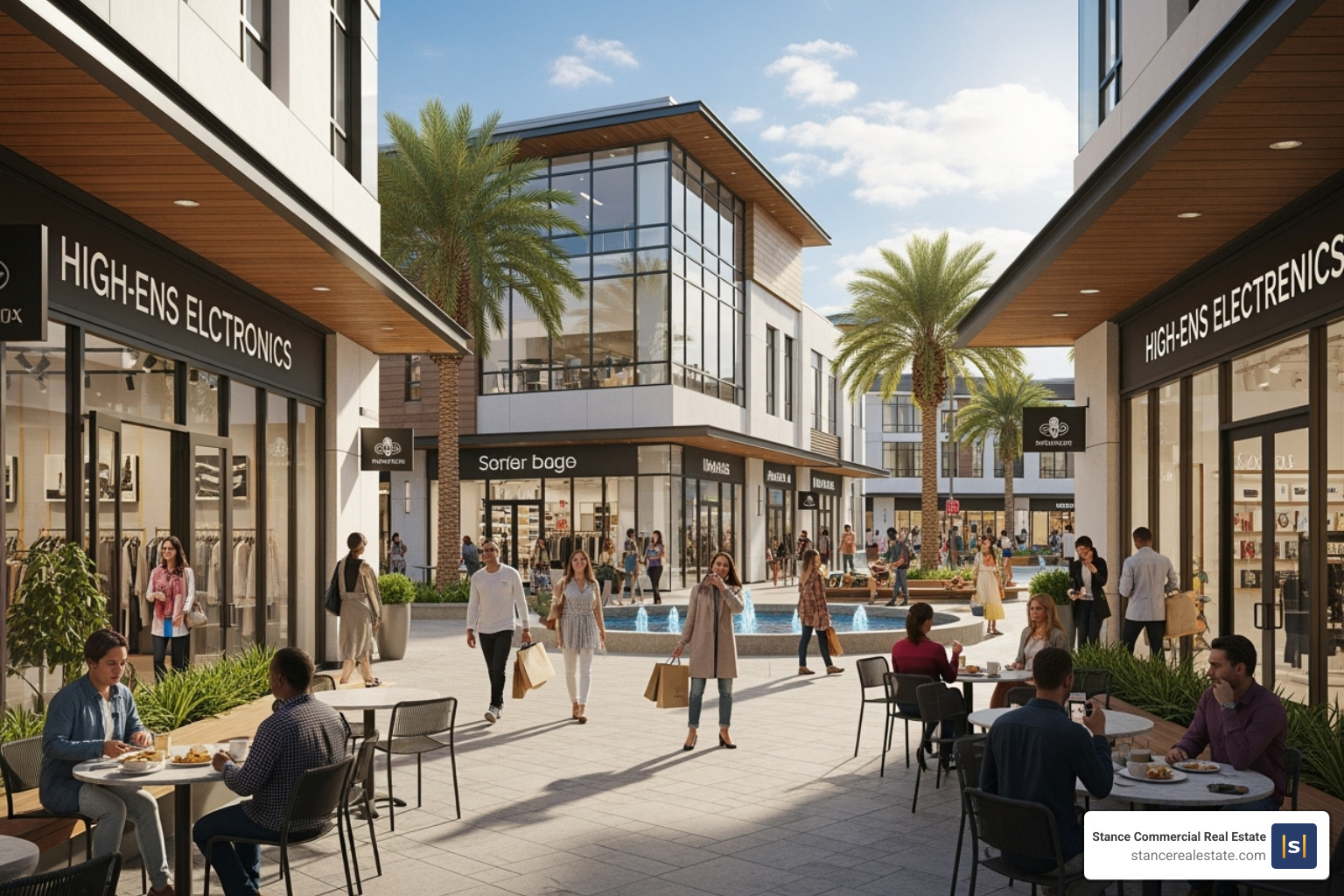
For forward-thinking investors, the rise of mixed-use developments—true live-work-play environments—translates into measurable financial advantages and long-term portfolio stability. Unlike traditional single-use assets, these projects combine office, retail, and hospitality into one integrated destination, creating built-in diversification and synergy. The result is a more secure and growth-oriented investment model that reduces reliance on any single tenant or sector. By spreading risk across multiple revenue streams within a cohesive property, mixed-use developments offer both resilience in shifting markets and the potential for outsized returns in today’s evolving commercial landscape.
This built-in diversification creates a powerful economic moat. If the office market faces headwinds, robust consumer spending can keep the retail and hospitality components thriving, thus maintaining a steady overall cash flow. The key financial benefits for investors are compelling:
- Diversified and Resilient Income Streams: Revenue is generated from multiple, often counter-cyclical, sources. Office tenants provide stable, long-term lease income, while retail tenants can offer percentage-rent agreements tied to sales performance. Hospitality and entertainment components capture discretionary spending. This blend provides a formidable hedge against market volatility in any single commercial sector.
- Premium Rental Rates and Higher Yields: The inherent value proposition of a mixed-use environment allows property owners to command premium rents. Tenants are willing to pay more for the unparalleled convenience, built-in amenities, and constant foot traffic that these developments provide. This leads to higher net operating income (NOI) and, consequently, more attractive capitalization rates for investors.
- Lower Vacancy Rates and Reduced Turnover: The integrated ecosystem creates natural, sustained demand. Office workers form a captive market for on-site retailers and restaurants. Conversely, the vibrant array of amenities serves as a powerful magnet for attracting and retaining high-quality office tenants. This symbiotic relationship leads to longer lease terms, lower vacancy rates, and reduced marketing and re-leasing costs over the life of the investment.
Throughout my years of experience guiding clients through Investing in Riverside Commercial Properties, I have consistently observed that well-executed mixed-use projects outperform their single-use counterparts in both occupancy levels and long-term value appreciation. They are not just buildings; they are destinations that foster a loyal customer base.
How Mixed-Use Developments Contribute to Local Economic Growth
Beyond the impressive returns for individual investors, these developments serve as powerful economic engines for entire communities. A thoughtfully planned mixed-use project can catalyze the transformation of a neighborhood, fostering sustainable prosperity and creating a legacy of growth. Their contributions include:
- Attracting and Retaining Businesses: The dynamic environment and ready-made customer base make these developments highly attractive to a wide range of businesses, from innovative startups seeking a collaborative atmosphere to established corporations looking for a prestigious address.
- Creating Diverse and Stable Job Opportunities: These large-scale projects generate a multitude of jobs across various sectors, including high-skilled positions in construction and engineering, professional services, property management, retail, and hospitality.
- Boosting Municipal Tax Revenue: As property values appreciate and commercial activity flourishes, local governments see a significant increase in their tax base. This includes higher property tax collections, as well as new revenue from sales taxes and business license fees, which can be reinvested into public services.
- Revitalizing Underutilized Areas: Mixed-use projects are an ideal solution for urban infill and revitalization. They can transform blighted industrial sites, aging strip malls, or vacant lots into thriving, walkable commercial hubs, thereby maximizing land use, curbing urban sprawl, and breathing new economic life into communities.
The inherent complexity and scale of these projects have spurred growth within the Commercial Real Estate Services Industry, demanding specialized expertise in finance, law, design, and management to unlock their substantial rewards.
For companies exploring options for Leasing Office Space in Riverside, properties that have been developed with these core principles in mind consistently attract the best tenants and maintain the highest occupancy rates over the long term.
Frequently Asked Questions about Mixed-Use Developments
As experts in The Future of Mixed-Use Developments: Live-Work-Play Spaces in Demand, we frequently engage with investors, developers, and business owners to demystify this complex but rewarding asset class. Here are detailed answers to some of the most common inquiries we receive.
Why is mixed-use development considered more sustainable?
Sustainability in mixed-use projects is a multi-faceted concept that encompasses economic, social, and environmental efficiencies. They are inherently more sustainable than conventional, single-use developments for several key reasons:
- Reduced Car Dependency and Emissions: By co-locating office, retail, and entertainment spaces, these developments create walkable environments where employees and visitors can accomplish multiple tasks in one trip, often without using a car. This significantly reduces vehicle miles traveled (VMT), which in turn lowers traffic congestion and carbon emissions.
- Efficient Land Use and Smart Growth: Mixed-use projects promote density and vertical development, which is a far more efficient use of valuable land than low-density, sprawling development patterns. This helps to preserve open space, protect natural habitats, and curb the high infrastructure costs associated with urban sprawl.
- Shared Infrastructure and Resources: The model allows for the highly efficient sharing of critical infrastructure. For example, a single parking structure can serve office workers during weekday business hours and then accommodate patrons of restaurants and entertainment venues in the evenings and on weekends. This shared-use model reduces the need for redundant facilities, lowers construction and operating costs, and minimizes the development's overall environmental footprint.
What are the biggest challenges for mixed-use development projects?
While the rewards are substantial, mixed-use projects are inherently complex and present unique challenges that require specialized expertise to overcome. The primary hurdles include:
- Complex Zoning and Entitlement Processes: Many municipalities still operate with outdated zoning codes that rigidly separate commercial uses. Navigating these regulations and securing the necessary entitlements for an integrated project can be a time-consuming, expensive, and uncertain process.
- Higher Upfront Costs and Complex Financing: Integrating diverse commercial property types with varied structural and infrastructure needs (e.g., ventilation for restaurants, loading docks for retail, high-tech connectivity for offices) leads to higher design and construction costs. Securing financing can also be more complex, often requiring multiple types of loans and a diverse capital stack.
- Intensive Market Analysis: Accurately forecasting long-term demand across multiple, distinct commercial sectors—office, retail, and hospitality—is a significant challenge. A successful project requires exhaustive market analysis to ensure the proposed mix and scale of uses aligns with the economic realities of the local market.
- Operational and Management Complexity: Managing a mixed-use property is far more demanding than overseeing a single-use building. It requires a sophisticated management team with expertise across various commercial property types. The management must also excel at community management, tenant relations, and event programming to maintain the vibrancy of the development.
How do mixed-use developments impact commercial property values?
Mixed-use developments typically have a powerful, positive impact on the value of both the property itself and the surrounding commercial real estate. The vibrant, synergistic environment they create drives value in several ways:
- Increased Demand and Premium Rents: The unparalleled convenience and dynamic atmosphere create intense demand for both office and retail space. For retail tenants, the built-in customer base of thousands of office workers and visitors is an invaluable asset that drives sales and justifies premium lease rates. For office tenants, the rich on-site amenities are a critical tool for attracting and retaining top talent, allowing owners to command higher rents than comparable single-use office buildings.
- Enhanced Financial Stability and Investor Appeal: The diversified revenue streams generated by the different commercial components create a more stable and predictable financial performance. This resilience is highly attractive to institutional investors and lenders, which can lead to a lower cost of capital and, consequently, higher property valuations.
- Long-Term Appreciation Potential: By creating a true 'destination,' a successful mixed-use project can elevate the profile and desirability of an entire neighborhood. This 'placemaking' effect often leads to an overall appreciation potential that significantly exceeds what standalone commercial properties can achieve, creating substantial long-term wealth for investors.
How is a mixed-use development financed differently from a single-use property?
Financing a mixed-use project is a more intricate process than financing a standard commercial building due to the multiple property types involved. Lenders view each component—office, retail, hospitality—as having its own distinct risk profile and revenue model. Consequently, the financing structure is often a hybrid. A developer might need to secure a traditional commercial mortgage for the office component, a separate construction loan for the retail portion that may be contingent on pre-leasing thresholds, and potentially specialized financing for a hotel. This often requires dealing with multiple lenders or finding a specialized lender with a dedicated mixed-use financing program. The complexity of the capital stack is higher, and investors must demonstrate a sophisticated understanding of each component's market to secure favorable terms.
What are the key metrics for measuring the success of a mixed-use development?
While traditional metrics like occupancy rates and rental income are crucial, they don't tell the whole story for a mixed-use project. Success is measured by the health of the entire ecosystem. Key performance indicators (KPIs) include:
- Foot Traffic and Dwell Time: Using sensors and mobile data to measure how many people visit the development and how long they stay provides insight into its drawing power.
- Cross-Property Patronage: Analyzing data to see what percentage of office workers patronize the on-site retail and dining establishments. High cross-patronage is a sign of strong synergy.
- Retail Tenant Sales Performance: Tracking tenant sales per square foot is a direct measure of the retail component's health and the value of the built-in customer base.
- Community Engagement Metrics: Measuring attendance at programmed events and engagement on social media platforms can quantify the project's success as a community hub.
How Stance CRE Can Help You
At Stance Commercial Real Estate, our deep local expertise in the Inland Empire is built on identifying and executing these creative opportunities. We were founded on the principle that service and local knowledge make all the difference in helping our clients achieve their goals.
The future of commercial real estate is integrated, experiential, and community-focused. For investors looking to build a resilient and profitable portfolio in Riverside and the broader Inland Empire, understanding these powerful trends is essential for identifying the high-growth opportunities that will define the next decade of commercial real estate. The time to adapt your investment strategy and embrace this new paradigm is now.
Explore investment opportunities in Riverside's Opportunity Zones
