


The Hidden Cost of Empty Spaces: How Vacancy Affects Property Value and ROI
Why Vacancy Rates Are The Hidden Driver of Commercial Real Estate Success
Vacancy rates play a pivotal role in shaping property value and ROI, yet their impact is often overlooked in commercial real estate. When spaces sit empty, the repercussions go well beyond the immediate loss of rental income. Vacancy triggers a chain reaction that can erode property valuation, weaken cash flow, increase operating expenses per tenant, and even limit access to favorable financing terms. An empty storefront or office suite does not simply represent missed revenue; it signals risk to lenders, reduces market competitiveness, and undermines investor confidence. In other words, vacancy is not a passive challenge but an active drain on an asset’s financial health, long-term performance, and overall return on investment.
Consider the immediate and cascading effects:
- A mere 1% increase in vacancy can reduce property values by a staggering 2-3%.
- High vacancy directly slashes your Net Operating Income (NOI), which is the fundamental measure of a property's profitability.
- Lenders view high vacancy as a significant indicator of increased risk, which can lead to less favorable financing terms or outright loan rejection.
- Empty units don't stop costing you money; they continue to generate carrying costs like property taxes, insurance, and essential maintenance.
- The direct costs associated with tenant turnover can range from $1,250 to $4,700 per vacancy, not including the lost income during the downtime.
Commercial real estate operates on longer lease cycles and higher per-unit values, meaning each vacant space carries amplified financial weight. A single vacant office suite or retail storefront can swing your annual returns from profitable to problematic, impacting not just your cash flow but the long-term equity of your investment.
I'm Joe Stance, and over my eighteen-year career in Riverside's dynamic commercial real estate market, I've witnessed firsthand how vacancy rates can make or break investment portfolios. I've seen savvy investors acquire underperforming assets with high vacancy and transform them into profitable powerhouses. Conversely, I've seen passive owners let vacancy creep up, only to find their property's value eroded and their financing options limited. Through guiding hundreds of property transactions in the Inland Empire, I've learned that understanding and actively managing this relationship is the cornerstone of long-term success. Let's explore precisely how vacancy rates affect your bottom line and what proactive steps you can take to protect and grow your investment.
Understanding Commercial Vacancy Rates: The Core Metric
When looking at commercial real estate, the vacancy rate is more than a number on a spreadsheet; it's a key performance indicator (KPI) that reflects your property's financial health, market position, and future potential. Think of it as your property's report card, revealing with stark clarity how well your investment is performing against its potential and its competition.
What is a Vacancy Rate and How is it Calculated?
A vacancy rate is the percentage of your property that is unoccupied and not generating rent. To truly grasp its impact, it's crucial to understand the two primary types: physical and economic vacancy.
Physical vacancy is the most straightforward calculation. It represents the percentage of space that is literally empty. The formula is simple:
Vacancy Rate = (Number of Vacant Units / Total Number of Units) x 100
For example, in an office building with 20 suites where 3 are empty, the physical vacancy is (3 ÷ 20) × 100 = 15%. This tells you how much space is available but not why it's empty or what the true financial loss is.
Economic vacancy provides a much deeper and more accurate look at revenue loss. It accounts not only for physically empty spaces but also for losses from tenant incentives like free rent periods, rent credits, or below-market lease rates. The formula is:
Economic Vacancy Rate = (Gross Potential Income - Actual Rental Income) / Gross Potential Income × 100
This distinction is vital. A building might be 95% physically occupied, but if you offered three months of free rent on one-year leases to attract those tenants, your economic vacancy could be significantly higher, severely impacting your bottom line. Vacant units mean you're still paying carrying costs (taxes, insurance, maintenance) without any offsetting lost revenue, a combination that quickly erodes profitability.
How Vacancy Rates Differ Across Commercial Property Types
There is no universal "good" vacancy rate; what's healthy for one property type can signal trouble for another. The market, location, asset class, and specific property characteristics all play a crucial role in defining a target vacancy rate.
- Office space vacancy rates are highly sensitive to economic cycles and evolving workplace trends like remote and hybrid work models. In markets like the Inland Empire, there's often a "flight to quality," where Class A buildings with modern amenities maintain low vacancy while older Class B and C properties struggle to attract tenants.
- Retail buildings are directly impacted by consumer spending habits and the health of their tenants. A vacant anchor tenant (like a major grocery or department store) can trigger co-tenancy clauses, allowing smaller tenants to break their leases or pay reduced rent. This creates a domino effect, increasing vacancy risk for the entire center.
- Industrial properties are currently experiencing historically low vacancy rates, largely driven by the e-commerce boom and the need for robust supply chains. In this sector, features like clear height, number of dock doors, and proximity to transportation hubs like those in the Inland Empire are key differentiators.
- Mixed-use developments blend different property types, such as retail and office components. The synergy between uses is key; a strong office occupancy can provide a built-in customer base for ground-floor retail, helping to stabilize the overall Net Operating Income and mitigate risk across the asset.
- Specialized properties like medical offices or self-storage facilities operate on unique demand drivers. Medical office vacancy is tied to local healthcare system growth and demographic trends, while self-storage can see seasonal fluctuations and is sensitive to population density.
For Stance CRE clients, understanding these nuances is essential for making informed investment decisions. Recognizing whether your property’s vacancy rate signals a deeper issue or merely reflects normal market fluctuations allows you to set realistic performance benchmarks, optimize cash flow, and prioritize strategic improvements. With the right insight, what might initially appear as a problem can become an opportunity to enhance tenant retention, adjust leasing strategies, and ultimately protect—and even increase—your property’s value and ROI. At Stance CRE, we help investors and property owners interpret these metrics in the context of their specific market segment, turning data into actionable strategies that drive long-term success.
The Financial Domino Effect: The Impact of Vacancy Rates on Property Value and ROI
Here is where the abstract concept of empty space transforms into a tangible financial force. The Impact of Vacancy Rates on Property Value and ROI is not just a theoretical risk; it's a real-world calculation that can determine the success or failure of your investment. When vacancies rise, the effects ripple through every line item of your property's financial performance, creating a cascade of negative outcomes.
- Property valuation takes the first and most significant hit. A widely accepted rule of thumb is that a 1% increase in vacancy can reduce a property's value by 2-3%. Buyers and appraisers view empty units as clear red flags signaling lower demand, potential management issues, and reduced future income.
- Your Return on Investment (ROI) feels the immediate squeeze as lost rent directly chips away at your Net Operating Income (NOI), the lifeblood of your property's financial performance.
- Cash flow becomes strained as you continue to pay for fixed operating expenses—property taxes, insurance, utilities, and maintenance—on empty units without any offsetting income. This can quickly turn a cash-flowing asset into one that requires capital infusions just to stay afloat.
- The Capitalization (Cap) Rate, a key metric for valuation, is directly impacted. Since the formula is Cap Rate = NOI / Property Value, a lower NOI resulting from vacancy signals higher risk to the market. This can lead to a higher cap rate being applied to your property, which in turn depresses its market value even further.
Calculating The Impact of Vacancy Rates on Property Value and ROI
Let's put this into practice by comparing the same hypothetical property at two different vacancy levels to illustrate the stark financial impact.
| Metric | At 5% Vacancy | At 15% Vacancy |
|---|---|---|
| Gross Potential Income (Annual) | $500,000 | $500,000 |
| Vacancy Loss | $25,000 (5% of GPI) | $75,000 (15% of GPI) |
| Effective Gross Income | $475,000 | $425,000 |
| Operating Expenses (Annual) | $150,000 | $150,000 |
| Net Operating Income (NOI) | $325,000 | $275,000 |
| Estimated Property Value (at 7% Cap Rate) | $4,642,857 ($325k / 0.07) | $3,928,571 ($275k / 0.07) |
| Cash Flow Strain | Healthy | Significant |
| Property Valuation Decline | - | ~$714,286 |
The numbers don't lie. A 10-percentage-point jump in vacancy translates directly to a $714,286 drop in property value. This is not a theoretical loss; it's a real-world impact affecting property owners throughout the Inland Empire.
- NOI reduction: The higher vacancy property loses an additional $50,000 in annual NOI.
- Cash flow strain: You're forced to cover the same $150,000 in expenses with $50,000 less income, which means over $4,000 less cash flow in your pocket each month.
- Property valuation decline: This represents a real loss of equity. If you needed to sell or refinance, you'd be working with nearly three-quarters of a million dollars less in asset value.
Understanding What is a Good Cap Rate for Commercial Real Estate? is crucial for making informed investment decisions based on these powerful relationships.
How Vacancy Affects Property Financing and Investor Confidence
The world of commercial financing operates on rigorous risk assessment, and a high or rising vacancy rate is one of the biggest red flags for a lender. Perceived risk skyrockets when cash flow is unstable, making lenders extremely cautious.
This caution manifests in several ways. You'll face intensified lender scrutiny, where banks will demand detailed re-leasing plans, market analyses, and stress tests on your financials. They may offer less favorable terms, such as lower Loan-to-Value (LTV) ratios (e.g., offering a 65% LTV instead of 75%), forcing you to contribute more cash to a purchase or refinance. Furthermore, your interest rates may be higher to compensate the lender for taking on the added risk of an underperforming asset. A critical loan covenant, the Debt Service Coverage Ratio (DSCR), can be breached if NOI falls too low, potentially putting your loan in technical default.
Refinancing challenges multiply when vacancy persists, as lenders become hesitant to lend on an asset with uncertain income streams. Similarly, equity investors, particularly institutional ones, typically target stable, income-producing assets and may avoid properties with high vacancy altogether. This can create a negative market perception that makes attracting quality tenants even harder, trapping the property in a downward cycle that requires aggressive, proactive management to break.
Key Drivers of Commercial Vacancy Rate Fluctuations
Understanding why vacancy rates rise and fall is essential for anticipating market shifts and protecting your investment. The Impact of Vacancy Rates on Property Value and ROI becomes much clearer when you grasp the complex interplay of forces driving these fluctuations—from sweeping national economic trends down to the condition of your property's parking lot.
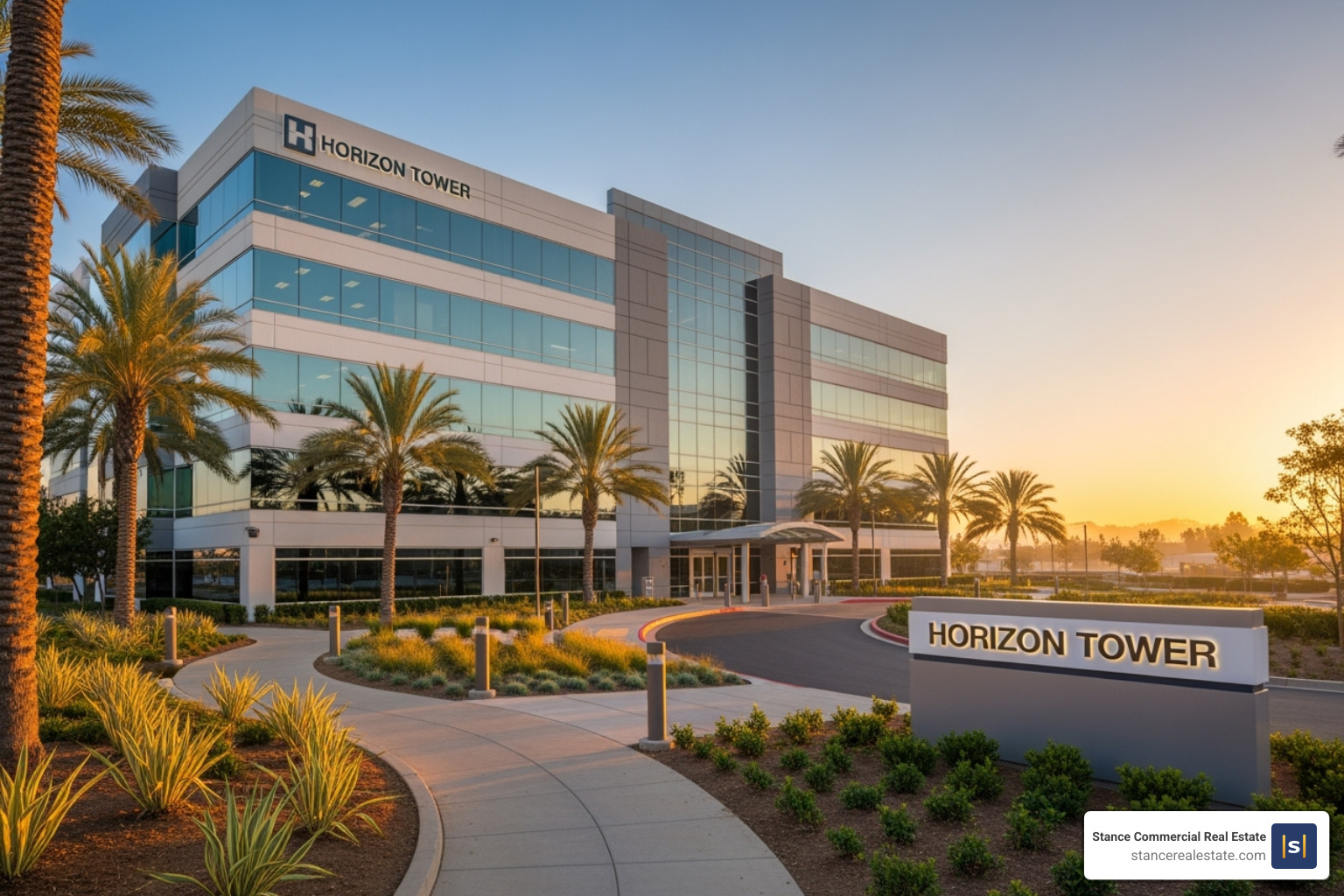
Economic Conditions and Market Trends
The broader economy acts like a powerful tide for the commercial real estate market. When the economy is strong, most properties benefit from lower vacancy as businesses expand. When it recedes, even well-managed properties can face headwinds.
- Job and GDP growth are the primary engines of demand. A growing economy gives companies the confidence and capital to expand their footprint, sign longer leases, and absorb new supply.
- Consumer spending directly influences the health of retail tenants. When consumer confidence is high, retailers thrive, and vacancy rates fall. When spending tightens, retail vacancies and demand for shorter lease terms often follow.
- Supply and demand dynamics are fundamental. A surge in new construction can temporarily push vacancy rates higher across a submarket until demand catches up. Conversely, a lack of new supply in a growing market can lead to bidding wars for space. You can track historical US commercial property vacancy rates to see if current conditions reflect normal market cycles or a more significant structural shift.
- Interest rate environments affect the cost of capital for businesses. Higher rates can make it more expensive for companies to borrow for expansion, potentially dampening demand for new commercial space.
Our deep, localized knowledge of Understanding the Southern California Commercial Real Estate Market helps our clients navigate these macroeconomic trends and position their assets to succeed in any cycle.
Property-Specific Factors: Location, Condition, and Amenities
While you can't control the national GDP, you have significant influence over the property-specific factors that attract and retain high-quality tenants. In a competitive market, these details are often the deciding factor.
- Location remains king. But "good location" is nuanced. A retail space needs high visibility and traffic counts, while an industrial property needs efficient proximity to freight corridors and ports. Office buildings benefit from convenient freeway access, ample parking, and proximity to amenities like restaurants and services.
- Property condition is a direct reflection of ownership. A building with deferred maintenance—a faded facade, cracked parking lot, or outdated lobby—signals to prospective tenants that the landlord may be unresponsive and neglectful. Proactive capital expenditure planning is crucial for preserving asset value.
- Modern amenities have evolved from a luxury to an expectation. Office tenants now seek high-speed internet infrastructure, flexible workspaces, tenant lounges, and fitness centers. Industrial tenants may prioritize high clear heights, ESFR sprinkler systems, and ample trailer parking.
- Tenant improvement (TI) allowances are a powerful negotiating tool. Offering a competitive TI allowance gives tenants the flexibility to customize a space to their specific needs, which can be a powerful incentive for closing a deal, especially for longer-term leases.
Investing in these areas is not just an expense; it's an investment in tenant retention. Given that turnover costs can range from $1,250 to $4,700 per vacancy—plus months of lost rent—keeping good tenants is one of the most profitable activities an owner can undertake. As we've seen with The Impact of Local Institutions on Commercial Real Estate Growth, properties that are well-maintained and strategically located near major employers or universities often maintain lower vacancy rates even during challenging economic times.
Proactive Strategies to Minimize Vacancy and Maximize Returns
Understanding the drivers of vacancy is one thing; actively controlling it is another. The most successful property owners don't just react to vacancy problems—they build a system to prevent them. With the right combination of strategic leasing, diligent management, and modern technology, you can turn vacancy prevention into a powerful competitive advantage that drives higher returns and builds long-term value.
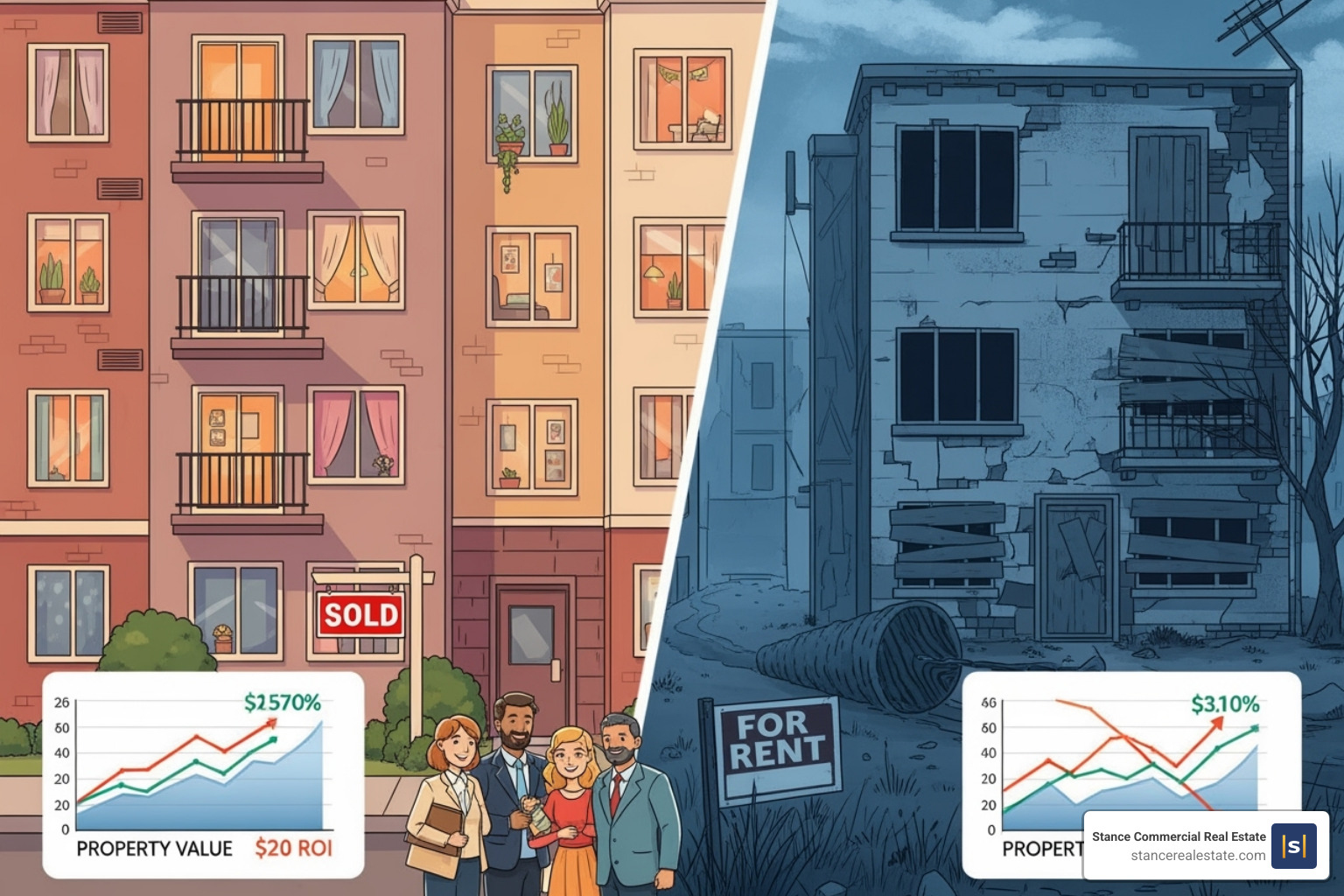
Strategic Leasing: Mitigating The Impact of Vacancy Rates on Property Value and ROI
Smart leasing is not about just filling empty spaces; it's about creating a deliberate, multi-faceted strategy to attract and retain high-quality tenants who contribute to the asset's stability and growth.
- Set Competitive, Data-Driven Rental Rates: Price your property based on current, granular market data, not on what the last tenant paid. This ensures you attract immediate interest without leaving money on the table. A rate that is even 5% too high can cause a property to languish on the market for months.
- Offer Flexible Lease Terms: In today's dynamic business environment, flexibility is a major draw. Consider offering options like shorter initial terms with renewal options, or rights of first refusal on adjacent spaces for growing businesses.
- Use Strategic Tenant Incentives: A period of free rent or a generous Tenant Improvement (TI) allowance is often far less costly than a prolonged vacancy. Calculate the breakeven point: a few months of free rent on a five-year lease is a small price to pay to avoid a year of vacancy.
- Master Tenant Retention: Keeping your existing tenants is almost always more profitable than finding new ones. This requires a proactive approach: initiate renewal conversations 9-12 months in advance, maintain open lines of communication, and address maintenance requests promptly and professionally. A simple tenant appreciation event can go a long way in building goodwill.
- Conduct Thorough Tenant Screening: A comprehensive screening process is your first line of defense against future vacancy problems. This must go beyond a simple credit check. Verify financial statements, check business references, and understand the tenant's business model to ensure they are a stable, reliable partner for your property.
- Aggressive Marketing and Broker Outreach: When a vacancy is anticipated, the marketing effort should begin immediately. This includes professional photography and virtual tours, listings on top platforms like CoStar and LoopNet, and proactive outreach to the local brokerage community with competitive commission offers. Explore our Commercial Property for Lease listings to see quality spaces with proven leasing strategies.
The Role of Proactive Property Management and Technology
Proactive property management moves beyond the basics of rent collection and repairs. It combines relationship building with powerful technology to create a superior tenant experience that encourages long-term stays and preserves the physical asset.
- Implement Preventative Maintenance Schedules: A well-maintained property signals professionalism and prevents small issues from becoming major, expensive problems. Regular, documented inspections of HVAC systems, roofing, plumbing, and safety equipment not only satisfy tenants but also protect the asset's long-term value.
- Ensure Responsive, Professional Communication: When tenants know their concerns will be heard and addressed quickly, their satisfaction and likelihood to renew skyrocket. Implement a system for tracking requests and ensuring timely follow-up.
- Leverage Property Management Software: Modern software platforms are essential for efficient operations. They can streamline rent collection, automate late fees, manage maintenance requests, and generate detailed financial reports, freeing up your time to focus on high-value tasks like tenant relations and strategic planning.
- Utilize Data Analytics for Decision Making: Don't guess—know. Use data analytics to benchmark your property's performance against the competition. Track key metrics like market rents, average time on market, and concession packages. This data allows you to make informed, agile decisions on pricing and marketing to shorten vacancy periods and maximize income.
Frequently Asked Questions about Vacancy Rates
Over my nearly two decades of working with sophisticated investors in Riverside and the broader Inland Empire, I've found that the same critical questions come up time and again. Here are the clear, actionable answers that can make a significant difference in your investment analysis and decision-making process.
What is considered a "good" or "normal" vacancy rate for commercial real estate?
There's no single magic number, as the ideal rate is highly dependent on the market, submarket, and property type. However, as a general benchmark, a healthy, stabilized vacancy rate is typically between 5% and 10%. Below 5% often indicates a very tight market with strong upward pressure on rents. Above 10% may suggest a softening market or property-specific issues. The most important concept is the "natural" vacancy rate for a given market—the level that allows for normal tenant turnover and movement without signaling market distress or forcing landlords into a price war. The key is to always compare your property's vacancy rate to the specific, current average for its submarket and asset class (e.g., Class A suburban office in Riverside).
How can an investor use vacancy rate data to find opportunities?
Smart investors don't just look at a vacancy rate; they analyze the story it tells to uncover hidden opportunities.
- Identify Declining Vacancy Trends: A market or submarket showing a consistent decline in vacancy rates often signals that demand is outpacing supply. This is a leading indicator of future rent growth, making it a prime target for acquisitions before prices fully adjust.
- Target Value-Add Opportunities: A property with an unusually high vacancy rate compared to its direct competitors can be a tremendous value-add opportunity. If you can correctly diagnose the root cause—such as poor management, deferred maintenance, or ineffective marketing—and have a clear strategy to fix it, you can acquire the asset at a discount and create substantial value by leasing it up to market levels.
- Benchmark for Underperformance: Comparing a target property's vacancy to the market average instantly reveals its competitive standing. If a property is at 20% vacancy while the market is at 8%, that 12% gap represents a clear path to increasing NOI and, therefore, forcing appreciation.
Layering this vacancy data with other economic indicators like job growth, new infrastructure projects, or corporate relocations can help you get ahead of the market and make highly informed investment decisions. Our Commercial Real Estate Investment Strategies resource provides more detailed guidance on this type of analysis.
What are the hidden costs of tenant turnover?
Many owners focus only on the lost rent during a vacancy, but the true cost of tenant turnover is much higher. These "hidden" costs can cripple a property's cash flow. They include:
- Marketing Costs: Expenses for online listings, brochures, signage, and broker events to advertise the space.
- Leasing Commissions: Fees paid to brokers for securing a new tenant, which can be substantial.
- Legal Fees: Costs associated with drafting and negotiating a new lease agreement.
- Tenant Improvements (TIs): The significant capital outlay required to reconfigure the space for the new tenant's needs.
- Management Time: The immense amount of time and resources your team spends on tours, negotiations, and project management instead of focusing on other value-add activities.
When you add all these up, the total cost of turnover can easily equal a year's rent or more, which underscores the immense value of proactive tenant retention.
Besides vacancy rate, what other metrics are crucial for assessing a commercial property?
While critically important, the vacancy rate is just one piece of a comprehensive financial puzzle. A complete analysis requires looking at several interconnected metrics:
- Net Operating Income (NOI): Gross rental income minus operating expenses (but before debt service). This is the single most important number, as it directly drives property value.
- Capitalization (Cap) Rate: The rate of return on an all-cash investment (NOI / Property Value). It's the primary tool for comparing different investment opportunities.
- Cash-on-Cash Return: Annual pre-tax cash flow divided by the total cash invested. It measures the return on your actual equity in the deal.
- Tenant Creditworthiness & Mix: The financial stability of your tenants and the diversity of industries they represent.
- Lease Expiration Schedule: A staggered schedule with no single year having a large percentage of expiring leases provides income stability and reduces risk.
- Average Rent vs. Market Rent: This comparison reveals if you are under-renting your space (an opportunity for future growth) or priced too high (a risk for future vacancy).
How Stance CRE Can Help You
The strategies we've covered—from data-driven leasing and aggressive marketing to proactive property management and a focus on tenant retention—are not theoretical. They are battle-tested, practical approaches that work. Success in this arena comes from treating vacancy management not as a reactive task, but as an active, ongoing discipline. The best owners treat every lease renewal as a critical opportunity and every market shift as a chance to gain a decisive competitive advantage.
Here in the Inland Empire, a globally significant logistics hub and a dynamic economic region, properties that adapt, invest in themselves, and stay ahead of tenant needs consistently outperform those that simply wait for leases to expire.
At Stance Commercial Real Estate, we have built our reputation on helping property owners navigate these complex dynamics. Our deep roots in the Riverside community provide unparalleled insights into what local tenants value, how to position properties for sustained success, and how to execute strategies that minimize vacancy, maximize returns, and build lasting value.
Your investment deserves more than a passive approach. It deserves a proactive, expert-led strategy.
Learn more about our commercial real estate services
