

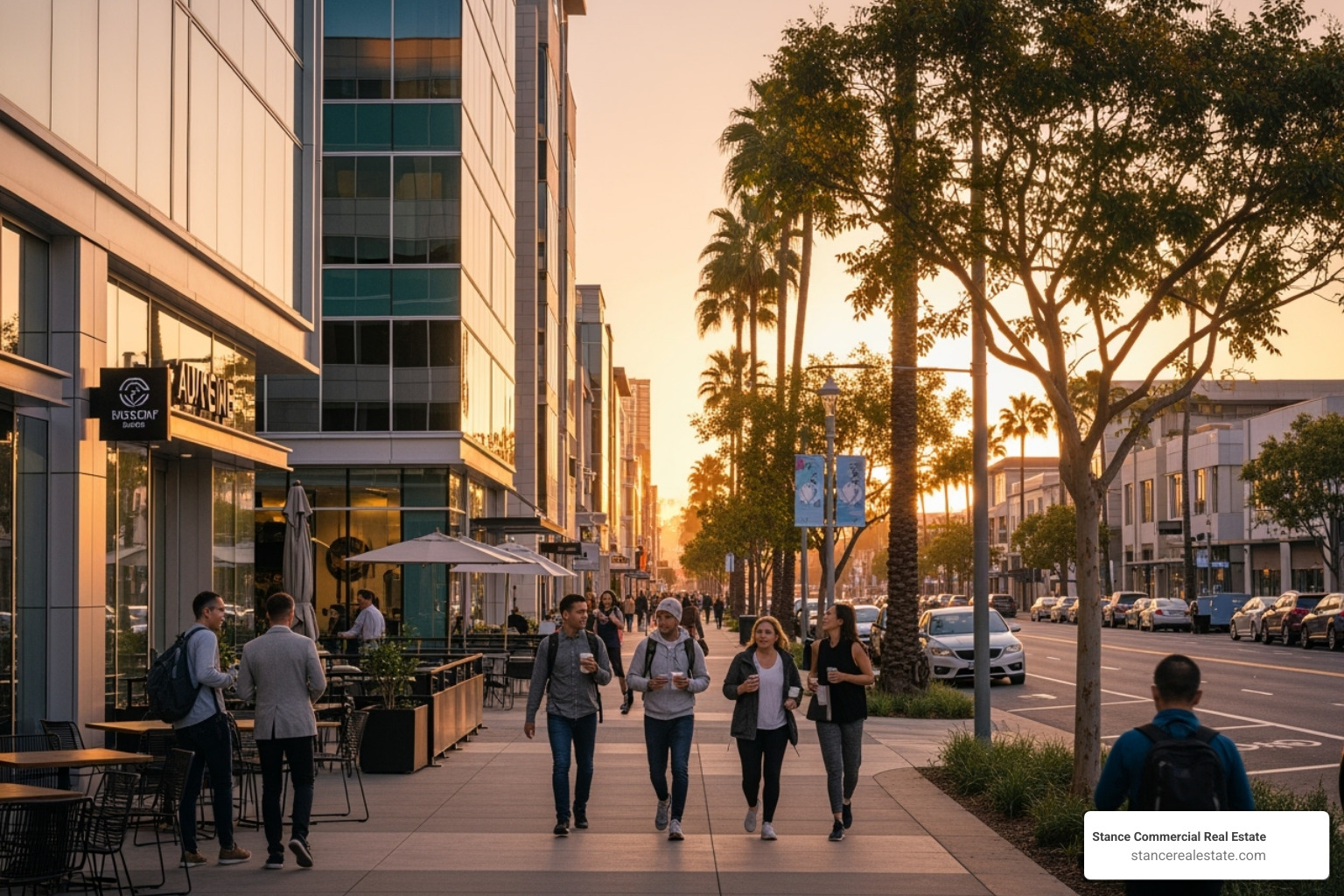
Location, Location, Location: Why Walkability Matters More Than Ever
The New Meaning of a Prime Location
Walkability has emerged as a key differentiator between thriving commercial properties and those that struggle to attract tenants. Properties in pedestrian-friendly locations consistently command higher rents, draw more desirable tenants, and generate stronger long-term returns. Beyond financial performance, walkable areas also enhance convenience, improve employee satisfaction, and support vibrant local communities—making them increasingly attractive to both businesses and investors seeking sustainable, high-performing assets.
The shift from sprawling, car-dependent developments to pedestrian-friendly districts is a fundamental change in how commercial real estate creates value. Walkability measures how easily people can access work, shops, restaurants, and services without a car. Properties near transit and surrounded by amenities consistently outperform isolated buildings. The numbers are clear: walkable urban places generate 20% of the nation's GDP despite occupying just 1.2% of metropolitan land.
Key Benefits of Walkable Commercial Properties:
- 35-45% rental premiums for office, retail, and multifamily properties.
- 5-8% property value increase for every 10-point Walk Score improvement.
- 49% boost in retail sales from pedestrian infrastructure improvements.
- 125% value appreciation in walkable business districts vs. 20% in car-dependent zones over the past decade.
The investment implications are significant. Properties in walkable locations command higher rents, experience faster lease-up times, lower vacancy rates, and better value retention during economic downturns.
I'm Joe Stance, and during my eighteen year career in commercial real estate, I've witnessed how Walkability has transformed property values across the Inland Empire. Understanding walkability is now essential for making smart investment decisions.
What is a Walkability Score and How is it Measured?
A walkability score is a 0-100 rating of a property's pedestrian friendliness, indicating how easily people can walk to daily destinations.
Scores are calculated using several key factors:
- Proximity to amenities: The density and variety of useful destinations like coffee shops, restaurants, and retail stores carry the most weight.
- Pedestrian infrastructure: Wide sidewalks, well-marked crosswalks, and safe pathways are essential for attracting foot traffic and keeping tenants happy.
- Street design: Shorter blocks and slower traffic speeds create a more comfortable and visible environment for pedestrians and retail tenants.
- Safety and security: Good lighting and clear sightlines encourage walking, especially during evening hours.
For commercial property analysis, these metrics translate directly to your bottom line. A high walkability score means more natural foot traffic for retail, a stronger talent attraction tool for offices, and higher occupancy for multifamily properties.
Key Tools for Assessing Commercial Property Walkability
Smart investors measure walkability with proven tools to assess a property's potential.
- Walk Score: The industry standard, rating locations from 0-100. A score of 90-100 is a "Walker's Paradise," while scores below 25 signal "Car-Dependent" areas.
- Transit Score: Measures public transportation access on the same 0-100 scale. This is critical for office and retail locations needing to attract employees and customers from across a metro area. See the methodology at Transit Score.
- Bike Score: Evaluates cycling infrastructure and conditions. This score is increasingly important for office properties attracting health-conscious tenants. Learn more at Bike Score.
- EPA's National Walkability Index: Takes a broader view, analyzing infrastructure and land use patterns to help identify emerging walkable districts. Access the guide at EPA's National Walkability Index.
- Using maps for amenity analysis: A visual check on Google Maps provides real-world context, revealing if amenities are truly accessible or separated by barriers like highways.
Interpreting the Scores for Investment Decisions
Translating walkability scores into smart investment moves is where strategy meets success. The difference between car-dependent and Walker's Paradise locations can make or break your returns.
- Office properties in walkable areas command premium rents by attracting top tenants who value convenience.
- Retail spaces benefit from natural foot traffic that translates directly to sales and higher rents.
- Multifamily properties in pedestrian-friendly areas maintain high occupancy due to resident demand for convenience and community.
The average US Walk Score is just 48, meaning most commercial properties are car-dependent. This creates a significant opportunity for investors who understand why walkability matters.
Identifying undervalued opportunities involves finding properties with good fundamentals in areas ready for walkability improvements, such as new transit lines or mixed-use developments. Matching property types to walkability levels is key: a warehouse doesn't need a 90 Walk Score, but a restaurant does. Office buildings perform best with scores above 70, while retail thrives above 80. Understanding these thresholds helps you make smarter acquisition decisions, whether you're Investing in Riverside Commercial Properties or exploring other markets.
The Economic Power of Walkability

Location, Location, Location is more than a phrase—it's a core driver of financial performance in commercial real estate. The data clearly shows a powerful connection between foot traffic and property values.
How Walkability Directly Impacts Commercial Property Values
The walkability premium is a well-documented phenomenon. A 10-point increase in a property's Walk Score can boost its value by 5-8%.
The long-term effects are even more dramatic. Over the past decade, property values in walkable central business districts have soared by 125%, compared to just 20% in car-dependent zones. Even in suburbs, walkable commercial properties saw values increase by 43%. This trend is not limited to major cities; it's reshaping markets of all sizes, including the Inland Empire.
The Ripple Effect on Rents and Marketability
Walkable commercial properties help solve two of an owner's biggest challenges: lower vacancy rates and faster lease-up times. Businesses are willing to pay more for the convenience that walkable locations offer their employees and customers.
The rental premiums are significant across all property types:
- Walkable office spaces: 90% premium over suburban counterparts.
- Retail spaces: 71% premium in walkable areas.
- Multifamily commercial properties: 66% higher rents.
This results in a combined premium of 74% for walkable urban properties. These locations are actively sought by businesses, leading to lower vacancy and stronger, more consistent cash flow. This is evident in areas like Downtown Riverside Commercial Real Estate, where strategic infrastructure investments have transformed the district.
Riverside, California Walkability and Tenant Demand
While Riverside has an average Walk Score of 43, indicating a car-dependent city, certain neighborhoods like Downtown, Arlington, and Eastside are more walkable Walk Score. These areas attract businesses seeking convenient locations for employees and customers. Notably, Riverside's Main Street Pedestrian Mall, a revitalized area with walkways, fountains, and seating, enhances the appeal of downtown spaces.
Businesses are increasingly willing to pay a premium for walkable locations, recognizing the value they offer in terms of accessibility and convenience. This trend is evident in Riverside's commercial real estate market, where demand for well-located properties supports lower vacancy rates and faster lease-up times.
Investing in walkable commercial properties in Riverside not only meets tenant demand but also contributes to reduced vacancy rates and quicker lease-up periods, aligning with broader market trends.
These examples prove that walkability investments create lasting value and reshape commercial districts, a trend visible in places like The retail culture in Riverside, California.
Why Businesses and Investors are Prioritizing Walkability in 2025
Two large demographic groups, Millennials and Baby Boomers, are converging in their preference for walkable environments. Millennials, now in their prime working years, seek integrated urban lifestyles. Boomers are increasingly downsizing and reducing car dependency, valuing the convenience and social aspects of pedestrian-friendly areas.
This convergence has fueled demand for the "live-work-play" ideal. Employees now expect a lifestyle that blends with their work. A walkable location is a competitive advantage in talent attraction and retention. Companies in walkable districts report higher employee satisfaction and easier recruitment, as workers prefer a vibrant community over an isolated office park.
The Lifestyle and Sustainability Appeal
The appeal of walkable locations extends beyond convenience to health and corporate responsibility.
- Health and Wellness: Adults in walkable neighborhoods are 1.5 times more likely to get enough physical activity. This can lead to a healthier, more productive workforce. A pleasant walk to work is far less stressful than a commute stuck in traffic.
- Corporate Sustainability: With a typical vehicle emitting about 4.6 metric tons of CO2 annually, higher Walk Scores directly translate to lower carbon footprints, helping companies meet their environmental goals.
- Community Atmosphere: The energy and vibrancy of walkable areas are difficult to replicate in car-dependent locations, fostering a greater sense of connection for employees. This is especially true in areas with strong educational institutions, as noted in the impact of Inland Empire colleges on CRE.
The Financial Benefits for Tenants and Businesses
The financial advantages of walkability are clear and compelling for both tenants and investors.
- Reduced Transportation Costs: When employees spend less on commuting, they are often happier and more financially stable, which benefits their employers.
- Increased Foot Traffic: For retail businesses, the constant flow of pedestrians creates a steady stream of potential customers, a significant advantage over destination-only strip malls.
- Improved Brand Image: Choosing a walkable location signals a company's commitment to sustainability, employee well-being, and community engagement, which resonates with modern consumers and talent.
Leveraging Walkability in Your Commercial Real Estate Strategy
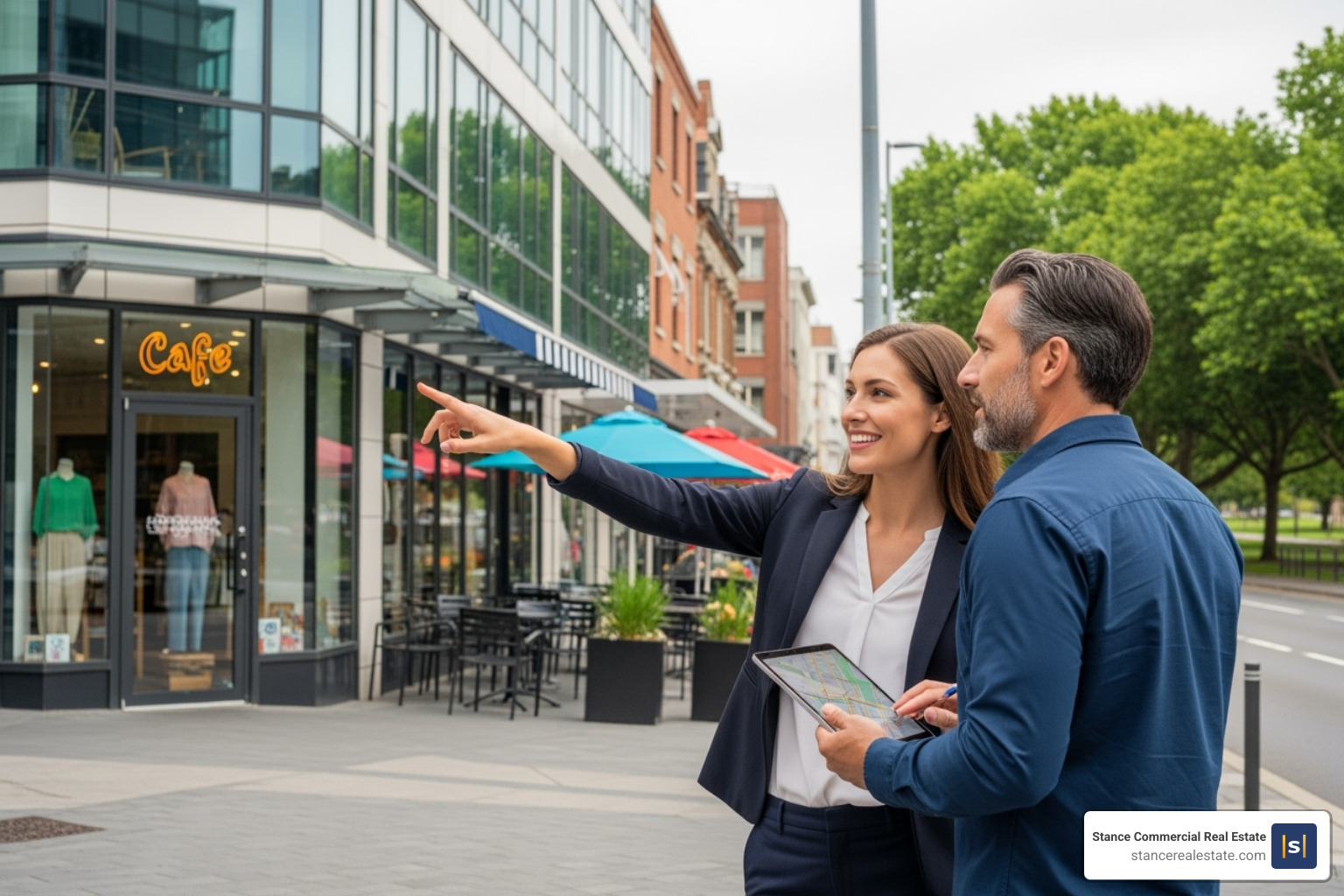
For Investors: How to Factor Walkability into Your Analysis
Walkability analysis should be a standard part of your due diligence, just like reviewing cap rates and financials.
- Identify "Walkable Urban Places" (WalkUPs): These are districts where daily needs can be met on foot. WalkUPs consistently deliver outsized economic performance and command rental premiums up to 75% higher than car-dependent locations.
- Analyze Future Development: Look beyond current scores. Investigate city plans for new pedestrian infrastructure, transit extensions, or zoning changes that favor mixed-use development. These future improvements can open up significant value.
- Evaluate Transit Access: Properties near quality public transit can command premiums of 40% to 200%. Assess the frequency, connectivity, and destinations of nearby transit routes to understand their true value. This is crucial in developing areas like Commercial Real Estate Southwest Riverside County.
For Business Owners: Choosing a Location that Works for You
Your business location directly impacts talent acquisition, customer access, and brand identity.
- Attract Top Talent: A walkable office location is a powerful recruiting tool. Today's professionals desire amenities like cafes, restaurants, and gyms within walking distance of their workplace.
- Improve Customer Accessibility: For retail and service businesses, foot traffic is a direct line to sales. Every pedestrian is a potential customer, creating opportunities that don't exist in isolated locations.
- Benefit from Business Synergy: Walkable districts create a positive feedback loop. The office lunch crowd supports restaurants, which in turn creates a vibrant atmosphere that attracts more people and benefits all nearby businesses. Understanding How Riverside, California Supports Businesses helps leverage these local ecosystems.
For Agents: Marketing the Walkability Advantage
Make walkability a central part of your value proposition to clients.
- Highlight Specific Scores: Instead of vague descriptions, use concrete data. "Walk Score: 85 - Walker's Paradise" is more powerful than "great location."
- Create Location-Centric Marketing: Tell the story of the neighborhood. Describe the lunch spots, after-work venues, and networking opportunities that a walkable location provides.
- Use Visual Aids: A map showing nearby amenities or photos of busy sidewalks can effectively communicate the energy and convenience of a location.
- Tell the Neighborhood Story: Paint a picture of the lifestyle. Describing an employee's convenient, car-free day helps clients visualize the true benefit of the location.
Challenges and the Future of Walkable Commercial Districts
While the benefits of Walkability are clear, creating and maintaining these districts presents real challenges.
The most pressing concern is gentrification and displacement. As a commercial district becomes more walkable and desirable, rising property values can price out the local businesses that gave the area its original character. This "affordability paradox" is a complex issue in developing areas, including The Rise of Riverside's Innovation District, where rapid growth brings both opportunity and strain.
The Rise of Mixed-Use and Walkable Suburbs
Despite these problems, the "surban" trend is reshaping communities. This involves suburban areas urbanizing by creating their own walkable cores. Former strip malls are being reimagined as vibrant, mixed-use developments with retail, offices, and residential components clustered around transit hubs.
This shift marks a fundamental change from traditional, single-use suburban commercial zones to modern, integrated districts.
- Traditional Suburban Zones: Segregated uses (office parks, shopping centers) connected by roads designed for cars, with vast surface parking lots.
- Modern Mixed-Use Districts: A mix of retail, office, and residential uses in the same block or building. Streets are designed for people first, with wide sidewalks, bike lanes, and public spaces. Parking is integrated more discreetly.
The economic performance difference is stark. While traditional suburban properties face higher vacancies, walkable mixed-use developments command premium rents and attract high-quality tenants.
How Stance CRE Can Help You
The future of commercial real estate is pedestrian-friendly. Despite challenges like outdated zoning, market demand is fueling billions in investment toward transit, mixed-use projects, and pedestrian infrastructure. The "surban" trend is changing suburbs into walkable hubs, creating new opportunities for savvy investors. Here in Riverside and the Inland Empire, this change is happening now, with car-dependent areas evolving into walkable cores.
At Stance Commercial Real Estate, Joe and Heidi Stance have built their reputation on deep local market knowledge. Our expertise in Riverside's evolving commercial landscape allows us to identify emerging walkable districts and guide clients toward long-term value. We have helped hundreds of clients steer transactions with a keen eye on how walkability drives future success.
Whether you are an investor, a business owner, or simply want to understand the future of commercial real estate, the properties that thrive tomorrow are those that make it easy for people to walk today.
Ready to explore how walkability can improve your commercial real estate strategy? Find resources for your business in the Inland Empire and find the opportunities in our evolving market.
