

Acquire Like a Pro: Your Guide to Commercial Property Ownership
Why Acquiring Commercial Property Is Your Next Smart Move
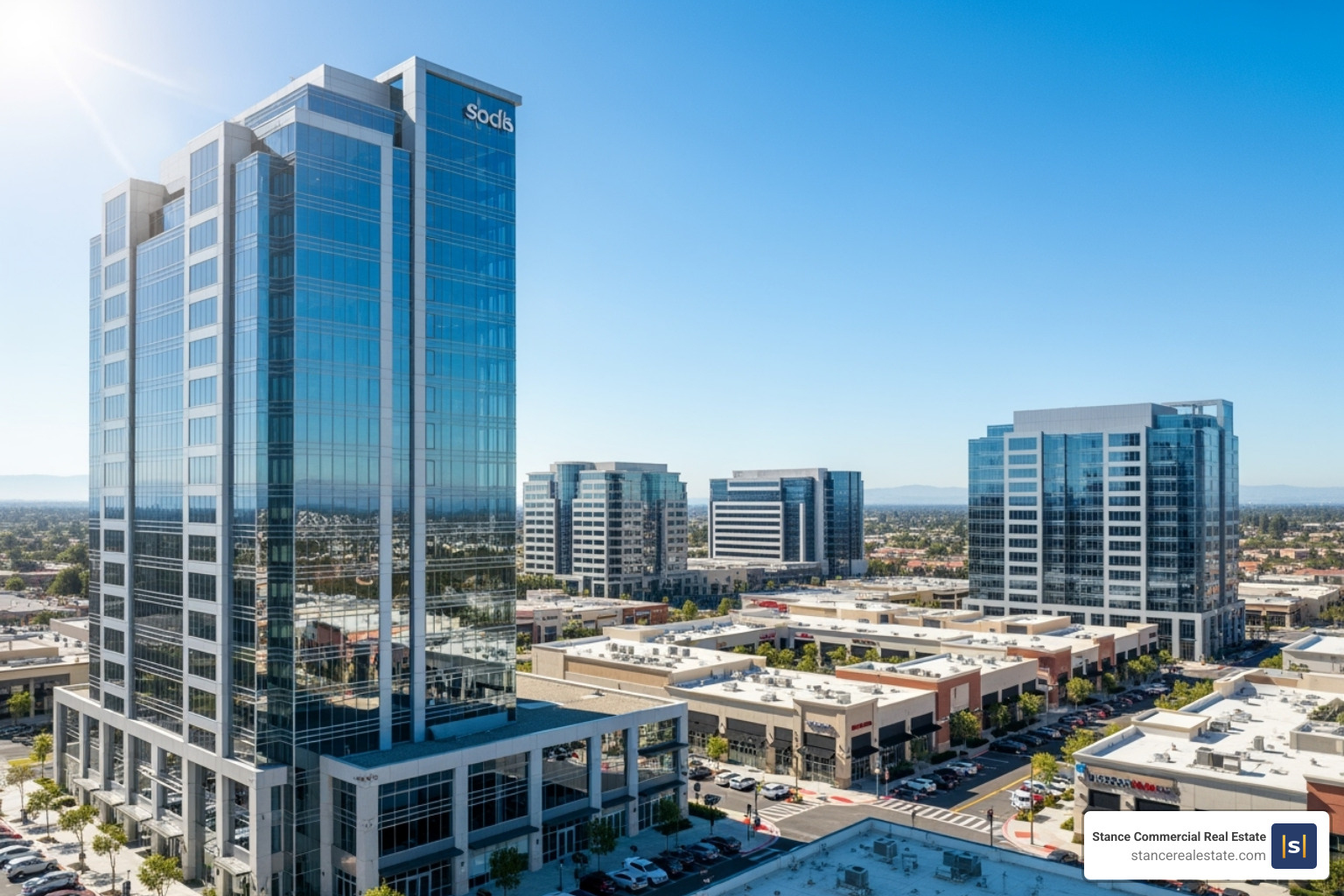
Caption: A vibrant commercial landscape in Southern California, featuring modern office buildings, busy retail centers, and expansive industrial warehouses.
Acquire Like a Pro: Your Guide to Commercial Property Ownership is about understanding a fundamental truth: commercial real estate offers a powerful and proven path to wealth. While many investment vehicles are subject to market volatility, commercial properties can generate stable and substantial 9-12% annual returns, far outpacing many other asset classes. This superior performance is not accidental; it is the direct result of a business-oriented model built on professional tenants, longer lease terms that ensure income stability, and triple net (NNN) leases that strategically shift many operational costs to the tenant, insulating the owner from unpredictable expenses.
Here's what you need to know to acquire commercial property like a pro:
- Financial preparation - This goes beyond just the down payment. Expect to need 25-35% down, but also have significant liquid reserves for closing costs, immediate repairs, and a contingency fund to cover vacancies. Lenders will want to see a strong personal financial statement and a clear understanding of key metrics like Net Operating Income (NOI), capitalization rates (cap rates), and the Debt Service Coverage Ratio (DSCR).
- Professional team - Success in this arena is a team sport. Before you even look at a property, you must assemble a team of dedicated specialists: a commercial agent with a track record in your desired asset type and market, a real estate attorney to protect your legal interests, a commercial lender who understands asset-based underwriting, a CPA to structure the deal for maximum tax efficiency, and a qualified inspector to uncover potential physical defects.
- Due diligence - This is the most critical phase of any acquisition. It is an exhaustive investigation where you verify every claim made by the seller. This includes verifying zoning compliance for your intended use, conducting environmental assessments to avoid liability, performing a detailed physical inspection of the building and its systems, and forensically analyzing all financial documents like rent rolls and operating statements.
- Market analysis - A great property in a declining market is a poor investment. You must evaluate macroeconomic indicators, local employment trends, population growth, and demographic shifts. Location is paramount, so analyze accessibility to major transportation corridors, supply and demand dynamics for your specific property type, and the overall health of the local business community.
- Negotiation - A successful negotiation is about more than just the price. It involves structuring a purchase agreement with contingencies that protect you, securing an adequate due diligence period to conduct your investigation, and understanding the seller's motivations to craft a mutually beneficial deal. The terms of the deal are often as important as the final number.
The leap into commercial property is significant. It involves different metrics, deeper underwriting, and higher stakes than other asset types. The value of a commercial property is intrinsically linked to its Net Operating Income (NOI), which means you have the power to directly increase your equity by improving the asset's performance. Leases typically span 3-10 years with business tenants who, having a vested interest in their commercial space, often maintain the properties to a higher standard.
I'm Joe Stance. Over the past decade, I've guided investors through millions of square feet of commercial transactions in the Inland Empire. The principles in this guide are the bedrock of my practice and have helped my clients avoid costly mistakes and build substantial, lasting wealth through commercial assets.
Acquire Like a Pro: Your Guide to Commercial Property Ownership helpful reading:
- Managing Commercial Property Expenses
- What Your Business Growth Plans Reveal About the Type of Property You Should Choose
Foundations: Why, What, and How to Invest in Commercial Real Estate
When we talk about commercial property ownership, we're discussing a strategic investment that can transform your financial future. It's a distinct discipline within the real estate world, offering unique and powerful advantages for investors seeking substantial returns, long-term stability, and a scalable path to portfolio growth.
The Compelling Benefits of Commercial Property
The benefits of owning commercial property are numerous and compelling. Commercial real estate often delivers higher annual returns, typically in the 9–12% range, a figure that consistently outperforms many other investment classes. This higher yield is driven by several structural factors unique to commercial assets.
First, commercial spaces generate significantly higher rental income per square foot. Leases are long-term, often spanning 3–10 years or more, which provides a stable, predictable, and reliable income stream that is less susceptible to short-term market fluctuations. The tenants are typically businesses—corporations, LLCs, or franchises—which translates to a more professional landlord-tenant relationship with lower turnover rates. Because their business depends on their location, these tenants have a vested interest in maintaining their space, leading to less wear and tear and better property upkeep.
A key advantage is the widespread use of the Triple Net Lease (NNN). In a typical NNN lease, the tenant is responsible for paying for property taxes, building insurance, and common area maintenance, in addition to their base rent. This structure minimizes the landlord's operational expenses and creates a more passive, predictable income stream, protecting your returns from rising costs.
Unlike properties valued primarily by subjective comparisons, commercial property is valued based on its Net Operating Income (NOI). This is a critical distinction: it gives you direct control over your property's value. By increasing rental income, reducing vacancies, or managing expenses more efficiently, you directly build equity. A single large commercial asset can provide significant cash flow with streamlined management compared to overseeing numerous smaller properties, allowing for more efficient scaling of your portfolio, as explained in Commercial Real Estate Passive Income Explained.
Understanding the Main Types of Commercial Properties
It's crucial to understand the diverse landscape of commercial properties. Each type has unique characteristics, tenant profiles, risks, and rewards. Specializing in one or two can give you a competitive edge.
Caption: A thriving retail center in the Inland Empire, showcasing diverse businesses and active consumer engagement.
- Office Buildings: Categorized by quality grades, which dictate tenant quality and rental rates.
- Class A: Premium, modern buildings in prime locations with high-end amenities, attracting top-tier corporate tenants like law firms and financial institutions.
- Class B: Good quality, slightly older buildings that are well-maintained. They offer a stable tenant base and present value-add opportunities through renovation and modernization.
- Class C: Older buildings, often in less desirable locations, requiring significant renovation. They offer higher risk but the potential for high returns through strategic repositioning.
- Retail Properties: Includes everything from large power centers with national anchor tenants to smaller strip centers and standalone commercial buildings. Location, visibility, traffic counts, and local demographics are absolutely critical for success. Co-tenancy clauses and the creditworthiness of anchor tenants are key diligence items.
- Industrial Properties: This broad category includes warehouses, distribution centers, manufacturing facilities, and flex spaces. The explosive growth of e-commerce has fueled unprecedented demand for Industrial Real Estate, especially for "last-mile" logistics centers. These assets often feature very long lease terms, credit-worthy tenants, and relatively low maintenance costs.
- Multifamily Properties (Commercial-Scale): Large apartment complexes with five or more units are treated as commercial investments by lenders and appraisers. They are underwritten based on their income potential (rent roll, vacancy rates, expense ratios), not on comparable sales of smaller properties. They offer steady cash flow from multiple tenants, spreading risk, and are a popular asset class for both new and experienced investors.
- Hospitality Properties: This includes hotels, motels, and extended-stay facilities. These properties have high profit potential but require intensive, specialized management and are highly sensitive to economic cycles, business travel, and tourism trends. Key metrics include Revenue Per Available Room (RevPAR) and Average Daily Rate (ADR).
Key Investment Strategies for Every Goal
Different strategies cater to varying levels of risk tolerance, capital, and desired returns in commercial real estate.
- Buy and Hold: A long-term strategy focused on acquiring stable, cash-flowing properties and holding them for an extended period. The goal is to generate consistent income and benefit from long-term property appreciation and loan amortization. This is ideal for investors seeking stability and wealth preservation.
- Value-Add Investing: This involves purchasing underperforming properties and increasing their value through strategic improvements. This could include physical renovations, lease restructuring to increase rents, or implementing more efficient professional management. This strategy carries higher risk but can yield significant returns, often in the 12–18% range, upon stabilization or sale.
- Passive vs. Active Investing: You can be an active, hands-on investor who directly manages properties, or you can invest passively in vehicles such as Real Estate Investment Trusts (REITs) or syndications (Limited Partnerships - LPs). Passive investing offers exposure to commercial real estate with less direct involvement and lower capital requirements, but also less control.
Explore our guide on Commercial Real Estate Investment Strategies to learn more.
Opening up Significant Tax Advantages
Commercial property ownership offers some of the most significant tax advantages available to investors, which can dramatically boost your overall returns.
- Depreciation: You can deduct a portion of the property's value (the building, not the land) from your taxable income each year through depreciation. A strategy known as a cost segregation study can accelerate these deductions, significantly improving cash flow in the early years of ownership.
- 1031 Exchange: This powerful tool allows you to defer capital gains taxes by reinvesting the proceeds from a sale into a "like-kind" commercial property. This enables you to grow your portfolio tax-free, compounding your wealth over time. Strict timelines apply (45 days to identify a replacement property, 180 days to close).
- Interest Deductions: The interest paid on your commercial mortgage is a business expense and is therefore tax-deductible.
- Operating Expenses: All ordinary and necessary costs of running the property, such as property management fees, insurance, repairs, and maintenance, are deductible business expenses that reduce your taxable income.
These benefits make commercial real estate a highly efficient and attractive asset class for building long-term wealth. We explore these in more detail in The Most Attractive Tax Benefits of Investing in Commercial Real Estate in 2022.
How to Determine the Right Offer Price for a Property
Determining the right offer price is both an art and a science, blending rigorous analytical methods with strategic negotiation and market insight.
- Income Capitalization Method: This is the primary valuation method for commercial properties. It directly links a property's value to its earning potential. The formula is:
Property Value = NOI / Market Cap Rate. By using the property's verified NOI and a market-appropriate cap rate, you can arrive at a valuation based purely on its financial performance. This is how sophisticated investors and appraisers value property. - Market Comparison Approach: This method involves analyzing recent sales of similar commercial properties in the same market. While it's a useful secondary check, it can be difficult to find truly "comparable" properties, as every commercial asset has unique tenants, lease terms, and physical conditions. It's most effective when used to validate the cap rate chosen for the income approach.
- Gross Rent Multiplier (GRM): This is a quick screening tool, not a definitive valuation method. It's calculated by dividing the purchase price by the gross annual rent. A lower GRM might indicate a better value, but this metric ignores vacancies and operating expenses, making it unreliable for final decision-making. Use it only for initial, high-level comparisons.
Beyond the numbers, understanding the seller's motivation is a powerful negotiation tool. Are they facing a deadline? Are they retiring? By uncovering their reasons for selling, you can often tailor an offer that addresses their specific needs—which may not just be about achieving the highest possible price. This insight helps you create a realistic pro forma analysis and project long-term ROI, as detailed in How to Evaluate a Commercial Property for Long-Term ROI.
Navigating Your Commercial Financing Options
Securing the right financing is critical. Unlike consumer lending, commercial lenders focus primarily on the property's income stream and your perceived ability to successfully operate the asset.
- Traditional Commercial Mortgages: Offered by banks and credit unions, these are the most common financing option. Terms typically range from 10 to 25 years with a balloon payment after 5, 7, or 10 years. Lenders will heavily scrutinize the property's NOI, DSCR, rent roll, and tenant quality.
- SBA 504 & 7a Loans: These government-backed loans are ideal for owner-occupied commercial properties, where a business will occupy at least 51% of the space. They often feature lower down payments (as low as 10%) and long-term, fixed-rate financing, making them very attractive for business owners looking to buy their own building.
- Bridge Loans: These are short-term loans (typically 6 months to 3 years) with higher interest rates. They are used to "bridge" a gap in financing, often for value-add properties that need improvements or lease-up before they can qualify for stable, long-term financing.
- Seller Financing: In some cases, a seller may be willing to finance a portion of the purchase price themselves. This can be a creative way to close a deal, especially when traditional financing is difficult to obtain. It offers flexibility in terms but often comes with a shorter loan term and higher interest rate.
Be prepared for a substantial down payment of 25–35% and have significant cash reserves for closing costs, due diligence expenses, and post-acquisition capital needs. Lenders will scrutinize your business plan, financial projections, and experience to ensure the asset can comfortably service the debt. Understanding the nuances of Commercial Real Estate Interest Rates is also crucial for locking in favorable terms.
The Acquisition Playbook: Your Guide to Commercial Property Ownership
Now that we understand the "why" and "how much," let's walk through the practical, step-by-step process of acquiring a commercial property. This playbook, with a focus on the dynamic Inland Empire market, is your roadmap to a successful transaction.
Step 1: Assemble Your Professional Power Team
Never attempt to navigate the complexities of a commercial real estate transaction alone. A strong, experienced, and local professional team is your greatest asset and your best protection against costly mistakes. Vet these professionals as if you were hiring for a key position in your own company.
- Commercial Real Estate Agent: Find a local market specialist, preferably one with a designation like CCIM (Certified Commercial Investment Member) or SIOR (Society of Industrial and Office Realtors). They should have deep expertise in your target property type (e.g., industrial, retail) and provide access to off-market deals, market data, and negotiation expertise.
- Real Estate Attorney: Hire an attorney who specializes in commercial real estate law within the specific county of the transaction. They will draft and review the purchase and sale agreement, review title and survey, verify zoning, and protect your legal interests throughout the process. Their fee is an investment, not an expense.
- Commercial Lender: Build a relationship with a reputable lender who understands asset-based lending for commercial properties. They can pre-qualify you, explain your financing options, and guide you to the best loan product for your specific deal.
- CPA/Tax Professional: A knowledgeable CPA is crucial for advising on the optimal ownership structure (e.g., LLC, LP) to limit liability and maximize tax advantages. They will be your guide for depreciation strategies and executing a 1031 exchange.
- Property Inspector & Engineers: Engage a qualified inspector who specializes in commercial buildings. Depending on the property, you may also need specialists like a structural engineer, roofing consultant, or HVAC technician to conduct thorough assessments and identify costly hidden defects.
This team's collective knowledge is your shield, helping you avoid pitfalls and capitalize on opportunities. Learn more about their roles in the Commercial Real Estate Services Industry.
Step 2: Master Market and Location Analysis
The adage "location, location, location" is amplified in commercial real estate. Your investment's success is inextricably tied to the health of the surrounding market and the specific attributes of its location.
- Economic Indicators: Evaluate the key economic drivers of the market. In the Inland Empire, this means tracking logistics and warehousing employment, population growth, new business formation, and major infrastructure projects like airport expansions or new highway interchanges.
- Supply and Demand: Analyze market-specific data like vacancy rates, absorption rates (the rate at which available space is leased), and the new construction pipeline for your property type. High absorption and low vacancy signal a strong, landlord-favorable market.
- Demographics: Understand the area's demographic profile—age, income levels, education—to ensure it aligns with the needs of your target tenants or their customers.
- Accessibility and Visibility: Proximity to major transportation arteries (like the I-10, I-15, and SR-60 in the Inland Empire), rail lines, ports, and public transit is critical, especially for industrial and retail properties. Visibility and ingress/egress are also key factors.
- Local Market Knowledge: Understanding the unique dynamics of submarkets, such as the Understanding the Riverside Commercial Real Estate Market, is essential for identifying pockets of growth and areas ripe for investment.
Step 3: Conduct Critical Due Diligence to Acquire Like a Pro
Due diligence is your 30- to 90-day investigation period to verify every single detail about the property. Your goal is to uncover any potential issues before you are legally obligated to close. Trust, but verify everything.
Caption: A detailed blueprint illustrating the essential due diligence checklist for commercial property acquisition.
- Financial Due Diligence: This is a forensic audit of the property's finances. Scrutinize at least three years of historical operating statements, rent rolls, and utility bills. Create lease abstracts for every tenant to understand their terms, options, and responsibilities. Verify all income and expenses to confirm the seller's NOI claims and build your own accurate pro forma.
- Physical Assessment: Conduct a thorough building inspection covering the structure, roof, HVAC systems, plumbing, electrical systems, parking lot, and landscaping. Check for ADA compliance. Reviewing past insurance claims can also reveal persistent issues like water intrusion or vandalism.
- Environmental Due Diligence: A Phase I Environmental Site Assessment (ESA) is non-negotiable, especially in a mature market like California. This report identifies potential soil or groundwater contamination from current or past uses (like gas stations or dry cleaners), protecting you from massive cleanup liabilities. If issues are found, a more invasive Phase II ESA may be required.
- Legal and Title Due Diligence: Your attorney will conduct a title search to verify clear ownership and uncover any liens, easements, or encumbrances that could affect your use of the property. They will also review the survey to confirm property boundaries. Always secure title insurance for protection against future claims.
- Zoning and Entitlement Verification: Confirm with the local municipality that the property's current use is legally compliant and that your intended future use is permitted under current zoning regulations. Investigate any planned zoning changes or development overlays that could impact the property's value.
This meticulous process, outlined in our Due Diligence Checklist: What to Review Before Buying Commercial Property, ensures you know exactly what you're buying.
Step 4: Negotiate the Purchase Agreement to Acquire Like a Pro
The purchase agreement is the legally binding backbone of your acquisition. It's where all terms, conditions, timelines, and protections are formally documented.
- Letter of Intent (LOI): While typically non-binding, the LOI is a crucial first step. It outlines the key deal terms (price, closing date, due diligence period) and serves as a roadmap for drafting the final agreement. A well-defined LOI saves time and legal fees.
- Purchase and Sale Agreement (PSA): This is the definitive, legally binding contract. Your attorney will ensure it includes all necessary protections, representations, and warranties from the seller, and clearly defines the obligations of both parties.
- Contingencies: These are your safety nets. Critical contingencies include clauses that allow you to terminate the agreement without penalty if you cannot secure satisfactory financing, if the physical inspection reveals unacceptable defects, or if the due diligence uncovers negative information.
- Due Diligence Period: Negotiate for a sufficient timeframe (typically 30–90 days, depending on complexity) to conduct your comprehensive investigations without being rushed.
- Closing Process: Once all contingencies are satisfied and removed in writing, the deal moves to closing. Your attorney, title company, and escrow agent will manage the transfer of funds and the official recording of the deed, making you the new owner.
A well-drafted purchase agreement is paramount to a secure investment. For more guidance, see our resource on Purchasing Commercial Real Estate.
Mitigating Risk and Ensuring Long-Term Success
Even with the best preparation, all investments involve risk. In commercial real estate, learning from the common pitfalls of others and proactively implementing strategies to address them is the key to protecting your capital and ensuring long-term success.
Common Pitfalls and How to Avoid Them
Here are the most frequent and costly mistakes investors make, and how you can avoid them to safeguard your investment:
Caption: A universal warning sign, reminding investors of the potential pitfalls in commercial property acquisition.
- Inadequate Financial Analysis: Never trust a seller's pro forma at face value. These are marketing documents. You must conduct your own independent analysis using actual, verified financial documents (rent rolls, operating statements, tax bills) to avoid overpaying for an underperforming asset.
- Insufficient Market Research: Failing to deeply research local economic trends, supply/demand dynamics, demographics, and competition can lead to investing in a declining market or overpaying at the peak. Your market analysis must be as thorough as your property analysis.
- Over-Leveraging: Taking on too much debt makes your investment fragile and vulnerable to market downturns or an unexpected vacancy. Maintain a healthy Debt Service Coverage Ratio (DSCR) above 1.25x and ensure you have sufficient cash reserves to weather any storms.
- Skipping or Skimping on Inspections: The cost of a professional commercial inspection is minimal compared to the potential expense of an unforeseen roof replacement, HVAC failure, or structural issue. It is your first and best line of defense against physical defects. Always hire qualified, specialized professionals.
- Neglecting Legal Counsel: Trying to save money by not hiring an experienced commercial real estate attorney is a false economy. One missed clause in a lease, one overlooked easement in a title report, or one poorly drafted PSA clause can cost you multiples of their fee or kill the deal entirely.
- Underestimating Capital Expenditures (CapEx): Operating expenses cover day-to-day costs, but CapEx covers major, long-term replacements (roof, HVAC, parking lot). Failing to budget for these large, inevitable expenses by setting aside a monthly CapEx reserve will lead to a cash flow crisis when a major system fails.
By being acutely aware of these common pitfalls, you can build layers of protection into your acquisition process. For further insights, explore Common Mistakes New Investors Make in Commercial Real Estate.
Frequently Asked Questions about Commercial Property Ownership
Here are answers to some of the most common questions we receive from aspiring commercial property owners:
- What is the biggest difference between buying commercial and other types of property?
The biggest differences are valuation and tenants. Commercial property value is fundamentally driven by the net operating income (NOI) it generates. This means you, as the owner, can directly increase the property's value by improving its financial performance. Furthermore, commercial tenants are businesses operating under formal lease agreements, typically for longer terms (3–10+ years) and often under triple net (NNN) structures, which creates a more stable, professional, and predictable income stream. - How much capital do I really need to start investing in commercial real estate?
You should expect to need a 25–35% down payment, plus an additional 3-5% of the purchase price for closing costs (e.g., legal fees, loan origination, title insurance). Beyond that, you must have substantial cash reserves for post-closing repairs, tenant improvements, leasing commissions, and a contingency fund to cover at least six months of debt service and operating expenses in case of unexpected vacancies. - What is a Triple Net (NNN) lease and why is it important?
An NNN lease is a lease structure where the tenant is responsible for paying for the three major "nets": real estate taxes, building insurance, and common area maintenance (CAM), in addition to their base rent. It is highly important for investors because it shifts the burden of unpredictable or rising operating costs to the tenant, making the landlord's income stream more predictable and passive. - What is a tenant estoppel certificate and why is it important?
A tenant estoppel certificate is a legal document signed by a tenant during the due diligence period that confirms the key terms of their lease agreement (e.g., rent amount, lease term, security deposit). It is critically important because it prevents the tenant from later claiming different terms exist, thereby verifying the seller's rent roll and protecting the buyer from post-closing disputes. - What are my responsibilities after closing the deal?
After closing, your work begins. Your primary responsibilities include property management (or overseeing your property manager), tenant relations, financial administration (bookkeeping, budgeting, reporting), and strategic asset management. This involves making long-term decisions to maintain and increase the property's value, such as planning capital improvements and optimizing the tenant mix.
How Stance CRE Can Help You
From mastering financial analysis and market research to conducting critical due diligence and negotiating protective contracts, every step is crucial for mitigating risk and making informed, profitable decisions. The path to long-term wealth through commercial real estate has its challenges, but by embracing the best practices outlined in this guide, you can navigate them successfully and build a robust portfolio.
At Stance Commercial Real Estate, we are deeply committed to the Riverside and Inland Empire markets. Our local expertise, data-driven approach, and service-over-profit ethos position us as your trusted partner in achieving your investment goals. Ready to take the next step? Explore our Commercial Real Estate Investment Strategies to find the right fit for your goals.
