

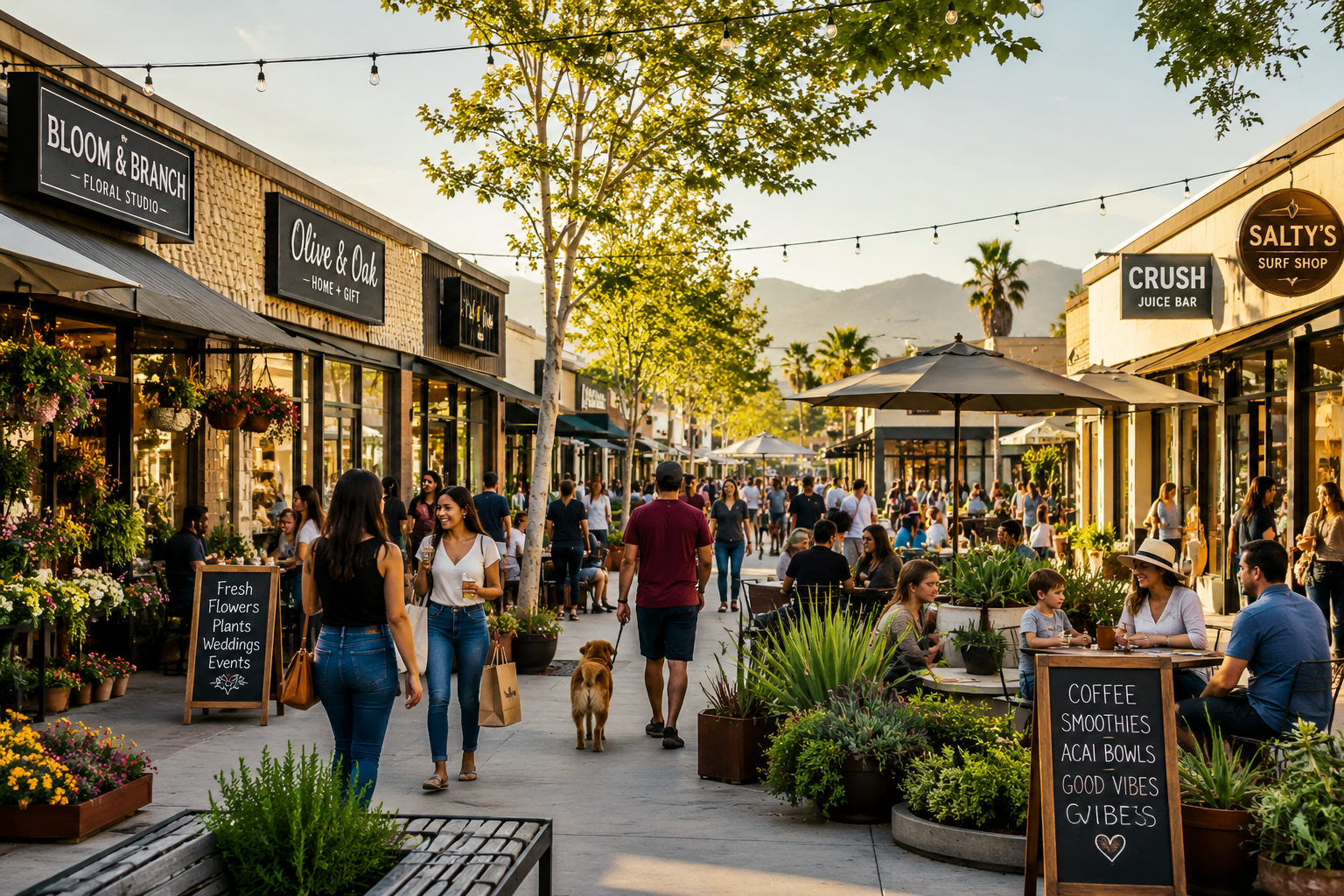
How Retail Centers Can Thrive Without National Tenants
How Retail Centers Can Thrive Without National Tenants
For decades, many shopping center owners believed that success depended on landing a major national retailer. Big-box anchors, national restaurant chains, and recognizable corporate brands were often viewed as the foundation of stable commercial real estate performance. However, retail patterns are changing across California and especially throughout Riverside County. Today, many successful retail centers are proving that a property can generate strong traffic, tenant stability, and long-term value without relying on national tenants at all.
Across the Inland Empire, consumers increasingly prioritize convenience, experience, authenticity, and community connection over brand familiarity alone. That shift has created new opportunities for landlords, developers, and investors who understand how to build retail environments that reflect local demand. In many cases, smaller independent tenants can outperform large chains in customer loyalty, flexibility, and neighborhood engagement.
This trend is especially important in areas like Riverside, where local entrepreneurship continues to grow alongside population expansion and infrastructure investment. Retail property owners who adapt to these changing dynamics may find themselves in a stronger position than landlords who continue chasing only traditional anchor tenants. The modern commercial real estate market rewards adaptability, thoughtful tenant mix strategies, and properties that create repeat consumer engagement.
Why National Tenants Are No Longer the Only Path to Stability
National retailers still play an important role in many shopping centers, but they are no longer the automatic solution for long-term retail success. In recent years, major chains have reduced physical footprints, closed underperforming stores, and shifted resources toward e-commerce fulfillment. Modern consumers increasingly blend online shopping with localized in-person experiences, changing the role that retail centers play within communities.
That shift has opened the door for independent operators and regional businesses to thrive in spaces that were once dominated by national brands. Smaller tenants often understand neighborhood demographics better than corporate chains because they are deeply connected to the surrounding community. A locally owned coffee shop, boutique fitness studio, specialty grocer, or family-operated restaurant may generate stronger repeat traffic than a national tenant with little local identity.
Another major factor is flexibility. National retailers often require lengthy negotiations, extensive tenant improvement packages, strict site requirements, and long approval timelines. Local tenants can frequently move faster and adapt more easily to changing market conditions. For landlords, this flexibility may reduce downtime and create opportunities to diversify risk across multiple tenant categories rather than relying heavily on one large anchor.
In Riverside County, where neighborhoods continue evolving rapidly, smaller businesses are helping shape retail corridors with distinct personality and community appeal. Retail centers that embrace this shift can position themselves as destination-oriented properties rather than simply transactional shopping locations.
The Power of Community-Oriented Tenant Mixes
One of the most effective ways retail centers succeed without national tenants is through strategic tenant curation. A successful center is rarely built around random occupancy. Instead, thriving properties intentionally combine complementary businesses that encourage repeat visits and longer dwell times.
For example, a neighborhood retail center in Riverside might combine a locally owned fitness studio, an independent coffee shop near Downtown Riverside, a family-run salon, a boutique clothing retailer, an after-school tutoring center, and a specialty taco or dessert concept that draws evening crowds. Each business serves a different purpose while contributing to consistent customer traffic throughout the day. Parents dropping children off for tutoring may stop for coffee, gym members may grab lunch nearby after a workout, and evening restaurant visitors often create additional exposure for neighboring shops. This type of locally connected tenant mix creates a self-reinforcing ecosystem that benefits every business in the center while helping the property feel more integrated into the Riverside community.
Retail property owners who focus on experience-driven businesses often see stronger resilience during economic shifts because experiential tenants are less vulnerable to direct online competition. Restaurants, wellness concepts, medical services, beauty businesses, entertainment venues, and specialty retailers all provide services that consumers still prefer to access in person.
The Inland Empire continues seeing growth in mixed-use and community-centered developments. Many consumers want shopping environments that feel approachable and locally connected rather than overly corporate.
Well-designed tenant mixes also improve overall property identity. Instead of depending on one anchor tenant for visibility, the center itself becomes the attraction. This branding strategy can create stronger long-term asset value and improve retention among tenants who benefit from the surrounding synergy.
Creating Foot Traffic Without a Big-Box Anchor
One of the biggest concerns property owners have is whether a retail center can maintain foot traffic without a national anchor. The answer is yes, but it requires intentional planning and operational consistency.
Modern foot traffic is generated differently than it was twenty years ago. Consumers now prioritize convenience, walkability, unique experiences, and social interaction. Centers that succeed today often emphasize outdoor gathering areas, attractive storefront design, visibility, accessibility, and experiential retail offerings rather than relying solely on a department store anchor.
Retail centers can increase visitation through community events, seasonal programming, farmers markets, fitness pop-ups, live entertainment, and partnerships with local organizations. These activities create emotional engagement with the property itself. Consumers are more likely to revisit spaces that feel active and connected to the surrounding community.
The rise of hybrid work has also reshaped consumer movement patterns. More people now spend time near residential neighborhoods during traditional work hours. According to The Urban Land Institute, neighborhood-serving retail and mixed-use developments continue gaining importance as work and lifestyle patterns evolve.
This trend benefits smaller retail centers throughout Riverside County. Areas that once depended heavily on commuter traffic may now support stronger daytime business activity because residents spend more time locally. Retail property owners who understand these behavioral changes can reposition centers to capture consistent neighborhood traffic.
Local Businesses Often Build Stronger Customer Loyalty
Independent businesses frequently create deeper customer relationships than national chains because they rely heavily on reputation and repeat local support. Consumers often appreciate personalized service, unique offerings, and authentic business stories that corporate retailers struggle to replicate consistently.
In Riverside, many residents value businesses that feel connected to the local community. The city has a distinctive balance of growth and familiarity. While the Inland Empire continues expanding rapidly, Riverside still maintains many neighborhood-oriented characteristics that encourage community engagement. That creates opportunities for retail centers focused on local identity and service-oriented tenants.
Smaller operators are also often more engaged in grassroots marketing efforts. They actively promote events, collaborate with neighboring businesses, and participate in local community initiatives. These activities indirectly benefit the entire shopping center by increasing visibility and customer engagement.
Additionally, many local tenants are willing to adapt quickly to customer preferences. Independent operators can modify menus, store layouts, inventory, and service models much faster than corporate chains that require approval through multiple layers of management. That adaptability helps retail centers remain relevant as consumer behavior changes.
Leasing Strategies That Support Long-Term Success
Retail centers without national tenants require leasing strategies focused on balance, flexibility, and sustainability. Landlords should avoid overconcentrating any single business category while maintaining enough complementary uses to support consistent traffic patterns.
One important consideration is lease structure. Different tenant categories may require different approaches depending on business maturity, buildout costs, and operational stability. Understanding commercial real estate lease agreement structures, including triple net lease arrangements and flexible occupancy strategies, can help landlords create more resilient tenant rosters.
Property owners should also carefully evaluate tenant quality beyond financial statements alone. Operational experience, community involvement, branding strength, customer reviews, and long-term business vision can all influence tenant success. A smaller operator with strong local support may outperform a larger tenant with declining sales trends.
Another key strategy involves maintaining flexibility in unit sizes. Demand for small commercial space, boutique retail suites, and adaptable storefront layouts continues growing across many California markets. Smaller spaces may allow landlords to attract more diverse tenants while reducing exposure to large vacancies.
Retail landlords should also invest in property presentation and maintenance. Clean landscaping, visible signage, updated facades, lighting improvements, and functional parking areas all influence leasing performance. Even without national tenants, a professionally maintained center can attract strong operators and encourage customer confidence.
Why Riverside County Is Positioned Well for Independent Retail Growth
Riverside County offers a particularly favorable environment for retail centers built around regional and local tenants. Population growth, housing development, infrastructure investment, and continued economic diversification are helping support new consumer demand throughout the Inland Empire.
According to data from the California Department of Finance, Inland Empire communities continue experiencing significant population growth compared to many other California regions. More residents create more demand for neighborhood-serving retail, dining, healthcare, wellness, and service-oriented businesses.
Riverside itself has become increasingly attractive because it offers many advantages of a larger metropolitan area while maintaining a more approachable and community-oriented atmosphere. Residents often appreciate that they can still support local businesses while benefiting from ongoing development and modernization. That balance creates strong potential for community-focused retail environments.
The city’s ongoing infrastructure improvements and revitalization projects continue strengthening commercial corridors throughout the region. Retail centers positioned near residential growth zones, educational institutions, healthcare hubs, and mixed-use developments may benefit significantly from these long-term trends.
Additionally, many entrepreneurs are looking beyond coastal California markets due to cost pressures and operational challenges. Riverside County provides opportunities for businesses seeking accessible commercial space, growing consumer bases, and relatively favorable operating conditions compared to more saturated urban markets.
Frequently Asked Questions
Retail property owners, investors, and tenants often have questions about operating shopping centers without national anchor tenants. As retail behavior continues evolving, understanding these trends can help commercial property stakeholders make more informed decisions.
What types of local businesses perform best in retail centers?
Businesses that provide recurring services or experiential offerings often perform well. Examples include fitness studios, salons, coffee shops, restaurants, childcare providers, medical offices, pet services, tutoring centers, and specialty food concepts. These tenants encourage repeat visits and community engagement.
Are local tenants riskier than national retailers?
Not necessarily. While national retailers may appear financially stronger, many corporate chains are reducing store counts or restructuring operations. Strong local operators with loyal customer bases and adaptable business models may provide long-term stability when properly vetted.
How can landlords attract better local tenants?
Property presentation, flexible lease structures, visibility, parking access, and strong property management all influence tenant attraction. Retail landlords who actively market their properties, maintain attractive centers, and understand local business needs are often better positioned to secure quality tenants.
How Stance CRE Can Help You
At Stance CRE, we understand that retail success in Riverside County no longer depends entirely on national tenants. The Inland Empire continues evolving into one of California’s most dynamic business regions, and property owners who adapt to these changing retail patterns may uncover significant long-term opportunities. Our team helps clients evaluate how tenant mix, location strategy, lease structures, and market positioning align with broader investment and operational goals.
Because we are local to the region, we understand the neighborhoods, traffic patterns, growth corridors, and consumer behaviors shaping the Riverside commercial real estate landscape. We have worked with business owners, investors, landlords, and tenants across nearly every commercial property category throughout the city of Riverside and surrounding Inland Empire communities. When people ask what product type we specialize in, we often answer simply: Riverside.
Joe and Heidi Stance launched Stance Commercial Real Estate in 2018 with a vision to improve the commercial real estate experience for Inland Empire clients. Today, we continue helping business owners, investors, and tenants identify the right opportunities throughout Riverside County. If you are exploring retail leasing, investment, or redevelopment opportunities, contact Stance CRE at 909-772-1212 to discuss how we can help you position your property for long-term success.
