

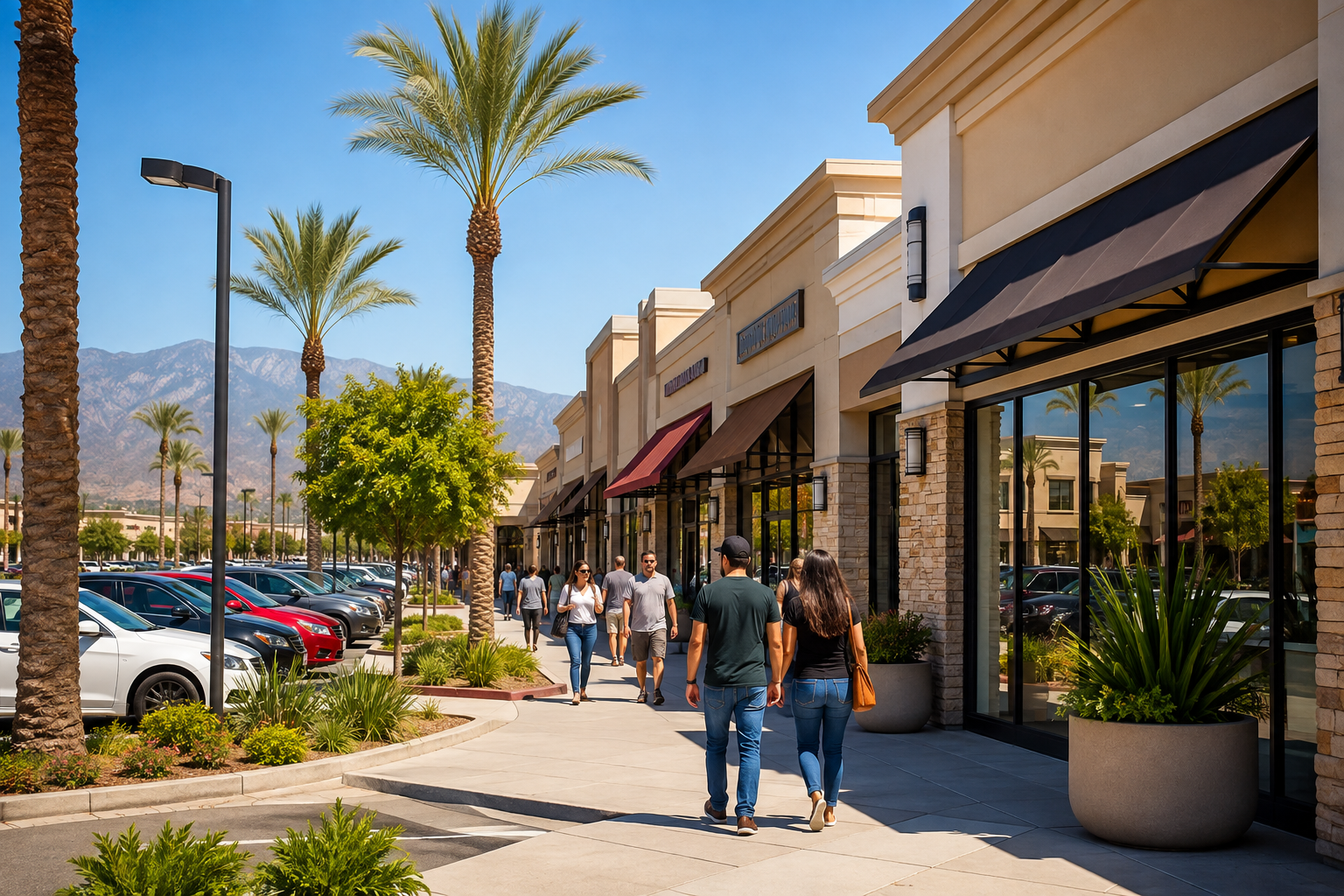
What Makes a Retail Location Successful?
Finding a storefront is relatively easy. Finding a retail location that gives a business the right conditions to attract customers, operate efficiently, build awareness, and remain profitable over time requires much more thought.
A successful retail location is rarely defined by one factor. High traffic counts can be valuable, but traffic means little if the people passing the property are not part of the retailer's target market. An attractive shopping center may create a strong first impression, but poor access can discourage repeat visits. Even an affordable retail space for lease can become expensive when weak visibility, inadequate parking, or an unsuitable tenant mix limits sales.
The Right Customers Matter More Than the Largest Crowd
One of the first questions businesses ask about a potential retail location is how much traffic passes the property. Vehicle counts and pedestrian activity deserve attention, but raw numbers do not tell the entire story. The more important question is whether those people are likely customers.
A specialty boutique, quick-service restaurant, medical retailer, neighborhood market, and furniture showroom can have completely different ideal trade areas. Before committing to a commercial space, businesses should examine population characteristics, household income, daytime employment, nearby residential development, customer age ranges, spending habits, and other factors relevant to their particular concept.
This is especially important in Riverside County because one neighborhood can behave differently from another only a few miles away. Riverside itself illustrates the size of the opportunity.
Those numbers are impressive, but successful retail real estate decisions go deeper. A business needs to understand the smaller trade area surrounding an individual property. The best location is where the characteristics of the surrounding customers closely match the people most likely to buy the product or service.
Visibility Helps Turn Traffic Into Customers
A retailer cannot benefit from passing traffic if potential customers never notice the business. Visibility remains one of the most practical advantages a retail property can provide.
Businesses evaluating retail space for rent in Riverside, CA should consider sightlines from major streets, building orientation, monument signage, storefront exposure, landscaping, neighboring structures, and the speed at which vehicles pass the property. A storefront visible for several seconds while drivers approach an intersection can have significantly greater practical exposure than a building hidden behind another structure.
Signage is equally important. Retailers should investigate what signage is permitted before signing a lease rather than assuming that a preferred sign can be installed later. Building signs, monument signs, window graphics, and directional signs can all influence how easily customers recognize and locate a business.
Visibility is particularly valuable in a city like Riverside, where major commercial corridors coexist with established neighborhoods and smaller community-oriented shopping districts. Riverside is a substantial Southern California city, yet many parts of it still have the familiar feeling of a smaller community. Customers develop routines around favorite shopping centers, restaurants, coffee shops, service businesses, and neighborhood corridors. Becoming visible within those routines can be enormously valuable.
Easy Access Can Be Just as Important as Exposure
A highly visible retail property can still struggle when getting into it is frustrating. Customers generally want convenience, particularly when they are making frequent or relatively small purchases.
When comparing Riverside retail spaces, business owners should physically drive the surrounding streets rather than evaluating access exclusively from a map. Can customers turn into the property from both directions? Is there a traffic signal nearby? Does a center have multiple entrances? Is the driveway obvious? Are customers forced to make a U-turn? Does congestion make entering or leaving difficult during peak periods?
Parking deserves the same scrutiny. The total number of spaces does not necessarily reveal how well parking functions. A retailer should consider where those spaces are located, how heavily neighboring tenants use them, whether employees occupy prime customer spaces, and what the parking lot looks like during the busiest periods of the day.
Accessibility should also reflect the habits of the target customer. Some concepts depend heavily on automobiles, while others benefit from pedestrian connections, public transportation, nearby offices, residential density, or a combination of several transportation patterns. The correct accessibility profile depends on how customers actually reach the business.
Neighboring Tenants Can Strengthen a Retail Location
A retailer does not operate in isolation. In a multi-tenant center, surrounding businesses can significantly influence customer traffic and the overall perception of a location.
Businesses should look beyond whether neighboring tenants appear successful. They should consider whether those tenants attract compatible customers. Two businesses do not need to sell related products to benefit each other. They simply need overlapping customer profiles or shopping patterns.
The strongest retail centers often contain complementary businesses that give customers several reasons to visit. Fitness concepts may bring customers early in the morning and after work. Medical and service businesses can create daytime traffic. A grocery store might generate frequent trips that benefit a nearby restaurant, salon, fitness studio, service provider, or specialty retailer. Restaurants can extend activity into evenings.
Competition also requires context. A competing business nearby is not automatically negative. In some categories, clustering creates a recognized destination that attracts more customers to the area. In others, a nearby competitor may divide a limited customer base. Effective commercial real estate site selection considers both complementary businesses and direct competitors before determining whether the surrounding environment supports the concept.
The Economics of the Space Must Support the Business
A beautiful storefront in a popular center is not automatically a successful retail location if occupancy expenses place too much pressure on the business.
Businesses evaluating retail space need to understand the complete cost of occupancy. Base rent is only the starting point. Depending on the lease structure, additional expenses can include common area maintenance charges, property taxes, insurance, utilities, maintenance responsibilities, signage, improvements, and other operating costs.
The lowest rent does not automatically represent the best deal, either. A more expensive location can sometimes justify its cost through stronger customer traffic, superior visibility, convenient parking, better neighboring tenants, or a more valuable trade area. Conversely, paying premium rent for advantages that do not matter to the business can weaken profitability.
This is where site selection and financial planning intersect. Businesses should evaluate projected sales against total occupancy expenses and consider how those costs could change throughout the lease term. A retail property should support the operating model rather than forcing the operating model to support the property.
Riverside Offers Distinct Retail Trade Areas
Riverside is particularly interesting for retailers because it combines the scale of a regional economic center with neighborhoods that retain distinct personalities. Downtown, established residential neighborhoods, freeway-oriented commercial areas, university-influenced districts, and suburban retail corridors can serve noticeably different customer bases.
The City of Riverside Economic Development data dashboard estimates a population of roughly 2.7 million people within a 20-mile radius of the city and a Riverside trade-area population exceeding 1.86 million. The city also reports a 2024 average household income of approximately $113,485. These figures help illustrate why commercial real estate in Riverside, CA continues to attract retailers, investors, and businesses.
Yet Riverside's appeal is not limited to statistics. There is an approachable quality to doing business here. A customer can shop at a major retail center and, a short drive later, stop at a locally owned restaurant where familiar faces are part of the experience. Historic neighborhoods, tree-lined streets, established shopping districts, universities, healthcare facilities, and newer development all contribute to a city that is large enough to generate substantial commercial activity without completely losing its hometown character.
For retailers, that makes local knowledge particularly important. Two properties that appear comparable on paper may serve very different customer patterns because of neighborhood identity, traffic flow, nearby employers, schools, residential areas, or established shopping habits.
A Successful Site Must Work Five or Ten Years From Now
Retailers should not select a property solely according to present conditions. Most commercial leases create a multi-year commitment, so businesses need to consider what could happen around a property during that period.
Planned residential development can expand a customer base. New employers can increase daytime population. Infrastructure improvements can make an area easier to reach. Conversely, road construction, changing traffic patterns, major tenant vacancies, or new competitive projects can alter the attractiveness of a location.
Modern retailers have access to increasingly sophisticated data for evaluating these possibilities. Retailers can now analyze demographic information, foot traffic, consumer spending, competitive intelligence, and predictive information when evaluating expansion opportunities.
Data is valuable, but it works best when paired with firsthand market knowledge. Walking a property, driving surrounding streets at different times, observing customer behavior, studying neighboring tenants, and understanding upcoming local developments can reveal information that spreadsheets alone may overlook.
The Physical Space Has to Fit the Retail Concept
Location is not only about where the building sits. The building itself must support the business.
A retailer searching for commercial space should evaluate square footage, storefront width, ceiling height, storage, loading access, utility capacity, HVAC, plumbing, restrooms, accessibility requirements, floor plan efficiency, and opportunities for signage. Restaurants may require grease interceptors, venting, specialized electrical service, or patio opportunities. Service businesses may prioritize private rooms. Traditional retailers may need open merchandising areas and strong storefront exposure.
The condition of the premises also affects startup costs. A second-generation retail or restaurant space may contain improvements that reduce the cost and time required to open, although existing improvements should always be evaluated carefully rather than assumed to be usable.
Businesses should also think about growth. A space that barely accommodates current operations may become restrictive sooner than expected. On the other hand, paying for substantially more square footage than the business can productively use can create unnecessary overhead. The objective is to find commercial space that balances current needs with realistic future plans.
Frequently Asked Questions About Successful Retail Locations
Choosing a retail property involves much more than finding an available storefront. These questions address several of the factors businesses commonly encounter during a commercial property search.
What is the most important factor in a successful retail location?
There is no single factor that works for every retailer. Customer demographics, access, visibility, traffic, occupancy costs, competition, and neighboring tenants should be evaluated together. The strongest location is generally the one that best aligns the property with the retailer's specific customer and operating model.
Is a high-traffic location always better?
No. High traffic is useful only when it represents potential customers and those customers can conveniently access the business. A location with lower overall traffic but a much stronger target demographic may produce better results. Retailers should consider traffic quality as well as quantity.
How important is parking when choosing retail space?
Parking can be extremely important, particularly for businesses that depend on convenience or frequent customer turnover. Businesses should examine not only parking ratios but also parking location, shared demand, peak usage, ease of circulation, and accessibility from the storefront.
Should I choose a cheaper location to keep overhead low?
Lower occupancy costs can be beneficial, but rent should never be considered without examining what the location provides in return. A less expensive property that reduces visibility or customer access may cost the business more in lost revenue than it saves in rent. The objective should be sustainable occupancy costs in a location capable of supporting the business.
How Stance CRE Can Help You
Selecting a retail location requires an understanding of both commercial real estate and the community surrounding it. At Stance CRE, we bring those perspectives together. Our team consists not only of experienced commercial real estate brokers but also Inland Empire locals who understand how Riverside County's neighborhoods, commercial corridors, businesses, and development patterns fit together.
Joe and Heidi Stance founded the company in 2018 with a vision of changing the commercial real estate industry for the better. Since then, we have sold or leased nearly every type of commercial real estate product around Riverside. When asked what type of CRE we specialize in, our answer is Riverside. We consider ourselves generalists because our experience extends across retail, office, industrial, investment, and specialized commercial properties throughout the area.
That local perspective is especially useful during retail site selection. Riverside is more than traffic counts and demographic reports. It is a collection of established neighborhoods, busy commercial corridors, locally loved businesses, regional destinations, and growing areas, all connected within a city that manages to feel surprisingly close-knit for its size. We help clients look beyond an available storefront and consider the customers, access, visibility, surrounding businesses, property characteristics, lease economics, and long-term potential that can influence whether a location truly supports their goals.
Whether you are searching for retail space in Riverside CA, evaluating commercial space for rent, expanding an existing operation, or looking for a niche property somewhere in the Inland Empire, Stance CRE can help you approach the search with local knowledge and practical commercial real estate experience. To discuss your business, property requirements, and the type of location that could position you for long-term success, call 909-772-1212.

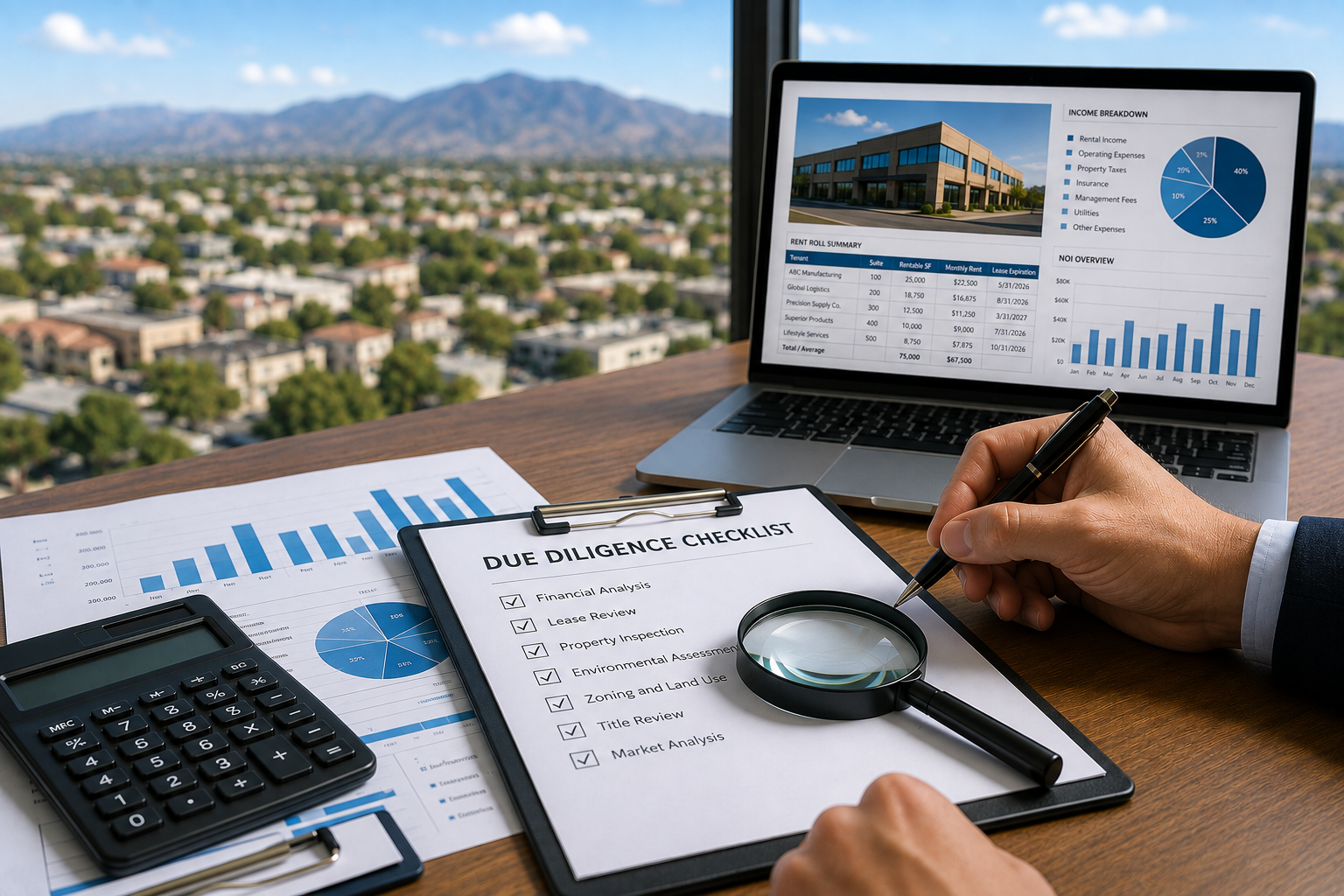
The Role of Due Diligence in Commercial Real Estate Investing
Commercial real estate can create significant opportunities for long-term income, appreciation, business expansion, and portfolio growth. However, the value of an investment is determined by much more than its asking price, square footage, or appearance. Before an investor commits capital to a property, there is an essential period when the assumptions behind the investment need to be tested. That process is commercial real estate due diligence.
For investors considering commercial property investment in Riverside, CA and throughout the Inland Empire, due diligence can reveal the difference between a property that merely looks attractive and one that actually supports a sound investment strategy. A well-located retail center may have deferred maintenance. A warehouse with strong occupancy may have leases that are nearing expiration. An office building may appear affordable but require substantial capital improvements. Even a property producing reliable income today may face zoning, environmental, title, or tenant-related issues that affect its future performance.
This is why experienced investors treat commercial property acquisition as an investigation rather than simply a purchase. Due diligence provides the opportunity to verify information, identify risks, refine financial projections, and decide whether the property still makes sense once the details are known.
In Riverside, that process is especially valuable. The city combines the commercial activity of a major Inland Empire market with a remarkably close-knit character. Historic neighborhoods, familiar local businesses, established shopping corridors, industrial districts, and newer development areas exist within the same market. People who do business here often know one another, and commercial properties can have histories stretching back decades. Understanding both the numbers and the local context is an important part of making an informed investment.
What Is Due Diligence in Commercial Real Estate?
Commercial real estate due diligence is the process of investigating a property before completing a transaction. The objective is to confirm that the information used to evaluate the investment is accurate and to uncover conditions that could influence the property's value, usability, operating expenses, financing, or future marketability.
Due diligence typically begins once a buyer has a property under contract and continues during a negotiated investigation period. Depending on the asset, investors may review financial statements, leases, title documents, zoning, building systems, environmental conditions, property taxes, insurance, service contracts, permits, and other records. Specialists such as attorneys, accountants, inspectors, engineers, environmental professionals, lenders, and commercial real estate brokers may contribute expertise during the process.
The scope should also reflect the property itself. Due diligence for a small owner-user office building will not necessarily resemble the investigation of a large distribution facility or multi-tenant shopping center. Industrial properties may require close attention to loading, power, clear height, yard space, environmental history, and transportation access. Retail investments require detailed analysis of tenants, lease structures, parking, visibility, surrounding demographics, and competing centers.
Effective due diligence is therefore not simply a checklist. It is an effort to understand how all aspects of a property work together and whether the resulting investment aligns with the buyer's objectives.
Financial Due Diligence: Confirming What the Property Actually Earns
Financial analysis is one of the most important components of commercial real estate investment. Investors should not rely exclusively on marketing materials or projected income. Instead, they should work to verify historical operating performance and determine whether the assumptions used to justify the purchase price are realistic.
That investigation may include reviewing rent rolls, profit-and-loss statements, tenant payment histories, operating expenses, utility bills, property taxes, insurance costs, maintenance expenses, management fees, and capital expenditures. Comparing several years of information can help reveal whether income and expenses are stable or whether a single strong year is creating an overly optimistic picture.
Investors should also distinguish between current income and sustainable income. A property may be fully leased at closing, but several major tenants could have leases expiring within two years. Another property may have below-market rents that create future upside, but reaching those higher rents might require tenant improvements, leasing commissions, renovations, or a period of vacancy.
This is where commercial real estate portfolio analysis and property-level underwriting become especially important. Investors need to consider net operating income, capitalization rates, debt obligations, reserves, anticipated improvements, and realistic vacancy assumptions together. The goal is not simply to confirm what the property earned last year. The goal is to determine what the asset can reasonably be expected to produce under future ownership.
Lease and Tenant Due Diligence Can Change the Investment Picture
For income-producing properties, leases are among the most valuable documents in the transaction. A building may appear financially strong because it has recognizable tenants and high occupancy, but the details contained within the leases determine how secure that income really is.
Investors should review lease expiration dates, renewal options, rent increases, expense reimbursements, security deposits, exclusivity provisions, tenant improvement obligations, termination rights, assignment provisions, and other terms that could affect future cash flow. Estoppel certificates may also help verify key lease information directly with tenants.
Tenant concentration deserves particular attention. If one tenant generates a substantial percentage of a property's revenue, the investment may carry more risk than the occupancy rate initially suggests. Investors should consider what would happen if that tenant left, downsized, or renegotiated its lease.
In a Riverside neighborhood retail center, for example, a combination of restaurants, service businesses, professional offices, fitness concepts, and locally owned shops may create diversified traffic and income. Riverside has the scale and economic activity of a substantial Southern California city, yet many of its commercial districts retain the familiarity of a smaller community where established businesses develop loyal followings. Understanding which tenants are genuinely rooted in their location can add useful context to the numbers shown on a rent roll.
Physical Inspections Reveal the Costs Behind the Purchase Price
A property can look impressive during a tour and still contain expensive problems. Roofs, HVAC systems, plumbing, electrical service, paving, drainage, elevators, fire protection equipment, loading areas, and structural components all have useful lives. Investors need to understand their current condition and how soon major repairs or replacements may be required.
A professional property condition assessment or inspection can help identify immediate deficiencies and future capital needs. This information can then be incorporated into the investment model. If a warehouse roof is approaching the end of its useful life, for example, the projected return should account for that expense rather than treating it as an unexpected problem several years after acquisition.
The same principle applies to commercial property valuation. Two seemingly comparable buildings may command very different values when one has recently completed major capital improvements and the other requires substantial deferred maintenance.
Investors should look beyond whether a building is functional today. The more useful question is what it will cost to keep the property competitive and operational throughout the planned holding period. That distinction can significantly influence whether a seemingly attractive acquisition actually supports the investor's financial objectives.
Environmental Due Diligence Deserves Serious Attention
Environmental issues are another important consideration when buying commercial real estate. Certain properties may carry a greater risk because of how the site was used in the past. Industrial buildings, automotive properties, former manufacturing sites, dry cleaners, gas stations, and older commercial properties may have a history that raises questions about soil, groundwater, or other forms of contamination.
A Phase I Environmental Site Assessment is often used to investigate a property's current and previous uses and look for signs of potential environmental concerns. Environmental conditions and potential contamination concerns can be evaluated before a property is purchased. If the initial assessment identifies something that needs a closer look, additional testing may be recommended.
This step is important because environmental problems can become expensive after an investor takes ownership. Cleanup costs, construction restrictions, financing complications, and delays in redevelopment can all affect the profitability of an investment. For buyers considering commercial properties in California, identifying these concerns before closing provides an opportunity to understand the potential costs and decide whether the property still makes sense.
Environmental due diligence is ultimately about avoiding unwanted surprises. Investors do not need to become environmental experts themselves, but they should make sure qualified professionals investigate potential concerns when appropriate. A property with an environmental issue may still be a viable investment, but buyers are in a much stronger position when they understand that issue before completing the purchase.
Zoning and Land Use Determine What an Investor Can Actually Do
An investor should never assume that a property's existing appearance determines all of its permitted uses. Zoning, specific plans, overlays, conditional use permits, parking requirements, development standards, and other regulations can affect both current operations and future redevelopment.
This is particularly important for investors pursuing a value-add strategy. A buyer may envision converting a building to another commercial use, expanding the structure, increasing density, adding outdoor operations, changing signage, or redeveloping a portion of the site. Those plans should be investigated before the acquisition rather than after the property changes hands.
The City of Riverside Planning Division's zoning information includes regulations for commercial, mixed-use, industrial, and other zones, along with permitted-use information and development standards. The city also cautions that its interactive mapping information is for reference and that current zoning and land-use information should be confirmed with the Planning Division.
That is particularly relevant in Riverside because the city's commercial landscape is diverse. Downtown properties, neighborhood commercial centers, industrial areas, office districts, and mixed-use corridors may operate under different regulations. Riverside's blend of historic character and ongoing growth is part of what makes the market appealing, but it also makes property-specific investigation essential.
Title, Survey, Access, and Property Rights Matter
Due diligence should establish not only what a buyer is purchasing but also which rights and limitations accompany the property. A title review may reveal easements, liens, restrictions, covenants, or other recorded matters that influence ownership or future use.
A survey can provide additional clarity regarding property boundaries, encroachments, access points, improvements, easements, and other physical conditions. For some commercial properties, these issues have immediate operational implications. An easement running through a potential expansion area, for example, could complicate future development.
Access is particularly important for industrial property for sale in Riverside and other logistics-oriented investments. Truck circulation, driveway locations, shared access agreements, loading areas, and surrounding roadway conditions may influence how effectively a property can serve tenants. For retail assets, ingress and egress can have a direct effect on customer convenience and tenant desirability.
These details may seem secondary when an investor is initially focused on price and income, but they can become extremely important when it is time to lease, expand, refinance, redevelop, or sell the property.
Market Due Diligence Goes Beyond the Property Line
Even a thoroughly inspected building can be a weak investment if market assumptions are unrealistic. Investors should evaluate the surrounding market as carefully as the property itself.
That may include studying vacancy, comparable rents, recent sales, tenant demand, planned developments, traffic patterns, employment centers, population trends, competing properties, and nearby infrastructure. Investors should also consider the property's position within its specific submarket rather than relying solely on broad regional statistics.
Riverside provides an excellent example. One of the pleasures of the city is how quickly its character can change from one commercial pocket to another. A morning drive might pass established industrial areas, neighborhood shopping centers, tree-lined streets, local restaurants where regular customers are greeted by name, university-related businesses, and Downtown Riverside's historic architecture. These areas all belong to the same city, but they do not necessarily behave as one uniform commercial real estate market.
Due Diligence Should Test the Investment Strategy
One of the most useful ways to approach due diligence is to continually compare new information against the original investment thesis. Every significant finding should lead to a simple question: Does this information change why the property makes sense?
Consider an investor pursuing commercial property investment strategies centered on increasing rents. If lease review reveals that existing tenants have long-term renewal options at predetermined rates, the planned upside may be delayed. If an investor intends to redevelop excess land but zoning review identifies limitations, the anticipated value creation may not materialize as expected.
Similarly, a buyer pursuing passive income may discover that the property requires extensive near-term management, tenant improvements, leasing activity, or capital repairs. The property itself may still be a worthwhile investment, but it may no longer fit the investor's intended strategy.
Good due diligence does not require a property to be perfect. Commercial assets rarely are. Instead, it helps investors understand imperfections well enough to determine whether the price and terms appropriately compensate them for the risks involved.
What Happens When Due Diligence Uncovers a Problem?
Finding a problem during due diligence does not automatically mean a transaction should be abandoned. In many cases, discovering an issue is precisely what the due diligence period is designed to accomplish.
Depending on the purchase agreement, nature of the problem, and professional advice involved, a buyer may decide to seek additional information, revise financial projections, request repairs, renegotiate terms, adjust the purchase price, obtain credits, require specific closing conditions, or decide that the investment no longer fits the original objectives.
Suppose an inspection identifies a significant future roof replacement. The investor can estimate that cost and incorporate it into the acquisition analysis. If an environmental report identifies a concern, additional investigation can clarify its extent. If a tenant lease contains unexpected obligations, the investor can calculate how those obligations affect future cash flow.
The important point is that risk discovered before closing can be evaluated. Risk discovered after closing belongs to the new owner.
Building a Strong Commercial Real Estate Due Diligence Team
Commercial due diligence is multidisciplinary. A broker may understand local market conditions and transaction dynamics, but environmental professionals, attorneys, inspectors, engineers, accountants, insurance professionals, lenders, title professionals, and other specialists each bring expertise to specific parts of the investigation.
Investors should assemble the appropriate team early enough to complete meaningful analysis within contractual deadlines. Waiting until the final days of the due diligence period can create unnecessary pressure and leave insufficient time to investigate findings.
A knowledgeable commercial real estate consultant or brokerage professional can also help investors recognize which questions deserve attention based on the property type and local market. Someone familiar with Riverside commercial real estate may know that a seemingly routine issue deserves closer examination because of the property's location, history, tenant profile, or intended use.
That local perspective becomes especially useful in a city such as Riverside, where commercial real estate includes everything from neighborhood storefronts and medical facilities to office properties, distribution buildings, manufacturing sites, and specialized commercial spaces. Investors need professionals who understand both the asset class and the community surrounding it.
Frequently Asked Questions About Commercial Real Estate Due Diligence
Due diligence varies from transaction to transaction, which means investors frequently have questions about timing, responsibilities, costs, and the significance of different findings. The following answers provide a general starting point for understanding the process, although buyers should work with the appropriate legal, financial, environmental, and technical professionals for property-specific guidance.
How long does commercial real estate due diligence take?
The due diligence period is generally established in the purchase agreement, and its length can vary based on the complexity of the property and transaction. A straightforward small commercial building may require less investigation than a large industrial facility, multi-tenant retail center, redevelopment site, or property with potential environmental concerns.
Investors should consider how much time will realistically be required for inspections, financial review, lease analysis, environmental assessments, title work, financing, zoning verification, and follow-up investigation. The goal should be sufficient time for meaningful analysis rather than simply completing a checklist before a deadline.
What documents should an investor review before purchasing commercial property?
Documents vary by asset, but investors commonly review leases, rent rolls, historical operating statements, tax records, utility expenses, insurance information, service contracts, title materials, surveys, permits, environmental reports, repair records, warranties, and information regarding recent capital improvements.
The investor should also compare these records against the underwriting assumptions used to determine the property's value. If the offering assumes particular rents, operating expenses, or future improvements, due diligence should verify whether those assumptions have adequate support.
Is a Phase I Environmental Site Assessment always necessary?
The appropriate environmental investigation depends on the property, transaction, lender requirements, and professional advice. However, environmental due diligence is an important consideration in commercial property acquisitions. EPA explains that All Appropriate Inquiries is the process used to evaluate environmental conditions and potential contamination liability, and certain parties seeking specific federal liability protections must complete qualifying inquiries before acquisition. (US EPA)
Properties with industrial, automotive, fuel-related, manufacturing, dry-cleaning, or other potentially sensitive historical uses may warrant particularly careful environmental review. Investors should consult qualified environmental and legal professionals regarding the appropriate scope.
Can due diligence affect the purchase price?
Potentially, yes. Significant findings can change an investor's assessment of value because they may alter expected income, expenses, capital requirements, risk, or future use. A major deferred-maintenance item, unexpected lease obligation, zoning limitation, environmental concern, or discrepancy in operating expenses can materially change projected returns.
Whether a buyer can renegotiate the transaction depends on the purchase agreement and circumstances involved. This is another reason investors should identify issues as early as possible and work with qualified professionals throughout the acquisition.
How Stance CRE Can Help You
Successful commercial real estate investing requires the willingness to take calculated risks, but calculated is the important word. At Stance CRE, we help investors, business owners, and tenants understand the Riverside and Inland Empire commercial market so that major real estate decisions are supported by local knowledge, thoughtful analysis, and a clear understanding of the property being considered.
Our roots in Riverside give us a perspective that cannot be captured completely by spreadsheets or national property databases. Riverside is a substantial economic center, but it still has the welcoming rhythm of a community where relationships matter. Established local businesses sit alongside major healthcare facilities, distribution centers, retail destinations, offices, and industrial properties. We live here, work here, and stay closely connected to the commercial activity shaping the region.
Joe and Heidi Stance launched Stance Commercial Real Estate in 2018 with a vision to change the commercial real estate industry for the better. Since then, our team has sold or leased nearly every type of commercial real estate product around Riverside. Rather than limiting ourselves to one asset category, we often describe our specialty simply as Riverside. That broad experience allows us to assist clients searching for retail space, offices, industrial buildings, investment properties, niche facilities, and other opportunities throughout the Inland Empire.
If you are evaluating a commercial property acquisition, expanding an existing portfolio, or searching for an investment opportunity in Riverside County, having knowledgeable local representation can help you ask better questions before you commit. Call 909-772-1212 to discuss your goals and learn how we can help you navigate the Riverside commercial real estate market with greater clarity and confidence.

Why Cash Flow Matters More Than Purchase Price
Why Cash Flow Matters More Than Purchase Price
When investors evaluate a commercial property, the purchase price often receives the most attention. It is easy to understand why. A lower acquisition cost feels like a better deal, while a higher price tag may seem difficult to justify. However, experienced commercial real estate investors know that the true measure of an investment is not what it costs on closing day. It is what that property earns over months, years, and even decades.
In commercial real estate investment, cash flow is the engine that keeps an investment moving forward. Positive cash flow provides stability during market fluctuations, funds future acquisitions, supports property improvements, and helps investors achieve long-term financial goals. Even a property purchased below market value can become a poor investment if it consistently struggles to generate income.
This principle is especially relevant throughout Riverside County, California. The Inland Empire continues to experience steady commercial growth fueled by logistics, healthcare, manufacturing, retail, and professional services. Riverside, in particular, offers something many Southern California markets no longer can: a thriving business community that still feels approachable. Local entrepreneurs know one another, neighborhood shopping centers remain active gathering places, and businesses continue to invest in long-term growth. Understanding how cash flow fits into this environment helps investors make smarter decisions that extend well beyond the initial purchase price.
Purchase Price Is Only the Beginning
Many first-time commercial investors become focused on negotiating the lowest possible acquisition price. While buying below market value certainly has advantages, purchase price represents only one component of an investment's overall performance.
Commercial properties continue generating expenses long after closing. Mortgage payments, insurance premiums, property taxes, maintenance, repairs, management costs, utilities, tenant improvements, and capital expenditures all influence profitability. A building purchased at a bargain price may ultimately cost significantly more if vacancies remain high or operating expenses exceed expectations.
By contrast, an investor may purchase a fully leased office building or retail center at a premium price and still realize stronger long-term returns because the property consistently produces reliable income. This is why seasoned investors evaluate the entire financial picture instead of focusing solely on acquisition costs.
Successful investors regularly analyze commercial property investment opportunities by asking questions such as:
- How stable is the rental income?
- How much income remains after operating expenses?
- What future maintenance costs should be anticipated?
- How likely are lease renewals?
- What opportunities exist to increase revenue?
These questions reveal much more about a property's value than the purchase price alone.
Understanding Commercial Property Cash Flow
Cash flow refers to the money remaining after all operating expenses and debt obligations have been paid. Simply put, it represents the income an owner actually keeps.
Positive cash flow creates flexibility. Investors can reinvest profits into renovations, purchase additional properties, build cash reserves, or simply enjoy consistent passive income. Negative cash flow often requires owners to contribute additional capital simply to keep the property operating.
For example, two industrial buildings may each cost $4 million. One produces consistent rental income from long-term tenants with manageable expenses. The other struggles with vacancies, deferred maintenance, and expensive tenant turnover. Although both properties share the same purchase price, their financial performance could differ dramatically.
This is why experienced investors prioritize commercial real estate investment performance rather than acquisition costs alone.
Reliable Tenants Create Reliable Income
Cash flow depends heavily on tenant quality. Stable tenants paying rent on time provide predictable income that supports both operating expenses and future growth.
Long-term leases with financially healthy businesses reduce uncertainty. They also lower turnover costs, minimize vacancy periods, and decrease marketing expenses associated with finding replacement tenants.
Riverside's diverse economy contributes to tenant stability. Distribution centers, medical offices, engineering firms, retailers, restaurants, educational services, and professional offices all help diversify the local commercial marketplace. Investors benefit when tenant demand comes from multiple industries rather than relying upon one economic sector.
Walking through Riverside's commercial districts demonstrates this diversity. A neighborhood shopping center may include a locally owned coffee shop, a dental office, a fitness studio, and family-operated restaurants serving longtime residents alongside newcomers. That blend of businesses creates resilience that supports stronger occupancy rates over time.
Occupancy Often Matters More Than Price
Vacancy is one of the fastest ways to reduce cash flow.
An inexpensive building sitting partially vacant generates little income while many operating expenses continue regardless of occupancy. Insurance, taxes, landscaping, utilities, and maintenance rarely disappear simply because suites remain empty.
Meanwhile, a higher-priced property maintaining 95 percent occupancy can consistently outperform a cheaper property operating at 60 percent occupancy.
Smart investors evaluate:
- Historical occupancy trends
- Local tenant demand
- Lease expiration schedules
- Market rental rates
- Nearby development activity
The U.S. Census Bureau regularly tracks business growth and economic activity that can help investors understand expanding commercial markets, making it a valuable resource when evaluating long-term demand.
Operating Expenses Can Make or Break Returns
Gross rental income rarely tells the full story.
Every commercial property carries operating expenses that directly affect cash flow. Some buildings appear profitable until investors account for roof replacements, HVAC systems, parking lot repairs, insurance increases, or rising utility costs.
Properties with newer infrastructure often generate stronger long-term cash flow because major capital expenditures occur less frequently. Likewise, well-maintained buildings typically retain tenants longer while reducing emergency repair costs.
Conducting detailed financial due diligence before purchasing helps investors estimate future expenses more accurately. Reviewing maintenance records, service contracts, inspection reports, and reserve accounts provides valuable insight into the property's actual earning potential.
Strong commercial property management practices also contribute significantly to healthier cash flow by controlling expenses while maintaining tenant satisfaction.
Financing Influences Cash Flow Every Month
Purchase price determines financing needs, but financing structure determines monthly cash flow.
Interest rates, loan terms, amortization schedules, down payment amounts, and refinancing opportunities all influence how much income remains after debt service.
An investor who negotiates favorable financing may produce substantially stronger monthly cash flow than another investor purchasing a similar property with less favorable lending terms.
This illustrates another reason purchase price alone provides an incomplete picture. Financing strategy often has just as much influence on profitability as acquisition costs.
Careful financial modeling allows investors to compare multiple financing scenarios before making purchasing decisions. Even small differences in interest rates can significantly affect long-term returns.
Appreciation Is Valuable, but Cash Flow Pays the Bills
Many investors hope property appreciation will produce significant future profits. Appreciation certainly contributes to wealth creation, but it is not guaranteed and often depends upon market conditions beyond an owner's control.
Cash flow, on the other hand, generates value immediately.
Positive monthly income can:
- Support additional acquisitions
- Offset economic downturns
- Fund capital improvements
- Reduce investment risk
- Build long-term financial security
The National Association of REALTORS® regularly publishes research demonstrating how market fundamentals such as occupancy, leasing activity, and rental performance influence values over time.
Investors who prioritize dependable income frequently find themselves better positioned during changing economic conditions than those relying solely upon appreciation.
Evaluating Cash Flow Before Buying
Experienced investors rarely make purchasing decisions based solely on listing prices. Instead, they conduct comprehensive financial analyses that project future performance.
Important metrics include:
- Net Operating Income (NOI)
- Capitalization Rate (Cap Rate)
- Debt Service Coverage Ratio (DSCR)
- Cash-on-Cash Return
- Occupancy Rate
- Expense Ratio
These measurements help determine whether a property can consistently generate positive returns.
Investors should also evaluate lease structures, tenant creditworthiness, renewal probabilities, deferred maintenance, local economic trends, and surrounding development projects before completing an acquisition.
Strong real estate investment strategies combine financial analysis with local market knowledge to reduce uncertainty and improve long-term outcomes.
Riverside Offers Long-Term Cash Flow Opportunities
Riverside continues attracting businesses because of its strategic location, transportation infrastructure, skilled workforce, and expanding economy. While the city has grown substantially over the years, it has managed to retain a welcoming atmosphere that appeals to both business owners and investors. It is common to find locally owned restaurants filled with familiar faces, neighborhood retailers that have served generations of families, and commercial districts where business relationships are built through trust rather than transactions alone.
This balance between growth and community creates attractive opportunities for investors seeking dependable cash flow. Industrial facilities continue supporting logistics throughout the Inland Empire, healthcare providers expand alongside population growth, and neighborhood retail centers remain important gathering places for residents. Office users, service businesses, and specialty retailers all contribute to a diversified tenant base that strengthens long-term income potential.
Rather than chasing the lowest purchase price available, many successful investors recognize that Riverside's consistent business activity, stable tenant demand, and ongoing commercial development create an environment where strong cash flow can outperform short-term bargains. The result is an investment strategy focused on sustainable income instead of simply acquiring property at the lowest possible cost.
Frequently Asked Questions
Cash flow often raises important questions for both new and experienced investors. Understanding how income, expenses, financing, and market conditions interact helps investors make more informed commercial real estate decisions.
Does a lower purchase price always mean a better investment?
No. A lower purchase price may reduce initial costs, but weak rental income, high operating expenses, or frequent vacancies can produce poor financial performance. Strong cash flow generally creates better long-term returns than simply purchasing the least expensive property available.
Why is positive cash flow important in commercial real estate?
Positive cash flow provides monthly income after expenses and debt payments. It helps investors cover unexpected costs, reinvest in their properties, expand their portfolios, and withstand economic fluctuations without relying solely on appreciation.
What factors have the greatest impact on cash flow?
Rental income, occupancy rates, tenant quality, operating expenses, financing terms, maintenance costs, and lease structures all influence cash flow. Evaluating these factors together provides a much clearer picture of investment performance than purchase price alone.
Can a property with a higher purchase price still be a better investment?
Absolutely. A well-maintained property with stable tenants, long-term leases, and consistent occupancy may generate significantly stronger returns than a less expensive property struggling with vacancies or excessive operating costs.
How Stance CRE Can Help You
At Stance CRE, we understand that successful commercial real estate investing is about far more than negotiating the lowest purchase price. We work closely with investors, business owners, landlords, and tenants throughout Riverside County to evaluate properties based on long-term financial performance, market conditions, tenant demand, and realistic income potential. Our goal is to help clients identify opportunities that support sustainable cash flow and lasting growth.
The Inland Empire continues to evolve as one of Southern California's most important business hubs, with major distribution centers, retail developments, healthcare facilities, office properties, and industrial buildings driving economic activity. Because we live and work here, we provide local insight that extends beyond market statistics. From neighborhood trends in Riverside to emerging opportunities throughout the region, we help clients make confident, informed decisions.
Joe and Heidi Stance founded Stance Commercial Real Estate in 2018 with a vision of improving the commercial real estate experience through expertise, transparency, and personalized service. Having sold or leased nearly every type of commercial property throughout Riverside, we proudly consider ourselves generalists who specialize in Riverside itself. Whether you are searching for retail space, office buildings, industrial facilities, or a unique investment opportunity, we have the local knowledge and experience needed to guide your next move.
If you are considering your next commercial real estate investment, contact Stance CRE at 909-772-1212. We are committed to helping Inland Empire business owners, investors, and tenants identify opportunities that generate meaningful cash flow, support long-term financial success, and strengthen the communities that make Riverside such a remarkable place to do business.

How to Grow a Commercial Real Estate Portfolio Over Time
Building a successful commercial real estate portfolio rarely happens overnight. Most experienced investors reach long-term success by making thoughtful acquisitions, improving asset performance, diversifying holdings, and remaining disciplined through changing market conditions. Whether purchasing a first retail building or expanding into industrial, office, or mixed-use properties, every decision should support a larger investment strategy.
Riverside County has become one of Southern California's most dynamic commercial markets. The combination of population growth, expanding infrastructure, thriving logistics, healthcare expansion, and steady retail demand creates opportunities for investors at nearly every stage. Riverside, CA, in particular, offers something unique. Although it is one of the Inland Empire's economic anchors, it still maintains the welcoming atmosphere of a close-knit community where local businesses continue to thrive alongside national employers.
Growing a commercial property investment portfolio requires patience, market knowledge, financial discipline, and an understanding of where opportunities are emerging before everyone else notices them. Investors who focus on long-term value instead of short-term speculation often build stronger portfolios capable of generating income while appreciating over time.
Start With a Clear Investment Strategy
Every successful investor begins with a plan. Purchasing properties simply because they appear attractive or are currently available often leads to inconsistent returns. Before acquiring a property, investors should establish clear objectives regarding income generation, appreciation, risk tolerance, financing strategy, and long-term exit plans.
Some investors prioritize stable cash flow through fully leased neighborhood retail centers. Others focus on value-add industrial buildings, medical office properties, or office redevelopment opportunities. Each investment type serves a different purpose within a broader portfolio.
Having a clearly defined strategy also simplifies future decisions. Instead of evaluating every property on the market, investors can focus exclusively on opportunities that align with established goals. This disciplined approach reduces emotional decision-making and encourages smarter acquisitions.
As portfolios expand, strategies often evolve. Investors may initially purchase smaller commercial investment properties before gradually acquiring larger assets with multiple tenants, increasing income potential while spreading operational risk across several revenue sources.
Choose Markets With Long-Term Growth Potential
Location has always been one of the most important factors in commercial real estate investing. However, investors should think beyond today's market conditions and evaluate where businesses, residents, infrastructure, and employers are likely to grow over the next decade.
Riverside County continues attracting companies seeking access to Southern California's transportation network while benefiting from comparatively affordable commercial real estate. Distribution facilities, healthcare providers, manufacturers, educational institutions, and retail businesses all contribute to sustained commercial demand throughout the region.
Riverside, CA, illustrates this balance particularly well. Despite its growing economy, the city still feels approachable. Local restaurants remember their regular customers, neighborhood shopping centers support family-owned businesses, and community events continue bringing residents together. That combination of economic growth and hometown character makes Riverside attractive for both businesses and commercial investors.
Diversify Your Commercial Real Estate Portfolio
One of the most effective ways to reduce investment risk is diversification. Rather than concentrating all capital into one property type or one tenant, experienced investors often spread investments across multiple commercial asset classes.
A diversified commercial real estate portfolio might include:
- Retail centers
- Medical office buildings
- Professional office space
- Industrial warehouses
- Flex properties
- Mixed-use developments
Different property types often perform differently during various economic cycles. Industrial properties may outperform during logistics expansion, while healthcare properties frequently remain stable regardless of broader economic fluctuations. Retail centers anchored by service-based businesses often experience greater resilience than traditional retail focused exclusively on discretionary spending.
Diversification can also extend geographically. Although Riverside County presents excellent opportunities, expanding throughout the Inland Empire can provide additional exposure to growing commercial corridors while maintaining familiarity with regional market dynamics.
Focus on Cash Flow Before Appreciation
Many first-time investors become overly focused on appreciation. While property values certainly matter, healthy cash flow typically drives long-term portfolio growth.
Properties producing consistent rental income generate capital that can later fund additional acquisitions. Strong operating income also improves financing options since lenders closely evaluate income-producing performance when underwriting commercial loans.
Before purchasing any asset, investors should carefully analyze:
- Current rental income
- Operating expenses
- Lease terms
- Vacancy rates
- Capital improvement needs
- Future maintenance costs
- Tenant stability
A property with modest appreciation but dependable income often contributes more to long-term wealth than an expensive speculative acquisition producing inconsistent returns.
The National Association of REALTORS® publishes ongoing commercial market research that helps investors evaluate national and regional trends affecting income-producing properties.
Use Financing Strategically
Financing allows investors to grow more quickly than relying exclusively on cash purchases. However, leverage should always be approached carefully.
Responsible financing enables investors to preserve capital while acquiring multiple assets over time. Excessive leverage, on the other hand, increases exposure during economic downturns or unexpected vacancies.
Successful investors regularly evaluate:
- Interest rates
- Loan maturity schedules
- Debt service coverage ratios
- Refinancing opportunities
- Equity positions
- Cash reserves
Maintaining healthy financial flexibility often proves just as valuable as acquiring another property. Adequate reserves allow investors to weather vacancies, complete renovations, or capitalize on unexpected buying opportunities.
As portfolios mature, refinancing appreciated properties can provide additional capital for future acquisitions without requiring property sales.
Increase Property Value Through Active Management
Growing a portfolio involves more than purchasing additional buildings. Existing properties should continually become more valuable through thoughtful management and strategic improvements.
Value-add opportunities frequently include:
- Modernizing building systems
- Improving curb appeal
- Updating signage
- Enhancing landscaping
- Renovating tenant suites
- Improving parking layouts
- Increasing operational efficiency
Even relatively small improvements can significantly increase tenant satisfaction while supporting higher lease rates during renewals.
Professional property management also helps minimize vacancies, improve tenant retention, reduce maintenance costs, and preserve long-term asset value. Investors who actively manage their holdings often outperform those who simply collect rent without pursuing operational improvements.
Build Strong Relationships With Tenants
Long-term tenants provide stability that supports consistent cash flow and stronger property values.
Commercial tenants appreciate responsive ownership, well-maintained facilities, clear communication, and proactive maintenance. Satisfied tenants frequently renew leases, reducing vacancy costs and minimizing expensive turnover periods.
Strong relationships become particularly valuable during market uncertainty. Businesses that trust their landlords are often more willing to negotiate lease extensions or temporary adjustments rather than relocating.
Tenant retention should therefore be viewed as an investment rather than simply a property management responsibility.
Continue Learning as Your Portfolio Expands
Commercial real estate markets constantly evolve. Interest rates change, consumer behavior shifts, zoning regulations adapt, and new industries emerge.
Successful investors continually educate themselves regarding:
- Market trends
- Financing options
- Local development projects
- Tax considerations
- Demographic changes
- Infrastructure investments
- Commercial leasing strategies
The Urban Land Institute regularly publishes research examining commercial development trends, land use, and investment patterns that influence long-term real estate performance:.
Remaining informed allows investors to recognize opportunities earlier while avoiding common mistakes that can slow portfolio growth.
Think Long-Term Instead of Chasing Short-Term Trends
Some investment opportunities receive tremendous attention because they align with current headlines. However, long-term portfolio growth usually comes from disciplined decision-making rather than following temporary market enthusiasm.
Patient investors often outperform by consistently purchasing quality properties in growing markets, maintaining conservative financing, improving operations, and reinvesting income over many years.
Commercial real estate rewards thoughtful planning. Every acquisition should strengthen the overall portfolio rather than simply increasing the number of owned properties.
Over time, a carefully assembled portfolio becomes increasingly resilient through diversified income streams, stronger equity positions, experienced management, and improved financing flexibility.
Frequently Asked Questions
Growing a commercial real estate portfolio often raises important questions about timing, financing, diversification, and market selection. While every investor has unique goals, understanding these fundamentals can help build confidence when making long-term investment decisions.
How much capital is needed to begin investing in commercial real estate?
The required investment varies depending on property type, financing structure, and market conditions. Many investors begin with smaller commercial buildings or partner with other investors before gradually expanding into larger acquisitions.
Should investors focus on one property type or diversify?
Diversification generally reduces risk over time. Owning a combination of retail, office, industrial, or medical properties can provide more stable income because different sectors often perform differently during changing economic conditions.
Why is Riverside County attractive for commercial real estate investing?
Riverside County benefits from continued population growth, expanding transportation infrastructure, strong logistics activity, healthcare development, and increasing business investment. These economic drivers continue supporting demand for multiple commercial property types.
How often should a commercial real estate portfolio be reviewed?
Most experienced investors review portfolio performance at least annually while monitoring occupancy, rental income, maintenance expenses, financing, and local market conditions throughout the year. Regular reviews help identify opportunities for refinancing, renovations, acquisitions, or strategic dispositions.
How Stance CRE Can Help You
Growing a commercial real estate portfolio requires more than identifying available properties. It requires local insight, market timing, strong negotiation skills, and a deep understanding of Riverside County's commercial landscape. At Stance CRE, we help investors, business owners, and tenants make informed decisions that support both immediate objectives and long-term growth. Whether you are purchasing your first investment property or expanding an established portfolio, we work alongside you to identify opportunities that align with your financial goals.
Our team is proud to call the Inland Empire home. We are not simply commercial real estate brokers working in Riverside County; we live here, build relationships here, and stay connected to the businesses and neighborhoods that continue shaping the local economy. Joe and Heidi Stance founded the company in 2018 with a vision of improving the commercial real estate experience, and since then we have sold or leased nearly every type of commercial property throughout Riverside. When asked what product type we specialize in, our answer remains simple: Riverside. That local perspective allows us to recognize opportunities that others may overlook.
Whether you are searching for commercial real estate, evaluating commercial investment property, exploring retail space, office buildings, industrial facilities, or a specialized commercial asset, we provide personalized guidance throughout every stage of the transaction. Our experience across multiple property types allows us to serve investors with practical advice based on real market knowledge rather than one-size-fits-all recommendations.
If you are ready to grow your commercial real estate portfolio with confidence, let Stance CRE become your trusted local partner. We would be honored to help you identify the right opportunities, negotiate favorable terms, and position your investments for lasting success throughout Riverside County and the Inland Empire. Contact our team today at 909-772-1212 to begin the conversation.
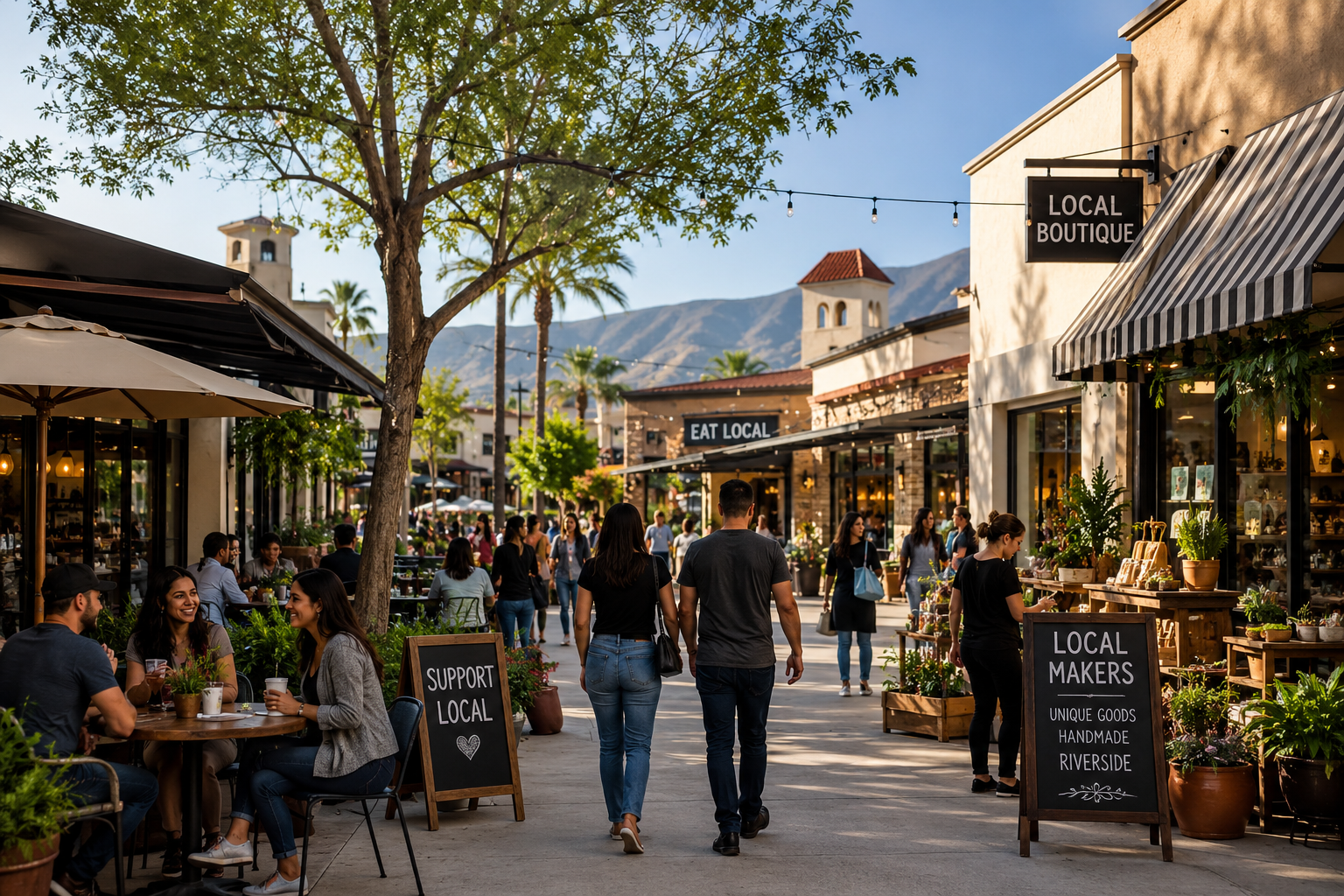
How Local Businesses Are Reshaping Retail Centers in Riverside County
Retail centers throughout Riverside County are experiencing a noticeable transformation. While national chains continue to play an important role in the commercial landscape, many of the region's most vibrant shopping destinations are increasingly being shaped by local entrepreneurs. Independent restaurants, specialty retailers, fitness studios, professional services, and boutique businesses are redefining what successful retail properties look like, creating destinations that reflect the character of the communities they serve.
Riverside, CA, has always maintained an appealing balance between economic growth and hometown charm. Although it is one of Southern California's largest cities, it still offers neighborhoods where business owners recognize familiar faces, customers support locally owned establishments, and commercial relationships often develop into lasting partnerships. That sense of community has become a competitive advantage for many retail commercial real estate developments as property owners seek tenants capable of creating memorable customer experiences rather than simply filling vacant space.
Changing consumer preferences, flexible business models, and evolving shopping habits have encouraged investors, landlords, and developers to rethink traditional leasing strategies. Businesses that offer unique products, personalized service, or experiential retail often generate repeat visits that benefit neighboring tenants as well. This shift has increased interest in retail property leasing, retail property search, and strategic tenant placement across Riverside County.
At Stance CRE, we have watched this evolution firsthand while helping business owners, investors, and landlords throughout Riverside County identify opportunities that align with long-term growth. Our local perspective allows us to recognize trends that extend beyond occupancy rates and lease agreements, helping clients position themselves for lasting success within an increasingly dynamic commercial market.
The Rise of Local Businesses as Retail Anchors
For decades, many shopping centers depended heavily on national retailers to attract consistent customer traffic. While recognizable brands remain valuable, many property owners have discovered that local businesses often generate stronger community engagement. Customers increasingly seek authentic experiences that cannot be replicated by large corporate chains.
Independent coffee shops, chef-owned restaurants, specialty bakeries, artisan boutiques, wellness centers, pet services, and locally operated fitness facilities frequently become neighborhood gathering places. Their owners actively participate in community events, sponsor youth organizations, and build loyal customer bases through personal relationships rather than national advertising campaigns. These qualities help transform retail centers into destinations rather than simple collections of storefronts.
In Riverside, CA, this trend feels especially natural. Residents appreciate businesses that reflect the city's welcoming atmosphere. Whether someone is enjoying lunch downtown, visiting Canyon Crest, shopping near Arlington, or exploring Magnolia Center, there is a noticeable appreciation for businesses with local roots. That community support creates a positive environment for both tenants and commercial property owners.
From a commercial real estate perspective, locally owned businesses often create diversified customer traffic throughout the day. Instead of relying primarily on weekend shoppers, a retail center may benefit from morning coffee customers, lunchtime restaurant patrons, afternoon service appointments, and evening fitness classes. This staggered activity improves visibility for neighboring tenants while increasing the overall appeal of the property.
Consumer Expectations Have Changed
Modern consumers are looking for more than convenience. Although online shopping continues to influence retail spending, many purchasing decisions still involve visiting physical locations when businesses provide experiences that cannot be duplicated digitally.
People enjoy browsing unique merchandise, interacting with knowledgeable staff, attending community events, and supporting entrepreneurs whose businesses contribute to the local economy. These experiences encourage longer visits and repeat customers, creating healthier retail ecosystems.
According to the National Association of REALTORS®, successful retail centers are increasingly emphasizing experiential retail, dining, entertainment, wellness, and service-oriented tenants to meet changing consumer preferences and create destinations that encourage repeat visits. These strategies help commercial properties remain competitive as shopping behaviors continue to evolve.
For Riverside County property owners, understanding these evolving expectations has become an important part of retail real estate market research. Tenant selection now involves evaluating how businesses complement one another, encourage customer circulation, and contribute to the property's overall identity rather than simply considering lease rates alone.
Why Tenant Mix Matters More Than Ever
One successful local business can positively influence an entire shopping center. When customers regularly visit a popular bakery, boutique, or specialty market, they often explore neighboring businesses during the same trip. This natural crossover benefits multiple tenants while increasing overall property performance.
Thoughtful tenant diversification reduces dependence on any single business category. A retail center may include restaurants, medical offices, beauty services, financial professionals, educational services, fitness facilities, and specialty retailers. Each attracts different customer segments throughout the day, helping stabilize foot traffic regardless of seasonal fluctuations.
This balanced approach also makes commercial properties more resilient during changing economic conditions. If one industry experiences temporary challenges, businesses in other sectors may continue generating consistent customer activity. Property owners therefore increasingly view tenant diversity as both a leasing strategy and a long-term investment consideration.
Commercial landlords conducting retail property research frequently evaluate customer demographics, surrounding residential development, nearby employers, traffic counts, parking availability, and complementary business categories before making leasing decisions. These factors help create retail environments that support both tenants and investors over many years.
Riverside County Offers a Unique Retail Environment
Few regions combine population growth, transportation access, business expansion, and community character quite like Riverside County. The Inland Empire continues attracting new residents, employers, logistics companies, healthcare providers, and educational institutions, creating opportunities for retail businesses that serve expanding neighborhoods.
Yet Riverside itself continues to feel approachable. Residents often choose neighborhood restaurants over national chains, discover locally owned boutiques through word of mouth, and return to businesses where employees know their names. That combination of economic momentum and community loyalty creates an environment where independent businesses can thrive.
Infrastructure improvements throughout the county continue supporting commercial development while maintaining access to established neighborhoods. Retail centers positioned near residential communities, employment hubs, healthcare campuses, and major transportation corridors frequently experience strong long-term demand because they serve both existing residents and new population growth.
The Riverside market also benefits from its diverse economy. Distribution centers, manufacturing, education, healthcare, government services, technology, and professional offices all contribute to a broad customer base that supports a wide variety of retail concepts.
How Commercial Property Owners Are Responding
Landlords have become increasingly strategic when evaluating prospective tenants. Rather than focusing exclusively on financial qualifications, many property owners now consider how businesses contribute to the property's overall atmosphere and customer experience.
Restaurant patios, outdoor gathering spaces, landscaping improvements, community events, seasonal promotions, and collaborative marketing initiatives have become more common across successful retail centers. These enhancements encourage customers to remain on-site longer while increasing exposure for multiple businesses.
Flexible lease structures have also become more prevalent. Property owners recognize that emerging businesses may require different lease terms than established national retailers. Customized agreements can help promising local businesses establish themselves while protecting landlord interests over the long term.
Strong retail lease management practices remain essential throughout this process. Clearly defined lease responsibilities, maintenance expectations, renewal options, signage standards, and operational requirements create stability for both landlords and tenants while supporting healthy long-term business relationships.
Investors Are Paying Attention to Community-Focused Retail
Commercial real estate investors increasingly recognize that successful retail properties depend upon much more than occupancy percentages. Properties featuring carefully curated tenant mixes often demonstrate stronger long-term resilience because customer loyalty extends beyond individual businesses.
Investors evaluating retail opportunities frequently examine surrounding demographics, population growth, household income, traffic patterns, redevelopment plans, and tenant diversity before making acquisition decisions. These factors provide valuable insight into a property's long-term income potential.
Experience-driven retail environments continues evolving alongside changing consumer preferences. Well-positioned neighborhood retail centers that successfully integrate dining, wellness, services, and local businesses frequently remain competitive despite broader retail industry changes.
For investors considering Riverside County, understanding neighborhood dynamics can be just as important as reviewing financial statements. Local knowledge often reveals development opportunities, infrastructure improvements, and community trends that may not be immediately apparent through national market reports alone.
Local Expertise Makes a Meaningful Difference
Commercial real estate decisions rarely occur in isolation. Every leasing transaction, acquisition, or investment affects surrounding businesses, neighboring property owners, employees, and customers. Understanding these interconnected relationships requires more than reviewing market statistics.
That is particularly true in Riverside, CA, where neighborhoods maintain distinct personalities despite the city's continued growth. One retail corridor may primarily serve families, another may attract university students, while another supports healthcare professionals or industrial employees. Matching businesses with the appropriate location requires careful market knowledge and practical experience.
This is where working with professionals who live and work within the Inland Empire provides measurable value. Familiarity with neighborhood development, local planning initiatives, landlord preferences, traffic patterns, and tenant demand often leads to opportunities that may not appear through standard property listings alone.
Successful retail property leasing involves understanding not only available square footage but also the long-term vision for each commercial corridor. Businesses positioned within the right environment are far more likely to establish lasting customer relationships and sustainable growth.
Frequently Asked Questions
As Riverside County's retail landscape continues evolving, business owners and investors often have questions about what these changes mean for future opportunities. The following answers address several of the most common topics surrounding commercial retail properties and local business growth.
Why are local businesses becoming more important in retail centers?
Local businesses often provide unique products, personalized customer service, and authentic community connections that encourage repeat visits. Their presence can increase customer loyalty while creating consistent activity that benefits neighboring tenants throughout a shopping center.
How should investors evaluate retail properties today?
Beyond reviewing financial performance, investors should examine tenant diversity, surrounding demographics, future development plans, traffic patterns, accessibility, and the property's ability to adapt to changing consumer preferences. Long-term sustainability frequently depends upon these broader market factors.
What types of businesses perform well in Riverside County retail centers?
Restaurants, specialty retail, healthcare services, fitness facilities, beauty services, educational businesses, pet services, professional offices, and experiential retail concepts often perform well because they generate repeat customer visits while serving growing residential communities throughout Riverside County.
Why is local commercial real estate knowledge valuable?
Every commercial corridor has unique characteristics that influence customer behavior, tenant demand, lease negotiations, and investment potential. Local expertise helps businesses identify locations that align with their operational goals while avoiding costly location mistakes.
How Stance CRE Can Help You
The Inland Empire continues to grow as one of Southern California's most important centers for business, commerce, logistics, healthcare, retail, and industrial development. As that growth continues, selecting the right commercial property has become increasingly important. At Stance CRE, we combine extensive commercial real estate experience with deep local knowledge because Riverside is not simply the market where we work. It is the community we proudly call home.
Since launching our company in 2018, Joe and Heidi Stance have remained committed to improving the commercial real estate experience for business owners, investors, landlords, and tenants throughout Riverside County. We have successfully sold and leased nearly every type of commercial property in Riverside and proudly describe ourselves as generalists because our true specialty is understanding the Riverside market itself. Whether you are searching for retail space, office buildings, industrial properties, healthcare facilities, or specialized commercial buildings, we work to identify opportunities that align with your long-term business objectives.
Because we live in the Inland Empire, we stay informed about neighborhood growth, emerging commercial districts, investment trends, and changing market conditions that influence commercial real estate decisions. Business owners, investors, and tenants trust us to provide practical guidance backed by current market knowledge and genuine local insight rather than relying solely on national trends or generalized market reports.
If you are planning your next commercial investment, expanding your business, relocating operations, or evaluating available retail opportunities in Riverside County, our team is ready to help. Contact Stance CRE today at 909-772-1212 to discuss your commercial real estate goals and discover how local expertise can help position your business for long-term success in one of Southern California's most dynamic and welcoming commercial markets.
Riverside’s Warehouse Boom: Opportunities for Logistics Investors
Riverside, California has quietly become one of the most important logistics hubs in the United States. Positioned within the Inland Empire and connected to major transportation corridors, the city continues to attract manufacturers, distributors, third-party logistics providers, and e-commerce companies seeking efficient access to millions of consumers throughout Southern California. As supply chains continue evolving, the demand for strategically located warehouse facilities has transformed Riverside into a destination for investors looking to capitalize on the growing industrial real estate market.
Unlike many large metropolitan areas that feel crowded and impersonal, Riverside maintains a welcoming atmosphere that blends economic opportunity with a genuine sense of community. Historic neighborhoods, locally owned restaurants, vibrant business districts, and scenic views of Mount Rubidoux give the city a character that many investors appreciate. Businesses operating here often find that Riverside offers the infrastructure of a major commercial center while preserving the relationships and accessibility of a smaller town.
For commercial investors, this combination creates an appealing environment. Strong regional demand, expanding infrastructure, and long-term economic growth continue fueling interest in commercial real estate in Riverside CA, making warehouse investments an increasingly attractive option for those seeking stable income and long-term appreciation.
Why Riverside Has Become a Logistics Powerhouse
The Inland Empire has earned worldwide recognition as one of North America's premier distribution markets. Riverside sits near major freeways including Interstate 215, State Route 91, State Route 60, and Interstate 10, allowing goods to move efficiently throughout Southern California and beyond. The city's location also provides relatively quick access to the Ports of Los Angeles and Long Beach, two of the busiest seaports in the Western Hemisphere.
As imported goods continue flowing into California, companies increasingly require warehouse space capable of handling storage, sorting, fulfillment, and last-mile delivery operations. According to research published by the CBRE Research industrial market reports, the Inland Empire consistently ranks among the strongest industrial markets in North America due to sustained tenant demand and limited supply in desirable locations.
Riverside also benefits from a substantial workforce, established transportation infrastructure, expanding residential development, and business-friendly communities throughout Riverside County. Together, these factors create an environment where logistics operations can grow efficiently while maintaining access to both employees and customers.
The city's appeal extends beyond large corporations. Regional distributors, food suppliers, medical product companies, construction suppliers, and manufacturing firms all require warehouse facilities to support their operations. This diverse tenant base reduces dependence on any single industry while strengthening long-term demand for industrial property in Riverside and investment opportunities throughout the region.
The Growth of E-Commerce Continues Driving Warehouse Demand
Consumer shopping habits have changed dramatically during the past decade. Businesses increasingly promise faster delivery times, larger product selections, and improved inventory availability. Behind every online purchase sits a warehouse responsible for receiving inventory, managing orders, and preparing shipments.
Every improvement in delivery speed increases the importance of warehouse location. Distribution facilities located in Riverside can reach millions of Southern California consumers within hours, making the city especially attractive for companies competing in today's fast-moving retail environment.
Warehouse facilities have evolved well beyond simple storage buildings. Modern logistics centers often include sophisticated inventory management systems, robotics, temperature-controlled storage, truck courts, high-clearance ceilings, and advanced loading capabilities designed to maximize operational efficiency.
This modernization has created additional opportunities for investors interested in commercial property investment. Newer industrial buildings frequently command premium lease rates because they meet the operational needs of today's logistics companies while reducing operating costs for tenants.
Limited Industrial Land Creates Long-Term Value
One of the most important drivers behind Riverside's warehouse market is limited developable land. As residential neighborhoods, retail centers, healthcare campuses, and business parks continue expanding throughout Riverside County, fewer parcels remain available for new industrial development.
Basic economics suggests that when supply remains constrained while demand continues increasing, property values often strengthen over time. This dynamic has helped support both rental growth and long-term appreciation for many warehouse investments throughout the Inland Empire.
Developers also face increasing construction costs, entitlement requirements, labor expenses, and infrastructure improvements before bringing new warehouse projects online. These barriers reduce the pace of new supply entering the marketplace, helping existing industrial properties remain competitive.
For investors evaluating commercial real estate investment opportunities, understanding local supply constraints can be just as important as evaluating current rental income.
What Investors Should Evaluate Before Purchasing Warehouse Properties
Not every warehouse investment offers the same potential. Successful investors evaluate numerous variables before making acquisition decisions.
Location remains the most obvious factor. Properties near freeway interchanges, transportation hubs, airports, rail facilities, and established industrial corridors generally attract stronger tenant demand than isolated facilities with limited transportation access.
Building functionality is equally important. Ceiling heights, loading docks, trailer storage, truck circulation, electrical capacity, parking, sprinkler systems, office build-outs, and expansion potential all influence tenant desirability. Older buildings may still perform well if they can accommodate modern operational requirements.
Lease structure deserves careful attention as well. Long-term leases with financially stable tenants often provide predictable cash flow, while shorter leases may create opportunities to increase rental rates as market conditions improve.
Investors should also evaluate maintenance history, deferred capital improvements, environmental reports, zoning compliance, utility capacity, and future redevelopment potential. A comprehensive due diligence process frequently uncovers opportunities or risks that may not appear obvious during an initial property tour.
Riverside Offers More Than Warehouses Alone
Although warehouses often receive the headlines, Riverside's broader commercial ecosystem strengthens industrial investment opportunities. The city supports healthcare providers, higher education institutions, manufacturers, retailers, construction companies, and professional service firms that collectively contribute to economic stability.
Walking through downtown Riverside, visitors quickly notice the blend of historic architecture, local coffee shops, family-owned restaurants, and community events that give the city its distinctive personality. Despite serving as one of Southern California's major employment centers, Riverside continues to feel approachable. Business owners often know one another, local partnerships remain important, and commercial relationships frequently extend beyond individual transactions.
That sense of community matters. Businesses expanding into Riverside are not simply leasing buildings; they are becoming part of a city that values long-term growth and local investment. For warehouse owners, that translates into a marketplace supported by both regional commerce and local economic development.
Understanding the Risks Alongside the Opportunities
Every investment carries risk, including industrial real estate. Interest rates, financing availability, insurance costs, labor shortages, and broader economic conditions all influence warehouse performance.
Market cycles also deserve careful consideration. While Riverside continues experiencing strong industrial demand, investors should avoid assuming every property will appreciate at the same pace. Building quality, tenant stability, lease terms, and local competition all affect long-term returns.
Environmental regulations, sustainability initiatives, and evolving transportation technologies may also influence future warehouse design. Facilities capable of adapting to automation, electric vehicle fleets, and energy-efficient operations may enjoy stronger long-term competitiveness.
Thoughtful investors balance optimism with disciplined analysis by carefully evaluating cash flow projections, operating expenses, tenant quality, replacement costs, and exit strategies before acquiring any commercial asset.
Why Local Expertise Makes a Difference
Industrial real estate markets can vary dramatically from one submarket to another. Even within Riverside County, rental rates, vacancy levels, redevelopment opportunities, and tenant preferences differ from neighborhood to neighborhood.
National market reports provide valuable context, but they cannot replace local insight. Understanding upcoming roadway improvements, municipal planning initiatives, business expansions, redevelopment projects, and neighborhood trends often reveals opportunities unavailable through public listing data alone.
Experienced local professionals frequently identify opportunities before they reach broader investor audiences while helping clients avoid properties with hidden operational or regulatory challenges.
Frequently Asked Questions
Warehouse investments continue attracting experienced investors as well as newcomers entering the commercial real estate market. The following questions address several of the most common topics surrounding Riverside's industrial sector.
Why is Riverside considered a strong warehouse market?
Riverside benefits from exceptional transportation access, proximity to the Ports of Los Angeles and Long Beach, a large regional workforce, and strong consumer demand throughout Southern California. These advantages continue attracting logistics companies, manufacturers, and distributors seeking strategically located warehouse facilities.
Are warehouse properties a good long-term investment?
Many warehouse properties can provide stable rental income while benefiting from long-term appreciation, particularly in markets where industrial land remains limited. Individual investment performance depends on property quality, tenant strength, lease structure, financing, and market conditions.
What should investors look for before purchasing an industrial building?
Investors should carefully evaluate location, transportation access, building functionality, lease terms, tenant financial strength, maintenance history, zoning, environmental reports, operating expenses, and future redevelopment potential before making an acquisition decision.
How Stance CRE Can Help You
Navigating Riverside's rapidly evolving warehouse market requires more than simply reviewing available listings. At Stance CRE, we combine local knowledge with years of hands-on commercial real estate experience to help investors identify opportunities that align with both immediate objectives and long-term investment strategies. Because we live and work throughout Riverside County, we understand the neighborhoods, business districts, and industrial corridors that continue shaping the region's commercial growth.
The Inland Empire serves as one of California's premier business and commerce hubs, home to some of the nation's largest distribution centers as well as retail developments, healthcare facilities, office properties, and industrial buildings. As the region continues expanding, businesses and investors increasingly rely on experienced commercial real estate professionals who understand the local market. Whether you are searching for warehouse space, investment properties, offices, retail locations, or specialized commercial facilities, we provide the market insight needed to make informed decisions.
Joe and Heidi Stance founded Stance Commercial Real Estate in 2018 with a vision of improving the commercial real estate experience through transparency, expertise, and personalized service. Having sold or leased nearly every commercial property type throughout Riverside, they proudly describe themselves as generalists who specialize in Riverside itself. That deep local perspective allows us to guide investors through opportunities that support long-term success rather than short-term transactions.
Contact Stance CRE today at 909-772-1212 to discuss your investment goals and discover why so many Inland Empire business owners, investors, and tenants trust us as their commercial real estate partner.

Why Businesses Should Never Negotiate Commercial Leases Alone
Signing a commercial lease is one of the most important financial decisions a business will make. Whether a company is opening its first location, expanding into a second market, relocating operations, or investing in long-term growth, the lease agreement will influence profitability, operational flexibility, and future opportunities for years to come. Unfortunately, many business owners focus almost exclusively on monthly rent while overlooking dozens of clauses that can dramatically increase costs or limit their options later.
A commercial lease negotiation is far more complex than agreeing on a rental rate. Every section of the agreement, from operating expenses and maintenance responsibilities to renewal options and tenant improvements, represents an opportunity for negotiation. Property owners negotiate leases regularly, often with experienced legal teams and commercial brokers supporting them. Business owners who negotiate alone frequently enter discussions without the same level of market knowledge or negotiating leverage.
Throughout Riverside County, California, businesses continue to expand into retail centers, office buildings, industrial properties, healthcare facilities, and mixed-use developments. Riverside remains a welcoming community where growing neighborhoods, established business districts, and a genuine small-town atmosphere exist alongside a thriving regional economy. That unique combination makes it an excellent place to launch or expand a business, but it also makes understanding the local commercial real estate market even more valuable.
Working with experienced professionals helps businesses evaluate the entire agreement instead of focusing on a single number. From reviewing commercial lease agreements to understanding commercial lease clauses, expert representation can protect both immediate financial interests and long-term business goals.
Commercial Leases Are Written to Protect the Property Owner
Commercial leases are sophisticated legal documents designed to allocate risk between landlords and tenants. Unlike many residential leases, nearly every commercial lease is negotiable. However, that does not mean every provision is equally favorable to both parties.
Many business owners are surprised by the number of financial obligations hidden beyond base rent. Common provisions include Common Area Maintenance (CAM) fees, insurance requirements, property tax allocations, maintenance responsibilities, annual rent escalations, utility costs, and repair obligations. Individually these costs may appear manageable, but collectively they can substantially increase occupancy expenses.
Even experienced entrepreneurs often assume standard lease language is non-negotiable. In reality, many terms can be revised depending on market conditions, property vacancies, tenant qualifications, lease length, and landlord motivation. Understanding which provisions are flexible requires familiarity with local market trends and comparable transactions.
The U.S. Small Business Administration offers guidance encouraging business owners to carefully evaluate lease obligations because occupancy costs directly affect long-term business success and cash flow planning. Their recommendations emphasize understanding every contractual obligation before signing rather than after occupancy.
Negotiation Extends Well Beyond Monthly Rent
Rent usually receives the most attention during lease discussions, but experienced commercial brokers know it is only one piece of the overall financial picture.
A lease may offer attractive monthly rent while including aggressive annual increases, limited renewal rights, expensive maintenance obligations, or unfavorable exit provisions. Conversely, a property with slightly higher rent could ultimately provide better financial value through tenant improvement allowances, reduced operating expenses, flexible renewal options, or negotiated expansion rights.
Successful commercial lease negotiation examines every economic component together, including:
- Full service lease versus modified gross or triple-net structures
- Rent escalation schedules
- Tenant improvement allowances
- Build-out timelines
- Free rent periods
- Exclusive use clauses
- Parking rights
- Signage opportunities
- Maintenance responsibilities
- Renewal options
- Assignment and subleasing rights
- Early termination provisions
Each negotiated improvement can produce significant savings over the life of a five-, seven- or ten-year lease.
Local Market Knowledge Creates Negotiating Leverage
Commercial real estate is intensely local. Lease rates, concessions, vacancy levels, and landlord expectations vary dramatically from one community to another.
Riverside, CA offers an excellent example. Although it serves as one of Southern California's major economic centers, Riverside still maintains the welcoming character of a close-knit community. Businesses benefit from strong relationships among local owners, investors, and developers while enjoying access to one of the fastest-growing commercial corridors in the Inland Empire.
That local familiarity matters during negotiations. A tenant considering commercial property for lease Inland Empire opportunities may discover that landlords in one submarket are offering months of free rent while another area emphasizes tenant improvement packages instead. Understanding these differences allows businesses to negotiate from a position of knowledge rather than assumption.
Current commercial market data published by the National Association of REALTORS® provides valuable insight into vacancy trends, leasing activity, and broader market conditions that influence negotiations across commercial sectors.
Knowing how Riverside compares with neighboring communities allows tenants to evaluate whether lease terms are truly competitive.
Hidden Clauses Can Become Expensive Problems
Many commercial lease disputes arise not because tenants intentionally violated the agreement, but because they misunderstood it.
Seemingly minor provisions often carry significant financial consequences. For example, repair language may require tenants to replace expensive HVAC systems. Maintenance clauses might shift responsibility for structural components. Insurance requirements could exceed standard business coverage. Holdover provisions sometimes double monthly rent if a tenant remains after lease expiration.
Another frequently overlooked area involves operating expense reconciliations. Businesses paying CAM charges should understand exactly which expenses are recoverable, how they are calculated, and whether annual increases are capped.
A knowledgeable commercial real estate advisor reviews these provisions with the business owner before signatures occur, identifying opportunities for clarification, modification, or negotiation.
Every Business Has Different Space Requirements
A technology company, restaurant, medical practice, distribution operation, and professional office all prioritize different lease terms.
Restaurants may require grease interceptors, ventilation systems, outdoor seating rights, and alcohol licensing considerations. Industrial users often focus on loading docks, ceiling heights, power capacity, and truck circulation. Medical offices may prioritize parking ratios, accessibility, plumbing infrastructure, and patient flow.
Understanding these operational differences allows negotiations to focus on the issues that truly affect day-to-day business performance rather than generic lease language.
Businesses evaluating commercial space requirements should also consider future growth. Negotiating expansion rights today may eliminate the need for an expensive relocation later. Similarly, renewal options can preserve business continuity if the location proves successful.
Planning several years ahead frequently produces better long-term financial outcomes.
Negotiating Today Can Protect Tomorrow's Business
Many entrepreneurs view lease negotiations as a one-time event. In reality, today's lease decisions influence tomorrow's flexibility.
Business circumstances change. Companies grow, shrink, merge, relocate, or diversify. A carefully negotiated lease should provide reasonable options that accommodate those possibilities.
Important future-focused considerations include assignment rights if the business is sold, subleasing flexibility during market changes, renewal options, expansion opportunities, relocation clauses, and clearly defined exit strategies.
Negotiating these provisions after signing becomes significantly more difficult.
Commercial real estate research from CBRE continues to highlight how occupiers increasingly prioritize flexibility within lease agreements as businesses adapt to changing operational needs.
Forward-thinking negotiations protect both current operations and future opportunities.
Riverside Businesses Benefit from Local Expertise
When it comes to commercial real estate in Riverside County, local knowledge is more than a competitive advantage. It is often the difference between simply finding a space and securing the right opportunity for long-term success. At Stance CRE, we have built our reputation by understanding not only the properties themselves but also the people, neighborhoods, and businesses that make Riverside such a remarkable place to invest. We are proud to call this community home, and that firsthand experience gives our clients insights that cannot be found in market reports alone.
Riverside has a character that is difficult to replicate elsewhere in Southern California. While it serves as one of the Inland Empire's leading economic centers, it still carries the warmth of a city where relationships matter. Historic streets lined with mature trees lead into thriving business districts, locally owned restaurants sit alongside national retailers, and entrepreneurs continue to invest in neighborhoods that are growing year after year. It is a city where business owners can build lasting connections while enjoying access to one of the region's strongest commercial markets.
That is exactly why businesses turn to Stance CRE. Since launching the company in 2018, Joe and Heidi Stance have earned a reputation for helping clients navigate nearly every type of commercial real estate transaction throughout Riverside. We often say that our specialty is not a particular property type; it is Riverside itself. From retail storefronts and office buildings to industrial facilities, healthcare properties, and specialty commercial spaces, we understand how each neighborhood is evolving and where opportunities exist before they become obvious to the broader market.
Our clients benefit from far more than property searches. We provide strategic guidance backed by years of local experience, current market knowledge, and relationships developed throughout the Inland Empire. Whether you are negotiating your first commercial lease, expanding your portfolio, or relocating an established business, we help you approach every decision with confidence.
Frequently Asked Questions
Commercial lease negotiations often raise questions for both first-time tenants and experienced business owners. Understanding the process before entering negotiations helps businesses avoid costly mistakes while making informed decisions about their next location.
Is commercial lease language negotiable?
Yes. Unlike many residential leases, most commercial leases contain negotiable terms. Depending on market conditions, landlords may negotiate rent, tenant improvements, operating expenses, maintenance obligations, renewal options, signage rights, parking allocations, and many other provisions.
What is the biggest mistake businesses make during lease negotiations?
Many businesses focus exclusively on monthly rent while overlooking operating expenses, maintenance obligations, rent escalations, renewal rights, and other contractual provisions. These overlooked details often have a greater financial impact than the advertised rental rate.
How early should businesses begin negotiating a lease?
Ideally, businesses should begin evaluating options several months before they need occupancy. Starting early provides additional negotiating leverage, increases available property choices, and allows sufficient time for due diligence, inspections, financing, and build-out planning.
How Stance CRE Can Help You
Commercial real estate decisions should support your long-term business objectives rather than create unnecessary financial risk. At Stance CRE, we help business owners navigate complex lease negotiations with confidence by evaluating opportunities through both a financial and operational lens. Whether you are searching for commercial property for lease, negotiating a renewal, or comparing multiple locations, we work to ensure every agreement supports your future growth.
We are proud to call the Inland Empire home. The faces behind Team Stance are not only experienced commercial real estate brokers, but also locals who understand the Riverside market better than anyone. Inland Empire business owners, investors, and tenants trust us to stay informed on the latest commercial real estate developments throughout the region. Whether you are looking for retail space, office space, industrial facilities, healthcare properties, or a specialized commercial building, we have the knowledge and experience to help you identify the right location.
Joe and Heidi Stance launched the company in 2018 with a vision to improve the commercial real estate experience for business owners throughout Riverside County. Since then, we have sold or leased nearly every type of commercial real estate product across Riverside. When people ask what we specialize in, our answer remains simple: Riverside. As generalists with extensive local expertise, we understand the unique opportunities that make this community such a rewarding place to own and grow a business.
If you are preparing to negotiate a commercial lease, do not leave one of your largest business investments to chance. Contact Stance CRE at 909-772-1212 to discuss your goals, evaluate available properties, and negotiate from a position of strength. We are committed to helping businesses throughout Riverside County secure commercial spaces that support lasting success.

What Makes a Commercial Property a Good Investment?
Investing in commercial property can be one of the most effective ways to build long-term wealth, generate steady income, and diversify an investment portfolio. However, not every building that comes to market represents a strong opportunity. Some properties appreciate consistently while others struggle with vacancies, costly maintenance, or declining market demand. Understanding the characteristics that separate an average investment from an exceptional one is essential before committing significant capital.
For investors exploring opportunities throughout Riverside County, knowing the local market is equally important. Riverside, CA offers something unique within Southern California. It is a growing city with expanding business districts, established neighborhoods, and an inviting atmosphere that still feels connected to its community. Although it continues to attract new employers, entrepreneurs, and developers, Riverside has managed to maintain the welcoming character that makes local businesses feel like an important part of the community rather than simply another storefront.
Whether you are purchasing your first investment property or expanding an existing portfolio, evaluating commercial property investment strategies, financial performance, tenant quality, and long-term market trends will help you make smarter decisions. A successful commercial real estate investment is rarely based on luck. Instead, it is built upon careful research, strategic planning, and understanding what truly creates value over time.
Location Continues to Be the Foundation of Value
The old saying that location matters remains one of the most accurate principles in commercial real estate. Even the most attractive building can underperform if it is located in an area with declining business activity or poor accessibility. Conversely, a modest property situated within a thriving commercial corridor can experience consistent appreciation and attract reliable tenants for years.
Location involves far more than a street address. Investors should evaluate traffic counts, visibility, surrounding businesses, population growth, accessibility, parking availability, nearby residential development, and future infrastructure improvements. Reviewing regional economic data from the U.S. Census Bureau Economic Census can also provide valuable insight into business growth patterns that influence commercial demand.
Riverside continues to stand out because it combines economic growth with a comfortable pace that many businesses appreciate. New restaurants open beside long-standing family-owned businesses. Distribution centers, healthcare facilities, professional offices, and neighborhood retail all contribute to a diverse local economy. It is a city where entrepreneurs often know neighboring business owners by name, creating a business environment that feels surprisingly personal despite serving one of California's largest regional economies.
Investors looking at Commercial property opportunities frequently discover that strong locations continue attracting tenants through changing economic cycles because businesses value convenience, accessibility, and customer visibility.
Strong Financial Performance Matters More Than Appearance
An attractive building certainly helps attract prospective tenants, but appearance alone should never drive an investment decision. Successful investors place greater emphasis on financial performance than cosmetic improvements.
Before purchasing any commercial property investment, carefully review current rental income, operating expenses, maintenance history, lease agreements, occupancy rates, insurance costs, tax obligations, and projected capital improvements. These numbers paint a much clearer picture than fresh landscaping or recently painted walls.
One of the most important measurements investors evaluate is the capitalization rate, commonly known as the cap rate. Understanding how income compares to purchase price allows buyers to compare multiple opportunities objectively. Investors should also calculate projected cash flow under different occupancy scenarios while accounting for unexpected repairs or vacancies.
It is equally important to verify whether rental rates align with current market conditions. If rents are significantly below market value, there may be opportunities to increase income over time. On the other hand, rents that already exceed local averages could indicate limited future upside.
Performing thorough financial due diligence reduces surprises after closing and supports more informed commercial property buying decisions.
Quality Tenants Create Long-Term Stability
The strength of a commercial investment often depends upon the businesses occupying the property. High-quality tenants generate consistent rental income while reducing turnover costs and vacancy risk.
When reviewing existing leases, investors should consider several factors:
- Remaining lease terms
- Renewal options
- Tenant financial strength
- Industry stability
- Rental escalation clauses
- Responsibility for maintenance expenses
A property leased to financially stable businesses with long-term commitments generally offers greater income predictability than one occupied by short-term tenants with uncertain futures.
Diversification also contributes to investment stability. Retail centers, office buildings, and mixed-use properties that serve multiple industries may be less vulnerable to changes affecting any single business sector.
Because Riverside supports healthcare providers, logistics companies, restaurants, professional services, educational organizations, retailers, and manufacturers, investors often benefit from a broad tenant pool across many property types.
Market Growth and Economic Fundamentals Drive Appreciation
The best investments typically exist within markets experiencing sustainable growth rather than temporary excitement.
Population growth, employment expansion, infrastructure investments, housing development, and business formation all contribute to increasing demand for commercial real estate. Investors should monitor both current conditions and long-term projections before purchasing a property.
The Federal Reserve Economic Data (FRED) database offers valuable economic indicators that many commercial investors use to evaluate employment trends, interest rates, and regional economic performance.
Riverside County continues benefiting from several long-term growth drivers:
- Expanding logistics and distribution operations
- Continued residential development
- Growing healthcare services
- Increasing consumer spending
- Strong transportation connections throughout Southern California
These fundamentals create demand across multiple commercial real estate California sectors while supporting long-term property appreciation.
Unlike markets driven primarily by speculation, Riverside's continued expansion reflects genuine business activity and population growth, helping create a healthier investment environment.
Property Condition Can Protect Future Returns
Deferred maintenance can significantly reduce investment returns. Even properties with strong tenants may require substantial capital expenditures if roofs, HVAC systems, plumbing, electrical infrastructure, or parking lots have not been properly maintained.
A comprehensive property inspection should evaluate:
- Structural integrity
- Roof condition
- HVAC systems
- Electrical capacity
- Plumbing systems
- ADA compliance
- Environmental concerns
- Parking lot condition
- Landscaping
- Building code compliance
Understanding these expenses before closing allows investors to negotiate purchase prices appropriately while budgeting for future improvements.
Older buildings are not necessarily poor investments. Many historic commercial properties throughout Riverside offer tremendous value when properly maintained. However, investors should understand renovation costs and modernization requirements before making an acquisition.
Flexibility Creates Long-Term Investment Potential
Commercial properties capable of adapting to changing market conditions generally outperform highly specialized buildings.
Flexible floor plans, modern utilities, ample parking, and adaptable layouts allow owners to attract different tenant types over time. A building originally occupied by one business may later accommodate professional offices, healthcare providers, educational users, or specialty retailers with relatively modest improvements.
Properties located within mixed-use districts or areas experiencing redevelopment may also provide additional upside through future repositioning opportunities.
Investors considering Commercial property acquisition should think beyond today's tenants and evaluate how easily a property could serve tomorrow's businesses.
This long-term perspective often separates experienced investors from those focused only on immediate income.
Financing, Interest Rates, and Investment Strategy
Every investment should align with an overall financial strategy rather than being evaluated independently.
Interest rates influence purchasing power, borrowing costs, cash flow, and investor demand. Although financing conditions fluctuate, successful investors focus on properties capable of generating strong performance throughout various economic cycles instead of attempting to perfectly time the market.
Some investors prioritize stable income through fully leased buildings. Others seek value-add opportunities by renovating underperforming assets. Some pursue 1031 exchange investment options to defer capital gains taxes while expanding their portfolios.
No single approach fits every investor. The right strategy depends upon financial goals, risk tolerance, available capital, management experience, and desired investment timeline.
Developing clear acquisition criteria before searching for properties helps investors avoid emotional decisions and remain focused on opportunities that support long-term objectives.
Due Diligence Protects Every Investment Decision
Even an outstanding property deserves careful investigation before closing.
Due diligence should include reviewing:
- Financial statements
- Existing leases
- Environmental reports
- Title commitments
- Zoning regulations
- Property surveys
- Insurance history
- Maintenance records
- Vendor contracts
- Local market comparables
The U.S. Small Business Administration also offers guidance that can help business owners evaluate operational considerations when purchasing commercial real estate for their own companies.
Investors should never rush this process. Thorough research frequently identifies opportunities for negotiation while reducing the likelihood of unexpected expenses after acquisition.
Working with experienced local professionals who understand Riverside's commercial market provides additional confidence throughout the transaction.
Frequently Asked Questions
Investors often have similar questions when evaluating commercial real estate opportunities. The answers below address several of the most common concerns.
What is the most important factor when evaluating a commercial property?
Although many factors influence investment success, location remains one of the strongest predictors of long-term performance. A desirable location supports tenant demand, rental growth, property appreciation, and resale value. However, location should always be evaluated alongside financial performance, tenant quality, and overall property condition.
Should investors focus more on appreciation or cash flow?
The ideal investment often provides both. Strong cash flow supports ongoing income while appreciation builds long-term equity. Depending upon personal investment goals, some buyers may prioritize immediate income whereas others pursue properties with greater future redevelopment or value-add potential.
Why is Riverside an attractive commercial real estate market?
Riverside offers a balanced economy supported by logistics, healthcare, education, retail, manufacturing, and professional services. The city continues to grow while maintaining a welcoming atmosphere that appeals to both businesses and residents. This combination creates consistent demand across multiple commercial property types.
How important is working with a local commercial real estate broker?
Local expertise can significantly improve investment outcomes. Market knowledge, neighborhood familiarity, lease trends, zoning considerations, pricing insight, and established professional relationships often help investors identify opportunities that may not be obvious through online listings alone.
How Stance CRE Can Help You
Choosing the right commercial investment requires more than reviewing listings. At Stance CRE, we understand that every investor, business owner, and property owner has unique financial goals. Because we live and work throughout Riverside County, we provide practical local insight that goes far beyond market statistics. We understand the neighborhoods, business corridors, redevelopment opportunities, and commercial trends that continue shaping the Inland Empire.
The Inland Empire has become one of Southern California's most important centers for business, distribution, healthcare, retail, and industrial development. As this growth continues, the need for knowledgeable commercial real estate guidance becomes even more valuable. Whether you are searching for retail space, office buildings, industrial facilities, or specialized commercial properties, we help clients identify opportunities that align with both immediate needs and long-term investment objectives.
Joe and Heidi Stance founded the company in 2018 with a vision of improving the commercial real estate experience through education, transparency, and exceptional local knowledge. Having sold or leased nearly every type of commercial property throughout Riverside, we proudly consider ourselves generalists with one true specialty: Riverside itself. That local perspective allows us to provide meaningful guidance that supports informed investment decisions.
If you are considering purchasing, selling, leasing, or investing in commercial real estate brokerage services throughout Riverside County, we would welcome the opportunity to help you navigate the process with confidence. Contact Stance CRE today at 909-772-1212 to discuss your commercial real estate goals and discover opportunities that support your long-term success.
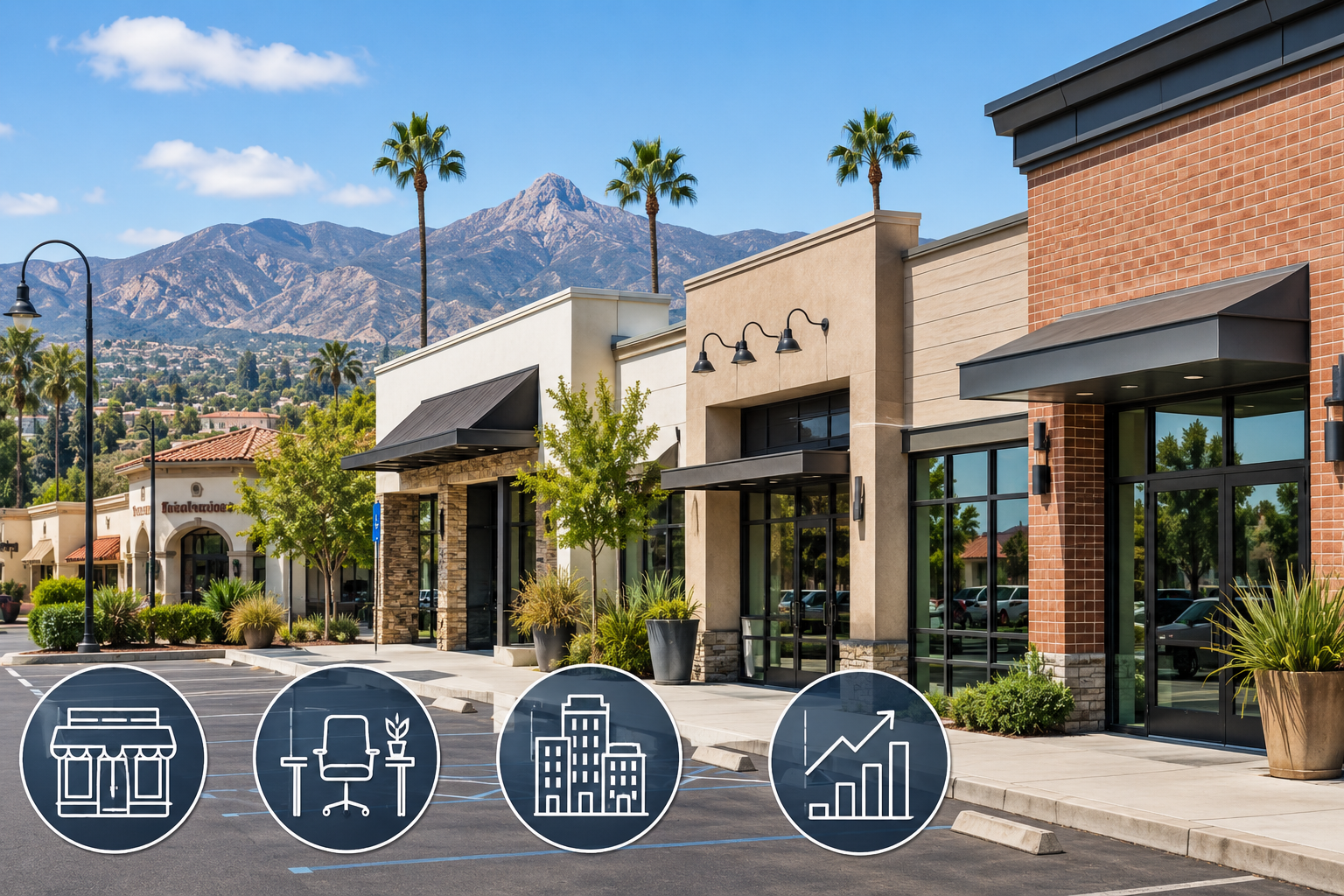
Why Smaller Commercial Spaces Are in High Demand Across Riverside County
The commercial real estate landscape is constantly evolving, and one of the most notable trends across Riverside County is the increasing demand for smaller commercial spaces. From boutique retailers and professional service firms to healthcare providers and startup companies, businesses are seeking flexible, cost-effective locations that align with modern operational needs. Across Riverside, CA and the broader Inland Empire, entrepreneurs are finding that smaller footprints often provide greater efficiency, lower overhead costs, and stronger opportunities for sustainable growth.
This shift is influencing leasing activity, property investment decisions, and commercial development throughout the region. Businesses that once searched exclusively for large offices or expansive retail centers are now prioritizing small commercial space opportunities that better match their actual needs. As Riverside County continues to attract new businesses and residents, demand for strategically located smaller commercial properties is expected to remain strong.
The Changing Economics of Commercial Real Estate
One of the primary drivers behind the demand for smaller commercial spaces is affordability. Rising operating costs have encouraged business owners to become more intentional about how much space they truly require. Rather than paying for unused square footage, many companies are choosing efficient layouts that support productivity while keeping occupancy expenses manageable.
For startups, growing businesses, and independent operators, leasing a smaller space often means preserving capital for hiring, marketing, inventory, technology, or expansion initiatives. According to research from the U.S. Small Business Administration, managing fixed expenses effectively is a key factor in long-term business success. Commercial rent typically represents one of the largest recurring expenses, making right-sizing an increasingly attractive strategy.
This trend is particularly evident throughout Riverside County, where businesses appreciate having access to high-quality locations without committing to oversized facilities. In many cases, a 600 sq ft office space for rent can adequately support modern business operations while offering greater financial flexibility.
The result is a market where tenants are seeking practical solutions rather than simply pursuing larger properties. This change in mindset is helping fuel demand for smaller offices, retail suites, and specialized commercial spaces throughout the region.
Riverside County's Growing Small Business Community
The Inland Empire continues to experience substantial economic growth, attracting entrepreneurs from across Southern California. Riverside County's business-friendly environment, expanding population, and strategic location make it an attractive destination for companies in numerous industries.
Small businesses account for a significant portion of economic activity throughout the county. Whether opening a boutique retail store, professional office, medical practice, fitness studio, or specialty service business, many owners discover that a smaller commercial footprint provides the ideal balance between visibility and affordability.
Riverside, CA offers a unique advantage in this regard. Despite being one of Southern California's larger cities, Riverside maintains a welcoming community atmosphere that often feels more like a small town than a major metropolitan area. Business owners value the relationships they build within local neighborhoods, and many prefer smaller commercial spaces that allow them to stay closely connected to their customers.
Flexibility Is More Important Than Ever
Today's businesses operate differently than they did even a decade ago. Hybrid work arrangements, cloud-based technology, e-commerce integration, and evolving customer expectations have fundamentally changed space requirements.
Many companies no longer need extensive office footprints because employees work remotely part of the time. Professional service providers often require private offices, conference rooms, and collaborative areas rather than rows of cubicles. Retailers increasingly combine physical storefronts with online sales platforms, reducing the need for large inventory storage areas.
As a result, businesses are actively seeking small commercial space options that provide flexibility without sacrificing professionalism. Smaller properties often offer:
- Lower lease commitments
- Reduced maintenance responsibilities
- Easier operational management
- Faster occupancy timelines
- Greater adaptability for future growth
These benefits are particularly attractive in dynamic markets like Riverside County, where businesses want the ability to respond quickly to changing economic conditions and customer demands.
Commercial landlords are also recognizing this trend by subdividing larger suites into smaller units or designing new developments that cater to smaller tenants. This evolution is helping meet the growing demand for efficient, strategically designed commercial spaces.
Retail Businesses Are Driving Demand
Retail operators represent a major segment of the market seeking smaller commercial properties. Consumer preferences have shifted toward specialized shopping experiences, creating opportunities for boutique stores, specialty food concepts, wellness businesses, and service-oriented retailers.
Rather than occupying large retail boxes, many businesses find success in smaller storefronts located within neighborhood shopping centers or mixed-use developments. These locations often provide excellent visibility while maintaining manageable operating costs.
Recent commercial real estate trends highlighted by publications such as The National Association of Realtors continue to demonstrate the importance of local retail environments and walkable commercial districts. Smaller retail spaces allow businesses to establish a physical presence while remaining financially agile.
In many cases, smaller retail footprints encourage owners to create more curated customer experiences, leading to stronger branding and improved customer engagement.
Professional Offices Are Becoming More Efficient
The office market has experienced significant transformation in recent years. Businesses are reevaluating how they use office environments and prioritizing quality over quantity.
Law firms, accounting practices, insurance agencies, consulting firms, and healthcare providers increasingly seek smaller office suites that support client interactions without unnecessary overhead. Efficient floor plans, shared amenities, and modern technology enable businesses to accomplish more with less space.
Many tenants searching for Riverside office space for rent are focusing on properties that provide:
- Convenient parking
- Professional appearances
- Flexible lease terms
- Modern infrastructure
- Accessible locations
Smaller offices frequently satisfy these requirements while offering cost savings that can be reinvested into business growth.
This trend is especially noticeable in Riverside, where businesses benefit from proximity to major transportation corridors while maintaining access to a local customer base. As commercial districts continue evolving, demand for appropriately sized office environments is expected to remain strong.
Investors Are Paying Attention
The popularity of smaller commercial spaces is not limited to tenants. Commercial real estate investors are also recognizing the advantages of these properties.
Smaller units often attract a broader range of prospective tenants, reducing vacancy risks and increasing leasing flexibility. If one tenant vacates, landlords may be able to secure a replacement more quickly than they would for a larger, more specialized property.
Additionally, diversified tenant mixes can strengthen overall property performance. Rather than relying on a single large occupant, investors can generate revenue from multiple smaller businesses operating within the same building.
This strategy aligns particularly well with Riverside County's growing entrepreneurial ecosystem. Investors who understand local market dynamics often view smaller commercial properties as an attractive component of their portfolios.
At Stance CRE, we regularly observe how demand for smaller offices, retail suites, and specialty commercial spaces influences both leasing activity and investment opportunities throughout the Inland Empire. Understanding these trends allows business owners and investors to make more informed real estate decisions.
Location Matters More Than Size
While square footage remains important, location frequently has a greater impact on business success than overall space size. A well-positioned smaller property can outperform a larger facility located in a less desirable area.
Businesses throughout Riverside County are increasingly prioritizing visibility, accessibility, demographics, and customer convenience when evaluating commercial properties. A strategically located smaller space may generate more customer traffic, stronger brand recognition, and higher revenue potential than a larger property situated farther from target audiences.
Riverside's blend of historic charm, growing neighborhoods, and expanding commercial corridors creates numerous opportunities for businesses seeking high-value locations. Many tenants discover that choosing the right address allows them to operate successfully with less square footage while still achieving their growth objectives.
As competition for premium locations continues, smaller commercial spaces in desirable areas are becoming increasingly valuable assets.
Frequently Asked Questions
Businesses exploring commercial real estate opportunities often have questions about the growing demand for smaller properties. Understanding these trends can help companies make more informed decisions when evaluating potential locations.
What industries benefit most from smaller commercial spaces?
Professional services, healthcare providers, boutique retailers, fitness businesses, consultants, technology companies, and specialty service providers frequently benefit from smaller commercial footprints. These businesses often prioritize location and functionality over excess square footage.
Is Riverside County a good market for small commercial spaces?
Yes. Riverside County continues to experience population growth, economic expansion, and business development. These factors contribute to strong demand for smaller offices, retail spaces, and commercial properties throughout the region.
Can a smaller commercial space support future growth?
Absolutely. Many businesses use smaller locations as a foundation for growth. By reducing overhead expenses, companies can invest more resources into operations, staffing, marketing, and expansion opportunities. As needs evolve, businesses can often relocate or expand strategically.
How Stance CRE Can Help You
Finding the right commercial property requires more than simply reviewing listings. It requires local market knowledge, industry expertise, and a deep understanding of how commercial real estate trends affect business success. At Stance CRE, we help businesses identify opportunities that align with their operational goals, budget requirements, and long-term growth strategies.
The Inland Empire serves as a major hub for business and commerce, home to large distribution centers, retail destinations, healthcare facilities, industrial properties, and professional office environments. As the region continues to expand, commercial real estate opportunities continue evolving. Our team stays informed on the latest market developments so clients can make confident decisions.
Joe and Heidi Stance launched Stance Commercial Real Estate in 2018 with a vision of improving the commercial real estate experience for business owners, investors, and tenants. As local experts who have sold and leased nearly every type of commercial real estate product throughout Riverside, we understand the nuances that make this market unique. When asked what property type we specialize in, our answer is simple: Riverside.
Whether you are searching for commercial space for rent or retail space for lease, investment opportunities, or specialized commercial properties, we are here to help. Contact Stance CRE today at 909-772-1212 to discuss your commercial real estate goals and discover how our local expertise can help you find the perfect property in Riverside County.
How to Choose the Right Commercial Space for Your Business Growth
Choosing a commercial property is one of the most important decisions a business owner will make. The right location can support expansion, strengthen brand visibility, improve operational efficiency, and create opportunities for long-term profitability. The wrong location can create challenges that impact staffing, customer access, logistics, and future growth. Whether you are searching for a retail storefront, office suite, industrial facility, medical building, or specialized commercial property, understanding how to evaluate your options strategically is essential.
For businesses operating in Riverside County, the decision carries additional significance. Riverside, CA offers a unique blend of economic opportunity and community character. While it is one of Southern California's larger cities, it still maintains the welcoming atmosphere and interconnected business culture often associated with a small town. Business owners regularly discover that relationships, local knowledge, and community reputation remain valuable assets when selecting the ideal commercial property.
According to the U.S. Census Bureau, Riverside continues to experience population growth and economic development, creating opportunities for businesses seeking to establish or expand their presence in the Inland Empire. Businesses that align their facility needs with long-term objectives are often positioned to capitalize on this growth.
Start With Your Long-Term Business Goals
Before evaluating available properties, business owners should clearly define where they expect their company to be in three, five, or even ten years. Commercial real estate decisions should support future objectives rather than simply address immediate needs. A company that anticipates adding employees, expanding inventory, increasing customer traffic, or introducing new services may quickly outgrow a space selected solely for current operations.
Growth planning should include projected staffing levels, equipment requirements, storage needs, parking demands, and customer accessibility. Businesses frequently focus on monthly rent while overlooking how operational requirements may evolve. Choosing a property with room for expansion can prevent costly relocations and business disruptions later.
This is particularly important when evaluating office space for rent, retail properties, and industrial facilities throughout Riverside County. A growing company needs flexibility, and a property that accommodates future growth can become a strategic asset rather than a temporary solution.
Business owners should also consider how their space contributes to company culture and customer perception. A professional office environment can support recruiting efforts, while a highly visible retail location may increase foot traffic and brand recognition. Every property should be evaluated through the lens of long-term business success.
Understanding the Importance of Location
The phrase "location, location, location" remains relevant because location influences nearly every aspect of business performance. Customer convenience, employee commuting times, supplier access, visibility, and future property values are all directly connected to location selection.
In Riverside, CA, location decisions often involve balancing accessibility with affordability. Businesses benefit from proximity to major transportation corridors such as Interstate 215, State Route 91, and State Route 60. These transportation networks provide access to customers throughout the Inland Empire and Southern California while supporting distribution and logistics operations.
For retail businesses, visibility and traffic counts are often critical considerations. A highly visible location with strong vehicle and pedestrian traffic may justify higher lease rates because of increased customer exposure. Office users may prioritize professional surroundings, nearby amenities, and accessibility for clients and employees.
Industrial users often evaluate transportation efficiency, warehouse functionality, and access to distribution routes. The Inland Empire has become one of the nation's most important logistics hubs, making location selection particularly important for businesses involved in manufacturing, warehousing, and distribution.
Riverside's charm also contributes to its appeal. Despite its growth and economic importance, many neighborhoods retain a community-oriented atmosphere where local businesses thrive through relationships and word-of-mouth referrals. This combination of economic opportunity and small-town character continues to attract businesses seeking sustainable growth.
Evaluate Space Requirements Carefully
One of the most common mistakes businesses make is selecting a property based solely on square footage. While size matters, functionality matters just as much.
A company searching for office space for rent should evaluate workspace layouts, conference rooms, reception areas, break rooms, storage capacity, and future expansion possibilities. An efficiently designed 3,000-square-foot office may function better than a poorly configured 5,000-square-foot office.
Retail businesses must consider customer flow, merchandising opportunities, visibility, parking availability, and delivery access. Restaurants require specialized infrastructure, including ventilation systems, grease interceptors, kitchen layouts, and dining configurations. Businesses seeking a restaurant for lease may find opportunities to reduce buildout costs by utilizing existing restaurant infrastructure.
Industrial users should assess ceiling heights, loading docks, power availability, warehouse configurations, truck access, and yard space. Operational efficiency often depends more on building functionality than total square footage.
Business owners should also anticipate future needs. Selecting a property that provides additional capacity can reduce the likelihood of outgrowing the facility before the lease term ends. The goal is finding a property that supports both current operations and future expansion.
Analyze Total Occupancy Costs
Many business owners focus primarily on base rent when evaluating properties. While rent is important, it represents only one component of total occupancy costs.
Commercial leases often include additional expenses such as Common Area Maintenance (CAM) charges, property taxes, insurance contributions, utilities, maintenance obligations, and operating expenses. Understanding these costs is essential when comparing properties.
The property with the lowest advertised rent may ultimately cost more than a higher-rent property with lower operating expenses. Careful analysis of total occupancy costs provides a more accurate picture of financial obligations.
The U.S. Small Business Administration emphasizes the importance of understanding all lease expenses before committing to a commercial property. Businesses that fully evaluate occupancy costs are better positioned to maintain healthy cash flow and avoid unexpected financial burdens.
Financial planning should also account for tenant improvements, moving expenses, technology upgrades, furniture purchases, and signage installation. These costs can significantly impact the overall investment required for a new location.
Consider the Customer and Employee Experience
The ideal commercial property should support both customer satisfaction and employee productivity. Businesses sometimes focus so heavily on operational considerations that they overlook the importance of user experience.
Customers evaluate convenience from the moment they arrive. Parking availability, building appearance, accessibility, safety, and ease of navigation all influence perceptions. A location that creates a positive first impression can strengthen customer relationships and encourage repeat business.
Employees also benefit from thoughtful location selection. Reasonable commute times, nearby dining options, modern facilities, and comfortable work environments can improve morale and retention. As labor markets remain competitive, workplace quality has become an increasingly important factor in attracting talent.
Riverside offers an appealing balance of professional opportunities and quality of life. Employees often appreciate the area's diverse neighborhoods, local restaurants, community events, and access to outdoor recreation. These factors contribute to the overall attractiveness of a business location.
Companies that prioritize both customer and employee experiences frequently discover that commercial real estate decisions have broader impacts than they initially anticipated.
Understand Lease Terms Before Signing
Commercial lease agreements are often significantly more complex than residential leases. Business owners should carefully review all terms and conditions before committing to a property.
Key considerations include lease length, renewal options, rent escalation clauses, maintenance responsibilities, tenant improvement allowances, exclusivity provisions, assignment rights, and early termination options. Each provision can affect operational flexibility and financial performance.
Businesses expecting significant growth may benefit from expansion rights or options on adjacent space. Companies uncertain about future requirements may seek shorter lease terms or renewal flexibility. The right lease structure depends on individual business objectives.
The International Council of Shopping Centers has published extensive research showing that lease structure can significantly influence long-term business performance and occupancy costs.
Professional guidance during lease negotiations can help identify risks, uncover opportunities, and ensure that lease terms align with business goals. A carefully negotiated lease often delivers value far beyond rental rate reductions.
Why Local Market Knowledge Matters
Commercial real estate markets vary dramatically from one region to another. National trends provide useful context, but local conditions ultimately determine property availability, pricing, tenant demand, and investment opportunities.
Riverside County represents one of the most dynamic commercial real estate markets in California. Population growth, infrastructure improvements, business expansion, and logistics development continue to shape market conditions. Understanding neighborhood-level trends often provides advantages that broad market reports cannot offer.
Local knowledge can help businesses identify emerging opportunities, understand competitive dynamics, and evaluate future growth potential. Factors such as planned developments, traffic improvements, zoning changes, and community initiatives frequently influence property performance.
Riverside's unique personality also plays a role. Despite serving as a major economic center within the Inland Empire, many business owners describe Riverside as a city where relationships still matter. It combines the resources of a large metropolitan area with the welcoming atmosphere of a close-knit community, creating an environment where businesses can build lasting connections.
Frequently Asked Questions
Selecting the right commercial property often raises numerous questions. Below are answers to some of the most common concerns business owners encounter during the site selection process.
How much space should my business lease?
The answer depends on your current operational needs and anticipated growth. Businesses should evaluate staffing projections, customer traffic, equipment requirements, storage needs, and future expansion plans. Choosing a property that accommodates moderate growth can help avoid costly relocations later.
Is it better to lease or buy commercial property?
The decision depends on financial objectives, capital availability, and long-term plans. Leasing typically provides flexibility and lower upfront costs, while ownership can offer equity growth and greater control. Many growing businesses initially lease before considering ownership opportunities.
How important is parking when selecting commercial space?
Parking can significantly impact both customer convenience and employee satisfaction. Retail businesses often require ample customer parking, while office and medical users may need sufficient spaces for staff and visitors. Parking shortages can negatively affect operations regardless of how attractive the property may be.
What should I prioritize when comparing multiple properties?
Business owners should evaluate total occupancy costs, location, accessibility, functionality, growth potential, lease terms, and customer experience. The best property is not always the cheapest option. The right choice is the one that most effectively supports long-term business objectives.
How Stance CRE Can Help You
Choosing the right commercial property can feel overwhelming, particularly when balancing growth plans, financial considerations, operational requirements, and market conditions. That is where we can help. At Stance CRE, we work closely with business owners, investors, and tenants throughout Riverside County to identify properties that align with their long-term objectives rather than simply meeting immediate needs.
As local experts and active members of the Inland Empire business community, we understand the nuances that make Riverside unique. The region continues to evolve with new development, expanding infrastructure, and increasing business activity. Because we live and work here, we stay informed about market trends, opportunities, and changes that can influence commercial real estate decisions. Businesses trust us to provide current insights and practical guidance throughout the site selection process.
Since launching Stance Commercial Real Estate in 2018, Joe and Heidi Stance have built a reputation for helping clients navigate nearly every type of commercial real estate transaction in Riverside. From retail storefronts and professional offices to industrial facilities, healthcare properties, and specialized commercial buildings, we have sold or leased virtually every product type across the city. When asked what property type we specialize in, our answer remains simple: Riverside.
Whether you are searching for commercial space for rent, evaluating office space for rent, considering a retail expansion, or exploring industrial opportunities throughout Riverside County, our team is ready to help. We focus on education, transparency, and strategic guidance so that every decision supports your business growth. To discuss your goals and explore available opportunities, contact Stance CRE today at 909-772-1212 and let us help you find the right space for your next chapter of success.