


Location, Location, Location: Why Walkability Matters More Than Ever
The New Meaning of a Prime Location
Walkability has emerged as a key differentiator between thriving commercial properties and those that struggle to attract tenants. Properties in pedestrian-friendly locations consistently command higher rents, draw more desirable tenants, and generate stronger long-term returns. Beyond financial performance, walkable areas also enhance convenience, improve employee satisfaction, and support vibrant local communities—making them increasingly attractive to both businesses and investors seeking sustainable, high-performing assets.
The shift from sprawling, car-dependent developments to pedestrian-friendly districts is a fundamental change in how commercial real estate creates value. Walkability measures how easily people can access work, shops, restaurants, and services without a car. Properties near transit and surrounded by amenities consistently outperform isolated buildings. The numbers are clear: walkable urban places generate 20% of the nation's GDP despite occupying just 1.2% of metropolitan land.
Key Benefits of Walkable Commercial Properties:
- 35-45% rental premiums for office, retail, and multifamily properties.
- 5-8% property value increase for every 10-point Walk Score improvement.
- 49% boost in retail sales from pedestrian infrastructure improvements.
- 125% value appreciation in walkable business districts vs. 20% in car-dependent zones over the past decade.
The investment implications are significant. Properties in walkable locations command higher rents, experience faster lease-up times, lower vacancy rates, and better value retention during economic downturns.
I'm Joe Stance, and during my eighteen year career in commercial real estate, I've witnessed how Walkability has transformed property values across the Inland Empire. Understanding walkability is now essential for making smart investment decisions.
What is a Walkability Score and How is it Measured?
A walkability score is a 0-100 rating of a property's pedestrian friendliness, indicating how easily people can walk to daily destinations.
Scores are calculated using several key factors:
- Proximity to amenities: The density and variety of useful destinations like coffee shops, restaurants, and retail stores carry the most weight.
- Pedestrian infrastructure: Wide sidewalks, well-marked crosswalks, and safe pathways are essential for attracting foot traffic and keeping tenants happy.
- Street design: Shorter blocks and slower traffic speeds create a more comfortable and visible environment for pedestrians and retail tenants.
- Safety and security: Good lighting and clear sightlines encourage walking, especially during evening hours.
For commercial property analysis, these metrics translate directly to your bottom line. A high walkability score means more natural foot traffic for retail, a stronger talent attraction tool for offices, and higher occupancy for multifamily properties.
Key Tools for Assessing Commercial Property Walkability
Smart investors measure walkability with proven tools to assess a property's potential.
- Walk Score: The industry standard, rating locations from 0-100. A score of 90-100 is a "Walker's Paradise," while scores below 25 signal "Car-Dependent" areas.
- Transit Score: Measures public transportation access on the same 0-100 scale. This is critical for office and retail locations needing to attract employees and customers from across a metro area. See the methodology at Transit Score.
- Bike Score: Evaluates cycling infrastructure and conditions. This score is increasingly important for office properties attracting health-conscious tenants. Learn more at Bike Score.
- EPA's National Walkability Index: Takes a broader view, analyzing infrastructure and land use patterns to help identify emerging walkable districts. Access the guide at EPA's National Walkability Index.
- Using maps for amenity analysis: A visual check on Google Maps provides real-world context, revealing if amenities are truly accessible or separated by barriers like highways.
Interpreting the Scores for Investment Decisions
Translating walkability scores into smart investment moves is where strategy meets success. The difference between car-dependent and Walker's Paradise locations can make or break your returns.
- Office properties in walkable areas command premium rents by attracting top tenants who value convenience.
- Retail spaces benefit from natural foot traffic that translates directly to sales and higher rents.
- Multifamily properties in pedestrian-friendly areas maintain high occupancy due to resident demand for convenience and community.
The average US Walk Score is just 48, meaning most commercial properties are car-dependent. This creates a significant opportunity for investors who understand why walkability matters.
Identifying undervalued opportunities involves finding properties with good fundamentals in areas ready for walkability improvements, such as new transit lines or mixed-use developments. Matching property types to walkability levels is key: a warehouse doesn't need a 90 Walk Score, but a restaurant does. Office buildings perform best with scores above 70, while retail thrives above 80. Understanding these thresholds helps you make smarter acquisition decisions, whether you're Investing in Riverside Commercial Properties or exploring other markets.
The Economic Power of Walkability

Location, Location, Location is more than a phrase—it's a core driver of financial performance in commercial real estate. The data clearly shows a powerful connection between foot traffic and property values.
How Walkability Directly Impacts Commercial Property Values
The walkability premium is a well-documented phenomenon. A 10-point increase in a property's Walk Score can boost its value by 5-8%.
The long-term effects are even more dramatic. Over the past decade, property values in walkable central business districts have soared by 125%, compared to just 20% in car-dependent zones. Even in suburbs, walkable commercial properties saw values increase by 43%. This trend is not limited to major cities; it's reshaping markets of all sizes, including the Inland Empire.
The Ripple Effect on Rents and Marketability
Walkable commercial properties help solve two of an owner's biggest challenges: lower vacancy rates and faster lease-up times. Businesses are willing to pay more for the convenience that walkable locations offer their employees and customers.
The rental premiums are significant across all property types:
- Walkable office spaces: 90% premium over suburban counterparts.
- Retail spaces: 71% premium in walkable areas.
- Multifamily commercial properties: 66% higher rents.
This results in a combined premium of 74% for walkable urban properties. These locations are actively sought by businesses, leading to lower vacancy and stronger, more consistent cash flow. This is evident in areas like Downtown Riverside Commercial Real Estate, where strategic infrastructure investments have transformed the district.
Riverside, California Walkability and Tenant Demand
While Riverside has an average Walk Score of 43, indicating a car-dependent city, certain neighborhoods like Downtown, Arlington, and Eastside are more walkable Walk Score. These areas attract businesses seeking convenient locations for employees and customers. Notably, Riverside's Main Street Pedestrian Mall, a revitalized area with walkways, fountains, and seating, enhances the appeal of downtown spaces.
Businesses are increasingly willing to pay a premium for walkable locations, recognizing the value they offer in terms of accessibility and convenience. This trend is evident in Riverside's commercial real estate market, where demand for well-located properties supports lower vacancy rates and faster lease-up times.
Investing in walkable commercial properties in Riverside not only meets tenant demand but also contributes to reduced vacancy rates and quicker lease-up periods, aligning with broader market trends.
These examples prove that walkability investments create lasting value and reshape commercial districts, a trend visible in places like The retail culture in Riverside, California.
Why Businesses and Investors are Prioritizing Walkability in 2025
Two large demographic groups, Millennials and Baby Boomers, are converging in their preference for walkable environments. Millennials, now in their prime working years, seek integrated urban lifestyles. Boomers are increasingly downsizing and reducing car dependency, valuing the convenience and social aspects of pedestrian-friendly areas.
This convergence has fueled demand for the "live-work-play" ideal. Employees now expect a lifestyle that blends with their work. A walkable location is a competitive advantage in talent attraction and retention. Companies in walkable districts report higher employee satisfaction and easier recruitment, as workers prefer a vibrant community over an isolated office park.
The Lifestyle and Sustainability Appeal
The appeal of walkable locations extends beyond convenience to health and corporate responsibility.
- Health and Wellness: Adults in walkable neighborhoods are 1.5 times more likely to get enough physical activity. This can lead to a healthier, more productive workforce. A pleasant walk to work is far less stressful than a commute stuck in traffic.
- Corporate Sustainability: With a typical vehicle emitting about 4.6 metric tons of CO2 annually, higher Walk Scores directly translate to lower carbon footprints, helping companies meet their environmental goals.
- Community Atmosphere: The energy and vibrancy of walkable areas are difficult to replicate in car-dependent locations, fostering a greater sense of connection for employees. This is especially true in areas with strong educational institutions, as noted in the impact of Inland Empire colleges on CRE.
The Financial Benefits for Tenants and Businesses
The financial advantages of walkability are clear and compelling for both tenants and investors.
- Reduced Transportation Costs: When employees spend less on commuting, they are often happier and more financially stable, which benefits their employers.
- Increased Foot Traffic: For retail businesses, the constant flow of pedestrians creates a steady stream of potential customers, a significant advantage over destination-only strip malls.
- Improved Brand Image: Choosing a walkable location signals a company's commitment to sustainability, employee well-being, and community engagement, which resonates with modern consumers and talent.
Leveraging Walkability in Your Commercial Real Estate Strategy

For Investors: How to Factor Walkability into Your Analysis
Walkability analysis should be a standard part of your due diligence, just like reviewing cap rates and financials.
- Identify "Walkable Urban Places" (WalkUPs): These are districts where daily needs can be met on foot. WalkUPs consistently deliver outsized economic performance and command rental premiums up to 75% higher than car-dependent locations.
- Analyze Future Development: Look beyond current scores. Investigate city plans for new pedestrian infrastructure, transit extensions, or zoning changes that favor mixed-use development. These future improvements can open up significant value.
- Evaluate Transit Access: Properties near quality public transit can command premiums of 40% to 200%. Assess the frequency, connectivity, and destinations of nearby transit routes to understand their true value. This is crucial in developing areas like Commercial Real Estate Southwest Riverside County.
For Business Owners: Choosing a Location that Works for You
Your business location directly impacts talent acquisition, customer access, and brand identity.
- Attract Top Talent: A walkable office location is a powerful recruiting tool. Today's professionals desire amenities like cafes, restaurants, and gyms within walking distance of their workplace.
- Improve Customer Accessibility: For retail and service businesses, foot traffic is a direct line to sales. Every pedestrian is a potential customer, creating opportunities that don't exist in isolated locations.
- Benefit from Business Synergy: Walkable districts create a positive feedback loop. The office lunch crowd supports restaurants, which in turn creates a vibrant atmosphere that attracts more people and benefits all nearby businesses. Understanding How Riverside, California Supports Businesses helps leverage these local ecosystems.
For Agents: Marketing the Walkability Advantage
Make walkability a central part of your value proposition to clients.
- Highlight Specific Scores: Instead of vague descriptions, use concrete data. "Walk Score: 85 - Walker's Paradise" is more powerful than "great location."
- Create Location-Centric Marketing: Tell the story of the neighborhood. Describe the lunch spots, after-work venues, and networking opportunities that a walkable location provides.
- Use Visual Aids: A map showing nearby amenities or photos of busy sidewalks can effectively communicate the energy and convenience of a location.
- Tell the Neighborhood Story: Paint a picture of the lifestyle. Describing an employee's convenient, car-free day helps clients visualize the true benefit of the location.
Challenges and the Future of Walkable Commercial Districts
While the benefits of Walkability are clear, creating and maintaining these districts presents real challenges.
The most pressing concern is gentrification and displacement. As a commercial district becomes more walkable and desirable, rising property values can price out the local businesses that gave the area its original character. This "affordability paradox" is a complex issue in developing areas, including The Rise of Riverside's Innovation District, where rapid growth brings both opportunity and strain.
The Rise of Mixed-Use and Walkable Suburbs
Despite these problems, the "surban" trend is reshaping communities. This involves suburban areas urbanizing by creating their own walkable cores. Former strip malls are being reimagined as vibrant, mixed-use developments with retail, offices, and residential components clustered around transit hubs.
This shift marks a fundamental change from traditional, single-use suburban commercial zones to modern, integrated districts.
- Traditional Suburban Zones: Segregated uses (office parks, shopping centers) connected by roads designed for cars, with vast surface parking lots.
- Modern Mixed-Use Districts: A mix of retail, office, and residential uses in the same block or building. Streets are designed for people first, with wide sidewalks, bike lanes, and public spaces. Parking is integrated more discreetly.
The economic performance difference is stark. While traditional suburban properties face higher vacancies, walkable mixed-use developments command premium rents and attract high-quality tenants.
How Stance CRE Can Help You
The future of commercial real estate is pedestrian-friendly. Despite challenges like outdated zoning, market demand is fueling billions in investment toward transit, mixed-use projects, and pedestrian infrastructure. The "surban" trend is changing suburbs into walkable hubs, creating new opportunities for savvy investors. Here in Riverside and the Inland Empire, this change is happening now, with car-dependent areas evolving into walkable cores.
At Stance Commercial Real Estate, Joe and Heidi Stance have built their reputation on deep local market knowledge. Our expertise in Riverside's evolving commercial landscape allows us to identify emerging walkable districts and guide clients toward long-term value. We have helped hundreds of clients steer transactions with a keen eye on how walkability drives future success.
Whether you are an investor, a business owner, or simply want to understand the future of commercial real estate, the properties that thrive tomorrow are those that make it easy for people to walk today.
Ready to explore how walkability can improve your commercial real estate strategy? Find resources for your business in the Inland Empire and find the opportunities in our evolving market.


The Hidden Cost of Empty Spaces: How Vacancy Affects Property Value and ROI
Why Vacancy Rates Are The Hidden Driver of Commercial Real Estate Success
Vacancy rates play a pivotal role in shaping property value and ROI, yet their impact is often overlooked in commercial real estate. When spaces sit empty, the repercussions go well beyond the immediate loss of rental income. Vacancy triggers a chain reaction that can erode property valuation, weaken cash flow, increase operating expenses per tenant, and even limit access to favorable financing terms. An empty storefront or office suite does not simply represent missed revenue; it signals risk to lenders, reduces market competitiveness, and undermines investor confidence. In other words, vacancy is not a passive challenge but an active drain on an asset’s financial health, long-term performance, and overall return on investment.
Consider the immediate and cascading effects:
- A mere 1% increase in vacancy can reduce property values by a staggering 2-3%.
- High vacancy directly slashes your Net Operating Income (NOI), which is the fundamental measure of a property's profitability.
- Lenders view high vacancy as a significant indicator of increased risk, which can lead to less favorable financing terms or outright loan rejection.
- Empty units don't stop costing you money; they continue to generate carrying costs like property taxes, insurance, and essential maintenance.
- The direct costs associated with tenant turnover can range from $1,250 to $4,700 per vacancy, not including the lost income during the downtime.
Commercial real estate operates on longer lease cycles and higher per-unit values, meaning each vacant space carries amplified financial weight. A single vacant office suite or retail storefront can swing your annual returns from profitable to problematic, impacting not just your cash flow but the long-term equity of your investment.
I'm Joe Stance, and over my eighteen-year career in Riverside's dynamic commercial real estate market, I've witnessed firsthand how vacancy rates can make or break investment portfolios. I've seen savvy investors acquire underperforming assets with high vacancy and transform them into profitable powerhouses. Conversely, I've seen passive owners let vacancy creep up, only to find their property's value eroded and their financing options limited. Through guiding hundreds of property transactions in the Inland Empire, I've learned that understanding and actively managing this relationship is the cornerstone of long-term success. Let's explore precisely how vacancy rates affect your bottom line and what proactive steps you can take to protect and grow your investment.
Understanding Commercial Vacancy Rates: The Core Metric
When looking at commercial real estate, the vacancy rate is more than a number on a spreadsheet; it's a key performance indicator (KPI) that reflects your property's financial health, market position, and future potential. Think of it as your property's report card, revealing with stark clarity how well your investment is performing against its potential and its competition.
What is a Vacancy Rate and How is it Calculated?
A vacancy rate is the percentage of your property that is unoccupied and not generating rent. To truly grasp its impact, it's crucial to understand the two primary types: physical and economic vacancy.
Physical vacancy is the most straightforward calculation. It represents the percentage of space that is literally empty. The formula is simple:
Vacancy Rate = (Number of Vacant Units / Total Number of Units) x 100
For example, in an office building with 20 suites where 3 are empty, the physical vacancy is (3 ÷ 20) × 100 = 15%. This tells you how much space is available but not why it's empty or what the true financial loss is.
Economic vacancy provides a much deeper and more accurate look at revenue loss. It accounts not only for physically empty spaces but also for losses from tenant incentives like free rent periods, rent credits, or below-market lease rates. The formula is:
Economic Vacancy Rate = (Gross Potential Income - Actual Rental Income) / Gross Potential Income × 100
This distinction is vital. A building might be 95% physically occupied, but if you offered three months of free rent on one-year leases to attract those tenants, your economic vacancy could be significantly higher, severely impacting your bottom line. Vacant units mean you're still paying carrying costs (taxes, insurance, maintenance) without any offsetting lost revenue, a combination that quickly erodes profitability.
How Vacancy Rates Differ Across Commercial Property Types
There is no universal "good" vacancy rate; what's healthy for one property type can signal trouble for another. The market, location, asset class, and specific property characteristics all play a crucial role in defining a target vacancy rate.
- Office space vacancy rates are highly sensitive to economic cycles and evolving workplace trends like remote and hybrid work models. In markets like the Inland Empire, there's often a "flight to quality," where Class A buildings with modern amenities maintain low vacancy while older Class B and C properties struggle to attract tenants.
- Retail buildings are directly impacted by consumer spending habits and the health of their tenants. A vacant anchor tenant (like a major grocery or department store) can trigger co-tenancy clauses, allowing smaller tenants to break their leases or pay reduced rent. This creates a domino effect, increasing vacancy risk for the entire center.
- Industrial properties are currently experiencing historically low vacancy rates, largely driven by the e-commerce boom and the need for robust supply chains. In this sector, features like clear height, number of dock doors, and proximity to transportation hubs like those in the Inland Empire are key differentiators.
- Mixed-use developments blend different property types, such as retail and office components. The synergy between uses is key; a strong office occupancy can provide a built-in customer base for ground-floor retail, helping to stabilize the overall Net Operating Income and mitigate risk across the asset.
- Specialized properties like medical offices or self-storage facilities operate on unique demand drivers. Medical office vacancy is tied to local healthcare system growth and demographic trends, while self-storage can see seasonal fluctuations and is sensitive to population density.
For Stance CRE clients, understanding these nuances is essential for making informed investment decisions. Recognizing whether your property’s vacancy rate signals a deeper issue or merely reflects normal market fluctuations allows you to set realistic performance benchmarks, optimize cash flow, and prioritize strategic improvements. With the right insight, what might initially appear as a problem can become an opportunity to enhance tenant retention, adjust leasing strategies, and ultimately protect—and even increase—your property’s value and ROI. At Stance CRE, we help investors and property owners interpret these metrics in the context of their specific market segment, turning data into actionable strategies that drive long-term success.
The Financial Domino Effect: The Impact of Vacancy Rates on Property Value and ROI
Here is where the abstract concept of empty space transforms into a tangible financial force. The Impact of Vacancy Rates on Property Value and ROI is not just a theoretical risk; it's a real-world calculation that can determine the success or failure of your investment. When vacancies rise, the effects ripple through every line item of your property's financial performance, creating a cascade of negative outcomes.
- Property valuation takes the first and most significant hit. A widely accepted rule of thumb is that a 1% increase in vacancy can reduce a property's value by 2-3%. Buyers and appraisers view empty units as clear red flags signaling lower demand, potential management issues, and reduced future income.
- Your Return on Investment (ROI) feels the immediate squeeze as lost rent directly chips away at your Net Operating Income (NOI), the lifeblood of your property's financial performance.
- Cash flow becomes strained as you continue to pay for fixed operating expenses—property taxes, insurance, utilities, and maintenance—on empty units without any offsetting income. This can quickly turn a cash-flowing asset into one that requires capital infusions just to stay afloat.
- The Capitalization (Cap) Rate, a key metric for valuation, is directly impacted. Since the formula is Cap Rate = NOI / Property Value, a lower NOI resulting from vacancy signals higher risk to the market. This can lead to a higher cap rate being applied to your property, which in turn depresses its market value even further.
Calculating The Impact of Vacancy Rates on Property Value and ROI
Let's put this into practice by comparing the same hypothetical property at two different vacancy levels to illustrate the stark financial impact.
| Metric | At 5% Vacancy | At 15% Vacancy |
|---|---|---|
| Gross Potential Income (Annual) | $500,000 | $500,000 |
| Vacancy Loss | $25,000 (5% of GPI) | $75,000 (15% of GPI) |
| Effective Gross Income | $475,000 | $425,000 |
| Operating Expenses (Annual) | $150,000 | $150,000 |
| Net Operating Income (NOI) | $325,000 | $275,000 |
| Estimated Property Value (at 7% Cap Rate) | $4,642,857 ($325k / 0.07) | $3,928,571 ($275k / 0.07) |
| Cash Flow Strain | Healthy | Significant |
| Property Valuation Decline | - | ~$714,286 |
The numbers don't lie. A 10-percentage-point jump in vacancy translates directly to a $714,286 drop in property value. This is not a theoretical loss; it's a real-world impact affecting property owners throughout the Inland Empire.
- NOI reduction: The higher vacancy property loses an additional $50,000 in annual NOI.
- Cash flow strain: You're forced to cover the same $150,000 in expenses with $50,000 less income, which means over $4,000 less cash flow in your pocket each month.
- Property valuation decline: This represents a real loss of equity. If you needed to sell or refinance, you'd be working with nearly three-quarters of a million dollars less in asset value.
Understanding What is a Good Cap Rate for Commercial Real Estate? is crucial for making informed investment decisions based on these powerful relationships.
How Vacancy Affects Property Financing and Investor Confidence
The world of commercial financing operates on rigorous risk assessment, and a high or rising vacancy rate is one of the biggest red flags for a lender. Perceived risk skyrockets when cash flow is unstable, making lenders extremely cautious.
This caution manifests in several ways. You'll face intensified lender scrutiny, where banks will demand detailed re-leasing plans, market analyses, and stress tests on your financials. They may offer less favorable terms, such as lower Loan-to-Value (LTV) ratios (e.g., offering a 65% LTV instead of 75%), forcing you to contribute more cash to a purchase or refinance. Furthermore, your interest rates may be higher to compensate the lender for taking on the added risk of an underperforming asset. A critical loan covenant, the Debt Service Coverage Ratio (DSCR), can be breached if NOI falls too low, potentially putting your loan in technical default.
Refinancing challenges multiply when vacancy persists, as lenders become hesitant to lend on an asset with uncertain income streams. Similarly, equity investors, particularly institutional ones, typically target stable, income-producing assets and may avoid properties with high vacancy altogether. This can create a negative market perception that makes attracting quality tenants even harder, trapping the property in a downward cycle that requires aggressive, proactive management to break.
Key Drivers of Commercial Vacancy Rate Fluctuations
Understanding why vacancy rates rise and fall is essential for anticipating market shifts and protecting your investment. The Impact of Vacancy Rates on Property Value and ROI becomes much clearer when you grasp the complex interplay of forces driving these fluctuations—from sweeping national economic trends down to the condition of your property's parking lot.
Economic Conditions and Market Trends
The broader economy acts like a powerful tide for the commercial real estate market. When the economy is strong, most properties benefit from lower vacancy as businesses expand. When it recedes, even well-managed properties can face headwinds.
- Job and GDP growth are the primary engines of demand. A growing economy gives companies the confidence and capital to expand their footprint, sign longer leases, and absorb new supply.
- Consumer spending directly influences the health of retail tenants. When consumer confidence is high, retailers thrive, and vacancy rates fall. When spending tightens, retail vacancies and demand for shorter lease terms often follow.
- Supply and demand dynamics are fundamental. A surge in new construction can temporarily push vacancy rates higher across a submarket until demand catches up. Conversely, a lack of new supply in a growing market can lead to bidding wars for space. You can track historical US commercial property vacancy rates to see if current conditions reflect normal market cycles or a more significant structural shift.
- Interest rate environments affect the cost of capital for businesses. Higher rates can make it more expensive for companies to borrow for expansion, potentially dampening demand for new commercial space.
Our deep, localized knowledge of Understanding the Southern California Commercial Real Estate Market helps our clients navigate these macroeconomic trends and position their assets to succeed in any cycle.
Property-Specific Factors: Location, Condition, and Amenities
While you can't control the national GDP, you have significant influence over the property-specific factors that attract and retain high-quality tenants. In a competitive market, these details are often the deciding factor.
- Location remains king. But "good location" is nuanced. A retail space needs high visibility and traffic counts, while an industrial property needs efficient proximity to freight corridors and ports. Office buildings benefit from convenient freeway access, ample parking, and proximity to amenities like restaurants and services.
- Property condition is a direct reflection of ownership. A building with deferred maintenance—a faded facade, cracked parking lot, or outdated lobby—signals to prospective tenants that the landlord may be unresponsive and neglectful. Proactive capital expenditure planning is crucial for preserving asset value.
- Modern amenities have evolved from a luxury to an expectation. Office tenants now seek high-speed internet infrastructure, flexible workspaces, tenant lounges, and fitness centers. Industrial tenants may prioritize high clear heights, ESFR sprinkler systems, and ample trailer parking.
- Tenant improvement (TI) allowances are a powerful negotiating tool. Offering a competitive TI allowance gives tenants the flexibility to customize a space to their specific needs, which can be a powerful incentive for closing a deal, especially for longer-term leases.
Investing in these areas is not just an expense; it's an investment in tenant retention. Given that turnover costs can range from $1,250 to $4,700 per vacancy—plus months of lost rent—keeping good tenants is one of the most profitable activities an owner can undertake. As we've seen with The Impact of Local Institutions on Commercial Real Estate Growth, properties that are well-maintained and strategically located near major employers or universities often maintain lower vacancy rates even during challenging economic times.
Proactive Strategies to Minimize Vacancy and Maximize Returns
Understanding the drivers of vacancy is one thing; actively controlling it is another. The most successful property owners don't just react to vacancy problems—they build a system to prevent them. With the right combination of strategic leasing, diligent management, and modern technology, you can turn vacancy prevention into a powerful competitive advantage that drives higher returns and builds long-term value.
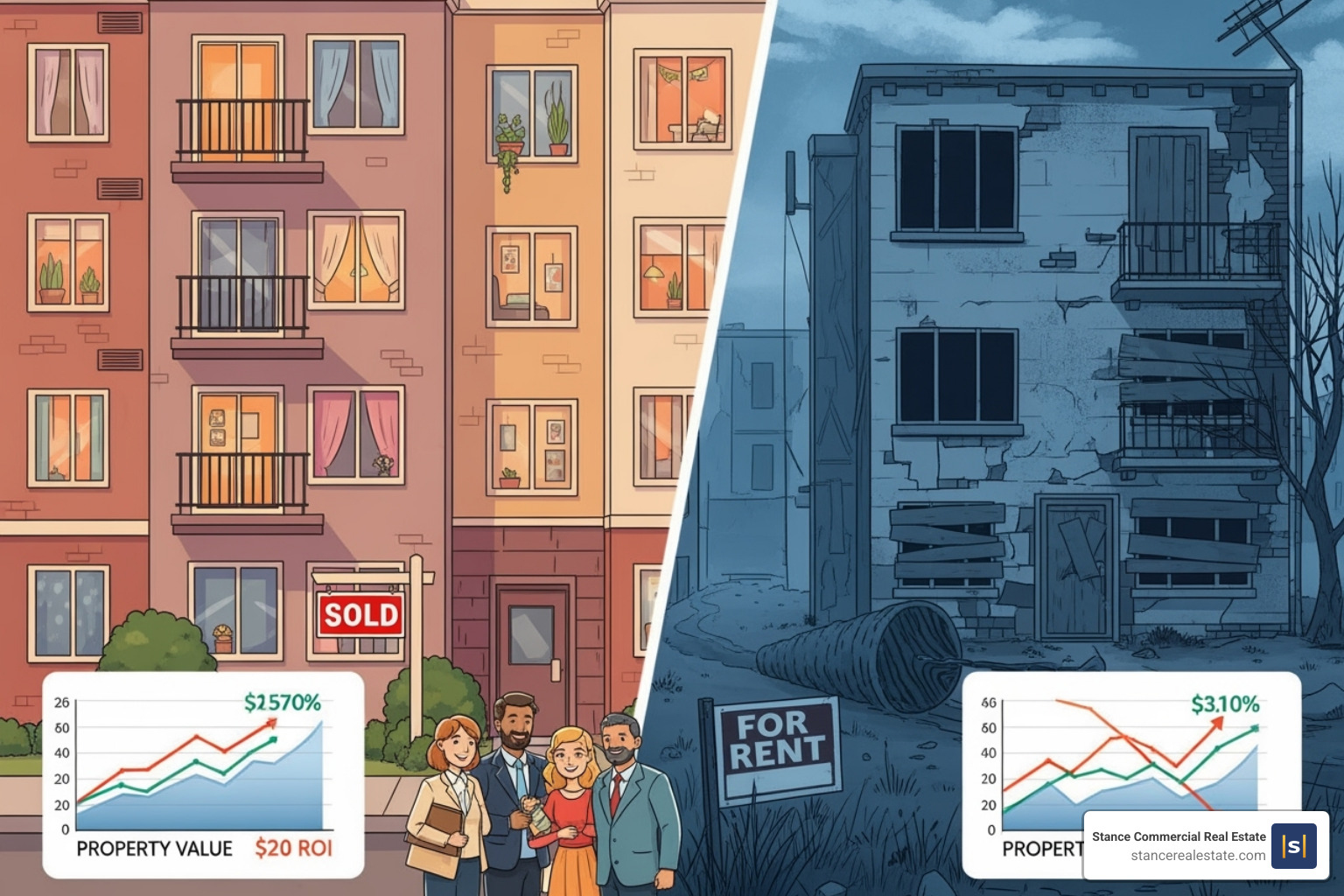
Strategic Leasing: Mitigating The Impact of Vacancy Rates on Property Value and ROI
Smart leasing is not about just filling empty spaces; it's about creating a deliberate, multi-faceted strategy to attract and retain high-quality tenants who contribute to the asset's stability and growth.
- Set Competitive, Data-Driven Rental Rates: Price your property based on current, granular market data, not on what the last tenant paid. This ensures you attract immediate interest without leaving money on the table. A rate that is even 5% too high can cause a property to languish on the market for months.
- Offer Flexible Lease Terms: In today's dynamic business environment, flexibility is a major draw. Consider offering options like shorter initial terms with renewal options, or rights of first refusal on adjacent spaces for growing businesses.
- Use Strategic Tenant Incentives: A period of free rent or a generous Tenant Improvement (TI) allowance is often far less costly than a prolonged vacancy. Calculate the breakeven point: a few months of free rent on a five-year lease is a small price to pay to avoid a year of vacancy.
- Master Tenant Retention: Keeping your existing tenants is almost always more profitable than finding new ones. This requires a proactive approach: initiate renewal conversations 9-12 months in advance, maintain open lines of communication, and address maintenance requests promptly and professionally. A simple tenant appreciation event can go a long way in building goodwill.
- Conduct Thorough Tenant Screening: A comprehensive screening process is your first line of defense against future vacancy problems. This must go beyond a simple credit check. Verify financial statements, check business references, and understand the tenant's business model to ensure they are a stable, reliable partner for your property.
- Aggressive Marketing and Broker Outreach: When a vacancy is anticipated, the marketing effort should begin immediately. This includes professional photography and virtual tours, listings on top platforms like CoStar and LoopNet, and proactive outreach to the local brokerage community with competitive commission offers. Explore our Commercial Property for Lease listings to see quality spaces with proven leasing strategies.
The Role of Proactive Property Management and Technology
Proactive property management moves beyond the basics of rent collection and repairs. It combines relationship building with powerful technology to create a superior tenant experience that encourages long-term stays and preserves the physical asset.
- Implement Preventative Maintenance Schedules: A well-maintained property signals professionalism and prevents small issues from becoming major, expensive problems. Regular, documented inspections of HVAC systems, roofing, plumbing, and safety equipment not only satisfy tenants but also protect the asset's long-term value.
- Ensure Responsive, Professional Communication: When tenants know their concerns will be heard and addressed quickly, their satisfaction and likelihood to renew skyrocket. Implement a system for tracking requests and ensuring timely follow-up.
- Leverage Property Management Software: Modern software platforms are essential for efficient operations. They can streamline rent collection, automate late fees, manage maintenance requests, and generate detailed financial reports, freeing up your time to focus on high-value tasks like tenant relations and strategic planning.
- Utilize Data Analytics for Decision Making: Don't guess—know. Use data analytics to benchmark your property's performance against the competition. Track key metrics like market rents, average time on market, and concession packages. This data allows you to make informed, agile decisions on pricing and marketing to shorten vacancy periods and maximize income.
Frequently Asked Questions about Vacancy Rates
Over my nearly two decades of working with sophisticated investors in Riverside and the broader Inland Empire, I've found that the same critical questions come up time and again. Here are the clear, actionable answers that can make a significant difference in your investment analysis and decision-making process.
What is considered a "good" or "normal" vacancy rate for commercial real estate?
There's no single magic number, as the ideal rate is highly dependent on the market, submarket, and property type. However, as a general benchmark, a healthy, stabilized vacancy rate is typically between 5% and 10%. Below 5% often indicates a very tight market with strong upward pressure on rents. Above 10% may suggest a softening market or property-specific issues. The most important concept is the "natural" vacancy rate for a given market—the level that allows for normal tenant turnover and movement without signaling market distress or forcing landlords into a price war. The key is to always compare your property's vacancy rate to the specific, current average for its submarket and asset class (e.g., Class A suburban office in Riverside).
How can an investor use vacancy rate data to find opportunities?
Smart investors don't just look at a vacancy rate; they analyze the story it tells to uncover hidden opportunities.
- Identify Declining Vacancy Trends: A market or submarket showing a consistent decline in vacancy rates often signals that demand is outpacing supply. This is a leading indicator of future rent growth, making it a prime target for acquisitions before prices fully adjust.
- Target Value-Add Opportunities: A property with an unusually high vacancy rate compared to its direct competitors can be a tremendous value-add opportunity. If you can correctly diagnose the root cause—such as poor management, deferred maintenance, or ineffective marketing—and have a clear strategy to fix it, you can acquire the asset at a discount and create substantial value by leasing it up to market levels.
- Benchmark for Underperformance: Comparing a target property's vacancy to the market average instantly reveals its competitive standing. If a property is at 20% vacancy while the market is at 8%, that 12% gap represents a clear path to increasing NOI and, therefore, forcing appreciation.
Layering this vacancy data with other economic indicators like job growth, new infrastructure projects, or corporate relocations can help you get ahead of the market and make highly informed investment decisions. Our Commercial Real Estate Investment Strategies resource provides more detailed guidance on this type of analysis.
What are the hidden costs of tenant turnover?
Many owners focus only on the lost rent during a vacancy, but the true cost of tenant turnover is much higher. These "hidden" costs can cripple a property's cash flow. They include:
- Marketing Costs: Expenses for online listings, brochures, signage, and broker events to advertise the space.
- Leasing Commissions: Fees paid to brokers for securing a new tenant, which can be substantial.
- Legal Fees: Costs associated with drafting and negotiating a new lease agreement.
- Tenant Improvements (TIs): The significant capital outlay required to reconfigure the space for the new tenant's needs.
- Management Time: The immense amount of time and resources your team spends on tours, negotiations, and project management instead of focusing on other value-add activities.
When you add all these up, the total cost of turnover can easily equal a year's rent or more, which underscores the immense value of proactive tenant retention.
Besides vacancy rate, what other metrics are crucial for assessing a commercial property?
While critically important, the vacancy rate is just one piece of a comprehensive financial puzzle. A complete analysis requires looking at several interconnected metrics:
- Net Operating Income (NOI): Gross rental income minus operating expenses (but before debt service). This is the single most important number, as it directly drives property value.
- Capitalization (Cap) Rate: The rate of return on an all-cash investment (NOI / Property Value). It's the primary tool for comparing different investment opportunities.
- Cash-on-Cash Return: Annual pre-tax cash flow divided by the total cash invested. It measures the return on your actual equity in the deal.
- Tenant Creditworthiness & Mix: The financial stability of your tenants and the diversity of industries they represent.
- Lease Expiration Schedule: A staggered schedule with no single year having a large percentage of expiring leases provides income stability and reduces risk.
- Average Rent vs. Market Rent: This comparison reveals if you are under-renting your space (an opportunity for future growth) or priced too high (a risk for future vacancy).
How Stance CRE Can Help You
The strategies we've covered—from data-driven leasing and aggressive marketing to proactive property management and a focus on tenant retention—are not theoretical. They are battle-tested, practical approaches that work. Success in this arena comes from treating vacancy management not as a reactive task, but as an active, ongoing discipline. The best owners treat every lease renewal as a critical opportunity and every market shift as a chance to gain a decisive competitive advantage.
Here in the Inland Empire, a globally significant logistics hub and a dynamic economic region, properties that adapt, invest in themselves, and stay ahead of tenant needs consistently outperform those that simply wait for leases to expire.
At Stance Commercial Real Estate, we have built our reputation on helping property owners navigate these complex dynamics. Our deep roots in the Riverside community provide unparalleled insights into what local tenants value, how to position properties for sustained success, and how to execute strategies that minimize vacancy, maximize returns, and build lasting value.
Your investment deserves more than a passive approach. It deserves a proactive, expert-led strategy.
Learn more about our commercial real estate services

The Future of Mixed-Use Developments: Live-Work-Play Spaces in Demand
Modern mixed-use development in Southern California featuring integrated office, retail, and commercial spaces with contemporary glass architecture and pedestrian-friendly design
The Rise of Mixed-Use Developments: Redefining Commercial Real Estate
The Future of Mixed-Use Developments: Live-Work-Play Spaces in Demand signifies a paradigm shift in urban planning and commercial real estate investment. This evolution moves beyond constructing isolated buildings to creating dynamic, integrated ecosystems. It's not merely an architectural trend but a strategic response to changing workforce behaviors, consumer preferences, and investment priorities. By weaving together various commercial property types, these developments foster vibrant, self-sustaining environments that generate value far exceeding the sum of their parts.
Several key drivers are accelerating this transformation:
- Post-Pandemic Shift in Work Culture: The widespread adoption of remote and hybrid work models has fundamentally altered the role of the physical office. Employees no longer need to be in a traditional office five days a week, but they crave collaborative, amenity-rich environments when they are. Mixed-use developments provide the perfect solution, offering flexible workspaces surrounded by conveniences that make the commute worthwhile.
- Robust Investment Appeal: For commercial investors in Riverside, diversification is a cornerstone of risk management. The city’s growing economy and revitalized downtown make mixed-use properties especially attractive, as they naturally balance risk by drawing income from office tenants, retail businesses, and hospitality ventures. With Riverside’s mix of university-driven demand, a strong logistics sector, and a steadily expanding local population, this multi-pronged revenue model provides a powerful buffer against sector-specific downturns—helping investors secure more stable and predictable cash flow in one of Southern California’s most dynamic markets.
- Evolving Business and Employee Needs: In Riverside’s competitive labor market—shaped in part by the presence of UC Riverside and a steady stream of young talent—companies are increasingly leveraging their physical location as a tool for recruitment and retention. A workplace within one of the city’s dynamic mixed-use hubs, surrounded by high-quality dining, fitness centers, and entertainment venues, offers more than convenience. It creates an environment that appeals to graduates, professionals, and families alike, enhancing employee satisfaction while promoting a healthy work-life balance in a true college-town setting.
Mixed-use developments masterfully combine office, retail, hospitality, and entertainment spaces within a single, pedestrian-friendly location. This integration gives rise to what urban planners term "18-hour neighborhoods." Unlike sterile, single-use office parks that become ghost towns after 5 p.m., these districts remain animated from early morning coffee runs to late-night entertainment, creating a continuous cycle of commercial activity. This sustained vibrancy makes the area safer, more appealing, and economically potent.
The concept directly addresses modern business demands through convenience, community, and economic synergy. Instead of disparate properties scattered across a city, these developments create a symbiotic environment where each commercial component amplifies the success of the others. For investors, this translates to multiple, reinforcing revenue streams from a single asset. Office tenants benefit from immediate access to dining, shopping, and client entertainment venues. In turn, retail and hospitality businesses thrive on the consistent foot traffic generated by office workers, hotel guests, and event attendees. This powerful feedback loop results in higher occupancy rates, premium rental potential, and enhanced long-term asset value.
This transformative trend is reshaping markets across the country, including the Inland Empire, where underutilized retail centers and vacant land are being reimagined as bustling commercial destinations. As an expert in the Inland Empire commercial real estate market, I have witnessed firsthand how these ambitious projects unlock new avenues for growth and profitability for forward-thinking investors. A deep understanding of these evolving property types is paramount for success, as explored in our comprehensive guide to Understanding the Riverside Commercial Real Estate Market.
What Are the Core Components of a "Work-Play" Space?
A successful mixed-use development is far more than a simple collection of buildings; it is a meticulously curated ecosystem of complementary commercial uses. The synergy between these components is what drives its economic engine. The core elements typically include:
- Commercial Office Space: This forms the economic anchor of the daytime economy. Modern developments offer a spectrum of office solutions, from prestigious corporate headquarters and build-to-suit campuses to flexible co-working hubs and satellite offices for companies embracing a hub-and-spoke model. The proximity to a rich tapestry of amenities makes these office spaces exceptionally attractive, helping companies foster a vibrant corporate culture and win the war for talent.
- Retail and Dining: This is the commercial lifeblood of the development, providing essential services and creating a sense of place. A carefully curated tenant mix is crucial. It should include a variety of options, such as fast-casual eateries for office workers, high-end restaurants for client dinners, boutique shops, and essential services like banks or fitness centers. This diverse offering ensures the development caters to a wide audience and captures spending throughout the day and evening.
- Entertainment and Hospitality: These components extend the development's commercial vibrancy beyond standard business hours. Cinemas, live music venues, art galleries, and boutique hotels act as powerful magnets, drawing visitors from across the region, especially during evenings and weekends. This influx of external traffic provides a significant revenue boost for on-site retail and dining establishments.
- Public Green Spaces and Plazas: Well-designed public realms are the connective tissue of a mixed-use development. Landscaped parks, inviting plazas with seating, and interactive water features serve as communal gathering points. They enhance the aesthetic appeal, promote well-being, and provide versatile venues for programmed events like farmers' markets, outdoor concerts, and seasonal festivals, which further drive foot traffic and community engagement.
The seamless integration of these elements creates a powerful, self-reinforcing economic loop. The daytime population from the office spaces provides a captive audience for retailers and restaurants. In the evening, the entertainment and hospitality venues draw a new wave of visitors, sustaining commercial activity. This symbiotic relationship is the defining characteristic that makes mixed-use developments such a compelling and resilient asset class for commercial real estate investors.
The Investment Advantage: Why Mixed-Use Properties Are a Smart Portfolio Addition
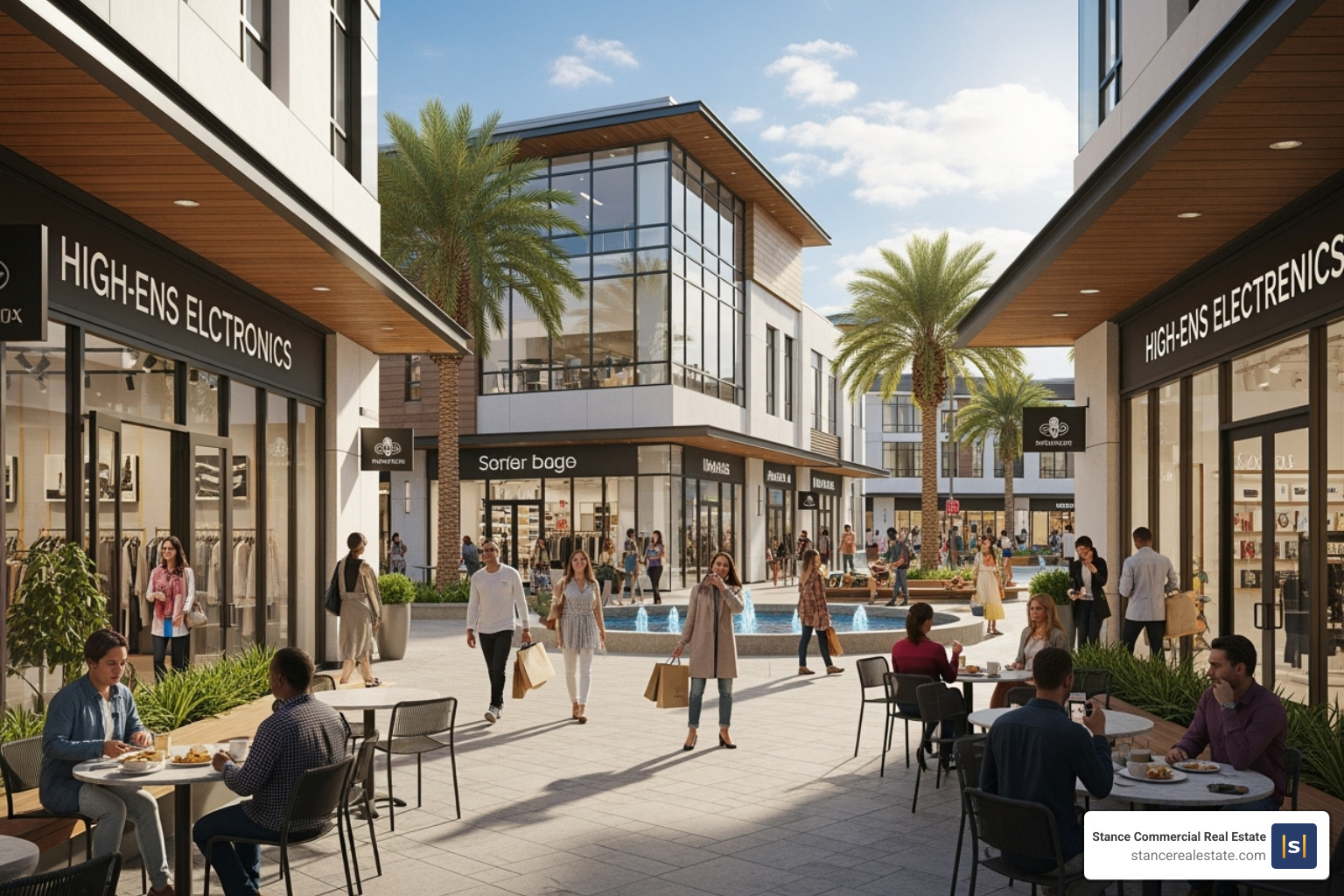
For forward-thinking investors, the rise of mixed-use developments—true live-work-play environments—translates into measurable financial advantages and long-term portfolio stability. Unlike traditional single-use assets, these projects combine office, retail, and hospitality into one integrated destination, creating built-in diversification and synergy. The result is a more secure and growth-oriented investment model that reduces reliance on any single tenant or sector. By spreading risk across multiple revenue streams within a cohesive property, mixed-use developments offer both resilience in shifting markets and the potential for outsized returns in today’s evolving commercial landscape.
This built-in diversification creates a powerful economic moat. If the office market faces headwinds, robust consumer spending can keep the retail and hospitality components thriving, thus maintaining a steady overall cash flow. The key financial benefits for investors are compelling:
- Diversified and Resilient Income Streams: Revenue is generated from multiple, often counter-cyclical, sources. Office tenants provide stable, long-term lease income, while retail tenants can offer percentage-rent agreements tied to sales performance. Hospitality and entertainment components capture discretionary spending. This blend provides a formidable hedge against market volatility in any single commercial sector.
- Premium Rental Rates and Higher Yields: The inherent value proposition of a mixed-use environment allows property owners to command premium rents. Tenants are willing to pay more for the unparalleled convenience, built-in amenities, and constant foot traffic that these developments provide. This leads to higher net operating income (NOI) and, consequently, more attractive capitalization rates for investors.
- Lower Vacancy Rates and Reduced Turnover: The integrated ecosystem creates natural, sustained demand. Office workers form a captive market for on-site retailers and restaurants. Conversely, the vibrant array of amenities serves as a powerful magnet for attracting and retaining high-quality office tenants. This symbiotic relationship leads to longer lease terms, lower vacancy rates, and reduced marketing and re-leasing costs over the life of the investment.
Throughout my years of experience guiding clients through Investing in Riverside Commercial Properties, I have consistently observed that well-executed mixed-use projects outperform their single-use counterparts in both occupancy levels and long-term value appreciation. They are not just buildings; they are destinations that foster a loyal customer base.
How Mixed-Use Developments Contribute to Local Economic Growth
Beyond the impressive returns for individual investors, these developments serve as powerful economic engines for entire communities. A thoughtfully planned mixed-use project can catalyze the transformation of a neighborhood, fostering sustainable prosperity and creating a legacy of growth. Their contributions include:
- Attracting and Retaining Businesses: The dynamic environment and ready-made customer base make these developments highly attractive to a wide range of businesses, from innovative startups seeking a collaborative atmosphere to established corporations looking for a prestigious address.
- Creating Diverse and Stable Job Opportunities: These large-scale projects generate a multitude of jobs across various sectors, including high-skilled positions in construction and engineering, professional services, property management, retail, and hospitality.
- Boosting Municipal Tax Revenue: As property values appreciate and commercial activity flourishes, local governments see a significant increase in their tax base. This includes higher property tax collections, as well as new revenue from sales taxes and business license fees, which can be reinvested into public services.
- Revitalizing Underutilized Areas: Mixed-use projects are an ideal solution for urban infill and revitalization. They can transform blighted industrial sites, aging strip malls, or vacant lots into thriving, walkable commercial hubs, thereby maximizing land use, curbing urban sprawl, and breathing new economic life into communities.
The inherent complexity and scale of these projects have spurred growth within the Commercial Real Estate Services Industry, demanding specialized expertise in finance, law, design, and management to unlock their substantial rewards.
For companies exploring options for Leasing Office Space in Riverside, properties that have been developed with these core principles in mind consistently attract the best tenants and maintain the highest occupancy rates over the long term.
Frequently Asked Questions about Mixed-Use Developments
As experts in The Future of Mixed-Use Developments: Live-Work-Play Spaces in Demand, we frequently engage with investors, developers, and business owners to demystify this complex but rewarding asset class. Here are detailed answers to some of the most common inquiries we receive.
Why is mixed-use development considered more sustainable?
Sustainability in mixed-use projects is a multi-faceted concept that encompasses economic, social, and environmental efficiencies. They are inherently more sustainable than conventional, single-use developments for several key reasons:
- Reduced Car Dependency and Emissions: By co-locating office, retail, and entertainment spaces, these developments create walkable environments where employees and visitors can accomplish multiple tasks in one trip, often without using a car. This significantly reduces vehicle miles traveled (VMT), which in turn lowers traffic congestion and carbon emissions.
- Efficient Land Use and Smart Growth: Mixed-use projects promote density and vertical development, which is a far more efficient use of valuable land than low-density, sprawling development patterns. This helps to preserve open space, protect natural habitats, and curb the high infrastructure costs associated with urban sprawl.
- Shared Infrastructure and Resources: The model allows for the highly efficient sharing of critical infrastructure. For example, a single parking structure can serve office workers during weekday business hours and then accommodate patrons of restaurants and entertainment venues in the evenings and on weekends. This shared-use model reduces the need for redundant facilities, lowers construction and operating costs, and minimizes the development's overall environmental footprint.
What are the biggest challenges for mixed-use development projects?
While the rewards are substantial, mixed-use projects are inherently complex and present unique challenges that require specialized expertise to overcome. The primary hurdles include:
- Complex Zoning and Entitlement Processes: Many municipalities still operate with outdated zoning codes that rigidly separate commercial uses. Navigating these regulations and securing the necessary entitlements for an integrated project can be a time-consuming, expensive, and uncertain process.
- Higher Upfront Costs and Complex Financing: Integrating diverse commercial property types with varied structural and infrastructure needs (e.g., ventilation for restaurants, loading docks for retail, high-tech connectivity for offices) leads to higher design and construction costs. Securing financing can also be more complex, often requiring multiple types of loans and a diverse capital stack.
- Intensive Market Analysis: Accurately forecasting long-term demand across multiple, distinct commercial sectors—office, retail, and hospitality—is a significant challenge. A successful project requires exhaustive market analysis to ensure the proposed mix and scale of uses aligns with the economic realities of the local market.
- Operational and Management Complexity: Managing a mixed-use property is far more demanding than overseeing a single-use building. It requires a sophisticated management team with expertise across various commercial property types. The management must also excel at community management, tenant relations, and event programming to maintain the vibrancy of the development.
How do mixed-use developments impact commercial property values?
Mixed-use developments typically have a powerful, positive impact on the value of both the property itself and the surrounding commercial real estate. The vibrant, synergistic environment they create drives value in several ways:
- Increased Demand and Premium Rents: The unparalleled convenience and dynamic atmosphere create intense demand for both office and retail space. For retail tenants, the built-in customer base of thousands of office workers and visitors is an invaluable asset that drives sales and justifies premium lease rates. For office tenants, the rich on-site amenities are a critical tool for attracting and retaining top talent, allowing owners to command higher rents than comparable single-use office buildings.
- Enhanced Financial Stability and Investor Appeal: The diversified revenue streams generated by the different commercial components create a more stable and predictable financial performance. This resilience is highly attractive to institutional investors and lenders, which can lead to a lower cost of capital and, consequently, higher property valuations.
- Long-Term Appreciation Potential: By creating a true 'destination,' a successful mixed-use project can elevate the profile and desirability of an entire neighborhood. This 'placemaking' effect often leads to an overall appreciation potential that significantly exceeds what standalone commercial properties can achieve, creating substantial long-term wealth for investors.
How is a mixed-use development financed differently from a single-use property?
Financing a mixed-use project is a more intricate process than financing a standard commercial building due to the multiple property types involved. Lenders view each component—office, retail, hospitality—as having its own distinct risk profile and revenue model. Consequently, the financing structure is often a hybrid. A developer might need to secure a traditional commercial mortgage for the office component, a separate construction loan for the retail portion that may be contingent on pre-leasing thresholds, and potentially specialized financing for a hotel. This often requires dealing with multiple lenders or finding a specialized lender with a dedicated mixed-use financing program. The complexity of the capital stack is higher, and investors must demonstrate a sophisticated understanding of each component's market to secure favorable terms.
What are the key metrics for measuring the success of a mixed-use development?
While traditional metrics like occupancy rates and rental income are crucial, they don't tell the whole story for a mixed-use project. Success is measured by the health of the entire ecosystem. Key performance indicators (KPIs) include:
- Foot Traffic and Dwell Time: Using sensors and mobile data to measure how many people visit the development and how long they stay provides insight into its drawing power.
- Cross-Property Patronage: Analyzing data to see what percentage of office workers patronize the on-site retail and dining establishments. High cross-patronage is a sign of strong synergy.
- Retail Tenant Sales Performance: Tracking tenant sales per square foot is a direct measure of the retail component's health and the value of the built-in customer base.
- Community Engagement Metrics: Measuring attendance at programmed events and engagement on social media platforms can quantify the project's success as a community hub.
How Stance CRE Can Help You
At Stance Commercial Real Estate, our deep local expertise in the Inland Empire is built on identifying and executing these creative opportunities. We were founded on the principle that service and local knowledge make all the difference in helping our clients achieve their goals.
The future of commercial real estate is integrated, experiential, and community-focused. For investors looking to build a resilient and profitable portfolio in Riverside and the broader Inland Empire, understanding these powerful trends is essential for identifying the high-growth opportunities that will define the next decade of commercial real estate. The time to adapt your investment strategy and embrace this new paradigm is now.
Explore investment opportunities in Riverside's Opportunity Zones

Mastering Property Maintenance: A Comprehensive Guide for Real Estate Pros
Why Commercial Property Maintenance Matters

Real estate maintenance is the systematic process of preserving commercial properties through regular upkeep and repairs to ensure optimal performance and value.
Quick Definition:
- What it is: Ongoing activities to keep commercial buildings functional, safe, and attractive.
- Key types: Preventative (scheduled), predictive (data-driven), and reactive (emergency).
- Main goals: Preserve property value, retain tenants, ensure safety, and reduce long-term costs.
- Who handles it: Property managers, technicians, custodians, and specialized contractors.
Effective commercial property maintenance is a strategic approach that impacts your bottom line through tenant satisfaction, property value, and cost control. Proactive maintenance can reduce equipment failures by up to 80% and cut overall maintenance costs by 25%. This isn't just about fixing what's broken; it's about creating an environment of reliability and quality that directly translates to higher Net Operating Income (NOI). By systematically preserving the physical asset, owners can command higher lease rates, reduce tenant turnover, and minimize the financial disruption of unexpected, large-scale repairs. It's a shift in mindset from viewing maintenance as a cost center to recognizing it as a powerful value-creation engine.
In the Inland Empire's competitive market, well-maintained properties command premium rents and attract quality tenants, while poor maintenance leads to costly emergency repairs and tenant turnover.
I'm Joe Stance. In my eighteen years of managing millions of square feet of commercial real estate in the Inland Empire, I've learned that successful owners treat maintenance as a strategic investment, not just an expense.
The Strategic Importance of Property Maintenance
Think of commercial property maintenance as an insurance policy that pays you back. In the competitive Inland Empire market, strategic real estate maintenance isn't just about upkeep; it's about creating a competitive advantage that drives property value, keeps tenants happy, and protects your bottom line.
Well-maintained properties consistently outperform neglected ones in every key metric. Property value appreciation, tenant retention, risk mitigation, and brand reputation all improve when you prioritize maintenance, while operational costs decrease and long-term asset performance strengthens.
Property owners who treat maintenance as a strategic investment see higher returns. They cultivate thriving business environments that tenants want to stay in, justifying premium rents.
Preserving and Increasing Property Value
Your property's condition directly determines its market value. Curb appeal makes the first impression, but structural integrity and functional systems form the backbone of its worth. A building with a well-maintained HVAC system, solid roofing, and updated electrical components commands higher rents and attracts quality tenants who take care of the space. These are not just expenses; they are capital improvements that directly impact your property's market competitiveness.
Consider the direct return on investment (ROI) from specific capital improvements that fall under a strategic maintenance plan. Upgrading to energy-efficient LED lighting, for example, not only improves aesthetics and safety but can also reduce lighting-related energy costs by up to 75%, a saving that is passed on to tenants or boosts your NOI. Similarly, replacing an aging HVAC system with a modern, high-efficiency unit is a significant outlay, but it prevents catastrophic failures, lowers utility consumption, and becomes a major selling point for attracting and retaining tenants. These improvements are reflected in a higher property appraisal and a more favorable capitalization rate upon sale.
Regular maintenance catches small issues before they become expensive capital expenditures. Replacing a dirty HVAC filter costs around $50 and prevents strain on the system; replacing the entire unit after a catastrophic failure can cost $50,000. Proactive care prevents these costly surprises and protects your asset's value.
Enhancing Tenant Satisfaction and Retention
Happy tenants renew leases, which is the key to a stable and profitable investment. The secret is responsive service that creates a safe environment with functional amenities. When tenants know maintenance requests will be handled quickly and professionally, it builds trust and fosters positive tenant relationships. This translates directly into reduced turnover costs and higher lease renewals.
Imagine two identical office buildings. In Building A, maintenance is reactive. A tenant reports a flickering light, and it takes a week to fix. The AC is unreliable in the summer, and common areas look tired. In Building B, a proactive maintenance plan is in effect. The lighting is regularly checked, so flickering is rare. The HVAC system is serviced before the summer heat arrives, ensuring consistent comfort. Common areas are pristine. Tenants in Building B feel valued and secure in their business environment, making them far more likely to renew their lease, even at a premium. This stability is the bedrock of a profitable commercial asset.
Industry data shows that effective property maintenance can boost tenant retention rates by up to 20%. Every time you avoid a tenant turnover, you save thousands in marketing costs, lost rent during vacancy, and tenant improvement expenses.
Mitigating Risk and Legal Liability
Poor maintenance can be dangerous and financially devastating. Code compliance and hazard prevention are not optional. A loose handrail, a faulty electrical outlet, or a cracked sidewalk can result in liability lawsuits that far exceed the cost of the simple repair. These are preventable risks that no owner can afford to ignore.
Beyond general safety, strategic maintenance addresses specific compliance mandates that can carry severe penalties. This includes ensuring adherence to the Americans with Disabilities Act (ADA), which requires accessible pathways, restrooms, and parking. It also involves rigorous fire safety protocols, such as maintaining clear egress paths, testing sprinkler systems annually, and ensuring fire extinguishers are certified. Proactive inspections can identify and remedy potential hazards like uneven pavement that could lead to a slip-and-fall lawsuit, or faulty wiring that poses a fire risk. These actions are not just about avoiding lawsuits; they are fundamental to responsible property ownership.
Your property's condition also directly affects your insurance premiums. Insurers reward well-maintained, lower-risk properties with better rates. Furthermore, proactive maintenance prevents most tenant disputes before they can escalate into costly legal headaches.
Core Strategies and Tasks for Effective Real Estate Maintenance
Successful real estate maintenance relies on a clear strategy, not just reacting to problems as they arise. The most effective property owners in the Inland Empire use a balanced approach that combines three key maintenance strategies for optimal results.
Proactive vs. Reactive: Key Maintenance Strategies
The difference between a profitable property and a money pit often comes down to your maintenance philosophy.
- Preventative Maintenance (PM): This is your foundational strategy. It involves creating PM schedules for routine tasks like seasonal HVAC servicing, checking belts and filters, and cleaning coils. This scheduled upkeep can prevent up to 80% of equipment failures, saving you from costly downtime and emergency repairs. A practical PM schedule for a commercial HVAC system might look like this: Quarterly: Replace all air filters, inspect and clean drain pans and lines. Semi-Annually (Spring/Fall): Clean condenser and evaporator coils, check refrigerant levels, inspect and tighten all electrical connections, and lubricate motors and bearings. Annually: Inspect ductwork for leaks, check belts for wear and tear, and verify thermostat calibration. Documenting these tasks in a CMMS creates a verifiable history of care that is invaluable for troubleshooting, tenant discussions, and potential sale due diligence.
- Predictive Maintenance (PdM): This advanced strategy uses condition monitoring technology—like thermal imaging to spot electrical hot spots or vibration analysis on motors—to predict failures before they happen. It allows you to fix components at the optimal time, potentially reducing maintenance costs by 25% by avoiding unnecessary work and preventing unexpected breakdowns. To illustrate, thermal imaging can scan electrical panels under load to reveal 'hot spots'—areas of high resistance caused by loose connections or failing components. These spots are invisible to the naked eye but are precursors to electrical fires or equipment failure. Vibration analysis on large motors, like those in HVAC systems or industrial equipment, measures frequency patterns. Changes in these patterns can indicate issues like bearing wear, misalignment, or imbalance long before the motor fails audibly or seizes up, allowing for a planned, non-emergency replacement.
- Reactive Maintenance (RM): This is the break-fix model for unexpected failures. While unavoidable, relying on it as your primary strategy is inefficient and can cost up to 50% more than proactive approaches due to overtime labor, rush shipping for parts, and potential tenant disruption.
Common Commercial Real Estate Maintenance Tasks
Every commercial property requires consistent attention in several core areas. A comprehensive maintenance plan should include:
- HVAC System Checks: Regular filter changes, coil cleaning, and calibration to ensure tenant comfort and energy efficiency. This also includes checking and cleaning ductwork and verifying thermostat calibration.
- Plumbing and Electrical: Routine inspections of pipes, drains, fixtures, panels, and wiring to prevent leaks and outages. This extends to periodic hydro-jetting of main drain lines to prevent blockages and testing of Ground Fault Circuit Interrupter (GFCI) outlets in wet areas.
- Exterior and Grounds: Professional landscaping, irrigation system checks, and parking lot sweeping and repairs. It also includes facade inspections, pressure washing of walkways, window cleaning and caulking, and integrated pest management.
- Lighting: Regular checks on all exterior, parking lot, and interior common area lighting for safety and security.
- Roofing: Semi-annual inspections and prompt repairs of any damage to prevent costly water intrusion. This involves clearing roof drains and scuppers, inspecting flashing around vents and equipment, and checking for membrane deterioration.
- Janitorial Services: Daily cleaning and sanitation of common areas to maintain a professional and healthy environment.
- Fire and Life Safety: Regular testing and certification of all safety systems, including sprinklers, alarms, and extinguishers.
Staying Compliant: The International Property Maintenance Code (IPMC)
The International Property Maintenance Code (IPMC) sets the minimum standards for existing commercial buildings, covering building safety, sanitation, and fire safety equipment. These codes are updated every three years, and local jurisdiction adoption can create specific requirements within the Inland Empire.
Violations can lead to fines, legal issues, and unhappy tenants. For instance, the IPMC specifies minimum standards for natural light and ventilation in occupied spaces, requirements for safe and sanitary plumbing fixtures, and mandates for the structural integrity of foundations, walls, and roofs. It also dictates the proper maintenance of fire safety equipment. The good news is that a robust, proactive maintenance program that addresses structural integrity, cleanliness, and safety systems will naturally align with most IPMC requirements, making compliance a byproduct of good management.
For detailed information about current standards, you can check what the IPMC covers here
Assembling Your Maintenance Team: Roles and Resources
Key Roles and Responsibilities
Successful real estate maintenance requires several key roles, whether in-house or outsourced:
- Property Manager: The strategic lead who oversees budgets, coordinates vendors and staff, manages tenant communication, and ensures compliance. The Property Manager is the conductor of the maintenance orchestra. They don't just react to issues; they develop the comprehensive maintenance plan, create the budget, select and manage all vendors and staff, and serve as the primary point of contact for tenants. Their role is to translate the owner's financial goals into a tangible, on-the-ground operational strategy, providing regular reports on performance, costs, and compliance to ensure the owner's investment is protected and enhanced.
- Maintenance Technician: The hands-on professional who performs repairs on systems like HVAC, plumbing, and electrical. Certifications like the Systems Maintenance Technician (SMT) designation from BOMI International demonstrate relevant skills.
- Custodian: Responsible for cleanliness, sanitation, and waste management, often serving as the first to spot minor issues.
- Specialized Contractors: Experts hired for complex jobs like major roofing, elevator servicing, or fire suppression system maintenance.
Building Your Team: In-House vs. Outsourced Maintenance
Many property owners in the Inland Empire use a hybrid approach: an in-house team for daily tasks and outsourced contractors for specialized work. An in-house route offers maximum control but comes with the overhead of payroll, benefits, and liability. When considering an in-house team, factor in the 'hidden' costs beyond payroll: the purchase and maintenance of tools and service vehicles, ongoing training and certification costs, and the managerial overhead required for scheduling and supervision. Outsourcing provides flexibility and access to specialized expertise without the management burden, but requires careful vetting of vendors to ensure quality and reliability. For an outsourced model, success hinges on rigorous vendor management. This means not just collecting quotes, but thoroughly vetting potential partners by checking their licenses, verifying their insurance coverage (both General Liability and Workers' Compensation), and speaking with current clients. A well-drafted Service Level Agreement (SLA) is critical, clearly defining the scope of work, response times for different priority levels, and key performance indicators (KPIs).
The best structure depends on your portfolio. A single building may benefit from outsourcing, while a large commercial park could justify a full in-house team. The goal is to find the most efficient and cost-effective solution for your specific property.
Frequently Asked Questions about Commercial Property Maintenance
We hear many of the same questions from commercial property owners across the Inland Empire. Here are answers to the most common inquiries about real estate maintenance.
What is the primary role of a property manager in maintenance?
A property manager acts as the central coordinator for all maintenance activities, serving as the owner's strategic partner. Their primary role is to protect the investment by creating and managing maintenance budgets, scheduling preventative work to minimize costly surprises, managing all tenant repair requests to ensure satisfaction, and hiring and supervising qualified vendors or in-house staff. Crucially, they also ensure the property remains safe and compliant with all local codes and regulations.
How do maintenance needs differ between office, retail, and industrial properties?
Maintenance priorities are highly dependent on the property type and its use:
- Office Buildings: The focus is on creating a professional and comfortable environment for tenants. Key areas include high-performance HVAC systems, quality lighting, and impeccable upkeep of common areas like lobbies, elevators, and restrooms.
- Retail Properties: The emphasis is on curb appeal and customer safety to drive traffic for tenants. This includes pristine parking lot maintenance, highly visible and functional signage, clean storefronts, and attractive landscaping.
- Industrial Properties: The priority is functionality, durability, and safety for heavy-duty operations. Maintenance focuses on robust systems like loading docks and overhead doors, large-scale roofing, high-capacity electrical systems, and strict compliance with industrial safety codes like OSHA.
What are the typical costs for commercial property maintenance?
While costs vary based on property age, size, and type, a general guideline is to budget between 1-3% of the property's value annually for maintenance. This budget typically covers three key areas: predictable routine contracts (e.g., landscaping, janitorial), preventative maintenance on major systems (e.g., HVAC, elevators), and, most importantly, contributions to a reserve fund. This fund is set aside for large, inevitable capital repairs like a new roof or parking lot resurfacing, ensuring you are financially prepared when they are needed.
What is the difference between operating expenses and capital expenditures in maintenance?
This is a critical distinction for budgeting and accounting. Operating Expenses (OpEx) are the routine, ongoing costs required to keep the property functional day-to-day. This includes items like janitorial services, landscaping contracts, minor repairs (like fixing a leaky faucet), and preventative maintenance services. These are predictable and are paid for out of the property's annual operating budget. Capital Expenditures (CapEx), on the other hand, are significant investments that replace a major asset or extend its useful life. Examples include a full roof replacement, an HVAC system overhaul, or repaving the entire parking lot. These are not regular expenses and should be funded from a separate reserve fund built up over time. Properly classifying these costs is essential for accurate financial reporting and long-term planning.
What are the biggest deferred maintenance risks for a commercial property?
Deferred maintenance—the practice of postponing necessary repairs—is one of the most significant risks to a property's value and safety. The biggest risks include:
- Water Intrusion: Postponing roof repairs or failing to seal building envelopes can lead to widespread water damage, mold growth (a serious health and liability issue), and structural decay.
- HVAC Failure: Neglecting an aging HVAC system can lead to a complete failure during extreme weather, potentially making the building uninhabitable, causing tenant business interruption, and requiring a costly emergency replacement.
- Safety Hazards: Ignoring issues like cracked sidewalks, faulty wiring, or broken handrails creates significant liability for personal injury lawsuits.
- Accelerated Decline: Small, unfixed problems often cascade into larger, more expensive ones. A small leak becomes major water damage; a worn motor belt causes a catastrophic system failure. Deferring maintenance almost always costs more in the long run.
How Stance CRE Can Help You
Implementing preventative maintenance schedules, leveraging technology like CMMS and IoT sensors for data-driven decisions, and budgeting wisely with dedicated funds for both operating expenses and long-term capital expenditures will improve your property's condition, increase its value, and improve your bottom line. The complexities of commercial property maintenance—from HVAC systems and roofing to ADA and fire code compliance—require professional expertise.
For property owners in Riverside and the Inland Empire, partnering with Stance CRE ensures your maintenance strategy is custom to our market's unique challenges. We combine local knowledge with systematic efficiency to protect and grow your investment.
Ready to optimize your commercial property's maintenance strategy? Learn more about our comprehensive commercial property management services and how we can add value to your investments: Learn more about our commercial property management services
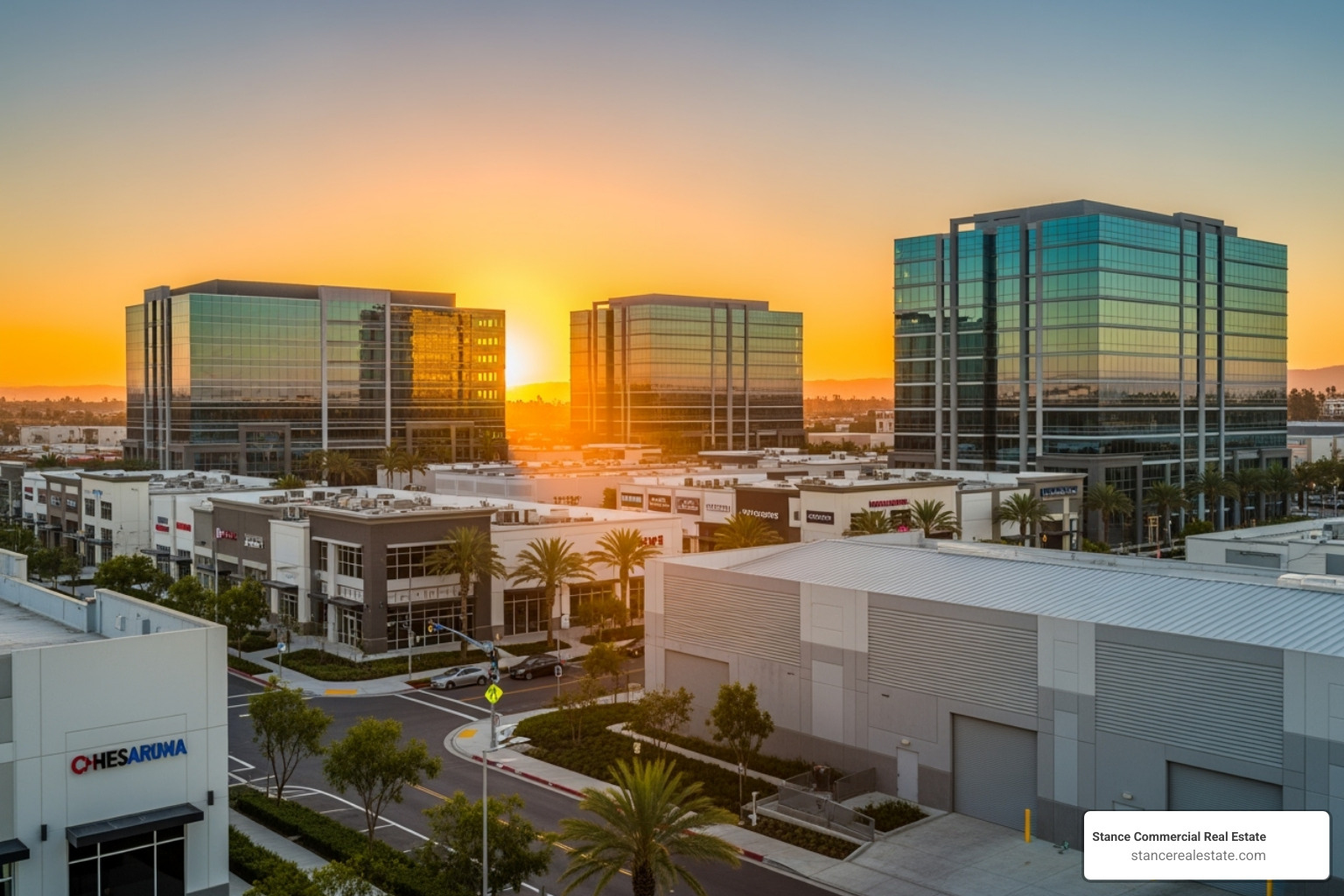
The BRRRR Method: A Step-by-Step Guide to Real Estate Success
Understanding the BRRRR Investing Strategy for Commercial Real Estate Success
Modern commercial properties in the Inland Empire showcasing investment opportunities for the BRRRR strategy
The brrrr investing strategy is a proven method for rapidly building a commercial real estate portfolio. This five-step process allows investors to recycle their initial investment into multiple properties, creating a powerful wealth-building cycle by forcing appreciation and generating passive income.
Here's how the BRRRR method works:
- Buy - Acquire an undervalued commercial property below market value.
- Rehab - Renovate to increase property value and rental appeal.
- Rent - Secure quality tenants to generate positive cash flow.
- Refinance - Pull out equity based on the improved property value.
- Repeat - Use the extracted capital to purchase the next property.
This strategy enables you to build a portfolio with minimal personal capital, achieve higher returns than traditional buy-and-hold strategies, and scale your investments efficiently.
As Joe Stance, founder of Stance Commercial Real Estate, I've seen how the brrrr investing strategy thrives in our dynamic Inland Empire market. With over eighteen years of experience in Riverside, my team has guided countless investors through this process, leveraging the area's tremendous value-add potential.
Deconstructing the BRRRR Method: The Five Core Stages
The BRRRR investing strategy is a powerful wealth-building machine, but each stage requires careful planning and execution. Let's walk through each step to see how it works in the real world.
Step 1: Buy – Acquiring the Right Commercial Property
The foundation of a successful BRRRR investing strategy is finding the right deal. We're looking for undervalued commercial assets with untapped potential-the diamonds in the rough that other investors overlook. These are often distressed properties, such as buildings facing foreclosure or those owned by landlords who have deferred maintenance. Off-market deals, found through networking and relationship building, are also gold mines.
Before purchasing, a thorough market analysis is critical to calculate the After Repair Value (ARV)-what the property will be worth after your improvements. The 70% rule is a helpful guideline: you shouldn't pay more than 70% of the ARV minus renovation costs. For example, if a property's ARV is $800,000 and rehab costs are $80,000, your maximum offer should be around $480,000 ($800,000 x 0.70 - $80,000).
Due diligence is non-negotiable. Inspect the property from foundation to roof, review existing leases, and verify permits. For financing the initial purchase, many investors use short-term hard money loans or private lenders for their speed and flexibility. For more guidance, see our guide on How to Invest in Commercial Real Estate.
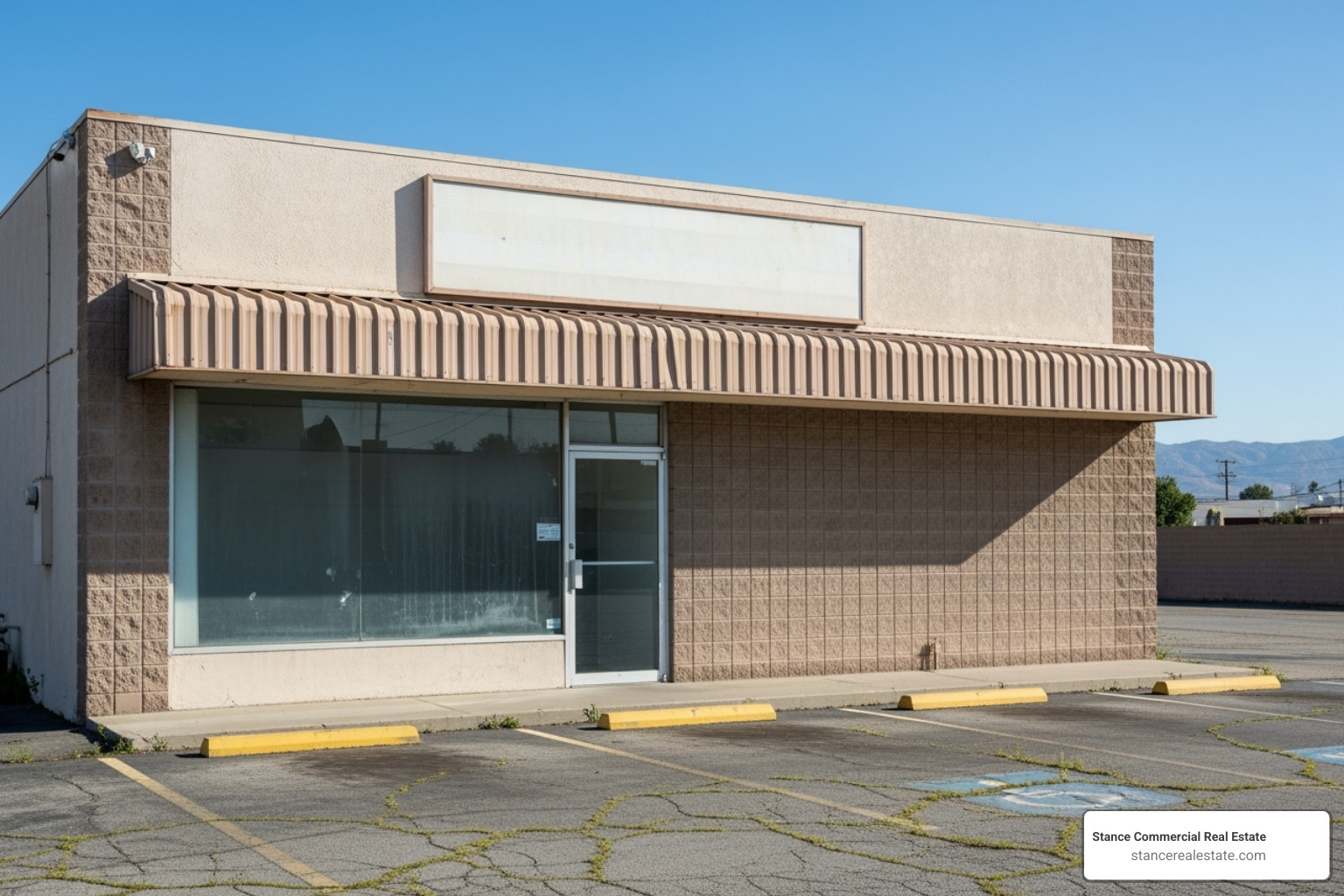
A vacant retail storefront in the Inland Empire, ripe for a BRRRR change.
Step 2: Rehab – Forcing Appreciation Through Renovation
The rehab phase is where you create forced appreciation, actively increasing your property's value. Focus on smart renovations that deliver the highest ROI on upgrades. For commercial properties, this often means facade updates, HVAC system upgrades, or reconfiguring floor plans to meet modern business needs. For industrial properties, increasing clear ceiling height or adding loading docks can significantly boost rental rates.
Effective project management is crucial. You'll need to coordinate contractors, manage timelines, and stay within budget, always including a 10-15% contingency for unexpected issues. Building relationships with reliable commercial contractors makes all the difference, as they can prevent costly delays and ensure quality work. You're renovating to appeal to commercial tenants and future buyers. For more on strategic improvements, explore our guide on Commercial Building Investment.
Step 3: Rent – Stabilizing the Asset and Generating Cash Flow
With renovations complete, it's time to find quality tenants to create stable, predictable income. This requires smart marketing and thorough screening. Commercial leasing has unique structures; you'll encounter net leases (often called NNN leases, where tenants pay most expenses) or gross leases (where you cover them). Understanding which structure fits your property and market is key.
Tenant screening for businesses involves reviewing financial statements and understanding their business model. Setting competitive rental rates is a balance-price too high and you'll sit vacant, too low and you leave money on the table. Your goal is to achieve positive cash flow and a healthy Debt service coverage ratio (DSCR). Lenders typically want to see a DSCR of at least 1.25, meaning your income is 25% higher than your debt payments. Learn more about building income streams in our article on Commercial Real Estate Passive Income Explained.
Step 4: Refinance – Recouping Your Capital for Reinvestment
This is where the magic happens. Your renovated, tenanted property is now worth significantly more, and it's time to open up that equity with a cash-out refinance. The process starts with a new property appraisal. Lenders will then offer a new loan based on a percentage of this higher value-typically 70-80% loan-to-value (LTV) for commercial properties.
Lenders will require proof of stable rental income and a good DSCR. Some also have a seasoning period, requiring you to own the property for six to twelve months. For example, if you bought a property for $400,000, spent $100,000 on rehab, and it now appraises for $750,000, a 75% LTV loan would be $562,500. After paying off your initial $500,000 costs, you'd get $62,500 back to reinvest. This recycling capital is the engine of the BRRRR strategy. Learn more about evaluating opportunities at What is a Good Cap Rate for Commercial Real Estate.
Step 5: Repeat – Scaling Your Commercial Real Estate Portfolio
Now you're ready to do it all over again. Portfolio growth through the BRRRR investing strategy creates a snowball effect, where each successful project funds the next. With each cycle, you gain experience, build relationships, and benefit from economies of scale. This disciplined approach is how you build long-term wealth and a commercial empire, one property at a time. For tools to track your portfolio, visit Commercial Real Estate Portfolio Analysis.
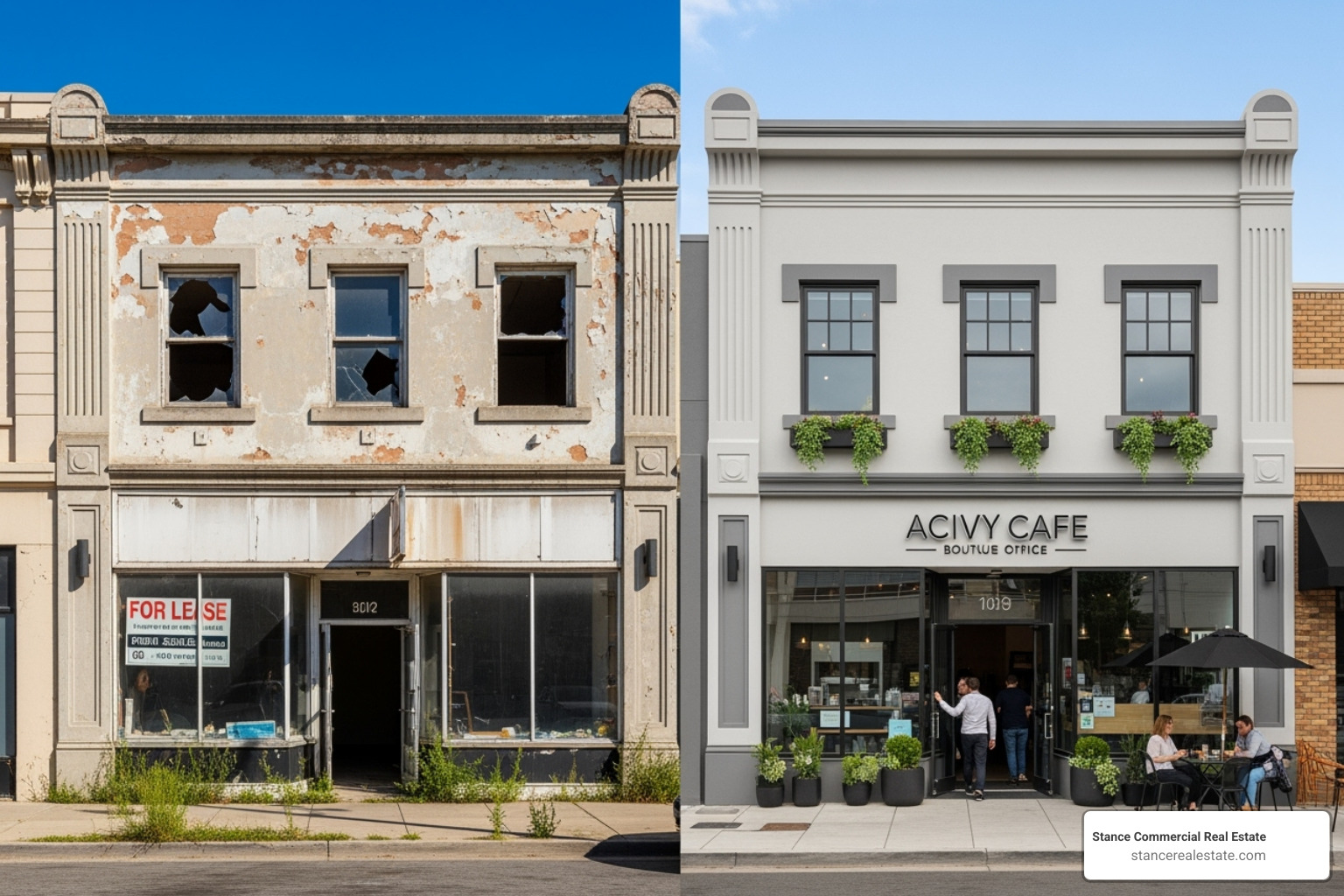
Before and after: A dilapidated commercial property transformed into a thriving, tenanted asset through the BRRRR strategy.
The BRRRR Investing Strategy: A Balanced Look at Benefits and Risks
Like any investment strategy, the BRRRR method has significant upsides and potential pitfalls. Success requires patience, dedication, and a realistic understanding of what you're getting into.
The Powerful Benefits of the BRRRR Investing Strategy
The allure of the brrrr investing strategy is its power to accelerate wealth creation. The primary benefits include rapid portfolio expansion by recycling the same capital, and a high return on investment, often leading to low-money-in deals. You're not waiting for the market to improve; you're creating value through forced appreciation with strategic renovations. Once stabilized, these properties generate consistent passive cash flow, building substantial long-term wealth as you repeat the process. For more on building these income streams, explore The Ultimate Guide to Generating Passive Income.
Navigating the Risks and Potential Pitfalls
It's crucial to be aware of the risks. The BRRRR method is not a guaranteed path to riches and requires careful management to avoid common pitfalls.
- Overleveraging: Acquiring properties quickly can be intoxicating, but taking on too much debt makes your portfolio vulnerable to market shifts or tenant issues.
- Market Risk: Economic downturns can impact property values and your ability to find tenants, potentially leading to appraisal gaps during the refinance stage.
- Renovation Issues: Cost overruns and construction delays are common. A $50,000 rehab budget can easily swell, and every month of delay is a month of carrying costs without income.
- Extended Vacancies: Finding the right commercial tenant can take time. Meanwhile, mortgage payments and operating costs continue.
- Refinancing Difficulties: Lending standards and interest rates can change, making it harder to qualify for a refinance or reducing the amount of cash you can extract.
Managing these risks requires thorough preparation, conservative budgeting, and a strong team of professionals. For investors seeking different risk profiles, consider exploring Low Risk Real Estate Investing Strategy options.
BRRRR vs. Other Commercial Real Estate Strategies
Understanding how the brrrr investing strategy stacks up against other popular investment approaches helps clarify when it's the right tool for the job. Each method suits different goals, timelines, and risk tolerances.
Here's a comparison of three common strategies:
| Criteria | BRRRR Investing Strategy | Traditional Buy-and-Hold | Commercial Flipping |
|---|---|---|---|
| Capital Required | Low (recycled) | Moderate to High | Moderate to High |
| Timeline | Medium-term (3-12 months/cycle) | Long-term (years) | Short-term (3-12 months) |
| Risk Level | Medium-High | Medium | High |
| Primary Goal | Portfolio Growth & Cash Flow | Passive Cash Flow & Appreciation | Capital Gain |
| Management Intensity | High (initially), then Moderate | Low to Moderate | High |
The BRRRR method's unique advantage is its focus on capital recycling, allowing for rapid portfolio growth funded by the assets themselves. It contrasts with flipping, which targets a single capital gain, and traditional buy-and-hold, where capital remains tied up in one property for long-term, slower growth. For a broader overview of your options, check out Different Real Estate Investment Strategies.
Essential Skills for a Successful BRRRR Investing Strategy
Executing the BRRRR method requires more than just capital; it demands a specific set of skills. Mastering these is key to navigating the complexities of each deal.
An investor reviews blueprints and financial documents on a commercial construction site.
- Market Knowledge: You need a deep understanding of local property values, rental rates, and economic trends to spot opportunities.
- Deal Analysis: Accurately calculating the After Repair Value (ARV) and applying metrics like the 70% rule is crucial for ensuring a deal is profitable from the start.
- Project Management: You must effectively coordinate contractors, manage budgets, and oversee timelines to keep the rehab phase on track and avoid costly overruns.
- Negotiation Skills: Strong negotiation is vital when dealing with sellers, lenders, contractors, and tenants to protect your bottom line at every stage.
- Financial Literacy: Understanding commercial financing, from loan-to-value ratios to debt service coverage, is essential for securing the right loans.
The brrrr investing strategy is not a solo endeavor. Success depends on building a reliable team of commercial contractors, lenders, and real estate agents who have deep local expertise. At Stance Commercial Real Estate, we've spent decades building these relationships in the Riverside market to help investors execute their vision with confidence. To learn more, see The Insiders Guide to Commercial Real Estate Services and Investments.
Frequently Asked Questions about the BRRRR Method
Here are answers to the most common questions we hear from investors considering the brrrr investing strategy for commercial real estate.
How do you finance the initial purchase and rehab of a BRRRR property?
Financing the 'Buy' and 'Rehab' stages typically involves short-term solutions like hard money loans, private money lenders, or a commercial line of credit. These options offer the speed and flexibility needed to acquire a property and fund renovations. They are designed to be temporary and are paid off during the 'Refinance' stage, when you secure a long-term, conventional commercial mortgage based on the property's higher After Repair Value (ARV).
What makes a good commercial property for the BRRRR method?
A good BRRRR candidate is an undervalued property with significant value-add potential in a solid location. In the Inland Empire, this could be a Class C office building that can be upgraded, a retail strip with high vacancy due to poor management, or an older warehouse needing modernization like higher ceilings or more loading docks. The key is finding a property where you can force appreciation through renovation and attract quality tenants who will pay higher rents.
Are there specific considerations for BRRRR in Canada versus the U.S.?
Yes. While the core brrrr investing strategy is the same, the execution differs. In Canada, cash-out refinancing can be more conservative, potentially limiting the capital you can extract. In the United States, lenders often have "seasoning" requirements, meaning you must hold the property for a period (typically 6-12 months) before refinancing. Tax laws and financing regulations also vary significantly. Partnering with local experts who understand these regional nuances is essential for success in either country.
How Stance CRE Can Help You
The brrrr investing strategy is a dynamic method that transforms investment dollars into a powerful engine for portfolio growth. Instead of tying up capital for years, you strategically renovate undervalued commercial properties and extract your investment through refinancing, using the same money to build wealth over and over again.
Success with BRRRR requires diligence, deep market expertise, and a strong professional team. This is where local knowledge becomes invaluable. The Inland Empire has unique characteristics, and understanding its commercial growth patterns, renovation costs, and key players can make or break a deal.
At Stance Commercial Real Estate, we have spent decades building this exact expertise in the Riverside and Inland Empire markets. We help investors analyze opportunities through the lens of the entire BRRRR cycle, from identifying undervalued assets to ensuring a profitable exit through refinancing. Our goal is to help you create long-term wealth through strategic reinvestment and value creation.
Ready to build your commercial real estate portfolio? See what we do.

Retail Commercial Real Estate Remains a Strong Investment Choice in Riverside, California
Retail commercial real estate refers to properties specifically designed for businesses that sell goods or services directly to consumers. This broad category includes neighborhood strip centers, grocery-anchored shopping plazas, lifestyle centers, outlet malls, and standalone retail buildings such as restaurants, banks, or big-box stores. These properties are typically located in high-traffic areas to attract customers and often serve as hubs of daily activity within a community. Successful retail real estate balances visibility, accessibility, and tenant mix to drive consistent foot traffic and long-term value.
Key Facts About Retail Commercial Real Estate:
- Higher Returns: Average gross rental returns of 9-12% vs. 3-5% for residential properties
- Longer Leases: Commercial tenants typically sign 3-10 year leases vs. 6-12 months residential
- Tenant-Paid Expenses: Commercial tenants often cover property taxes, insurance, and maintenance
- Market Strength: U.S. retail availability rate expected to hit record-low 4.6% in 2024
- Supply Constraints: Only 14 million sq. ft. of new retail space scheduled for delivery in 2024
Despite e-commerce growth, physical retail sales reached $724.6 billion in November 2024, showing 3.8% year-over-year growth. The "halo effect" proves that when retailers open physical stores, their online sales jump by approximately 30%.
The current market shows remarkable strength. Limited new construction over recent years has created a supply shortage, driving down vacancy rates and supporting rent growth. In markets like Toronto's GTA, average commercial/retail lease rates jumped from $28.01 to $47.21 per square foot in just one year.
I'm Joe Stance, and over my eighteen-year career in commercial real estate, I've leased and sold millions of square feet of property in the Inland Empire, with experience in retail commercial real estate transactions. Through my company Stance Commercial Real Estate, I've guided hundreds of companies through the complex process of finding, leasing, and purchasing retail properties that align with their specific business needs.
Understanding Retail Commercial Real Estate
When you walk into your neighborhood grocery store or grab coffee at that corner café, you're experiencing retail commercial real estate in action. These properties are specifically designed to house businesses that sell goods or services directly to you and me – the everyday consumers.
Retail commercial real estate generates income through rent payments from retail tenants, creating opportunities for investors to earn steady returns while supporting local businesses. The beauty of this market lies in its diversity, ranging from small storefront spaces where your local barber operates to massive shopping complexes that anchor entire communities.
The market splits into single-tenant and multi-tenant properties, each with distinct advantages. Single-tenant buildings house one retailer – think of a standalone Starbucks or bank branch. These properties often come with longer lease terms and stable income streams, making them attractive to investors who prefer predictability.
Multi-tenant properties combine multiple retailers under one roof or development, creating powerful synergies. When a strong anchor tenant like a grocery store draws steady foot traffic, smaller specialty stores benefit from that constant flow of potential customers.
Grocery-anchored centers have become the golden child of retail real estate. People need groceries regardless of economic conditions or online shopping trends. These properties typically feature a supermarket as the star attraction, surrounded by complementary businesses like pharmacies, dry cleaners, and restaurants.
Medical retail, or "medtail," represents one of the fastest-growing sectors. These properties house healthcare services like urgent care centers, dental offices, and specialty clinics. Medical tenants typically sign longer leases and face virtually no competition from e-commerce.
Retail Real Estate Market Research provides the local insights needed to make informed decisions in this dynamic market.
Types of Retail Commercial Real Estate Properties
Strip centers are the workhorses of retail commercial real estate – linear developments typically housing 5-15 tenants sharing a common parking area, creating convenient one-stop destinations for everyday needs.
Most strip centers are anchored by necessity-based retailers like grocery stores, pharmacies, or hardware stores that drive consistent traffic. The smaller tenants benefit from this steady flow of customers who might grab lunch while running errands.
Shopping malls face unique challenges but many are successfully adapting by incorporating experiential elements like entertainment venues, food halls, and interactive spaces that give people reasons to visit beyond just shopping.
Outlet centers serve value-conscious shoppers seeking discounted merchandise from brand-name retailers. These properties often locate outside urban cores where land costs are lower.
How Lease Structures Differ in Retail Commercial Real Estate
Triple net (NNN) leases dominate retail commercial real estate because they create alignment between landlords and tenants. Tenants pay base rent plus their proportionate share of property taxes, building insurance, and common area maintenance.
Percentage rent adds an interesting twist by tying some rent to tenant performance. Once a tenant's sales exceed a predetermined breakpoint, they pay additional rent as a percentage of gross sales.
CAM charges cover shared expenses like parking lot maintenance, landscaping, and common area utilities. These charges are typically split based on each tenant's proportionate share of the total leasable area.
Typical Returns & Risk Profile for Retail Commercial Real Estate
Retail commercial real estate typically delivers higher returns than other property types, with gross rental returns averaging 9-12% compared to 3-5% for residential properties.
Cap rates for retail properties vary dramatically based on location, tenant quality, and property type. A grocery-anchored center in a strong market might trade at 5-7% cap rates, while single-tenant properties with credit tenants could command even lower rates.
E-commerce risk remains a key concern, but the reality is more nuanced than many people assume. Physical and digital retail channels often complement rather than compete with each other.
2024-2025 Market Trends & Outlook for Retail Commercial Real Estate in Riverside, California
The retail commercial real estate market in Riverside, California is entering a rare and highly competitive phase—a genuine supply shortage that is creating significant opportunities for investors, developers, and tenants who are ready to move quickly.
Across the nation, retail availability is tightening, but Riverside stands out as a market where the imbalance between supply and demand is especially pronounced. With the U.S. retail availability rate hitting a record-low 4.6% in 2024, and only 14 million square feet of new multi-tenant retail space set for delivery nationwide, the squeeze is being felt locally. In Riverside, retail vacancy rates have dipped well below the regional average, and absorption remains strong, driven by sustained population growth and increasing consumer demand.
This supply crunch is no accident. After the 2008 financial crisis, retail development all but stalled in many parts of the country, and Riverside was no exception. For more than a decade, developers avoided large-scale retail projects, waiting for more favorable economic signals. That wait has turned into a bottleneck. As we move through 2024 and into 2025, the market dynamic has shifted rapidly—from tenant-favorable to landlord-favorable—almost overnight.
Rising construction costs have added another layer of complexity. In Southern California, we are seeing costs ranging from $300 to $500 per square foot, depending on the building type. This pricing, combined with higher interest rates and labor shortages, has made it difficult to justify speculative development unless rent growth is strong and sustained. Fortunately, Riverside's retail rents are beginning to catch up, with asking rents projected to grow by over 2% in Q4 2024, and that momentum is expected to continue into 2025.
Meanwhile, consumer spending in Riverside remains resilient. Bolstered by steady job growth, demographic expansion, and rising wages, local retail sales are performing better than many experts anticipated. The Inland Empire region—Riverside in particular—benefits from its strategic location, diverse population, and increasing foot traffic in both neighborhood centers and lifestyle destinations.
In short, Riverside is facing the same supply shortage seen nationwide, but with the added pressure of a fast-growing consumer base and limited new construction in the pipeline. Whether you are an investor seeking long-term upside, a developer evaluating build-to-suit opportunities, or a tenant searching for prime space, 2024–2025 is shaping up to be a critical window for making strategic retail real estate moves in Riverside.
Demand & Supply Drivers in 2024-2025
Population growth across the Sun Belt is unlocking retail goldmines—and Riverside, California is right in the mix. As more young professionals and families relocate to the Inland Empire, Riverside is seeing a surge in demand for high-quality retail experiences. This is not just about more people—it is about the right demographic: upwardly mobile, tech-savvy consumers with disposable income who are looking for places to shop, dine, and be entertained close to home.
The suburban migration trend that took off during the pandemic has solidified into a long-term behavioral shift. Riverside, with its balance of affordability, quality of life, and accessibility to major job markets, is a natural beneficiary. As a result, open-air community centers and convenience-oriented retail formats are thriving, while traditional enclosed malls continue to struggle with relevance. Consumers want ease, outdoor space, and a neighborhood feel—attributes Riverside’s retail corridors are increasingly built around.
While interest rates are finally stabilizing in 2024, providing more predictability for planning and underwriting, the cost of capital remains elevated. In Riverside, as elsewhere, this means speculative retail development remains limited. Investors and developers are focusing on core assets and tenant-driven projects, but that does not solve the underlying supply-demand imbalance.
Even when a project pencils out financially, construction challenges persist. The Inland Empire continues to face labor shortages and inflated material costs, making it difficult to build at scale. These bottlenecks are keeping new supply constrained, even as tenant demand accelerates.
Meanwhile, younger consumers are redefining retail expectations throughout the region. In Riverside, we are seeing growing interest in experiential retail—a mix of shopping, dining, wellness, and entertainment in dynamic, walkable environments. From local breweries and boutique fitness studios to food halls and immersive brand experiences, the next wave of retail in Riverside is about more than transactions—it is about creating places people want to spend time.
For those watching the market closely, the message is clear: Riverside’s retail landscape in 2024–2025 is full of opportunity, but the window to act is narrowing. Developers and investors who understand the demographic shifts and are ready to respond to changing consumer behavior stand to benefit most.
Impact of E-Commerce & Omnichannel on Retail Commercial Real Estate
Here's something that might surprise you: e-commerce and physical retail aren't enemies anymore—they're partners. The online share of total U.S. retail sales is expected to exceed 30% by 2030, up from 23% in 2024. But instead of killing physical stores, this growth is actually making them more valuable.
The halo effect is real and it's powerful. When retailers open physical store locations, their online sales jump by approximately 30%. Physical stores have become marketing tools, customer acquisition channels, and fulfillment centers all rolled into one.
Click-to-brick expansion is happening everywhere. Digitally native brands that started online are rushing to open physical locations. They're starting smart—with smaller format stores or pop-up locations to test markets before committing to larger spaces.
Last-mile logistics have completely changed what retailers need from their spaces. Many stores now double as mini-distribution centers, which means different layouts, better loading capabilities, and more flexibility. This is especially true in grocery and general merchandise.
Curbside pickup and buy-online-pickup-in-store services aren't nice-to-have features anymore—they're essential. Properties that can accommodate these services are commanding premium rents because tenants know their customers expect these options.
Physical stores have also become the solution to e-commerce's biggest headache: returns. Stores serve as convenient return locations for online purchases, which drives foot traffic and creates opportunities for additional sales.
Investing in Retail CRE: Pros, Cons, Returns & Lease Mechanics
When I sit down with investors considering retail commercial real estate, the first thing they notice is how different the numbers look compared to residential properties. The returns are higher, the leases are longer, and the tenant relationships work completely differently.
| Comparison Factor | Residential Real Estate | Retail Commercial Real Estate |
|---|---|---|
| Average Returns | 3-5% | 9-12% |
| Lease Terms | 6-12 months | 3-10 years |
| Tenant Responsibilities | Limited | Extensive (taxes, insurance, maintenance) |
| Management Intensity | High | Moderate |
| Entry Capital | Lower | Higher |
| Market Liquidity | High | Moderate |
Those higher returns in retail commercial real estate aren't just luck. They reflect the additional value that smart investors create through strategic tenant selection, careful lease structuring, and well-timed property improvements.
Pros & Cons of Investing in Retail Commercial Real Estate
The high yields are what initially attract most investors to retail properties. When you can generate 9-12% gross rental returns instead of the 3-5% typical in residential, it fundamentally changes your investment math.
Longer lease terms create stability that residential investors dream about. Instead of worrying about annual lease renewals, retail tenants typically commit to 3-10 year terms with predictable income.
Professional relationships make a huge difference in day-to-day management. Commercial tenants understand their lease obligations and handle issues through established business processes.
But retail investment isn't without challenges. Vacancy risk can be brutal when anchor tenants depart. Economic sensitivity affects retail properties more than necessity-based real estate like apartments or medical buildings.
Lease Structures, CAM & Percentage Rent Explained
Triple net (NNN) leases dominate retail commercial real estate because they create alignment between landlords and tenants. Tenants pay base rent plus their proportionate share of property taxes, building insurance, and common area maintenance.
Percentage rent clauses add excitement to retail leases by tying additional rent to tenant sales performance. Once tenant sales exceed a predetermined breakpoint, they pay extra rent as a percentage of gross sales.
Common Area Maintenance (CAM) charges cover shared property expenses like parking lot maintenance, landscaping, snow removal, security, and common area utilities.
Key Risks & Mitigation Strategies
Anchor tenant turnover represents the biggest risk in multi-tenant retail properties. When major tenants depart, it can trigger co-tenancy clauses allowing other tenants to reduce rent or terminate leases.
E-commerce disruption continues affecting certain retail categories, but successful retailers are adapting through omnichannel strategies that integrate online and offline operations.
Portfolio diversification across property types, geographic markets, and tenant categories reduces concentration risk.
Site Selection, Analytics & The Future of Experiential Retail
Finding the perfect location for retail commercial real estate has evolved far beyond driving around town and trusting your gut. Today's successful retailers and investors rely on sophisticated data analysis.
Demographics still matter, but we're talking about much more than counting heads. Smart retailers dig deep into household income patterns, age groups, education levels, and family structures.
Traffic counts have gotten incredibly sophisticated. Instead of someone sitting with a clipboard counting cars, we now use mobile phone data and video analytics to track pedestrian flow throughout the day, week, and year.
Parking ratios might sound boring, but they're crucial for success. Most thriving retail centers provide 4-6 parking spaces per 1,000 square feet of retail space.
Medical retail growth represents one of the hottest trends in retail real estate. As our population ages and healthcare needs increase, properties housing medical services enjoy steady patient flow, longer lease terms, and virtually no competition from online shopping.
The Retail Foot Traffic Battle explores how today's retailers compete for customer attention in an increasingly crowded marketplace.
Frequently Asked Questions about Retail Commercial Real Estate
These are the three questions I hear most often from investors considering retail commercial real estate. Let me give you the straight answers based on what I've seen in the market over the past decade.
What returns can I expect from retail commercial real estate investments?
Retail commercial real estate delivers significantly stronger returns than residential properties, but the numbers vary quite a bit depending on what you're buying and where.
Gross rental returns typically fall between 9-12%, which looks pretty attractive compared to the 3-5% you'd see from residential properties. But here's what really matters: your net returns after all expenses usually land in the 6-9% range for well-managed properties.
The beauty of triple net lease structures is that your tenants cover most operating expenses - property taxes, insurance, and maintenance. This helps maximize your net returns, though you'll still need to budget for vacancy periods, tenant improvements, and the occasional major repair.
Cap rates tell another part of the story. Grocery-anchored centers with solid anchor tenants might trade at 5-7% cap rates because they're so stable. Single-tenant properties with strong credit tenants can command even lower cap rates due to their predictability.
Don't forget about appreciation potential. In growing markets like ours here in the Inland Empire, properties often appreciate 3-5% annually while generating strong cash flow. When you combine that with your rental returns, you're looking at some compelling total return profiles.
How is limited new supply affecting rents and vacancy?
The supply shortage in retail commercial real estate is unlike anything I've seen in my career. We're dealing with only 14 million square feet of new multi-tenant retail space scheduled for delivery in 2024 - that's literally half of what the market needs.
Vacancy rates are hitting record lows. The U.S. retail availability rate is expected to drop to 4.6% in 2024, and in hot markets like Charlotte and Phoenix, we're seeing availability rates below 3.5%. That creates intense competition for quality space.
Rent growth is finally accelerating after years of modest increases. We're projecting rent growth to exceed 2% in the fourth quarter and keep climbing into 2025. Some markets are seeing even more dramatic jumps - Toronto's GTA saw commercial retail lease rates jump from $28.01 to $47.21 per square foot in just one year.
The challenge is that construction costs now range from $300-500 per square foot, which means only markets with really strong rent growth can justify new development. It's a cycle that feeds itself: supply stays tight, rents keep rising, but construction costs make it tough to add new supply.
What makes grocery-anchored and open-air centers so resilient?
Grocery-anchored centers have something most retail properties don't: necessity-based traffic. About 65% of consumer spending focuses on essential goods, which means people need to visit these centers regardless of economic conditions or online shopping trends.
Think about your own shopping habits. You probably hit the grocery store once or twice a week, and while you're there, you might grab dry cleaning, pick up a prescription, or grab lunch. That convenience factor creates incredible tenant synergies - the grocery store provides steady traffic while specialty tenants offer one-stop shopping for customers.
Open-air formats have become even more popular since the pandemic. Customers prefer outdoor shopping environments with easy parking, better visibility, and a more pleasant experience than cramped indoor malls. These centers just feel more comfortable and convenient.
The real advantage is adaptability. Open-air centers can easily reconfigure spaces, add drive-through services, or incorporate curbside pickup areas without major construction disruptions. Try doing that in an enclosed mall - it's nearly impossible.
From an investment standpoint, these properties combine stability with growth potential. The grocery anchor provides steady income while the surrounding tenants benefit from consistent foot traffic. It's a model that works in good times and bad.
How Stance CRE Can Help You
At Stance Commercial Real Estate, our deep local expertise in the Inland Empire is built on identifying and executing these creative opportunities. We were founded on the principle that service and local knowledge make all the difference in helping our clients achieve their goals.
The Southern California market is constantly evolving. Lease option investing gives you the adaptability to capitalize on market movements while protecting your capital.
Ready to explore what retail commercial real estate can do for your investment goals? Check out our insights on Investing in Riverside Commercial Properties or reach out to Stance Commercial Real Estate directly. With our local expertise and decade of retail transaction experience, we'll help you find opportunities that match your investment strategy and risk tolerance.

Lease Options: The Flexible Path to Real Estate Success
Why Lease Option Investing is Revolutionizing Commercial Real Estate
Modern commercial properties in Southern California's Inland Empire offer a dynamic range of investment opportunities, reflecting the region’s rapid growth and economic diversity. From sleek office buildings in bustling business districts to high-traffic retail centers and expansive industrial facilities near key logistics hubs, the area caters to a wide spectrum of commercial needs. With continued development, competitive pricing, and access to major transportation routes, the Inland Empire stands out as a strategic market for both seasoned investors and those entering the commercial real estate space.
Lease option investing is a creative financing strategy that lets you control commercial properties without the massive upfront capital of a traditional purchase. It combines a lease with a purchase option, giving you the right—but not the obligation—to buy a property at a set price within a specified time.
Key Benefits of Lease Option Investing:
- Low Capital Entry: Control valuable commercial properties with a minimal option fee (typically 1-5%).
- Reduced Risk: Walk away if the investment doesn't perform as expected.
- Market Testing: Evaluate a property's performance before committing to a purchase.
- Appreciation Capture: Lock in today's price while benefiting from future value increases.
- Flexible Exit: Use multiple profit strategies, including exercise, assignment, or forfeiture.
In today's high-interest-rate environment, lease options offer a powerful alternative to costly traditional financing. They create a win-win scenario for sellers, investors, and business tenants. In Southern California's dynamic Inland Empire, this strategy is a key tool for accessing a competitive market without the usual barriers.
I'm Joe Stance. In my eighteen years of experience in Inland Empire commercial real estate, I've seen lease options open up opportunities that traditional financing can't. This flexible approach is a perfect solution for investors building their portfolios strategically.
Understanding the Commercial Lease Option: A Foundation for Investors
A commercial lease option is a two-part contract combining a standard lease with a purchase option. This structure provides what investors call "control without ownership," allowing you to operate a commercial property while keeping your future purchase options open.
The lease agreement is a standard commercial lease where you pay rent for the right to use the space. The option agreement is the key: for an upfront fee, the owner gives you the exclusive right to buy the property at a pre-agreed price within a set timeframe. No one else can buy it during your option period.
The Core Components of a Lease Option Agreement
Every successful lease option contains five essential elements:
The option fee represents your "skin in the game"—typically 1% to 5% of the property's value. This non-refundable payment compensates the owner for taking their building off the market.
The purchase price gets locked in from day one. This predetermined "strike price" provides certainty and can lead to significant profits if the market appreciates.
The option period gives you breathing room—usually between 1 to 3 years in commercial deals. This timeframe allows you to secure financing or test-drive the property.
Rent credits sweeten the deal by applying a portion of your monthly rent toward the purchase price, helping you build equity while you lease.
Due diligence remains absolutely critical. Thoroughly inspect the building, review financial records, and analyze market conditions before committing.
For more details on structuring these agreements, see our guide: Commercial Real Estate Lease Agreement
How a Typical Commercial Lease Option Unfolds
Here is a summary of how these deals typically play out:
- The Search: An investor or business identifies a suitable property and a motivated owner.
- Negotiation: The parties agree on the option fee, purchase price, option period, and rent terms.
- Execution: With legal counsel, both parties sign the lease option contract, and the option fee is paid.
- The Option Period: The tenant operates from the property while preparing for the purchase (e.g., securing loan pre-approval).
- Decision Time: As the period ends, the tenant decides whether to exercise the option.
- Closing or Forfeiture: If exercised, the sale proceeds like a traditional transaction. If not, the tenant walks away, forfeiting the option fee and any rent credits.
The Strategic Advantages of Lease Option Investing in Today's Market
Lease option investing is a powerful strategy in today's market of high interest rates, where traditional financing is costly. It allows investors to secure prime commercial properties in markets like the Inland Empire without immediate, expensive debt. This approach creates a "Win-Win-Win" scenario: the owner gets premium income, the investor gains control with low capital, and the tenant secures a path to ownership.
For more insights on how market conditions affect investment strategies, check out our guide on Real Estate Investment Strategies.
Benefits for the Investor (Optionee)
- Low Capital Entry: Control properties with a small option fee (1-5%) instead of a large down payment.
- Control of Appreciating Asset: Lock in today's purchase price and benefit from potential value increases during the option period.
- "Test-Drive" a Property: Operate from a location for 1-3 years to assess its performance before committing to buy.
- Portfolio Expansion: Control multiple properties with the same capital that would be required for a single traditional purchase, diversifying risk.
Our team helps investors use this strategy to build experience and capital. Learn more about our Buyers services or explore our guide for Your First Commercial Real Estate Investment.
Benefits for the Property Owner (Optionor)
- Premium Income Stream: Command higher monthly rents and receive a non-refundable upfront option fee, boosting cash flow.
- High-Quality Tenants: Attract motivated tenants who are invested in maintaining the property as their potential future asset.
- Reduced Vacancy Risk: Lease option tenants plan for the long term, providing more stability than traditional renters.
- Locked-In Sale Price: Gain certainty for financial planning with a predetermined sale price.
We help property owners evaluate all their options. Explore our services for Sellers and Landlords.
Benefits for the Business Tenant (Tenant-Buyer)
- Path to Ownership: Bridge the gap when you need a stable location to grow but don't yet qualify for a commercial loan.
- Build Equity: Use rent credits to apply a portion of your monthly payments toward the down payment.
- Secure a Strategic Location: Lock in a desirable property in a competitive market while you prepare to purchase.
- Time to Secure Financing: Use the 1-3 year option period to strengthen financials and secure loan approval.
We assist companies in finding their ideal locations. Learn more through our Tenants services.
How to Execute a Commercial Lease Option: A Step-by-Step Guide
Executing a commercial lease option requires a methodical approach, from finding the right deal to managing the contract. Following these steps, with the help of expert legal counsel, is key to success.
For a comprehensive guide on how to approach real estate investments, see: How to Invest in Commercial Real Estate
Step 1: Identifying and Vetting the Opportunity
- Find Motivated Sellers: Look for owners who see a lease option as a solution, such as "tired landlords" or those with vacant properties or low equity.
- Analyze the Property: Dig into the building's fundamentals, suitability for its intended use, and current vs. potential income.
- Conduct Market Research: Analyze comparable properties, rental rates, and sales trends in the target area, like the Inland Empire, to ensure the terms are financially sound.
- Create a Financial Model: Project your cash flow and potential profit, factoring in all costs like the option fee, rent, and closing costs.
Step 2: Negotiation and Structuring the Agreement
- Negotiate Key Points: Focus on the option fee, purchase price, option period, and rent credits. Favorable terms can be more valuable than the lowest price.
- Involve Legal Counsel: Always use a qualified real estate attorney specializing in commercial lease options to draft a sound agreement that protects your interests.
- Record a Memorandum of Option: File this document with the county to give public notice of your purchase right, preventing the owner from selling the property to someone else.
Step 3: Managing the Option Period and Exercising the Purchase
- Manage the Property: Ensure the property is well-maintained during the lease period, whether by you or your tenant-buyer.
- Prepare for Purchase: The tenant-buyer uses the option period to secure financing by improving credit and building cash reserves.
- Close or Exit: If the option is exercised, the closing proceeds like a standard sale. If not, you have the flexibility to find a new tenant-buyer or let your own option expire, limiting your loss to the option fee.
Advanced Strategies and Critical Distinctions
Beyond the basics, advanced strategies and a clear understanding of key legal distinctions can maximize returns and minimize risk in lease option investing.
The "Sandwich" Lease Option in Commercial Real Estate
In a sandwich lease option, you act as the middleman. You secure a lease option from a property owner and then offer a separate lease option to a tenant-buyer on more profitable terms. Your profit comes from three sources: the spread between the option fees, the difference in monthly rent, and the spread on the final purchase price.
While this strategy offers significant profit potential, it also increases complexity and risk, as you are responsible to the owner even if your tenant defaults.
Lease Option vs. Lease Purchase: Understanding Your Obligation
This is a critical distinction. A lease option gives you the right, but not the obligation, to buy. You can walk away, forfeiting only your option fee. A lease purchase, however, is a binding obligation to buy. You are legally required to complete the purchase at the end of the term.
Most savvy investors prefer the flexibility and lower risk of a true lease option, especially in uncertain markets.
For more detailed information about lease purchase arrangements, visit: Lease Purchase Options
Differentiating from ROFR and ROFO
Don't confuse a lease option with a Right of First Refusal (ROFR) or a Right of First Offer (ROFO). A ROFR lets you match a third-party offer if the owner decides to sell. A ROFO gives you the chance to make the first offer.
A lease option is far more powerful because it gives you proactive control: the price and terms are already set, and you have the exclusive right to buy during the option period. This locks in your position in a way that ROFR and ROFO arrangements cannot.
Frequently Asked Questions about Commercial Lease Option Investing
Investors new to this strategy often have similar questions. Here are answers to the most common ones about lease option investing.
What are the biggest risks of lease option investing for an investor?
- Market Depreciation: If property values fall below your locked-in purchase price, you can let the option expire. Your loss is limited to the non-refundable option fee.
- Tenant Default: In a sandwich lease, if your tenant-buyer defaults, you are still responsible for payments to the owner. Thorough tenant vetting is crucial.
- Seller Complications: The owner could face foreclosure or liens that jeopardize your option. Due diligence on the seller and recording a Memorandum of Option are essential protections.
- Forfeited Option Fee: The upfront fee is non-refundable. It's the cost of controlling the asset and securing the purchase right.
Can a lease option be used on any type of commercial property?
Yes. Lease options are versatile and can be structured for nearly any commercial property, including industrial, retail, and office spaces, and even vacant land. The key is not the property type but finding a motivated seller and structuring a mutually beneficial deal.
How is the purchase price determined in a lease option?
The purchase price (or "strike price") is negotiated and locked in at the start. It's typically based on the current market value, with consideration for future appreciation. A motivated seller may agree to a price closer to the current value, while a premium may be required in a competitive market. The goal is to find a price that is fair to the owner while offering you upside potential. Some agreements include appraisal contingencies, but fixed prices provide greater certainty.
How Stance CRE Can Help You
Lease option investing is a game-changing strategy for today's commercial real estate market, especially in dynamic regions like Riverside and the Inland Empire. It provides flexibility and control, allowing investors to secure valuable assets with minimal upfront capital and risk. This approach creates win-win outcomes for investors, property owners, and business tenants alike.
In a market of rising interest rates, such creative financing solutions are no longer just alternatives—they are essential tools for success.
At Stance Commercial Real Estate, our deep local expertise in the Inland Empire is built on identifying and executing these creative opportunities. We were founded on the principle that service and local knowledge make all the difference in helping our clients achieve their goals.
The Southern California market is constantly evolving. Lease option investing gives you the adaptability to capitalize on market movements while protecting your capital.
Ready to see how this powerful strategy can advance your investment portfolio? We're here to guide you through every step.
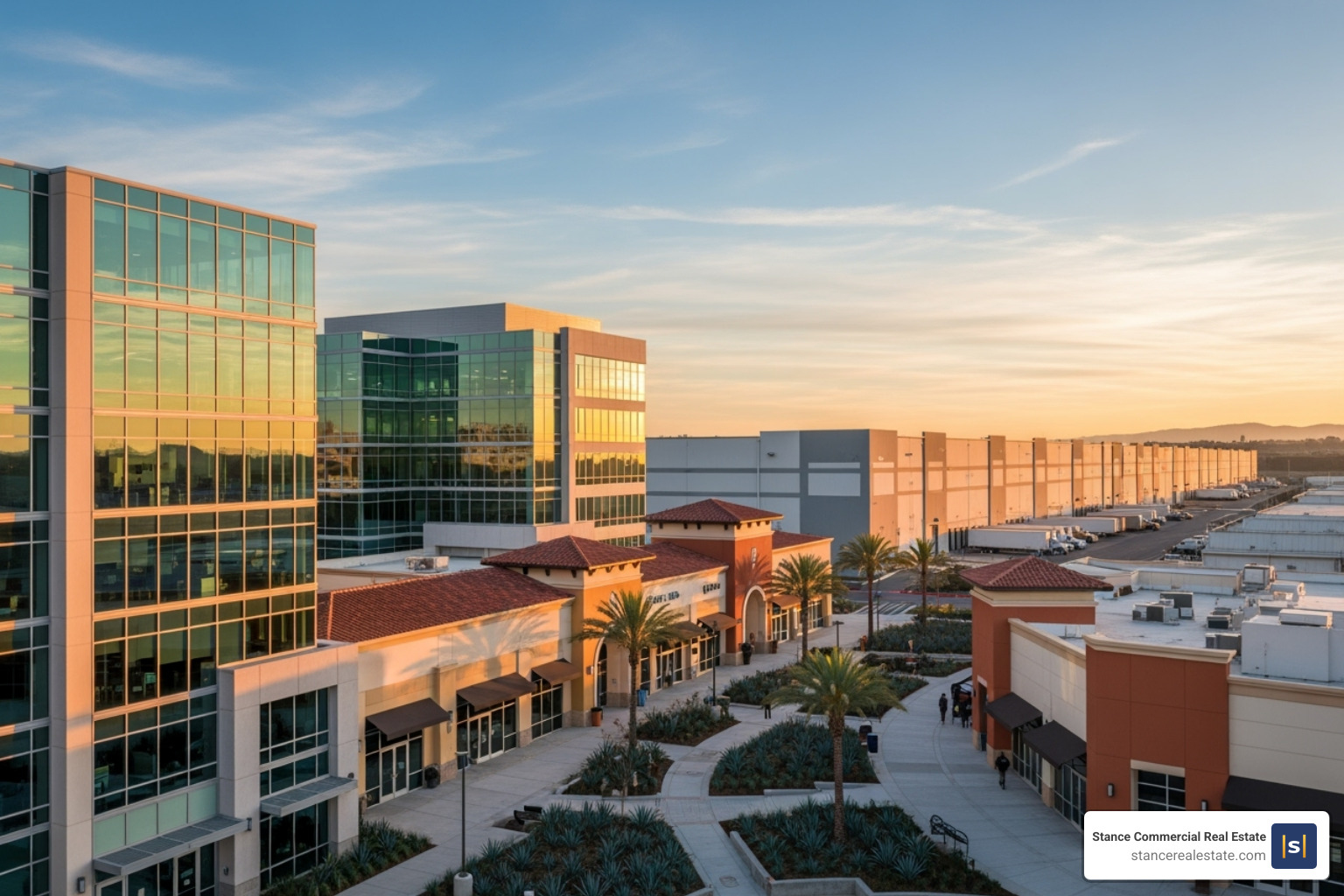
The Basics of Active Income in Commercial Real Estate
Introduction: The Two Paths of Commercial Real Estate Investing
Active commercial real estate investing puts you in direct control of your properties and their financial performance.
Active income commercial real estate is one of two primary approaches to property investment. Unlike passive investing, where you contribute capital and let others manage the asset, active investing places you in control of all major decisions.
Key differences between active and passive investing include:
- Control: Active investors directly manage properties and make operational decisions, while passive investors have limited input.
- Time Commitment: Active investing can range from a part-time role to a full-time business operation.
- Tax Benefits: Active investors may qualify for more significant tax advantages.
- Capital: Active investors can often use creative financing to lower initial capital requirements.
The active path involves hands-on property management, strategic improvements, and direct involvement in every aspect of the investment. This approach can lead to higher returns but requires significant time, expertise, and risk tolerance. It transforms you from a passive owner into a commercial real estate entrepreneur.
My name is Joe Stance, and my career in commercial real estate has focused on guiding investors through both active and passive strategies. My experience in the Inland Empire market shows that successful active investors follow proven strategies.
What Defines an Active Commercial Real Estate Investor?
An active income commercial real estate investor is the captain of their investment ship, not just a passenger. You maintain full control and decision-making authority over your property's operations. This direct involvement means you are not a silent partner; you are engaged in everything from tenant negotiations to managing renovations and handling property emergencies.
This hands-on approach requires an entrepreneurial mindset. You are running a business where each property is an operating company. This can lead to higher returns than passive investing, but it demands your time and energy. For more information, you can explore our resources on how to invest in commercial real estate.
The Mindset of a Hands-On Investor
Successful active investors are proactive problem-solvers with a long-term vision. They thrive on proactive management, analyzing market trends and planning improvements rather than waiting for reports. Key traits include:
- Risk Tolerance: Understanding that greater control comes with greater responsibility and potential rewards.
- Detail-Oriented: Knowing that small improvements can significantly impact the bottom line.
- Business Operator Focus: Actively working to force appreciation through strategic management, not just hoping the market will lift the property's value.
Active vs. Material Participation: A Critical IRS Distinction
From a tax perspective, the IRS distinguishes between being "active" and having "material participation." This distinction has significant tax implications. If you prove material participation and qualify as a "real estate professional," you may be able to deduct rental losses against your regular income (e.g., W-2 salary), which is a major tax advantage.
The IRS has several material participation tests, and you only need to meet one. The most common tests are:
- Participating more than 500 hours during the tax year.
- Participating more than 100 hours, and more than any other individual.
Core Responsibilities and Time Commitment
Active active income commercial real estate investing is a demanding endeavor, equivalent to running a business. The most successful active investors in the Inland Empire treat their properties as full-time operations requiring constant attention, strategic planning, and hands-on management. The day-to-day operations and significant time investment become part of your lifestyle.
Key Responsibilities for Active Income Commercial Real Estate
Active investors wear many hats, from financial analyst to crisis manager. Key responsibilities include:
- Market Analysis: Researching local trends, vacancy rates, and rental drivers.
- Deal Sourcing: Networking with brokers and owners to find off-market opportunities.
- Due Diligence: Scrutinizing financial records, leases, and property condition reports. For guidance, see our resource on purchasing commercial real estate.
- Lease Negotiation: Crafting terms that protect your interests and secure long-term tenants.
- Tenant Relations: Managing tenant needs to ensure high occupancy and timely payments.
- Property Maintenance: Overseeing routine upkeep and capital improvements. Our commercial real estate property management services can assist with this.
- Financial Management: Handling budgeting, cash flow analysis, and financial reporting.
- Vendor Management: Building and managing relationships with contractors and suppliers.
Gauging the Required Time and Expertise
Expect to spend hundreds of hours per year on your investments. To qualify as a real estate professional for tax purposes, you must document over 750 hours annually—about 15 hours per week.
Beyond time, you need professional expertise in several areas:
- Market Knowledge: Deep understanding of local economic drivers and regulations.
- Legal Understanding: Familiarity with leases, zoning, and landlord-tenant laws.
- Financial Literacy: Proficiency with metrics like NOI, cap rates, and IRR.
- Professional Network: Strong relationships with brokers, lenders, attorneys, and contractors.
This level of commitment is a serious business endeavor, but for those willing to put in the work, it can provide substantial returns.
Common Strategies for Active Income Commercial Real Estate
In active income commercial real estate, investors choose from several strategies to create value through direct intervention rather than waiting for market appreciation. The ability to adapt your strategy to the market and your own expertise is a key advantage of the active approach. These strategies have proven successful across markets, including here in the Inland Empire.
Explore more at Commercial Real Estate Investment Strategies.
The Value-Add Approach
The value-add strategy is the most popular path for active investors. It involves acquiring underperforming properties and forcing appreciation. In commercial real estate, value is directly tied to Net Operating Income (NOI). By increasing NOI, you increase the property's worth.
This is achieved through:
- Renovations and Upgrades: Modernizing a property to make it more attractive.
- Raising Rents to Market Rate: Justified by the improvements made.
- Improving Management Efficiency: Streamlining operations to cut costs and boost income.
Every dollar added to the annual NOI can increase property value by $10-$15, depending on market cap rates.
Ground-Up Development and Redevelopment
For investors seeking higher risk and reward, development and redevelopment offer the highest potential returns.
- Ground-up development involves building from scratch on raw land. This requires managing entitlements (zoning, permits) and construction management. The final lease-up phase involves creating new supply and proving market demand.
- Redevelopment involves changing existing structures, such as converting an old warehouse into modern offices. This breathes new life into underused assets.
Both paths require significant capital and expertise but offer best returns and the satisfaction of creating a valuable new asset.
Operating a Commercial Real Estate-Based Business
This strategy merges real estate investment with entrepreneurship. Instead of just leasing space, you run a business from the property. Examples include:
- Coworking Spaces: Providing flexible memberships and services, generating higher revenue than traditional leases. Learn more about Turning Your Commercial Space into a Coworking Space.
- Self-Storage Facilities: Managing hundreds of small rental agreements, diversifying tenant risk.
- Executive Suites: Offering furnished, serviced offices at premium rates.
These direct business operations require more daily involvement but offer greater control and higher profit margins.
Active vs. Passive Investing: A Direct Comparison
Choosing between active income commercial real estate and passive investing is a critical decision that will shape your financial outcomes and lifestyle. The right choice depends on your personal goals, available time, and risk tolerance.
| Feature | Active Commercial Real Estate Investing | Passive Commercial Real Estate Investing |
|---|---|---|
| Level of Control | Complete control over all decisions. | Limited control; decisions made by sponsors. |
| Time Commitment | High; often hundreds of hours annually. | Low; minimal ongoing involvement. |
| Required Expertise | High; deep knowledge of market and operations. | Low; relies on the expertise of others. |
| Risk Profile | Higher; direct exposure to all risks. | Lower; risk is often diversified. |
| Potential Returns | Higher potential through forced appreciation. | Moderate to steady returns. |
| Capital Commitment | Can be substantial, but creative financing exists. | Lower entry point for some options (e.g., REITs). |
| Tax Treatment | Potential to offset active income. | Generally passive income/losses. |
| Liquidity | Low; properties can take time to sell. | Varies; REITs are liquid, syndications are not. |
The Passive Path: Syndications and Partnerships
Passive investing allows you to own a piece of a commercial property without handling the day-to-day work. In a syndication, you pool capital with other investors, and a professional sponsor manages the entire process. This approach offers a lower barrier to entry in terms of time and expertise. It allows for diversification across multiple properties and markets, leveraging the skills of experienced operators. For more details, see our guide: Commercial Real Estate Passive Income Explained.
Advantages and Disadvantages of the Active Approach
The active path offers unique benefits but also comes with significant challenges.
Advantages:
- Full Control: You make all strategic decisions, allowing you to act on opportunities immediately.
- Higher Potential Returns: You can force appreciation through smart management, leading to outsized returns.
- Significant Tax Benefits: Qualifying as a real estate professional can allow you to offset other income with property losses, a powerful tax-saving tool.
Disadvantages:
- High Time Commitment: It is a demanding role, often equivalent to a part-time or full-time job.
- High Stress & Liability: You are responsible for solving every problem and bear greater personal liability.
- Requires Expertise: You must develop knowledge across finance, law, and property management or hire expensive professionals.
- Less Diversification: Capital is typically concentrated in fewer assets, increasing risk if one property underperforms.
The Tax Implications of Active CRE Investing
Understanding the tax landscape is where active income truly shines compared to passive investing. For high-income earners, the tax benefits can make the additional effort of active management highly worthwhile. Active investors can potentially use real estate losses to offset ordinary income (like a salary), which is taxed at higher rates—a benefit unavailable to most passive investors.
Qualifying as a "Real Estate Professional"
The key to open uping these benefits is qualifying as a "Real Estate Professional" (REP) under IRS guidelines. This tax classification requires meeting two strict tests annually:
- More than half of your personal services must be performed in real property trades or businesses in which you materially participate.
- You must log more than 750 hours of service in those real property activities.
Meeting these tests requires a significant time commitment and meticulous documentation (e.g., detailed time logs) to prove your hours to the IRS. The reward is the ability to treat rental losses as active losses, which can dramatically reduce your overall tax bill. For official details, see the IRS page on Passive activities – Losses and credits.
Tax Benefits of Active Income Commercial Real Estate
For a qualifying active investor, several powerful tax strategies become available:
- Offsetting W-2 Income: Use "paper losses" from depreciation to reduce your taxable income from other sources, even while the property generates positive cash flow.
- Bonus Depreciation: This allows for the immediate deduction of a large percentage of the cost of eligible property components, creating substantial upfront tax savings.
- Cost Segregation Studies: These engineering-based studies identify property components that can be depreciated over shorter periods (e.g., 5, 7, or 15 years instead of 39), accelerating deductions into the early years of ownership.
These strategies can significantly reduce your tax liability. Always consult a qualified tax advisor specializing in real estate to ensure compliance and maximize benefits. Learn more about Managing Commercial Property Expenses.
Frequently Asked Questions about Active CRE Investing
Here are answers to the most common questions we receive about active income commercial real estate.
Is all rental income considered passive by the IRS?
No. While rental income is generally considered passive, there are key exceptions. If you qualify as a Real Estate Professional and materially participate in your rental activities, the income and losses can be treated as non-passive (active). This allows you to use rental losses to offset your ordinary income. Additionally, certain short-term rental operations where significant services are provided may also be treated as an active business.
How much capital is needed to start as an active investor?
The amount of capital varies widely. While traditional commercial loans often require a 20-30% down payment, creative strategies can lower this barrier. Seller financing, where the seller acts as the bank, can allow for lower down payments. Partnering with other investors is another effective way to pool resources and reduce your initial cash outlay while maintaining active control. A well-structured deal with strong potential often attracts the necessary capital.
What is a realistic return for an active commercial real estate investment?
Returns depend heavily on strategy and execution. Value-add projects often target an internal rate of return (IRR) of 15-20% or higher. More stabilized, actively managed properties might generate steady cash-on-cash returns of 8-10% or more. The primary goal of active investing is to outperform passive market returns by forcing appreciation through renovations, superior management, and operational efficiencies. While 8-10% is a solid return, savvy active investors often achieve much more through their hands-on involvement.
Is the Active Path Right for You?
The journey into active income commercial real estate is a significant lifestyle choice, not just an investment strategy. It requires the commitment and mindset of an entrepreneur. Before proceeding, a candid self-assessment is crucial. Do you have the time, risk tolerance, and drive to manage a demanding real estate business?
If you are prepared for the challenge, the high-reward potential can be transformative. Active investors have full control over their assets, the ability to force appreciation, and access to powerful tax benefits. This path is incredibly appealing for the right person.
However, there is no single "correct" path. Passive investing is an excellent alternative for those who want exposure to commercial real estate without the intense time commitment. The key is to be honest about your personal capacity and financial goals.
How Stance CRE Can Help You
At Stance Commercial Real Estate, we help investors steer this decision. Our local market expertise in Riverside and the Inland Empire provides clients with unique insights into what strategies succeed here. We prioritize service over profit, ensuring our guidance aligns with your personal situation and long-term vision.
Whether you are ready to dive into active income commercial real estate or are still weighing your options, we are here to help you make an informed choice.
For more on getting started in our local market, see Your comprehensive guide to buying commercial property in Riverside.
Why Riverside's Healthcare Real Estate Market is Booming
Healthcare-related commercial real estate in Riverside, California, has become one of the Inland Empire’s most competitive sectors. With medical office space in high demand and limited supply—typically only around nine suites available for lease at any given time—vacancy rates remain low, hovering between 5–7%. This tight market signals more than just scarcity; it highlights strong, sustained demand and a resilient healthcare economy. For investors and medical providers alike, this creates a dynamic environment where the right property can offer long-term stability and strong returns.
Key Market Snapshot:
- Vacancy Rate: 5–7% (well below general office space)
- Purchase Prices: $250–$350 per square foot
- Cap Rates: 5.5–7%
- Annual Appreciation: 3–5% in prime corridors
- Parking Requirement: 4.44 spaces per 1,000 SF
- Average Property Size: 30,103 SF
Several forces are powering this boom: an aging population, UC Riverside’s expanding research footprint, and steady migration from coastal counties to the more affordable Inland Empire. Major developments such as the $580 million Wellness Village campus in nearby Mead Valley underscore investor confidence.
Most facilities range from 1,000 SF boutique suites to 10,000 SF multi-specialty centers. Demand is especially strong for urgent care, imaging, and behavioral health practices located near hospital clusters along the 91, 60, and 215 freeways.
I’m Joe Stance, founder of Stance Commercial Real Estate. Over the last eighteen years, I have helped hundreds of providers lease and purchase millions of square feet throughout Riverside. The insights that follow will help you steer this high-demand niche.
Why Riverside’s Healthcare Property Market Matters
Healthcare properties outperform most other commercial asset classes during economic swings thanks to long lease terms and essential-service tenants. Pair that resilience with 3–5% annual value growth and Riverside becomes a compelling location for both providers and investors.
Market Overview of Commercial Real Estate Healthcare Facilities in Riverside, California
The healthcare facilities commercial real estate market in Riverside tells a story of scarcity and opportunity. Picture this: on any given day, only about 9 medical office spaces sit available for lease across the entire Riverside area. That's like having nine parking spots for a hundred cars – it creates some serious competition.
This tight market reflects what we're seeing throughout the Inland Empire. Healthcare providers often find themselves in bidding wars, and the smart ones know they need to move fast when the right property hits the market.
The numbers paint an interesting picture. While Riverside's overall commercial real estate market averages $567 per square foot, medical office purchases typically range from $250 to $350 per square foot. This pricing difference reflects the specialized market with specific location and infrastructure needs.
Most healthcare facilities in our market range from small 1,000 square foot practices to larger 10,000 square foot multi-specialty centers. The average commercial property size in Riverside is 30,103 square feet, but medical facilities tend to be more intimate and patient-focused in their scale.
Investors love medical office properties for good reason. Capitalization rates range from 5.5% to 7%, with the highest quality properties commanding the lowest cap rates. Medical tenants typically sign long-term leases and have excellent payment histories.
Supply & Demand for Healthcare Facilities in Riverside, California
Here's the reality of Riverside's healthcare real estate market: we're dealing with a classic supply shortage. Those 5-7% vacancy rates signal a market where demand consistently outpaces what's available.
Unlike other commercial sectors, we're not seeing much new ground-up construction of medical facilities. Most new supply comes from adaptive reuse projects – taking older office buildings and converting them into medical spaces. Converting an existing building is often faster and more cost-effective than starting from scratch.
Limited new construction reflects the reality of developing medical facilities. The approval process takes longer, development costs run higher, and many developers in the Inland Empire prefer industrial projects right now. This supply constraint supports both rental rates and property values.
Key Growth Drivers
Several powerful forces are driving growth in Riverside's healthcare market. The population boom in the Inland Empire is the big story here. We're talking about 2.41 million residents within a 20-mile radius of nearby Moreno Valley – that's a lot of people who need medical care.
UC Riverside's research growth adds another layer to this story. With over 53,000 students enrolled at local universities, we're seeing demand for both student health services and attracting medical professionals to the area.
The Inland Empire migration pattern is fascinating to watch. Families and healthcare professionals are relocating from higher-cost coastal areas, bringing both patient needs and medical expertise.
The $580 million Wellness Village campus in nearby Mead Valley represents the scale of investment flowing into regional healthcare infrastructure. This 450,000-square-foot integrated behavioral and medical health campus shows that major institutions have serious confidence in our market's long-term growth prospects.
Facility Types Most in Demand
The Riverside market shows clear preferences for specific types of healthcare facilities. Urgent care centers lead the pack, driven by changing patient preferences for convenient, immediate care. These facilities typically need 2,500 to 5,000 square feet with excellent visibility and abundant parking.
Imaging centers represent another high-demand category, though they come with specialized requirements like lead-lined walls for X-ray equipment and reinforced floors for heavy machinery.
Ambulatory surgery centers (ASCs) are increasingly popular as more procedures move from expensive hospital settings to outpatient facilities. These require 5,000 to 10,000 square feet with specialized HVAC systems and medical gas connections.
Behavioral health facilities have seen explosive growth, partly driven by increased awareness and the integration of mental health services into primary care.
Location, Design & Compliance Essentials
Finding the right location for commercial real estate isn't just about square footage and rent - it's about navigating a complex web of regulations, patient needs, and operational requirements that can make or break your practice.
The regulatory landscape starts with zoning verification. Not every commercial zone allows medical offices, and some require conditional use permits for specialized services. OSHPD (Office of Statewide Health Planning and Development) regulations kick in for certain facility types, while ADA compliance goes far beyond basic accessibility.
HIPAA compliance shapes your entire floor plan. Patient consultation areas need proper sound barriers, and records storage requires secure, restricted access zones. These aren't afterthoughts - they're fundamental design elements that affect everything from your initial build-out to daily operations.
Medical Office Space for Lease Riverside listings highlight compliance features as selling points because savvy healthcare providers know these details determine operational success.
Proximity & Accessibility Factors
Hospital clusters create natural medical corridors where everyone benefits. Referral relationships flow more easily when specialists are located near primary care providers and hospital services. Riverside's medical facilities naturally gravitate toward these clusters, creating synergies that help practices thrive.
The 91, 60, and 215 freeway corridors provide regional patient access, but the sweet spot is being within 5-10 minutes of major interchanges while maintaining visibility from arterial roads. Patients want convenience, and staff need reasonable commutes to reduce turnover.
Public transit access matters more than many providers realize. Practices serving diverse patient populations often find that bus route proximity affects patient retention and no-show rates.
Typical Sizes & Specialized Build-Out Features
Healthcare facility sizing in Riverside follows predictable patterns based on practice type and provider count. Small practices typically need 1,000 to 2,500 square feet, while medium practices require 2,500 to 5,000 square feet. Large single-specialty practices often occupy 5,000 to 10,000 square feet.
The 2-3 exam rooms per provider ratio serves as your baseline for space planning, but you'll also need consultation rooms, patient waiting areas, and administrative space.
Specialized build-out features separate medical facilities from standard office space. Improved plumbing systems support multiple sinks and specialized equipment. Dedicated electrical circuits handle medical equipment loads that would overwhelm standard office electrical systems.
HVAC systems with high air exchange rates aren't just comfort features - they're infection control necessities. Sound insulation between exam rooms protects patient privacy and creates the professional environment patients expect.
Regulatory, Zoning & Compliance Checklist
Medical-use zoning verification comes first because everything else depends on it. Some areas require conditional use permits for controlled substances or specialized procedures.
Medical waste disposal requirements exceed standard commercial waste management. You'll need specialized disposal contracts and appropriate storage areas within your facility. Fire codes for medical facilities include improved egress requirements and emergency lighting.
Environmental compliance varies by service type but may include X-ray equipment licensing, hazardous material storage protocols, and air quality monitoring.
Leasing vs. Buying: Process, Best Practices & Financial Analysis
Choosing between leasing and purchasing commercial real estate isn't just about monthly payments - it's about your practice's future and how you want to build wealth over time.
Most new practices start by leasing to keep their cash available for medical equipment, hiring staff, and building patient volume. Established practices often shift toward purchasing once they've proven their location works and want the tax benefits and equity building that comes with ownership.
Lease timelines for medical facilities typically take 6-12 months from your first property tour to seeing your first patient. That includes 3-4 months just for build-out, since medical spaces need specialized plumbing, electrical, and HVAC work. Purchase transactions move faster at 4-6 months, but require more upfront capital.
The Letter of Intent (LOI) stage sets everything in motion. This is where we negotiate your base rent, tenant improvement allowances, lease term, and renewal options. Medical tenants often get higher TI allowances because landlords know you're installing expensive specialized systems they'll benefit from long-term.
SBA loans can be game-changers for healthcare facility purchases. They often require just 10-15% down for owner-occupied medical facilities, compared to 25-30% for conventional commercial loans.
Understanding Commercial Real Estate Lease Agreement terms becomes crucial since medical leases include provisions most other businesses never see.
Step-by-Step Leasing Roadmap
Start with an honest needs assessment at least 6-12 months before you want to move in. I sit down with providers to map out not just their current needs, but where they'll be in five years.
Property tours require a different eye than most commercial spaces. The location and square footage matter, but can you actually deliver quality patient care there? We look at natural light quality, HVAC performance, sound insulation between rooms, and whether the layout supports efficient patient flow.
Negotiation goes way beyond the base rent number. Your total occupancy cost includes common area maintenance, utilities, insurance, and property taxes. Medical practices often have higher utility costs due to specialized equipment running extended hours.
Build-out coordination makes or breaks your timeline. I recommend assembling your full project team - architect, contractor, equipment suppliers, and IT specialists - before you even sign the lease.
Purchase & Investment Workflow
Due diligence for healthcare facilities digs deeper than typical commercial purchases. We verify zoning compliance for your specific medical use, conduct environmental assessments, and review any existing tenant leases if you're buying an investment property.
Financing options vary significantly based on your situation. Conventional commercial mortgages typically require 20-30% down. SBA 504 loans for owner-occupied facilities often provide better terms with lower down payments.
Escrow and closing processes involve additional inspections related to medical equipment, environmental compliance, and regulatory approvals.
Advantages & Disadvantages of Leasing vs. Buying in Riverside
Leasing works best when you need to preserve capital for medical equipment and operations, want flexibility to relocate as your practice grows, or prefer focusing on patient care rather than property management.
Buying makes sense when you want long-term cost control, tax benefits through depreciation and mortgage interest deductions, and the ability to build equity over time. Ownership gives you complete control over facility modifications.
The leasing downside includes ongoing rent payments with no equity building, potential rent increases at renewal, and restrictions on facility modifications.
Buying disadvantages include significant upfront capital requirements, responsibility for all maintenance and repairs, and reduced flexibility to relocate.
How Brokers Add Value
Site selection goes far beyond finding available space. We analyze demographics to ensure sufficient patient volume, map competitors to avoid oversaturated areas, and evaluate traffic patterns for patient accessibility.
Negotiation expertise becomes crucial in Riverside's tight market where multiple offers are common. We structure offers that stand out while protecting your interests.
Compliance guidance helps steer the maze of zoning, ADA, HIPAA, and other regulatory requirements affecting healthcare facilities.
Our Commercial Real Estate Services Industry expertise includes understanding healthcare-specific lease terms and long-term strategic planning for practice growth.
Rental & Investment Metrics
Base rents typically range from $2.50 to $4.00 per square foot annually, with premium locations near major hospitals commanding higher rates.
Net-net-net (NNN) costs add another $1.50 to $3.00 per square foot annually for taxes, insurance, and common area maintenance.
Return on investment scenarios for healthcare facility purchases typically show break-even points of 7-10 years compared to leasing, assuming 3-5% annual appreciation and available tax benefits.
Technology, Incentives & Future Outlook
Technology and public-sector funding are rapidly reshaping commercial real estate.
Emerging Investment Opportunities
- Behavioral health campuses – fastest-growing segment, often backed by long-term government contracts.
- Mixed-use medical developments – pharmacies, healthy food options, and fitness amenities within a single project.
- Value-add conversions – outdated offices turned into compliant medical space at below-market acquisition costs.
- Telehealth-ready suites – smaller, tech-heavy exam rooms paired with robust data infrastructure.
Taken together, these trends point to a Riverside market that will stay tight—and innovative—for years to come.
Frequently Asked Questions about Riverside Healthcare Real Estate
How close should my clinic be to a hospital?
The sweet spot for hospital proximity really depends on what type of practice you're running. If you're in a hospital-dependent specialty like emergency medicine or surgery, you'll want to stay within a 5-minute drive for those urgent patient transfers and emergency consultations that can't wait.
For referral-based specialists, that 10-15 minute range often works beautifully. You're close enough to maintain those crucial referral relationships with hospital physicians, but far enough out to potentially snag better property values. I've worked with imaging centers that found this distance perfect - they could still rush over for emergency reads when needed, but their rent was significantly lower than the properties right next to the hospital.
Primary care practices have more flexibility with location. Your patients care more about convenient parking and easy access from their neighborhoods than whether you're next door to the hospital. That said, you still want reasonable access for those times when you need to refer patients or handle emergencies.
The key is thinking about your daily workflow. How often do you actually need to be at the hospital? How critical is response time for your specialty? These practical considerations should drive your location decision more than any arbitrary distance rule.
What parking ratio is required for an urgent-care facility?
Urgent care facilities need more parking than your typical medical office, and there's a good reason for that. While standard medical offices require 4.44 spaces per 1,000 square feet, urgent care facilities typically need 5-6 spaces per 1,000 square feet due to their walk-in nature and higher patient turnover.
Think about it - regular medical offices work on appointments, so patient flow is somewhat predictable. Urgent care is the opposite. You might have two patients at 2 PM and twelve patients at 6 PM when everyone gets off work with their sick kids.
Peak hour analysis becomes crucial for urgent care parking planning. These facilities see their biggest rushes during evenings and weekends when primary care offices are closed. That's exactly when people realize they can't wait until Monday for that cough or sprained ankle.
One smart solution I've seen work well is shared parking arrangements with complementary businesses. If you're in a mixed-use development, you might share spaces with a business that's busy during your slow hours. Just make sure the arrangement is formal and legally documented.
The bottom line? Don't skimp on parking for urgent care. Nothing frustrates sick patients more than driving around looking for a parking spot when they already feel terrible.
How Stance CRE Can Help You
For healthcare providers entering this market, my advice remains consistent: start early, plan thoroughly, and work with experienced professionals. The tight inventory means good properties move quickly, but the right preparation positions you to act decisively when opportunities arise.
Investors should take note of the unique characteristics that make healthcare real estate so attractive. Long-term leases, stable tenants, and recession-resistant demand create an investment profile that's hard to match in other commercial sectors.
At Stance Commercial Real Estate, we've built our reputation on putting your success first. Our faith-driven approach means we prioritize your long-term success over short-term commissions. When you're ready to explore the opportunities in commercial real estate in Riverside, we're here to guide you through every step of the process with the local expertise and personal attention you deserve.
The healthcare real estate market in Riverside isn't just growing—it's thriving. Whether you're healing patients or building investment portfolios, this market offers the stability, growth potential, and community impact that makes commercial real estate so rewarding.

Understanding Landlord Representation in Commercial Real Estate
Why Landlord Representation Services Are Essential for Property Success
Landlord Representation Services are specialized commercial real estate solutions where licensed brokers act exclusively for property owners to maximize rental income, minimize vacancies, and grow long-term asset value through strategic marketing, tenant screening, and expert lease negotiation.
Key Components of Landlord Representation Services
- Property Marketing & Tenant Attraction – Digital campaigns, broker networks, targeted outreach
- Market Analysis & Pricing Strategy – Data-driven rent optimization and competitive positioning
- Tenant Screening & Risk Management – Financial verification and lease structuring
- Lease Negotiation & Legal Compliance – Terms optimization and regulatory adherence
- Ongoing Asset Management – Retention programs and property repositioning
Professional representation typically trims vacancy periods by up to 30% and lifts rental rates 10-15% compared with self-managed space. By pairing market intelligence with proven leasing tactics, your property becomes the obvious choice for quality tenants.
I’m Joe Stance. Over the past eighteen years in the Inland Empire I’ve guided hundreds of landlords through successful Landlord Representation Services, leasing millions of square feet and protecting their interests. The right representation boosts immediate cash flow and safeguards future value.
Landlord Representation Services Explained
Think of Landlord Representation Services as having a dedicated champion for your commercial property. We're licensed real estate professionals who work exclusively for you, the property owner, to squeeze every dollar of value from your investment while keeping those vacancy signs in storage.
This isn't your typical property management setup. We focus laser-sharp on one thing: making your property the most attractive option in the market. That means developing smart leasing strategies, positioning your building to stand out from the crowd, and negotiating lease terms that protect your wallet and your future.
The agency relationship is key here. When we represent you as a landlord, we have a legal duty to put your interests first. Every decision, every negotiation, every marketing campaign is designed with one goal: maximizing your property's performance.
Our day-to-day work covers the full spectrum of leasing success. We analyze market conditions to price your space competitively, develop targeted marketing campaigns that highlight what makes your property special, and screen potential tenants to ensure they're financially solid and a good fit for your building.
Value creation happens through multiple smart moves: setting rental rates based on real market data, cutting down vacancy time through proven marketing techniques, and structuring lease terms that give you steady cash flow today and security tomorrow. We also spot opportunities where small property improvements can command significantly higher rents.
Whether you own a single office building in Riverside or manage multiple industrial properties across the Inland Empire, our approach adapts to fit your specific investment goals and timeline.
Difference Between Landlord Representation Services and Tenant Representation
Here's where things get interesting. Landlord representation and tenant representation are like two sides of a coin - they serve completely different masters with opposite goals.
| Aspect | Landlord Representation | Tenant Representation |
|---|---|---|
| Primary Goal | Maximize rental income and property value | Minimize occupancy costs and optimize space |
| Negotiation Focus | Higher rents, favorable lease terms, tenant improvements limits | Lower rents, tenant-friendly terms, maximum TI allowances |
| Risk Profile | Minimize vacancy, ensure tenant creditworthiness | Flexibility, expansion options, early termination rights |
| Service Scope | Property marketing, tenant screening, lease structuring | Space search, market analysis, lease negotiation |
| Success Metrics | Occupancy rates, rental income, NOI growth | Cost per square foot, lease flexibility, total occupancy cost |
The bottom line? Tenant representatives fight to save their clients money, while we fight to make you money. When a tenant rep negotiates for lower rent and maximum tenant improvement allowances, we're on the other side pushing for fair market rates and reasonable improvement budgets.
This isn't personal - it's business. Both sides need skilled representation to ensure fair deals. But as your landlord representative, we wake up every morning thinking about how to improve your property's performance and profitability.
Why Landlord Representation Services Matter in Today's Market
Today's commercial real estate market is like trying to hit a moving target while riding a roller coaster. Market volatility, changing tenant expectations, and increased competition make professional representation more valuable than a good cup of coffee on Monday morning.
Every month your property sits vacant is money walking out the door that you'll never see again. Professional landlord representation typically reduces vacancy periods by tapping into established broker networks, running targeted marketing campaigns, and maintaining relationships with active tenants looking for space.
The numbers don't lie: properties with professional landlord representation achieve 10-15% higher rental rates on average compared to owner-managed properties. That's not magic - it's the result of expert market positioning and skilled negotiation.
Tenant turnover costs can eat into your profits faster than you'd expect. Professional representation can decrease turnover by up to 25% through proactive tenant retention programs and relationship management that keeps good tenants happy and signing renewal leases.
Current market trends show tenants increasingly want flexible lease terms, sustainable building features, and technology-enabled spaces. We stay on top of these shifts, helping position your property to attract today's tenants while maintaining strong investment returns that make sense for your bottom line.
Core Responsibilities & Value Drivers
When you work with Landlord Representation Services, you're getting much more than someone to show your property. You're partnering with professionals who understand that every decision impacts your bottom line and long-term investment success.
Market analysis is where everything starts. We're constantly watching what's happening in your neighborhood and across the Inland Empire. Are new businesses moving in? Is there a construction boom affecting supply? What are tenants actually paying for similar spaces? This isn't guesswork – it's data-driven intelligence that helps us position your property to win.
Think of pricing strategy as finding that sweet spot where you attract great tenants without leaving money on the table. We look at comparable properties, but we also dig deeper. Maybe your building has that extra parking everyone wants, or you're closer to the freeway than your competition. These advantages can justify higher rents when positioned correctly.
Targeted marketing means your property gets seen by the right people at the right time. We're not just throwing up a "For Lease" sign and hoping for the best. Professional photos, detailed property specs, and strategic distribution through broker networks and online platforms ensure qualified prospects know about your space.
Tenant screening protects your investment from day one. We thoroughly vet potential tenants' finances, check references, and review their business plans. It's much easier to say no to a risky tenant upfront than to deal with payment problems or early lease breaks later.
When it comes to lease negotiation, this is where our experience really pays off. We structure deals that attract quality tenants while protecting your interests through appropriate security deposits, rent escalations, and lease terms that make sense for your property type and market conditions.
Market Knowledge & Research
Knowledge is power in commercial real estate, and we make it our business to know everything happening in your market. The difference between good representation and great representation often comes down to having the most current, accurate information when making decisions.
Macro trends paint the big picture. Interest rates, employment levels, and industry growth patterns all influence tenant demand. When we see major employers expanding in Riverside or new infrastructure projects breaking ground, we know how these changes might affect your property's value and rental potential.
Micro trends get down to the details that really matter for your specific property. We track absorption rates in your immediate area, monitor new construction that could create competition, and watch tenant movement patterns. This granular analysis helps us price your space competitively and spot opportunities before they become obvious to everyone else.
Understanding vacancy rates requires local market expertise because they vary dramatically by property type and location. What works in downtown Riverside might not apply to industrial properties in the outskirts, and we know these nuances matter for your success.
For property owners serious about maximizing returns, Managing Commercial Property Expenses becomes crucial for maintaining competitive operating costs while growing net operating income.
Tenant Attraction & Retention Programs
Finding great tenants requires casting a wide net with the right bait. Our digital campaigns use search engine optimization and targeted online advertising to ensure your property appears when tenants are actively searching. We're not just posting listings – we're creating compelling content that makes prospects want to learn more.
Broker networks remain incredibly important because many commercial deals involve tenant representatives. We maintain strong relationships with tenant brokers throughout the Inland Empire, ensuring your property gets maximum exposure to qualified prospects who might be perfect fits.
Relationship management extends far beyond lease signing. We stay in regular contact with existing tenants, addressing concerns quickly and identifying opportunities for renewals or expansions before tenants start looking elsewhere. Happy tenants are profitable tenants.
Following tenant screening guidance from the Federal Trade Commission ensures our evaluation process remains fair and legal while protecting your interests.
Lease Structuring & Negotiation Power
Great lease negotiation creates win-win outcomes that support long-term relationships while protecting your investment. We're not trying to squeeze every penny from tenants – we're structuring deals that make sense for everyone involved.
Rent escalations protect your income from inflation while staying competitive. We structure these increases based on current market conditions, your property type, and lease length. The goal is ensuring your rental income grows appropriately without pricing out good tenants.
Tenant improvement allowances require careful balance. Too little and you can't attract tenants; too much and you're giving away profit. We analyze market standards and specific tenant needs to negotiate TI packages that facilitate deals without excessive owner investment.
Security deposits and personal guarantees provide crucial protection against tenant default. We evaluate each tenant's creditworthiness to determine appropriate security requirements – enough protection for you, but not so much that we scare away good prospects.
Understanding Commercial Real Estate Lease Agreement fundamentals helps property owners appreciate why professional lease negotiation and structuring makes such a difference in long-term success.
How Representatives Maximize Occupancy & Income
The secret to maximizing your property's performance isn't just finding tenants—it's creating a systematic approach that keeps spaces filled with quality tenants paying optimal rents. Landlord Representation Services achieve this through strategic planning that addresses every aspect of your property's income potential.
Vacancy minimization starts long before your current tenants even think about leaving. We maintain detailed tracking of every lease expiration and begin conversations about renewals 12-18 months in advance. This gives us plenty of time to address any concerns your tenants might have and negotiate terms that work for everyone.
When we do need to find new tenants, our proactive approach means we're already marketing your space while current tenants are still occupying it. This overlap dramatically reduces the dreaded "dark periods" that eat into your profits.
Rent optimization requires constant attention to market conditions. We're not just looking at what similar properties are charging—we're analyzing why some properties command premium rents while others sit empty. Your property's unique advantages, whether it's superior parking, flexible floor plates, or an ideal location, become the foundation for achieving above-market rents.
The numbers tell the story: properties with professional landlord representation typically achieve 10-15% higher rental rates and reduce vacancy periods by up to 30%. That's real money back in your pocket.
Data-Driven Marketing Strategies
Today's tenants start their space search online, which means your property needs to shine in digital channels. Our data-driven marketing strategies ensure your space gets seen by the right prospects at the right time.
SEO optimization for property listings means when a tenant searches for "office space near Riverside" or "industrial warehouse Inland Empire," your property appears at the top of their results. We craft property descriptions using the exact terms tenants are searching for, making sure your space gets maximum visibility.
Social media marketing extends your reach beyond traditional commercial real estate channels. Professional photography and targeted advertising help showcase your property's personality and unique features to a broader audience. Sometimes the perfect tenant finds your space through a well-placed LinkedIn post or Facebook ad.
Drone tours and virtual reality technology have revolutionized how we market properties. Prospective tenants can experience your space from anywhere, which is especially valuable for out-of-area businesses or during times when in-person tours aren't practical.
Community positioning highlights the advantages of your property's location. We don't just mention that you're "conveniently located"—we explain how your location helps tenants' businesses succeed. Easy freeway access reduces employee commute stress. Nearby restaurants and services keep workers happy. Proximity to suppliers or customers improves operational efficiency.
Financial & Legal Risk Management
Protecting your investment requires vigilant attention to both financial and legal risks throughout the leasing process. Our systematic approach identifies potential problems early and implements safeguards that protect your interests.
Credit checks and financial analysis go beyond basic credit scores. We review financial statements, analyze cash flow patterns, and check business references to ensure prospective tenants can fulfill their lease obligations for the entire term.
Lease auditing involves regular review of existing agreements to ensure compliance and identify opportunities. We monitor rent escalations to make sure you're receiving proper increases, track expense recoveries to ensure accurate billing, and watch lease option deadlines that could impact your property's future.
Compliance review covers multiple regulatory areas that could expose you to liability. From ADA accessibility requirements to environmental regulations, we ensure your lease agreements include appropriate compliance provisions and that your property meets all applicable legal standards.
Selecting a Top-Tier Landlord Representation Service
Finding the right Landlord Representation Services partner can make the difference between a property that struggles with vacancies and one that consistently generates strong returns. After helping hundreds of property owners over the past decade, I've seen how the right representation transforms investment outcomes.
The selection process goes far beyond checking basic credentials. You need someone who truly understands your property type, knows your local market inside and out, and shares your commitment to maximizing long-term value.
Local expertise makes an enormous difference in commercial real estate. Market knowledge, established broker relationships, and understanding of local regulations all contribute to faster leasing and better terms. Here in Riverside and throughout the Inland Empire, we've built these relationships over years of consistent, ethical business practices.
Performance metrics should be clearly defined and regularly reported. Look for representatives who can share specific data on their average vacancy periods, rental rate achievements, and tenant retention rates. These numbers tell the real story of representation effectiveness, not just marketing promises.
Checklist for Evaluating Landlord Representation Services
A systematic approach helps you compare potential representatives objectively. Start by requesting references from current and former clients with similar properties. Don't just ask for names – dig into specific results and measurable outcomes they achieved.
Market knowledge separates good representatives from great ones. Ask about their familiarity with your property type and local market conditions. Can they discuss recent comparable transactions? Do they understand current tenant demands and market trends affecting your property?
Review their marketing toolkit and capabilities. Modern landlord representation requires sophisticated digital marketing, professional photography, and access to multiple listing platforms. Their marketing materials should look professional and highlight properties effectively.
Negotiation success becomes evident through examples of lease structures they've achieved. Look for representatives who can balance competitive positioning with appropriate risk management.
For comprehensive information about our approach to property owner representation, visit our Landlords page to see how we structure our services and measure success.
Questions to Ask Prospective Representatives
The right questions reveal both technical competence and working relationship compatibility. Start with service scope questions: What specific services are included? How do they develop leasing strategies? What's their approach to tenant screening and qualification?
Performance expectations require honest discussion. What are realistic vacancy targets for your property type and market? How do they measure success? What's their average time-to-lease for similar properties?
Ask about their marketing approach and budget. How do they reach prospective tenants? What digital marketing tools do they use? How do they differentiate properties in competitive markets?
Communication and reporting preferences need alignment from the start. How frequently will you receive updates? What information is included in performance reports? How do they handle urgent situations?
Finally, test their market knowledge and strategic thinking. How do they stay current on market trends? What's their assessment of current conditions for your property? How do they determine appropriate rental rates?
Frequently Asked Questions about Landlord Representation Services
What is the typical fee structure for Landlord Representation Services?
Most Landlord Representation Services work on a commission basis, which means you only pay when we successfully lease your space. It's a performance-based approach that aligns our interests with yours – we succeed when you succeed.
Commission rates typically range from 3-6% of the total lease value for most office and retail properties. The exact percentage depends on several factors: your property type, the lease length, and current market conditions in your area.
Here's something interesting about how lease terms affect pricing: longer leases often carry higher total commissions but actually cost you less per year. A five-year lease might carry a 4% commission, while a ten-year lease could be 6% total – but that 6% is spread over twice as many years, making your annual representation cost lower.
Some high-value or complex properties involve retainer agreements with exclusive representation. These retainers get credited toward your final commission, but they ensure your property receives dedicated attention and resources from day one.
Performance bonuses are becoming more common, especially when we exceed your expectations. These might kick in when we achieve rental rates above certain targets, fill vacancies faster than market averages, or secure particularly strong tenants for your property.
The investment typically pays for itself quickly. Properties with professional representation achieve 10-15% higher rental rates on average, often more than covering the representation costs while reducing your vacancy periods.
How long does it take to fill a vacancy with professional representation?
The honest answer is: it depends on your property and market conditions. But professional representation consistently reduces vacancy periods compared to going it alone, mainly because we have established relationships and know exactly where to find qualified tenants.
Office properties in healthy markets typically lease within 3-6 months with professional representation. In more challenging markets or for properties needing improvements, this can extend to 9-12 months. Location, building condition, and how we position your property against competitors all play major roles in timing.
Industrial properties often move faster – usually 2-4 months – because there's typically less available inventory in most markets. However, if your industrial space requires specialized improvements or serves a very specific use, it might take longer to find the right tenant match.
Retail properties face unique challenges in today's changing market, with leasing timelines often running 6-12 months or longer. The retail landscape has shifted dramatically, requiring specialized marketing approaches and very careful tenant selection to ensure long-term success.
Property class makes a significant difference in timing. Class A properties generally lease faster than Class B or C buildings. However, professional representation helps lower-class properties compete more effectively through strategic positioning and targeted marketing campaigns.
Market conditions beyond our control – overall vacancy rates, new construction coming online, and broader economic factors – all influence timing. The advantage of professional representation is that we monitor these variables constantly and adjust our strategies to minimize your vacancy periods.
How Stance CRE Can Help You
At Stance Commercial Real Estate, we've built our reputation on a simple idea: your success comes first. That means we're not interested in quick deals that look good on paper but fall apart later. We want long-term relationships with property owners who see real results from our partnership.
Our deep roots in Riverside and the Inland Empire give us advantages that out-of-area firms simply can't match. We know which tenants are expanding, which buildings are struggling, and what's driving demand in each submarket. This local knowledge translates directly into faster leasing and better terms for your property.
The numbers tell the story. Professional Landlord Representation Services typically increase rental income by 10-15% while reducing vacancy periods by up to 30%. When you factor in the stress reduction and time savings, the return on investment becomes even more compelling.
But it's not just about the money. It's about having a trusted partner who understands your goals and works tirelessly to achieve them. Someone who answers the phone when tenants call with problems, who knows how to structure leases that protect your interests, and who can spot opportunities before they become obvious to everyone else.
Whether you own a single office building or manage a portfolio across the region, we adapt our approach to fit your specific situation. No cookie-cutter solutions or one-size-fits-all strategies—just personalized service that delivers measurable results.
Ready to see what professional representation can do for your property? We'd love to show you how our proven approach can maximize your investment returns while minimizing the day-to-day hassles of property ownership. Check out what we do and let's start a conversation about your property's potential.
Your investment deserves expert representation. We're here to deliver it with the professionalism, market knowledge, and personal attention that sets successful properties apart from the rest.