

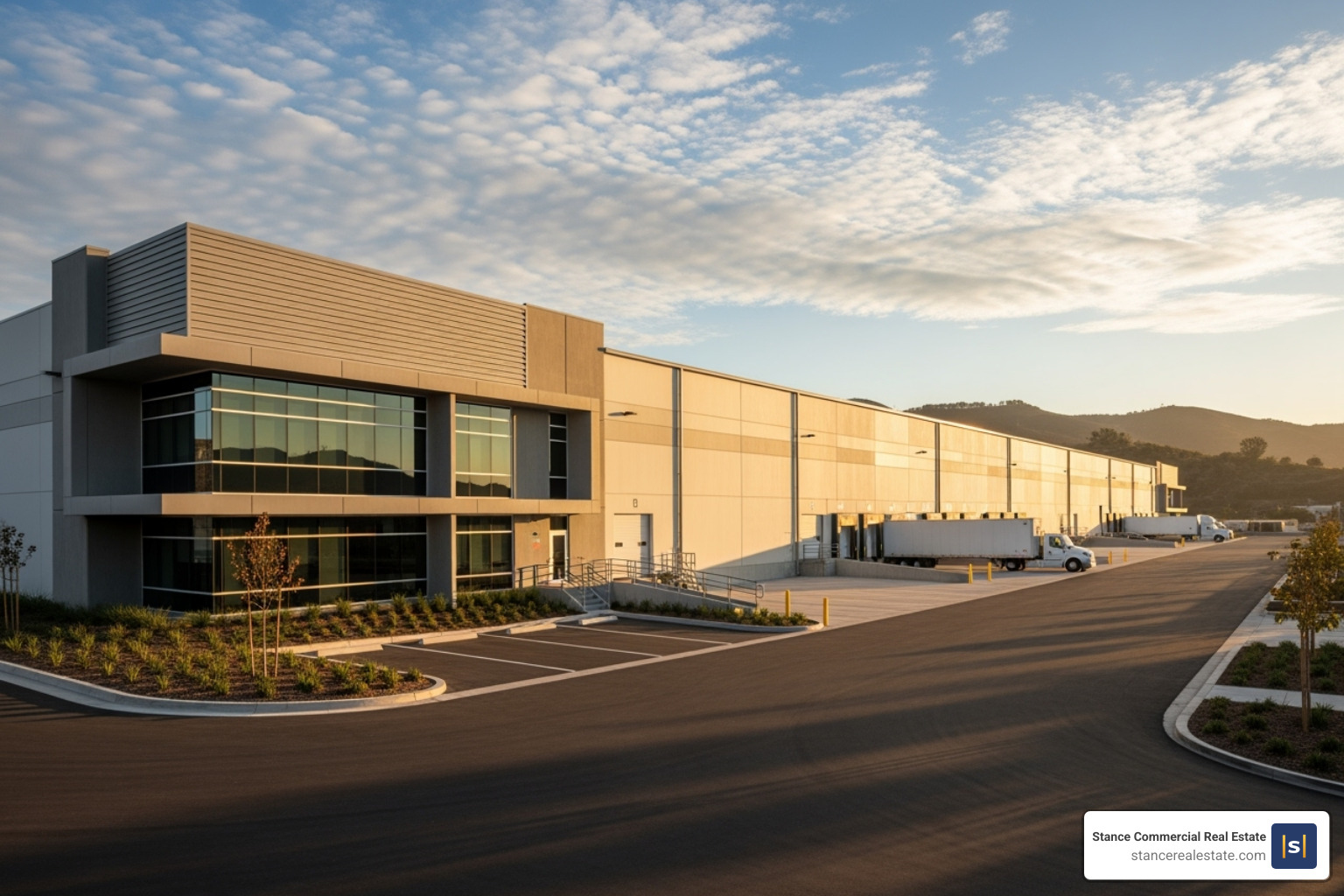
Industrial Real Estate: Why Warehouses Are Outperforming Other Sectors
The Unshakeable Strength of Industrial Real Estate
In today’s unpredictable commercial real estate market, one sector continues to rise above the rest. Industrial real estate—driven by the power of logistics, e-commerce, and global supply chains—has proven remarkably resilient, showing steady growth even as other sectors struggle to regain footing.
In 2024, warehouses are not just performing well—they’re leading the pack. This success is no accident. It stems from long-term shifts in how goods are produced, stored, and delivered, creating sustained demand that shows no signs of slowing down. While office towers face record vacancies and retail centers work to reinvent themselves, industrial properties have become the backbone of modern commerce—quietly powering the global economy behind the scenes.
Key Drivers of Warehouse Outperformance:
- E-commerce Explosion: The relentless shift to online shopping continues, with e-commerce growing at a staggering 9% annually. Crucially for investors, online fulfillment requires three times more logistics space than traditional brick-and-mortar retail.
- Supply Chain Restructuring: Global disruptions have forced a strategic pivot from lean "just-in-time" inventory models to more resilient "just-in-case" strategies, demanding significantly more storage capacity to buffer against uncertainty.
- Record-Low Vacancy Rates: The national industrial vacancy rate stands at a historically tight 5.7%, far below the long-term average of 6.7%. This supply-demand imbalance gives landlords significant pricing power.
- Institutional Investor Confidence: The world's largest investors have taken notice. Institutional allocations to industrial assets have surged from just 14% in 2017 to a commanding 35% in 2023, injecting massive liquidity into the market.
- Strong Financial Fundamentals: The sector boasts an impressive 40% cumulative rent growth since 2020 and is projected to have the highest Net Operating Income (NOI) growth among all property types through 2028.
- Government Policy Support: Landmark legislation like the CHIPS Act and broader reshoring initiatives are actively encouraging the return of manufacturing to the U.S., creating a powerful new wave of demand for domestic production and distribution facilities.
While office buildings struggle with vacancy rates approaching 20.3% and retail faces ongoing structural challenges, warehouses have consistently maintained occupancy rates well above 90%. This remarkable resilience is rooted in their critical, non-discretionary role in supporting essential supply chain functions that persist and even strengthen regardless of economic cycles. The sector's strength is not tied to temporary market sentiment but to long-term, irreversible changes in global consumption patterns and supply chain management. From the hyper-local last-mile delivery hubs ensuring same-day package arrival to the massive distribution centers supporting reshored American manufacturing, industrial properties are the vital, humming infrastructure of modern commerce.
I'm Joe Stance, and my eighteen year-long career in commercial real estate has provided me with a front-row seat to this monumental shift, particularly within the logistics-driven market of the Inland Empire. My direct experience in leasing and selling millions of square feet of industrial space confirms that what we are witnessing is not a temporary trend but a fundamental and lasting economic transformation.
The Unstoppable Demand: Primary Drivers of Industrial Outperformance
The compelling story behind industrial real estate's sustained outperformance is not one of cyclical market trends, but of fundamental, permanent changes in how we conduct business, manufacture goods, and consume products. These are not temporary market fluctuations but powerful structural demand drivers that are creating deep and lasting growth. While other commercial real estate sectors are forced to adapt to new realities, warehouses have firmly established themselves as the heart of the modern economy, fueled by irreversible shifts in consumer behavior, global trade dynamics, and corporate strategy.
When I work with clients exploring opportunities in Industrial Real Estate, I emphasize that we are not merely investing in buildings; we are investing in the critical infrastructure that makes modern life possible. This is an investment in the very arteries of commerce.
The E-Commerce Revolution: More Space, Faster Delivery
A foundational statistic that every investor must understand is that e-commerce utilizes three times more warehouse space than traditional retail. This isn't an arbitrary figure; it's a reflection of the inherent complexity of the online fulfillment process. Instead of efficiently shipping large pallets of uniform goods to a handful of retail stores, e-commerce operations require vast, sophisticated facilities to store an immense variety of individual products (SKUs), and then pick, pack, and ship millions of unique orders directly to individual consumers. This process includes managing a high volume of returns, known as reverse logistics, which requires its own dedicated space and operational capacity.
The numbers underpinning this trend are undeniable. E-commerce is projected to grow at a robust 9% annually, a pace that far outstrips overall retail growth. Its share of total retail sales is expected to leap from approximately 20% today to a dominant 35% by 2035. This colossal shift in consumer spending habits necessitates a correspondingly massive expansion of industrial logistics space to support it.
Bringing Manufacturing Back: Opportunities for Industrial Investors
This momentum has only strengthened in 2025, fueled by renewed onshoring and reshoring efforts backed by sweeping federal investments. Landmark policies like the CHIPS and Science Act, the Infrastructure Investment and Jobs Act, and the Inflation Reduction Act continue to incentivize domestic production—especially in high-tech sectors. These initiatives are reshaping America’s industrial map, putting factories and supply chains back on U.S. soil.
The current administration has made revitalizing American manufacturing a central focus, promoting initiatives and incentives designed to encourage companies to produce domestically. From high-tech industries like semiconductors to advanced automotive production, these efforts are driving a wave of new factories and production hubs across the country. For investors and commercial real estate professionals, this translates into a growing need for modern industrial facilities—warehouses, distribution centers, and manufacturing-adjacent properties—that support these reshored operations. Each new plant doesn’t just produce goods; it generates demand for surrounding logistics, supply chain networks, and workforce infrastructure, creating a ripple effect that strengthens the industrial real estate market nationwide.
These policies are part of a broader vision: a manufacturing-led revival where the ripple effects extend far beyond the factory floor. A single new semiconductor fab, for example, doesn’t just produce microchips—it anchors an entire ecosystem of suppliers, parts makers, logistics hubs, and modern industrial facilities surrounding it. And whether or not the tariff-driven model ultimately succeeds at scale, these bold policy maneuvers reflect how industrial real estate is becoming deeply entwined with national economic strategy—and why demand for warehouse space near manufacturing zones is surging.
The Obsolescence Factor and the Flight to Quality
A surprising and often overlooked driver of demand is the age of the existing industrial building stock. An estimated 70% of all industrial buildings in the U.S. were constructed before the year 2000. The vast majority of these older facilities are functionally obsolete and cannot meet the needs of 21st-century businesses. Modern logistics and manufacturing operations require higher clear heights (36 to 40 feet or more, compared to 24 feet in older buildings) to accommodate taller racking systems, advanced power capacity to support automation and robotic equipment, and flexible, efficient layouts with wider column spacing and more dock doors.
This functional mismatch has created a pronounced "flight to quality" across the market. Tenants, driven by the need for maximum efficiency and throughput, are overwhelmingly choosing modern, Class A facilities. The data is striking: although newly built Class A inventory represents less than 20% of the total industrial assets in the nation, it has captured an impressive 70% of the total net absorption (the net change in occupied space) since 2018.
For investors, this trend has critical implications. Modern, well-located properties lease up quickly at premium rental rates and attract high-quality, creditworthy tenants. Conversely, older, outdated facilities face prolonged vacancy and downward pressure on rents. This ongoing modernization cycle is a key component of the Industrial Development Trends we meticulously track for our clients, as it ensures a sustainable, long-term demand for new, efficient industrial space.
Financial & Structural Advantages: Why Warehouses Are Outperforming Other Sectors
The outperformance of industrial real estate is not just a compelling narrative; it is a story backed by rock-solid financial data and unique structural advantages. A detailed examination of the sector's fundamentals reveals precisely why sophisticated investors are increasingly allocating capital to warehouses while other commercial property types, such as office and retail, struggle with significant headwinds.
Navigating the Current Economic Climate
No property type is entirely immune to macroeconomic headwinds. The period of rising interest rates and persistent inflation that began in 2022 has exerted pressure on valuations and transaction volumes across all real estate sectors. However, industrial real estate has demonstrated its superior resilience once again. While other sectors, particularly multifamily and office, face a potential oversupply problem from projects started in a low-interest-rate environment, new industrial construction has plummeted by 64% year-over-year. The current development pipeline is the smallest it has been since 2019, as higher financing costs and economic uncertainty have made new projects more difficult to pencil out.
This sharp moderation in new supply, combined with the powerful structural demand drivers, creates a highly favorable environment for existing industrial property owners. It effectively puts a floor under vacancy rates and supports continued rent growth. While not entirely recession-proof, the sector's intrinsic link to the storage and distribution of essential goods makes its demand far more stable and less discretionary than that for office or retail space.
The powerful combination of strong underlying fundamentals, the protective NNN lease structure, and emerging supply constraints makes industrial real estate the undisputed standout performer in today's challenging market.
Key Investment Hotspots and Niche Opportunities
The remarkable strength of the industrial real estate sector is not just a story of broad national trends; it is also found in specific pockets of opportunity and nuanced market dynamics. Understanding these geographic sweet spots and emerging niche strategies is where savvy investors can unlock significant value and outperform the market. Success lies in moving beyond the headlines and identifying the specific locations and asset types that offer the most compelling risk-adjusted returns.
Small Footprints, Big Premiums: The Appeal of Sub-100,000 Sq Ft Buildings
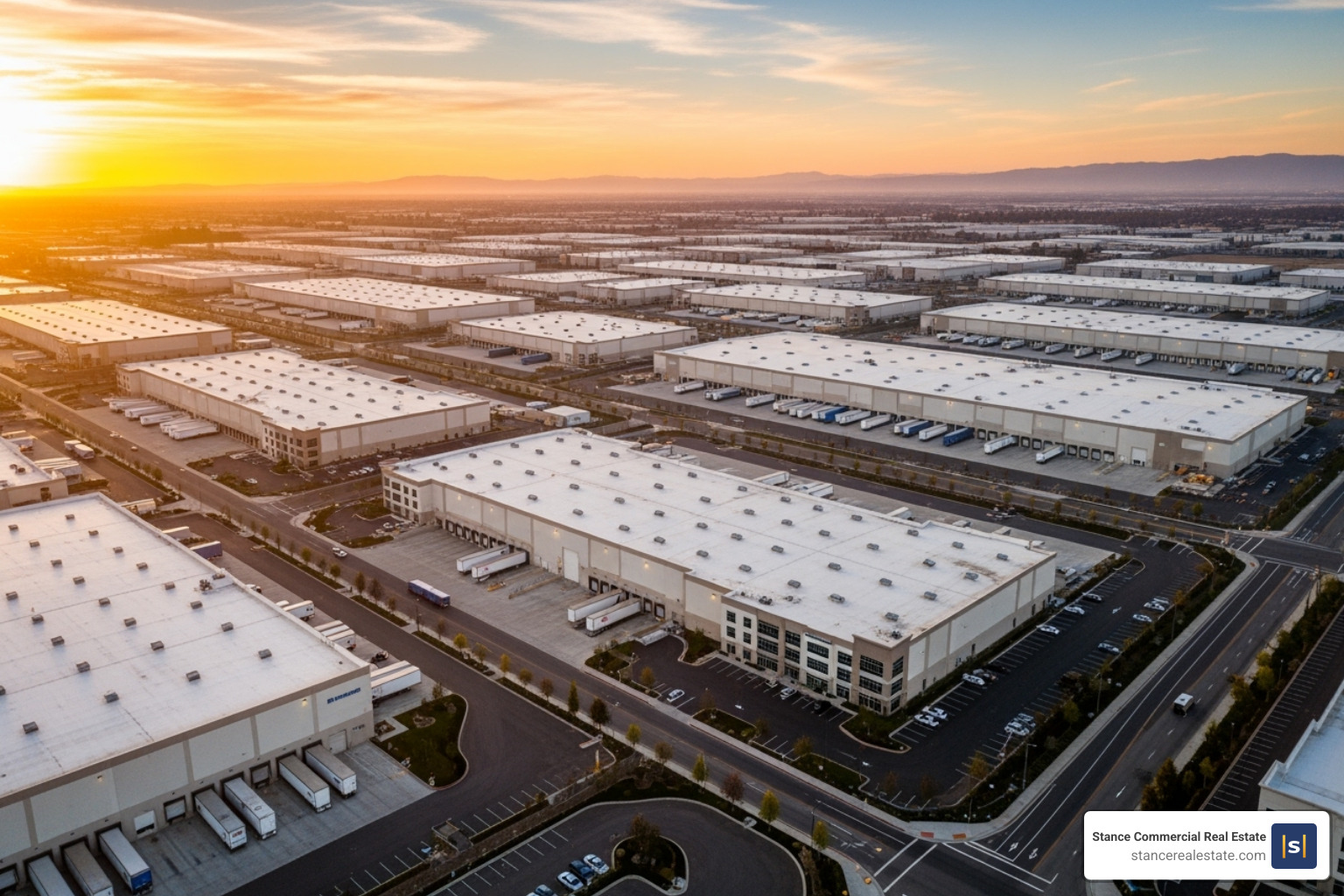
Many institutional investors focus exclusively on large-scale distribution centers, but this overlooks the immense opportunity in the "small footprint premium" offered by buildings under 100,000 square feet. These smaller buildings are the true workhorses of the industrial sector. They appeal to a much broader and more diverse tenant base, including local and regional distributors, light manufacturers, service providers (like plumbers and electricians), and smaller e-commerce companies. This tenant diversity provides a powerful hedge against any single industry downturn, reducing an investor's risk profile.
Their smaller size also offers greater flexibility and adaptability, leading to shorter lease-up times and consistently higher occupancy rates compared to massive facilities that may require a single, hard-to-find mega-tenant. The demand pool for a 50,000-square-foot building is vastly larger than for a 1-million-square-foot building, making these assets more liquid and easier to manage.
The Future of Industrial Real Estate: Modernization and Strategic Positioning
The industrial real estate landscape is in a constant state of evolution, driven by the relentless pace of technology, a growing emphasis on sustainability, and transformative government policy. The sector's remarkable ability to adapt to these powerful forces is the key to its continued success and outperformance. For investors, understanding these future trends is not just an academic exercise; it is essential for making strategic decisions that will generate returns for years to come.
The Modern Warehouse: How Tech, ESG, and Policy are Shaping Demand
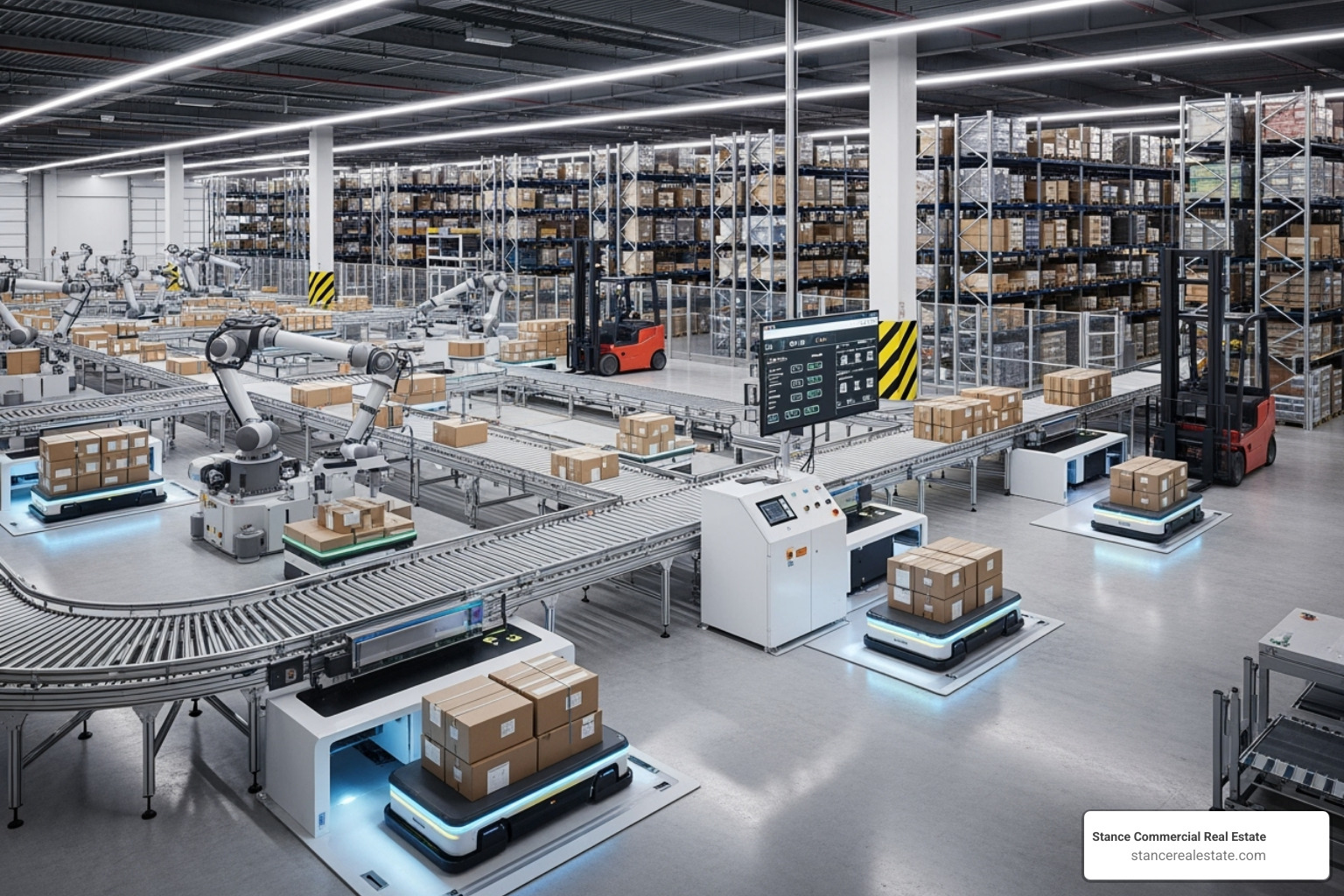
Today's state-of-the-art warehouses bear little resemblance to the simple storage sheds of the past. They are sophisticated, high-tech facilities buzzing with artificial intelligence, advanced robotics, and complex automation systems. Technologies like Automated Storage and Retrieval Systems (ASRS) and Autonomous Mobile Robots (AMRs) require a very specific type of modern building foundation: higher clear heights (often 40 feet or more) for vertical racking, super-flat and reinforced floors to support heavy robotic equipment, and robust, high-capacity power grids to charge entire fleets of electric forklifts and robots. Older buildings simply cannot support this technology without significant and costly upgrades, creating a clear opportunity for investors willing to develop new facilities or modernize existing ones.
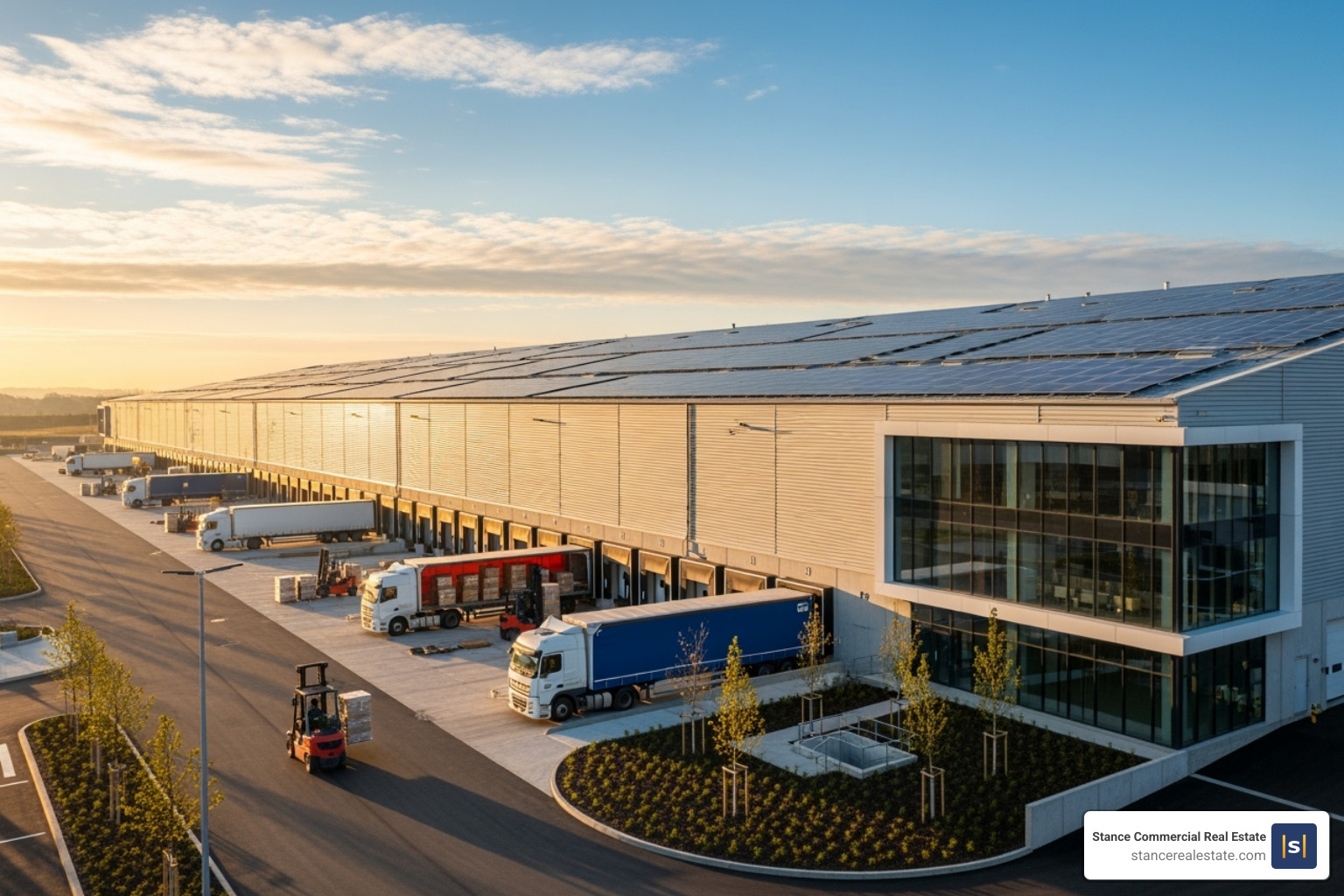
Environmental, Social, and Governance (ESG) principles are also becoming a major force in shaping tenant demand. Corporate tenants, driven by their own sustainability mandates and investor pressure, increasingly demand facilities with green building certifications like LEED (Leadership in Energy and Environmental Design). They seek features such as rooftop solar installations, energy-efficient LED lighting, cool-roof systems, and EV charging stations for both employee vehicles and electric truck fleets. These features not only help tenants meet their corporate goals but also significantly cut operating costs, making ESG-compliant buildings more attractive and valuable.
A Spectrum of Opportunity: Understanding Different Warehouse Types
Not all warehouses are created equal. The term "industrial property" encompasses a wide range of facility types, each serving a different purpose and presenting a unique investment profile. Understanding these distinctions is crucial for making informed investment decisions.
| Warehouse Type | Description |
|---|---|
| Private Warehouses | These are facilities owned and operated by a single company for its exclusive use (e.g., a large retailer's dedicated distribution network). For an investor, acquiring a property with such a tenant can mean a stable, long-term lease with a high-credit entity, though the building may be highly specialized. |
| Public Warehouses | Operated by third-party logistics (3PL) providers, these facilities offer flexible, shared space to multiple clients. They are in high demand from e-commerce companies and other businesses that need the ability to scale their logistics operations up or down without the commitment of a long-term lease. |
| Automated Warehouses | These are high-tech, capital-intensive facilities featuring advanced robotics and AI-driven management systems. They require significant upfront investment from either the landlord or tenant but command premium rents and attract the highest-quality, most sophisticated tenants due to their immense efficiency gains. |
| Climate-Controlled Facilities | These are specialized buildings designed to maintain specific temperature and humidity levels. They are essential for storing sensitive goods like pharmaceuticals, food and beverage products, and fine art. This growing demand creates a profitable niche opportunity with higher-than-average rental rates due to the specialized construction and systems. |
| Distribution Centers | These are large-scale facilities (often 500,000 sq ft or more) that serve as regional or national hubs for receiving goods from manufacturers, sorting them, and shipping them out to other warehouses or stores. Their value is intrinsically tied to their strategic location near major transportation networks like highways, ports, and airports. |
Positioning for Success: How Investors Can Capitalize on the Industrial Boom
Success in the ongoing industrial boom requires intelligent and strategic positioning. Location remains king, and investors should prioritize facilities located near major population centers, key manufacturing hubs benefiting from the reshoring trend, and critical transportation infrastructure. Modern infrastructure is non-negotiable; properties with high clear heights, ample power, flexible layouts, and automation-ready features will continue to command premium rents and attract the best tenants. Don't overlook the "small footprint premium" of smaller, infill properties, which serve a diverse tenant base and consistently demonstrate higher occupancy and rent growth.
Finally, the financial structure of the deal is paramount. Insisting on triple-net (NNN) leases with regular rent escalations provides the predictable cash flow and inflation protection that every prudent investor craves. Above all, thorough due diligence is key. Local market dynamics, submarket vacancy rates, tenant credit quality, and the physical condition of the property are all critical factors that influence long-term success. Our tailored approach to Commercial Real Estate Investment Strategies focuses on meticulously matching our clients' financial goals with the right, carefully vetted opportunities in our dynamic Riverside market.
Frequently Asked Questions About Industrial Real Estate Investment
As investors increasingly turn their attention to the high-performing industrial sector, they often have thoughtful and important questions. Navigating any investment class requires a clear understanding of the potential risks and rewards. Here are concise, expert answers to the most common questions we encounter from both new and experienced investors.
What are the primary risks of investing in industrial real estate today?
While the sector's fundamentals are exceptionally strong, no investment is without risk. Prudent investors should be aware of several factors:
- Market Normalization: After several years of supercharged, record-breaking growth, the market is naturally settling into a more sustainable and healthy rhythm. This means that rent growth, while still projected to be positive and lead other sectors, is moderating from the double-digit annual peaks seen recently to a more normal 3-5% range in many markets.
- New Supply Deliveries: A significant pipeline of new construction projects that were started during the peak of the boom is now coming online. This influx of new space can temporarily increase vacancy rates in specific submarkets, particularly for older, less competitive Class B and C buildings that cannot compete with the modern features of the new deliveries.
- Interest Rates & Valuations: The higher cost of borrowing has impacted property values across all commercial real estate classes, and industrial is no exception. The era of cheap debt is over, which has led to a valuation reset as the market adjusts to a new equilibrium between buyer and seller expectations. This pressure is expected to stabilize as the Federal Reserve's policy becomes clearer.
- Capital Markets Uncertainty: Broader economic conditions and geopolitical events can create volatility in the capital markets, making financing more expensive or more difficult to secure than it was a few years ago. Lenders have become more conservative in their underwriting standards.
Successfully mitigating these risks involves a disciplined investment strategy focused on acquiring high-quality assets in prime, supply-constrained locations, conducting exhaustive due diligence on tenant credit and market fundamentals, and securing favorable long-term lease structures.
How does e-commerce specifically impact warehouse space needs?
E-commerce requires approximately three times more logistics space per dollar of sales than traditional brick-and-mortar retail. This is not an exaggeration but a function of the fundamentally different business models:
- Individual Order Fulfillment & SKU Variety: A traditional retail store receives periodic, predictable shipments of full pallets. An e-commerce fulfillment center, by contrast, must store a vastly wider variety of individual products (SKUs) and manage a chaotic process of picking single items for millions of unique customer orders. This requires more floor space for storage, packing stations, and conveyor systems.
- Reverse Logistics (The Cost of Returns): The online retail model has a notoriously high return rate, often ranging from 20% to 30% of all items sold. This creates a massive operational challenge known as "reverse logistics." Processing these returns—receiving packages, inspecting the merchandise, restocking it, or disposing of it—is a labor-intensive process that requires significant dedicated space within a warehouse, sometimes even entire dedicated facilities known as returns processing centers.
- Networked for Speed: To meet intense consumer demand for same-day or next-day delivery, companies must build a sophisticated, multi-layered logistics network. This includes massive regional fulfillment centers located in strategic logistics hubs, as well as a constellation of smaller, urban "last-mile" stations positioned close to the end consumer. This entire network adds to the overall demand for industrial square footage.
Is industrial real estate recession-proof?
No asset class is completely recession-proof, but industrial real estate is widely considered to be highly recession-resilient. Its exceptional strength during economic downturns stems from its direct connection to the production, storage, and distribution of essential goods and services. During a recession, consumers may cut back on discretionary spending, but they still need food, medicine, cleaning supplies, and other household staples. The products that stock the shelves of grocery stores and pharmacies must be stored and distributed through the industrial supply chain, regardless of the economic climate.
Furthermore, the strategic shift to "just-in-case" inventory management provides an additional buffer. During times of economic uncertainty, companies are now more inclined to hold larger amounts of safety stock to protect themselves against potential supply chain disruptions, which props up demand for warehouse space. While transaction volumes may slow and rent growth may flatten during a severe recession, the fundamental need for logistics space remains far more stable than in sectors like office (tied to white-collar employment) or discretionary retail (tied to consumer confidence), which are much more sensitive to economic cycles. Historical data from past downturns, including the 2008 financial crisis, shows that industrial vacancy rates remained significantly lower and more stable than those of other commercial property types.
How Stance CRE Can Help You
The resounding outperformance of industrial real estate is not a temporary blip or a cyclical high; it is the clear and direct result of deep, fundamental economic and societal shifts that are here to stay. The irreversible explosion of e-commerce, the strategic reconfiguration of global supply chains toward resilience, and a pronounced flight to quality for modern, efficient facilities have firmly established warehouses as the indispensable backbone of modern commerce. This is a sector driven by need, not by discretionary wants.
At Stance Commercial Real Estate, we have witnessed firsthand how these powerful trends have transformed the investment landscape here in the Inland Empire, one of the world's most important logistics hubs. Our deep local knowledge, data-driven insights, and unwavering commitment to client service provide the expert guidance necessary to navigate these opportunities successfully and avoid potential pitfalls.
The industrial boom is about more than just market statistics; it's about positioning yourself in a sector that is absolutely essential to the functioning of our economy. Whether you are a seasoned investor looking to diversify your portfolio or a new investor seeking a stable, high-growth asset class, the time to act is now. Partner with local experts for your next industrial real estate investment and secure your place in commercial real estate's undisputed top-performing sector.
