

The Ultimate Guide to Real Estate Investment Strategies: From Residential to Short-Term
The Importance of Real Estate Investment Strategies
Understanding different real estate investment strategies can enhance your investment portfolio by diversifying your assets, taking advantage of tax breaks, and building economic resilience.
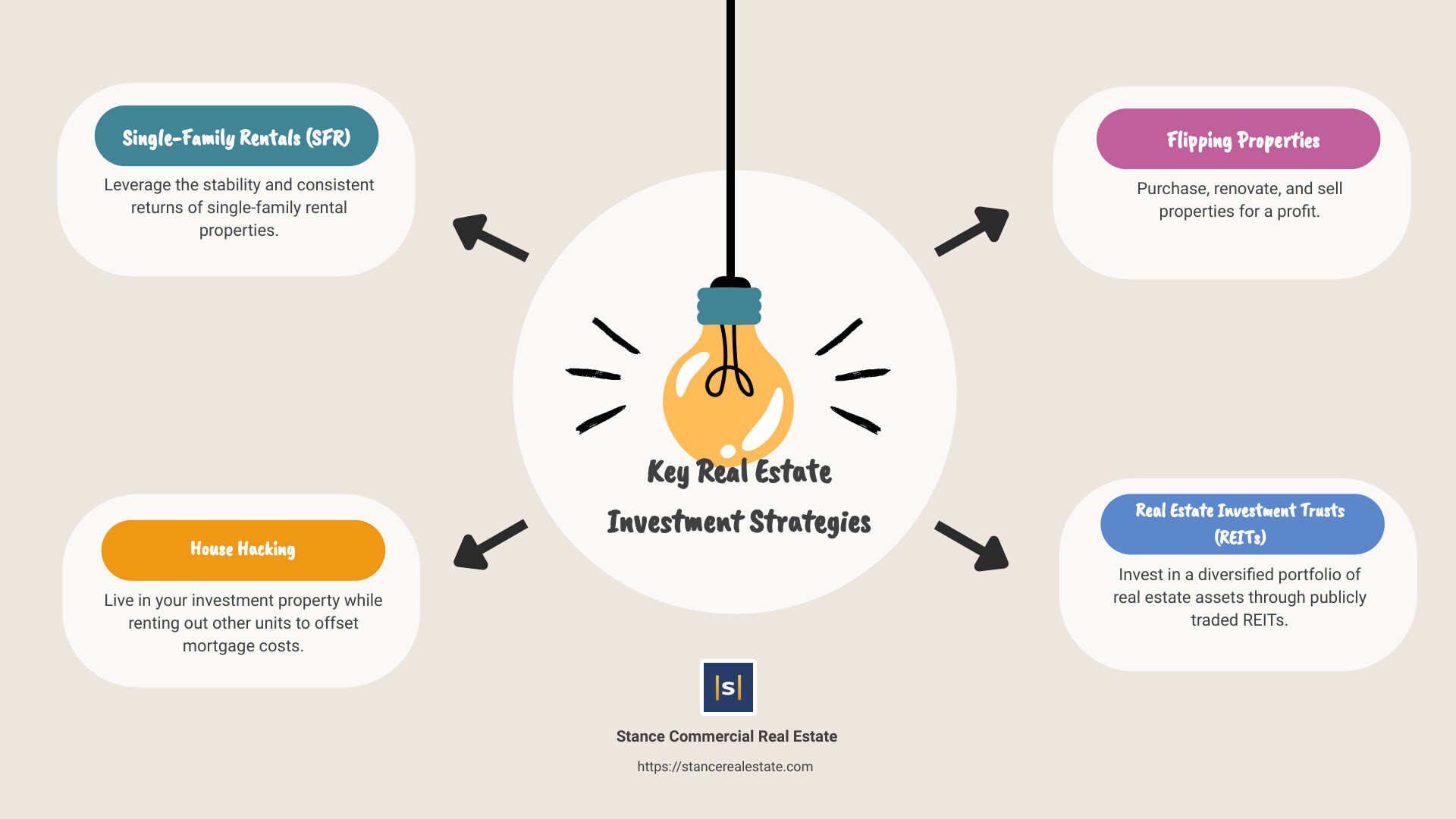
Key Strategies:
- Single-Family Rentals (SFR)
- House Hacking
- Flipping Properties
- Rental Income Properties
- Real Estate Investment Trusts (REITs)
Real estate is more than just an asset; it’s a powerful engine for building wealth. With a low correlation to stock market volatility and a range of tax incentives, these strategies offer both stability and lucrative returns over time. Owning geographically diverse rental properties can further mitigate risks associated with economic downturns.
I'm Joe Stance, founder of Stance Commercial Real Estate and a seasoned professional in real estate investment strategies. With over ten years in the industry, I have guided numerous clients through the complexities of real estate investments, ensuring they select the most suitable strategies for their needs.
Different Types of Real Estate Investments
Real estate investments come in many forms, each with unique benefits and risks. Understanding the different real estate investment strategies can help you make informed decisions. Let's break down the main types: private equity, publicly traded equity, private debt, and publicly traded debt.
Private Equity
Private equity in real estate involves investing directly in properties or through private real estate funds. These investments are typically not listed on public exchanges. They offer the potential for high returns but come with higher risks and longer investment horizons.
Example: Emily, an entrepreneur, diversified her tech startup wealth by investing in a multifamily residential property. This direct investment provided her with rental income and potential property appreciation.
Publicly Traded Equity
Publicly traded equity includes investments in real estate investment trusts (REITs). REITs are companies that own, operate, or finance income-producing properties. They are traded on major stock exchanges, making them more liquid than private equity investments.
Fact: REITs often pay higher dividends than other publicly traded stocks, making them a stable, long-term investment option.
Private Debt
Private debt involves lending money to real estate developers or property owners in return for interest payments. This type of investment is not traded on public exchanges and can offer higher returns compared to publicly traded debt.
Case Study: Mark, a high net worth investor, used private debt to lend money to a developer. By leveraging depreciation and a 1031 exchange, he minimized his tax liabilities while earning a steady income from interest payments.
Publicly Traded Debt
Publicly traded debt includes bonds issued by real estate companies or mortgage-backed securities (MBS). These investments are traded on public markets and offer more liquidity than private debt. They typically provide regular interest payments and are considered less risky than private debt.
Statistic: According to industry sources, top crowdfunding platforms, which often involve publicly traded debt, boast annualized returns of between 2% and 20%.
Understanding these different real estate investment strategies can help you diversify your portfolio and optimize your returns. Each type has its own set of benefits and risks, so choose the one that aligns best with your financial goals and risk tolerance.
Next, we'll explore simple ways to start investing in real estate, even if you're a beginner.
5 Simple Ways to Invest in Real Estate
Investing in real estate doesn't have to be complicated. Here are five straightforward strategies to get you started:
1. Rental Properties
Owning rental properties is a classic way to generate steady income. You buy a property, rent it out, and collect monthly rent.
Pros:
- Regular Income: You receive a monthly rent check.
- Equity Buildup: As you pay down the mortgage, you build equity.
- Tax Benefits: Many expenses, like maintenance and property management fees, are tax-deductible.
Cons:
- Management Hassles: Being a landlord requires time and effort. You might need to deal with repairs, tenant issues, and vacancies.
- Upfront Costs: You'll need a significant down payment and cash reserves for maintenance.
2. Real Estate Investment Groups (REIGs)
REIGs are perfect for those who want to invest in rental properties without the hassle of managing them.
How It Works:
- A company buys or builds a set of rental properties.
- Investors can purchase units or shares in these properties.
- The company handles all management tasks, such as maintenance and tenant screening.
Pros:
- Hands-Off: The management company handles everything.
- Income and Diversification: You earn income and diversify your investments without much effort.
Cons:
- Fees: Management fees can eat into your profits.
- Vacancy Risks: If too many units are empty, your income may drop.
3. House Flipping
House flipping involves buying a property, renovating it, and selling it for a profit. This strategy requires a good understanding of real estate markets and renovation costs.
Pros:
- Quick Profits: You can make significant returns in a short period.
- Market Knowledge: Success requires deep knowledge of the local market and renovation skills.
Cons:
- High Risk: If you can't sell the property quickly, holding costs (like mortgage payments) can add up.
- Capital Intensive: You need substantial upfront capital to buy and renovate properties.
4. Real Estate Investment Trusts (REITs)
REITs allow you to invest in real estate without owning physical property. You can buy shares of a REIT on a stock exchange, similar to buying stocks.
Pros:
- Liquidity: You can buy and sell REIT shares easily.
- Dividends: REITs often pay out regular dividends.
- Diversification: REITs invest in various types of properties, like shopping centers and office buildings.
Cons:
- Market Volatility: REIT prices can be affected by stock market fluctuations.
- Fees: Some REITs have management fees that can reduce returns.
5. Online Real Estate Platforms
Online platforms, also known as real estate crowdfunding, let you invest in large commercial or residential projects with a modest stake.
How It Works:
- Investors pool their money to fund real estate projects.
- You can invest in a single project or a portfolio of projects.
Pros:
- Diversification: Spread your investment across different properties and locations.
- Access to Large Projects: Invest in bigger deals that you couldn't afford on your own.
Cons:
- Illiquidity: These investments often have lockup periods, meaning you can't access your money for a set time.
- Management Fees: Fees can reduce your overall returns.
Each of these different real estate investment strategies has its own set of benefits and risks. Choose the one that aligns best with your financial goals and risk tolerance.
Next, we'll dive into 11 Real Estate Investment Strategies for Beginners to help you get started with minimal risk.
11 Real Estate Investment Strategies for Beginners
1. Single-Family Rentals
Single-family rentals are a great way to start investing in real estate. You purchase a home and rent it out to a tenant. This strategy provides a steady income stream and potential property appreciation.
Pros:
- Steady Income: Monthly rent payments can provide reliable income.
- Appreciation: Property values may increase over time.
Cons:
- Vacancy Risk: Periods without tenants can affect income.
- Maintenance Costs: You are responsible for repairs and upkeep.
2. House Hacking
House hacking involves buying a property and living in one part while renting out the other. This can be a duplex, triplex, or even just renting out rooms in a single-family home.
Pros:
- Reduced Living Costs: Rent from tenants can cover your mortgage.
- Tax Benefits: You can deduct property expenses.
Cons:
- Privacy: Sharing your living space with tenants.
- Management: You may have to handle tenant issues personally.
3. Flipping Properties
Flipping properties means buying a home, renovating it, and selling it for a profit. This strategy requires good knowledge of the real estate market and renovation skills.
Pros:
- Quick Profits: Potential for high returns in a short period.
- Market Knowledge: Gain valuable insights into real estate trends.
Cons:
- High Risk: Market changes can affect profitability.
- Time-Consuming: Renovations and sales processes take time.
4. Live-In Flip
A live-in flip is similar to house flipping, but you live in the property while renovating it. This can save on living expenses while you improve the home.
Pros:
- Cost Savings: Save on rent or mortgage while renovating.
- Potential Profit: Sell the home for a higher price after improvements.
Cons:
- Disruption: Living in a construction zone can be challenging.
- Time Investment: Renovations can be time-consuming.
5. Wholesaling
Wholesaling involves finding properties at a discount and then selling the contract to another buyer for a fee. You don't need to purchase the property yourself.
Pros:
- Low Capital Requirement: No need to buy the property.
- Quick Transactions: Deals can close quickly.
Cons:
- Market Knowledge: Requires a good understanding of property values.
- Networking: Success depends on finding buyers and sellers.
6. REITs (Real Estate Investment Trusts)
REITs allow you to invest in real estate without owning property. They are companies that own, operate, or finance income-generating real estate.
Pros:
- Diversification: Invest in a variety of properties.
- Liquidity: Easier to buy and sell than physical properties.
Cons:
- Market Risk: Share prices can fluctuate.
- Fees: Management fees can reduce returns.
7. REIGs (Real Estate Investment Groups)
REIGs pool money from investors to buy, manage, and sell properties. They offer a way to invest in real estate without hands-on management.
Pros:
- Passive Income: Professional management of properties.
- Diversification: Invest in multiple properties.
Cons:
- Fees: Management fees can impact returns.
- Illiquidity: Investments may have lock-up periods.
8. Tax Lien Investing
Tax lien investing involves buying tax lien certificates from municipalities. If the property owner doesn't pay their taxes, you can earn interest or even acquire the property.
Pros:
- High Returns: Potential for high-interest earnings.
- Property Acquisition: Possibility of owning the property.
Cons:
- Complexity: Requires knowledge of tax laws and lien processes.
- Risk: Property owners may not pay their taxes.
9. BRRR (Buy, Rehab, Rent, Refinance, Repeat)
BRRR is a strategy where you buy a property, renovate it, rent it out, refinance it, and then use the funds to repeat the process.
Pros:
- Equity Growth: Increase property value through renovations.
- Cash Flow: Rental income covers mortgage payments.
Cons:
- Capital Intensive: Requires significant upfront investment.
- Management: Ongoing property management is needed.
10. Rental Debt Snowballing
Rental debt snowballing involves using rental income to pay off property mortgages quickly, then using the freed-up cash flow to buy more properties.
Pros:
- Debt Reduction: Pay off mortgages faster.
- Scalability: Grow your portfolio over time.
Cons:
- Initial Investment: Requires starting capital.
- Time Commitment: Managing multiple properties can be time-consuming.
11. BURL (Buy Utility, Rent Luxury)
BURL involves buying properties in less expensive markets (utility) and renting them out in high-demand areas (luxury).
Pros:
- Higher Returns: Rent in high-demand areas can be lucrative.
- Market Flexibility: Benefit from different market dynamics.
Cons:
- Market Risk: Economic changes can affect rental demand.
- Management: Requires effective property management.
Each of these different real estate investment strategies offers unique opportunities and challenges. Choose the one that best fits your goals and risk tolerance.
Next, we'll explore Understanding the Four Main Commercial Real Estate Investment Strategies to help you navigate more advanced investment options.
Understanding the Four Main Commercial Real Estate Investment Strategies
When diving into commercial real estate, understanding the four main investment strategies—core, core-plus, value-add, and opportunistic—is crucial. These strategies offer different risk and return profiles, helping investors align their choices with their goals and risk tolerance.
Core Strategy
Summary: The core strategy is the classic "buy and hold" approach. Investors purchase high-quality buildings in prime locations that generate stable revenue.
Risk Profile: Low risk. Core properties are typically well-maintained, fully leased, and located in desirable areas, minimizing vacancy rates and ensuring steady income.
Typical IRR: Below 10%.
Example: Imagine buying a fully-leased office building in downtown Riverside. The building is in excellent condition and attracts high-quality tenants, providing reliable cash flow with minimal management effort.
Core-Plus Strategy
Summary: Core-plus involves acquiring high-quality assets that may require some improvements or are located in secondary locations. These properties have a slight element of risk but offer a higher return than core investments.
Risk Profile: Moderate risk. These properties might need minor upgrades or are in slightly less prime locations but still retain their value well.
Typical IRR: Between 10-12%.
Example: Purchasing an office building in a growing area of Riverside that needs a few cosmetic updates. With some investment in renovations, you can increase its appeal and rental income.
Value-Add Strategy
Summary: The value-add strategy focuses on properties that need significant improvements to enhance cash flow and value. This could include renovations, re-tenanting, or operational efficiencies.
Risk Profile: Higher risk. The success of this strategy depends heavily on the execution of the improvement plan.
Typical IRR: Between 11-16%.
Example: Buying an older apartment complex in Riverside with high vacancy rates. By renovating units, improving amenities, and rebranding, you can attract new tenants and raise rents, significantly increasing the property's value.
Opportunistic Strategy
Summary: The opportunistic strategy involves high-risk, high-reward investments. This might include developing new properties, significant redevelopment, or acquiring distressed assets.
Risk Profile: Highest risk. These projects require substantial capital, expertise, and a keen understanding of market conditions.
Typical IRR: Greater than 16%.
Example: Developing a new mixed-use property in an emerging Riverside neighborhood. This project involves extensive planning and construction but has the potential for significant returns once completed and leased.
Each of these different real estate investment strategies offers unique opportunities. Whether you prefer the stability of core investments or the high potential returns of opportunistic projects, understanding these strategies will help you make informed decisions.
Next, we'll answer some Frequently Asked Questions about Different Real Estate Investment Strategies to further clarify these concepts and help you choose the best path for your goals.
Frequently Asked Questions about Different Real Estate Investment Strategies
What is the 4-3-2-1 real estate strategy?
The 4-3-2-1 real estate strategy is a method to build financial stability and consistent income through property investments. Here's how it works:
- 4 Properties: Start by acquiring four rental properties. These properties will generate rental income and help spread risk.
- 3 Properties: Sell one property and use the proceeds to pay off the mortgages on the remaining three properties.
- 2 Properties: Repeat the process by selling another property to pay down the debt on the remaining two.
- 1 Property: Finally, sell the third property to eliminate the mortgage on the last one, making it debt-free.
This strategy aims to create debt-free properties that generate consistent rental income, providing long-term financial stability.
What is the 10% rule in real estate investing?
The 10% rule is a simple guideline to evaluate the profitability of a rental property. It states that the annual rental income should be at least 10% of the property's purchase price.
Example: If you buy a property for $200,000, it should generate at least $20,000 in annual rental income.
This rule helps investors quickly assess whether a property is likely to be profitable. Properties that meet or exceed this rule are generally considered good investments.
What are the most profitable types of real estate investments?
Commercial real estate often tops the list of the most profitable types of real estate investments. There are several reasons for this:
- Higher Income Potential: Commercial properties, such as office buildings, retail spaces, and industrial warehouses, typically generate higher rental income compared to residential properties.
- Longer Leases: Commercial leases often span several years, providing stable and predictable cash flow.
- Lower Vacancy Rates: Due to the longer lease terms, commercial properties tend to have lower vacancy rates, reducing the risk of income loss.
For example, owning a commercial building can provide rental income from multiple tenants, increasing overall profitability and spreading risk.
Each of these investment strategies—whether focusing on residential properties for stability or commercial properties for higher returns—offers unique benefits. By understanding these strategies and their potential, you can make informed decisions that align with your financial goals.
Conclusion
At Stance Commercial Real Estate, we understand that navigating real estate investment can be complex. Our mission is to simplify this process and help you make informed decisions that align with your financial goals.
Riverside: A Thriving Market
Riverside, CA, offers a vibrant and growing market for real estate investments. Its strategic location near major transportation routes and ports makes it ideal for industrial, retail, and office spaces. The city's rich cultural scene and robust economic growth present numerous opportunities for investors looking to diversify their portfolios.
Local Market Expertise
Our team at Stance Commercial Real Estate is deeply embedded in the Riverside community. We know the streets, the buildings, and the history behind them. This local expertise allows us to offer insights that go beyond basic metrics. We can tell you which locations have the best foot traffic, the demographic shifts influencing the market, and how future developments might affect your investment.
Service Over Profit
At Stance, service excellence is at the heart of everything we do. We strive to provide a seamless experience from start to finish. Our team is dedicated to transparency, communication, and integrity. We handle the complexities of commercial transactions so that you can focus on what you do best—running your business.
From identifying the perfect property to negotiating contracts and managing post-sale logistics, we are with you every step of the way. Our goal is to ensure that every client is fully supported and satisfied with their real estate journey.
Partner with Us
Choosing Stance Commercial Real Estate means choosing a partner who values local insight and delivers exceptional service. Let us help you navigate Riverside's dynamic commercial real estate landscape and achieve your investment goals.
Learn more about our services at Stance Commercial Real Estate.
By integrating our local expertise with your investment strategies, together we can build a robust portfolio that stands the test of time. Whether you're looking to buy, sell, or lease, our team is equipped to guide you through every step of the process.
Let Stance Commercial Real Estate be your partner in achieving long-term success in Riverside's flourishing commercial real estate market.


Get Your Small Business Involved in the Riverside Community
Your local community is just as integral to the wellness of your business as it is to all of us as individuals. No man is an island and the same goes for businesses. Businesses, especially local small businesses depend on a vast network of others around them. And without these relationships, success is impossible.
Did you know that 94% of people say they prefer to buy local than from a big chain? But one of the obstacles that many small businesses face is finding creative and cost-effective ways to advertise who they are, what they do and where they are. The best solution is community involvement.
Unlike big corporate chain stores, local businesses have closer access to customers and a better connection to the community they operate in. That means businesses like yours (and ours) can have a direct positive impact on your community by getting more involved. At Stance CRE, we value our connection to the wonderful, quaint city of Riverside. We like being an extension of this community. We strive to be an integral part of where people live, work and play. After all, we live, work and play here too!
Doing good for the community is also good for business. Not only will volunteering and getting involved build community leaders among your organization, but it will also show that your business is trying to make a difference within your neighborhood. Your potential customers will notice and appreciate these efforts.
Here are some ways to get more involved with your community and give back as a business.
Serve on a Board
Joining a board, such as a nonprofit board, business organization board or school board, is a great way to get involved with your local community and to help serve the community’s needs. These boards also offer an incredible opportunity to network with other local leaders and make important connections that can contribute to your business’s future growth.
At Stance CRE, we feel that this is one of the best ways to become part of the change and growth we all strive for. That is why Heidi Stance serves as the Social Committee Chair and Impact Committee Chair for the Pick Group of Young Professionals and Joe Stance serves on the Social Committee. The Pick Group is a diverse network of young professionals interested in engaging with and bettering their community while pursuing excellence in the workplace.
With monthly meetings and several events, including a year-end awards ceremony, The Pick Group allows the owners of Stance CRE to guide and shape young professionals and helping other local businesses get involved through sponsorships. This year’s awards ceremony event is on the rooftop of the Riverside Arts Museum on October 13th, with a theme of “Above Water, Sky’s the Limit”. The community can purchase tickets at https://www.pickriverside.org/ .
Join Your Local Chamber of Commerce
Your local chamber of commerce is a centerpiece for business in your community. Getting involved with your own allows you the opportunity to network with other small businesses in the area. It also gives you the opportunity to become among the leading experts in your industry.
As members of the Riverside Chamber of Commerce, we at Stance CRE attend monthly chamber events, mixers and other meetings. We have always valued the opportunity to be part of a like-minded group dedicated to helping businesses and we actively advocate for new businesses in Riverside becoming Chamber members. The Riverside Chamber of Commerce offers programs and solutions for all stages of business and oftentimes, new businesses can find mentors that include established business people. Through the chamber, you can shape the future of education in your area by working with the leaders in business, government and education. And you will be a part of the chamber directory that may help your business get more traffic and customers.
Attend Other Local Business Group Meetings
In addition to serving on boards and joining the chamber of commerce, many cities have a myriad of opportunities for small business owners to network and help the communities. For instance, Riverside Downtown Partnership serve as the essential liaison between downtown businesses and local government to effectively represent members’ interests and advances downtown business priorities. We at Stance CRE are active members and we attend meetings regularly. The goal of Riverside Downtown Partnership’s is to foster a vibrant, safe and successful business and cultural community in downtown Riverside.
Riverside really is a unique community. The community is committed to making the business environment as beneficial as it can for all involved. The best way to reap these benefits is to put your hat into the pile and jump in with as much time and effort as you can. Attend these meetings. Come say hi to us! Joe and Heidi Stance would love to meet you. Remember that within any community, you get out what you put in.
Donate to Local Charities
Donating to a charitable cause or local nonprofit is a simple yet effective way to give your community the tools it needs to make a difference. This is a good entry point for businesses that want to give back, as it can be as easy as clicking a button on a website or mailing a check. You might also consider donating products or offering pro bono services to community organizations for even greater brand exposure and community impact.
Sponsor Local Events and Sports Teams
Nearly every community hosts local events and organized sports teams. Sponsoring these events or teams allows for an opportunity to be a part of your community culture, while also generating valuable engagement and positive public relations for your business. Get your name on the uniforms by sponsoring a youth sports team, purchase advertising space in event programs or donate free goods or services to organizations when requested for raffles and other giveaways. Making donations can go a long way toward supporting goodwill in the community while making a direct impact on the organizations you support.
Volunteer Your Time
We all know that one of the best ways to get involved in your community is by getting hands-on experience and volunteering. Pick a cause that is important to your team and that aligns with your brand values, and plan a day to volunteer together. Aside from supporting a worthy cause, you will be building team camaraderie and contributing to a positive company culture. This creates a relationship with the community and feeling of connection.
The Importance of Businesses Being Involved in Communities
At Stance CRE, we love to help businesses in Riverside. We know first-hand how deeply most business owners care about their community and we hope you realize how important community involvement is for your day-to-day operations.
Here are a few reasons why it is so important for businesses to be involved in their communities.
Community Involvement Gives Back to the People Who Support You
Your local community supports your business, and getting involved helps you to return the favor. A business’s involvement affects positive change and investment by bringing members of the community together to enrich lives. The health of your community has a direct impact on the health of your business, so get involved and all will prosper.
Community Involvement Builds Strong Bonds
Leaders who can tap into their team’s group intelligence are leaders who build strong and meaningful connections with their teams. Make it a priority to develop good collaboration and camaraderie. Strong relationships build strong teams. While working in your community, you will meet your neighbors who will then become personally familiar with your business. The strong bonds built with your public will have incredible benefits for your organization in the long-run.
Whether it involves raising money for park improvements or sponsoring a school program, make sure that it is something that your company can get behind and remain passionate about. By doing this, you will create monumental waves in your community and solidify lasting relationships.
Community Involvement is Good for Business
Today’s consumers are more informed than ever before and many strive to keep their dollars local. The businesses that a consumer chooses to spend their money with are often directly impacted by corporate responsibility and philanthropy. In fact, millennials prefer companies that give back to their community, and are more likely to recommend them to their friends and family. In short, consumers recognize and appreciate when organizations give back to the community, and they are likely to direct their business to those who do.
Community Involvement Helps You Get the Best Hires and Retain Them
Customers are not the only group drawn to philanthropic companies. Employees pay close attention to those who give back, as well. In fact, it is quite a powerful recruiting tool. Giving your employees the opportunity to volunteer has even more impact. Initiating a volunteer program can enhance engagement in the work place, build professional skills and encourage productivity- while supporting the community at the same time.
How Stance CRE Can Help You
Navigating the commercial real estate market can be an intimidating task, especially in a fast-moving market such as the Inland Empire. Any commercial real estate situation can change in the blink of an eye, leaving you to face challenges that you never anticipated. And to make a sale that meets your pricing and timeline goals, there are even more factors to keep in mind.
Stance CRE can be a great resource regardless of which type of business owner you are. We have been adding value to business owners’ decisions right here in Riverside for years. We are not just market experts, we are your neighbors! We are a local business with local interests.
At Stance Commercial Real Estate, we live and breathe Riverside culture. We are not only working in the community, we live here… we love it and we want to help you succeed in it!
Call us today at (909) 772-1212 and let us help you decide which type of role is best for you!
Turning Your Commercial Space Into a Coworking Space
As telecommuting and freelancing become more common, coworking is turning into a viable alternative to working from home or a traditional office. Even in today’s digital age, having a physical place to work still matters. Beyond that, coworking spaces are as much about being around other people as they are about having that aforementioned place to work.
Cities like Riverside provide a thriving coworking culture as people crave social interaction, access to conference rooms and the ability to establish a better work-home balance. As a booming college town that is home to numerous start-up and e-commerce companies, Riverside residents realize that work in the new economy is meaningful, innovative, collaborative and fun. Those operating successful coworking spaces are already beginning to differentiate themselves into segmented market niches to meet the specific needs of a diverse range of workers.
Do you have a vacant retail space? Only operate a storefront a few days per week? Monetize this unused space and create new lines of revenue when business is slow or during your closed hours. Offering amenities such as private offices, meeting rooms, open lounges and cafes, allows users to work efficiently. It is a great alternative over working from home, with the benefit of community and connections that help your business progress.
If you are considering utilizing part or all of your commercial building to start a coworking space, the expert team at Stance CRE would like to guide you through the details and highlight things to consider. Our passion is in commercial real estate and our dedication is focused on creating a flourishing culture within our quaint, beautiful city so that Riverside, California becomes a hub for small businesses and entrepreneurs across the Inland Empire.
What Is a Coworking Space?
Coworking is an office-sharing arrangement between individuals and (sometimes) small businesses. In some cases, the arrangement is very informal whereas a business owner who owns or leases an office space that is too large for their needs then sublets desks and offices to others. Coworking spaces also operate as formal businesses, renting out desk and office space to freelancers, telecommuters and even business travelers.
These workspaces provide flexible memberships to remote workers and businesses. Due to this increased flexibility and new opportunities to network, coworking spaces appeal to a large demographic of users. Operation models vary, with some coworking businesses charging daily, weekly, or monthly rent, while others sell memberships that allow the member to make use of the workspace and its amenities. Coworking spaces usually do not utilize long-term membership contracts or leases.
In addition to offering office space and shared use of amenities, some coworking space owners actively encourage collaboration between members by sponsoring networking events or “getting to know you” websites that allow members to introduce themselves to one another.
The Rise of Coworking In Retail
As a retail owner, learning how you can further monetize your underutilized space can turn your vacant retail space into a super-profitable, vibrant coworking community. By offering professionals a new way they can work and interact, you can become the solution many in our community are searching for.
Companies like Walmart and Amazon have completely disrupted the retail industry by offering consumers new ways of purchasing goods. As a result, many local retail businesses have had to close their doors or have scaled back the need to lease storefronts in highly trafficked areas. Paying high mortgages on office or retail space in the modern era just does not seem to make much sense for many small business owners. Due to the impact of large e-commerce brands and increasing retail vacancy rates, there needs to be a “new use” for these retail locations. The trend toward coworking spaces seems to be on the rise for this very reason.
The Benefits of Turning Your Storefront Into A Coworking Space
If you already own or have invested in retail, by creating a coworking model that is complementary to your target audience’s needs means that you can turn your slow hours or closed hours into a source of revenue.
- You already operate a space to sell your products/services. By leveraging your current investment, you can maximize your opportunities by making money from workspace memberships and customer experiences.
- Creating a popup workspace during your closed or preferred hours, will allow you to build a loyal community by creating unique experiences around your space.
- Coworking can increase foot traffic to a building or retail space. Coworking presents a viable solution for vacant retail space by decreasing vacancy and driving additional foot traffic with a guaranteed daytime population. Coworking brands that also offer a coffee shop within their space, means that more passersby are likely to stop and enter your building.
Coworking Model
Not all coworking spaces offer the same membership. Below, we break down the three most popular space layouts below:
Open Space Coworking
As the name implies, this model mainly offers open desks, lounges and sometimes a conference room for members who need to have privacy. Memberships are offered for specific access to the shared areas, with the option to purchase a dedicated desk to store your belongings if you so need.
Coworking & Office Space
Not all members can work in open space. If the need for privacy is crucial, these users cannot utilize the open coworking model. The coworking and office model allows these customers access to their own dedicated, lockable space.
Shared Office
Unlike the traditional open space coworking model, the shared office model consists of 90% dedicated lockable offices with one smaller open common area. This model is more like a typical office that caters to smaller companies who want a suite.
What Are the Costs Involved in Opening a Coworking Space Business?
The startup costs associated with opening a coworking space business are manageable. The primary costs include leasing a commercial space and purchasing:
- Furniture
- Networking Equipment
- Decorations
- Miscellaneous Office Supplies (e.g. trash bags and toilet paper)
- Insurance
Who Is the Target Market?
The target market for a coworking space business is business owners and professionals with a focus on serving entrepreneurs, solopreneurs and small business owners in the local community. In a destination city like Riverside, your coworking space could cater to large corporations with traveling employees. Riverside is also home to 4 major universities, meaning you could expand to cater to graduate students, remote workers and freelancers.
Other industries and professionals that could be well-served by a coworking space include Software Developers, IT Services, Financial and Legal Services, Marketing and Advertising Services, and more. Developing a coworking marketing plan that communicates your services to the types of users it serves is best because it helps you identify avenues for future growth.
How Does a Coworking Space Make Money?
A coworking space business’ primary source of revenue is subscription fees, which clients pay in exchange for being able to use the space. Many coworking space businesses rent meeting rooms, offer classes and hold events for additional sources of revenue. Since the whole point of a coworking space is to provide flexible office solutions, most coworking space owners have multiple subscription options. Clients could pay by the day, week or month, with an extra charge for a dedicated desk, an office or a locker. Some spaces charge extra for use of a meeting room, while others including meeting room use in their standard fee.
With coworking locations expected to double worldwide by 2024, this is the perfect time to invest in a growing trend. Coworking spaces are continuing to trend and will soon become relatively mainstream. Coworking has become a global industry that can be as viable to big chains as it is to single, self-run locations.
Popular Revenue Streams
People collaborate in diverse ways and many need a location to perform a myriad of short-term and long-term tasks. There is a multitude of models to run a coworking space, but most include at least several options to monetize the space, the equipment and the human resources.
Membership Fees
Depending on how much privacy and liberty the coworker needs over the rented space, membership packages can include private offices, shared desks or dedicated desk options. Membership fees can be calculated at daily, monthly, quarterly or annual fees and can allow the member to use basic or more advanced amenities of the coworking space.
Membership Packages
This is an area where you can get creative. This option can vary based on the needs of the client. The more the member uses, the more cost-effective the package gets. A membership package can include benefits and discounts with restaurant, gyms, outdoor activities and even transportation services. These all meet the needs of the members and can be easily negotiated and incorporated into different packages.
Renting Amenities and Equipment
While your amenities could be free, you can also choose to charge for them. Premium conveniences like private audio or video call booths, individual lockers, social spaces, telephone lines, video and audio equipment, printers, computers, and even cloud storage for startups that need larger data resources.
Start a coworking space business by following these 10 steps:
- Plan your Coworking Space Business
- Form your Coworking Space Business into a Legal Entity
- Register your Coworking Space Business for Taxes
- Open a Business Bank Account & Credit Card
- Set up Accounting for your Coworking Space Business
- Get the Necessary Permits & Licenses for your Coworking Space Business
- Get Coworking Space Business Insurance
- Define your Coworking Space Business Brand
- Create your Coworking Space Business Website
- Set up your Business Phone System
How Stance CRE Can Help You
Typically, when we ask people what they do for a living, we ask where they work. We think about work and the workplace as synonymous. Lawyers work in a law firm and journalists work in newsrooms. Increasingly over the past decade, coworking spaces have begun popping up in areas around the country. Riverside is a city prime for such spaces.
Stance CRE can be a great resource regardless of which type of business owner you are. We have been adding value to business owners’ decisions right here in Riverside for years. We are not just market experts, we are your neighbors! We are a local business with local interests.
At Stance Commercial Real Estate, we live and breathe Riverside culture. We are not only working in the community, we live here… we love it and we want to help you succeed in it!
Call us today at (909) 772-1212 and let us help you decide which type of role is best for you!
Creating a Sustainable Future: Green Trends To Consider in Commercial Real Estate
As businesses grow across the Inland Empire, the need for sustainable and green commercial real estate (CRE) will also increase. The Quadrennial Technology Review from the Department of Energy reveals the true impact CRE has on the environment and climate change. The commercial real estate sector accounts for about 76% of electrical use and 40% of associated greenhouse gas emissions in the U.S. Together, greenhouse gases, water abstraction and air pollutants account for about 90% of the commercial real estate environmental impact costs— mainly due to the high cost of extracting water from natural resources. These costs create a financial roadblock for CRE investors.
While some buildings continue to be developed without the environment in mind, commercial real estate is quickly becoming greener in an effort to reduce the sector's impact on the environment. These changes are speared by government regulations set to finalize in coming years. Out of the variety of ways the industry is working to reduce its carbon footprint, there are three specific trends leading towards a sustainable future.
Solar-Powered Energy
Solar power investments are a top green trend within the commercial real estate industry. As solar power becomes more affordable, building owners are making sure new properties are solar generated. This cuts back on overhead costs of powering the buildings and is better for the environment than traditional energy sources.
Architects, engineers, and contractors are now of the opinion that net-zero buildings are achievable in the future by using solar energy and other clean forms of energy. The U.S. Energy Information Agency (EIA) projects that solar installations in 2020 and 2021 (approximately 13 GWac of utility-scale solar power and 4 GWac of small solar power) will continue to grow. Solar energy is expected to make up 39% of clean energy by the end of 2021.
In Riverside specifically, the goal of Riverside's municipal electric and water utilities was to obtain 33% of electricity from renewable sources by 2020. This year, Riverside has dedicated itself to reducing potable water usage and increasing renewable energy.
Space Design and Integration
Productive workspaces are more about the function of available space rather than the excess of space. Excess space that serves little function contributes to higher costs including extra energy to heat or cool the space, as well as to light, clean and fill the space with décor. New green commercial real estate properties are being designed with efficient space usage in mind. The environments are designed to not only cut down on overhead costs, but to also drive productivity in the workplace.
In addition to functional spaces, new environmentally friendly CRE property development is focused on providing adaptable spaces for the work-from-home hybrid model that many companies are adopting. While traditional workspaces, such as offices and conference rooms, are still needed, flex spaces for game rooms and hangout spaces are in demand.
Human and Eco-Friendly Building Materials
When it comes to green commercial real estate, building materials contribute to cost and sustainability. Traditional paint, drywall, furniture and carpeting can all contain volatile organic compounds (VOCs) that can be harmful to the environment. As a result, builders are turning to low-VOC products and other alternatives.
Builders are also incorporating architectural aluminum grills, self-mending concrete, and switchable smart glass. Architectural aluminum grills allow for airflow from the outside to be harnessed and controlled to help lower heating and cooling costs. Switchable smart glass can inhibit UV rays and deflect the heat of the sun from entering the workspace, providing for more energy-efficient spaces. Self-mending concrete contains bacteria that grow and bind into cracks and fissures in the concrete, creating more impermeability and longevity. While these eco-friendly products may cost more initially, they present long-term savings for investors considering the environmental impact of commercial real estate.
Looking Ahead
These are just a few of the trends helping to move the CRE industry towards a more sustainable future. Governmental regulations are beginning to lean towards requiring eco trends to be permanent. While the initial efforts to be sustainable can be time-consuming and costly, the results are worth it. Compared to energy-inefficient properties, new green buildings are expected to emit 40% less CO2, consume 40% less water, and up to 50% less energy.
Builders and investors are being met with the opportunity to help companies increase profitability while reducing their eco footprint. With today's market increasingly demanding environmentally-friendly products and workplaces, the profitability of green commercial real estate development will only grow.
--
Contact Team Stance today to learn about available sustainable properties and other opportunities within the Inland Empire.

Commercial Real Estate Trends: Increasing Demand for Industrial Development
As technology advances and Covid-19 has forced ordinary habits to change, the demand for warehouse, distribution and manufacturing centers has increased. In the Inland Empire, industrial vacancy reached 2.7 percent—a historic low according to a JLL market report— by the end of the first quarter. As a result, industrial development has boomed in the Inland Empire. The Inland Empire East alone had 14.5 million square feet of industrial space under construction as of last quarter.
The demand seen is not surprising. The industrial real estate sector has proven its ability to weather economic downturns in the past, including with the Covid-19 pandemic. As a result, increased interest from investment groups has helped spearhead growth. The JLL market report reports that the annual total of e-commerce deliveries has more than tripled in the last five years. For the Inland Empire, this demand equates to increased industrial development, which in turn will impact residential and commercial real estate. This will likely mean a stronger economy with an expanding workforce.
The Demand for Industrial Development
The major financial institution, Deloitte, predicts that industrial real estate investment demand will increase to 14.8 billion square feet by 2023— a 850 million square feet increase. The JLL market report expects demand to surpass 1 billion square feet by 2025. The demand for industrial development is in response to the growth in e-commerce and delivery services. As Covid-19 has kept consumers in their homes, grocery delivery and online shopping have become the norm. Industrial spaces are seeing greater demand in dense urban environments so operators can get closer to the consumers and cut back on delivery times. However, locations near truck routes are also necessary to ease cross-country transportation and provide more efficient networks for goods to traverse.
Industrial Real Estate Development
To fulfill the growing demand, the Inland Empire Black Creek Group has announced 1.7 million square feet of Class A industrial space to be built in the Etiwanda Commerce Center and Riverside Logistics Centers.
In addition to building new industrial facilities in undeveloped areas, corporations are also buying abandoned retail and office spaces. With the growth of e-commerce and teleworking, office spaces and retail strip malls are sitting empty. Investors are purchasing these commercial properties, tearing the buildings down and erecting warehouse, distribution, and manufacturing centers. Further incorporating them into densely populated areas, bringing new jobs and more efficient transport of goods.
Opportunities for Industrial Real Estate Investment
For investors and developers, the demand for new industrial real estate space brings new opportunities. Particularly with last-mile facilities, locations in highly populated urban markets have a higher rent cost. However, the need for large logistical centers in suburban areas also presents an opportunity for industrial development. As demand increases, new companies are looking for industrial space, while existing companies are looking for additional locations or larger locations to fulfill the growing demand. In addition, the movement of people away from the Los Angeles area and into the suburbs of the Inland Empire means last-mile facilities in suburban areas are necessary. These factors create a fantastic opportunity for businesses looking to invest in the changing landscape of the Inland Empire.
Increased Demand for Workers
The increase in demand for space to store, process and fulfill online orders also brings a high volume of new jobs for both skilled and unskilled labor. As more able workers move out of the surrounding cities into the suburbs of the Inland Empire, the influx in workers can fill the need for industrial development. This allows for a greater economic output for the Inland Empire and a higher number of monetary resources put back into the economy.
For the past several years, commercial real estate trends have shown that the industrial market has been their top performing industry, and will likely continue to be. If behavioral changes continue as they have for the last five years, these trends will continue to work in favor of industrial real estate investments.
---
Ready to see what local investment opportunities are available? Call Joe today at (909) 772-1212.

Rebuilding The Economy Through Commercial Real Estate
As efforts to end the pandemic continue, rebuilding the economy will be a long term battle. As businesses begin to reopen and people begin to get back to their jobs, the economy will begin to rebound from the strain the pandemic has placed on it. While residential real estate markets have fared well in the last year— speared by historically low interest rates— the commercial real estate market is also seeing a positive climb.
NAIOP Research Foundation Study
The annual NAIOP Research Foundation study, “Economic Impacts of Commercial Real Estate,” reports that commercial real estate development contributed $26.0 billion to the state economy, supporting 162,515 jobs, and generating 9.5 billion in wages. In addition to the number of employees these new spaces will house, the contributions to the local and state economy are unsurmountable. On the national level, construction’s percentage of total U.S. GDP rose from 19.5 percent in 2019 to 21 percent in 2020. This percentage is anticipated to increase over the next several years as state and federal infrastructure projects get underway adding more jobs and generating more wages that lead to economic recovery.
The study also provides an in-depth explanation for the changes the commercial real estate market is experiencing, as well as the possible reasons behind the changes. The study asserts that much of the commercial construction growth can be primarily attributed to manufacturing and retail companies rethinking their spaces and focusing more on creating an experience for the customer than a strict sales space. In the luxury market, these redesigned retail spaces have become the norm as brands vie for the most cutting edge retail space to draw in a consumer who can more easily shop online. However, this is a trend we are seeing in middle tier retail businesses as well. Stores redesign their spaces to appeal more to the consumer, giving them alternate reasons to come into the store.
How Offices Are Being Impacted
For office buildings, the growth hasn’t been as direct. When workers began working from home, many new office construction projects were cancelled. However, as people begin to trickle back into the office, businesses are rethinking their footprint. Some may opt to move to more affordable areas, others may downsize their spaces, and some will experience growth on the back of the pandemic that will drive them to seek larger spaces. Businesses that intend to remain in their space will ultimately begin to better utilize the space, with renovations and alterations. All of these changes though, the NAIOP report asserts, are beneficial to the commercial real estate market.
The most substantial impact coming to the industry is going to come from the state and federal levels. COVID relief packages include funds earmarked specifically for public infrastructure. This will have a positive effect on the commercial real estate market as new buildings and public spaces are created. On the federal level, there will also be an increase in infrastructure that will improve city and suburban environments bringing more businesses and people into the areas. All of these projects will have a significant impact on rebuilding the local economy in the coming years.
---
Rebuilding the economy will take time. Be prepared for the slow process by knowing what to expect with the commercial market. Call Joe today at (909) 772-1212 to learn more.
How Covid-19 is Affecting Residential Migration
The Covid-19 pandemic has had a massive effect on both the national economy and local economies, like within California’s Inland Empire. Many individuals suddenly found themselves without a job. More people are working from home than ever before. Businesses are downsizing, changing location, or shutting down entirely. The job market has changed drastically, urging many to make adjustments to their careers. Part of that adjustment, in many cases, means migrating to new cities. In The Inland Empire, commercial and residential real estate markets have both seen tremendous growth spurred by the number of well-qualified candidates moving into the area.
What Reports Are Showing
The annual CBRE report provides evidence to this growth asserting that a more significant number of people moved in the last year, than in previous years. California has seen an exodus of residents into nearby states. However, while California overall experienced a decrease in residents in 2020, the Inland Empire saw an increase comparatively. Currently, businesses are now opening back up and workers are returning to their places of employment, indicating that commercial real estate market trends will see an uptick as well.
Based on the CBRE report, The Inland Empire ranked number five in the state for the number of move-ins versus move-outs. This means that more people moved into the Inland Empire in 2020 than moved out. The report suggests that this is a result of the pandemic, coupled with the normal fluctuation of residents. Specifically, 2020 saw a 10 percent increase in young, highly educated individuals moving out of the city into suburban and rural areas. Los Angeles saw a significant decrease in residents, suggesting more city-dwellers have moved into the Inland Empire and other surrounding areas. This has had a positive impact on the residential market in the Inland Empire and has also been beneficial for businesses in the area who are able to attract the incoming talent.
Moves during the second and third quarters— the most turbulent annual quarters— were higher than usual. Address changes slowed modestly during the fourth quarter, suggesting that the moves were already planned and not a knee-jerk pandemic reaction. This type of activity indicates that the movement away from cities may continue into the following years. As more businesses move towards a remote-work model, more individuals are likely to migrate to affordable areas like The Inland Empire from surrounding major cities such as Los Angeles.
What This All Means
With the upwards trend of movement into suburban areas, the following years almost guarantee new opportunities for growth. Riverside alone will see an increase in business as college students start to return to school. As a college town, the local Riverside economy relies heavily on students. Returning students combined with new residents equals the perfect time for adjustments to be made within the commercial real estate industry.
These trends and data are beneficial for the economy of the Inland Empire area. Business owners will benefit from the influx of residents moving to The I.E. Now is the time for building owners to take advantage of market shifts and consider selling or leasing their properties to new businesses or businesses looking to downsize. Some companies may even be looking to move into larger buildings in preparation for pandemic-related restrictions lifting. While the costs of commercial properties remain higher than usual, negotiations are more flexible than ever.
Ultimately, time will show what the lasting results of the pandemic will be. In the meantime, the Inland Empire is benefiting from the new, young, and well-educated residents moving into the area in both the business and residential sectors.
---
Now is the time to take advantage of commercial market trends. Want to know what options are available? Call Joe today at (909) 772-1212.
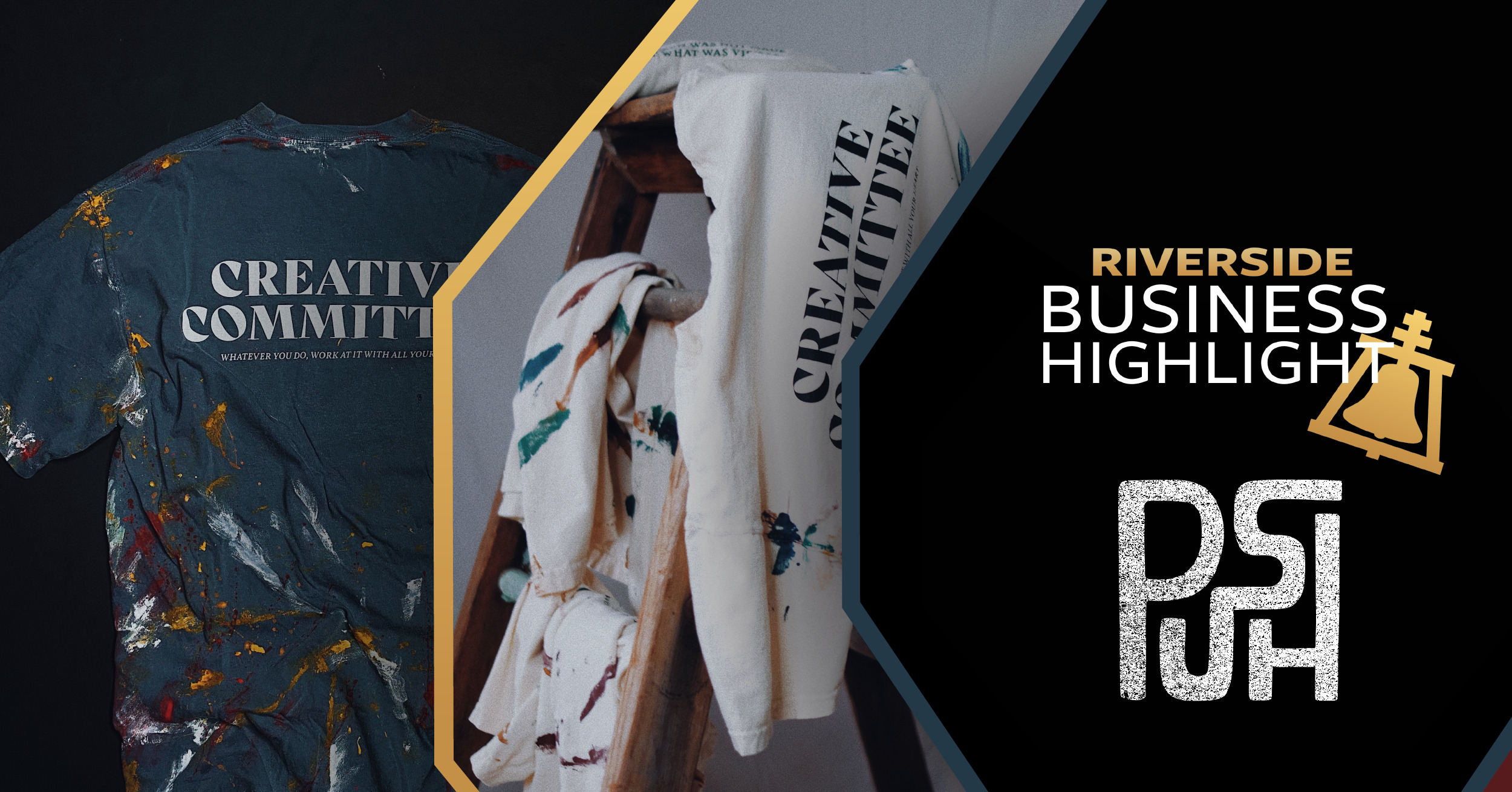
Riverside Business Highlight: Push Project
Push Project is a faith-based clothing company that launched in 2017. We sat down with Owner and Founder, Josh Paat, to hear the story behind the Inland Empire-based brand.
What started out as a simple idea has evolved into a successful business venture. From adjusting to a new schedule and keeping up with content creation, Josh’s day-to-day is filled with all levels of business management.
How Push Project Began
Josh always had a dream of starting a faith-based company, but the final vision came after he and his former business partner exhausted other business ideas.
“We actually wanted to start a ramen business together," Josh says. “I wanted to market it to be on social media, but we realized that it was too ambitious. I told him about my idea of starting this clothing brand and he was down to fund it...It really just took off from there.”
Developing an overall aesthetic to model his designs after was another layer to building the brand.
“[Push] started off as what was supposed to be an outdoors brand,” Josh says. “Somehow it kind of steered away from that, which is totally okay. I wanted to tie in something with my faith, and the aesthetic of being outdoors and adventure.”
Deciding on branding wasn’t the only decision Josh faced. It took years before he was ready to manage the brand full-time.
Leading Up To The Leap
Prior to focusing purely on Push Project, Josh was working from home and juggling two jobs. Ultimately, he decided to take the leap and quit his “day job” in pursuit of full-time entrepreneurship.
“I think what was revealed to me was the fact that I don't have to do that anymore,” he says. “What led me to actually make the decision was the fact that I was already making my paycheck in a day doing Push. Eventually, I realized that working my day job was almost a waste of time. I feel like I got everything that I needed from that job.”
At first, taking the leap came with caveats.
“Leaving my nine to five meant I was also leaving health insurance, dental, and all the security. I thought to myself, I'm pretty, like self-sustaining though. I think that's the illusion that we create for ourselves that the security we have in our corporate job is what will help us live our life,” he says. “I realized that I can take care of myself. If Push has a bad month, there'll be other ways that I can provide for myself. The blanket of security that a corporate job gives, ya it's safe, but at the same time, it's not the only way.”
Despite challenges along the way, taking the leap was worth it.
“I've always wanted to have something like this that was self-sustaining, but also have the opportunity to do other things,” he says. “I have other plans to someday pursue— you're going to laugh— but maybe firefighting. I think that's one of the things that people always get surprised by, but that's something that I want to do!”
The Beginning Stages
Getting the ball rolling with Push Project took time. Step-by-step Josh made the company official.
“One of the hardest things that I feel like I still haven't fully figured out is all the legal side of things like the actual business,” Josh says. “I just did my taxes recently. I think I realized how important it is to have somebody who is either an accountant or somebody who knows taxes very well (to help). They're the ones who helped me guide it to transition from being a sole proprietor to an actual LLC, which was something we had been trying to do.”
As for getting sorting through the legalities and details of running a business, Josh says a lot of it comes down to motivation and being aware of the difficulties.
“A lot of it is just self-motivation,” he says. “I think a lot of people don't realize how much it takes to start a business. A lot of people jump into it thinking that it's just all about taking pictures and posting on Instagram. There's a lot of strategy behind it, too. Most of the time, they don't realize the actual maintenance costs behind things.”
Josh has found that navigating the metaphorical and literal costs of business ownership is made easier by a network of support.
“I think having a good community behind your mission, to help you kind of get started, really does help,” he says. “A lot of work is going to be you, but the support comes from your community.”
Lesson Learned Along The Way
Josh had to think out of the box when marketing Push Project. Rather than strictly focusing on numbers, he had to strategize different ways to reach his audience.
“I realized more and more that it wasn't just all about statistics. A lot of what made me push into it, into more marketing and tapping into like, you know, is what people actually like,” he says. “If you're doing things just based off of what you think other people are doing, that’s so cliche.”
Outside of marketing strategy, Josh also had to decide the best way to manage inventory.
“When we first started, we saw different ways that we can start this drop shipping model, where you can have other people fulfill your stuff for you. So you don't have to carry inventory. That's compared to holding everything at home, which is what we're doing now. The drop shipping model would really work for people who [don’t have storage],” he says. “Just research what makes sense in the beginning, because you have options.”
He has learned that research also can mitigate mistakes made in the beginning. For example, Josh found finances to be much easier to navigate than he originally thought.
“One of the mistakes people make in the beginning is the idea that you have to spend a bunch of money to start,” he says. “I think people make the mistake of not knowing their options in the beginning.”
Goals For The Future
As a company that sells a product, expanding into a physical space is important for Push Project. While Josh doesn’t want to switch to a drop shipping model, he does hope to expand his inventory and his team.
“I think a goal of mine would be to either find a warehouse space where we can work or maybe even a house to store everything,” he says.
As the thriving online brand continues to grow and thrive, Josh continues to look forward to new opportunities. All in all, while it took years from inception to a full-time clothing label, the process of launching a business has been a venture Josh doesn’t regret.
---
Looking for storage or a space to grow your company? Our team at Stance Commercial Real Estate has helped numerous brands find office space, warehouses and other properties to fit their needs. Give us a call today at (909) 772-1212, or visit our properties page to browse available opportunities.

Returning To Work Post-Pandemic: When Work From Home Ends
With regulations loosening up around the U.S., employers are beginning to strategize returning to work and how to get workers back into the office. For California and the Inland Empire this has resulted in businesses and employees moving into new spaces, renovating existing spaces, and rethinking the functionality of their spaces. As a result, the commercial real estate market is experiencing growth that will only continue to increase as businesses continue to bring employees back.
After over a year of quarantine sparked by COVID-19, it may seem like work from home life is the new normal. While many individuals actually prefer the new virtual office set-up, a Monster.com survey shows that 69 percent of workers are struggling with burnout and anxiety. This number increased by 35 percent since May of 2020. Studies have shown that the average workday has increased 48 minutes, or 8 percent, as remote workers struggle to separate work and home life as efficiently.
Furthermore, research has shown that the increase in productivity early in the pandemic has since declined. With employees spending more time working and less time being productive, the psychological toll of working from home is abundantly apparent. Moreover, while some major companies, such as Google and Microsoft, have announced permanent or indefinite work from home, many businesses plan to bring employees back into the office when returning to work after COVID.
With these statistics in mind, companies are keen to move employees back into the workplace, providing new work environments, workspaces and new office buildings. The commercial real estate market is experiencing a spike in response to these new employer attitudes that is further spearing economic growth on the local and state levels.
As you move back into the office, whether it's a new one or a newly organized one, here's what you can expect when that day comes for you:
A slow trickle of employees returning to the office
With social distancing guidelines still in effect and the threat of COVID still alive, employers will be focusing on returning the most necessary employees to the office first. The employees who do return initially should expect to see fewer peers in the office. More workers are likely to be brought in based on COVID related data and trends in your area. Reverting to work from home is possible if the number of COVID cases increases or someone in the office discovers they have contracted it. Flexibility will be increasingly important as the pandemic wears on.
Some businesses may be looking to downsize as they allow a portion of their work force to continue remote work. For businesses that own their building, leasing the larger space while downsizing may be an option. Tenant demand will continue to rise as the pandemic ebbs and flows and employees are returning to work. Consider all options before making adjustments.
Social distancing and spacing within the office
The social distancing guidelines will likely affect the layout of workspaces within offices. Some businesses may opt to scatter employees in the office throughout the week, so no two employees are right next to each other. Other companies may opt to completely rearrange working spaces. Either way, it will be essential to remain patient if your workspace in the office changes to accommodate proper distancing. Masks indoors will also be enforced, and public break rooms may be regulated or closed altogether.
Expect new ways of working from home and in the office
Many companies have opted to invest in new software and programs to encourage greater efficiency in the office and work from home situations. After being away from the office so long, the time is ripe to revisit the standard operating procedures of pre-pandemic age and find ways to improve the processes. New automation may be a reality for your company, as well as further training and education for workers. There may be a learning curve when you go back into the office. Still, improved methods and processes will be beneficial for everyone's success post-pandemic.
As employees are going back to work, the new environments and practices will be a challenge to adjust to after over a year of working from home. However, studies show that businesses are moving towards being more accommodating to employees and their needs both in and out of the workplace. These positive changes in employer attitudes will continue to have positive lasting effects on the residential and commercial markets in the Inland Empire encouraging economic growth and development.
---
For questions on current market trends, contact Joe Stance at (909) 772-1212. Ready to move into a new space? View your options now.
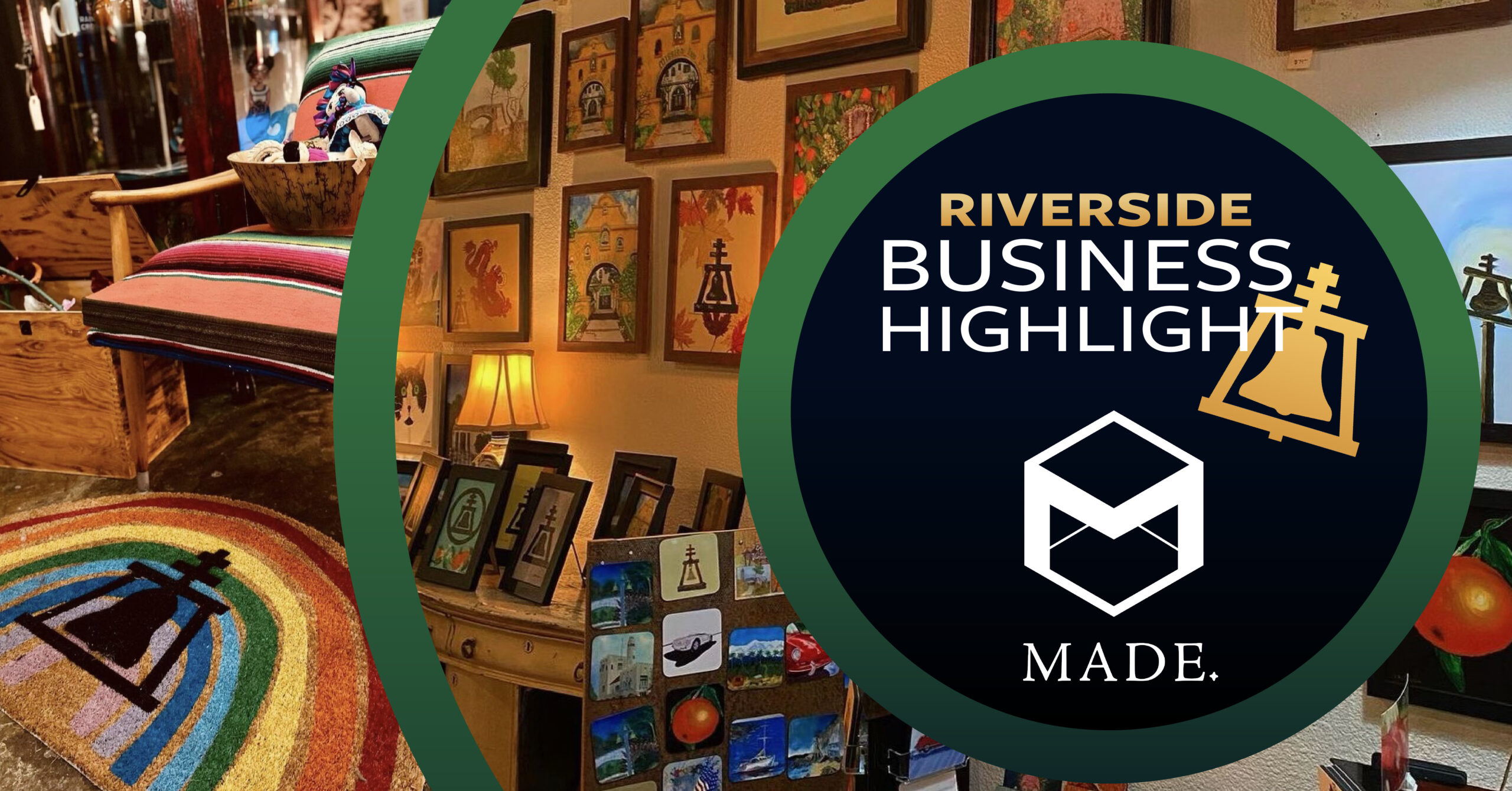
Local Business Highlight: MADE Riverside
MADE Riverside is a brick and mortar store located in the Inland Empire that resells handcrafted and custom-made goods created by local artisans. The store’s inception began as a family endeavor to establish a set location for makers to sell their creations without having to navigate the complications of sellers’ markets. Their store is now a well known go-to for Riverside locals and hosts over 100 local small businesses selling their products.
We interviewed MADE Riverside’s owner, Rico, to learn more about how the business came to be and what challenges his family faced when launching their vision.
What is the history behind the store?
The family behind MADE started selling handcrafted woodwork at markets like the Rose Bowl before the idea of a physical store came up.
“We had retail experience,” Rico says, referring to his dad’s experience as a business owner. “We also had market experience. So we kind of had the entrepreneur going, and then the retail thing going.”
Anyone who enters the MADE Riverside store will instantly notice a number of crafted goods stamped with the Riverside rain cross— symbolizing that MADE is truly a store for local artisans. While this wasn’t originally intended, it has become part of what makes the store a Riverside favorite.
“We're kind of known as the rain craft store in Riverside, but that wasn't intended,” Rico says. “That's just what happens having local makers that are proud of where they're from.”
What challenges did you face when MADE Riverside was first launched?
“So in the beginning, for the first two years, I was out all the time, trying to find people and trying to convince people of our resale model,” Rico says. “Since it's kind of a unique mode, it's really hard to explain to people what we do.”
The hardest thing about being an entrepreneur is the first step. For the team behind MADE, the first step was finding local artisans to jump on board.
“The main challenge was getting the makers and another challenge was actually gaining advertising and gaining notoriety and finding a way to share what we're doing,” Rico says. “The other challenge was obviously the business side. We knew how to make things, but there are a ton of things that go into just running the brick and mortar business that have to happen behind the scenes— contracts and figuring out how to successfully track inventory.”
Did you struggle to find a building that fit your needs?
“We (originally) tried to get a location downtown, but it was harder because we weren't established.”
Rico and family also found it hard to explain their business model to building owners. The family decided to take a vacation to Arizona, and when they came back, they were able to find a location within a week near the Riverside Plaza. The timing worked perfectly, and the MADE team eagerly began to set up shop.
The store now has two sides, and is continuing to expand. After a quick month of searching, Team Stance secured yet another location for MADE Riverside in the Freeway Industrial Park for Rico to expand his custom fabrications business: Alderette Designs. Part of MADE Riverside’s evolution has been to get more and more involved in the community.
How has the shop, as a local business, been able to stay involved in the community?
“I'm really big on that: keeping it local,” Rico says. “We try to buy and use local...and that's great for the community. All the small businesses helping the other small businesses— that's what's gonna help Riverside as a whole to rise, I think.”
During the pandemic, the team at MADE saw some of that community support in return. “People were buying gift cards even though we were closed. It was a really cool sense of community.”
What is the future of the store?
“We're just really focusing on trying to bring more people into the store, bring notoriety, and bring back our regular customers. We're in the rebuilding phase (post pandemic).”
After the “rebuilding phase,” Rico also hopes to continue expanding Alderette Designs and bring more small businesses into the MADE Riverside network.
When asked if he would recommend starting a business to others despite the many challenges and setbacks, Rico said “absolutely,” without hesitation.
“I've grown as a human being,” he says. “We need more small businesses and less big corporations. If people don't step up and start getting out there and (start businesses), then all we're going to have is big corporations.”
“Even if everything shuts down tomorrow, I still learned so much. (Starting MADE Riverside) is an experience I don’t regret.”
--
Our team at Stance Commercial Real Estate is happy to help locals like MADE Riverside move into buildings that allow their businesses to grow. Ready to expand? Not sure if you should lease or purchase? Our team will help you find the perfect location and answer all of your questions. Call Joe today at (909) 772-1212 for a free consultation.