

When It Makes Sense to Sell a Commercial Asset Before Peak Valuation
Why Selling Before Peak Valuation Can Be the Smartest Move You Make
Knowing when to sell a commercial asset is rarely about chasing the absolute peak—it’s about recognizing the point where risk begins to outweigh additional upside. In today’s market, shifting interest rates, evolving tenant demand, and localized supply pressures can all compress the window of optimal value faster than many owners expect. What looks like “just a little more upside” can quickly turn into a plateau—or even a decline—if market conditions shift.
Selling before peak valuation can be a strategic move rather than a missed opportunity. For many owners, it’s about locking in strong returns, improving portfolio liquidity, and reducing exposure to future uncertainty. The key is understanding the signals that matter most: cap rate compression or expansion, lease rollover risk, capital expenditure timing, and broader economic indicators that influence buyer demand. Recognizing these factors early can turn timing from guesswork into a deliberate wealth-preservation strategy.
Here's a quick answer:
It makes sense to sell a commercial asset before peak valuation when:
- Rising vacancies or lease expirations are about to erode your NOI
- Major capital expenditures (roof, HVAC, parking) are on the horizon
- Cap rates in your sector are forecast to rise, compressing values
- Your property is at "peak buyer appeal" — fully leased, strong tenants, clean rent roll
- Interest rate pressure is reducing the buyer pool
- Tax strategies like a 1031 exchange create a time-sensitive window
- A life event (retirement, partner buyout, new venture) requires liquidity
- Sector-specific distress — like the office market — signals a coming correction
- You are over-concentrated in one asset type or submarket
- Your NOI has plateaued with no clear path to growth
The core idea is simple: waiting for the absolute top often means selling on the way down. In commercial real estate, the difference between a good exit and a great one is rarely luck — it's timing backed by data. In the Inland Empire and across Southern California, we are seeing a unique convergence of economic factors in 2026 that makes the "sell early" strategy more relevant than ever. From the massive wave of loan maturities to the shifting demands of industrial logistics, the window for a high-value exit is often narrower than owners realize.
Consider what's already happened in the office sector. National office vacancy hit a record 13% in early 2023 and is forecast to climb toward 18% by 2026. Owners who waited for values to recover are now watching cap rates decompress and NOI shrink simultaneously — a double hit that CoStar estimates could reduce price per square foot by as much as 23%. That's not a plateau. That's a cliff. This serves as a cautionary tale for owners of all asset classes: the market does not wait for you to be ready.
But this isn't just an office story. Across all commercial asset classes, the 2026 market is being shaped by $936 billion in maturing loans, shifting interest rates, and a wide gap between what sellers expect and what buyers will pay. Knowing when to move — and having the courage to act before the crowd — is what separates investors who preserve wealth from those who give it back. Selling at 95% of the peak with 100% certainty is infinitely better than holding for 100% of the peak and ending up with 80% because the market turned while you were in escrow.
Understanding the Mechanics of Peak Valuation
In Southern California commercial real estate, "peak valuation" is often treated like a mythical destination. In reality, it is a fleeting moment where market cycles, buyer sentiment, and economic conditions align perfectly. To understand when it makes sense to sell a commercial asset before peak valuation, we first have to understand the four phases of the real estate cycle: Recovery, Expansion, Hypersupply, and Recession. Each phase offers different opportunities, but the transition from Expansion to Hypersupply is where most wealth is either solidified or lost.
Most owners want to sell at the very end of the Expansion phase. However, identifying that exact moment is nearly impossible until you're already sliding into Hypersupply. In Riverside and the broader Inland Empire, we often see a "valuation plateau" before a decline. This happens when absorption rates slow down and price discovery becomes difficult because buyers and sellers can't agree on where the market is headed. During this plateau, transaction volume typically drops significantly. If you are trying to sell during a period of low volume, you lose your competitive edge as a seller.
Value is largely driven by Net Operating Income (NOI) divided by the capitalization rate. If the market is cooling and buyers start demanding higher returns (higher cap rates) to offset risk, your property value drops even if your rent stays the same. Understanding Cap Rates is essential here; if you wait for the "peak" while cap rates are rising, you might actually be losing equity every month you hold. For example, a property generating $500,000 in NOI at a 5% cap rate is worth $10 million. If the market shifts and buyers demand a 6% cap rate, that same $500,000 in income now supports a valuation of only $8.33 million. That is a $1.67 million loss in equity without a single tenant leaving the building.
The Risks of Waiting for the Absolute Top
The primary danger of waiting for the absolute peak is the "liquidity trap." When a market turns, it doesn't just get cheaper; it gets quieter. Buyers pull back, lenders tighten their purse strings, and transaction timelines blow out from 60 days to six months or more. In a declining market, time is your enemy. If you are forced to sell because of a loan maturity or a partnership dispute during a liquidity trap, you will likely be forced to accept a "fire sale" price. Selling while the market is still active—even if it hasn't hit the absolute ceiling—ensures you have multiple bidders competing for your asset.
There is also a significant opportunity cost. If you hold an asset in a plateauing market, you might miss out on the chance to move that capital into a high-growth sector, like industrial logistics or data centers. Buyer fatigue is real; after years of expansion, investors become hypersensitive to any sign of economic cooling, which can lead to a sudden drop in demand. By exiting early, you maintain the "dry powder" necessary to strike when the next cycle begins or to pivot into an asset class with more immediate upside.
Identifying When It Makes Sense to Sell a Commercial Asset Before Peak Valuation in Volatile Markets
In volatile environments, we recommend a defensive selling strategy. This involves a rigorous sensitivity analysis—a "stress test" for your investment. Ask yourself: "If my vacancy rate increases by 10% or interest rates rise another 50 basis points, can I still achieve my exit goals?" If the answer is no, then you are essentially gambling on a perfect outcome. In commercial real estate, gambling is a recipe for disaster.
Market-Driven Triggers for an Early Disposition

Macro-economic factors are often the loudest signals that it's time to exit. In 2026, the most significant factor is the "Maturity Wall"—a staggering $936 billion in commercial real estate loans coming due this year. This creates a "refinancing shock" for owners who took out low-interest debt in 2021 and are now facing Commercial Real Estate Interest Rates that have more than doubled. When a loan matures, the owner is forced to either refinance at current rates, pay down the principal to meet new LTV requirements, or sell the asset. If thousands of owners are forced to sell at the same time, it creates a supply glut that drives prices down.
Lenders are also becoming more conservative, often capping Loan-to-Value (LTV) ratios at 75% or even lower for certain asset classes like multi-tenant retail or older office buildings. If your property value has dipped and your Debt Service Coverage Ratio (DSCR) is hovering near 1.20x, you may find it impossible to refinance without injecting significant new capital into the deal. Selling before your loan matures allows you to exit on your terms rather than being forced into a distressed sale. It also allows you to market the property to buyers who might have better banking relationships or more cash on hand to navigate the current lending environment.
Sector-Specific Distress: The Office Market Warning
The office sector provides the clearest example of why waiting for a peak can be disastrous. With national office vacancy projected to hit 18% by late 2026, many Class B and C buildings are facing functional obsolescence. As tenants downsize and embrace hybrid work, we are seeing a "flight to quality," where only the top-tier "trophy" assets maintain value. If you own a mid-tier office building, the "peak" for your asset may have already passed in 2019. Waiting for a return to those valuations is not a strategy; it's a hope, and hope is not a financial plan.
If you own an office asset with significant sublease space available nearby, you are competing against "ghost" inventory that often rents at a 30-50% discount. This glut of space leads to negative net absorption, which inevitably triggers cap rate decompression. If you’re seeing these Vacancy Rate signals in your submarket, selling pre-peak is a defensive necessity. The capital you rescue from a declining office asset can be redeployed into the Inland Empire's thriving industrial sector, where demand for last-mile delivery hubs continues to outpace supply.
Capitalizing on the "Retail Renaissance" and Industrial Strength
On the flip side, some sectors are so hot that selling "early" actually means capturing a historic premium. The "Retail Renaissance" has brought shopping center vacancies down to 5%, driven by experiential retail and grocery-anchored centers. Similarly, the Inland Empire remains a global hub for logistics, with "just-in-case" inventory management keeping industrial demand high. In these sectors, the risk isn't that the market will crash, but that it will plateau. When a market is at its hottest, buyers are willing to overlook minor flaws in a property. Once the market cools even slightly, those same buyers become much more selective.
However, even in strong sectors, Inflation can be a double-edged sword. While inflation can drive up rents, it also increases operating costs—insurance, property taxes, and maintenance—especially in high-tax areas like California. If your expense growth is outpacing your ability to raise rents due to existing lease terms, your NOI will shrink, and your value will follow. Selling while demand is at a fever pitch ensures you get multiple offers and the best possible terms, often with shorter due diligence periods and non-refundable deposits.
Property-Level Indicators: When It Makes Sense to Sell a Commercial Asset Before Peak Valuation
A property is often at its most valuable when its leases are in a "sweet spot." This means you have:
- High occupancy (90-100%)
- A healthy Weighted Average Lease Term (WALT) of 3-7 years
- Strong, creditworthy tenants with no history of late payments
- Minimal upcoming lease expirations in the next 24 months
When your rent roll is "clean," your property has maximum appeal to institutional buyers and 1031 exchange investors who are looking for stability. If you wait until those leases have only 18 months remaining, the risk profile of the building changes. A buyer will look at that 18-month window and see the potential for a total building vacancy. They will price in the cost of tenant improvements (TIs), leasing commissions (LCs), and downtime. This will cause your Cap Rate to rise, lowering your price. Selling when the "hard work" of leasing is done is often the peak of buyer appeal, even if the market hasn't technically hit its pricing ceiling.
Management Intensity and Portfolio Rebalancing
We also have to consider the "hassle factor." Many of our Riverside clients reach a point where they want to shift from "active" management (like a multi-tenant retail strip with high turnover) to "passive" income (like a single-tenant NNN industrial building). If you are experiencing management fatigue, it makes sense to sell early to preserve your quality of life. The stress of managing a difficult tenant or dealing with constant repairs can lead to poor decision-making. Selling while you are still in a position of strength allows you to transition into a more passive investment on your own terms.
Furthermore, Commercial Real Estate Portfolio Analysis might reveal that you are over-concentrated. If 80% of your net worth is tied up in one Inland Empire warehouse, you are vulnerable to local zoning changes, environmental regulations, or sector shifts. Even if that warehouse is increasing in value, the risk of having all your eggs in one basket is high. Selling a portion of your holdings before the peak allows you to diversify into different geographic regions or asset classes, such as medical office or self-storage, reducing your overall risk profile and ensuring long-term wealth stability.
Strategic Financial and Tax Advantages of Pre-Peak Sales
The financial "win" of a sale isn't just the price on the closing statement; it's what you keep after Uncle Sam takes his cut. For many sellers, the timing of a 1031 exchange is the primary driver for a pre-peak sale. The 1031 exchange allows you to defer capital gains taxes by reinvesting the proceeds into a "like-kind" property. However, the 1031 process has strict timelines—45 days to identify a new property and 180 days to close. If you find a "perfect" replacement property that offers better long-term growth or less management intensity, it is almost always smarter to sell your current asset now—even if it hasn't hit peak value—to secure that new opportunity. The long-term benefits of the new asset will far outweigh the small gain you might have made by holding your old asset for another six months.
Selling early can also help mitigate capital gains taxes and depreciation recapture. If you've fully depreciated an asset over 39 years (for commercial property), your tax liability upon sale is at its highest. By rolling that equity into a new property via a 1031 exchange, you reset your depreciation schedule, creating a fresh tax shield for your cash flow. This "swap 'til you drop" strategy is a cornerstone of commercial real estate wealth building. Waiting for a market peak might mean missing the window to find a suitable replacement property, forcing you to pay a massive tax bill that erodes all the gains you worked so hard to achieve.
Leveraging the 2026 Refinancing Environment
The current credit landscape is another reason to consider an early exit. While we've seen some Interest Rate Cuts recently, the market remains cautious. Traditional banks have pulled back on commercial lending, leading to a "liquidity gap." Private credit has stepped in to fill this gap, now accounting for 24% of lending volume. While private credit provides necessary liquidity, it often comes with higher interest rates and shorter terms.
If you are facing a loan maturity in the next 12-18 months, you should perform a "cost of capital" analysis. Is it cheaper to sell now and harvest your equity, or to refinance at a higher rate and hope the market peaks before you need to sell? If you refinance at 7.5% today to replace a 4% loan, your cash flow will drop significantly. You are essentially paying the bank the profit you hoped to make by waiting for the peak. In many cases, "equity harvesting" through a sale is the mathematically superior move, especially when CMBS delinquency trends are on the rise. By selling now, you exit with your equity intact and avoid the risk of a "capital call" where you have to put more money into the deal just to keep it afloat.
When It Makes Sense to Sell a Commercial Asset Before Peak Valuation: Strategic Timing
To help visualize the trade-offs, consider this comparison between holding for a hypothetical peak and making a strategic pre-peak sale. This table highlights why the "bird in the hand" approach is often favored by institutional investors who prioritize risk-adjusted returns over speculative gains.
| Factor | Hold for Peak | Strategic Pre-Peak Sale |
|---|---|---|
| Pricing | Potentially 5-10% higher | Current market reality (90-95% of peak) |
| Market Risk | High (Volatility/Cycles/Black Swans) | Low (Locked-in gains and realized equity) |
| Buyer Pool | Shrinking as rates rise and lenders tighten | Active, competitive, and motivated |
| CapEx Risk | Owner responsible for all repairs/upgrades | Shifted to the buyer as part of the deal |
| Liquidity | Uncertain; market could freeze or plateau | High; cash in hand or 1031 exchange ready |
| Financing | Refinancing shock likely at maturity | Avoids debt maturity issues and capital calls |
| Opportunity Cost | Capital locked in a maturing asset | Capital available for new high-growth deals |
Receiving an unsolicited offer is often the universe's way of telling you it's time to go. These offers often come from "dry powder" funds or 1031 buyers who are under pressure to deploy capital and are willing to pay a premium for a "sure thing." If an offer comes in that meets your financial goals, don't let ego get in the way. Many owners have turned down a great offer in search of a "perfect" one, only to see the market turn and the original buyer disappear. In commercial real estate, a closed deal at a good price is always better than a theoretical deal at a great price.
Frequently Asked Questions about Pre-Peak Commercial Sales
How do I know if my property has reached a value plateau?
The most common sign is NOI stagnation—your expenses (taxes, insurance, utilities) are rising as fast or faster than your rents. You should also look at local comp analysis; if similar buildings are sitting on the market for 6+ months or showing decreased showing activity, the market has likely plateaued. Another key indicator is the "bid-ask spread." If sellers are asking for 5% caps but buyers are only offering 6% caps, the market is in a state of price discovery, which usually precedes a plateau or a decline. Broker feedback is your best "boots on the ground" indicator of shifting buyer sentiment.
Is it better to renovate or sell "as-is" before a market peak?
This depends on the "Value-Add" appetite of current buyers. In 2026, many investors are looking for turnkey properties because construction costs and labor shortages make renovations risky and expensive. If your building needs significant work, you might find that the "as-is" price is surprisingly strong because buyers want to control the renovation process themselves. Unless a renovation offers a guaranteed 2x return on the dollar and can be completed in less than six months, it often makes more sense to sell "as-is" to a buyer who specializes in distressed assets or has their own construction crew. This removes the execution risk from your shoulders.
How does the 2026 "Maturity Wall" affect my decision to sell now?
If you have a loan maturing in 2026 or 2027, the "Maturity Wall" means you will be competing for lender attention with thousands of other owners. This leads to higher scrutiny, stricter equity requirements, and longer closing times. Proactive selling now avoids the risk of being caught in a market saturated with distressed assets later this year, where buyers will be looking for "blood in the water" deals. By selling before the wall hits, you are the only game in town for buyers who still have capital to deploy. Once the wall hits, those same buyers will have hundreds of options to choose from, and your leverage will vanish.
What are the signs that a specific submarket is about to peak?
Watch for a surge in new construction (hypersupply) and a slowdown in net absorption. In the Inland Empire, if you see millions of square feet of new industrial space hitting the market while major tenants like Amazon or FedEx are slowing their expansion, that is a clear sign of a coming peak. Additionally, keep an eye on local government policy. If a city council begins discussing new warehouse moratoriums or increased impact fees, the "regulatory risk" of holding that asset increases significantly. Selling before these policies are enacted allows you to exit at a valuation that doesn't yet account for the new restrictions.
How Stance CRE Can Help You
Stance CRE supports commercial real estate clients by providing clear guidance on how lease structures, addendums, and amendments align with their broader business and investment objectives. This approach begins with a careful review of financial goals, operational needs, risk tolerance, and long-term flexibility, ensuring that contract decisions support growth rather than create unintended constraints. Instead of promoting one-size-fits-all solutions, Stance CRE emphasizes education, transparency, and strategic alignment at every stage of the transaction.
With deep expertise in Riverside County and the surrounding commercial markets, the Stance CRE team brings local insight and practical experience to each client engagement. From initial site selection to lease negotiation and ongoing contract modifications, Stance CRE helps businesses navigate complex agreements with confidence and clarity. Whether securing a first location or optimizing an existing portfolio, the focus remains on protecting client interests while positioning them for sustainable success in a dynamic commercial environment.
At Stance CRE, we understand the importance of fostering strong relationships between communities and small businesses. We are not only working in Riverside; we live here and actively support the growth of the local economy. Our commitment to the community ensures that both property owners and business operators have the resources and insights necessary to thrive. Call us today at (909) 772-1212 and let us help you determine the best approach for supporting your business while contributing to a stronger, more connected community.
Get started with a strategic consultation at Stance Commercial Real Estate


Why Amenities No Longer Drive Value Unless They Solve a Business Problem
For years, workplace amenities were seen as a competitive advantage—sleek breakrooms, game spaces, and wellness perks designed to attract talent and boost morale. But in today’s business environment, the standard has shifted. Amenities alone no longer drive value unless they are intentionally designed to solve a real business problem. Organizations are increasingly scrutinizing every investment through the lens of performance, productivity, and measurable outcomes.
What separates impactful amenities from superficial ones is purpose. A space or feature must directly support how people work, collaborate, or recharge in ways that improve results—not just optics. Whether it’s reducing burnout, enhancing focus, or fostering meaningful collaboration, the most effective amenities are those aligned with organizational goals. Without that connection, even the most impressive features risk becoming underutilized expenses rather than strategic assets.
Amenities stop driving value when they don't solve a real business problem because:
- Tenant Utility Over Aesthetics: Modern commercial tenants pay for what helps their business run efficiently — not what looks impressive in a marketing brochure but serves no functional purpose. A flashy lobby might impress a visitor for thirty seconds, but a lack of reliable high-speed data will frustrate an entire workforce for eight hours a day.
- The Cost of Underutilization: Unused amenities like golf simulators, cold plunges, or oversized, empty gyms become pure cost centers with zero return on investment (ROI), draining Net Operating Income (NOI). Every square foot of a commercial property must generate value, either through direct rent or by significantly increasing the leaseability of the surrounding space.
- Practicality Wins: Data shows 85% of tenants prioritize transit access and 75% prioritize diverse food options — these are practical needs that solve the daily logistical challenges of a workforce. In the Inland Empire, where commute times can be significant, amenities that reduce friction are the ones that command the highest premiums.
- Occupancy Premiums: Buildings with purpose-driven amenities post 16.2% higher occupancy and command significant rent premiums because they address specific operational pain points. This is the difference between a "nice-to-have" and a "must-have" for a growing company.
- The Amenity Arms Race Failure: The "amenity arms race" has left many landlords with expensive, underutilized spaces that increase maintenance costs without providing a competitive edge in leasing. This race to the top in terms of features has often ignored the bottom line of the tenant's business model.
The bottom line for any commercial property owner or investor is simple: an amenity is only worth the capital expenditure if it directly helps your tenants attract top-tier employees, boost daily productivity, or solve a specific commute or operational challenge. In the Riverside and San Bernardino markets, where industrial and office sectors are the primary drivers of growth, the focus must remain on utility. If an amenity does not contribute to the tenant's ability to recruit talent or move product, it is likely a wasted investment.
Over the past decade, the commercial real estate (CRE) sector has navigated what many call an "amenity arms race." Following the 2008 financial crisis, office and retail landlords added perks to fill massive vacancies. Then came the global shift in work patterns — and suddenly, the commercial office was no longer the only place where work could happen. The bar for what it takes to justify a commercial lease got significantly higher. The competition is no longer just the building across the street; it is the flexibility of remote work and the comfort of a private workspace.
The result? Many landlords kept piling on amenities, hoping something would stick. We saw the rise of rooftop bars, salt baths, and elaborate gaming lounges. While some of these features worked in specific high-density urban cores like Los Angeles or San Francisco, many failed in suburban office parks and industrial hubs. Today, the market is correcting itself. Buildings that invested in functional amenities — such as ultra-fast fiber-optic connectivity, on-site healthy food options, secure 24/7 access, and high-quality end-of-trip facilities — are seeing strong absorption and tenant retention. Meanwhile, buildings that chased novelty are sitting with costly, vacant spaces that require expensive retrofitting to become useful again.
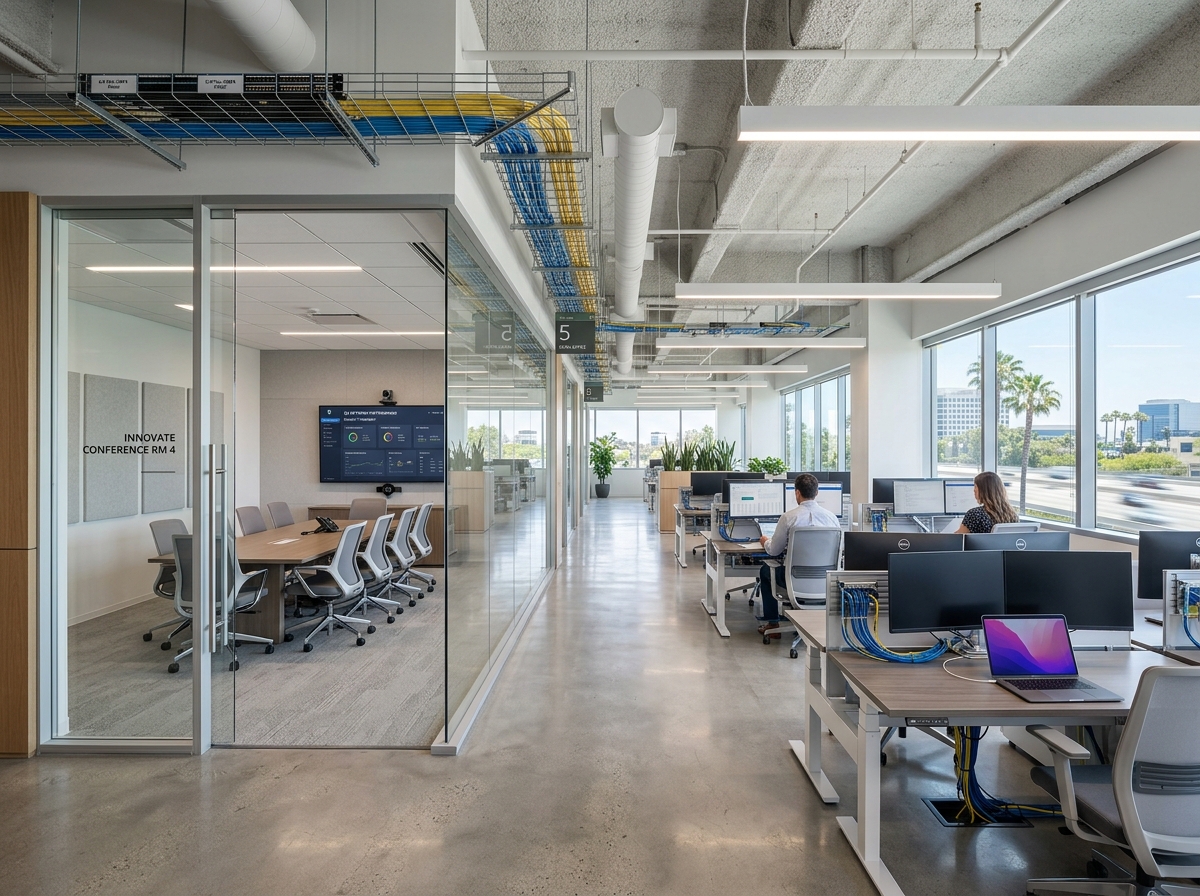
Utility-Driven Office Design: High-tech conference rooms with fiber-optic connectivity and ergonomic design are now essential for modern business operations.
In the current Southern California commercial market, we are seeing a fundamental shift in tenant behavior. The "wow factor" of a flashy lobby or a rooftop lounge is losing its luster if the building lacks the basic infrastructure to support a modern workforce. Post-pandemic demands have transformed amenities from "perks" into "business tools." When a tenant looks at a property in Riverside or the wider Inland Empire, they aren't just looking for a place to put desks or inventory; they are looking for a solution to their biggest headaches: employee retention, productivity, and the return-to-office (RTO) challenge.
If an amenity doesn't help solve one of those three problems, it is effectively a "vanity amenity." These flashy features might look good on a tour, but they don't drive long-term Net Operating Income (NOI). On the other hand, functional convenience — things like high-speed fiber availability (which has an 84% prevalence in top-performing buildings) and controlled access (86% prevalence) — are what actually keep tenants from moving. This is why we see a massive "flight to quality." Since the market shifted, there has been over 100 million square feet of positive absorption in the best, newest office buildings, while the rest of the market has seen negative absorption. In fact, 90% of office absorption in the years leading up to the pandemic was concentrated in Class-A buildings, which only make up about half of the total inventory.
Landlords who understand this are moving away from the "amenity arms race" and toward premium amenity strategies that prioritize utility over aesthetics. This applies not just to office spaces, but to industrial and retail properties as well. In the industrial sector, for example, an "amenity" might be extra trailer parking or enhanced power capacity — features that solve a direct business problem for a logistics company. In the retail sector, it might be high-visibility signage or ample EV charging stations that attract a specific customer demographic. The goal is always the same: align the property's features with the tenant's operational goals.
The RTO Challenge
The biggest business problem facing employers today is the competition with the flexibility of remote work. For many employees in the Inland Empire, the commute is a major deterrent. To win the RTO (Recovery Time Objective) battle, the commercial office must offer "irreplaceable experiences" that cannot be replicated elsewhere. This is where neighborhood retail and outdoor workspaces come into play. Employees miss the socialization and professional development that happens in person, but they require a frictionless environment to make the trip worthwhile.
Amenities that mitigate this friction — like on-site childcare, diverse food and beverage options, and high Walk Score locations — are the ones driving value. In suburban markets like Riverside, "commute ease" is the ultimate amenity. If a building offers ample on-site parking and proximity to transit or major highways, it solves a logistical nightmare for the employee. If that same building offers a high-quality café where teams can socialize, it solves a cultural problem for the employer. This is a strategic alignment of property features with business goals. We are seeing a rise in "third spaces" within commercial buildings—areas that are neither a desk nor a breakroom, but a collaborative environment that encourages the kind of spontaneous innovation that remote work often lacks.
Measuring Productivity Gains
Productivity is the lifeblood of any business. We’ve found that amenities that support wellness and focused work have a direct, measurable impact on a company's bottom line. According to industry data, employees with high levels of wellbeing are 2.5 times more likely to say they can do their best work. This has led to a surge in wellness certifications like LEED, WELL, and Fitwel within the commercial sector. But it goes beyond plaques on the wall. True productivity-driving amenities include:
- Acoustic Privacy: Spaces designed for deep work, moving away from the noise of traditional open-plan layouts. This solves the business problem of cognitive load and employee burnout.
- Fiber Connectivity: 84% of top-tier buildings prioritize fiber because downtime is a massive business cost that no tenant can afford. In the digital age, a building without robust connectivity is functionally obsolete.
- Wellness Infrastructure: Fitness centers with showers and lockers (64% prevalence) that allow employees to integrate health into their workday without leaving the premises. This reduces time lost to off-site travel and improves overall employee morale.
Understanding these factors is key when you evaluate a commercial property for long-term ROI. If a building's amenities don't boost the "output" of the people inside it, those amenities are failing to drive value for the owner or the tenant. The focus must shift from what the building has to what the building does for the business.
The Flight to Quality: Data-Driven Evidence of Amenity ROI
The data is clear: commercial tenants are willing to pay a premium for quality, but only when that quality translates into tangible business results. There is a growing bifurcation between Class-A "trophy" assets and obsolete Class-B or C properties. In some Southern California markets, Class-A rents are now 84% higher than lower-tier properties, proving that "cheap" space is often the most expensive choice for a growing business due to lost productivity and talent turnover. When a company chooses a lower-tier building to save on rent, they often pay for it in the form of higher recruitment costs and lower employee engagement.
| Amenity Type | Business Problem Solved | Rent Premium / Impact |
|---|---|---|
| Roof/Sky Terraces | Socialization & Wellness | 5.2% Rent Premium |
| Courtyards/Outdoor Space | Employee Retention | 3.5% Rent Premium |
| Fitness Centers | Health & Wellness | 2.9% Rent Premium |
| Spec Suites | Speed to Market | 15-20% Higher Rents |
| Fiber/Tech Infrastructure | Productivity/Uptime | Essential for Retention |
| On-site Retail/Food | Convenience/RTO | 86% Prevalence in Top Leases |
Beyond rent premiums, amenitized properties boast a 16.2% higher occupancy rate than those without. For landlords, the ROI is also seen in "speed to lease." Spec suites — move-in-ready offices with high-end finishes and integrated technology — lease up 11 months faster on average than raw shell space. While Tenant Improvement (TI) packages have risen to over $100/SF (and even $212/SF in some gateway markets), the cost of a vacant building is far higher. By providing a space that is already optimized for business, landlords solve the tenant's problem of "time to occupancy." This is particularly critical in the Inland Empire, where business cycles move quickly and companies cannot afford to wait for lengthy construction periods.
Critical Amenities in CBD vs. Suburban Locations
The value of an amenity often depends on the specific geography of the commercial asset. In a Central Business District (CBD), walkability and public transit are king. CBD buildings often have an average Walk Score of 93, and 80% of top-performing urban buildings are within two blocks of public transit. In these environments, the building must act as a hub that connects the worker to the city. The amenity here is the city itself, and the building's job is to provide a seamless interface with that urban environment.
In suburban markets like the Inland Empire, the priorities shift toward accessibility and convenience. Here, on-site parking (80% prevalence) and highway proximity are the non-negotiables. However, both markets share a need for security and "end-of-trip" facilities. Features like bike storage, showers, and lockers are no longer just for "active" employees; they are part of a broader wellness and commute-mitigation strategy that makes the office a more attractive destination than any alternative. For industrial properties, this might translate to high-bay lighting, ESFR sprinkler systems, and ample truck court depths — amenities that solve the business problem of safety and throughput efficiency. In the logistics world, an amenity is anything that allows a truck to turn around faster or a pallet to be stored more securely.
Furthermore, the rise of ESG (Environmental, Social, and Governance) criteria has turned sustainability into a business-critical amenity. Tenants are increasingly looking for buildings with LEED or Energy Star certifications not just for the environmental benefits, but because these buildings typically have lower operating costs and provide a healthier environment for employees. This is a direct solution to the business problem of rising energy costs and employee absenteeism. A building that uses 30% less energy is a building that puts more money back into the tenant's pocket, making it a more valuable asset in the long run.
The Amenity Trap: When Perks Become Costly Burdens

The Amenity Trap: An underutilized office gym with outdated equipment represents a sunk cost that fails to drive tenant value.
Not all amenities are created equal. In the rush to compete for tenants, many commercial landlords fall into the "amenity trap" — investing in vanity perks that sound great in a press release but sit empty 90% of the time. This is a critical error in asset management. Think about the "golf simulator" or the "cold plunge" suite. While these might provide a "wow" moment during a property tour, they often lead to high maintenance costs and low actual engagement. In fact, some studies show that "novelty" amenities can have an underutilization rate of over 60%. This is capital that could have been deployed into more critical infrastructure, such as HVAC upgrades or improved security systems.
When amenities are misaligned with the actual demographics of the tenants, they become "sunk costs." A high-end gym in a building full of accounting firms that value quiet, focused space is a mismatch. These underused spaces drain the budget through perpetual operating expenses, insurance, and maintenance, eventually leading to revenue erosion. This is why understanding the specific needs of your target tenant is vital before committing capital to a renovation. A landlord must ask: "Does this feature help my tenant make more money or save more time?" If the answer is no, it is likely a vanity project.
It’s also important to consider total occupancy costs. If a landlord spends so much on flashy perks that they have to skimp on janitorial services, security, or HVAC maintenance, the tenant experience will suffer. Service consistency and operational management are the "invisible amenities" that actually drive retention. As noted in recent industry analysis, the amenity trap does not equal value. In the commercial world, a building that works perfectly is always more valuable than a building that looks pretty but functions poorly.
Frequently Asked Questions about Commercial Amenities
Which amenities provide the highest rent premium in office buildings?
Based on recent market data, roof and sky terraces command the highest premium at approximately 5.2%. This is followed by courtyards (3.5%), fitness centers (2.9%), and LEED/wellness certifications (2.8%). However, the "real" premium often comes from the speed of leasing; amenitized spaces can lease up to 11 months faster than standard shells, significantly reducing the cost of vacancy. In a high-interest-rate environment, the time-value of money makes speed-to-lease one of the most important metrics for any landlord.
How do amenities impact commercial property valuations?
Amenities act as "valuation levers." By increasing occupancy rates and allowing for higher face rents, they boost the Net Operating Income (NOI). Because commercial property value is a multiple of NOI (based on cap rates), even a small increase in rent or a decrease in vacancy can add hundreds of thousands of dollars to an asset's total value. Conversely, failing to provide essential infrastructure like high-speed fiber can reduce a property's value by 5-10% in today's tech-dependent market. Investors are increasingly looking at the "future-proofing" of a building when determining its cap rate.
What is the difference between a "vanity amenity" and "asset activation"?
A "vanity amenity" is a perk designed for "show" that often has low utilization and high maintenance (e.g., a golf simulator or a decorative water feature). These are often added without a clear understanding of the tenant's business needs. "Asset activation" is the strategic repurposing of underutilized space into a functional utility that generates revenue or solves a specific tenant problem (e.g., converting a basement into rentable storage or a micro-logistics hub for e-commerce tenants). Asset activation is focused on the bottom line, while vanity amenities are focused on the brochure.
Do industrial properties need amenities?
Yes, but they are different from office amenities. In the industrial sector, amenities include enhanced power for automation, extra trailer parking, high-efficiency LED lighting, and modern breakrooms for warehouse staff. These features solve the business problems of operational efficiency and labor retention in the logistics industry. In the Inland Empire, where the labor market for warehouse workers is extremely competitive, a high-quality breakroom or an on-site fitness area can be a major differentiator for a tenant looking to reduce turnover.
How Stance CRE Can Help You
Stance CRE supports commercial real estate clients by providing clear guidance on how lease structures, addendums, and amendments align with their broader business and investment objectives. This approach begins with a careful review of financial goals, operational needs, risk tolerance, and long-term flexibility, ensuring that contract decisions support growth rather than create unintended constraints. Instead of promoting one-size-fits-all solutions, Stance CRE emphasizes education, transparency, and strategic alignment at every stage of the transaction.
With deep expertise in Riverside County and the surrounding commercial markets, the Stance CRE team brings local insight and practical experience to each client engagement. From initial site selection to lease negotiation and ongoing contract modifications, Stance CRE helps businesses navigate complex agreements with confidence and clarity. Whether securing a first location or optimizing an existing portfolio, the focus remains on protecting client interests while positioning them for sustainable success in a dynamic commercial environment.
At Stance CRE, we understand the importance of fostering strong relationships between communities and small businesses. We are not only working in Riverside; we live here and actively support the growth of the local economy. Our commitment to the community ensures that both property owners and business operators have the resources and insights necessary to thrive. Call us today at (909) 772-1212 and let us help you determine the best approach for supporting your business while contributing to a stronger, more connected community.

How Hybrid Work Is Changing Lease Lengths, Not Just Square Footage
The Office Lease Is Changing — And It’s Not Just About Square Footage
Image metadata
- Alt text: Modern glass office buildings in Southern California at sunrise, illustrating evolving office leasing trends tied to hybrid work.
- Title: How Hybrid Work Is Changing Lease Lengths in Southern California Commercial Real Estate
- Caption: Modern glass office buildings in Southern California at sunrise, representing the evolving landscape of Riverside and Inland Empire commercial real estate.
How hybrid work is changing lease lengths, not just square footage is one of the most important commercial real estate shifts of the past five years. For decades, the commercial office market in Southern California, particularly in the Inland Empire and Riverside areas, was built on the foundation of the long-term commitment. Landlords, lenders, and tenants all operated under the assumption that a ten-year lease was the standard unit of measurement for business stability. However, the rapid adoption of flexible work models has shattered this paradigm, forcing a complete re-evaluation of what a “successful” lease looks like in 2026.
| Factor | Pre-Pandemic | Today |
|---|---|---|
| Standard lease length | 10+ years | 3.5 – 7.6 years (varies by sector) |
| Financial services avg. | ~10 years | 7.6 years |
| Tech sector avg. | ~10 years | 5.3 years |
| AI startup avg. | ~10 years | 3.5 years |
| Primary tenant concern | Square footage | Lease flexibility and optionality |
| Dominant lease type | Long-term, fixed | Shorter terms with exit options |
The traditional 10-year office lease was once the backbone of commercial real estate. Landlords built their business models around it, using the guaranteed cash flow to secure favorable financing. Lenders priced debt against these long-term obligations, viewing them as low-risk assets. Tenants, in turn, planned their entire growth strategy around a single, fixed location, often over-leasing space to account for projected headcount growth that might not materialize for years.
Then hybrid work arrived — and it did not just shrink offices. It fundamentally changed how long companies are willing to commit to them. The Inland Empire, which has seen a surge in professional service firms and tech-adjacent businesses, is now at the forefront of this transition. Companies are no longer looking for a permanent “anchor”; they are looking for a strategic resource that can scale up or down as their workforce evolves.
According to a Gallup poll, 52% of U.S. workers are now hybrid. This shift has created a massive forecasting challenge for executives. Signing a decade-long lease when you are not sure how many desks you need on any given Tuesday is a serious financial risk. As one industry expert put it, the entire commercial real estate model has been “predicated upon the 10-year-plus lease” — and that model has been upended in favor of agility and risk mitigation.
This guide breaks down exactly what is happening, why it matters, and what it means for business owners and investors navigating today’s market. I’m Joe Stance, founder of Stance Commercial Real Estate, and over my 10-year career in the Inland Empire I’ve leased and sold millions of square feet of commercial property — giving me a front-row seat to how how hybrid work is changing lease lengths, not just square footage across Southern California markets. Let’s walk through what the data and real-world deals are telling us about the future of the office.
The Structural Shift: Why Hybrid Work Is Changing Lease Lengths, Not Just Square Footage
For decades, the “gold standard” of the office market was the long-term lease. If you were a serious company, you signed for 10 or 15 years. This gave landlords the stability they needed to secure financing and gave tenants a “permanent” home. In markets like Riverside and Ontario, these long-term commitments were the primary drivers of new development.
However, the rise of hybrid work has introduced a level of occupancy uncertainty that makes a 10-year commitment feel like an anchor rather than an asset. We are seeing a fundamental shift in how companies approach their returning-to-work strategies. It is no longer just about deciding how many days people come in; it is about acknowledging that we don’t know what the workforce will look like in 2030. This uncertainty is the primary reason why how hybrid work is changing lease lengths, not just square footage has become the dominant conversation in commercial boardrooms.
Forecasting headcount has become nearly impossible for many firms. If your team is growing rapidly but only comes in three days a week, do you lease for your current peak or your future average? This “wait-and-see” approach is driving a demand for risk mitigation. Tenants are now prioritizing termination options, contraction rights, and expansion clauses within their commercial-real-estate-lease-agreement. They want the ability to pivot without the massive financial penalties traditionally associated with breaking a lease.

A modern corporate boardroom in Southern California equipped with hybrid meeting technology, reflecting the shift toward flexible work environments.
The Death of the “One-Size-Fits-All” 10-Year Term
Rigid, decade-long leases are becoming the exception rather than the rule in the Inland Empire. Modern tenants want adaptable floor plans and, more importantly, “optionality.” With real estate having slowed in terms of traditional dealmaking volume, landlords are finding they must be more flexible to win over high-quality tenants. This flexibility often manifests as shorter initial terms with multiple renewal options, allowing the tenant to re-evaluate their needs every few years.
In this tenant-favorable market, we are seeing a surge in 3-to-5-year lease terms. These shorter windows allow businesses to test their hybrid strategies without the looming shadow of a long-term liability. When decoding-the-cast-of-a-commercial-lease-agreement, it is clear that the “cost” of a lease isn’t just the rent—it’s the lack of flexibility. A company that signs a 10-year lease for space they only use 40% of the time is paying a massive premium for stability they don’t actually need.
Utilization vs. Headcount: The New Metric for Success
We used to measure office success by headcount: “We have 100 employees, so we need 15,000 square feet.” Today, we measure by utilization. The “Tuesday effect” is a real phenomenon where office attendance peaks mid-week (often as high as 73% on Tuesdays) while remaining ghost-town quiet on Mondays and Fridays. This creates a massive efficiency gap that traditional leasing models simply aren’t equipped to handle.
Landlords and tenants are now using data to make decisions. Interestingly, a Stanford study found that hybrid employees (in-office three days per week or fewer) were just as productive as their in-office peers. This data gives executives the confidence to lean into hybrid models, which naturally leads them toward shorter lease terms as they refine their office-building-management strategies. The goal is no longer to house every employee every day, but to provide a high-quality collaborative environment for the days they are actually present.
Sector Divergence: How Industry Needs Dictate Lease Terms
Not every industry is moving at the same speed. There is a clear “K-shaped” divergence in how different sectors view their real estate. While some are doubling down on the office as a tool for culture and mentorship, others are treating it as a rotating resource. This divergence is a key component of how hybrid work is changing lease lengths, not just square footage.
A 2025 analysis shows a stark contrast in average lease lengths across major industries. While the data often highlights gateway markets like Manhattan, we see these same trends trickling down into the Southern California landscape, particularly as tech and professional services expand into the Inland Empire.
Financial Services vs. Tech: A Widening Gap in How Hybrid Work Is Changing Lease Lengths
Financial services and legal firms remain the “traditionalists” of the office world. These sectors often have stricter return-to-office mandates and value the prestige of a long-term, stable address. According to reporting from the Financial Times, luxury real estate is actually seeing a rise in demand among these groups as they use high-end amenities to entice workers back. For these firms, a 7-to-10-year lease is still common, as they view the office as a critical component of their brand identity and talent development.
Tech companies, by contrast, are much more volatile. With a 5.3-year average lease term, tech firms are choosing agility over stability. They are the primary drivers of the the-ultimate-guide-to-a-smooth-office-relocation trend, moving frequently to adjust their footprint as their remote-work policies evolve. In the Inland Empire, we see tech-adjacent firms opting for shorter commitments that allow them to scale their physical presence in lockstep with their venture capital funding rounds or product cycles.
The AI Influence: Why Emerging Tech Demands Ultra-Short Terms
The AI sector is the “wild west” of commercial leasing right now. With an average lease term of just 3.5 years, AI startups are prioritizing rapid scaling and proximity to innovation hubs over long-term savings. They need the ability to grow from 10 people to 100 people in eighteen months, which makes a 10-year lease a death sentence for their growth. They are looking for “plug-and-play” spaces that require minimal tenant improvements and offer maximum flexibility.
Even major players like Oracle, which is slated to take over massive operations, are rethinking how campuses function—moving toward “town-like” environments that offer high-end hospitality. For smaller firms in Riverside, finding the right commercial-property-for-lease means finding a landlord who understands this need for speed and is willing to offer terms that reflect the nature of the modern tech economy.
The Landlord’s Dilemma: Moving from 10-Year Stability to “Hotel-Style” Agility
For landlords, the shift to shorter leases is a double-edged sword. On one hand, it keeps the building occupied and maintains cash flow in a challenging market. On the other, it creates a constant cycle of “earning the tenant back.” As Fortune points out, landlords now have to “think and act a lot more like hotels.” This means the relationship is no longer transactional; it is experiential.
This means moving away from simply providing “four walls and a roof” and toward providing a service. Hospitality-driven design—think high-end lobbies, on-site cafes, and wellness centers—is no longer a “nice-to-have.” It is a requirement for retention. We often tell our clients that why-the-cheapest-lease-isnt-the-lowest-cost-understanding-total-occupancy-cost is more relevant than ever; a “cheap” building with no amenities will cost you more in employee turnover and vacancy than a premium space that actually draws people into the office.
A luxury office lobby in the Inland Empire featuring hospitality-driven amenities like a cafe and lounge, designed to attract hybrid workers.
Space-as-a-Service and Coworking Integration
The “Space-as-a-Service” model is gaining massive traction. Instead of a traditional lease, some companies are opting for membership-based models or on-demand desks. Market research indicates that companies shifting to hybrid can save 10% to 50% in space costs by reallocating resources into these flexible models. This allows them to maintain a professional presence without the overhead of unused square footage.
For many businesses leasing-office-space-in-riverside, the best strategy is a “hub and spoke” model: a smaller, high-quality central office (the hub) complemented by on-demand coworking spaces near where employees live (the spokes). This reduces commute times and increases employee satisfaction while keeping the company’s long-term real estate liabilities to a minimum.
Financial Implications of Shorter Lease Cycles
Shorter leases create a “valuation headache” for property owners. Traditionally, building value was calculated based on the Net Operating Income (NOI) secured by long-term leases. With terms shrinking, the risk profile of these assets increases, which can impact refinancing options. Landlords must now prove the “stickiness” of their tenants through high renewal rates rather than long initial terms.
Furthermore, accounting standards like ASC 842 and IFRS 16 now require companies to put these leases on their balance sheets. Shorter terms can actually help a company’s financial ratios, as they represent a smaller total liability. However, for the landlord, it means more frequent capital expenditure on Tenant Improvements (TIs) and leasing commissions, requiring a more robust cash reserve and a more active management style.
Flight to Quality and the Class A Paradox
We are witnessing a massive bifurcation in the market. While the headlines talk about “office distress,” that distress is not distributed equally. There is a “flight to quality” where the best buildings are thriving while the rest struggle. This is a direct result of how hybrid work is changing lease lengths, not just square footage, as tenants are willing to pay more for less space, provided that space is of superior quality.
With U.S. office distress totaling $51.6 billion, much of that is concentrated in Class B and C assets that lack the amenities or ESG (Environmental, Social, and Governance) profiles modern tenants demand. In downtown-riverside-office-space, the buildings that are winning are those that offer a superior experience, including better air filtration, natural light, and collaborative zones.
Why Premium Spaces Still Command Longer Terms
It sounds like a contradiction: if leases are getting shorter, why do some Class A buildings still get 10-year commitments? The answer lies in the investment. Recent industry reports suggest that a majority of organizations globally plan to increase investment in space design and fit-outs over the next five years. When a company spends millions on a custom, amenity-rich build-out, they want to amortize that cost over a longer period. For these “trophy” assets, the lease length remains a tool for securing the high-end environment needed for talent retention, even if the total square footage is smaller than in the past.
The Obsolescence of Class B and C Assets
Older buildings that were “just an office” are facing a reckoning. Many of these assets are seeing high vacancy rates as tenants “trade up” to better spaces. The solution for many of these properties is adaptive reuse. Repositioning an obsolete office into medical suites, life science labs, or specialized commercial facilities is a growing trend.
Converting an underperforming office into alternative commercial uses is often 30% less than new construction only if the building’s structural integrity and layout allow for it. We are also seeing the public sector cutting back on real estate, which adds even more pressure to the lower-tier market. Landlords of these buildings must either invest heavily in upgrades or consider a complete change in use to remain viable in the long term.
Strategic Implications for CRE Investors and Tenants
The market is fragmenting, and the old rules of thumb no longer apply. What works in one part of the Inland Empire might not work in another. This is where local expertise becomes a competitive advantage. Investors who can identify buildings ripe for repositioning—using technologies like a digital twin to model better usage and energy efficiency—will thrive in this new environment.
For tenants, the goal is to leverage-office-space-in-riverside by negotiating for maximum flexibility. Don’t just look at the rent per square foot; look at the “exit ramps,” the expansion rights, and the landlord’s willingness to adapt as your hybrid policy evolves. The most successful companies will be those that view their real estate not as a fixed cost, but as a dynamic tool that supports their most valuable asset: their people.
Investors must also shift their focus from simple rent collection to active asset management. This involves staying ahead of tenant needs, investing in technology that improves the user experience, and maintaining a flexible approach to leasing. The buildings that offer the most adaptability will be the ones that maintain the highest occupancy and value in the years to come.
Frequently Asked Questions about Hybrid Lease Trends
How much have average office lease lengths decreased?
Average terms have dropped significantly across the board. While the 10-year lease was the standard for decades, tech firms now average around 5.3 years, and AI startups are signing for as little as 3.5 years. Even in more traditional sectors like financial services, terms have contracted to an average of 7.6 years. This reflects a broader trend toward agility and risk management in a post-pandemic economy.
Why are tenants choosing shorter leases over square footage reductions?
While many tenants are reducing square footage, shorter leases provide “optionality.” When hybrid policies are still being tested, a shorter lease allows a company to pivot—taking more or less space or moving to a different location—without being locked into a decade-long financial liability. It allows the physical office to evolve alongside the company’s culture and headcount.
What is the “flight to quality” in the current office market?
The “flight to quality” describes tenants migrating from older, amenity-poor Class B and C buildings to modern, high-end Class A spaces. These tenants are often willing to pay a premium or even commit to slightly longer terms if the building offers top-tier amenities, wellness features, and ESG certifications. The goal is to create an environment that is “commute-worthy” and helps attract and retain top talent in a competitive labor market.
How does hybrid work affect property valuations?
Hybrid work affects valuations by increasing the perceived risk of shorter lease terms. Traditionally, long-term leases provided the stability that drove high valuations. Now, appraisers and lenders look more closely at building amenities, tenant diversification, and the landlord’s ability to manage frequent turnovers. High-quality buildings with modern features often maintain their value better than commodity office space.
Conclusion
At Stance Commercial Real Estate, we believe the office isn’t dying—it’s evolving. The way how hybrid work is changing lease lengths, not just square footage is a clear signal that the relationship between landlord and tenant is becoming more of a partnership. The era of the passive landlord is over; the era of the service-oriented property partner has begun.
Joe and Heidi Stance founded this company on the principle of putting service over profit. In a market as complex as the Inland Empire, you need more than just a broker; you need a partner who understands the local nuances of Riverside and the surrounding areas. Whether you are an investor looking to future-proof your portfolio or a business owner trying to navigate the new rules of the office, we are here to help you make data-driven decisions that protect your bottom line.
The future of work is flexible, and your real estate strategy should be too. By embracing shorter terms, higher quality, and greater flexibility, you can turn your office space into a competitive advantage.
Find your next commercial property for lease

Premium Amenities or Lower Lease Rates? Which Strategy Wins?
Defining the Value Proposition: Premium Amenities vs. Basic Infrastructure
When it comes to attracting and retaining high-quality tenants, commercial property owners often face a pivotal question: Is it smarter to compete on price or on experience? In competitive markets, the decision between offering premium amenities or lowering lease rates can significantly impact occupancy, tenant satisfaction, and long-term asset value. While reduced rents may generate short-term interest, today’s tenants—particularly corporate users and growing businesses—are increasingly evaluating properties based on how well they support productivity, brand image, employee experience, and operational efficiency.
Premium amenities such as upgraded common areas, fitness centers, collaborative spaces, smart-building technology, enhanced landscaping, and sustainability features can differentiate a property in ways that price alone cannot. However, these investments require capital and strategic positioning. On the other hand, lowering lease rates may quickly fill vacancies but can compress margins and potentially reposition the asset in a less desirable market tier. So which strategy truly wins? The answer depends on market conditions, tenant profile, and long-term ownership goals—and understanding that balance is key to maximizing performance.
Premium Amenities or Lower Lease Rates? Which Strategy Wins? — here's the short answer before we dive in:
| Scenario | Winning Strategy |
|---|---|
| Low vacancy market (under 5%) | Premium amenities — justify higher rents |
| High vacancy market (over 10%) | Lower lease rates or concessions — fill space fast |
| Class A / Trophy assets | Premium amenities — drive rent premiums up to 5.2% |
| Class B/C commodity space | Competitive pricing — rate cuts rarely work alone |
| Suburban mixed-use or urban core | Premium amenities — 16.2% higher occupancy on average |
| Short-term hold, tight budget | Hybrid — selective upgrades plus strategic concessions |
The bottom line: premium amenities outperform in most commercial markets, especially post-pandemic — but lower lease rates can be the smarter play when supply surges or budgets are constrained. The right answer depends on your asset class, local vacancy rate, and tenant demographics. In the Inland Empire, where industrial and office sectors are evolving rapidly, the decision to invest in capital improvements versus slashing the face rate of a lease can determine the long-term viability of a commercial portfolio.
In commercial real estate, landlords and investors face a persistent question: spend money upgrading a property to justify higher rents, or price aggressively to win tenants faster? It sounds simple, but the wrong choice can cost you years of revenue — or leave your building sitting vacant. The Inland Empire, particularly Riverside, has seen a massive transformation in how businesses view their physical footprint. It is no longer just about a roof and four walls; it is about the utility and experience the space provides to the workforce. This shift is driven by a fundamental change in corporate culture, where the workplace is now viewed as a tool for recruitment and retention rather than just a line-item expense.
The market has shifted dramatically since 2020. According to leading industry research, highly amenitized office buildings absorbed over 23 million square feet of new tenants since the pandemic, while less-upgraded buildings lost more than 50 million square feet of occupancy. That gap is hard to ignore. This trend, often referred to as the "Flight to Quality," suggests that tenants are willing to pay a premium for spaces that enhance productivity and employee well-being. In the competitive landscape of Southern California, where labor markets are tight, providing a superior environment is often the only way for a company to convince its workforce to return to the office full-time.
But premium amenities aren't a guaranteed win. A pool that forces rent 60% above the local average will sit empty. A rent cut that erodes your net operating income can quietly destroy asset value over time. The math matters — and so does the market you're in. For instance, the Building Owners and Managers Association (BOMA) International provides standards that help landlords understand how to measure and value these spaces effectively. Understanding the difference between a "usable" square foot and a "rentable" square foot, and how amenities factor into that load factor, is essential for any serious commercial investor.
When we talk about premium amenities in the Riverside or Inland Empire markets, we aren't just talking about a clean lobby and a working elevator. Those are basics. Premium amenities are "value-add" features that fundamentally change the tenant's workday. These features are designed to solve specific pain points for modern businesses, such as the need for high-speed data, flexible meeting spaces, and environments that promote health and wellness.

A high-tech conference room equipped with integrated fiber-optic connectivity and ergonomic furniture.
These include things like high-speed fiber-optic connectivity (essential for modern operations), LEED certification for sustainability-minded corporations, and wellness features like advanced air filtration systems. In office space, "spec suites"—fully built-out, move-in-ready offices—have become a massive premium. Research shows these lease up to 11 months faster than shell space because they remove the headache of construction for the tenant. For a business owner, the ability to sign a lease on Monday and move in on Friday is worth a significant premium over a lower-priced space that requires a six-month build-out.
However, a savvy landlord must also understand the total occupancy cost. A lower base rent might look attractive on a flyer, but if the building lacks energy-efficient systems or modern infrastructure, the tenant's utility and maintenance costs will skyrocket, leading to dissatisfaction and turnover. In the long run, a tenant who saves $2.00 per square foot on rent but pays $3.00 more in electricity and HVAC repairs will eventually leave for a more efficient building.
The Shift Toward "Flight to Quality" in Commercial Hubs
We are currently seeing a massive "flight to quality." In major Southern California hubs, Class A and "Trophy" assets are seeing the lion's share of leasing activity. Why? Because post-pandemic, employers need to give their staff a reason to leave the home office. A building with a gym, a rooftop lounge, and proximity to transit isn't just a place to work—it's a tool for talent retention. This is particularly true in Riverside, where the competition for skilled labor is fierce. Companies are realizing that the cost of a slightly higher lease rate is far lower than the cost of losing a key executive to a competitor with a better office environment.
Premium Amenities or Lower Lease Rates? Which Strategy Wins in High-Vacancy Urban Centers?
In urban centers where vacancy rates begin to inch upward, the knee-jerk reaction is often to lower lease rates in hopes of filling space quickly. Yet market performance data consistently shows that when considering premium amenities vs lower lease rates, the advantage frequently leans toward amenities. Properties that differentiate themselves—offering elevated tenant experiences, upgraded common areas, wellness features, technology integration, and curated environments—avoid being lumped into the “commodity” category. When supply increases, competing on price alone becomes a race to the bottom; competing on quality becomes a platform for long-term growth.
Investors and asset managers must evaluate performance through the lens of long-term absorption and asset value, not just short-term rent collection. A building stabilized at 95% occupancy at $3.00 per square foot generates stronger cash flow, higher perceived value, and better refinancing leverage than a property sitting at 70% occupancy at $2.25 per square foot—even if operating expenses are lower. Sustained occupancy at premium rates enhances valuation, strengthens tenant mix, and builds resilience in shifting markets. In competitive urban environments, being the best-positioned asset often proves far more profitable than simply being the least expensive option.
The Case for Premium Amenities: Driving ROI and Occupancy
The numbers behind the amenity race are compelling. National market reports indicate that specific features provide measurable rent bumps. This isn't just anecdotal; it is reflected in the appraisals and the net operating income of top-performing assets. When a landlord invests in the common areas, they are essentially investing in the marketing of the building. A tenant's first impression starts at the curb and continues through the lobby to the elevators.
- Roof/Sky Terraces: 5.2% rent premium. These spaces provide a unique venue for corporate events and employee breaks, which is highly valued in urban environments.
- Fitness Centers (with showers): 2.9% rent premium. As health and wellness become central to corporate culture, on-site gyms are no longer a luxury but an expectation for Class A tenants.
- Courtyards with seating: 3.5% rent premium. Outdoor space has become critical post-2020, offering a safe and refreshing alternative to indoor breakrooms.
A rooftop terrace overlooking a city skyline, designed for corporate events and employee relaxation.
When evaluating a commercial property for long-term ROI, these percentages add up. For instance, spec suites often command 15-20% higher rental rates than unrenovated units. If you spend $60 per square foot on a high-end build-out but secure a tenant a year sooner at a higher rate, the math clearly favors the investment. This is especially true in the Riverside market, where the demand for move-in-ready professional space has outpaced the supply of traditional shell space. The time-value of money is a critical factor here; every month a space sits vacant is a month of lost revenue that can never be recovered.
Leveraging Technology and Wellness for Tenant Retention
Smart buildings are no longer a futuristic concept; they are a requirement for top-tier tenants. Integrating IoT for lighting and climate control doesn't just lower operating costs—it hits ESG (Environmental, Social, and Governance) goals that modern corporations prioritize. Furthermore, every time a tenant renews, you save. Industry estimates suggest every renewal saves over $4,000 in turnover expenses (marketing, commissions, and downtime). By providing a superior experience, you aren't just getting more rent; you're keeping more of it. High-quality tenants tend to be more stable, and they are less likely to move if their employees are happy with the building's amenities.
Wellness features have also moved from "nice-to-have" to essential. Advanced HVAC systems with HEPA filtration and touchless entry systems provide peace of mind for employees returning to the office. In the Inland Empire, where summer temperatures can be extreme, high-efficiency cooling systems are both a wellness feature and a significant cost-saving measure for tenants. A building that can maintain a comfortable 72 degrees while the outside temperature hits 105, without breaking the bank on utilities, is a building that will stay occupied.
The Case for Lower Lease Rates: Stability in Competitive Markets
While amenities are flashy, there is a strong case for the "budget-friendly" approach, especially in the industrial sector. For a logistics company, a functional warehouse with ample loading docks and clear heights is more important than a fancy coffee bar. In the Inland Empire, which serves as a global hub for logistics, the priority is often throughput and efficiency. For these tenants, the building is a machine, and the goal is to minimize the cost of operating that machine.
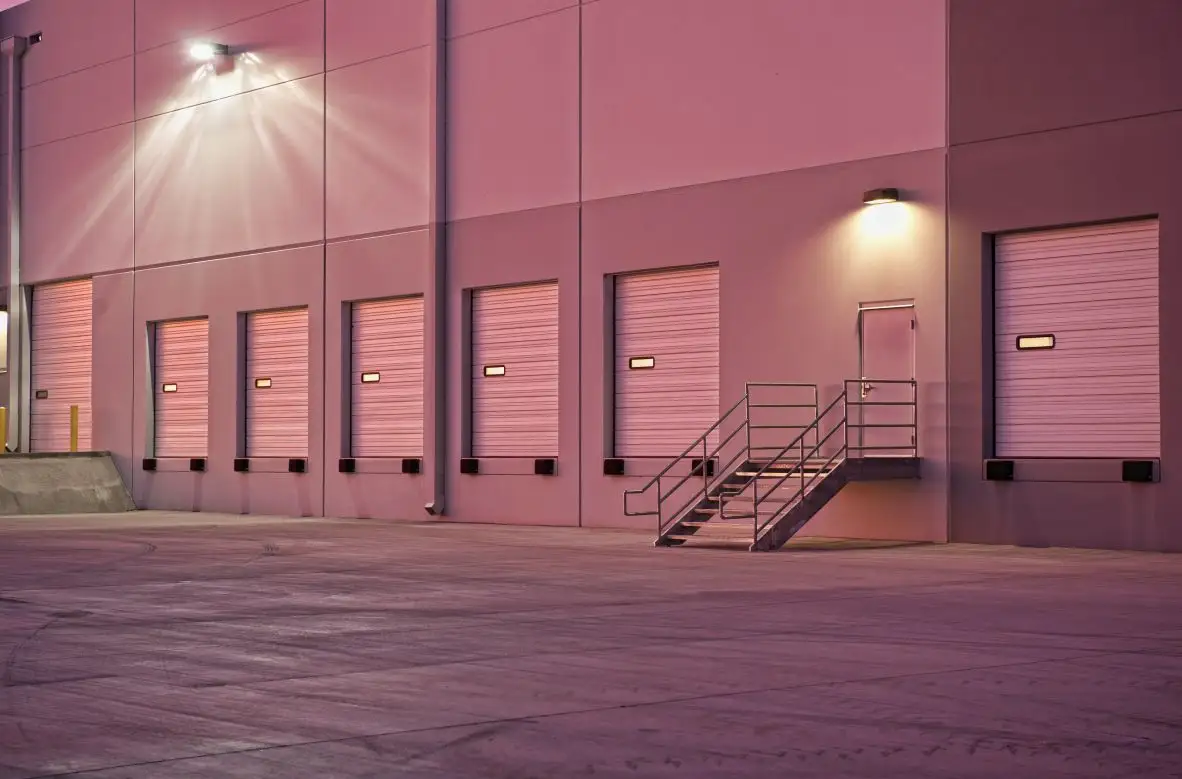
A functional industrial warehouse exterior with ample loading docks and clear signage.
In these cases, focusing on a competitive commercial real estate lease agreement with a lower base rate can ensure 100% occupancy. This strategy appeals to "efficiency experts"—businesses that operate on thin margins and prioritize cash flow stability above all else. For a 100,000-square-foot warehouse, a difference of $0.10 per square foot in rent translates to $120,000 in annual savings for the tenant. In a world of rising labor and fuel costs, that $120,000 can be the difference between a profitable year and a loss.
Understanding the Risks of Aggressive Price Cutting
However, we have to be careful. Drastically lowering rates can negatively impact your property's valuation. Since cap rates are explained as the ratio between Net Operating Income (NOI) and the asset's value, a drop in rent directly lowers what the building is worth. It can also signal to the market that the property is "distressed," attracting lower-quality tenants who may struggle to meet lease obligations. A building filled with tenants who are only there because it was the cheapest option is a building at high risk of mass vacancy during an economic downturn.
Furthermore, once a building's rent roll is set at a lower rate, it can take years or even decades to bring those rates back up to market levels, especially with long-term commercial leases. This "revenue erosion" can make it difficult to fund necessary capital improvements later, leading to a cycle of property degradation. If you can't afford to fix the roof because the rent is too low, the building will eventually become un-leasable at any price. This is the "death spiral" of commodity commercial real estate.
Market Conditions and the Power of Dynamic Pricing
In markets with high vacancy (over 10%), tenants have the leverage. Here, landlords often use "concessions"—like three months of free rent—instead of lowering the permanent face rate. This protects the long-term valuation while giving the tenant the immediate "win" of a lower effective cost. Using dynamic pricing models—adjusting rates based on real-time demand rather than annual reviews—is a sophisticated way to stay competitive without leaving money on the table. This approach allows landlords to remain flexible during economic downturns while maintaining the asset's integrity for future financing or sale.
Another critical aspect of the lower-rate strategy is the "Triple Net" (NNN) lease structure. In many industrial and retail scenarios, the tenant pays for taxes, insurance, and maintenance. If a landlord can keep these operating expenses low through efficient management, they can offer a lower total occupancy cost to the tenant without necessarily sacrificing their own bottom line. This requires a hands-on approach to property management and a commitment to preventative maintenance that avoids costly emergency repairs.
Calculating the Winner: ROI, Market Conditions, and Tenant Demographics
To decide which strategy wins, you have to look at who is renting. The demographic profile of your target tenant should dictate your capital expenditure budget. A tech startup has vastly different needs than a regional distribution center. A medical group requires specialized infrastructure that a law firm might find unnecessary. Understanding these nuances is the key to a successful commercial real estate strategy.
| Metric | Premium Amenities Strategy | Lower Lease Rate Strategy |
|---|---|---|
| Typical Rent Premium | 5% – 18% Higher | Market Average or Below |
| Lease-up Speed | Up to 50% Faster (if well-designed) | Variable based on price sensitivity |
| Asset Valuation | Higher (due to higher NOI) | Stable but capped |
| Maintenance Cost | Higher (ongoing upkeep) | Lower (basic infrastructure) |
| Target Tenant | Tech, Creative, Medical, Fortune 500 | Logistics, Back-office, Local small biz |
| Tenant Retention | High (due to environment) | Moderate (price-dependent) |
| Capital Requirement | High Upfront | Low Upfront |
Knowing what is a good cap rate for your specific asset class in the Inland Empire is vital. A medical office building requires high-end infrastructure, specialized plumbing, and high-capacity electrical systems. It will almost always "win" with a premium amenity strategy because the tenants require those features to operate. Conversely, a Class C suburban office might be better off maintaining a low-cost, high-occupancy model to serve local small businesses that are highly price-sensitive. These businesses often don't need a gym or a rooftop lounge; they need a functional space with good parking and a reliable landlord.
Hybrid Strategies for Optimal Portfolio Performance
The smartest landlords often use a hybrid approach. They might offer "tiered amenities"—where basic access is included, but premium features like reserved parking or executive gym memberships carry an additional fee. This allows you to keep the base rent competitive while generating secondary revenue streams. This is common in high-end office towers where the "amenity floor" is a separate profit center.
Another hybrid tactic is "strategic incentives." Instead of a permanent rent cut, offer "early possession," allowing a tenant to move in 30 days early for free to set up their equipment. This is a "disguised concession" that protects your long-term leasing vs buying commercial real estate math. By focusing on the "Net Effective Rent" rather than just the "Face Rate," landlords can create win-win scenarios that satisfy tenant budgets while preserving investor returns. For example, offering a higher Tenant Improvement (TI) allowance instead of lower rent allows the tenant to customize the space to their needs, which often leads to a longer lease term and higher renewal probability.
Furthermore, landlords can look at "soft amenities" that don't require massive capital. This could include organized food truck visits, outdoor yoga classes, or a concierge service for tenants. These features add value and build a sense of community without the permanent overhead of a built-out fitness center or cafeteria. In the Riverside market, where community and local connections are highly valued, these soft amenities can be a powerful differentiator.
Premium Amenities or Lower Lease Rates? Which Strategy Wins?
The strategy that "wins" for long-term profitability is the one that aligns with the Flight to Quality. Even in a tepid economy, businesses are willing to pay for convenience, flexibility, and productivity. The modern workforce is more mobile and more discerning than ever before. If a commercial space doesn't offer a compelling reason for people to be there, it will eventually struggle to maintain occupancy.
A modern retail strip with outdoor seating, EV charging stations, and high-end finishes.
Whether you are buying vs leasing commercial real estate, the goal is future-proofing. A building that offers EV charging, smart tech, and collaborative spaces will always be more resilient than a "cheap" building that hasn't been painted since 1995. In the Southern California market, quality is the best hedge against vacancy. As environmental regulations tighten, buildings with green certifications and energy-efficient systems will also face lower risk of obsolescence and regulatory fines.
Ultimately, the "winner" is the landlord who understands their tenant's business model as well as the tenant does. If you know that your target tenant is a growing tech firm, you invest in fiber and collaborative zones. If your target is a regional distributor, you invest in yard space and dock high doors. The strategy isn't about amenities vs. price in a vacuum; it's about delivering the highest value for the specific needs of the market. In the Inland Empire, where the economy is diversifying beyond just logistics into healthcare, tech, and professional services, the demand for high-quality, amenitized space is only going to grow.
Frequently Asked Questions about Commercial Leasing Strategies
Which amenities provide the highest rent premium in office buildings?
According to industry-wide research, roof and sky terraces lead the pack with a 5.2% rent premium. Other high-performers include fitness centers with showers (2.9%), courtyards (3.5%), and LEED certification (2.8%). These features are highly valued because they provide employees with spaces to decompress and socialize, which is a key component of modern workplace culture. In a post-pandemic world, outdoor access has moved from a luxury to a top-tier requirement for many corporate tenants.
How do lower lease rates affect the long-term valuation of a commercial property?
Lower lease rates directly reduce your Net Operating Income (NOI). Since commercial property value is typically calculated by dividing NOI by the market cap rate, lower rent equals a lower building value. This can make it harder to refinance or sell the property for a profit later. For example, a $10,000 reduction in annual NOI can result in a $200,000 loss in property value at a 5% cap rate. This is why many sophisticated investors prefer to offer concessions like free rent rather than lowering the base rate.
When should a landlord choose concessions over a permanent rent reduction?
Concessions (like free rent or tenant improvement allowances) are best used during temporary market oversupply or seasonal dips. They allow you to attract tenants immediately while keeping the "face rate" of the lease high, which preserves the building's appraised value for investors and lenders. This is a critical strategy for maintaining the long-term health of a commercial portfolio and ensuring that the property remains attractive to future buyers or refinancing partners.
What is the impact of EV charging stations on commercial property value?
As Southern California moves toward a greener economy, EV charging stations have become a significant draw for both retail and office tenants. Properties that offer these stations often see higher dwell times in retail settings and higher satisfaction scores in office settings. They are increasingly viewed as a standard infrastructure requirement rather than a luxury amenity. Furthermore, many state and local incentives can help offset the cost of installation, making it a high-ROI upgrade.
How does high-speed fiber connectivity influence tenant retention?
In the modern digital economy, downtime is not an option. Buildings with redundant fiber-optic connections and high-speed capabilities are far more resilient to market fluctuations. Tenants in sectors like finance, tech, and healthcare view reliable connectivity as a non-negotiable utility, similar to electricity or water. A building that can guarantee 99.9% uptime will always have a competitive advantage over one that relies on older copper or single-provider connections.
How Stance CRE Can Help You
Stance CRE supports commercial real estate clients by providing clear guidance on how lease structures, addendums, and amendments align with their broader business and investment objectives. This approach begins with a careful review of financial goals, operational needs, risk tolerance, and long-term flexibility, ensuring that contract decisions support growth rather than create unintended constraints. Instead of promoting one-size-fits-all solutions, Stance CRE emphasizes education, transparency, and strategic alignment at every stage of the transaction.
With deep expertise in Riverside County and the surrounding commercial markets, the Stance CRE team brings local insight and practical experience to each client engagement. From initial site selection to lease negotiation and ongoing contract modifications, Stance CRE helps businesses navigate complex agreements with confidence and clarity. Whether securing a first location or optimizing an existing portfolio, the focus remains on protecting client interests while positioning them for sustainable success in a dynamic commercial environment.
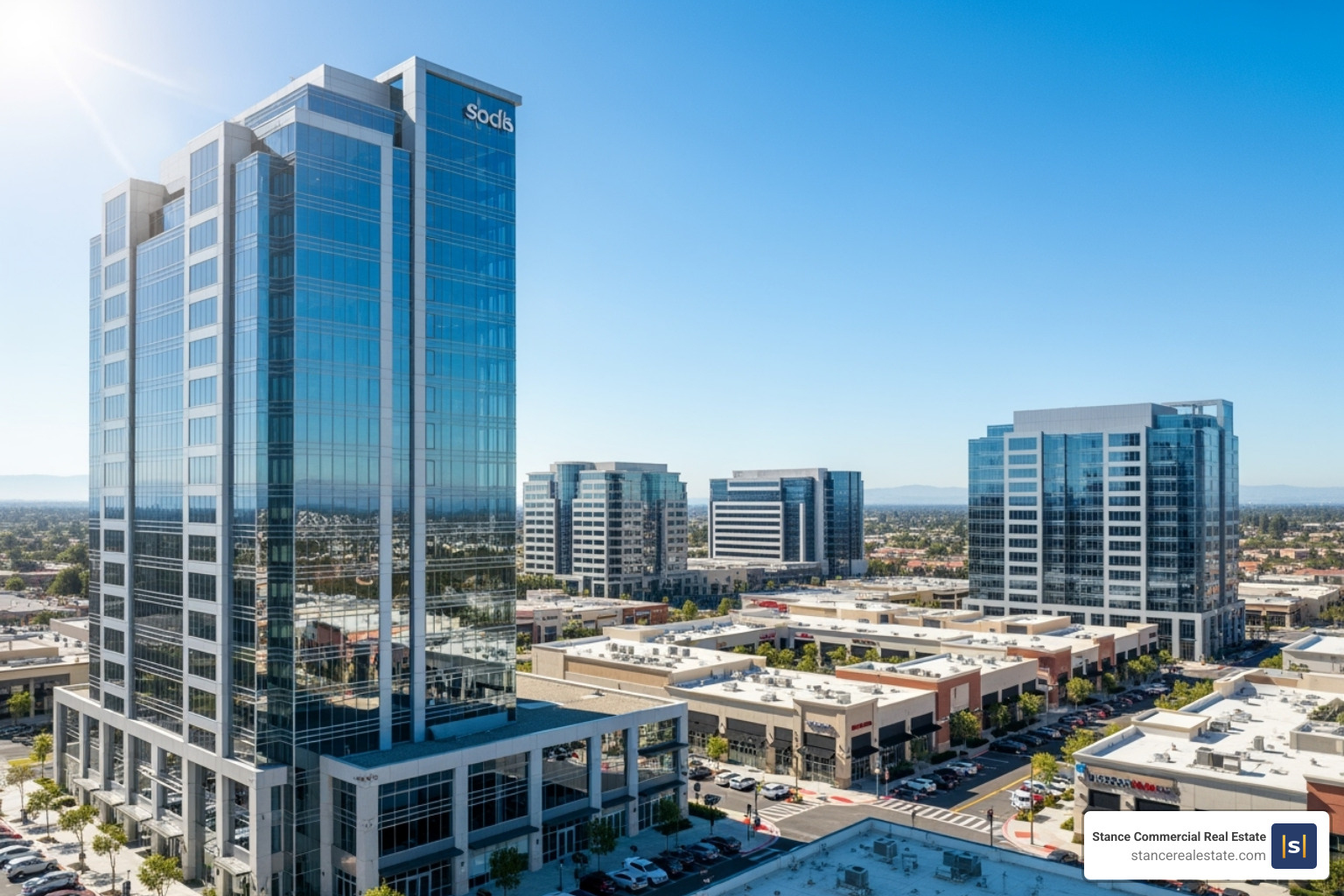
Acquire Like a Pro: Your Guide to Commercial Property Ownership
Why Acquiring Commercial Property Is Your Next Smart Move
Caption: A vibrant commercial landscape in Southern California, featuring modern office buildings, busy retail centers, and expansive industrial warehouses.
Acquire Like a Pro: Your Guide to Commercial Property Ownership is about understanding a fundamental truth: commercial real estate offers a powerful and proven path to wealth. While many investment vehicles are subject to market volatility, commercial properties can generate stable and substantial 9-12% annual returns, far outpacing many other asset classes. This superior performance is not accidental; it is the direct result of a business-oriented model built on professional tenants, longer lease terms that ensure income stability, and triple net (NNN) leases that strategically shift many operational costs to the tenant, insulating the owner from unpredictable expenses.
Here's what you need to know to acquire commercial property like a pro:
- Financial preparation - This goes beyond just the down payment. Expect to need 25-35% down, but also have significant liquid reserves for closing costs, immediate repairs, and a contingency fund to cover vacancies. Lenders will want to see a strong personal financial statement and a clear understanding of key metrics like Net Operating Income (NOI), capitalization rates (cap rates), and the Debt Service Coverage Ratio (DSCR).
- Professional team - Success in this arena is a team sport. Before you even look at a property, you must assemble a team of dedicated specialists: a commercial agent with a track record in your desired asset type and market, a real estate attorney to protect your legal interests, a commercial lender who understands asset-based underwriting, a CPA to structure the deal for maximum tax efficiency, and a qualified inspector to uncover potential physical defects.
- Due diligence - This is the most critical phase of any acquisition. It is an exhaustive investigation where you verify every claim made by the seller. This includes verifying zoning compliance for your intended use, conducting environmental assessments to avoid liability, performing a detailed physical inspection of the building and its systems, and forensically analyzing all financial documents like rent rolls and operating statements.
- Market analysis - A great property in a declining market is a poor investment. You must evaluate macroeconomic indicators, local employment trends, population growth, and demographic shifts. Location is paramount, so analyze accessibility to major transportation corridors, supply and demand dynamics for your specific property type, and the overall health of the local business community.
- Negotiation - A successful negotiation is about more than just the price. It involves structuring a purchase agreement with contingencies that protect you, securing an adequate due diligence period to conduct your investigation, and understanding the seller's motivations to craft a mutually beneficial deal. The terms of the deal are often as important as the final number.
The leap into commercial property is significant. It involves different metrics, deeper underwriting, and higher stakes than other asset types. The value of a commercial property is intrinsically linked to its Net Operating Income (NOI), which means you have the power to directly increase your equity by improving the asset's performance. Leases typically span 3-10 years with business tenants who, having a vested interest in their commercial space, often maintain the properties to a higher standard.
I'm Joe Stance. Over the past decade, I've guided investors through millions of square feet of commercial transactions in the Inland Empire. The principles in this guide are the bedrock of my practice and have helped my clients avoid costly mistakes and build substantial, lasting wealth through commercial assets.
Acquire Like a Pro: Your Guide to Commercial Property Ownership helpful reading:
- Managing Commercial Property Expenses
- What Your Business Growth Plans Reveal About the Type of Property You Should Choose
Foundations: Why, What, and How to Invest in Commercial Real Estate
When we talk about commercial property ownership, we're discussing a strategic investment that can transform your financial future. It's a distinct discipline within the real estate world, offering unique and powerful advantages for investors seeking substantial returns, long-term stability, and a scalable path to portfolio growth.
The Compelling Benefits of Commercial Property
The benefits of owning commercial property are numerous and compelling. Commercial real estate often delivers higher annual returns, typically in the 9–12% range, a figure that consistently outperforms many other investment classes. This higher yield is driven by several structural factors unique to commercial assets.
First, commercial spaces generate significantly higher rental income per square foot. Leases are long-term, often spanning 3–10 years or more, which provides a stable, predictable, and reliable income stream that is less susceptible to short-term market fluctuations. The tenants are typically businesses—corporations, LLCs, or franchises—which translates to a more professional landlord-tenant relationship with lower turnover rates. Because their business depends on their location, these tenants have a vested interest in maintaining their space, leading to less wear and tear and better property upkeep.
A key advantage is the widespread use of the Triple Net Lease (NNN). In a typical NNN lease, the tenant is responsible for paying for property taxes, building insurance, and common area maintenance, in addition to their base rent. This structure minimizes the landlord's operational expenses and creates a more passive, predictable income stream, protecting your returns from rising costs.
Unlike properties valued primarily by subjective comparisons, commercial property is valued based on its Net Operating Income (NOI). This is a critical distinction: it gives you direct control over your property's value. By increasing rental income, reducing vacancies, or managing expenses more efficiently, you directly build equity. A single large commercial asset can provide significant cash flow with streamlined management compared to overseeing numerous smaller properties, allowing for more efficient scaling of your portfolio, as explained in Commercial Real Estate Passive Income Explained.
Understanding the Main Types of Commercial Properties
It's crucial to understand the diverse landscape of commercial properties. Each type has unique characteristics, tenant profiles, risks, and rewards. Specializing in one or two can give you a competitive edge.
Caption: A thriving retail center in the Inland Empire, showcasing diverse businesses and active consumer engagement.
- Office Buildings: Categorized by quality grades, which dictate tenant quality and rental rates.
- Class A: Premium, modern buildings in prime locations with high-end amenities, attracting top-tier corporate tenants like law firms and financial institutions.
- Class B: Good quality, slightly older buildings that are well-maintained. They offer a stable tenant base and present value-add opportunities through renovation and modernization.
- Class C: Older buildings, often in less desirable locations, requiring significant renovation. They offer higher risk but the potential for high returns through strategic repositioning.
- Retail Properties: Includes everything from large power centers with national anchor tenants to smaller strip centers and standalone commercial buildings. Location, visibility, traffic counts, and local demographics are absolutely critical for success. Co-tenancy clauses and the creditworthiness of anchor tenants are key diligence items.
- Industrial Properties: This broad category includes warehouses, distribution centers, manufacturing facilities, and flex spaces. The explosive growth of e-commerce has fueled unprecedented demand for Industrial Real Estate, especially for "last-mile" logistics centers. These assets often feature very long lease terms, credit-worthy tenants, and relatively low maintenance costs.
- Multifamily Properties (Commercial-Scale): Large apartment complexes with five or more units are treated as commercial investments by lenders and appraisers. They are underwritten based on their income potential (rent roll, vacancy rates, expense ratios), not on comparable sales of smaller properties. They offer steady cash flow from multiple tenants, spreading risk, and are a popular asset class for both new and experienced investors.
- Hospitality Properties: This includes hotels, motels, and extended-stay facilities. These properties have high profit potential but require intensive, specialized management and are highly sensitive to economic cycles, business travel, and tourism trends. Key metrics include Revenue Per Available Room (RevPAR) and Average Daily Rate (ADR).
Key Investment Strategies for Every Goal
Different strategies cater to varying levels of risk tolerance, capital, and desired returns in commercial real estate.
- Buy and Hold: A long-term strategy focused on acquiring stable, cash-flowing properties and holding them for an extended period. The goal is to generate consistent income and benefit from long-term property appreciation and loan amortization. This is ideal for investors seeking stability and wealth preservation.
- Value-Add Investing: This involves purchasing underperforming properties and increasing their value through strategic improvements. This could include physical renovations, lease restructuring to increase rents, or implementing more efficient professional management. This strategy carries higher risk but can yield significant returns, often in the 12–18% range, upon stabilization or sale.
- Passive vs. Active Investing: You can be an active, hands-on investor who directly manages properties, or you can invest passively in vehicles such as Real Estate Investment Trusts (REITs) or syndications (Limited Partnerships - LPs). Passive investing offers exposure to commercial real estate with less direct involvement and lower capital requirements, but also less control.
Explore our guide on Commercial Real Estate Investment Strategies to learn more.
Opening up Significant Tax Advantages
Commercial property ownership offers some of the most significant tax advantages available to investors, which can dramatically boost your overall returns.
- Depreciation: You can deduct a portion of the property's value (the building, not the land) from your taxable income each year through depreciation. A strategy known as a cost segregation study can accelerate these deductions, significantly improving cash flow in the early years of ownership.
- 1031 Exchange: This powerful tool allows you to defer capital gains taxes by reinvesting the proceeds from a sale into a "like-kind" commercial property. This enables you to grow your portfolio tax-free, compounding your wealth over time. Strict timelines apply (45 days to identify a replacement property, 180 days to close).
- Interest Deductions: The interest paid on your commercial mortgage is a business expense and is therefore tax-deductible.
- Operating Expenses: All ordinary and necessary costs of running the property, such as property management fees, insurance, repairs, and maintenance, are deductible business expenses that reduce your taxable income.
These benefits make commercial real estate a highly efficient and attractive asset class for building long-term wealth. We explore these in more detail in The Most Attractive Tax Benefits of Investing in Commercial Real Estate in 2022.
How to Determine the Right Offer Price for a Property
Determining the right offer price is both an art and a science, blending rigorous analytical methods with strategic negotiation and market insight.
- Income Capitalization Method: This is the primary valuation method for commercial properties. It directly links a property's value to its earning potential. The formula is:
Property Value = NOI / Market Cap Rate. By using the property's verified NOI and a market-appropriate cap rate, you can arrive at a valuation based purely on its financial performance. This is how sophisticated investors and appraisers value property. - Market Comparison Approach: This method involves analyzing recent sales of similar commercial properties in the same market. While it's a useful secondary check, it can be difficult to find truly "comparable" properties, as every commercial asset has unique tenants, lease terms, and physical conditions. It's most effective when used to validate the cap rate chosen for the income approach.
- Gross Rent Multiplier (GRM): This is a quick screening tool, not a definitive valuation method. It's calculated by dividing the purchase price by the gross annual rent. A lower GRM might indicate a better value, but this metric ignores vacancies and operating expenses, making it unreliable for final decision-making. Use it only for initial, high-level comparisons.
Beyond the numbers, understanding the seller's motivation is a powerful negotiation tool. Are they facing a deadline? Are they retiring? By uncovering their reasons for selling, you can often tailor an offer that addresses their specific needs—which may not just be about achieving the highest possible price. This insight helps you create a realistic pro forma analysis and project long-term ROI, as detailed in How to Evaluate a Commercial Property for Long-Term ROI.
Navigating Your Commercial Financing Options
Securing the right financing is critical. Unlike consumer lending, commercial lenders focus primarily on the property's income stream and your perceived ability to successfully operate the asset.
- Traditional Commercial Mortgages: Offered by banks and credit unions, these are the most common financing option. Terms typically range from 10 to 25 years with a balloon payment after 5, 7, or 10 years. Lenders will heavily scrutinize the property's NOI, DSCR, rent roll, and tenant quality.
- SBA 504 & 7a Loans: These government-backed loans are ideal for owner-occupied commercial properties, where a business will occupy at least 51% of the space. They often feature lower down payments (as low as 10%) and long-term, fixed-rate financing, making them very attractive for business owners looking to buy their own building.
- Bridge Loans: These are short-term loans (typically 6 months to 3 years) with higher interest rates. They are used to "bridge" a gap in financing, often for value-add properties that need improvements or lease-up before they can qualify for stable, long-term financing.
- Seller Financing: In some cases, a seller may be willing to finance a portion of the purchase price themselves. This can be a creative way to close a deal, especially when traditional financing is difficult to obtain. It offers flexibility in terms but often comes with a shorter loan term and higher interest rate.
Be prepared for a substantial down payment of 25–35% and have significant cash reserves for closing costs, due diligence expenses, and post-acquisition capital needs. Lenders will scrutinize your business plan, financial projections, and experience to ensure the asset can comfortably service the debt. Understanding the nuances of Commercial Real Estate Interest Rates is also crucial for locking in favorable terms.
The Acquisition Playbook: Your Guide to Commercial Property Ownership
Now that we understand the "why" and "how much," let's walk through the practical, step-by-step process of acquiring a commercial property. This playbook, with a focus on the dynamic Inland Empire market, is your roadmap to a successful transaction.
Step 1: Assemble Your Professional Power Team
Never attempt to navigate the complexities of a commercial real estate transaction alone. A strong, experienced, and local professional team is your greatest asset and your best protection against costly mistakes. Vet these professionals as if you were hiring for a key position in your own company.
- Commercial Real Estate Agent: Find a local market specialist, preferably one with a designation like CCIM (Certified Commercial Investment Member) or SIOR (Society of Industrial and Office Realtors). They should have deep expertise in your target property type (e.g., industrial, retail) and provide access to off-market deals, market data, and negotiation expertise.
- Real Estate Attorney: Hire an attorney who specializes in commercial real estate law within the specific county of the transaction. They will draft and review the purchase and sale agreement, review title and survey, verify zoning, and protect your legal interests throughout the process. Their fee is an investment, not an expense.
- Commercial Lender: Build a relationship with a reputable lender who understands asset-based lending for commercial properties. They can pre-qualify you, explain your financing options, and guide you to the best loan product for your specific deal.
- CPA/Tax Professional: A knowledgeable CPA is crucial for advising on the optimal ownership structure (e.g., LLC, LP) to limit liability and maximize tax advantages. They will be your guide for depreciation strategies and executing a 1031 exchange.
- Property Inspector & Engineers: Engage a qualified inspector who specializes in commercial buildings. Depending on the property, you may also need specialists like a structural engineer, roofing consultant, or HVAC technician to conduct thorough assessments and identify costly hidden defects.
This team's collective knowledge is your shield, helping you avoid pitfalls and capitalize on opportunities. Learn more about their roles in the Commercial Real Estate Services Industry.
Step 2: Master Market and Location Analysis
The adage "location, location, location" is amplified in commercial real estate. Your investment's success is inextricably tied to the health of the surrounding market and the specific attributes of its location.
- Economic Indicators: Evaluate the key economic drivers of the market. In the Inland Empire, this means tracking logistics and warehousing employment, population growth, new business formation, and major infrastructure projects like airport expansions or new highway interchanges.
- Supply and Demand: Analyze market-specific data like vacancy rates, absorption rates (the rate at which available space is leased), and the new construction pipeline for your property type. High absorption and low vacancy signal a strong, landlord-favorable market.
- Demographics: Understand the area's demographic profile—age, income levels, education—to ensure it aligns with the needs of your target tenants or their customers.
- Accessibility and Visibility: Proximity to major transportation arteries (like the I-10, I-15, and SR-60 in the Inland Empire), rail lines, ports, and public transit is critical, especially for industrial and retail properties. Visibility and ingress/egress are also key factors.
- Local Market Knowledge: Understanding the unique dynamics of submarkets, such as the Understanding the Riverside Commercial Real Estate Market, is essential for identifying pockets of growth and areas ripe for investment.
Step 3: Conduct Critical Due Diligence to Acquire Like a Pro
Due diligence is your 30- to 90-day investigation period to verify every single detail about the property. Your goal is to uncover any potential issues before you are legally obligated to close. Trust, but verify everything.
Caption: A detailed blueprint illustrating the essential due diligence checklist for commercial property acquisition.
- Financial Due Diligence: This is a forensic audit of the property's finances. Scrutinize at least three years of historical operating statements, rent rolls, and utility bills. Create lease abstracts for every tenant to understand their terms, options, and responsibilities. Verify all income and expenses to confirm the seller's NOI claims and build your own accurate pro forma.
- Physical Assessment: Conduct a thorough building inspection covering the structure, roof, HVAC systems, plumbing, electrical systems, parking lot, and landscaping. Check for ADA compliance. Reviewing past insurance claims can also reveal persistent issues like water intrusion or vandalism.
- Environmental Due Diligence: A Phase I Environmental Site Assessment (ESA) is non-negotiable, especially in a mature market like California. This report identifies potential soil or groundwater contamination from current or past uses (like gas stations or dry cleaners), protecting you from massive cleanup liabilities. If issues are found, a more invasive Phase II ESA may be required.
- Legal and Title Due Diligence: Your attorney will conduct a title search to verify clear ownership and uncover any liens, easements, or encumbrances that could affect your use of the property. They will also review the survey to confirm property boundaries. Always secure title insurance for protection against future claims.
- Zoning and Entitlement Verification: Confirm with the local municipality that the property's current use is legally compliant and that your intended future use is permitted under current zoning regulations. Investigate any planned zoning changes or development overlays that could impact the property's value.
This meticulous process, outlined in our Due Diligence Checklist: What to Review Before Buying Commercial Property, ensures you know exactly what you're buying.
Step 4: Negotiate the Purchase Agreement to Acquire Like a Pro
The purchase agreement is the legally binding backbone of your acquisition. It's where all terms, conditions, timelines, and protections are formally documented.
- Letter of Intent (LOI): While typically non-binding, the LOI is a crucial first step. It outlines the key deal terms (price, closing date, due diligence period) and serves as a roadmap for drafting the final agreement. A well-defined LOI saves time and legal fees.
- Purchase and Sale Agreement (PSA): This is the definitive, legally binding contract. Your attorney will ensure it includes all necessary protections, representations, and warranties from the seller, and clearly defines the obligations of both parties.
- Contingencies: These are your safety nets. Critical contingencies include clauses that allow you to terminate the agreement without penalty if you cannot secure satisfactory financing, if the physical inspection reveals unacceptable defects, or if the due diligence uncovers negative information.
- Due Diligence Period: Negotiate for a sufficient timeframe (typically 30–90 days, depending on complexity) to conduct your comprehensive investigations without being rushed.
- Closing Process: Once all contingencies are satisfied and removed in writing, the deal moves to closing. Your attorney, title company, and escrow agent will manage the transfer of funds and the official recording of the deed, making you the new owner.
A well-drafted purchase agreement is paramount to a secure investment. For more guidance, see our resource on Purchasing Commercial Real Estate.
Mitigating Risk and Ensuring Long-Term Success
Even with the best preparation, all investments involve risk. In commercial real estate, learning from the common pitfalls of others and proactively implementing strategies to address them is the key to protecting your capital and ensuring long-term success.
Common Pitfalls and How to Avoid Them
Here are the most frequent and costly mistakes investors make, and how you can avoid them to safeguard your investment:
Caption: A universal warning sign, reminding investors of the potential pitfalls in commercial property acquisition.
- Inadequate Financial Analysis: Never trust a seller's pro forma at face value. These are marketing documents. You must conduct your own independent analysis using actual, verified financial documents (rent rolls, operating statements, tax bills) to avoid overpaying for an underperforming asset.
- Insufficient Market Research: Failing to deeply research local economic trends, supply/demand dynamics, demographics, and competition can lead to investing in a declining market or overpaying at the peak. Your market analysis must be as thorough as your property analysis.
- Over-Leveraging: Taking on too much debt makes your investment fragile and vulnerable to market downturns or an unexpected vacancy. Maintain a healthy Debt Service Coverage Ratio (DSCR) above 1.25x and ensure you have sufficient cash reserves to weather any storms.
- Skipping or Skimping on Inspections: The cost of a professional commercial inspection is minimal compared to the potential expense of an unforeseen roof replacement, HVAC failure, or structural issue. It is your first and best line of defense against physical defects. Always hire qualified, specialized professionals.
- Neglecting Legal Counsel: Trying to save money by not hiring an experienced commercial real estate attorney is a false economy. One missed clause in a lease, one overlooked easement in a title report, or one poorly drafted PSA clause can cost you multiples of their fee or kill the deal entirely.
- Underestimating Capital Expenditures (CapEx): Operating expenses cover day-to-day costs, but CapEx covers major, long-term replacements (roof, HVAC, parking lot). Failing to budget for these large, inevitable expenses by setting aside a monthly CapEx reserve will lead to a cash flow crisis when a major system fails.
By being acutely aware of these common pitfalls, you can build layers of protection into your acquisition process. For further insights, explore Common Mistakes New Investors Make in Commercial Real Estate.
Frequently Asked Questions about Commercial Property Ownership
Here are answers to some of the most common questions we receive from aspiring commercial property owners:
- What is the biggest difference between buying commercial and other types of property?
The biggest differences are valuation and tenants. Commercial property value is fundamentally driven by the net operating income (NOI) it generates. This means you, as the owner, can directly increase the property's value by improving its financial performance. Furthermore, commercial tenants are businesses operating under formal lease agreements, typically for longer terms (3–10+ years) and often under triple net (NNN) structures, which creates a more stable, professional, and predictable income stream. - How much capital do I really need to start investing in commercial real estate?
You should expect to need a 25–35% down payment, plus an additional 3-5% of the purchase price for closing costs (e.g., legal fees, loan origination, title insurance). Beyond that, you must have substantial cash reserves for post-closing repairs, tenant improvements, leasing commissions, and a contingency fund to cover at least six months of debt service and operating expenses in case of unexpected vacancies. - What is a Triple Net (NNN) lease and why is it important?
An NNN lease is a lease structure where the tenant is responsible for paying for the three major "nets": real estate taxes, building insurance, and common area maintenance (CAM), in addition to their base rent. It is highly important for investors because it shifts the burden of unpredictable or rising operating costs to the tenant, making the landlord's income stream more predictable and passive. - What is a tenant estoppel certificate and why is it important?
A tenant estoppel certificate is a legal document signed by a tenant during the due diligence period that confirms the key terms of their lease agreement (e.g., rent amount, lease term, security deposit). It is critically important because it prevents the tenant from later claiming different terms exist, thereby verifying the seller's rent roll and protecting the buyer from post-closing disputes. - What are my responsibilities after closing the deal?
After closing, your work begins. Your primary responsibilities include property management (or overseeing your property manager), tenant relations, financial administration (bookkeeping, budgeting, reporting), and strategic asset management. This involves making long-term decisions to maintain and increase the property's value, such as planning capital improvements and optimizing the tenant mix.
How Stance CRE Can Help You
From mastering financial analysis and market research to conducting critical due diligence and negotiating protective contracts, every step is crucial for mitigating risk and making informed, profitable decisions. The path to long-term wealth through commercial real estate has its challenges, but by embracing the best practices outlined in this guide, you can navigate them successfully and build a robust portfolio.
At Stance Commercial Real Estate, we are deeply committed to the Riverside and Inland Empire markets. Our local expertise, data-driven approach, and service-over-profit ethos position us as your trusted partner in achieving your investment goals. Ready to take the next step? Explore our Commercial Real Estate Investment Strategies to find the right fit for your goals.

Selecting a Property That Actually Fits Your Business Growth Plans
Why Your Next Property is a Strategic Growth Lever, Not Just an Expense
Your business growth plans do far more than hint at the type of property you should choose—they define it. This decision isn’t just about square footage or lease terms; it’s about creating a physical environment that supports where your company is headed, not just where it is today. The space you select becomes a strategic asset, shaping how efficiently your team operates, how well you serve customers, and how effectively you can scale.
When you look closely at your growth trajectory—whether you expect rapid expansion, steady long-term development, or a shift in operational needs—you’re essentially outlining the property specifications required to support that path. Your facility becomes the foundation for future wins, ensuring your operations, talent, and customer experience all have room to grow.
Consider the specific implications of your strategy:
- Rapid Scaling: A plan to double your headcount in 24 months requires more than just extra desks. It demands a space with flexible lease terms, such as expansion clauses giving you the right of first refusal on adjacent units. Without this, you could find yourself landlocked and forced into a costly, disruptive move just as your business gains momentum.
- Product Line Expansion: Introducing a new product isn't just a marketing challenge; it's a physical one. You may need adaptable production zones, higher ceilings for vertical storage or new machinery, increased floor load capacity, and significant utility upgrades for power and water. The right property has this capacity built-in or can be easily retrofitted.
- Geographic Expansion: Moving into a new territory means prioritizing locations that serve as a strategic beachhead. This could be a site near major transport hubs like the I-10/I-15 interchange for a logistics company, or a storefront in a high-density area for a retailer targeting a new customer base.
- Service-Based Growth: For firms reliant on top talent and client relationships, the property becomes a tool for attraction and retention. This means choosing professional, client-facing spaces in locations with excellent employee access, abundant amenities, and a prestigious address that reinforces your brand's credibility.
- Logistics Growth: Success in e-commerce or distribution hinges on supply chain velocity. This makes industrial properties near major highways with ample loading docks, large truck courts for easy maneuverability, and high clear heights for racking essential. Every minute saved in transit translates to a competitive advantage.
- Tech Needs: A modern business runs on data and power. Your property must support this with robust electrical capacity, redundant power sources, and access to high-speed fiber internet from multiple carriers. For data-intensive operations, specialized HVAC systems are non-negotiable to protect critical hardware.
Choosing the wrong property can stall growth for years. It can force a premature and expensive relocation, drain capital on underutilized space, or create operational bottlenecks that cripple efficiency and frustrate employees. Many businesses fall into the trap of treating property as a simple cost to be minimized, overlooking its profound impact on productivity, customer perception, and long-term financial stability. With brick-and-mortar still accounting for a staggering 85% of all retail sales, the right physical location remains one of the most powerful assets a business can possess.
Too often, leadership teams separate their corporate growth strategy from their real estate decisions, leading them to choose a property based on short-term availability or perceived affordability. This guide provides a strategic, step-by-step process for integrating your business plan directly into your property search, ensuring your next move is a catalyst for success.

Step 1: Auditing Your Present and Projecting Your Future
Before you even start browsing listings, signing a lease, or making an offer, it’s essential to take a hard, strategic look at where your business stands today—and where it’s realistically headed tomorrow. This isn’t just a helpful exercise; it’s the cornerstone of making a property decision that actually supports growth rather than limiting it. Choosing the right space begins with an honest, data-driven assessment of your current operations, combined with a forward-looking strategy that anticipates future needs. The properties you consider, the layout you prioritize, and even the location itself should all be informed by this thorough understanding of your business trajectory. The smarter your insight into growth, the more your property becomes a tool for scaling successfully rather than a constraint on progress.
Skipping this crucial step is a recipe for disaster. You'll either end up in a cramped space you outgrow within a year, triggering a costly and disruptive move, or you'll find yourself hemorrhaging cash on excessive square footage you don't need and can't afford. The goal is precision: finding the right fit for today with the built-in flexibility for tomorrow.

Assessing Your Current Business Needs
Start with what you know: your business as it operates right now. To do this effectively, assemble a cross-functional team involving heads of HR, Operations, IT, and Finance. Each department has unique insights into space and infrastructure requirements. Your first task is to calculate your baseline square footage by conducting a thorough audit of:
- People: Go beyond a simple headcount. Analyze the type of workspace your employees need to be productive. A creative agency might thrive in a collaborative, open-plan space with numerous breakout areas, while an accounting or law firm will likely require private offices for confidentiality and focused work. Consider different work styles; do you need quiet zones, team pods, or large conference rooms? Health and safety guidelines, such as the common standard of at least 11 cubic meters of space per employee, provide a minimum, but optimal productivity often requires more.
- Equipment: List every significant piece of machinery, technology, and specialized tool you rely on. This goes far beyond desks and chairs. A tech company needs a climate-controlled server room with robust HVAC and power. A manufacturer may need heavy-duty three-phase power, reinforced flooring, and specific ventilation. A medical clinic will have imaging machines with shielding requirements, while a commercial kitchen has extensive plumbing and fire suppression needs. The physical requirements of your equipment are non-negotiable constraints.
- Inventory: Quantify your current storage requirements for products, components, or raw materials. Document any special needs, such as climate control for perishable goods, high-security cages for valuable items, or specialized shelving and racking systems for efficient organization. Analyze your inventory workflow (e.g., FIFO, LIFO) and how the physical layout can optimize it. Easy access for shipping and receiving is paramount.
Beyond pure square footage, map your daily workflow requirements. How do people, materials, and information move through your space? An inefficient layout creates bottlenecks, wastes time, and can directly impact customer service and profitability. Finally, gain a complete picture of your total occupancy costs.
Forecasting Your Growth Trajectory
Here’s where the concept truly clicks: your 3–5 year business plan isn’t just a document—it’s the blueprint for your property strategy. Vague optimism won’t cut it; you need concrete, data-driven projections. If your plan anticipates adding 10 or more employees each year, a space that only accommodates your current team is already outdated before you move in. Planning for growth from day one ensures your property becomes a springboard, not a bottleneck, allowing operations, collaboration, and innovation to scale seamlessly alongside your business.
Translate your strategic goals into physical requirements. A new product line often means new equipment, which requires more space, more power, and potentially different zoning. Market diversification into a new region could mean opening a regional distribution center in the Inland Empire or a small satellite sales office. To manage this uncertainty, develop multiple growth scenarios—conservative, expected, and aggressive—and identify a property solution that can accommodate the most likely outcomes.
The property you choose must be scalable. Scalability can take many forms: a lease with a right of first refusal on an adjacent unit, a modular building design that can be easily reconfigured, or a property with excess land for future construction. For industrial users, the ability to add mezzanine floors can dramatically increase usable space without expanding the building's footprint.
For businesses with multiple properties, a Commercial Real Estate Portfolio Analysis is essential to ensure individual property decisions align with your broader corporate strategy. Smart planning also includes building in flexibility for downsizing or strategic pivots. A lease with favorable subleasing options provides a critical safety net if market conditions change or a business unit underperforms. The ultimate goal is to choose a property that can accommodate your entire journey—growth, pivots, and all—without holding you back.
Step 2: Matching Property Type to Your Business Model
Different business models demand fundamentally different physical spaces. Your day-to-day operational blueprint—how you create value, interact with customers, and manage your workflow—is the primary determinant of your ideal commercial property type. A misunderstanding here can lead to a space that actively works against your business goals. Let's examine how the unique needs of retail, industrial, and office-based businesses dictate their real estate choices.
Retail: The Customer-Facing Frontier
For any retail business, the property is the stage on which the customer experience unfolds. High foot traffic and maximum visibility are the non-negotiable pillars of success. Despite the rise of e-commerce, the physical store remains dominant, with brick-and-mortar still accounting for a massive 85 percent of total retail sales, according to Statista.
Customer accessibility is just as vital. This includes ample, convenient parking and strategic proximity to your target demographic. Research confirms this, showing that 93% of consumers travel 20 minutes or less for their everyday purchases. Your location must be within this radius. Furthermore, locating near complementary, non-competing businesses (e.g., a coffee shop next to a bookstore) can create a synergistic effect, boosting traffic for all. The type of retail center also matters, from a neighborhood strip mall serving daily needs to a large regional mall that acts as a destination. As omnichannel strategies become standard, consider if the space can support functions like buy-online-pickup-in-store (BOPIS).
Industrial & Warehousing: The Logistical Backbone
Industrial operations revolve around one core principle: the efficient movement and processing of goods. Therefore, proximity to major transport hubs—highways, ports, and intermodal rail facilities—is crucial. For businesses in the Inland Empire, immediate access to the I-10 and I-15 corridors can dramatically optimize delivery times and reduce transportation costs. The explosion of online shopping has intensified this need, making last-mile distribution centers one of the hottest asset classes, as detailed in How E-commerce Growth is Shaping Industrial Real Estate.
Key features to scrutinize include HGV access and sufficient loading docks (a good ratio is one dock door per 5,000-10,000 sq. ft.), a large, paved truck court for safe maneuvering, and high ceilings (clear heights of 32 feet or more are now standard) to maximize vertical storage with modern racking systems. The national industrial vacancy rate remains exceptionally low at 7%, with smaller small-bay properties even tighter at 4.2%, highlighting intense demand. Your layout must be designed for seamless supply chain efficiency, from receiving to storage to shipping. If you're looking for space in this competitive market, check out Industrial Property for Sale Riverside CA.
Office & Service-Based: The Hub for Talent and Operations
For office-based businesses, the property serves a dual purpose: it's a home base for attracting and retaining top talent, and it's the first physical impression you make on clients. Employee accessibility has become a top priority. This means considering average commute times, access to public transportation, and the availability of local amenities like cafes, restaurants, and gyms that improve the daily work environment and create a vibrant workplace culture.
If you regularly host clients, professional, well-equipped meeting spaces are essential for projecting credibility and confidence. Explore options like Downtown Riverside Office Space to establish a strong professional presence. With the rise of hybrid work models, the office's role has shifted. Many businesses now need flexible layouts with more collaborative zones, high-tech conference rooms for seamless virtual participation, and fewer dedicated desks. The choice between co-working and a dedicated space often depends on your growth stage; co-working offers maximum flexibility for early-stage companies, while a dedicated office provides stability, security, and the ability to build a unique company culture. For local insights, read about Leasing Office Space in Riverside.
| Property Type | Primary Location Driver | Key Feature | Ideal for Growth in... | Scalability Challenge |
|---|---|---|---|---|
| Retail | High Foot Traffic & Visibility | Storefronts, Display Space | Customer-facing sales, Brand presence | Limited physical expansion, Lease restrictions |
| Industrial & Warehousing | Transport Hub Proximity | High Ceilings, Loading Docks | Manufacturing, Logistics, E-commerce | Zoning, Specialized equipment space, Utility capacity |
| Office & Service | Employee/Client Accessibility | Collaborative/Private Workspaces | Professional services, Tech, Administration | Rapid headcount growth, Layout changes, Tech infrastructure |
What Your Business Growth Plans Reveal About the Type of Property You Should Choose
This is where everything converges. Your strategic plans are not abstract documents; they provide a practical, detailed roadmap to the right property. The way you run your business—your operational model—determines where it needs to be located, what physical infrastructure it requires to function, and what legal and regulatory frameworks it must adhere to. Ignoring this connection means choosing a property that will eventually hinder, rather than help, your growth.
How Your Operational Model Dictates Location Needs
Your operational model is the single most important driver of your location requirements. A national distribution center being established in the Inland Empire requires immediate, unimpeded access to the I-10 or I-15 for its logistics network to function. In contrast, a high-end retail boutique opening in Downtown Riverside needs to be on a street with heavy foot traffic and high visibility. For most retail and service businesses, the potential customer base is defined by a surprisingly small radius; as research shows, 93% of consumers travel 20 minutes or less for everyday purchases. You must be physically located within that convenient radius of your target demographic. For some businesses, Location Location Location: Why Walkability Matters More Than Ever is the deciding factor; for a heavy industrial user, it's irrelevant. Don't forget to consider supplier proximity. Moving to a location with cheaper rent can quickly become a net loss if it significantly increases transportation costs and lead times from your key suppliers, especially if you rely on a Just-In-Time inventory model. Understanding the nuances of the Riverside Commercial Real Estate Market helps match your specific operational needs to the right local corridor or submarket.
Matching Technological and Infrastructure Needs to Property Specs
A building's infrastructure is as critical as its size and layout. Before you get serious about a property, you must verify the availability and capacity of essential services that can support not just your current operations, but also your projected growth.
- High-speed fiber internet: This is a baseline, non-negotiable requirement for nearly all modern businesses. Crucially, you should verify the presence of multiple carriers in the building to ensure redundancy and competitive pricing. An outage can halt your entire operation.
- Power capacity: This is critical for manufacturing, data centers, or even large offices with dense employee counts. Conduct a power study to confirm the building's electrical service (including whether it has 3-phase power) can handle your current and future equipment load. Inquire about backup power systems like generators or UPS.
- HVAC systems: In the Inland Empire's climate, a reliable and efficient HVAC system is essential for employee comfort, productivity, and the proper functioning of sensitive equipment. Investigate the system's age, maintenance history, and whether it allows for zoned control. Modern systems with high MERV-rated air filtration have also become a key factor in employee wellness.
- Physical Security: Evaluate the building's existing security infrastructure, including access control (key card systems), video surveillance, and alarm monitoring. The level of security you need will vary greatly between a jewelry store and a standard office.
Properties with certified sustainable features often deliver significantly cheaper running costs over the lease term, a point detailed in our article on Green Real Estate Trends. Modern smart building features like integrated security, lighting, and energy management can also improve operational efficiency and provide valuable data. Always prioritize properties with robust, accessible conduit systems that can accommodate future technological upgrades without costly demolition and reconstruction.
Navigating Zoning, Regulations, and Your Long-Term Vision
Zoning laws and municipal regulations are hard constraints that can completely derail your plans if ignored. This is a critical part of your due diligence. In the Inland Empire, industrial zoning (e.g., M-1, M-2) is required for manufacturing and logistics, while commercial zoning (e.g., C-1, C-2) covers most retail and office uses. Mixed-use zoning is increasingly common in urban cores like Downtown Riverside, offering flexibility but with its own specific set of rules regarding operations and hours.
Beyond the base zoning, many businesses, such as medical clinics, educational facilities, or entertainment venues, require a special use permit or conditional use permit (CUP) to operate, even within the correct zone. This can be a lengthy and uncertain process. Be aware of signage restrictions, parking requirements (often a specific ratio of spaces per 1,000 sq. ft.), and environmental regulations, which are particularly stringent in California. A food production facility faces entirely different health and safety rules than a tech office. To avoid costly surprises, use our Due Diligence Checklist: What to Review Before Buying Commercial Property as an essential guide.
If your long-term vision includes diversification, choose an adaptable property. This could mean a building with a flexible layout, modular walls, or a location with zoning that permits a wider range of uses. For those looking to align their growth with powerful economic incentives, it's worth exploring opportunities like Investing in Riverside's Opportunity Zones. Your growth plans have already defined your property needs; the challenge is translating them into a concrete set of criteria before you start your search.
Step 3: Analyzing the Financial and Contractual Framework for Growth
The financial and legal aspects of acquiring commercial property aren't just administrative paperwork—they are strategic decisions that will either fuel your growth or severely constrain it. A favorable location is useless if the deal structure undermines your cash flow or locks you into an inflexible commitment. Understanding these frameworks is essential to ensuring What Your Business Growth Plans Reveal About the Type of Property You Should Choose aligns with both your financial capacity and your critical need for future flexibility.
The Financial Implications: Leasing vs. Buying for a Growing Business
The decision to lease or buy is one of the most consequential financial choices your business will make. It has profound, long-term effects on cash flow, balance sheet health, operational flexibility, and wealth creation. Our comprehensive guide on Leasing vs Buying Commercial Real Estate offers a detailed comparison.
- Leasing: The primary advantage of leasing is capital preservation. It requires far less upfront capital than a purchase, freeing up precious cash for core business activities like inventory, equipment investment, marketing, or hiring key personnel. Rent is typically a fully tax-deductible business expense. However, you are exposed to market volatility with potential rent increases at renewal, and you build no equity. A common benchmark is that rent should not exceed 10% of your gross income. It's also crucial to understand the lease structure: a Triple Net (NNN) lease means you pay for taxes, insurance, and maintenance on top of rent, while a Gross Lease includes those in a single payment.
- Buying: Ownership demands a substantial down payment (often 20-30% for a conventional loan, though SBA loans may require less) but provides long-term cost predictability through a fixed mortgage payment. This insulates you from rent inflation. Ownership is also a powerful wealth-building tool. You can deduct property depreciation and mortgage interest from your taxes, and most importantly, you build equity as the loan is paid down and the property appreciates in value. This creates a valuable asset on your balance sheet that can be leveraged for future financing. With over 50% of small and medium-sized enterprises planning to invest in property, its role in a long-term financial strategy is clear. If you buy a property larger than your current needs, you can also generate additional income by leasing the extra space.
What Your Business Growth Plans Reveal About the Type of Property You Should Choose: Lease Terms
If you decide to lease, the specific terms negotiated in your Commercial Real Estate Lease Agreement are powerful strategic tools. Do not simply accept the landlord's standard document. Negotiate for clauses that explicitly enable and protect your growth plans:
- Expansion Clauses: A Right of First Refusal (ROFR) or Right of First Offer (ROFO) on adjacent space is critical. This gives you the legal right to expand within the same building, allowing you to grow without the massive disruption and cost of a full relocation.
- Subleasing & Assignment Rights: These provide valuable insurance. Subleasing lets you rent a portion of your unused space to another tenant if your needs change or you downsize, offsetting your costs. Assignment rights allow you to transfer the entire lease to another business, providing an exit strategy.
- Renewal Options: This grants you the right to extend your lease on predetermined terms (or terms based on fair market value). This provides stability and protects you from exorbitant rent spikes or being forced out at the end of your term.
- Tenant Improvement (TI) Allowances: This is a negotiated amount of money from the landlord to help you customize the space for your specific needs (e.g., building offices, installing special plumbing). This can dramatically reduce your upfront, out-of-pocket renovation costs.
- Termination Rights: An early termination clause allows you to exit the lease before its expiration under specific, pre-agreed conditions (often with a penalty). This offers a crucial safety net for unforeseen business pivots or downturns.
- "Make Good" Clauses: This clause specifies the condition in which you must return the premises at the end of the lease. Negotiate this carefully to avoid unexpected and expensive restoration costs, such as having to demolish improvements you paid to install.
The financial structure and contractual terms you negotiate are just as important as the physical space itself. Getting these details right will create a framework that supports, rather than restricts, your expansion for years to come.
Frequently Asked Questions about Business Growth and Property Selection
How much space will my business need in the future?
Forecasting future space needs is a blend of art and science, but it's key to aligning your property with your growth. Start with your 3-5 year business plan, focusing on concrete projections for hiring, production volume, and inventory levels. A common rule of thumb for office space is 100-250 square feet per employee, but this varies widely. A tech company with an open-plan layout might use 150 sq. ft. per person, while a law firm with private offices may need 300 sq. ft. For industrial space, you must calculate needs based on machinery footprints, workflow clearances, and racking capacity. It's often wise to secure 15-25% more space than you need today or, more strategically, to find a property with clear expansion potential (like adjacent units or excess land) to avoid a disruptive and costly move down the line.
Should I choose a larger space now or plan to move later?
This requires a careful cost-benefit analysis. On one hand, leasing or buying excess space means paying for a non-productive asset, which impacts your monthly cash flow. Calculate this "cost of carry" (e.g., 2,000 extra sq. ft. at $1.50/sq. ft./month = $36,000 per year). On the other hand, a future relocation is incredibly expensive, factoring in broker fees, moving company costs, potential downtime in operations (lost revenue), and the cost of building out a new space. If your growth is highly certain and rapid, securing a larger space now can be the more prudent financial decision. If you're considering ownership, a larger property could be a smart Buy and Hold Real Estate investment, where you can lease out the extra space to another tenant, generating income until you need it yourself.
What's more important: customer accessibility or employee accessibility?
This depends entirely on your business model. There is no single right answer.
- Retail & Customer-Facing Services: For these businesses, customer accessibility is paramount and non-negotiable. You must be where your customers are, with high visibility, easy access, and ample parking. Most consumers will not travel far for routine purchases, so convenience is your primary location driver.
- B2B & Office-Based Services: Here, employee accessibility often becomes the top priority. In a competitive labor market like the Inland Empire, a location that is convenient for your team, with good freeway access and nearby amenities, is a powerful tool for talent acquisition and retention. Proximity to local institutions can also provide a talent pipeline, as discussed in The Impact of Inland Empire Colleges and Universities on Commercial Real Estate Growth.
- Industrial & Logistics: For this sector, neither customer nor employee accessibility is the top driver. Logistical accessibility—proximity to highways, ports, and rail, along with efficient truck circulation—trumps all other considerations.
What are the 'hidden' costs in a commercial lease?
What you see in the base rent is often just the beginning. In most non-gross leases (like NNN leases), you will also be responsible for operating expenses. These can include: Common Area Maintenance (CAM) charges, which cover the costs of managing and maintaining the property's shared areas (landscaping, parking lots, security, etc.); property taxes; and property insurance. These can be variable and increase annually. Also, look for built-in annual rent escalations (typically 3-4%) in the lease agreement. Finally, the "make good" or restoration clause can present a significant cost at the end of the lease, requiring you to pay for the removal of your improvements and returning the space to its original condition.
How Stance CRE Can Help You
At Stance Commercial Real Estate, we specialize in this strategic alignment. With unparalleled local expertise in the dynamic Inland Empire market, including Riverside and the surrounding communities, we help you integrate your real estate strategy directly with your business plan. We don't just find you an available space—we partner with you to identify and secure the right space that will serve your business for the long term. When you're ready to make a strategic move that supports your future, Trust Stance CRE to guide you through every step of the process.
Explore more commercial real estate insights and information or contact us today to have a confidential discussion about your company's growth plans.

Why the Cheapest Lease Isn’t Necessarily the Lowest Cost: Understanding Total Occupancy Cost
Why Base Rent Is Only the Tip of the Iceberg
When evaluating a commercial lease, it's tempting to focus on the advertised base rent. However, this figure is merely the starting point. A lease with a low base rate can conceal significant expenses that inflate your total cost, while a higher-rent lease might offer a more predictable and ultimately lower overall expense.
The key is to understand your Total Occupancy Cost (TCO), which is the sum of every dollar you will spend to occupy and operate in a space. In commercial real estate, the cheapest lease rarely equals the lowest cost, especially in the dynamic Inland Empire market.
Key factors to consider:
- Base rent often represents only 15-25% of your TCO.
- Hidden expenses like Common Area Maintenance (CAM) fees can add another 15-35%.
- For industrial users, rent may be just 5% of supply chain costs, with labor and transportation being far more significant.
Beyond the Base Rent: Unpacking the Components of Total Occupancy Cost (TCO)
Total Occupancy Cost (TCO) provides the complete financial picture of what you'll actually spend to operate in a commercial space. While base rent is a fixed starting point, it's the variable and often-overlooked expenses that constitute the bulk of your spending. Understanding these components before you sign is critical for an informed real estate decision.
Let's break down where your money goes beyond the base rent.

The Impact of Common Area Maintenance (CAM) Fees
Common Area Maintenance (CAM) fees are your share of the costs for maintaining shared spaces like lobbies, parking lots, landscaping, and elevators. These fees are a frequent source of budget surprises, as they can add 15-35% to your overall rental cost.
CAM fees are tricky because they are variable and tend to increase annually. One year might involve routine sweeping, while the next could include a costly parking lot resurfacing project. To avoid surprises, you must request and review at least three years of historical CAM data during your due diligence. This helps you spot trends and budget accurately for these operating expenses (OpEx).
Utilities and Insurance: The Volatile Variables
Utilities and insurance are two more significant and unpredictable parts of your TCO.
Utilities fluctuate with usage, rates, and even the efficiency of your HVAC system. In California, where electricity prices are high, an energy audit can identify inefficiencies that drive up costs. Power reliability is another factor; in 2022, U.S. businesses averaged 5.5 hours of outages, which can lead to thousands in lost productivity.
Insurance premiums are also rising. In disaster-prone areas, premiums have risen 14.7% faster than inflation since 2018. Your lease will specify required coverages, such as general liability and property insurance. Pay close attention to these clauses to accurately forecast costs. For more on protecting your assets, visit our page on Commercial Insurance Coverage.
Tenant Improvements (TI) and Initial Build-Out Costs
Nearly every new commercial space requires customization, known as Tenant Improvements (TI). While landlords often provide a TI allowance, it rarely covers the full expense of architectural plans, permits, and construction. Businesses often underestimate these costs and find themselves significantly over budget. To prevent this, get detailed bids from contractors and build a contingency buffer into your budget before signing the lease. For more guidance, see The Ultimate Guide to a Smooth Office Relocation.
Other Critical Costs to Factor In
Several other expenses contribute to your TCO. These include:
- Property taxes, which are passed through to tenants in many lease types and tend to increase over time.
- Proactive maintenance to prevent costly emergency repairs, a key part of Managing Commercial Property Expenses.
- Technology infrastructure, including internet, phone systems, and cybersecurity.
- Security deposits, which tie up initial capital.
- Janitorial services for your specific space.
How Different Lease Structures Dictate Your Total Cost
The type of commercial real estate lease agreement you sign is the primary determinant of which TCO components you are responsible for. Think of lease structures as different payment plans; some have a higher upfront rate with fewer surprises, while others advertise a low rate but pass through numerous variable costs.
Gross and Modified Gross Leases: Predictability Comes at a Price
For businesses that value budget predictability, a Full-Service Gross (FSG) Lease or Modified Gross (MG) Lease is often ideal.
In an FSG Lease, the landlord bundles nearly all operating expenses—property taxes, insurance, CAM, and often utilities—into a single monthly rent payment. This offers maximum predictability but comes with a higher base rent. Be aware of "base year" clauses, which make you responsible for expense increases in subsequent years.
A Modified Gross (MG) Lease is a hybrid popular in the Inland Empire. The landlord typically covers base building expenses like taxes and insurance, while the tenant pays for their own utilities and interior maintenance. The rent is a middle ground between an FSG and a Triple Net lease.
Triple Net (NNN) Leases: The Tenant-Responsibility Model
The Triple Net (NNN) lease is common for retail and single-tenant industrial properties. It features an attractively low base rent, but the tenant is responsible for their pro-rata share of the three "nets": property taxes, building insurance, and maintenance (including CAM).
These costs are variable, meaning your total monthly payment can fluctuate. While NNN leases offer more control over operations, they also bring less predictability and a greater administrative burden. You must budget carefully for inevitable spikes in operating expenses.
Why the Cheapest Lease Isn't the Lowest Cost: A Lease Type Comparison
Let's compare two hypothetical 5,000 sq. ft. spaces in Riverside to illustrate Why the Cheapest Lease Isn't the Lowest Cost: Understanding Total Occupancy Cost. A Modified Gross lease at $2.50/sf seems more expensive than an NNN lease at $1.80/sf. But after factoring in the NNN pass-through costs, the story changes.
| Cost Component | Modified Gross Lease (5,000 sq. ft. @ $2.50/sf/month) | Triple Net (NNN) Lease (5,000 sq. ft. @ $1.80/sf/month) |
|---|---|---|
| Base Rent | $12,500 | $9,000 |
| Property Taxes | Included in Base Rent | $3,125 (estimated $0.625/sf) |
| Building Insurance | Included in Base Rent | $1,000 (estimated $0.20/sf) |
| CAM Fees | Included in Base Rent | $2,375 (estimated $0.475/sf) |
| Utilities | Tenant Pays Separately | Tenant Pays Separately |
| Total Monthly Cost (excluding utilities) | $12,500 | $15,500 |
(Note: NNN cost estimates are illustrative for the Inland Empire market.)
Suddenly, the "cheaper" NNN lease costs $3,000 more per month—$36,000 more per year. The advertised rent was 28% lower, but the actual TCO is 24% higher. This is why you must compare leases on a TCO basis to make a financially sound decision.
The Strategic Importance of TCO in Industrial and Logistics Real Estate
For manufacturing and logistics companies, mainstays of the Inland Empire economy, TCO analysis extends beyond the building itself. For an industrial real estate user, rent can be as little as 5% of their total supply chain cost, making other operational factors far more critical to profitability.
When working with these clients, the conversation shifts from rent per square foot to the impact of location on labor, transportation, and taxes—the factors that truly drive profitability.
Labor Market Volatility and Workforce Costs
For industrial businesses, labor is the single largest operating expense, often accounting for 40-60% of total operating costs. This can be eight to twelve times the cost of rent. The availability and cost of skilled labor in the Inland Empire can dramatically impact your TCO.
A site with slightly lower rent but poor access to a stable workforce can be a costly mistake. It can lead to higher wages, increased employee turnover, and reduced productivity, quickly negating any rent savings. Understanding the local labor pool is paramount. Access to the talent pipeline from Inland Empire colleges and universities, as discussed in The Impact of Inland Empire Colleges and Universities on Commercial Real Estate Growth, can be a significant competitive advantage.
Transportation and Logistics Inefficiencies
Transportation costs often represent 50% or more of a company's total supply chain cost, dwarfing the 5% typically spent on rent. For businesses in the Inland Empire, a strategic location is non-negotiable.
Proximity to major freeways (I-10, I-15, SR-60) and the ports of Los Angeles and Long Beach significantly reduces transportation expenses. A 1% savings in transportation or labor can equate to 15-20% of your logistics real estate rent value. A facility with slightly higher rent but superior freeway access will almost always deliver a lower TCO than a "cheap" but poorly located warehouse. Understanding The Importance of Location in Commercial Real Estate is key to optimizing your logistics network.
Tax Exposure and Local Incentives
State and local taxes can quietly erode margins. While California projects may face a higher tax burden, the Inland Empire offers programs to mitigate these costs. Understanding local tax abatements and business incentives is crucial to lowering your TCO.
For example, Investing in Riverside's Opportunity Zones can offer significant tax advantages. Additionally, local initiatives highlighted in How Riverside California Supports Businesses can provide grants and streamlined permitting that reduce your overall costs. Evaluating these programs is a critical step in site selection.
Why the Cheapest Lease Isn't the Lowest Cost: Leveraging TCO for Strategic Advantage
Understanding TCO transforms your real estate search from a price comparison into a strategic business exercise. It empowers you to negotiate better terms, select the right site, and proactively control one of your largest expenses.
Gaining a Powerful Edge in Lease Negotiations
An informed TCO analysis gives you leverage. Instead of just asking for lower rent, you can negotiate specific terms that protect your budget. Key strategies include:
- Negotiating CAM Caps: Limit how much your Common Area Maintenance fees can increase annually to prevent uncontrolled escalations.
- Securing a Sufficient TI Allowance: Push for a tenant improvement package that genuinely covers your build-out needs, avoiding out-of-pocket surprises.
- Arguing for Expense Exclusions: Challenge charges for capital expenditures that primarily benefit the landlord, such as a full roof replacement on a short-term lease.
- Demanding Historical Data: Always request at least three years of operating expense statements. This is as crucial for leasing as it is for buying, as detailed in our Due Diligence Checklist: What to Review Before Buying Commercial Property.
Informing Site Selection and Long-Term Strategy
TCO analysis reshapes site selection by aligning your real estate with long-term business goals. For industrial users, this means weighing labor availability, transportation access, and local taxes alongside rent.
This holistic approach is also a form of risk mitigation. By identifying potential future expenses like aging HVAC systems or high-risk insurance zones, you can avoid costly surprises. This foresight supports future growth planning, helping you choose a space that can adapt to your needs. The principles of How to Evaluate a Commercial Property for Long-Term ROI apply whether you are buying or leasing.
Proactively Managing and Reducing Ongoing Costs
Once the lease is signed, you can continue to reduce your TCO through proactive management. Key tactics include:
- Proactive Maintenance: Regular servicing of HVAC and other systems prevents costly emergency repairs. This is a core tenet of effective Real Estate Maintenance.
- Smart Technology: Building Management Systems and smart sensors optimize energy usage and identify inefficiencies.
- Energy-Efficiency Upgrades: In California's high-cost electricity market, upgrades like LED lighting and smart thermostats are strategic necessities.
- Regular Expense Audits: Periodically review your landlord's operating expense statements to ensure accuracy and challenge discrepancies.
Frequently Asked Questions about Total Occupancy Cost
What is a good occupancy cost percentage for a business?
A healthy occupancy cost percentage varies significantly by industry. Here are some general benchmarks:
- Retail: Aim for 5-10% of gross sales. Exceeding this can strain profit margins.
- Office: Try to keep occupancy costs below 10% of total revenue to maintain profitability.
- Industrial/Logistics: While rent may only be 5% of your total supply chain cost, the real drivers are labor (40-60%) and transportation (50%+). Managing the location-dependent aspects of TCO is critical.
How can I get historical expense data for a property?
During your due diligence period, you must request at least three years of operating expense statements and CAM reconciliations from the landlord. Any reputable landlord should provide this. If they are reluctant, it's a major red flag.
This historical data is your crystal ball for forecasting future costs. It helps you identify unusual spikes or trends—like a sudden 25% jump in CAM fees—that need to be questioned before you sign a commercial real estate lease agreement. Without this data, you are budgeting in the dark.
Are all operating expenses negotiable?
Some are, and some are not. Expenses are typically divided into two categories:
- Uncontrollable Costs: These include property taxes and insurance premiums, which are dictated by external factors. You can't negotiate the costs themselves, but you can sometimes negotiate how increases are passed through to you.
- Controllable Costs: This is where you have leverage. These include management fees, landscaping, and janitorial services. You can often negotiate these costs directly or, more commonly, negotiate a cap on annual increases (e.g., 3-5%) to protect your budget from unexpected spikes.
Understanding this distinction, backed by historical data, allows you to actively shape your lease terms.
How Stance CRE Can Help You
Choosing a commercial lease based on base rent alone is a common but costly mistake. By shifting your focus to the comprehensive Total Occupancy Cost (TCO), you move from being a price-taker to a strategic decision-maker. This holistic approach allows you to anticipate expenses, mitigate risks, and select a property that truly supports your business's financial health and operational goals.
From CAM fees and TI allowances to the critical impact of labor and transportation costs for industrial users, understanding every component of TCO is essential for success in the Inland Empire.
Navigating these complexities requires local expertise. At Stance Commercial Real Estate, we specialize in TCO analysis to ensure our clients find a space that is not just cheap, but genuinely cost-effective. We leverage our thirty years in this market to negotiate better terms, challenge questionable expenses, and align your real estate with your long-term business goals.
Ready to find a property that aligns with your total budget—not just the advertised rent? Explore our available commercial properties for lease and let our team provide the in-depth analysis you need to lease with confidence.

Cap Rates Explained: What Every CRE Investor Needs to Know
Why Understanding Cap Rates is Critical for Commercial Real Estate Success
Understanding cap rates is essential for anyone evaluating commercial real estate, whether comparing properties, forecasting returns, or assessing market risk. Although the term is used frequently, cap rates are often misunderstood. Many investors know the basic formula, but not the deeper factors that cause cap rates to rise, fall, or vary across asset types and markets.
A clear understanding of cap rates allows investors to interpret market conditions more accurately and make stronger, data-driven decisions. By knowing what cap rates truly measure and how they reflect risk, value, and income performance, investors are better equipped to analyze opportunities, avoid mispriced assets, and build a portfolio with confidence.
While widely discussed, cap rates are often misunderstood. A common mistake is focusing on a single number without comparing the deal cap rate to the market cap rate. This comparison is crucial—it can be the difference between gaining instant equity and overpaying for an asset. Understanding this dynamic allows you to identify undervalued properties and negotiate from a position of strength.
For example, current market data shows multifamily cap rates averaging around 5.3%, with projections suggesting a slight increase. However, a "good" cap rate is always relative to property class, location, and your investment strategy.
What is a Cap Rate and How is it Calculated?
A cap rate (short for capitalization rate) is a metric used in commercial real estate to estimate a property’s potential return based on its income. It is calculated by dividing a property’s net operating income (NOI) by its current market value or purchase price.
Think of a cap rate as your return on investment (ROI) if you bought the property with cash, free of any financing. This makes it an unleveraged return, offering a clear view of the property's performance before debt payments are considered. Cap rates also serve as a risk measurement tool. A lower cap rate typically signals a safer, more stable investment (like a prime office building), while a higher cap rate may indicate more risk but also the potential for higher returns.
The Cap Rate Formula
The formula is beautifully simple:
Cap Rate = Net Operating Income ÷ Property Value
For example, if you're considering an office building with an annual NOI of $75,000 and an asking price of $1,000,000, the calculation is:
$75,000 ÷ $1,000,000 = 0.075 or 7.5%
This means the property generates an annual income equal to 7.5% of its purchase price.
Understanding Net Operating Income (NOI)
Net Operating Income (NOI) is the single most important figure for determining a property's profitability and is the foundation of the cap rate calculation. It represents the property's true earning power before considering financing or taxes. The calculation is more detailed than simply subtracting costs from rent; it follows a specific sequence:
- Potential Gross Income (PGI): This is the total rental income the property would generate if it were 100% occupied, with all tenants paying their full rent on time.
- Effective Gross Income (EGI): From the PGI, you subtract an allowance for vacancy and credit loss. This creates a more realistic picture of expected income. EGI also includes any other income generated by the property, such as from parking fees, vending machines, or laundry facilities.
- Operating Expenses (OpEx): These are the day-to-day costs required to run and maintain the property. A comprehensive list includes:
- Property Taxes
- Property Insurance
- Utilities (if not paid by tenants)
- Repairs and Maintenance
- Property Management Fees
- Administrative and Legal Fees
- Landscaping and Janitorial Services
- Net Operating Income (NOI): EGI - Operating Expenses = NOI.
NOI intentionally excludes several major expenses that often confuse new investors: debt service (mortgage principal and interest), capital expenditures such as roof replacements or major HVAC upgrades, depreciation, and income taxes. These items vary widely from investor to investor, which means including them would distort comparisons between properties. By removing these investor-specific costs, NOI provides a clean, consistent measure of how well a property performs operationally, regardless of who owns it.
This standardized view is what makes NOI so valuable in cap rate analysis. It isolates the property’s true earning power, focuses strictly on income and essential operating expenses, and enables investors to evaluate deals side by side with far greater accuracy. Whether comparing two similar assets in the same market or weighing different property types altogether, NOI ensures that the analysis is grounded in the property’s fundamentals rather than the financing or tax situation of a particular buyer.
Deal vs. Market Cap Rate: The Key to Finding Undervalued Properties
Understanding the basic cap rate formula is just the first step. The real opportunity for smart investors comes from mastering the difference between the two cap rates that exist for every deal. At Stance Commercial Real Estate, we use this strategy to help our clients in Riverside and the Inland Empire identify undervalued assets and negotiate from a position of strength.
Deal Cap Rate: Your Property's Specific Return
The deal cap rate is specific to the property you are analyzing. You calculate it by dividing the property's Net Operating Income by its asking price. For example, a building with a $50,000 NOI and a $1,000,000 asking price has a 5% deal cap rate. However, this number is meaningless without context.
Market Cap Rate: The Benchmark for Your Deal
The market cap rate provides that crucial context. It is the average cap rate of comparable properties (comps) that have recently sold in the same area. To find the market cap rate, you must analyze comps with similar locations, property types, asset classes, and tenant quality. If three similar properties recently sold at cap rates of 4.8%, 5.2%, and 5.4%, your average market cap rate is 5.13%.
The Comparison Strategy: Gaining a Competitive Edge
This is where you gain your advantage.
- If your deal cap rate is higher than the market cap rate, you may have found an undervalued property. The seller is offering a better return than the market average.
- If your deal cap rate is lower than the market cap rate, the property may be overpriced.
Let's revisit our example: your property has a 5% deal cap rate, but the market cap rate is 5.5%. This knowledge gives you negotiation power. You could offer $910,000 instead of $1,000,000. At that price, your new deal cap rate becomes 5.5% ($50,000 ÷ $910,000), aligning with the market and potentially creating $90,000 in instant equity. This data-driven approach transforms you from a guesser into a strategic investor.
Key Factors That Influence Commercial Real Estate Cap Rates
Cap rates are not static; they fluctuate as a dynamic reflection of both property-specific characteristics and broader economic trends. Factors such as location, property type, tenant quality, lease terms, and market demand all influence a property’s cap rate, while interest rates, inflation, and local economic conditions shape the broader investment landscape. Understanding these drivers is essential for accurately assessing risk, identifying opportunities, and making informed investment decisions in competitive markets such as California. By analyzing how these elements interact, investors can better evaluate potential returns and determine whether a property is fairly valued or presents a strategic advantage.
Property-Specific Drivers
- Location: Prime locations in Tier I markets (major gateway cities like Los Angeles or New York) have lower cap rates (4-5.25%) due to high demand, liquidity, and perceived safety. Tier II markets (strong secondary cities like Riverside or San Diego) see rates from 5.5% to 6.75%, offering a balance of growth and stability. Tier III markets (smaller, emerging areas) can have rates of 7% or higher, reflecting greater perceived risk but also potential for higher growth.
- Property Type: Different property types carry unique risk profiles and are influenced by different economic forces. Nationally, industrial properties average around 7.60% cap rates, driven by e-commerce and logistics demand. Stable multifamily properties average 5.3%, supported by strong demographic trends. Office properties, facing sensitivity to remote work trends, have climbed to around 8.90%. Retail sits in the middle at 7.00%, with cap rates heavily dependent on the quality of tenants and location (e.g., a grocery-anchored center vs. an unanchored strip mall).
- Asset Class: The quality of the building is a major factor. Class A properties are the newest and highest quality, commanding the lowest cap rates. Class C are older and may require improvements, resulting in the highest cap rates.
| Asset Class | Typical Cap Rate Range | Characteristics |
|---|---|---|
| Class A | 4% - 8% | Newest buildings, prime locations, credit tenants, modern amenities |
| Class B | 6% - 9% | Good locations, well-maintained but older, fewer modern amenities |
| Class C | 7% - 10%+ | Older (20+ years), needs improvements, higher risk, often in less desirable locations |
- Tenant Quality & Lease Terms: The strength of the income stream is paramount. A building with a high-credit national chain (like Walgreens or Starbucks) on a long-term lease will have a significantly lower cap rate than one with local, "mom-and-pop" tenants on short-term leases. The lease structure is also critical. A Triple Net (NNN) lease, where the tenant is responsible for paying property taxes, insurance, and maintenance, creates a highly predictable, passive income stream for the landlord, justifying a very low cap rate. In contrast, a Gross lease, where the landlord pays all operating expenses, introduces more risk and variability, leading to a higher cap rate.
Macroeconomic and Market Influences
- Interest Rates: Generally, when interest rates rise, borrowing becomes more expensive, and investors demand higher returns. This pushes cap rates up and property values down. The spread between cap rates and the 10-Year Treasury yield is a key indicator of perceived risk, typically ranging from 2% to 4%.
- Economic Health: A strong economy with GDP growth and low unemployment boosts demand for commercial space, pushing rents up and cap rates down. During contractions, the opposite occurs as vacancies rise and rental growth stagnates.
- Risk Premium: This is the extra return investors demand for choosing real estate over a risk-free investment like Treasury bonds. This premium fluctuates with market sentiment and economic conditions. In times of uncertainty, investors demand a higher risk premium, which pushes cap rates higher.
Using Cap Rates for Detailed Investment Analysis
Now that the fundamental concept and purpose of cap rates are clear, the focus shifts to how they can be applied in detailed investment analysis. Cap rate analysis functions as a financial GPS, providing direction for evaluating potential acquisitions, comparing properties, and estimating returns. However, it is important to understand its limitations. Cap rates offer a snapshot based on current income and market value, but they do not account for future changes in income, unexpected expenses, or financing structures. Using cap rates alongside other metrics and market insights allows investors to make more informed, strategic decisions.

What is a 'Good' Cap Rate? Cap Rates Explained: What Every CRE Investor Needs to Know
There is no single "good" cap rate. The right cap rate depends on your risk tolerance, investment strategy, and market conditions. The general 5% to 10% range can be broken down by strategy:
- Lower Cap Rates (4-5%): Signal stability and lower risk. These are often prime properties with creditworthy tenants. You trade higher immediate cash flow for safety and appreciation.
- Medium Cap Rates (5-8%): Represent a balance of risk and return. This is often the sweet spot for investors seeking solid performance without excessive risk.
- Higher Cap Rates (8%+): Offer higher potential returns but come with higher risk. These properties may require significant improvements or be in less-proven markets, making them ideal for value-add investors.
Current data shows multifamily cap rates averaging 5.3%, with expectations of a slight rise to 5.5-6%, reflecting ongoing market adjustments.
Limitations of Using Cap Rates
Cap rates are powerful but not perfect. Relying on them exclusively is a common mistake. Remember their limitations:
- They are a snapshot in time, reflecting performance at a single moment.
- They ignore leverage, so they don't show your actual cash-on-cash return if you use financing.
- They don't account for the time value of money, treating future income the same as present income.
- They don't factor in future cash flow changes or the cost of major capital improvements.
Cap Rate vs. Other Key Metrics
To be an effective investor, use cap rates in conjunction with other metrics:
- Return on Investment (ROI): A broader metric that considers the entire investment period, including appreciation and financing effects.
- Cash-on-Cash Return: Measures the annual cash flow against the actual cash you invested (down payment). This is your return on leveraged capital.
- Internal Rate of Return (IRR): A more sophisticated metric that accounts for the time value of money, ideal for comparing complex investments over time.
- Gross Rent Multiplier (GRM): A quick screening tool (Price ÷ Gross Rent), but less reliable than cap rate because it ignores operating expenses.
Use cap rates for initial screening and comparison, but always conduct a deeper analysis with these other metrics before making a final decision.
Leveraging Cap Rate Analysis for Smarter CRE Deal-Making
Mastering cap rate analysis provides a powerful toolkit for smarter, more informed deal-making. For investors in Riverside and the Inland Empire, understanding how to interpret and apply cap rates can become a significant competitive advantage, enabling more strategic acquisitions, better risk assessment, and stronger portfolio growth. By leveraging this knowledge, investors are better positioned to identify opportunities, make data-driven decisions, and build a successful commercial real estate portfolio.
Screening and Comparing Properties
Cap rates are your first filter for evaluating investments. They provide a crucial apples-to-apples comparison when looking at different properties, asset classes, or markets. This allows you to quickly filter opportunities based on your target return and identify outliers that warrant a closer look. Is a property with an unusually high cap rate a hidden gem or a sign of underlying problems? Cap rate analysis helps you ask the right questions.
Strategic Negotiation Using Cap Rate Data
Solid cap rate analysis is your best tool in negotiations. Instead of relying on gut feelings, you can use objective, market-based data to verify a property's value.
For example, a property has an NOI of $75,000 and an asking price of $1,500,000, for a 5% deal cap rate. Your research shows similar properties are selling at a 6% market cap rate. This data justifies a lower offer. You can present a data-backed offer of $1,250,000 ($75,000 ÷ 0.06), aligning the price with market reality. If successful, you not only save on the purchase but also gain $250,000 in instant equity and improve your cash flow from day one.
Identifying Value-Add Opportunities
Cap rate analysis is essential for spotting value-add opportunities—properties where you can actively improve performance and force appreciation. The key is to find properties where the current cap rate doesn't reflect its true potential. This strategy involves buying based on current performance and creating value by improving future performance.
Consider this value-add case study:
- The Purchase: An investor identifies a Class C industrial building with an asking price of $2,000,000. The property suffers from deferred maintenance and below-market rents, generating a current NOI of $160,000. This gives it an 8% deal cap rate.
- The Plan: The investor acquires the property and immediately invests $300,000 in capital improvements: a new roof, updated electrical systems, and cosmetic upgrades to the office space. An aggressive leasing strategy is implemented to bring rents to market levels, and a new management company is hired to reduce operating inefficiencies.
- The Result: After 18 months, the improvements and new management have increased the NOI to $225,000.
- The Exit: The property is now considered a stabilized Class B asset. Similar properties in the market are trading at a 6.5% exit cap rate. Based on the new, higher NOI, the property's value is now calculated as $225,000 ÷ 0.065 = $3,461,538.
By buying at a high cap rate (8%) and forcing appreciation through operational improvements, the investor was able to sell at a lower, compressed cap rate (6.5%), creating over $1.1 million in value on a total investment of $2.3 million.
Frequently Asked Questions about Cap Rates
Over years of helping investors in the Inland Empire, I've found that the same key questions about cap rates come up repeatedly. Here are clear, concise answers.
Is a higher or lower cap rate better?
Neither is universally "better." The right cap rate depends on your investment strategy and risk tolerance.
- Higher Cap Rates (e.g., 8%+) suggest higher potential returns but also higher risk. They are often associated with value-add opportunities, older properties, or emerging markets. These appeal to aggressive investors willing to take on more work for a bigger upside.
- Lower Cap Rates (e.g., 4-5%) indicate lower risk, greater stability, and a higher-value asset. These are typically prime properties with strong tenants. They appeal to conservative investors prioritizing capital preservation.
The "better" cap rate is the one that aligns with your personal investment goals.
How do rising interest rates affect cap rates?
There is a strong relationship between interest rates and cap rates.
Generally, when interest rates rise, cap rates also tend to rise. This is because higher borrowing costs mean investors need to pay less for a property to achieve their desired return. This upward pressure on cap rates can lead to a decrease in property values.
However, the relationship isn't always 1:1. Other factors, like strong rental growth and low supply, can counteract the effect of rising rates. For example, between 2023 and 2024, cap rates for multifamily, industrial, and office properties increased by 0.4% or more, but the change wasn't as dramatic as some predicted due to other market forces.
What is the difference between cap rate and cash-on-cash return?
This is a common point of confusion. Both are vital, but they measure different things.
- Cap Rate measures the property's unleveraged annual return, assuming an all-cash purchase (NOI ÷ Property Value). It tells you how the property itself performs, independent of financing.
- Cash-on-Cash Return measures the return on your actual cash invested (down payment plus closing costs). It includes the effects of financing (Annual Cash Flow ÷ Total Cash Invested).
In short: Cap rate asks, "How does this property perform?" Cash-on-cash return asks, "How will I perform with this property?" Understanding both is essential.
What is an 'exit cap rate' and why is it important?
The exit cap rate (or terminal cap rate) is the cap rate used to estimate a property's sale price at the end of your projected holding period. It is a critical assumption in any long-term financial model, such as an Internal Rate of Return (IRR) or discounted cash flow (DCF) analysis. Since you are projecting into the future, the exit cap rate is an educated guess based on expected market conditions. A common and conservative practice is to assume the exit cap rate will be slightly higher than your entry cap rate. This accounts for the building being older and provides a buffer against potential market downturns. Being too aggressive with your exit cap rate assumption is a frequent mistake that can lead to overestimating future profits.
How Stance CRE Can Help You
We've covered the fundamentals, from the basic formula to the critical distinction between the deal cap rate and the market cap rate—your key to finding undervalued assets. We also explored the property-specific and macroeconomic factors that influence rates, from asset class to interest rate shifts.
Cap rates are a foundational screening tool, but they are most powerful when combined with other metrics like cash-on-cash return and a deep understanding of local market context. What looks good on paper must be verified against the realities of a specific market, whether it's Riverside or the broader Inland Empire.
At Stance Commercial Real Estate, we combine rigorous analysis with unparalleled local expertise. Our service-first approach ensures you receive the honest, expert guidance needed to steer the complexities of California's commercial markets.
Whether you're targeting industrial, office, or retail properties, mastering cap rate analysis provides a significant competitive advantage. You'll spot better opportunities, negotiate from a position of strength, and build a portfolio that achieves your goals.
Ready to put this knowledge to work? Learn more about our commercial real estate services and find how we can help you secure the right investment opportunities in today's dynamic market.

Common Mistakes New Investors Make in Commercial Real Estate
Why Understanding Common Mistakes New Investors Make in Commercial Real Estate Can Save Your Investment
Commercial real estate offers significant opportunities, but it can also be a minefield for new investors who aren’t prepared. Mistakes such as underestimating operating costs, neglecting thorough due diligence, or misjudging market trends can quickly erode potential profits and even jeopardize an investment. By understanding the most common pitfalls, new investors can make more informed decisions, avoid costly errors, and position themselves for sustainable, long-term success in a competitive market. Knowledge and preparation aren’t just advantages—they’re essential tools for protecting your capital and maximizing returns.
Here are the top mistakes new CRE investors make:
- Underestimating expenses and overestimating potential returns.
- Over-leveraging with too much debt.
- Skipping thorough due diligence, missing hidden issues.
- Failing to understand market rents and key metrics.
- Trying to handle everything alone instead of building a professional team.
- Making emotional decisions instead of focusing on the numbers.
- Neglecting property management, leading to higher vacancy rates.
While mistakes are part of learning, CRE errors are exceptionally expensive. Many new investors rush into deals without a full understanding, leading to costly surprises. Whether you're targeting office, retail, or industrial properties in Southern California's Inland Empire, successful investing requires knowledge, preparation, and avoiding these common pitfalls.
As the founder of Stance Commercial Real Estate, I've seen these mistakes in the Inland Empire. My mission is to guide investors with the highest ethical standards, helping them build successful portfolios by avoiding the expensive errors that trap beginners.
Financial Miscalculations and Planning Failures
The foundation of any successful CRE investment is solid financial planning. This is where many new investors stumble, making errors that can doom a deal before it even closes.
Underestimating Expenses and Overestimating Returns
Many new investors fall for "pro forma fallacies"—rosy financial projections from sellers that make a property look more profitable than it is. Sellers often understate actual expenses, which artificially inflates the Net Operating Income (NOI) and the property's perceived value.
The true cost of ownership goes far beyond the mortgage. You must account for property taxes, complex Commercial Insurance Coverage, and ongoing Real Estate Maintenance. A major component is capital expenditures (CapEx)—large-scale replacements like roofs or HVAC systems. Smart investors budget for these costs and maintain a contingency fund of 5-15% for surprises. Without this cushion, a single emergency repair can lead to negative cash flow and financial distress. For a deeper dive, see our guide on Managing Commercial Property Expenses.
Making Poor Financing Decisions
Debt is a powerful tool, but misusing it is a classic mistake. Over-leveraging—taking on too much debt—can lead to negative cash flow, especially during vacancies or downturns when income drops but the mortgage payment doesn't. Many first-timers also accept high-interest loans or unfavorable terms because they don't understand Commercial Real Estate Interest Rates.
While all-cash deals avoid debt, they limit growth by tying up capital. A balanced approach is key. Lenders use the debt coverage ratio (DCR) to assess risk; a DCR below 1.25 is a red flag. Maintaining conservative loan-to-value ratios and substantial cash reserves is your best defense against unexpected financial trouble.
Failing to Develop a Sound Business Plan
Rushing into a deal without a clear roadmap is gambling, not investing. A sound business plan is essential and should include:
- Clear Goals: Are you seeking cash flow, appreciation, or tax benefits?
- Defined Investment Strategy: Will you pursue a Buy and Hold Real Estate strategy or a value-add approach? Explore different Real Estate Investment Strategies to find your fit.
- Property Management Plan: Will you self-manage or hire a professional?
- Exit Strategy: How and when do you plan to sell?
Without this foundational work, you're far more likely to make emotional decisions and struggle to achieve your goals.
Critical Research & Due Diligence: Avoiding Common Mistakes New Investors Make in Commercial Real Estate
Due diligence isn't a formality; it's your financial insurance policy. Thorough research and due diligence are the cornerstones of successful commercial real estate investing. Many new investors dive in too quickly, relying on surface-level information or assumptions, which can lead to costly mistakes. From misjudging property values and overlooking hidden expenses to underestimating local market dynamics, the risks are significant—but entirely avoidable with the right preparation.
By committing to careful analysis, investors can uncover potential red flags, verify financial projections, and make informed decisions that protect their capital. Critical research doesn’t just minimize risk; it builds confidence, uncovers hidden opportunities, and lays the foundation for long-term success in a competitive market. The more rigorous the due diligence process, the greater the likelihood of a profitable, sustainable investment.
Insufficient Market and Demographic Research
Commercial real estate is hyper-local. A strategy that works in one city may fail in another. Before investing, you must analyze the specific market's economic drivers and demand patterns. Key areas to research include:
- Economic Trends: Look at job growth and the health of local industries. A growing logistics hub offers different opportunities than a declining industrial area.
- Population Trends: Is the area growing? What are the demographics and income levels? This data determines demand for retail, office, and other property types.
- Vacancy Rates: High vacancy is a major red flag indicating oversupply or low demand.
- Zoning and Location: Zoning regulations dictate what you can do with a property. Proximity to infrastructure like highways is also critical.
Misunderstanding Property Valuation and Key Metrics
Without mastering key financial metrics, you're essentially guessing a property's value. A common trap is accepting a seller's inflated Net Operating Income (NOI) at face value. Always verify income and expenses yourself.
You must understand these core concepts:
- Market Rents: What could a vacant suite realistically lease for today? This varies by property type, size, and location.
- Net Operating Income (NOI): Gross rental income minus all operating expenses (taxes, insurance, maintenance, management, etc.).
- Capitalization Rate (Cap Rate): The NOI divided by the purchase price. A "good" cap rate depends on the market, property type, and risk.
- Cash-on-Cash Return: Your annual pre-tax cash flow divided by your total cash investment. This shows the return on your actual capital.
Most importantly, don't let emotions drive your valuation. A beautiful property that doesn't make financial sense is a bad investment. Use our guide on How to Evaluate a Commercial Property for Long-Term ROI to stay objective.
Skimping on the Due Diligence Process
Rushing due diligence to save time or money is a recipe for disaster. This is your last chance to find problems before they become your financial burden. The cost of proper inspections is minimal compared to the cost of fixing hidden issues after closing.
Your due diligence must include:
- Physical Inspections: Hire professionals to assess the roof, HVAC, electrical, and plumbing systems, as well as the building's structure.
- Environmental Reports: A Phase I (and possibly Phase II) assessment protects you from liability for site contamination.
- Title Search and Lease Audits: Verify clear ownership and review every lease in detail. Check expiration dates, rent escalations, and tenant creditworthiness.
- Zoning and Permit Verification: Confirm the property's use is legal and all past construction was properly permitted.
Our Due Diligence Checklist: What to Review Before Buying Commercial Property provides a comprehensive guide. Use the full due diligence period—it's the best investment you can make to protect your capital.
Execution and Management Errors
Even the most promising commercial real estate investments can falter if execution and management are mishandled. Mistakes such as poor project oversight, misaligned tenant management, or failure to adhere to timelines and budgets can quickly erode potential returns. For new investors, these errors often stem from inexperience or underestimating the complexity of property operations.
Effective execution and proactive management are essential for maximizing the value of an investment. This means implementing clear processes, maintaining strong communication with stakeholders, and staying on top of operational details—from leasing and maintenance to regulatory compliance. By avoiding common missteps in execution and management, investors can protect their assets, maintain tenant satisfaction, and ensure long-term profitability.
Trying to Do Everything Yourself
The "DIY investor" trap is one of the fastest ways to lose money in commercial real estate. CRE transactions are far more complex than residential deals. Trying to handle legal documents, financing, and negotiations without expertise is a costly mistake.
Building a strong professional team isn't an expense; it's an investment. Your team should include:
- A knowledgeable real estate broker with local market expertise.
- An experienced real estate attorney to protect your legal interests.
- A qualified Commercial Real Estate CPA for tax guidance.
- A trusted Commercial Escrow Agent for smooth closings.
Successful investors leverage the expertise of others, allowing them to focus on strategic decisions.
Letting Emotions Drive Decisions: A Common Mistake New Investors Make in Commercial Real Estate
Falling in love with a property is a dangerous emotional trap. The market doesn't care about a building's beautiful facade or impressive lobby; it only cares about the numbers.
Emotional attachment leads to overbidding, ignoring financial red flags, and focusing on aesthetics over profitability. Before purchasing commercial real estate, you must maintain objectivity. Ask yourself: "If this property looked different but had the same financials, would I still buy it?" Your spreadsheet, not your feelings, should guide your decision. Sometimes the best deal is the one you walk away from.
Neglecting Property Management and Asset Monitoring
Closing the deal is the starting line, not the finish. Many new investors underestimate the ongoing work required to make an investment succeed.
Poor property management leads to frustrated tenants, higher vacancy rates, deferred maintenance, and ultimately, a decrease in property value. Whether you hire a professional Commercial Property Management firm or manage it yourself, you need proactive systems for rent collection, tenant relations, and maintenance.
Successful investors use effective Real Estate Asset Management Strategies to preserve and grow their investment's value. The real work begins after you get the keys, and that's where your returns are made or lost.
Frequently Asked Questions about CRE Investment Mistakes
What are the key differences in mistakes made by HNW investors versus new investors?
Mistakes happen at all levels, but they differ in nature. High-Net-Worth (HNW) investors often make errors of scale. Due to the size of their transactions, a single misstep can cost millions. Their mistakes often involve over-relying on past success in other fields, lacking local market expertise for a new area, or mishandling complex financing structures. The greater consequences for high-net-worth (HNW) investors are substantial.
New investors, in contrast, typically make more fundamental errors stemming from basic knowledge gaps like miscalculating NOI or skipping due diligence. Under-capitalization is another major pitfall, leaving them without reserves for unexpected costs. Both groups can avoid these mistakes by partnering with experienced local professionals.
Why is a long-term perspective so crucial in commercial real estate?
Commercial real estate is a long-term wealth-building strategy, not a get-rich-quick scheme. Markets move in cycles, and a short-term focus can lead to impulsive, costly decisions. Adopting a Buy and Hold Real Estate Investors mindset allows you to ride out downturns and benefit from long-term advantages like property appreciation, steady cash flow from rent, and significant tax benefits. Patience isn't just a virtue in CRE; it's a core strategic advantage that allows you to build lasting wealth without being forced to sell at a loss during temporary market dips.
What are the consequences of poor legal and negotiation practices?
Cutting corners on legal and negotiation support is a classic mistake with long-lasting consequences. Inadequate lease terms in a generic Commercial Real Estate Lease Agreement can lead to tenant disputes and lost revenue. Overlooked zoning violations or title defects can result in fines and expensive legal battles years after closing. Ineffective negotiation can mean overpaying for a property or accepting unfavorable terms that hurt profitability for the entire ownership period. Investing in an experienced real estate attorney isn't an expense—it's insurance against six- or seven-figure mistakes.
How Stance CRE Can Help You
Success in CRE comes down to three things: education, preparation, and expert guidance. By understanding the fundamentals, you position yourself for success instead of costly surprises. Local market expertise is a critical part of that preparation. A strategy for Los Angeles may not work in Riverside, making it vital to Understanding the Riverside Commercial Real Estate Market.
At Stance Commercial Real Estate, we put our clients' interests first. Our reputation is built on trust, transparency, and deep local expertise in the Inland Empire. We focus on helping you make smart, informed decisions that align with your long-term goals, whether you prefer a Buy and Hold Real Estate approach or another strategy.
Don't let the fear of mistakes keep you from the opportunities in commercial real estate. Arm yourself with knowledge, build a team of trusted advisors, and approach every deal with a clear-eyed, objective perspective.
Ready to steer the Riverside commercial real estate market with confidence? Explore our Commercial Real Estate Investment Strategies and learn how our local expertise can help you build a thriving portfolio. Let's work together to turn your investment goals into reality—the right way.
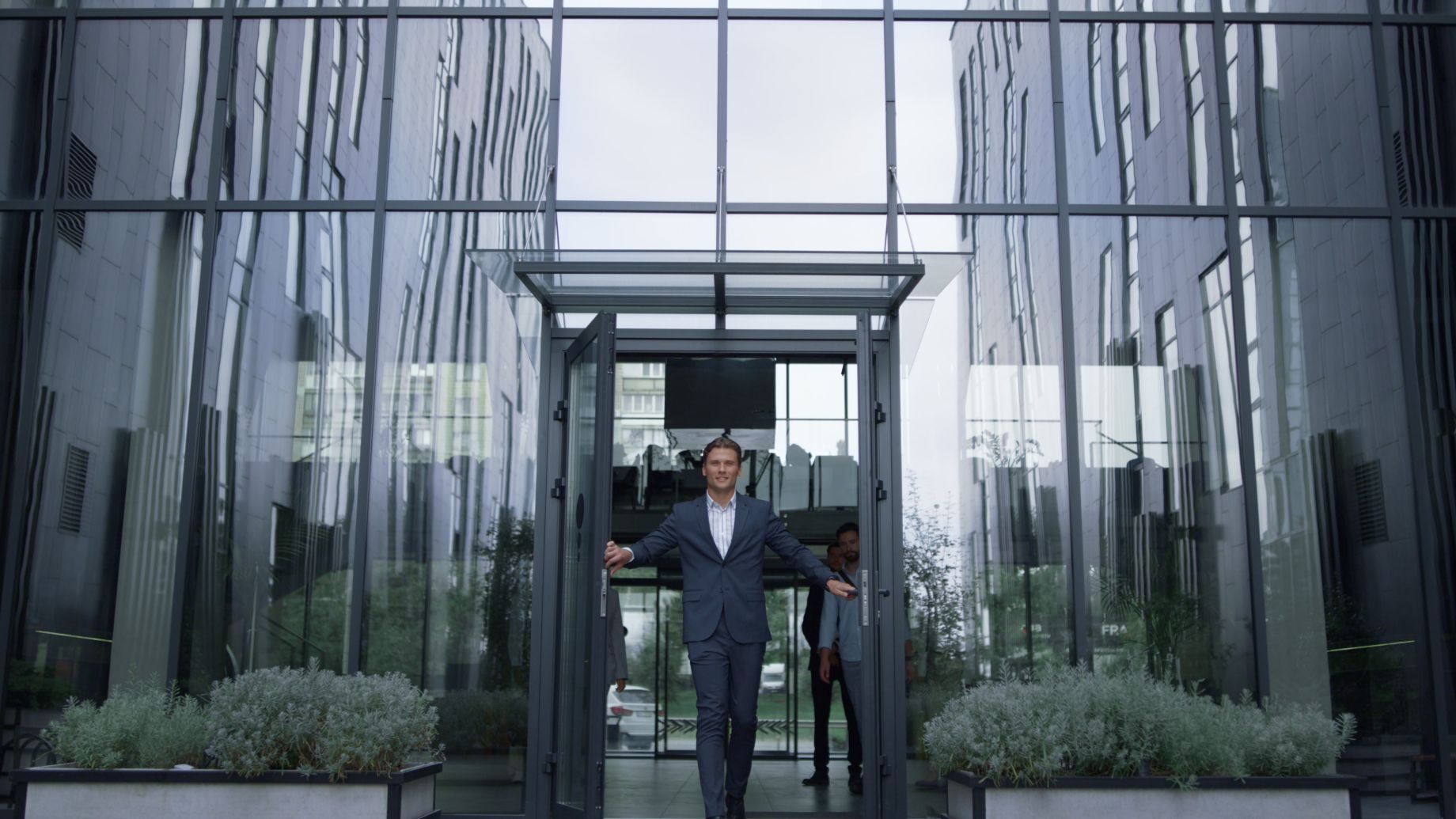
How to Market Your Commercial Property to High-Quality Tenants
Why Marketing to High-Quality Tenants is Critical for Your Investment
Marketing your commercial property to attract high-quality tenants takes more than just putting up a “For Lease” sign. In today’s highly competitive market, it requires a well-rounded strategy that highlights your property as a value-driven business opportunity. Successful leasing efforts go beyond showcasing space—they demonstrate how the location, amenities, and management add real advantages for a tenant’s operations, growth, and brand image. By positioning your property as a solution that supports business success, not just available square footage, you appeal to stable, long-term tenants who recognize and invest in quality.
Traditional marketing tactics no longer capture the attention of high-quality tenants who pay on time, maintain their space, and renew for the long term. You'll learn how to prepare your property, dominate the digital landscape, create an unbeatable tenant experience, and structure deals that close.
I'm Joe Stance, and through my company, Stance Commercial Real Estate, I've helped property owners in the Inland Empire successfully market their commercial properties to high-quality tenants by combining local market expertise with proven strategies. Let's explore how you can do the same.
Step 1: Defining Your Ideal Tenant and Preparing a Premium Property
Before you can effectively market your commercial property to high-quality tenants, you must answer two questions: Who are you trying to attract? And does your property meet their expectations? A premium property attracts premium tenants, who expect excellence from the moment they arrive.
What Defines a High-Quality Commercial Tenant?
A high-quality tenant is a strategic partner who contributes to your property's reputation and long-term value. Key characteristics include:
- Financial Stability: They demonstrate solid financial footing with verifiable income, healthy balance sheets, and strong credit. They can meet their lease obligations without issue, paying on time, every time.
- Business Reputation: A tenant with a respected brand lifts the entire property's image, creating a ripple effect that attracts other quality businesses.
- Long-Term Potential: Quality tenants often seek multi-year commitments, viewing their workspace as a strategic investment. This reduces turnover costs and provides predictable income.
- Brand Synergy: In multi-tenant properties, they create a beneficial ecosystem. A thriving coffee shop draws foot traffic for a law firm, or a respected accounting practice adds credibility.
- Low-Impact Operations: They maintain the premises responsibly, communicate proactively about maintenance, and respect the property as if it were their own.
Enhancing Curb Appeal for a Powerful First Impression
First impressions happen in seconds. A well-maintained exterior signals professionalism and a commitment to quality that discerning tenants recognize.
Focus on these key areas:
- Landscaping: A well-manicured lawn, vibrant seasonal plants, and clean common outdoor amenities create an inviting aesthetic.
- Exterior Maintenance: Regularly power wash the building, clean windows, and address any chipped or faded paint immediately. Fix visible repairs like cracked sidewalks promptly.
- Modern Signage: Clear, legible signs that complement your building's architecture are both practical and aesthetically pleasing.
- Parking: Ensure you have ample, well-lit parking. Inadequate or dark parking areas can be deal-breakers.
Essential Amenities and Features for Today's Businesses
Today's tenants seek an environment that improves productivity and supports employee wellness. Your property must offer a complete business solution.
- High-Speed Internet: Robust, reliable connectivity is as essential as electricity.
- Modernized Common Areas: Clean, aesthetically pleasing lobbies, hallways, and restrooms reflect a premium experience.
- Wellness and Collaboration: On-site fitness centers, even small ones, are highly valued. Well-equipped conference rooms and collaborative spaces are also deciding factors.
- Energy-Efficient Systems: Tenants increasingly expect sustainable features. Energy-efficient HVAC and LED lighting reduce operating costs and appeal to corporate values. Properties with diverse amenities see 12% higher demand, a clear signal that these features impact leasing success.
When you market your commercial property to high-quality tenants, these features transform from nice-to-haves into competitive necessities.
Step 2: Dominating the Digital Landscape with Strategic Marketing
In today’s market, your property’s first showing happens online—often long before a prospect ever schedules a tour. A strong digital presence isn’t optional; it’s essential for attracting sophisticated businesses across Southern California. Modern marketing means meeting prospective tenants where they already are: online, on their own time, and with clear, compelling information that helps them envision success in your space. From professional photography and virtual tours to detailed listings and active social media engagement, every digital touchpoint should build confidence and convey value long before the first handshake.
Creating a Compelling Online Presence
Your online presentation is your property's digital curb appeal. Grainy photos and a bare-bones listing won't impress serious prospects.
A professional property website, showcasing high-quality photos and a virtual tour, is crucial for attracting high-quality tenants.
- Professional Visuals: High-resolution photography is your foundation. It tells a story that basic snapshots can't. Drone footage offers a bird's-eye perspective that showcases your property's location and scale.
- Virtual Tours and 3D Renderings: This technology allows prospects to walk through your space from anywhere, at any time. For properties under development, 3D renderings bring your vision to life and help tenants see the finished product's potential.
- Digital Storefront: A dedicated property website serves as a central hub for comprehensive information and high-quality visuals. Also, ensure your property is listed prominently on major commercial real estate marketplaces like CoStar and LoopNet.
- Local SEO: When a business searches for "commercial property for lease Riverside CA," your property should appear at the top. This requires optimizing your website and listings with the right keywords and location information.
Leveraging Social Media and Targeted Advertising
Beyond basic listings, strategic advertising can connect you with high-quality tenants who might not be actively searching yet.
- LinkedIn: This is the platform for establishing credibility and connecting with business decision-makers. Share market insights and property updates to position your property in front of the right audience.
- Instagram: For properties with strong aesthetic appeal, Instagram is excellent for visual storytelling through high-quality photos and short videos.
- Targeted Advertising: Use platforms like Google AdWords and social media to reach specific demographics and businesses that fit your ideal tenant profile. This precision means your marketing dollars work smarter.
- Email Marketing: Use platforms like Constant Contact to keep your property front and center with brokers and prospects through regular newsletters with market updates and property news.
Using Data to Refine Your Marketing Efforts
Effective marketing is data-driven. We measure, analyze, and continuously refine our approach.
- Website Analytics: Google Analytics shows who is visiting your site, where they come from, and what content captures their attention.
- Lead Source Tracking: This reveals which marketing channels generate the most qualified leads, helping allocate future budgets effectively.
- Engagement Metrics: Social media likes, shares, and comments provide real-time feedback on what your audience finds valuable.
We continuously evaluate our strategies and adjust based on performance metrics and market trends to ensure your property remains competitive.
How to Market Your Commercial Property to High-Quality Tenants by Creating an Unbeatable Experience
Marketing doesn't stop once a lead is generated. The most desirable tenants aren't just looking for square footage—they're searching for properties that support their operational needs and company culture. This is where you transform your building from a commodity into a community where businesses can flourish.
Leveraging Technology for a Seamless Tenant Experience
Today's businesses expect their commercial spaces to be technologically advanced. Leveraging technology creates a seamless, efficient experience that makes tenants' lives easier.
Smart building integration automates and optimizes everything from security to energy management. The smart building tech market is growing rapidly, reflecting rising tenant expectations. Features like automated climate and lighting control give tenants the personalization they crave while delivering energy efficiency.
Tenant experience platforms, like HqO, have revolutionized communication. These digital hubs allow tenants to submit maintenance requests, book conference rooms, or RSVP to events from their smartphones. This convenience and transparency demonstrate your commitment to operational efficiency and a superior tenant experience.
The Growing Importance of Sustainability and Wellness
High-paying tenants increasingly prioritize properties that demonstrate a genuine commitment to sustainability and wellness. This is becoming a fundamental requirement in lease negotiations.
- Green Building Certifications: Certifications like LEED have evolved from a nice-to-have to an expected credential, helping corporate tenants meet their own sustainability targets.
- EV Charging Stations: The rise of electric vehicles has made EV charging stations one of the most requested amenities. Installing them signals that your property is forward-thinking.
- Innovative Initiatives: Beyond recycling, consider programs like urban agriculture or rooftop gardens, which can increase property values and build community.
- On-Site Wellness Programs: Research shows that employees in wellness-oriented workplaces report higher job satisfaction. This can include on-site fitness centers, meditation sessions, or quiet wellness rooms for mental health breaks.
Building a Thriving Business Ecosystem and Strong Relationships
Attracting high-quality tenants is a challenge, but keeping them is where the real value lies. The relationship between property owner and tenant should be a partnership built on trust and mutual success.
- Curate a Complementary Tenant Mix: Select tenants who can interact and benefit from one another, such as a law firm and an accounting practice, to build an ecosystem where businesses thrive together.
- Host Networking Events: Organize events like happy hours or "lunch-and-learns" to build community. When tenants feel connected, they are far more likely to renew their leases.
- Proactive Communication and Service: Keep tenants informed about maintenance and improvements. Be responsive and invested in their success. A recent study found that a 1-point increase in tenant satisfaction makes tenants 18% less likely to leave. Engaged tenants stay longer, pay consistently, and recommend your property to others.
Step 4: Structuring the Deal and Partnering for Success
Your marketing has attracted the right prospects. Now comes the moment to structure a deal that closes. This final step requires balancing competitiveness with value, offering flexibility while protecting your investment, and partnering with professionals who can steer complex lease negotiations.
How to Market Your Commercial Property to High-Quality Tenants with Smart Pricing and Flexible Leases
Setting the right rental rate is both an art and a science. Price too high, and you risk vacancy; too low, and you leave money on the table. The goal is to find the sweet spot where the rate reflects your property's premium value while remaining competitive.
Rental rate analysis starts with thorough market research of comparable properties in your area, like Riverside. This data-driven approach ensures informed decisions. High-quality tenants understand that premium properties command premium prices, but you must justify the rate by highlighting superior amenities and a thriving business environment.
Flexibility is increasingly important. While commercial leases are typically long-term, offering flexible terms can be a key differentiator. This might include shorter initial terms with renewal options, expansion rights, or graduated rent increases.
Understanding different lease structures helps craft deals that work for both parties:
| Lease Type | Landlord Responsibility | Tenant Responsibility | Best For |
|---|---|---|---|
| Full-Service Gross | All operating expenses (taxes, insurance, maintenance) | Base rent | Tenants seeking predictable, all-inclusive costs. |
| Triple Net (NNN) | Major structural repairs | Base rent + taxes, insurance, and maintenance | Landlords desiring a hands-off investment. |
| Modified Gross | Some operating expenses (e.g., structural) | Base rent + a portion of operating expenses | A balanced approach for both parties. |
| Percentage Lease | Varies | Base rent + a percentage of gross sales | Retail properties where landlord shares in tenant success. |
The Value of Partnering with a Reputable Brokerage Firm
Navigating the commercial real estate market, especially in competitive areas like Southern California, often requires expert assistance. Partnering with a reputable brokerage firm offers tangible benefits:
- Market Knowledge: A good broker understands which industries are expanding in Riverside, which neighborhoods are emerging, and how local projects affect property values.
- Extensive Networks: Brokerages have established relationships with tenant representation brokers, giving your property exposure to qualified prospects you might never reach alone.
- Negotiation Expertise: Experienced brokers know which lease terms are standard, negotiable, or deal-breakers, protecting your interests while keeping deals moving forward.
- Tenant Vetting: Rigorous screening processes assess financial stability, business viability, and reputation, ensuring you lease to truly high-quality tenants.
- Transaction Management: A brokerage handles the countless details from inquiry to lease signing, ensuring a smooth process for everyone.
At Stance Commercial Real Estate, our local market expertise in Riverside and the Inland Empire, combined with our dedication to building long-term relationships, means we're not just filling your space; we're finding the right partner for your investment's future.
Frequently Asked Questions about Attracting Commercial Tenants
Here are answers to some of the most common questions property owners ask when trying to steer the leasing landscape in markets like Riverside and the Inland Empire.
How do I determine the right rental rate for my commercial property?
Setting the right rental rate is a critical step when you market your commercial property to high-quality tenants. Start with a comprehensive market analysis of comparable properties in your specific area. Don't just look at general regional data; focus on similar buildings in similar neighborhoods. Factor in your property's unique advantages, such as location, condition, and amenities. The goal is to find the sweet spot that maximizes income while attracting tenants who see the value. A rate that is too high will lead to vacancy, while a rate that is too low may attract unstable tenants and leave money on the table.
What are the most important amenities for attracting office tenants today?
Today's high-quality office tenants prioritize amenities that support productivity and employee well-being. High-speed, reliable internet is a given. Beyond that, tenants look for modern, clean common areas, flexible meeting rooms, and on-site fitness facilities. Increasingly, they also expect smart building technology for environmental control and sustainability features like EV charging stations. Think about what makes an employee want to come to the office. In a competitive market, these amenities are often the deciding factor between two otherwise comparable properties.
How can I make my marketing materials stand out?
To stand out, you must invest in professional-quality assets. This means high-resolution photography, drone videos to showcase the location, and interactive 3D virtual tours. However, great marketing goes beyond visuals; it involves storytelling. Don't just list features. Instead, paint a picture of how the space will benefit a tenant's business. Highlight the unique aspects of your property and the surrounding neighborhood. You are selling a business solution and an experience, not just square footage. Your materials should help prospects envision their business thriving in your space.
How Stance CRE Can Help You
Today's tenants seek more than just square footage; they want spaces that support their growth and reflect their values. For property owners in Riverside and the broader Southern California region, leveraging local expertise is crucial for navigating the unique dynamics of the Inland Empire market.
At Stance Commercial Real Estate, we've spent over a decade mastering this market. Our approach is simple: we prioritize service over profit and treat every property as if it were our own. We combine deep local knowledge with the negotiation skills needed to structure deals that work.
When you partner with us, you gain a dedicated advocate who understands how to connect you with the quality prospects your investment deserves. We know what makes Riverside tenants tick and how to position your property to stand out.
Ready to explore your next commercial real estate opportunity in Riverside or the broader Inland Empire? Learn more about our services and insights and find how local expertise can transform your investment experience.