

When It Makes Sense to Sell a Commercial Asset Before Peak Valuation
Why Selling Before Peak Valuation Can Be the Smartest Move You Make
Knowing when to sell a commercial asset is rarely about chasing the absolute peak—it’s about recognizing the point where risk begins to outweigh additional upside. In today’s market, shifting interest rates, evolving tenant demand, and localized supply pressures can all compress the window of optimal value faster than many owners expect. What looks like “just a little more upside” can quickly turn into a plateau—or even a decline—if market conditions shift.
Selling before peak valuation can be a strategic move rather than a missed opportunity. For many owners, it’s about locking in strong returns, improving portfolio liquidity, and reducing exposure to future uncertainty. The key is understanding the signals that matter most: cap rate compression or expansion, lease rollover risk, capital expenditure timing, and broader economic indicators that influence buyer demand. Recognizing these factors early can turn timing from guesswork into a deliberate wealth-preservation strategy.
Here's a quick answer:
It makes sense to sell a commercial asset before peak valuation when:
- Rising vacancies or lease expirations are about to erode your NOI
- Major capital expenditures (roof, HVAC, parking) are on the horizon
- Cap rates in your sector are forecast to rise, compressing values
- Your property is at "peak buyer appeal" — fully leased, strong tenants, clean rent roll
- Interest rate pressure is reducing the buyer pool
- Tax strategies like a 1031 exchange create a time-sensitive window
- A life event (retirement, partner buyout, new venture) requires liquidity
- Sector-specific distress — like the office market — signals a coming correction
- You are over-concentrated in one asset type or submarket
- Your NOI has plateaued with no clear path to growth
The core idea is simple: waiting for the absolute top often means selling on the way down. In commercial real estate, the difference between a good exit and a great one is rarely luck — it's timing backed by data. In the Inland Empire and across Southern California, we are seeing a unique convergence of economic factors in 2026 that makes the "sell early" strategy more relevant than ever. From the massive wave of loan maturities to the shifting demands of industrial logistics, the window for a high-value exit is often narrower than owners realize.
Consider what's already happened in the office sector. National office vacancy hit a record 13% in early 2023 and is forecast to climb toward 18% by 2026. Owners who waited for values to recover are now watching cap rates decompress and NOI shrink simultaneously — a double hit that CoStar estimates could reduce price per square foot by as much as 23%. That's not a plateau. That's a cliff. This serves as a cautionary tale for owners of all asset classes: the market does not wait for you to be ready.
But this isn't just an office story. Across all commercial asset classes, the 2026 market is being shaped by $936 billion in maturing loans, shifting interest rates, and a wide gap between what sellers expect and what buyers will pay. Knowing when to move — and having the courage to act before the crowd — is what separates investors who preserve wealth from those who give it back. Selling at 95% of the peak with 100% certainty is infinitely better than holding for 100% of the peak and ending up with 80% because the market turned while you were in escrow.
Understanding the Mechanics of Peak Valuation
In Southern California commercial real estate, "peak valuation" is often treated like a mythical destination. In reality, it is a fleeting moment where market cycles, buyer sentiment, and economic conditions align perfectly. To understand when it makes sense to sell a commercial asset before peak valuation, we first have to understand the four phases of the real estate cycle: Recovery, Expansion, Hypersupply, and Recession. Each phase offers different opportunities, but the transition from Expansion to Hypersupply is where most wealth is either solidified or lost.
Most owners want to sell at the very end of the Expansion phase. However, identifying that exact moment is nearly impossible until you're already sliding into Hypersupply. In Riverside and the broader Inland Empire, we often see a "valuation plateau" before a decline. This happens when absorption rates slow down and price discovery becomes difficult because buyers and sellers can't agree on where the market is headed. During this plateau, transaction volume typically drops significantly. If you are trying to sell during a period of low volume, you lose your competitive edge as a seller.
Value is largely driven by Net Operating Income (NOI) divided by the capitalization rate. If the market is cooling and buyers start demanding higher returns (higher cap rates) to offset risk, your property value drops even if your rent stays the same. Understanding Cap Rates is essential here; if you wait for the "peak" while cap rates are rising, you might actually be losing equity every month you hold. For example, a property generating $500,000 in NOI at a 5% cap rate is worth $10 million. If the market shifts and buyers demand a 6% cap rate, that same $500,000 in income now supports a valuation of only $8.33 million. That is a $1.67 million loss in equity without a single tenant leaving the building.
The Risks of Waiting for the Absolute Top
The primary danger of waiting for the absolute peak is the "liquidity trap." When a market turns, it doesn't just get cheaper; it gets quieter. Buyers pull back, lenders tighten their purse strings, and transaction timelines blow out from 60 days to six months or more. In a declining market, time is your enemy. If you are forced to sell because of a loan maturity or a partnership dispute during a liquidity trap, you will likely be forced to accept a "fire sale" price. Selling while the market is still active—even if it hasn't hit the absolute ceiling—ensures you have multiple bidders competing for your asset.
There is also a significant opportunity cost. If you hold an asset in a plateauing market, you might miss out on the chance to move that capital into a high-growth sector, like industrial logistics or data centers. Buyer fatigue is real; after years of expansion, investors become hypersensitive to any sign of economic cooling, which can lead to a sudden drop in demand. By exiting early, you maintain the "dry powder" necessary to strike when the next cycle begins or to pivot into an asset class with more immediate upside.
Identifying When It Makes Sense to Sell a Commercial Asset Before Peak Valuation in Volatile Markets
In volatile environments, we recommend a defensive selling strategy. This involves a rigorous sensitivity analysis—a "stress test" for your investment. Ask yourself: "If my vacancy rate increases by 10% or interest rates rise another 50 basis points, can I still achieve my exit goals?" If the answer is no, then you are essentially gambling on a perfect outcome. In commercial real estate, gambling is a recipe for disaster.
Market-Driven Triggers for an Early Disposition

Macro-economic factors are often the loudest signals that it's time to exit. In 2026, the most significant factor is the "Maturity Wall"—a staggering $936 billion in commercial real estate loans coming due this year. This creates a "refinancing shock" for owners who took out low-interest debt in 2021 and are now facing Commercial Real Estate Interest Rates that have more than doubled. When a loan matures, the owner is forced to either refinance at current rates, pay down the principal to meet new LTV requirements, or sell the asset. If thousands of owners are forced to sell at the same time, it creates a supply glut that drives prices down.
Lenders are also becoming more conservative, often capping Loan-to-Value (LTV) ratios at 75% or even lower for certain asset classes like multi-tenant retail or older office buildings. If your property value has dipped and your Debt Service Coverage Ratio (DSCR) is hovering near 1.20x, you may find it impossible to refinance without injecting significant new capital into the deal. Selling before your loan matures allows you to exit on your terms rather than being forced into a distressed sale. It also allows you to market the property to buyers who might have better banking relationships or more cash on hand to navigate the current lending environment.
Sector-Specific Distress: The Office Market Warning
The office sector provides the clearest example of why waiting for a peak can be disastrous. With national office vacancy projected to hit 18% by late 2026, many Class B and C buildings are facing functional obsolescence. As tenants downsize and embrace hybrid work, we are seeing a "flight to quality," where only the top-tier "trophy" assets maintain value. If you own a mid-tier office building, the "peak" for your asset may have already passed in 2019. Waiting for a return to those valuations is not a strategy; it's a hope, and hope is not a financial plan.
If you own an office asset with significant sublease space available nearby, you are competing against "ghost" inventory that often rents at a 30-50% discount. This glut of space leads to negative net absorption, which inevitably triggers cap rate decompression. If you’re seeing these Vacancy Rate signals in your submarket, selling pre-peak is a defensive necessity. The capital you rescue from a declining office asset can be redeployed into the Inland Empire's thriving industrial sector, where demand for last-mile delivery hubs continues to outpace supply.
Capitalizing on the "Retail Renaissance" and Industrial Strength
On the flip side, some sectors are so hot that selling "early" actually means capturing a historic premium. The "Retail Renaissance" has brought shopping center vacancies down to 5%, driven by experiential retail and grocery-anchored centers. Similarly, the Inland Empire remains a global hub for logistics, with "just-in-case" inventory management keeping industrial demand high. In these sectors, the risk isn't that the market will crash, but that it will plateau. When a market is at its hottest, buyers are willing to overlook minor flaws in a property. Once the market cools even slightly, those same buyers become much more selective.
However, even in strong sectors, Inflation can be a double-edged sword. While inflation can drive up rents, it also increases operating costs—insurance, property taxes, and maintenance—especially in high-tax areas like California. If your expense growth is outpacing your ability to raise rents due to existing lease terms, your NOI will shrink, and your value will follow. Selling while demand is at a fever pitch ensures you get multiple offers and the best possible terms, often with shorter due diligence periods and non-refundable deposits.
Property-Level Indicators: When It Makes Sense to Sell a Commercial Asset Before Peak Valuation
A property is often at its most valuable when its leases are in a "sweet spot." This means you have:
- High occupancy (90-100%)
- A healthy Weighted Average Lease Term (WALT) of 3-7 years
- Strong, creditworthy tenants with no history of late payments
- Minimal upcoming lease expirations in the next 24 months
When your rent roll is "clean," your property has maximum appeal to institutional buyers and 1031 exchange investors who are looking for stability. If you wait until those leases have only 18 months remaining, the risk profile of the building changes. A buyer will look at that 18-month window and see the potential for a total building vacancy. They will price in the cost of tenant improvements (TIs), leasing commissions (LCs), and downtime. This will cause your Cap Rate to rise, lowering your price. Selling when the "hard work" of leasing is done is often the peak of buyer appeal, even if the market hasn't technically hit its pricing ceiling.
Management Intensity and Portfolio Rebalancing
We also have to consider the "hassle factor." Many of our Riverside clients reach a point where they want to shift from "active" management (like a multi-tenant retail strip with high turnover) to "passive" income (like a single-tenant NNN industrial building). If you are experiencing management fatigue, it makes sense to sell early to preserve your quality of life. The stress of managing a difficult tenant or dealing with constant repairs can lead to poor decision-making. Selling while you are still in a position of strength allows you to transition into a more passive investment on your own terms.
Furthermore, Commercial Real Estate Portfolio Analysis might reveal that you are over-concentrated. If 80% of your net worth is tied up in one Inland Empire warehouse, you are vulnerable to local zoning changes, environmental regulations, or sector shifts. Even if that warehouse is increasing in value, the risk of having all your eggs in one basket is high. Selling a portion of your holdings before the peak allows you to diversify into different geographic regions or asset classes, such as medical office or self-storage, reducing your overall risk profile and ensuring long-term wealth stability.
Strategic Financial and Tax Advantages of Pre-Peak Sales
The financial "win" of a sale isn't just the price on the closing statement; it's what you keep after Uncle Sam takes his cut. For many sellers, the timing of a 1031 exchange is the primary driver for a pre-peak sale. The 1031 exchange allows you to defer capital gains taxes by reinvesting the proceeds into a "like-kind" property. However, the 1031 process has strict timelines—45 days to identify a new property and 180 days to close. If you find a "perfect" replacement property that offers better long-term growth or less management intensity, it is almost always smarter to sell your current asset now—even if it hasn't hit peak value—to secure that new opportunity. The long-term benefits of the new asset will far outweigh the small gain you might have made by holding your old asset for another six months.
Selling early can also help mitigate capital gains taxes and depreciation recapture. If you've fully depreciated an asset over 39 years (for commercial property), your tax liability upon sale is at its highest. By rolling that equity into a new property via a 1031 exchange, you reset your depreciation schedule, creating a fresh tax shield for your cash flow. This "swap 'til you drop" strategy is a cornerstone of commercial real estate wealth building. Waiting for a market peak might mean missing the window to find a suitable replacement property, forcing you to pay a massive tax bill that erodes all the gains you worked so hard to achieve.
Leveraging the 2026 Refinancing Environment
The current credit landscape is another reason to consider an early exit. While we've seen some Interest Rate Cuts recently, the market remains cautious. Traditional banks have pulled back on commercial lending, leading to a "liquidity gap." Private credit has stepped in to fill this gap, now accounting for 24% of lending volume. While private credit provides necessary liquidity, it often comes with higher interest rates and shorter terms.
If you are facing a loan maturity in the next 12-18 months, you should perform a "cost of capital" analysis. Is it cheaper to sell now and harvest your equity, or to refinance at a higher rate and hope the market peaks before you need to sell? If you refinance at 7.5% today to replace a 4% loan, your cash flow will drop significantly. You are essentially paying the bank the profit you hoped to make by waiting for the peak. In many cases, "equity harvesting" through a sale is the mathematically superior move, especially when CMBS delinquency trends are on the rise. By selling now, you exit with your equity intact and avoid the risk of a "capital call" where you have to put more money into the deal just to keep it afloat.
When It Makes Sense to Sell a Commercial Asset Before Peak Valuation: Strategic Timing
To help visualize the trade-offs, consider this comparison between holding for a hypothetical peak and making a strategic pre-peak sale. This table highlights why the "bird in the hand" approach is often favored by institutional investors who prioritize risk-adjusted returns over speculative gains.
| Factor | Hold for Peak | Strategic Pre-Peak Sale |
|---|---|---|
| Pricing | Potentially 5-10% higher | Current market reality (90-95% of peak) |
| Market Risk | High (Volatility/Cycles/Black Swans) | Low (Locked-in gains and realized equity) |
| Buyer Pool | Shrinking as rates rise and lenders tighten | Active, competitive, and motivated |
| CapEx Risk | Owner responsible for all repairs/upgrades | Shifted to the buyer as part of the deal |
| Liquidity | Uncertain; market could freeze or plateau | High; cash in hand or 1031 exchange ready |
| Financing | Refinancing shock likely at maturity | Avoids debt maturity issues and capital calls |
| Opportunity Cost | Capital locked in a maturing asset | Capital available for new high-growth deals |
Receiving an unsolicited offer is often the universe's way of telling you it's time to go. These offers often come from "dry powder" funds or 1031 buyers who are under pressure to deploy capital and are willing to pay a premium for a "sure thing." If an offer comes in that meets your financial goals, don't let ego get in the way. Many owners have turned down a great offer in search of a "perfect" one, only to see the market turn and the original buyer disappear. In commercial real estate, a closed deal at a good price is always better than a theoretical deal at a great price.
Frequently Asked Questions about Pre-Peak Commercial Sales
How do I know if my property has reached a value plateau?
The most common sign is NOI stagnation—your expenses (taxes, insurance, utilities) are rising as fast or faster than your rents. You should also look at local comp analysis; if similar buildings are sitting on the market for 6+ months or showing decreased showing activity, the market has likely plateaued. Another key indicator is the "bid-ask spread." If sellers are asking for 5% caps but buyers are only offering 6% caps, the market is in a state of price discovery, which usually precedes a plateau or a decline. Broker feedback is your best "boots on the ground" indicator of shifting buyer sentiment.
Is it better to renovate or sell "as-is" before a market peak?
This depends on the "Value-Add" appetite of current buyers. In 2026, many investors are looking for turnkey properties because construction costs and labor shortages make renovations risky and expensive. If your building needs significant work, you might find that the "as-is" price is surprisingly strong because buyers want to control the renovation process themselves. Unless a renovation offers a guaranteed 2x return on the dollar and can be completed in less than six months, it often makes more sense to sell "as-is" to a buyer who specializes in distressed assets or has their own construction crew. This removes the execution risk from your shoulders.
How does the 2026 "Maturity Wall" affect my decision to sell now?
If you have a loan maturing in 2026 or 2027, the "Maturity Wall" means you will be competing for lender attention with thousands of other owners. This leads to higher scrutiny, stricter equity requirements, and longer closing times. Proactive selling now avoids the risk of being caught in a market saturated with distressed assets later this year, where buyers will be looking for "blood in the water" deals. By selling before the wall hits, you are the only game in town for buyers who still have capital to deploy. Once the wall hits, those same buyers will have hundreds of options to choose from, and your leverage will vanish.
What are the signs that a specific submarket is about to peak?
Watch for a surge in new construction (hypersupply) and a slowdown in net absorption. In the Inland Empire, if you see millions of square feet of new industrial space hitting the market while major tenants like Amazon or FedEx are slowing their expansion, that is a clear sign of a coming peak. Additionally, keep an eye on local government policy. If a city council begins discussing new warehouse moratoriums or increased impact fees, the "regulatory risk" of holding that asset increases significantly. Selling before these policies are enacted allows you to exit at a valuation that doesn't yet account for the new restrictions.
How Stance CRE Can Help You
Stance CRE supports commercial real estate clients by providing clear guidance on how lease structures, addendums, and amendments align with their broader business and investment objectives. This approach begins with a careful review of financial goals, operational needs, risk tolerance, and long-term flexibility, ensuring that contract decisions support growth rather than create unintended constraints. Instead of promoting one-size-fits-all solutions, Stance CRE emphasizes education, transparency, and strategic alignment at every stage of the transaction.
With deep expertise in Riverside County and the surrounding commercial markets, the Stance CRE team brings local insight and practical experience to each client engagement. From initial site selection to lease negotiation and ongoing contract modifications, Stance CRE helps businesses navigate complex agreements with confidence and clarity. Whether securing a first location or optimizing an existing portfolio, the focus remains on protecting client interests while positioning them for sustainable success in a dynamic commercial environment.
At Stance CRE, we understand the importance of fostering strong relationships between communities and small businesses. We are not only working in Riverside; we live here and actively support the growth of the local economy. Our commitment to the community ensures that both property owners and business operators have the resources and insights necessary to thrive. Call us today at (909) 772-1212 and let us help you determine the best approach for supporting your business while contributing to a stronger, more connected community.
Get started with a strategic consultation at Stance Commercial Real Estate


Why Amenities No Longer Drive Value Unless They Solve a Business Problem
For years, workplace amenities were seen as a competitive advantage—sleek breakrooms, game spaces, and wellness perks designed to attract talent and boost morale. But in today’s business environment, the standard has shifted. Amenities alone no longer drive value unless they are intentionally designed to solve a real business problem. Organizations are increasingly scrutinizing every investment through the lens of performance, productivity, and measurable outcomes.
What separates impactful amenities from superficial ones is purpose. A space or feature must directly support how people work, collaborate, or recharge in ways that improve results—not just optics. Whether it’s reducing burnout, enhancing focus, or fostering meaningful collaboration, the most effective amenities are those aligned with organizational goals. Without that connection, even the most impressive features risk becoming underutilized expenses rather than strategic assets.
Amenities stop driving value when they don't solve a real business problem because:
- Tenant Utility Over Aesthetics: Modern commercial tenants pay for what helps their business run efficiently — not what looks impressive in a marketing brochure but serves no functional purpose. A flashy lobby might impress a visitor for thirty seconds, but a lack of reliable high-speed data will frustrate an entire workforce for eight hours a day.
- The Cost of Underutilization: Unused amenities like golf simulators, cold plunges, or oversized, empty gyms become pure cost centers with zero return on investment (ROI), draining Net Operating Income (NOI). Every square foot of a commercial property must generate value, either through direct rent or by significantly increasing the leaseability of the surrounding space.
- Practicality Wins: Data shows 85% of tenants prioritize transit access and 75% prioritize diverse food options — these are practical needs that solve the daily logistical challenges of a workforce. In the Inland Empire, where commute times can be significant, amenities that reduce friction are the ones that command the highest premiums.
- Occupancy Premiums: Buildings with purpose-driven amenities post 16.2% higher occupancy and command significant rent premiums because they address specific operational pain points. This is the difference between a "nice-to-have" and a "must-have" for a growing company.
- The Amenity Arms Race Failure: The "amenity arms race" has left many landlords with expensive, underutilized spaces that increase maintenance costs without providing a competitive edge in leasing. This race to the top in terms of features has often ignored the bottom line of the tenant's business model.
The bottom line for any commercial property owner or investor is simple: an amenity is only worth the capital expenditure if it directly helps your tenants attract top-tier employees, boost daily productivity, or solve a specific commute or operational challenge. In the Riverside and San Bernardino markets, where industrial and office sectors are the primary drivers of growth, the focus must remain on utility. If an amenity does not contribute to the tenant's ability to recruit talent or move product, it is likely a wasted investment.
Over the past decade, the commercial real estate (CRE) sector has navigated what many call an "amenity arms race." Following the 2008 financial crisis, office and retail landlords added perks to fill massive vacancies. Then came the global shift in work patterns — and suddenly, the commercial office was no longer the only place where work could happen. The bar for what it takes to justify a commercial lease got significantly higher. The competition is no longer just the building across the street; it is the flexibility of remote work and the comfort of a private workspace.
The result? Many landlords kept piling on amenities, hoping something would stick. We saw the rise of rooftop bars, salt baths, and elaborate gaming lounges. While some of these features worked in specific high-density urban cores like Los Angeles or San Francisco, many failed in suburban office parks and industrial hubs. Today, the market is correcting itself. Buildings that invested in functional amenities — such as ultra-fast fiber-optic connectivity, on-site healthy food options, secure 24/7 access, and high-quality end-of-trip facilities — are seeing strong absorption and tenant retention. Meanwhile, buildings that chased novelty are sitting with costly, vacant spaces that require expensive retrofitting to become useful again.
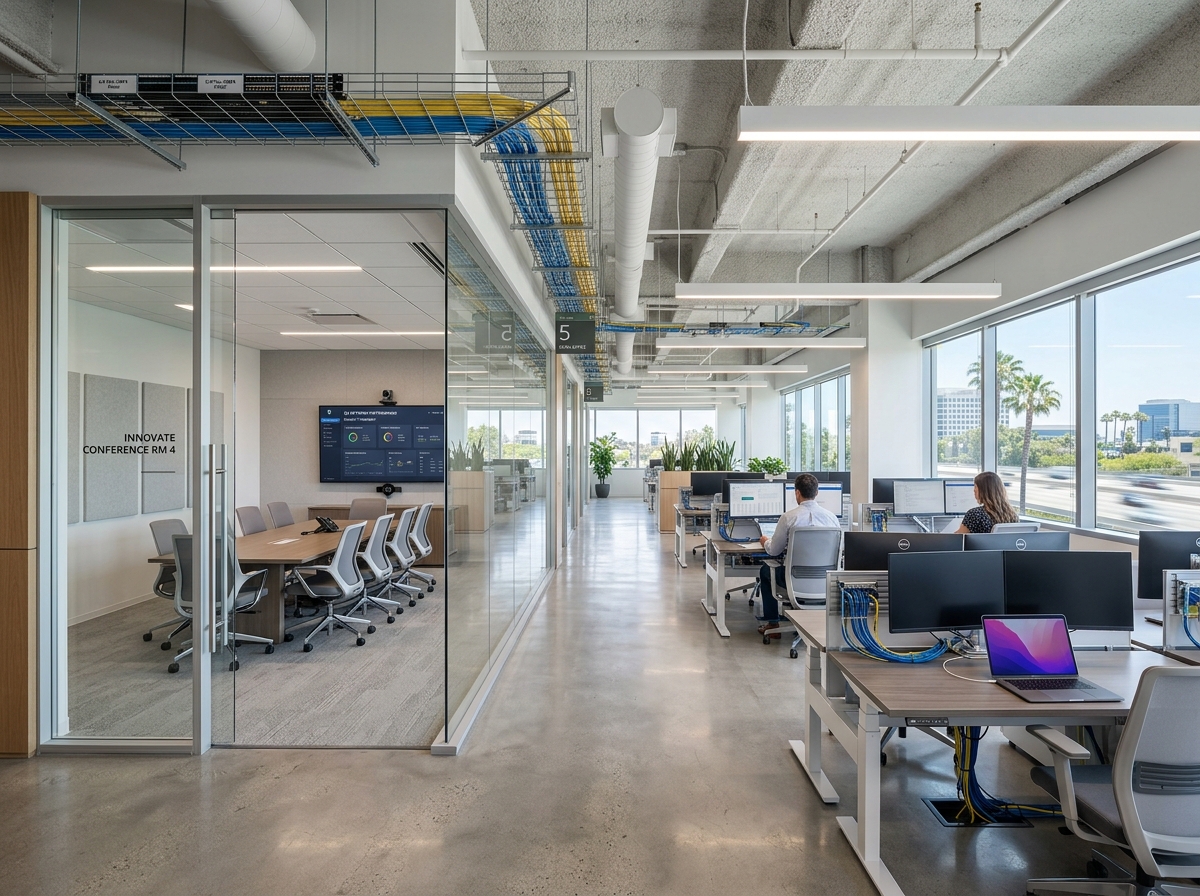
Utility-Driven Office Design: High-tech conference rooms with fiber-optic connectivity and ergonomic design are now essential for modern business operations.
In the current Southern California commercial market, we are seeing a fundamental shift in tenant behavior. The "wow factor" of a flashy lobby or a rooftop lounge is losing its luster if the building lacks the basic infrastructure to support a modern workforce. Post-pandemic demands have transformed amenities from "perks" into "business tools." When a tenant looks at a property in Riverside or the wider Inland Empire, they aren't just looking for a place to put desks or inventory; they are looking for a solution to their biggest headaches: employee retention, productivity, and the return-to-office (RTO) challenge.
If an amenity doesn't help solve one of those three problems, it is effectively a "vanity amenity." These flashy features might look good on a tour, but they don't drive long-term Net Operating Income (NOI). On the other hand, functional convenience — things like high-speed fiber availability (which has an 84% prevalence in top-performing buildings) and controlled access (86% prevalence) — are what actually keep tenants from moving. This is why we see a massive "flight to quality." Since the market shifted, there has been over 100 million square feet of positive absorption in the best, newest office buildings, while the rest of the market has seen negative absorption. In fact, 90% of office absorption in the years leading up to the pandemic was concentrated in Class-A buildings, which only make up about half of the total inventory.
Landlords who understand this are moving away from the "amenity arms race" and toward premium amenity strategies that prioritize utility over aesthetics. This applies not just to office spaces, but to industrial and retail properties as well. In the industrial sector, for example, an "amenity" might be extra trailer parking or enhanced power capacity — features that solve a direct business problem for a logistics company. In the retail sector, it might be high-visibility signage or ample EV charging stations that attract a specific customer demographic. The goal is always the same: align the property's features with the tenant's operational goals.
The RTO Challenge
The biggest business problem facing employers today is the competition with the flexibility of remote work. For many employees in the Inland Empire, the commute is a major deterrent. To win the RTO (Recovery Time Objective) battle, the commercial office must offer "irreplaceable experiences" that cannot be replicated elsewhere. This is where neighborhood retail and outdoor workspaces come into play. Employees miss the socialization and professional development that happens in person, but they require a frictionless environment to make the trip worthwhile.
Amenities that mitigate this friction — like on-site childcare, diverse food and beverage options, and high Walk Score locations — are the ones driving value. In suburban markets like Riverside, "commute ease" is the ultimate amenity. If a building offers ample on-site parking and proximity to transit or major highways, it solves a logistical nightmare for the employee. If that same building offers a high-quality café where teams can socialize, it solves a cultural problem for the employer. This is a strategic alignment of property features with business goals. We are seeing a rise in "third spaces" within commercial buildings—areas that are neither a desk nor a breakroom, but a collaborative environment that encourages the kind of spontaneous innovation that remote work often lacks.
Measuring Productivity Gains
Productivity is the lifeblood of any business. We’ve found that amenities that support wellness and focused work have a direct, measurable impact on a company's bottom line. According to industry data, employees with high levels of wellbeing are 2.5 times more likely to say they can do their best work. This has led to a surge in wellness certifications like LEED, WELL, and Fitwel within the commercial sector. But it goes beyond plaques on the wall. True productivity-driving amenities include:
- Acoustic Privacy: Spaces designed for deep work, moving away from the noise of traditional open-plan layouts. This solves the business problem of cognitive load and employee burnout.
- Fiber Connectivity: 84% of top-tier buildings prioritize fiber because downtime is a massive business cost that no tenant can afford. In the digital age, a building without robust connectivity is functionally obsolete.
- Wellness Infrastructure: Fitness centers with showers and lockers (64% prevalence) that allow employees to integrate health into their workday without leaving the premises. This reduces time lost to off-site travel and improves overall employee morale.
Understanding these factors is key when you evaluate a commercial property for long-term ROI. If a building's amenities don't boost the "output" of the people inside it, those amenities are failing to drive value for the owner or the tenant. The focus must shift from what the building has to what the building does for the business.
The Flight to Quality: Data-Driven Evidence of Amenity ROI
The data is clear: commercial tenants are willing to pay a premium for quality, but only when that quality translates into tangible business results. There is a growing bifurcation between Class-A "trophy" assets and obsolete Class-B or C properties. In some Southern California markets, Class-A rents are now 84% higher than lower-tier properties, proving that "cheap" space is often the most expensive choice for a growing business due to lost productivity and talent turnover. When a company chooses a lower-tier building to save on rent, they often pay for it in the form of higher recruitment costs and lower employee engagement.
| Amenity Type | Business Problem Solved | Rent Premium / Impact |
|---|---|---|
| Roof/Sky Terraces | Socialization & Wellness | 5.2% Rent Premium |
| Courtyards/Outdoor Space | Employee Retention | 3.5% Rent Premium |
| Fitness Centers | Health & Wellness | 2.9% Rent Premium |
| Spec Suites | Speed to Market | 15-20% Higher Rents |
| Fiber/Tech Infrastructure | Productivity/Uptime | Essential for Retention |
| On-site Retail/Food | Convenience/RTO | 86% Prevalence in Top Leases |
Beyond rent premiums, amenitized properties boast a 16.2% higher occupancy rate than those without. For landlords, the ROI is also seen in "speed to lease." Spec suites — move-in-ready offices with high-end finishes and integrated technology — lease up 11 months faster on average than raw shell space. While Tenant Improvement (TI) packages have risen to over $100/SF (and even $212/SF in some gateway markets), the cost of a vacant building is far higher. By providing a space that is already optimized for business, landlords solve the tenant's problem of "time to occupancy." This is particularly critical in the Inland Empire, where business cycles move quickly and companies cannot afford to wait for lengthy construction periods.
Critical Amenities in CBD vs. Suburban Locations
The value of an amenity often depends on the specific geography of the commercial asset. In a Central Business District (CBD), walkability and public transit are king. CBD buildings often have an average Walk Score of 93, and 80% of top-performing urban buildings are within two blocks of public transit. In these environments, the building must act as a hub that connects the worker to the city. The amenity here is the city itself, and the building's job is to provide a seamless interface with that urban environment.
In suburban markets like the Inland Empire, the priorities shift toward accessibility and convenience. Here, on-site parking (80% prevalence) and highway proximity are the non-negotiables. However, both markets share a need for security and "end-of-trip" facilities. Features like bike storage, showers, and lockers are no longer just for "active" employees; they are part of a broader wellness and commute-mitigation strategy that makes the office a more attractive destination than any alternative. For industrial properties, this might translate to high-bay lighting, ESFR sprinkler systems, and ample truck court depths — amenities that solve the business problem of safety and throughput efficiency. In the logistics world, an amenity is anything that allows a truck to turn around faster or a pallet to be stored more securely.
Furthermore, the rise of ESG (Environmental, Social, and Governance) criteria has turned sustainability into a business-critical amenity. Tenants are increasingly looking for buildings with LEED or Energy Star certifications not just for the environmental benefits, but because these buildings typically have lower operating costs and provide a healthier environment for employees. This is a direct solution to the business problem of rising energy costs and employee absenteeism. A building that uses 30% less energy is a building that puts more money back into the tenant's pocket, making it a more valuable asset in the long run.
The Amenity Trap: When Perks Become Costly Burdens

The Amenity Trap: An underutilized office gym with outdated equipment represents a sunk cost that fails to drive tenant value.
Not all amenities are created equal. In the rush to compete for tenants, many commercial landlords fall into the "amenity trap" — investing in vanity perks that sound great in a press release but sit empty 90% of the time. This is a critical error in asset management. Think about the "golf simulator" or the "cold plunge" suite. While these might provide a "wow" moment during a property tour, they often lead to high maintenance costs and low actual engagement. In fact, some studies show that "novelty" amenities can have an underutilization rate of over 60%. This is capital that could have been deployed into more critical infrastructure, such as HVAC upgrades or improved security systems.
When amenities are misaligned with the actual demographics of the tenants, they become "sunk costs." A high-end gym in a building full of accounting firms that value quiet, focused space is a mismatch. These underused spaces drain the budget through perpetual operating expenses, insurance, and maintenance, eventually leading to revenue erosion. This is why understanding the specific needs of your target tenant is vital before committing capital to a renovation. A landlord must ask: "Does this feature help my tenant make more money or save more time?" If the answer is no, it is likely a vanity project.
It’s also important to consider total occupancy costs. If a landlord spends so much on flashy perks that they have to skimp on janitorial services, security, or HVAC maintenance, the tenant experience will suffer. Service consistency and operational management are the "invisible amenities" that actually drive retention. As noted in recent industry analysis, the amenity trap does not equal value. In the commercial world, a building that works perfectly is always more valuable than a building that looks pretty but functions poorly.
Frequently Asked Questions about Commercial Amenities
Which amenities provide the highest rent premium in office buildings?
Based on recent market data, roof and sky terraces command the highest premium at approximately 5.2%. This is followed by courtyards (3.5%), fitness centers (2.9%), and LEED/wellness certifications (2.8%). However, the "real" premium often comes from the speed of leasing; amenitized spaces can lease up to 11 months faster than standard shells, significantly reducing the cost of vacancy. In a high-interest-rate environment, the time-value of money makes speed-to-lease one of the most important metrics for any landlord.
How do amenities impact commercial property valuations?
Amenities act as "valuation levers." By increasing occupancy rates and allowing for higher face rents, they boost the Net Operating Income (NOI). Because commercial property value is a multiple of NOI (based on cap rates), even a small increase in rent or a decrease in vacancy can add hundreds of thousands of dollars to an asset's total value. Conversely, failing to provide essential infrastructure like high-speed fiber can reduce a property's value by 5-10% in today's tech-dependent market. Investors are increasingly looking at the "future-proofing" of a building when determining its cap rate.
What is the difference between a "vanity amenity" and "asset activation"?
A "vanity amenity" is a perk designed for "show" that often has low utilization and high maintenance (e.g., a golf simulator or a decorative water feature). These are often added without a clear understanding of the tenant's business needs. "Asset activation" is the strategic repurposing of underutilized space into a functional utility that generates revenue or solves a specific tenant problem (e.g., converting a basement into rentable storage or a micro-logistics hub for e-commerce tenants). Asset activation is focused on the bottom line, while vanity amenities are focused on the brochure.
Do industrial properties need amenities?
Yes, but they are different from office amenities. In the industrial sector, amenities include enhanced power for automation, extra trailer parking, high-efficiency LED lighting, and modern breakrooms for warehouse staff. These features solve the business problems of operational efficiency and labor retention in the logistics industry. In the Inland Empire, where the labor market for warehouse workers is extremely competitive, a high-quality breakroom or an on-site fitness area can be a major differentiator for a tenant looking to reduce turnover.
How Stance CRE Can Help You
Stance CRE supports commercial real estate clients by providing clear guidance on how lease structures, addendums, and amendments align with their broader business and investment objectives. This approach begins with a careful review of financial goals, operational needs, risk tolerance, and long-term flexibility, ensuring that contract decisions support growth rather than create unintended constraints. Instead of promoting one-size-fits-all solutions, Stance CRE emphasizes education, transparency, and strategic alignment at every stage of the transaction.
With deep expertise in Riverside County and the surrounding commercial markets, the Stance CRE team brings local insight and practical experience to each client engagement. From initial site selection to lease negotiation and ongoing contract modifications, Stance CRE helps businesses navigate complex agreements with confidence and clarity. Whether securing a first location or optimizing an existing portfolio, the focus remains on protecting client interests while positioning them for sustainable success in a dynamic commercial environment.
At Stance CRE, we understand the importance of fostering strong relationships between communities and small businesses. We are not only working in Riverside; we live here and actively support the growth of the local economy. Our commitment to the community ensures that both property owners and business operators have the resources and insights necessary to thrive. Call us today at (909) 772-1212 and let us help you determine the best approach for supporting your business while contributing to a stronger, more connected community.

How Hybrid Work Is Changing Lease Lengths, Not Just Square Footage
The Office Lease Is Changing — And It’s Not Just About Square Footage
Image metadata
- Alt text: Modern glass office buildings in Southern California at sunrise, illustrating evolving office leasing trends tied to hybrid work.
- Title: How Hybrid Work Is Changing Lease Lengths in Southern California Commercial Real Estate
- Caption: Modern glass office buildings in Southern California at sunrise, representing the evolving landscape of Riverside and Inland Empire commercial real estate.
How hybrid work is changing lease lengths, not just square footage is one of the most important commercial real estate shifts of the past five years. For decades, the commercial office market in Southern California, particularly in the Inland Empire and Riverside areas, was built on the foundation of the long-term commitment. Landlords, lenders, and tenants all operated under the assumption that a ten-year lease was the standard unit of measurement for business stability. However, the rapid adoption of flexible work models has shattered this paradigm, forcing a complete re-evaluation of what a “successful” lease looks like in 2026.
| Factor | Pre-Pandemic | Today |
|---|---|---|
| Standard lease length | 10+ years | 3.5 – 7.6 years (varies by sector) |
| Financial services avg. | ~10 years | 7.6 years |
| Tech sector avg. | ~10 years | 5.3 years |
| AI startup avg. | ~10 years | 3.5 years |
| Primary tenant concern | Square footage | Lease flexibility and optionality |
| Dominant lease type | Long-term, fixed | Shorter terms with exit options |
The traditional 10-year office lease was once the backbone of commercial real estate. Landlords built their business models around it, using the guaranteed cash flow to secure favorable financing. Lenders priced debt against these long-term obligations, viewing them as low-risk assets. Tenants, in turn, planned their entire growth strategy around a single, fixed location, often over-leasing space to account for projected headcount growth that might not materialize for years.
Then hybrid work arrived — and it did not just shrink offices. It fundamentally changed how long companies are willing to commit to them. The Inland Empire, which has seen a surge in professional service firms and tech-adjacent businesses, is now at the forefront of this transition. Companies are no longer looking for a permanent “anchor”; they are looking for a strategic resource that can scale up or down as their workforce evolves.
According to a Gallup poll, 52% of U.S. workers are now hybrid. This shift has created a massive forecasting challenge for executives. Signing a decade-long lease when you are not sure how many desks you need on any given Tuesday is a serious financial risk. As one industry expert put it, the entire commercial real estate model has been “predicated upon the 10-year-plus lease” — and that model has been upended in favor of agility and risk mitigation.
This guide breaks down exactly what is happening, why it matters, and what it means for business owners and investors navigating today’s market. I’m Joe Stance, founder of Stance Commercial Real Estate, and over my 10-year career in the Inland Empire I’ve leased and sold millions of square feet of commercial property — giving me a front-row seat to how how hybrid work is changing lease lengths, not just square footage across Southern California markets. Let’s walk through what the data and real-world deals are telling us about the future of the office.
The Structural Shift: Why Hybrid Work Is Changing Lease Lengths, Not Just Square Footage
For decades, the “gold standard” of the office market was the long-term lease. If you were a serious company, you signed for 10 or 15 years. This gave landlords the stability they needed to secure financing and gave tenants a “permanent” home. In markets like Riverside and Ontario, these long-term commitments were the primary drivers of new development.
However, the rise of hybrid work has introduced a level of occupancy uncertainty that makes a 10-year commitment feel like an anchor rather than an asset. We are seeing a fundamental shift in how companies approach their returning-to-work strategies. It is no longer just about deciding how many days people come in; it is about acknowledging that we don’t know what the workforce will look like in 2030. This uncertainty is the primary reason why how hybrid work is changing lease lengths, not just square footage has become the dominant conversation in commercial boardrooms.
Forecasting headcount has become nearly impossible for many firms. If your team is growing rapidly but only comes in three days a week, do you lease for your current peak or your future average? This “wait-and-see” approach is driving a demand for risk mitigation. Tenants are now prioritizing termination options, contraction rights, and expansion clauses within their commercial-real-estate-lease-agreement. They want the ability to pivot without the massive financial penalties traditionally associated with breaking a lease.

A modern corporate boardroom in Southern California equipped with hybrid meeting technology, reflecting the shift toward flexible work environments.
The Death of the “One-Size-Fits-All” 10-Year Term
Rigid, decade-long leases are becoming the exception rather than the rule in the Inland Empire. Modern tenants want adaptable floor plans and, more importantly, “optionality.” With real estate having slowed in terms of traditional dealmaking volume, landlords are finding they must be more flexible to win over high-quality tenants. This flexibility often manifests as shorter initial terms with multiple renewal options, allowing the tenant to re-evaluate their needs every few years.
In this tenant-favorable market, we are seeing a surge in 3-to-5-year lease terms. These shorter windows allow businesses to test their hybrid strategies without the looming shadow of a long-term liability. When decoding-the-cast-of-a-commercial-lease-agreement, it is clear that the “cost” of a lease isn’t just the rent—it’s the lack of flexibility. A company that signs a 10-year lease for space they only use 40% of the time is paying a massive premium for stability they don’t actually need.
Utilization vs. Headcount: The New Metric for Success
We used to measure office success by headcount: “We have 100 employees, so we need 15,000 square feet.” Today, we measure by utilization. The “Tuesday effect” is a real phenomenon where office attendance peaks mid-week (often as high as 73% on Tuesdays) while remaining ghost-town quiet on Mondays and Fridays. This creates a massive efficiency gap that traditional leasing models simply aren’t equipped to handle.
Landlords and tenants are now using data to make decisions. Interestingly, a Stanford study found that hybrid employees (in-office three days per week or fewer) were just as productive as their in-office peers. This data gives executives the confidence to lean into hybrid models, which naturally leads them toward shorter lease terms as they refine their office-building-management strategies. The goal is no longer to house every employee every day, but to provide a high-quality collaborative environment for the days they are actually present.
Sector Divergence: How Industry Needs Dictate Lease Terms
Not every industry is moving at the same speed. There is a clear “K-shaped” divergence in how different sectors view their real estate. While some are doubling down on the office as a tool for culture and mentorship, others are treating it as a rotating resource. This divergence is a key component of how hybrid work is changing lease lengths, not just square footage.
A 2025 analysis shows a stark contrast in average lease lengths across major industries. While the data often highlights gateway markets like Manhattan, we see these same trends trickling down into the Southern California landscape, particularly as tech and professional services expand into the Inland Empire.
Financial Services vs. Tech: A Widening Gap in How Hybrid Work Is Changing Lease Lengths
Financial services and legal firms remain the “traditionalists” of the office world. These sectors often have stricter return-to-office mandates and value the prestige of a long-term, stable address. According to reporting from the Financial Times, luxury real estate is actually seeing a rise in demand among these groups as they use high-end amenities to entice workers back. For these firms, a 7-to-10-year lease is still common, as they view the office as a critical component of their brand identity and talent development.
Tech companies, by contrast, are much more volatile. With a 5.3-year average lease term, tech firms are choosing agility over stability. They are the primary drivers of the the-ultimate-guide-to-a-smooth-office-relocation trend, moving frequently to adjust their footprint as their remote-work policies evolve. In the Inland Empire, we see tech-adjacent firms opting for shorter commitments that allow them to scale their physical presence in lockstep with their venture capital funding rounds or product cycles.
The AI Influence: Why Emerging Tech Demands Ultra-Short Terms
The AI sector is the “wild west” of commercial leasing right now. With an average lease term of just 3.5 years, AI startups are prioritizing rapid scaling and proximity to innovation hubs over long-term savings. They need the ability to grow from 10 people to 100 people in eighteen months, which makes a 10-year lease a death sentence for their growth. They are looking for “plug-and-play” spaces that require minimal tenant improvements and offer maximum flexibility.
Even major players like Oracle, which is slated to take over massive operations, are rethinking how campuses function—moving toward “town-like” environments that offer high-end hospitality. For smaller firms in Riverside, finding the right commercial-property-for-lease means finding a landlord who understands this need for speed and is willing to offer terms that reflect the nature of the modern tech economy.
The Landlord’s Dilemma: Moving from 10-Year Stability to “Hotel-Style” Agility
For landlords, the shift to shorter leases is a double-edged sword. On one hand, it keeps the building occupied and maintains cash flow in a challenging market. On the other, it creates a constant cycle of “earning the tenant back.” As Fortune points out, landlords now have to “think and act a lot more like hotels.” This means the relationship is no longer transactional; it is experiential.
This means moving away from simply providing “four walls and a roof” and toward providing a service. Hospitality-driven design—think high-end lobbies, on-site cafes, and wellness centers—is no longer a “nice-to-have.” It is a requirement for retention. We often tell our clients that why-the-cheapest-lease-isnt-the-lowest-cost-understanding-total-occupancy-cost is more relevant than ever; a “cheap” building with no amenities will cost you more in employee turnover and vacancy than a premium space that actually draws people into the office.
A luxury office lobby in the Inland Empire featuring hospitality-driven amenities like a cafe and lounge, designed to attract hybrid workers.
Space-as-a-Service and Coworking Integration
The “Space-as-a-Service” model is gaining massive traction. Instead of a traditional lease, some companies are opting for membership-based models or on-demand desks. Market research indicates that companies shifting to hybrid can save 10% to 50% in space costs by reallocating resources into these flexible models. This allows them to maintain a professional presence without the overhead of unused square footage.
For many businesses leasing-office-space-in-riverside, the best strategy is a “hub and spoke” model: a smaller, high-quality central office (the hub) complemented by on-demand coworking spaces near where employees live (the spokes). This reduces commute times and increases employee satisfaction while keeping the company’s long-term real estate liabilities to a minimum.
Financial Implications of Shorter Lease Cycles
Shorter leases create a “valuation headache” for property owners. Traditionally, building value was calculated based on the Net Operating Income (NOI) secured by long-term leases. With terms shrinking, the risk profile of these assets increases, which can impact refinancing options. Landlords must now prove the “stickiness” of their tenants through high renewal rates rather than long initial terms.
Furthermore, accounting standards like ASC 842 and IFRS 16 now require companies to put these leases on their balance sheets. Shorter terms can actually help a company’s financial ratios, as they represent a smaller total liability. However, for the landlord, it means more frequent capital expenditure on Tenant Improvements (TIs) and leasing commissions, requiring a more robust cash reserve and a more active management style.
Flight to Quality and the Class A Paradox
We are witnessing a massive bifurcation in the market. While the headlines talk about “office distress,” that distress is not distributed equally. There is a “flight to quality” where the best buildings are thriving while the rest struggle. This is a direct result of how hybrid work is changing lease lengths, not just square footage, as tenants are willing to pay more for less space, provided that space is of superior quality.
With U.S. office distress totaling $51.6 billion, much of that is concentrated in Class B and C assets that lack the amenities or ESG (Environmental, Social, and Governance) profiles modern tenants demand. In downtown-riverside-office-space, the buildings that are winning are those that offer a superior experience, including better air filtration, natural light, and collaborative zones.
Why Premium Spaces Still Command Longer Terms
It sounds like a contradiction: if leases are getting shorter, why do some Class A buildings still get 10-year commitments? The answer lies in the investment. Recent industry reports suggest that a majority of organizations globally plan to increase investment in space design and fit-outs over the next five years. When a company spends millions on a custom, amenity-rich build-out, they want to amortize that cost over a longer period. For these “trophy” assets, the lease length remains a tool for securing the high-end environment needed for talent retention, even if the total square footage is smaller than in the past.
The Obsolescence of Class B and C Assets
Older buildings that were “just an office” are facing a reckoning. Many of these assets are seeing high vacancy rates as tenants “trade up” to better spaces. The solution for many of these properties is adaptive reuse. Repositioning an obsolete office into medical suites, life science labs, or specialized commercial facilities is a growing trend.
Converting an underperforming office into alternative commercial uses is often 30% less than new construction only if the building’s structural integrity and layout allow for it. We are also seeing the public sector cutting back on real estate, which adds even more pressure to the lower-tier market. Landlords of these buildings must either invest heavily in upgrades or consider a complete change in use to remain viable in the long term.
Strategic Implications for CRE Investors and Tenants
The market is fragmenting, and the old rules of thumb no longer apply. What works in one part of the Inland Empire might not work in another. This is where local expertise becomes a competitive advantage. Investors who can identify buildings ripe for repositioning—using technologies like a digital twin to model better usage and energy efficiency—will thrive in this new environment.
For tenants, the goal is to leverage-office-space-in-riverside by negotiating for maximum flexibility. Don’t just look at the rent per square foot; look at the “exit ramps,” the expansion rights, and the landlord’s willingness to adapt as your hybrid policy evolves. The most successful companies will be those that view their real estate not as a fixed cost, but as a dynamic tool that supports their most valuable asset: their people.
Investors must also shift their focus from simple rent collection to active asset management. This involves staying ahead of tenant needs, investing in technology that improves the user experience, and maintaining a flexible approach to leasing. The buildings that offer the most adaptability will be the ones that maintain the highest occupancy and value in the years to come.
Frequently Asked Questions about Hybrid Lease Trends
How much have average office lease lengths decreased?
Average terms have dropped significantly across the board. While the 10-year lease was the standard for decades, tech firms now average around 5.3 years, and AI startups are signing for as little as 3.5 years. Even in more traditional sectors like financial services, terms have contracted to an average of 7.6 years. This reflects a broader trend toward agility and risk management in a post-pandemic economy.
Why are tenants choosing shorter leases over square footage reductions?
While many tenants are reducing square footage, shorter leases provide “optionality.” When hybrid policies are still being tested, a shorter lease allows a company to pivot—taking more or less space or moving to a different location—without being locked into a decade-long financial liability. It allows the physical office to evolve alongside the company’s culture and headcount.
What is the “flight to quality” in the current office market?
The “flight to quality” describes tenants migrating from older, amenity-poor Class B and C buildings to modern, high-end Class A spaces. These tenants are often willing to pay a premium or even commit to slightly longer terms if the building offers top-tier amenities, wellness features, and ESG certifications. The goal is to create an environment that is “commute-worthy” and helps attract and retain top talent in a competitive labor market.
How does hybrid work affect property valuations?
Hybrid work affects valuations by increasing the perceived risk of shorter lease terms. Traditionally, long-term leases provided the stability that drove high valuations. Now, appraisers and lenders look more closely at building amenities, tenant diversification, and the landlord’s ability to manage frequent turnovers. High-quality buildings with modern features often maintain their value better than commodity office space.
Conclusion
At Stance Commercial Real Estate, we believe the office isn’t dying—it’s evolving. The way how hybrid work is changing lease lengths, not just square footage is a clear signal that the relationship between landlord and tenant is becoming more of a partnership. The era of the passive landlord is over; the era of the service-oriented property partner has begun.
Joe and Heidi Stance founded this company on the principle of putting service over profit. In a market as complex as the Inland Empire, you need more than just a broker; you need a partner who understands the local nuances of Riverside and the surrounding areas. Whether you are an investor looking to future-proof your portfolio or a business owner trying to navigate the new rules of the office, we are here to help you make data-driven decisions that protect your bottom line.
The future of work is flexible, and your real estate strategy should be too. By embracing shorter terms, higher quality, and greater flexibility, you can turn your office space into a competitive advantage.
Find your next commercial property for lease

Premium Amenities or Lower Lease Rates? Which Strategy Wins?
Defining the Value Proposition: Premium Amenities vs. Basic Infrastructure
When it comes to attracting and retaining high-quality tenants, commercial property owners often face a pivotal question: Is it smarter to compete on price or on experience? In competitive markets, the decision between offering premium amenities or lowering lease rates can significantly impact occupancy, tenant satisfaction, and long-term asset value. While reduced rents may generate short-term interest, today’s tenants—particularly corporate users and growing businesses—are increasingly evaluating properties based on how well they support productivity, brand image, employee experience, and operational efficiency.
Premium amenities such as upgraded common areas, fitness centers, collaborative spaces, smart-building technology, enhanced landscaping, and sustainability features can differentiate a property in ways that price alone cannot. However, these investments require capital and strategic positioning. On the other hand, lowering lease rates may quickly fill vacancies but can compress margins and potentially reposition the asset in a less desirable market tier. So which strategy truly wins? The answer depends on market conditions, tenant profile, and long-term ownership goals—and understanding that balance is key to maximizing performance.
Premium Amenities or Lower Lease Rates? Which Strategy Wins? — here's the short answer before we dive in:
| Scenario | Winning Strategy |
|---|---|
| Low vacancy market (under 5%) | Premium amenities — justify higher rents |
| High vacancy market (over 10%) | Lower lease rates or concessions — fill space fast |
| Class A / Trophy assets | Premium amenities — drive rent premiums up to 5.2% |
| Class B/C commodity space | Competitive pricing — rate cuts rarely work alone |
| Suburban mixed-use or urban core | Premium amenities — 16.2% higher occupancy on average |
| Short-term hold, tight budget | Hybrid — selective upgrades plus strategic concessions |
The bottom line: premium amenities outperform in most commercial markets, especially post-pandemic — but lower lease rates can be the smarter play when supply surges or budgets are constrained. The right answer depends on your asset class, local vacancy rate, and tenant demographics. In the Inland Empire, where industrial and office sectors are evolving rapidly, the decision to invest in capital improvements versus slashing the face rate of a lease can determine the long-term viability of a commercial portfolio.
In commercial real estate, landlords and investors face a persistent question: spend money upgrading a property to justify higher rents, or price aggressively to win tenants faster? It sounds simple, but the wrong choice can cost you years of revenue — or leave your building sitting vacant. The Inland Empire, particularly Riverside, has seen a massive transformation in how businesses view their physical footprint. It is no longer just about a roof and four walls; it is about the utility and experience the space provides to the workforce. This shift is driven by a fundamental change in corporate culture, where the workplace is now viewed as a tool for recruitment and retention rather than just a line-item expense.
The market has shifted dramatically since 2020. According to leading industry research, highly amenitized office buildings absorbed over 23 million square feet of new tenants since the pandemic, while less-upgraded buildings lost more than 50 million square feet of occupancy. That gap is hard to ignore. This trend, often referred to as the "Flight to Quality," suggests that tenants are willing to pay a premium for spaces that enhance productivity and employee well-being. In the competitive landscape of Southern California, where labor markets are tight, providing a superior environment is often the only way for a company to convince its workforce to return to the office full-time.
But premium amenities aren't a guaranteed win. A pool that forces rent 60% above the local average will sit empty. A rent cut that erodes your net operating income can quietly destroy asset value over time. The math matters — and so does the market you're in. For instance, the Building Owners and Managers Association (BOMA) International provides standards that help landlords understand how to measure and value these spaces effectively. Understanding the difference between a "usable" square foot and a "rentable" square foot, and how amenities factor into that load factor, is essential for any serious commercial investor.
When we talk about premium amenities in the Riverside or Inland Empire markets, we aren't just talking about a clean lobby and a working elevator. Those are basics. Premium amenities are "value-add" features that fundamentally change the tenant's workday. These features are designed to solve specific pain points for modern businesses, such as the need for high-speed data, flexible meeting spaces, and environments that promote health and wellness.

A high-tech conference room equipped with integrated fiber-optic connectivity and ergonomic furniture.
These include things like high-speed fiber-optic connectivity (essential for modern operations), LEED certification for sustainability-minded corporations, and wellness features like advanced air filtration systems. In office space, "spec suites"—fully built-out, move-in-ready offices—have become a massive premium. Research shows these lease up to 11 months faster than shell space because they remove the headache of construction for the tenant. For a business owner, the ability to sign a lease on Monday and move in on Friday is worth a significant premium over a lower-priced space that requires a six-month build-out.
However, a savvy landlord must also understand the total occupancy cost. A lower base rent might look attractive on a flyer, but if the building lacks energy-efficient systems or modern infrastructure, the tenant's utility and maintenance costs will skyrocket, leading to dissatisfaction and turnover. In the long run, a tenant who saves $2.00 per square foot on rent but pays $3.00 more in electricity and HVAC repairs will eventually leave for a more efficient building.
The Shift Toward "Flight to Quality" in Commercial Hubs
We are currently seeing a massive "flight to quality." In major Southern California hubs, Class A and "Trophy" assets are seeing the lion's share of leasing activity. Why? Because post-pandemic, employers need to give their staff a reason to leave the home office. A building with a gym, a rooftop lounge, and proximity to transit isn't just a place to work—it's a tool for talent retention. This is particularly true in Riverside, where the competition for skilled labor is fierce. Companies are realizing that the cost of a slightly higher lease rate is far lower than the cost of losing a key executive to a competitor with a better office environment.
Premium Amenities or Lower Lease Rates? Which Strategy Wins in High-Vacancy Urban Centers?
In urban centers where vacancy rates begin to inch upward, the knee-jerk reaction is often to lower lease rates in hopes of filling space quickly. Yet market performance data consistently shows that when considering premium amenities vs lower lease rates, the advantage frequently leans toward amenities. Properties that differentiate themselves—offering elevated tenant experiences, upgraded common areas, wellness features, technology integration, and curated environments—avoid being lumped into the “commodity” category. When supply increases, competing on price alone becomes a race to the bottom; competing on quality becomes a platform for long-term growth.
Investors and asset managers must evaluate performance through the lens of long-term absorption and asset value, not just short-term rent collection. A building stabilized at 95% occupancy at $3.00 per square foot generates stronger cash flow, higher perceived value, and better refinancing leverage than a property sitting at 70% occupancy at $2.25 per square foot—even if operating expenses are lower. Sustained occupancy at premium rates enhances valuation, strengthens tenant mix, and builds resilience in shifting markets. In competitive urban environments, being the best-positioned asset often proves far more profitable than simply being the least expensive option.
The Case for Premium Amenities: Driving ROI and Occupancy
The numbers behind the amenity race are compelling. National market reports indicate that specific features provide measurable rent bumps. This isn't just anecdotal; it is reflected in the appraisals and the net operating income of top-performing assets. When a landlord invests in the common areas, they are essentially investing in the marketing of the building. A tenant's first impression starts at the curb and continues through the lobby to the elevators.
- Roof/Sky Terraces: 5.2% rent premium. These spaces provide a unique venue for corporate events and employee breaks, which is highly valued in urban environments.
- Fitness Centers (with showers): 2.9% rent premium. As health and wellness become central to corporate culture, on-site gyms are no longer a luxury but an expectation for Class A tenants.
- Courtyards with seating: 3.5% rent premium. Outdoor space has become critical post-2020, offering a safe and refreshing alternative to indoor breakrooms.
A rooftop terrace overlooking a city skyline, designed for corporate events and employee relaxation.
When evaluating a commercial property for long-term ROI, these percentages add up. For instance, spec suites often command 15-20% higher rental rates than unrenovated units. If you spend $60 per square foot on a high-end build-out but secure a tenant a year sooner at a higher rate, the math clearly favors the investment. This is especially true in the Riverside market, where the demand for move-in-ready professional space has outpaced the supply of traditional shell space. The time-value of money is a critical factor here; every month a space sits vacant is a month of lost revenue that can never be recovered.
Leveraging Technology and Wellness for Tenant Retention
Smart buildings are no longer a futuristic concept; they are a requirement for top-tier tenants. Integrating IoT for lighting and climate control doesn't just lower operating costs—it hits ESG (Environmental, Social, and Governance) goals that modern corporations prioritize. Furthermore, every time a tenant renews, you save. Industry estimates suggest every renewal saves over $4,000 in turnover expenses (marketing, commissions, and downtime). By providing a superior experience, you aren't just getting more rent; you're keeping more of it. High-quality tenants tend to be more stable, and they are less likely to move if their employees are happy with the building's amenities.
Wellness features have also moved from "nice-to-have" to essential. Advanced HVAC systems with HEPA filtration and touchless entry systems provide peace of mind for employees returning to the office. In the Inland Empire, where summer temperatures can be extreme, high-efficiency cooling systems are both a wellness feature and a significant cost-saving measure for tenants. A building that can maintain a comfortable 72 degrees while the outside temperature hits 105, without breaking the bank on utilities, is a building that will stay occupied.
The Case for Lower Lease Rates: Stability in Competitive Markets
While amenities are flashy, there is a strong case for the "budget-friendly" approach, especially in the industrial sector. For a logistics company, a functional warehouse with ample loading docks and clear heights is more important than a fancy coffee bar. In the Inland Empire, which serves as a global hub for logistics, the priority is often throughput and efficiency. For these tenants, the building is a machine, and the goal is to minimize the cost of operating that machine.
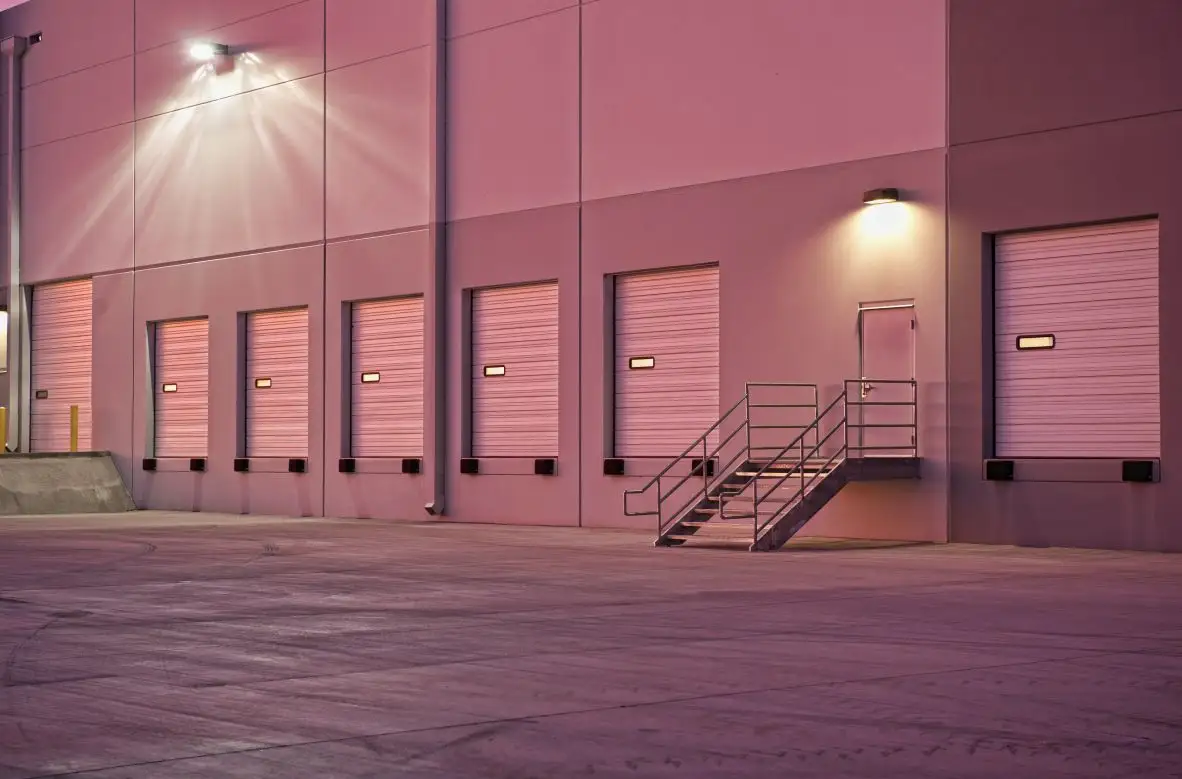
A functional industrial warehouse exterior with ample loading docks and clear signage.
In these cases, focusing on a competitive commercial real estate lease agreement with a lower base rate can ensure 100% occupancy. This strategy appeals to "efficiency experts"—businesses that operate on thin margins and prioritize cash flow stability above all else. For a 100,000-square-foot warehouse, a difference of $0.10 per square foot in rent translates to $120,000 in annual savings for the tenant. In a world of rising labor and fuel costs, that $120,000 can be the difference between a profitable year and a loss.
Understanding the Risks of Aggressive Price Cutting
However, we have to be careful. Drastically lowering rates can negatively impact your property's valuation. Since cap rates are explained as the ratio between Net Operating Income (NOI) and the asset's value, a drop in rent directly lowers what the building is worth. It can also signal to the market that the property is "distressed," attracting lower-quality tenants who may struggle to meet lease obligations. A building filled with tenants who are only there because it was the cheapest option is a building at high risk of mass vacancy during an economic downturn.
Furthermore, once a building's rent roll is set at a lower rate, it can take years or even decades to bring those rates back up to market levels, especially with long-term commercial leases. This "revenue erosion" can make it difficult to fund necessary capital improvements later, leading to a cycle of property degradation. If you can't afford to fix the roof because the rent is too low, the building will eventually become un-leasable at any price. This is the "death spiral" of commodity commercial real estate.
Market Conditions and the Power of Dynamic Pricing
In markets with high vacancy (over 10%), tenants have the leverage. Here, landlords often use "concessions"—like three months of free rent—instead of lowering the permanent face rate. This protects the long-term valuation while giving the tenant the immediate "win" of a lower effective cost. Using dynamic pricing models—adjusting rates based on real-time demand rather than annual reviews—is a sophisticated way to stay competitive without leaving money on the table. This approach allows landlords to remain flexible during economic downturns while maintaining the asset's integrity for future financing or sale.
Another critical aspect of the lower-rate strategy is the "Triple Net" (NNN) lease structure. In many industrial and retail scenarios, the tenant pays for taxes, insurance, and maintenance. If a landlord can keep these operating expenses low through efficient management, they can offer a lower total occupancy cost to the tenant without necessarily sacrificing their own bottom line. This requires a hands-on approach to property management and a commitment to preventative maintenance that avoids costly emergency repairs.
Calculating the Winner: ROI, Market Conditions, and Tenant Demographics
To decide which strategy wins, you have to look at who is renting. The demographic profile of your target tenant should dictate your capital expenditure budget. A tech startup has vastly different needs than a regional distribution center. A medical group requires specialized infrastructure that a law firm might find unnecessary. Understanding these nuances is the key to a successful commercial real estate strategy.
| Metric | Premium Amenities Strategy | Lower Lease Rate Strategy |
|---|---|---|
| Typical Rent Premium | 5% – 18% Higher | Market Average or Below |
| Lease-up Speed | Up to 50% Faster (if well-designed) | Variable based on price sensitivity |
| Asset Valuation | Higher (due to higher NOI) | Stable but capped |
| Maintenance Cost | Higher (ongoing upkeep) | Lower (basic infrastructure) |
| Target Tenant | Tech, Creative, Medical, Fortune 500 | Logistics, Back-office, Local small biz |
| Tenant Retention | High (due to environment) | Moderate (price-dependent) |
| Capital Requirement | High Upfront | Low Upfront |
Knowing what is a good cap rate for your specific asset class in the Inland Empire is vital. A medical office building requires high-end infrastructure, specialized plumbing, and high-capacity electrical systems. It will almost always "win" with a premium amenity strategy because the tenants require those features to operate. Conversely, a Class C suburban office might be better off maintaining a low-cost, high-occupancy model to serve local small businesses that are highly price-sensitive. These businesses often don't need a gym or a rooftop lounge; they need a functional space with good parking and a reliable landlord.
Hybrid Strategies for Optimal Portfolio Performance
The smartest landlords often use a hybrid approach. They might offer "tiered amenities"—where basic access is included, but premium features like reserved parking or executive gym memberships carry an additional fee. This allows you to keep the base rent competitive while generating secondary revenue streams. This is common in high-end office towers where the "amenity floor" is a separate profit center.
Another hybrid tactic is "strategic incentives." Instead of a permanent rent cut, offer "early possession," allowing a tenant to move in 30 days early for free to set up their equipment. This is a "disguised concession" that protects your long-term leasing vs buying commercial real estate math. By focusing on the "Net Effective Rent" rather than just the "Face Rate," landlords can create win-win scenarios that satisfy tenant budgets while preserving investor returns. For example, offering a higher Tenant Improvement (TI) allowance instead of lower rent allows the tenant to customize the space to their needs, which often leads to a longer lease term and higher renewal probability.
Furthermore, landlords can look at "soft amenities" that don't require massive capital. This could include organized food truck visits, outdoor yoga classes, or a concierge service for tenants. These features add value and build a sense of community without the permanent overhead of a built-out fitness center or cafeteria. In the Riverside market, where community and local connections are highly valued, these soft amenities can be a powerful differentiator.
Premium Amenities or Lower Lease Rates? Which Strategy Wins?
The strategy that "wins" for long-term profitability is the one that aligns with the Flight to Quality. Even in a tepid economy, businesses are willing to pay for convenience, flexibility, and productivity. The modern workforce is more mobile and more discerning than ever before. If a commercial space doesn't offer a compelling reason for people to be there, it will eventually struggle to maintain occupancy.
A modern retail strip with outdoor seating, EV charging stations, and high-end finishes.
Whether you are buying vs leasing commercial real estate, the goal is future-proofing. A building that offers EV charging, smart tech, and collaborative spaces will always be more resilient than a "cheap" building that hasn't been painted since 1995. In the Southern California market, quality is the best hedge against vacancy. As environmental regulations tighten, buildings with green certifications and energy-efficient systems will also face lower risk of obsolescence and regulatory fines.
Ultimately, the "winner" is the landlord who understands their tenant's business model as well as the tenant does. If you know that your target tenant is a growing tech firm, you invest in fiber and collaborative zones. If your target is a regional distributor, you invest in yard space and dock high doors. The strategy isn't about amenities vs. price in a vacuum; it's about delivering the highest value for the specific needs of the market. In the Inland Empire, where the economy is diversifying beyond just logistics into healthcare, tech, and professional services, the demand for high-quality, amenitized space is only going to grow.
Frequently Asked Questions about Commercial Leasing Strategies
Which amenities provide the highest rent premium in office buildings?
According to industry-wide research, roof and sky terraces lead the pack with a 5.2% rent premium. Other high-performers include fitness centers with showers (2.9%), courtyards (3.5%), and LEED certification (2.8%). These features are highly valued because they provide employees with spaces to decompress and socialize, which is a key component of modern workplace culture. In a post-pandemic world, outdoor access has moved from a luxury to a top-tier requirement for many corporate tenants.
How do lower lease rates affect the long-term valuation of a commercial property?
Lower lease rates directly reduce your Net Operating Income (NOI). Since commercial property value is typically calculated by dividing NOI by the market cap rate, lower rent equals a lower building value. This can make it harder to refinance or sell the property for a profit later. For example, a $10,000 reduction in annual NOI can result in a $200,000 loss in property value at a 5% cap rate. This is why many sophisticated investors prefer to offer concessions like free rent rather than lowering the base rate.
When should a landlord choose concessions over a permanent rent reduction?
Concessions (like free rent or tenant improvement allowances) are best used during temporary market oversupply or seasonal dips. They allow you to attract tenants immediately while keeping the "face rate" of the lease high, which preserves the building's appraised value for investors and lenders. This is a critical strategy for maintaining the long-term health of a commercial portfolio and ensuring that the property remains attractive to future buyers or refinancing partners.
What is the impact of EV charging stations on commercial property value?
As Southern California moves toward a greener economy, EV charging stations have become a significant draw for both retail and office tenants. Properties that offer these stations often see higher dwell times in retail settings and higher satisfaction scores in office settings. They are increasingly viewed as a standard infrastructure requirement rather than a luxury amenity. Furthermore, many state and local incentives can help offset the cost of installation, making it a high-ROI upgrade.
How does high-speed fiber connectivity influence tenant retention?
In the modern digital economy, downtime is not an option. Buildings with redundant fiber-optic connections and high-speed capabilities are far more resilient to market fluctuations. Tenants in sectors like finance, tech, and healthcare view reliable connectivity as a non-negotiable utility, similar to electricity or water. A building that can guarantee 99.9% uptime will always have a competitive advantage over one that relies on older copper or single-provider connections.
How Stance CRE Can Help You
Stance CRE supports commercial real estate clients by providing clear guidance on how lease structures, addendums, and amendments align with their broader business and investment objectives. This approach begins with a careful review of financial goals, operational needs, risk tolerance, and long-term flexibility, ensuring that contract decisions support growth rather than create unintended constraints. Instead of promoting one-size-fits-all solutions, Stance CRE emphasizes education, transparency, and strategic alignment at every stage of the transaction.
With deep expertise in Riverside County and the surrounding commercial markets, the Stance CRE team brings local insight and practical experience to each client engagement. From initial site selection to lease negotiation and ongoing contract modifications, Stance CRE helps businesses navigate complex agreements with confidence and clarity. Whether securing a first location or optimizing an existing portfolio, the focus remains on protecting client interests while positioning them for sustainable success in a dynamic commercial environment.
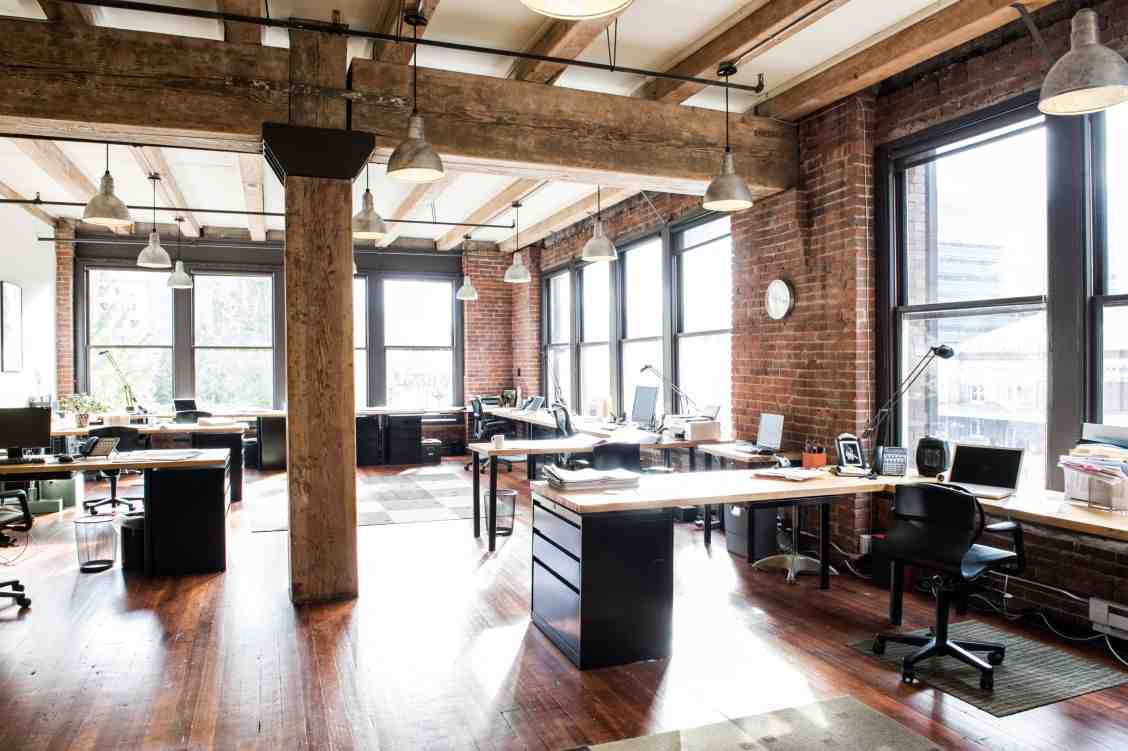
Adaptive Reuse in Riverside: Turning Old Buildings into Modern Offices
Adaptive reuse is transforming the way cities like Riverside approach commercial real estate. Instead of tearing down older buildings, adaptive reuse repurposes them into modern, functional office spaces that meet today’s business needs. This approach preserves architectural character, reduces construction waste, and often accelerates project timelines compared to building from scratch.
For property owners and investors, adaptive reuse offers a unique opportunity to revitalize underutilized properties while creating offices that attract tenants seeking contemporary amenities and efficient layouts. By combining historic charm with modern systems, these projects deliver both aesthetic appeal and long-term financial value, making adaptive reuse an increasingly popular strategy in Riverside’s evolving commercial market.
Quick Answer:
- What it is: Converting underused or historic buildings (like old citrus packing houses or warehouses) into functional modern offices
- Why it matters: Saves 16% on costs, takes 17% less time than new construction, and preserves Riverside's character
- Key benefits: Lower vacancy rates, unique character that attracts tenants, sustainability advantages, and federal tax credits up to 20%
- Best candidates: Buildings with high ceilings, open floor plates, and solid "bones"—especially former industrial and commercial structures near downtown or the Metrolink station
The trend is real. By early 2024, nearly 70 million square feet of office space across the U.S. was being repurposed, with conversions more than doubling compared to the previous year. In the Inland Empire, where commercial real estate continues to thrive, adaptive reuse offers a practical solution to rising vacancy rates while celebrating the region's rich history.
Riverside is uniquely positioned for this movement. The city's downtown core features New Formalist architecture, historic citrus packing houses, and brick warehouses that once defined the region's agricultural economy. These structures—many sitting underused—represent untapped potential for businesses seeking office space with character, modern amenities, and a story to tell.
Why adaptive reuse beats new construction:
- Reduces embodied carbon by approximately 75%
- Leverages existing infrastructure and prime locations
- Creates distinctive spaces that generic new builds can't match
- Often qualifies for historic tax credits and sustainability incentives
For business owners, this means competitive lease rates with unique architectural features—exposed brick, soaring ceilings, natural light from oversized windows—that help attract and retain talent. For investors, it means repositioning underperforming assets into high-demand Class A or B office space with shorter development timelines.
The New Wave of Commercial Real Estate: Why Adaptive Reuse is Gaining Momentum
The commercial real estate landscape is dynamic, and nowhere is this more evident than in the rising trend of adaptive reuse. Nationwide, office vacancy rates have sharply increased, with forecasts indicating a significant share of office spaces could remain empty. However, instead of viewing this as a crisis, we see an opportunity. By early 2024, nearly 70 million square feet of office space was already undergoing conversion projects across urban areas in the United States, with completions projected to more than double compared to the previous year. This surge is a direct response to changing work patterns and a desire for more sustainable, character-rich spaces.
Here in the Inland Empire, we’ve observed that commercial real estate remains strong. Yet, even in a robust market, repurposing underused assets is a smart strategy. Adaptive reuse offers compelling advantages that make it an attractive option for both property owners and businesses looking for modern office space.
Beyond environmental stewardship, adaptive reuse often translates into significant cost and time savings. Research consistently shows that conversion projects, on average, cost 16% less and take 17% less time than equivalent new construction. This faster turnaround means businesses can occupy their new spaces sooner, generating revenue and reducing the overall project timeline.
Finally, adaptive reuse plays a crucial role in preserving the unique character of our cities. Old buildings often boast architectural details, robust construction, and a sense of history that new builds simply cannot replicate. By repurposing these structures, we maintain the aesthetic and cultural fabric of our communities, creating memorable spaces that bland, new construction often lacks. This blend of heritage and modern functionality is a powerful draw for businesses seeking a distinctive brand identity and for investors looking to reposition assets into high-demand properties.
Architectural and Design Strategies for Adaptive Reuse in Riverside: Turning Old Buildings into Modern Offices
Transforming older buildings into modern office spaces requires thoughtful architectural and design strategies that respect the existing structure while meeting contemporary needs. In Riverside, many historic buildings feature unique brickwork, timber framing, or decorative facades that add character and visual appeal. Preserving these elements not only honors the city’s architectural heritage but also creates distinctive office environments that stand out in a competitive market.
A key strategy in adaptive reuse is reconfiguring interior layouts to maximize flexibility and functionality. Older buildings often have compartmentalized floor plans that aren’t ideal for modern office workflows. Architects and designers focus on creating open, collaborative spaces, integrating natural light, and improving circulation while maintaining structural integrity. In Riverside, where daylight and energy efficiency are highly valued, optimizing window placement, skylights, and interior glass walls can dramatically enhance occupant comfort and productivity.
Sustainability is another critical consideration in adaptive reuse projects. Reusing an existing building reduces construction waste and the environmental impact associated with new development. In Riverside’s climate, incorporating energy-efficient HVAC systems, high-performance insulation, and upgraded windows helps maintain comfortable indoor temperatures while lowering operating costs. Green design elements such as rooftop gardens or solar-ready roofs can further improve the building’s environmental footprint, appealing to tenants and investors alike.
Finally, integrating modern building systems without compromising historic character is essential. Electrical, plumbing, and IT infrastructure often need significant upgrades to meet today’s business demands. Thoughtful design ensures these systems are seamlessly incorporated, supporting modern office technology, safety codes, and accessibility requirements. When executed effectively, adaptive reuse in Riverside results in office spaces that blend historic charm with modern functionality, delivering long-term value and attracting tenants seeking unique, high-quality work environments.
Navigating Riverside's Regulatory Landscape
One of the most critical aspects of any adaptive reuse project in Riverside is successfully navigating the legal and regulatory problems. This isn't always a straightforward path, but with local expertise, it's entirely manageable.
Here are the key regulatory steps we typically encounter:
- Zoning and General Plan Amendments: Many older buildings are in areas with outdated zoning. Converting an industrial building to an office might require a General Plan Amendment and a Zone Change. This process has been successfully navigated in past projects, setting a precedent for flexibility in urban planning within the city.
- Historic Preservation Guidelines: Riverside's rich history means many potential adaptive reuse sites are designated historic landmarks or fall within Cultural Resources Overlay Zones. Projects involving these buildings often require oversight from the Cultural Heritage Board (CHB) and adherence to specific preservation standards, such as the Secretary of the Interior's Standards for Rehabilitation. This means working with experts who understand how to maintain historical and architectural significance—like original window casings, masonry, or structural elements—while making necessary modern updates. Early consultation with the CHB is essential to align the project vision with preservation requirements.
- Building Codes and ADA Compliance: Older buildings rarely meet today's stringent building codes, especially concerning accessibility (ADA compliance). This requires creative design solutions and careful planning to integrate modern safety and access standards without compromising historic features. We often recommend allowing 30-50% more time for permitting compared to new construction due to the complexities of aligning old structures with new codes.
- Permitting Process (Change-of-Use): A change in a building's function, from warehouse to office, for example, necessitates a change-of-use permit. This process involves multiple reviews and approvals, and early engagement with building officials is crucial to finding compliance pathways that save both historical elements and budget.
- Environmental Review (CEQA): Like many development projects in California, adaptive reuse projects may trigger environmental review under the California Environmental Quality Act (CEQA). This process assesses potential impacts on historical resources, traffic, noise, and air quality. While reusing a building is inherently more sustainable, the change of use can trigger the need for studies and mitigation measures. A thorough initial study can determine the level of review required, and proactive planning can streamline this often-complex process.
The City of Riverside is generally supportive of development that revitalizes its urban core, and they offer resources for small businesses. However, understanding and proactively addressing these regulatory challenges is vital for a smooth project timeline. Variances, especially for elements like parking requirements, are not uncommon and can be successfully negotiated with a well-prepared plan.
The Ripple Effect: Economic, Community, and Environmental Benefits
Investments in commercial and residential development don’t just affect the buildings themselves—they create a ripple effect that impacts the broader economy, communities, and the environment. Thoughtful projects can stimulate local businesses, create jobs, and enhance property values, while also fostering stronger, more connected neighborhoods. Understanding these benefits helps property owners and developers make decisions that deliver long-term value beyond immediate financial returns.
On the environmental side, sustainable design, energy-efficient systems, and smart land use reduce resource consumption, minimize waste, and help communities adapt to climate challenges. When combined with economic and social impacts, these benefits demonstrate how a single development—or even a well-planned renovation—can generate positive outcomes that extend far beyond the property line.
Fueling Economic Growth and Urban Revitalization
Adaptive reuse is a proven engine for economic growth and urban revitalization. By changing vacant or underused commercial properties, we attract new businesses and talent to Riverside, fostering a dynamic business environment. This influx of activity naturally increases property values in surrounding areas and creates both short-term construction jobs and long-term positions within the newly established offices.
The boost in local tax revenue from these revitalized properties and successful businesses helps fund public services and infrastructure. Furthermore, these projects stimulate nearby retail and service sectors, as new employees and visitors frequent local shops, restaurants, and other amenities. We've seen how the presence of thriving commercial spaces, often filled by graduates from Inland Empire colleges and universities, contributes to a vibrant downtown and supports the overall economic health of the region. For investors, these projects represent sound commercial real estate investment strategies, turning obsolete assets into profitable ventures that strengthen the local economy.
The Power of Partnerships and Sustainability in Adaptive Reuse in Riverside: Turning Old Buildings into Modern Offices
The success of adaptive reuse projects often hinges on strong public-private partnerships and meaningful community engagement. The Cheech Marin Center, for example, was a testament to how collaboration between public entities and private individuals can achieve ambitious revitalization goals. Such partnerships can leverage diverse resources, expertise, and funding to overcome complex challenges.
Beyond economic and social benefits, adaptive reuse is a cornerstone of achieving sustainability goals. By reusing existing structures, we significantly reduce construction waste and lower the embodied carbon associated with new building materials and processes. Projects that prioritize sustainability can also earn valuable certifications, such as LEED, further enhancing their appeal and demonstrating a commitment to environmental responsibility. This focus on sustainability demand is not just a trend; it's a fundamental shift in how we approach urban development, ensuring that our growth is both prosperous and planet-friendly. Our team at Stance Commercial Real Estate understands the importance of these elements and how they contribute to the long-term success of adaptive reuse projects, offering resources for small businesses looking to integrate sustainable practices.
Frequently Asked Questions about Adaptive Reuse in Riverside
We often get questions about the practicalities and benefits of adaptive reuse buildings. Here are some of the most common inquiries we address:
What are the primary financial incentives for adaptive reuse projects?
There are several compelling financial incentives that make adaptive reuse particularly attractive:
- Federal Historic Tax Credits: For certified historic structures, developers can receive a substantial 20% federal tax credit for rehabilitation expenses. This can significantly offset project costs.
- Section 179D Deduction: This incentive offers up to $1.88 per square foot for energy-efficient renovations, encouraging sustainable upgrades.
- PACE Financing Programs: Property Assessed Clean Energy (PACE) programs provide long-term funding for energy and water efficiency improvements, often secured by a property assessment rather than traditional loans.
- Local Incentives: Many cities, including Riverside, may offer local incentives such as property tax abatements, density bonuses, or expedited permitting processes to encourage adaptive reuse and historic preservation.
- Grants for Historic Preservation: Various grants are available from state and national organizations to help fund the preservation of historic properties.
These incentives, combined with the inherent cost savings compared to new construction, make adaptive reuse a financially savvy choice for many investors and businesses. Our team can help small businesses steer these opportunities and access available help.
What types of old buildings in Riverside are best suited for conversion into modern offices?
The best candidates for adaptive reuse typically share certain characteristics:
- Former Industrial Buildings: Old citrus packing houses, brick warehouses, and light manufacturing facilities are often ideal. They usually feature robust construction, high ceilings, large, open floor plates, and plenty of natural light—all highly desirable traits for modern, flexible office layouts.
- Underused Retail Buildings: Larger, older retail spaces, especially those with good street frontage and architectural character, can be reimagined as dynamic office environments.
- Older Class B and C Office Buildings: Many aging office buildings, while perhaps no longer suitable for their original purpose or attracting tenants at competitive rates, have solid "bones" and prime locations. With strategic renovations, these can be transformed into vibrant, modern Class A or B office spaces.
The key is to look for structural integrity, generous ceiling heights, and opportunities for abundant natural light and ventilation. These elements provide a flexible canvas for contemporary office design.
What are the biggest challenges associated with adaptive reuse projects?
While highly rewarding, adaptive reuse projects present unique challenges that require careful planning and expertise. The most common hurdles include:
- Unforeseen Structural Issues: Old buildings can hide surprises. What appears structurally sound on the surface may reveal deteriorated foundations, hidden water damage, or outdated structural systems once demolition begins. Comprehensive due diligence, including structural engineering assessments and materials testing, is crucial to budget for these potential 'unknowns.'
- Hazardous Materials Abatement: Buildings from certain eras often contain hazardous materials like asbestos, lead-based paint, or PCBs. Identifying and safely removing these materials is a regulatory requirement that can add significant time and cost to a project.
- Code Compliance and Modernization: Bringing an old structure up to modern building codes for seismic safety, fire suppression (sprinklers), energy efficiency, and ADA accessibility is one of the biggest tasks. It often requires creative engineering and architectural solutions to integrate new systems without compromising the building's historic character.
- Navigating the Permitting Labyrinth: As mentioned, the regulatory path for adaptive reuse is more complex than for new construction. It involves multiple agencies, potential historic reviews, and change-of-use permits, leading to longer permitting timelines.
Successfully overcoming these challenges hinges on assembling an experienced team—including architects, engineers, and contractors with a proven track record in adaptive reuse—and building a realistic budget and timeline that accounts for potential contingencies.
How does adaptive reuse impact the local commercial real estate market?
Adaptive reuse has a profoundly positive impact on the local commercial real estate market in Riverside:
- Reduces Vacancy Rates: By repurposing obsolete or underperforming inventory, adaptive reuse directly helps stabilize or lower office vacancy rates, making the overall market healthier.
- Creates Unique, High-Demand Spaces: These projects convert generic or outdated spaces into distinctive, character-rich offices that often command premium rental rates. They fill a niche that new, cookie-cutter construction cannot, creating high-demand Class A or B office spaces.
- Attracts Diverse Tenants: Businesses, especially those in creative, tech, or design fields, are often drawn to the unique aesthetic and collaborative potential of adaptive reuse spaces. They offer a strong brand identity that helps attract and retain talent.
- Improves Urban Fabric: Successful adaptive reuse projects contribute to the revitalization of neighborhoods, making downtown Riverside and other commercial districts more vibrant and attractive places to work and visit.
How Stance CRE Can Help You
Adaptive reuse strengthens Riverside's commercial real estate guide by diversifying its office offerings, improving market efficiency, and fostering a more dynamic urban environment.
The movement of turning old buildings into modern offices is more than just a trend; it's a strategic imperative for our city's commercial future. We've explored how this approach brings significant economic benefits, revitalizing urban areas, attracting new businesses, and creating jobs. Environmentally, it's a champion of sustainability, drastically reducing waste and carbon emissions compared to new construction. Culturally, it preserves the unique architectural heritage that tells Riverside's story, giving our city character and soul.
For investors and business owners alike, the opportunity is clear. Adaptive reuse offers a pathway to acquiring unique, high-value commercial properties with shorter development timelines and access to valuable financial incentives. It's about seeing potential where others see obsolescence and changing it into a thriving asset. For those looking to acquire like a pro: your guide to commercial property ownership in this evolving landscape, the advantages of adaptive reuse should be front and center.
As the Inland Empire continues to grow, adaptive reuse will play a pivotal role in shaping the future of work, creating vibrant, inspiring, and sustainable office environments that meet the demands of a modern workforce. As local experts in the Riverside market, the team at Stance Commercial Real Estate is uniquely positioned to help you identify and steer these unique opportunities. Whether you're looking to invest in a transformative project or find the perfect character-rich office space for your business, we are here to guide you.
Ready to explore the possibilities of adaptive reuse for your business or investment portfolio in Riverside? Leasing office space in Riverside starts with a clear strategy and a partner who understands the local market and regulatory landscape. Contact Stance Commercial Real Estate today to discuss how we can help you find or create your next exceptional commercial space.

Why the Cheapest Lease Isn’t Necessarily the Lowest Cost: Understanding Total Occupancy Cost
Why Base Rent Is Only the Tip of the Iceberg
When evaluating a commercial lease, it's tempting to focus on the advertised base rent. However, this figure is merely the starting point. A lease with a low base rate can conceal significant expenses that inflate your total cost, while a higher-rent lease might offer a more predictable and ultimately lower overall expense.
The key is to understand your Total Occupancy Cost (TCO), which is the sum of every dollar you will spend to occupy and operate in a space. In commercial real estate, the cheapest lease rarely equals the lowest cost, especially in the dynamic Inland Empire market.
Key factors to consider:
- Base rent often represents only 15-25% of your TCO.
- Hidden expenses like Common Area Maintenance (CAM) fees can add another 15-35%.
- For industrial users, rent may be just 5% of supply chain costs, with labor and transportation being far more significant.
Beyond the Base Rent: Unpacking the Components of Total Occupancy Cost (TCO)
Total Occupancy Cost (TCO) provides the complete financial picture of what you'll actually spend to operate in a commercial space. While base rent is a fixed starting point, it's the variable and often-overlooked expenses that constitute the bulk of your spending. Understanding these components before you sign is critical for an informed real estate decision.
Let's break down where your money goes beyond the base rent.

The Impact of Common Area Maintenance (CAM) Fees
Common Area Maintenance (CAM) fees are your share of the costs for maintaining shared spaces like lobbies, parking lots, landscaping, and elevators. These fees are a frequent source of budget surprises, as they can add 15-35% to your overall rental cost.
CAM fees are tricky because they are variable and tend to increase annually. One year might involve routine sweeping, while the next could include a costly parking lot resurfacing project. To avoid surprises, you must request and review at least three years of historical CAM data during your due diligence. This helps you spot trends and budget accurately for these operating expenses (OpEx).
Utilities and Insurance: The Volatile Variables
Utilities and insurance are two more significant and unpredictable parts of your TCO.
Utilities fluctuate with usage, rates, and even the efficiency of your HVAC system. In California, where electricity prices are high, an energy audit can identify inefficiencies that drive up costs. Power reliability is another factor; in 2022, U.S. businesses averaged 5.5 hours of outages, which can lead to thousands in lost productivity.
Insurance premiums are also rising. In disaster-prone areas, premiums have risen 14.7% faster than inflation since 2018. Your lease will specify required coverages, such as general liability and property insurance. Pay close attention to these clauses to accurately forecast costs. For more on protecting your assets, visit our page on Commercial Insurance Coverage.
Tenant Improvements (TI) and Initial Build-Out Costs
Nearly every new commercial space requires customization, known as Tenant Improvements (TI). While landlords often provide a TI allowance, it rarely covers the full expense of architectural plans, permits, and construction. Businesses often underestimate these costs and find themselves significantly over budget. To prevent this, get detailed bids from contractors and build a contingency buffer into your budget before signing the lease. For more guidance, see The Ultimate Guide to a Smooth Office Relocation.
Other Critical Costs to Factor In
Several other expenses contribute to your TCO. These include:
- Property taxes, which are passed through to tenants in many lease types and tend to increase over time.
- Proactive maintenance to prevent costly emergency repairs, a key part of Managing Commercial Property Expenses.
- Technology infrastructure, including internet, phone systems, and cybersecurity.
- Security deposits, which tie up initial capital.
- Janitorial services for your specific space.
How Different Lease Structures Dictate Your Total Cost
The type of commercial real estate lease agreement you sign is the primary determinant of which TCO components you are responsible for. Think of lease structures as different payment plans; some have a higher upfront rate with fewer surprises, while others advertise a low rate but pass through numerous variable costs.
Gross and Modified Gross Leases: Predictability Comes at a Price
For businesses that value budget predictability, a Full-Service Gross (FSG) Lease or Modified Gross (MG) Lease is often ideal.
In an FSG Lease, the landlord bundles nearly all operating expenses—property taxes, insurance, CAM, and often utilities—into a single monthly rent payment. This offers maximum predictability but comes with a higher base rent. Be aware of "base year" clauses, which make you responsible for expense increases in subsequent years.
A Modified Gross (MG) Lease is a hybrid popular in the Inland Empire. The landlord typically covers base building expenses like taxes and insurance, while the tenant pays for their own utilities and interior maintenance. The rent is a middle ground between an FSG and a Triple Net lease.
Triple Net (NNN) Leases: The Tenant-Responsibility Model
The Triple Net (NNN) lease is common for retail and single-tenant industrial properties. It features an attractively low base rent, but the tenant is responsible for their pro-rata share of the three "nets": property taxes, building insurance, and maintenance (including CAM).
These costs are variable, meaning your total monthly payment can fluctuate. While NNN leases offer more control over operations, they also bring less predictability and a greater administrative burden. You must budget carefully for inevitable spikes in operating expenses.
Why the Cheapest Lease Isn't the Lowest Cost: A Lease Type Comparison
Let's compare two hypothetical 5,000 sq. ft. spaces in Riverside to illustrate Why the Cheapest Lease Isn't the Lowest Cost: Understanding Total Occupancy Cost. A Modified Gross lease at $2.50/sf seems more expensive than an NNN lease at $1.80/sf. But after factoring in the NNN pass-through costs, the story changes.
| Cost Component | Modified Gross Lease (5,000 sq. ft. @ $2.50/sf/month) | Triple Net (NNN) Lease (5,000 sq. ft. @ $1.80/sf/month) |
|---|---|---|
| Base Rent | $12,500 | $9,000 |
| Property Taxes | Included in Base Rent | $3,125 (estimated $0.625/sf) |
| Building Insurance | Included in Base Rent | $1,000 (estimated $0.20/sf) |
| CAM Fees | Included in Base Rent | $2,375 (estimated $0.475/sf) |
| Utilities | Tenant Pays Separately | Tenant Pays Separately |
| Total Monthly Cost (excluding utilities) | $12,500 | $15,500 |
(Note: NNN cost estimates are illustrative for the Inland Empire market.)
Suddenly, the "cheaper" NNN lease costs $3,000 more per month—$36,000 more per year. The advertised rent was 28% lower, but the actual TCO is 24% higher. This is why you must compare leases on a TCO basis to make a financially sound decision.
The Strategic Importance of TCO in Industrial and Logistics Real Estate
For manufacturing and logistics companies, mainstays of the Inland Empire economy, TCO analysis extends beyond the building itself. For an industrial real estate user, rent can be as little as 5% of their total supply chain cost, making other operational factors far more critical to profitability.
When working with these clients, the conversation shifts from rent per square foot to the impact of location on labor, transportation, and taxes—the factors that truly drive profitability.
Labor Market Volatility and Workforce Costs
For industrial businesses, labor is the single largest operating expense, often accounting for 40-60% of total operating costs. This can be eight to twelve times the cost of rent. The availability and cost of skilled labor in the Inland Empire can dramatically impact your TCO.
A site with slightly lower rent but poor access to a stable workforce can be a costly mistake. It can lead to higher wages, increased employee turnover, and reduced productivity, quickly negating any rent savings. Understanding the local labor pool is paramount. Access to the talent pipeline from Inland Empire colleges and universities, as discussed in The Impact of Inland Empire Colleges and Universities on Commercial Real Estate Growth, can be a significant competitive advantage.
Transportation and Logistics Inefficiencies
Transportation costs often represent 50% or more of a company's total supply chain cost, dwarfing the 5% typically spent on rent. For businesses in the Inland Empire, a strategic location is non-negotiable.
Proximity to major freeways (I-10, I-15, SR-60) and the ports of Los Angeles and Long Beach significantly reduces transportation expenses. A 1% savings in transportation or labor can equate to 15-20% of your logistics real estate rent value. A facility with slightly higher rent but superior freeway access will almost always deliver a lower TCO than a "cheap" but poorly located warehouse. Understanding The Importance of Location in Commercial Real Estate is key to optimizing your logistics network.
Tax Exposure and Local Incentives
State and local taxes can quietly erode margins. While California projects may face a higher tax burden, the Inland Empire offers programs to mitigate these costs. Understanding local tax abatements and business incentives is crucial to lowering your TCO.
For example, Investing in Riverside's Opportunity Zones can offer significant tax advantages. Additionally, local initiatives highlighted in How Riverside California Supports Businesses can provide grants and streamlined permitting that reduce your overall costs. Evaluating these programs is a critical step in site selection.
Why the Cheapest Lease Isn't the Lowest Cost: Leveraging TCO for Strategic Advantage
Understanding TCO transforms your real estate search from a price comparison into a strategic business exercise. It empowers you to negotiate better terms, select the right site, and proactively control one of your largest expenses.
Gaining a Powerful Edge in Lease Negotiations
An informed TCO analysis gives you leverage. Instead of just asking for lower rent, you can negotiate specific terms that protect your budget. Key strategies include:
- Negotiating CAM Caps: Limit how much your Common Area Maintenance fees can increase annually to prevent uncontrolled escalations.
- Securing a Sufficient TI Allowance: Push for a tenant improvement package that genuinely covers your build-out needs, avoiding out-of-pocket surprises.
- Arguing for Expense Exclusions: Challenge charges for capital expenditures that primarily benefit the landlord, such as a full roof replacement on a short-term lease.
- Demanding Historical Data: Always request at least three years of operating expense statements. This is as crucial for leasing as it is for buying, as detailed in our Due Diligence Checklist: What to Review Before Buying Commercial Property.
Informing Site Selection and Long-Term Strategy
TCO analysis reshapes site selection by aligning your real estate with long-term business goals. For industrial users, this means weighing labor availability, transportation access, and local taxes alongside rent.
This holistic approach is also a form of risk mitigation. By identifying potential future expenses like aging HVAC systems or high-risk insurance zones, you can avoid costly surprises. This foresight supports future growth planning, helping you choose a space that can adapt to your needs. The principles of How to Evaluate a Commercial Property for Long-Term ROI apply whether you are buying or leasing.
Proactively Managing and Reducing Ongoing Costs
Once the lease is signed, you can continue to reduce your TCO through proactive management. Key tactics include:
- Proactive Maintenance: Regular servicing of HVAC and other systems prevents costly emergency repairs. This is a core tenet of effective Real Estate Maintenance.
- Smart Technology: Building Management Systems and smart sensors optimize energy usage and identify inefficiencies.
- Energy-Efficiency Upgrades: In California's high-cost electricity market, upgrades like LED lighting and smart thermostats are strategic necessities.
- Regular Expense Audits: Periodically review your landlord's operating expense statements to ensure accuracy and challenge discrepancies.
Frequently Asked Questions about Total Occupancy Cost
What is a good occupancy cost percentage for a business?
A healthy occupancy cost percentage varies significantly by industry. Here are some general benchmarks:
- Retail: Aim for 5-10% of gross sales. Exceeding this can strain profit margins.
- Office: Try to keep occupancy costs below 10% of total revenue to maintain profitability.
- Industrial/Logistics: While rent may only be 5% of your total supply chain cost, the real drivers are labor (40-60%) and transportation (50%+). Managing the location-dependent aspects of TCO is critical.
How can I get historical expense data for a property?
During your due diligence period, you must request at least three years of operating expense statements and CAM reconciliations from the landlord. Any reputable landlord should provide this. If they are reluctant, it's a major red flag.
This historical data is your crystal ball for forecasting future costs. It helps you identify unusual spikes or trends—like a sudden 25% jump in CAM fees—that need to be questioned before you sign a commercial real estate lease agreement. Without this data, you are budgeting in the dark.
Are all operating expenses negotiable?
Some are, and some are not. Expenses are typically divided into two categories:
- Uncontrollable Costs: These include property taxes and insurance premiums, which are dictated by external factors. You can't negotiate the costs themselves, but you can sometimes negotiate how increases are passed through to you.
- Controllable Costs: This is where you have leverage. These include management fees, landscaping, and janitorial services. You can often negotiate these costs directly or, more commonly, negotiate a cap on annual increases (e.g., 3-5%) to protect your budget from unexpected spikes.
Understanding this distinction, backed by historical data, allows you to actively shape your lease terms.
How Stance CRE Can Help You
Choosing a commercial lease based on base rent alone is a common but costly mistake. By shifting your focus to the comprehensive Total Occupancy Cost (TCO), you move from being a price-taker to a strategic decision-maker. This holistic approach allows you to anticipate expenses, mitigate risks, and select a property that truly supports your business's financial health and operational goals.
From CAM fees and TI allowances to the critical impact of labor and transportation costs for industrial users, understanding every component of TCO is essential for success in the Inland Empire.
Navigating these complexities requires local expertise. At Stance Commercial Real Estate, we specialize in TCO analysis to ensure our clients find a space that is not just cheap, but genuinely cost-effective. We leverage our thirty years in this market to negotiate better terms, challenge questionable expenses, and align your real estate with your long-term business goals.
Ready to find a property that aligns with your total budget—not just the advertised rent? Explore our available commercial properties for lease and let our team provide the in-depth analysis you need to lease with confidence.

Due Diligence Checklist: What to Review Before Buying Commercial Property
Why Due Diligence is Non-Negotiable in Commercial Real Estate
In commercial real estate, the stakes are high, and mistakes can be costly. Whether you’re acquiring an office building, retail space, or industrial property, skipping—or skimming over—due diligence is a risk you can’t afford. Every detail, from zoning regulations and structural integrity to lease agreements and environmental concerns, has the potential to make or break your investment. Thorough due diligence isn’t just a best practice—it’s a non-negotiable step that protects your capital, ensures regulatory compliance, and sets the foundation for long-term success.
I'm Joe Stance, and during my decade-long career in commercial real estate, I've guided hundreds of companies through the buying process in the Inland Empire. A comprehensive Due Diligence Checklist: What to Review Before Buying Commercial Property is essential for protecting your investment. Due diligence for commercial real estate typically involves investigating these six key areas:
- Financial Due Diligence: Analyzing the property's income, expenses, and overall financial performance.
- Physical Due Diligence: Assessing the structural integrity and condition of the building and site.
- Legal Due Diligence: Reviewing title, zoning, permits, and contracts to ensure clear ownership and compliance.
- Market Due Diligence: Understanding local market trends and the competitive landscape.
- Environmental Due Diligence: Identifying potential environmental hazards or contamination.
- Operational Due Diligence: Examining existing management, tenant relations, and service contracts.
The Due Diligence Checklist: Financial and Tenant Records
Think of due diligence as detective work—you're gathering clues to determine if a property is worth your investment. Every document tells part of the story, and your job is to piece together the complete picture before closing.
Financial Records and Performance Analysis
The numbers reveal a property's true financial health. This is where having a skilled Commercial Real Estate CPA on your team becomes invaluable. Your review should include:
- Property Financial Statements: Request at least three years of income and expense statements to identify trends and verify profitability.
- Operating and Capital Expense Budgets: Compare projections against historical performance to spot deferred maintenance or unrealistic cost estimates.
- Net Operating Income (NOI) Analysis: This figure is crucial for valuation and helps you determine What is a Good Cap Rate for Commercial Real Estate?.
- Tax and Utility Bills: Review three years of real estate tax bills and two years of utility records to understand operational costs and identify any pending assessments.
- Service and Management Contracts: Examine all agreements for unfavorable terms, automatic renewal clauses, or above-market rates.
- Aged Receivables Report: This reveals tenant payment patterns. Consistent late payments can signal future cash flow problems.
- FF&E Inventory: If the sale includes furniture, fixtures, and equipment, get a detailed list to verify its existence and condition.
Tenant Information and Lease Review
Tenants are the source of your income stream, so a thorough review of all tenant-related documents is critical. Your checklist should include:
- Certified Rent Roll: This document details every tenant, their space, rent, lease terms, and expiration dates. It's the financial bible for the property.
- Leases, Amendments, and Guarantees: Carefully review every Commercial Real Estate Lease Agreement to understand your obligations and the tenant's rights.
- Tenant Payment Histories: This report shows the reality behind the rent roll, highlighting which tenants pay on time.
- Tenant Financials: When available, credit reports and financial statements help you assess a tenant's ability to fulfill their lease.
- Estoppel Certificates: These legal documents, signed by tenants, confirm the terms of their lease and prevent future disputes.
- Vacancy Rates: Current and historic vacancy rates provide insight into market demand and property performance.
Physical and Environmental Investigations
While documents provide a baseline, you must move beyond the paperwork to investigate the property's physical and environmental condition. This is where you bring in specialists to uncover problems that documents might miss.
Physical and environmental inspections uncover hidden issues that documents alone cannot reveal.
The Physical Property Inspection
A commercial property inspector is trained to spot trouble before it becomes an expensive headache. Their assessment should cover:
- Structural Integrity: The inspector will look for cracks, foundation problems, or other signs of structural distress.
- Seismic Risk Assessment: In California, evaluating a building's ability to withstand an earthquake is a critical step.
- Site Improvements: The condition of the parking lot, landscaping, and drainage can represent significant future costs.
- Building Code Compliance: Violations of current building codes can trigger mandatory and expensive upgrades. A review of your Commercial Insurance Coverage is also wise to ensure it covers the property's physical risks.
Environmental Site Assessments (ESA)
Environmental due diligence protects you from massive liabilities. This process uncovers whether the property has any hazardous materials or contamination from past use.
- Phase I ESA: This is a background check for the property. It includes a review of historical records, a government database search, and a site visit to identify potential contamination from asbestos, lead paint, mold, or prior industrial use.
- Phase II ESA: If the Phase I report raises red flags, a Phase II is necessary. This involves taking soil, water, or material samples for laboratory testing to confirm the presence and extent of contamination.
- Remediation Costs: Understanding potential cleanup costs is crucial, as they can easily run into the hundreds of thousands or even millions. This is also an opportunity to assess alignment with Green Real Estate Trends and plan for sustainable improvements.
Navigating the Due Diligence Process
Successfully navigating due diligence requires assembling the right team and managing a strict timeline. It is a collaborative investigation where each expert examines the potential investment through a unique lens.
Assembling Your Professional Team
No one can be an expert in everything. Building a strong team is critical for a successful outcome. Your team should include:
- Commercial Real Estate Broker: Let Stance CRE be your quarterback, coordinating the process and providing market insights.
- Real Estate Attorney: Your legal guardian, scrutinizing contracts, title, and zoning issues.
- Accountant (CPA): Your financial analyst, verifying numbers and advising on tax implications.
- Commercial Property Inspector: Your on-the-ground detective, identifying physical defects and maintenance needs.
- Environmental Consultant: Your protection against contamination liabilities.
- Architect or Engineer: Specialized experts for properties requiring significant improvements or with structural concerns.
Each professional in your Commercial Real Estate Services Industry network protects a different aspect of your investment.
Typical Due Diligence Timeline and Key Milestones
The due diligence period typically ranges from 30 to 90 days, depending on the property's complexity. The process is generally broken into three phases.
| Phase | 30-Day Period | 60-Day Period | 90-Day Period | Key Milestones |
|---|---|---|---|---|
| Initial Review | Document collection, financial analysis, preliminary inspections | Extended financial analysis, detailed property inspections, environmental assessments | Comprehensive market analysis, complex environmental studies, extensive legal review | Purchase agreement execution, initial deposit, team assembly |
| Investigation Phase | Property condition assessment, title review, tenant verification | Phase I ESA completion, lease analysis, zoning verification | Phase II ESA (if needed), detailed engineering studies, market comparables | Inspection deadlines, financing applications, estoppel certificate collection |
| Analysis & Decision | Preliminary valuations, initial red flag identification | Detailed cost projections, negotiation preparation, financing progress | Final valuations, renegotiation or approval decisions, closing preparation | Contingency removal deadlines, final approval decisions, closing coordination |
The Due Diligence Checklist: Building Plans and Reports
A building might look impressive from the outside, but its true condition is revealed in its technical documents and physical reports. These papers show whether you are buying a well-maintained asset or a money pit.
Building Plans, Permits, and Physical Reports
Examining these documents is a critical part of your Due Diligence Checklist: What to Review Before Buying Commercial Property. They provide the foundation for your physical inspection and help you ask the right questions. Your review should include:
- As-Built Plans and Specifications: These drawings show the building's exact layout, systems, and any modifications, which is essential for planning future improvements.
- Licenses, Permits, and Certificates of Occupancy: These confirm the building is legally compliant. Missing permits for past work can create expensive problems.
- System Reports: Mechanical (HVAC), electrical, and plumbing reports reveal the condition and remaining lifespan of critical building systems.
- Roof Reports and Warranties: Roofs are expensive to replace. You need to know the roof's current condition and whether any warranties are transferable.
- ADA Compliance Reports: Non-compliance with the Americans with Disabilities Act can lead to lawsuits and costly retrofits.
- Architect's Certificate of Square Footage: This verifies the rentable area that drives your income projections. Discrepancies can significantly impact your returns.
- List of Capital Expenditures: A list of recent investments in building systems suggests good upkeep, while a lack of improvements may indicate deferred Real Estate Maintenance you will have to address.
Legal, Title, and Zoning Verification
Navigating the legal aspects of a commercial real estate transaction is not a DIY task. The expertise of a real estate attorney is indispensable for ensuring clear ownership and compliance with all regulations.
Legal, Title, and Zoning Verification
Your attorney acts as a translator for complex legal documents, spotting trouble before it finds you. Their review is a critical part of your Due Diligence Checklist: What to Review Before Buying Commercial Property and should cover the following:
- Title Report Review: The attorney will conduct a thorough review of the title report to identify any liens, easements, encroachments, or other encumbrances that could affect your ownership rights. This ensures you receive a clear and marketable title.
- ALTA Survey and Boundary Verification: An American Land Title Association (ALTA) survey is a detailed map of the property that clarifies boundaries, improvements, and any easements. This is crucial for confirming that the legal description matches the physical property and avoiding future disputes.
- Zoning Compliance: Your attorney will verify that the property's current use is permitted under local zoning ordinances and investigate the feasibility of any intended future uses. This is especially important in markets with complex regulations, and understanding the nuances of the Understanding the Riverside Commercial Real Estate Market can make or break an investment.
- Pending or Historic Litigation: A review of any legal disputes involving the property or the seller can reveal a history of problems that might persist after you take ownership.
- Corporate Transparency Act (CTA): With new regulations, it's important to consider compliance with BOI (Beneficial Ownership Information) reporting, which may affect how you structure the purchase. Getting quality Attorney Advice on these matters is essential.
Due Diligence Red Flags and Buyer Variations
During the due diligence period, you are not just checking boxes; you are actively looking for red flags that could derail the deal or diminish the property's value. At the same time, the focus of your investigation will vary depending on your goals as a buyer.
Common Red Flags to Watch For
Be wary of these warning signs, which often indicate deeper problems:
- Discrepancies in Financial Records: If income and expense numbers don't add up or key details are missing, it could signal poor management or misrepresentation.
- High Tenant Turnover: A revolving door of tenants may point to issues with the property, management, or local market.
- Significant Deferred Maintenance: A neglected property means you will likely face significant capital expenditures immediately after closing.
- Unresolved Legal Disputes: Cloudy titles or ongoing litigation can create major headaches and financial burdens down the road.
- Reluctance from the Seller: If a seller is hesitant to provide requested documents, they may be hiding something.
Identifying these issues is especially important when making Your First Commercial Real Estate Investment.
How Due Diligence Varies for Different Buyers
Your Due Diligence Checklist: What to Review Before Buying Commercial Property should be custom to your specific goals.
- Investors focus on cash flow and return on investment (ROI). Their due diligence will scrutinize financial records, rent rolls, and lease terms to ensure a stable income stream. Different Commercial Real Estate Investment Strategies will guide their analysis.
- Developers look at a property's potential. Their investigation centers on zoning, entitlements, site capacity, and environmental reports to determine the feasibility and cost of their plans.
- Business Operators prioritize operational suitability. When Buying Property for Business, they focus on layout, accessibility, parking, and whether the space meets their specific needs.
Frequently Asked Questions about the Due Diligence Checklist
Due diligence can feel complex, but it's your best tool for protecting your investment. Here are answers to some common questions about the process.
What are the most critical documents to review during due diligence?
While all documents are important, five are absolutely essential for your Due Diligence Checklist: What to Review Before Buying Commercial Property. These are:
- Certified Rent Roll: A snapshot of the property's income stream, detailing tenants, rents, and lease terms.
- Historical Operating Statements (3 Years): These show the property's actual income and expenses over time, revealing its true financial performance.
- Current Tenant Leases and Amendments: Each lease is a contract that defines your future income and obligations.
- Preliminary Title Report: This reveals any liens, easements, or other encumbrances that could cloud your ownership.
- Recent ALTA Survey: A detailed map that confirms property boundaries and improvements, ensuring you get exactly what you paid for.
What happens if I find a major issue during the due diligence period?
Finding a problem gives you leverage. The due diligence period is designed to uncover issues before you are fully committed. Depending on your purchase agreement, you can typically renegotiate the price, request the seller to make repairs before closing, ask for a credit to cover repair costs, or terminate the deal and get your earnest money deposit back. The key is to use the facts you've uncovered to ensure the deal still meets your financial goals.
What is the role of technology in modern due diligence?
Technology has revolutionized due diligence, making it more efficient and collaborative. Digital platforms streamline the process by creating standardized workflows. They allow your team to centralize documents, track tasks, automate reminders, and maintain a clear audit trail of all decisions. This increases efficiency, reduces human error, and helps you scale your investment operations by turning a static checklist into a dynamic, digital process. These tools are a key part of modern Real Estate Asset Management Strategies.
How Stance CRE Can Help You
By carefully reviewing every financial, physical, and legal detail, you position yourself to make an informed decision that aligns with your goals. This systematic approach ensures you understand exactly what you are buying and can purchase with confidence.
For investors and business owners in the Inland Empire, partnering with a local expert who knows the market can make all the difference. Stance Commercial Real Estate has been helping clients steer these complex transactions for years, leveraging deep knowledge of Riverside's unique commercial real estate landscape.
We understand that every property tells a story, and our expertise ensures no stone is left unturned during your due diligence process. The difference between a successful investment and a costly mistake often comes down to the quality of your investigation. With the right guidance, you can move forward knowing you've made a smart decision.
Ready to explore your next commercial real estate opportunity in Riverside or the broader Inland Empire? Learn more about our services and insights and find how local expertise can transform your investment experience.

Location, Location, Location: Why Walkability Matters More Than Ever
The New Meaning of a Prime Location
Walkability has emerged as a key differentiator between thriving commercial properties and those that struggle to attract tenants. Properties in pedestrian-friendly locations consistently command higher rents, draw more desirable tenants, and generate stronger long-term returns. Beyond financial performance, walkable areas also enhance convenience, improve employee satisfaction, and support vibrant local communities—making them increasingly attractive to both businesses and investors seeking sustainable, high-performing assets.
The shift from sprawling, car-dependent developments to pedestrian-friendly districts is a fundamental change in how commercial real estate creates value. Walkability measures how easily people can access work, shops, restaurants, and services without a car. Properties near transit and surrounded by amenities consistently outperform isolated buildings. The numbers are clear: walkable urban places generate 20% of the nation's GDP despite occupying just 1.2% of metropolitan land.
Key Benefits of Walkable Commercial Properties:
- 35-45% rental premiums for office, retail, and multifamily properties.
- 5-8% property value increase for every 10-point Walk Score improvement.
- 49% boost in retail sales from pedestrian infrastructure improvements.
- 125% value appreciation in walkable business districts vs. 20% in car-dependent zones over the past decade.
The investment implications are significant. Properties in walkable locations command higher rents, experience faster lease-up times, lower vacancy rates, and better value retention during economic downturns.
I'm Joe Stance, and during my eighteen year career in commercial real estate, I've witnessed how Walkability has transformed property values across the Inland Empire. Understanding walkability is now essential for making smart investment decisions.
What is a Walkability Score and How is it Measured?
A walkability score is a 0-100 rating of a property's pedestrian friendliness, indicating how easily people can walk to daily destinations.
Scores are calculated using several key factors:
- Proximity to amenities: The density and variety of useful destinations like coffee shops, restaurants, and retail stores carry the most weight.
- Pedestrian infrastructure: Wide sidewalks, well-marked crosswalks, and safe pathways are essential for attracting foot traffic and keeping tenants happy.
- Street design: Shorter blocks and slower traffic speeds create a more comfortable and visible environment for pedestrians and retail tenants.
- Safety and security: Good lighting and clear sightlines encourage walking, especially during evening hours.
For commercial property analysis, these metrics translate directly to your bottom line. A high walkability score means more natural foot traffic for retail, a stronger talent attraction tool for offices, and higher occupancy for multifamily properties.
Key Tools for Assessing Commercial Property Walkability
Smart investors measure walkability with proven tools to assess a property's potential.
- Walk Score: The industry standard, rating locations from 0-100. A score of 90-100 is a "Walker's Paradise," while scores below 25 signal "Car-Dependent" areas.
- Transit Score: Measures public transportation access on the same 0-100 scale. This is critical for office and retail locations needing to attract employees and customers from across a metro area. See the methodology at Transit Score.
- Bike Score: Evaluates cycling infrastructure and conditions. This score is increasingly important for office properties attracting health-conscious tenants. Learn more at Bike Score.
- EPA's National Walkability Index: Takes a broader view, analyzing infrastructure and land use patterns to help identify emerging walkable districts. Access the guide at EPA's National Walkability Index.
- Using maps for amenity analysis: A visual check on Google Maps provides real-world context, revealing if amenities are truly accessible or separated by barriers like highways.
Interpreting the Scores for Investment Decisions
Translating walkability scores into smart investment moves is where strategy meets success. The difference between car-dependent and Walker's Paradise locations can make or break your returns.
- Office properties in walkable areas command premium rents by attracting top tenants who value convenience.
- Retail spaces benefit from natural foot traffic that translates directly to sales and higher rents.
- Multifamily properties in pedestrian-friendly areas maintain high occupancy due to resident demand for convenience and community.
The average US Walk Score is just 48, meaning most commercial properties are car-dependent. This creates a significant opportunity for investors who understand why walkability matters.
Identifying undervalued opportunities involves finding properties with good fundamentals in areas ready for walkability improvements, such as new transit lines or mixed-use developments. Matching property types to walkability levels is key: a warehouse doesn't need a 90 Walk Score, but a restaurant does. Office buildings perform best with scores above 70, while retail thrives above 80. Understanding these thresholds helps you make smarter acquisition decisions, whether you're Investing in Riverside Commercial Properties or exploring other markets.
The Economic Power of Walkability

Location, Location, Location is more than a phrase—it's a core driver of financial performance in commercial real estate. The data clearly shows a powerful connection between foot traffic and property values.
How Walkability Directly Impacts Commercial Property Values
The walkability premium is a well-documented phenomenon. A 10-point increase in a property's Walk Score can boost its value by 5-8%.
The long-term effects are even more dramatic. Over the past decade, property values in walkable central business districts have soared by 125%, compared to just 20% in car-dependent zones. Even in suburbs, walkable commercial properties saw values increase by 43%. This trend is not limited to major cities; it's reshaping markets of all sizes, including the Inland Empire.
The Ripple Effect on Rents and Marketability
Walkable commercial properties help solve two of an owner's biggest challenges: lower vacancy rates and faster lease-up times. Businesses are willing to pay more for the convenience that walkable locations offer their employees and customers.
The rental premiums are significant across all property types:
- Walkable office spaces: 90% premium over suburban counterparts.
- Retail spaces: 71% premium in walkable areas.
- Multifamily commercial properties: 66% higher rents.
This results in a combined premium of 74% for walkable urban properties. These locations are actively sought by businesses, leading to lower vacancy and stronger, more consistent cash flow. This is evident in areas like Downtown Riverside Commercial Real Estate, where strategic infrastructure investments have transformed the district.
Riverside, California Walkability and Tenant Demand
While Riverside has an average Walk Score of 43, indicating a car-dependent city, certain neighborhoods like Downtown, Arlington, and Eastside are more walkable Walk Score. These areas attract businesses seeking convenient locations for employees and customers. Notably, Riverside's Main Street Pedestrian Mall, a revitalized area with walkways, fountains, and seating, enhances the appeal of downtown spaces.
Businesses are increasingly willing to pay a premium for walkable locations, recognizing the value they offer in terms of accessibility and convenience. This trend is evident in Riverside's commercial real estate market, where demand for well-located properties supports lower vacancy rates and faster lease-up times.
Investing in walkable commercial properties in Riverside not only meets tenant demand but also contributes to reduced vacancy rates and quicker lease-up periods, aligning with broader market trends.
These examples prove that walkability investments create lasting value and reshape commercial districts, a trend visible in places like The retail culture in Riverside, California.
Why Businesses and Investors are Prioritizing Walkability in 2025
Two large demographic groups, Millennials and Baby Boomers, are converging in their preference for walkable environments. Millennials, now in their prime working years, seek integrated urban lifestyles. Boomers are increasingly downsizing and reducing car dependency, valuing the convenience and social aspects of pedestrian-friendly areas.
This convergence has fueled demand for the "live-work-play" ideal. Employees now expect a lifestyle that blends with their work. A walkable location is a competitive advantage in talent attraction and retention. Companies in walkable districts report higher employee satisfaction and easier recruitment, as workers prefer a vibrant community over an isolated office park.
The Lifestyle and Sustainability Appeal
The appeal of walkable locations extends beyond convenience to health and corporate responsibility.
- Health and Wellness: Adults in walkable neighborhoods are 1.5 times more likely to get enough physical activity. This can lead to a healthier, more productive workforce. A pleasant walk to work is far less stressful than a commute stuck in traffic.
- Corporate Sustainability: With a typical vehicle emitting about 4.6 metric tons of CO2 annually, higher Walk Scores directly translate to lower carbon footprints, helping companies meet their environmental goals.
- Community Atmosphere: The energy and vibrancy of walkable areas are difficult to replicate in car-dependent locations, fostering a greater sense of connection for employees. This is especially true in areas with strong educational institutions, as noted in the impact of Inland Empire colleges on CRE.
The Financial Benefits for Tenants and Businesses
The financial advantages of walkability are clear and compelling for both tenants and investors.
- Reduced Transportation Costs: When employees spend less on commuting, they are often happier and more financially stable, which benefits their employers.
- Increased Foot Traffic: For retail businesses, the constant flow of pedestrians creates a steady stream of potential customers, a significant advantage over destination-only strip malls.
- Improved Brand Image: Choosing a walkable location signals a company's commitment to sustainability, employee well-being, and community engagement, which resonates with modern consumers and talent.
Leveraging Walkability in Your Commercial Real Estate Strategy

For Investors: How to Factor Walkability into Your Analysis
Walkability analysis should be a standard part of your due diligence, just like reviewing cap rates and financials.
- Identify "Walkable Urban Places" (WalkUPs): These are districts where daily needs can be met on foot. WalkUPs consistently deliver outsized economic performance and command rental premiums up to 75% higher than car-dependent locations.
- Analyze Future Development: Look beyond current scores. Investigate city plans for new pedestrian infrastructure, transit extensions, or zoning changes that favor mixed-use development. These future improvements can open up significant value.
- Evaluate Transit Access: Properties near quality public transit can command premiums of 40% to 200%. Assess the frequency, connectivity, and destinations of nearby transit routes to understand their true value. This is crucial in developing areas like Commercial Real Estate Southwest Riverside County.
For Business Owners: Choosing a Location that Works for You
Your business location directly impacts talent acquisition, customer access, and brand identity.
- Attract Top Talent: A walkable office location is a powerful recruiting tool. Today's professionals desire amenities like cafes, restaurants, and gyms within walking distance of their workplace.
- Improve Customer Accessibility: For retail and service businesses, foot traffic is a direct line to sales. Every pedestrian is a potential customer, creating opportunities that don't exist in isolated locations.
- Benefit from Business Synergy: Walkable districts create a positive feedback loop. The office lunch crowd supports restaurants, which in turn creates a vibrant atmosphere that attracts more people and benefits all nearby businesses. Understanding How Riverside, California Supports Businesses helps leverage these local ecosystems.
For Agents: Marketing the Walkability Advantage
Make walkability a central part of your value proposition to clients.
- Highlight Specific Scores: Instead of vague descriptions, use concrete data. "Walk Score: 85 - Walker's Paradise" is more powerful than "great location."
- Create Location-Centric Marketing: Tell the story of the neighborhood. Describe the lunch spots, after-work venues, and networking opportunities that a walkable location provides.
- Use Visual Aids: A map showing nearby amenities or photos of busy sidewalks can effectively communicate the energy and convenience of a location.
- Tell the Neighborhood Story: Paint a picture of the lifestyle. Describing an employee's convenient, car-free day helps clients visualize the true benefit of the location.
Challenges and the Future of Walkable Commercial Districts
While the benefits of Walkability are clear, creating and maintaining these districts presents real challenges.
The most pressing concern is gentrification and displacement. As a commercial district becomes more walkable and desirable, rising property values can price out the local businesses that gave the area its original character. This "affordability paradox" is a complex issue in developing areas, including The Rise of Riverside's Innovation District, where rapid growth brings both opportunity and strain.
The Rise of Mixed-Use and Walkable Suburbs
Despite these problems, the "surban" trend is reshaping communities. This involves suburban areas urbanizing by creating their own walkable cores. Former strip malls are being reimagined as vibrant, mixed-use developments with retail, offices, and residential components clustered around transit hubs.
This shift marks a fundamental change from traditional, single-use suburban commercial zones to modern, integrated districts.
- Traditional Suburban Zones: Segregated uses (office parks, shopping centers) connected by roads designed for cars, with vast surface parking lots.
- Modern Mixed-Use Districts: A mix of retail, office, and residential uses in the same block or building. Streets are designed for people first, with wide sidewalks, bike lanes, and public spaces. Parking is integrated more discreetly.
The economic performance difference is stark. While traditional suburban properties face higher vacancies, walkable mixed-use developments command premium rents and attract high-quality tenants.
How Stance CRE Can Help You
The future of commercial real estate is pedestrian-friendly. Despite challenges like outdated zoning, market demand is fueling billions in investment toward transit, mixed-use projects, and pedestrian infrastructure. The "surban" trend is changing suburbs into walkable hubs, creating new opportunities for savvy investors. Here in Riverside and the Inland Empire, this change is happening now, with car-dependent areas evolving into walkable cores.
At Stance Commercial Real Estate, Joe and Heidi Stance have built their reputation on deep local market knowledge. Our expertise in Riverside's evolving commercial landscape allows us to identify emerging walkable districts and guide clients toward long-term value. We have helped hundreds of clients steer transactions with a keen eye on how walkability drives future success.
Whether you are an investor, a business owner, or simply want to understand the future of commercial real estate, the properties that thrive tomorrow are those that make it easy for people to walk today.
Ready to explore how walkability can improve your commercial real estate strategy? Find resources for your business in the Inland Empire and find the opportunities in our evolving market.

The Hidden Cost of Empty Spaces: How Vacancy Affects Property Value and ROI
Why Vacancy Rates Are The Hidden Driver of Commercial Real Estate Success
Vacancy rates play a pivotal role in shaping property value and ROI, yet their impact is often overlooked in commercial real estate. When spaces sit empty, the repercussions go well beyond the immediate loss of rental income. Vacancy triggers a chain reaction that can erode property valuation, weaken cash flow, increase operating expenses per tenant, and even limit access to favorable financing terms. An empty storefront or office suite does not simply represent missed revenue; it signals risk to lenders, reduces market competitiveness, and undermines investor confidence. In other words, vacancy is not a passive challenge but an active drain on an asset’s financial health, long-term performance, and overall return on investment.
Consider the immediate and cascading effects:
- A mere 1% increase in vacancy can reduce property values by a staggering 2-3%.
- High vacancy directly slashes your Net Operating Income (NOI), which is the fundamental measure of a property's profitability.
- Lenders view high vacancy as a significant indicator of increased risk, which can lead to less favorable financing terms or outright loan rejection.
- Empty units don't stop costing you money; they continue to generate carrying costs like property taxes, insurance, and essential maintenance.
- The direct costs associated with tenant turnover can range from $1,250 to $4,700 per vacancy, not including the lost income during the downtime.
Commercial real estate operates on longer lease cycles and higher per-unit values, meaning each vacant space carries amplified financial weight. A single vacant office suite or retail storefront can swing your annual returns from profitable to problematic, impacting not just your cash flow but the long-term equity of your investment.
I'm Joe Stance, and over my eighteen-year career in Riverside's dynamic commercial real estate market, I've witnessed firsthand how vacancy rates can make or break investment portfolios. I've seen savvy investors acquire underperforming assets with high vacancy and transform them into profitable powerhouses. Conversely, I've seen passive owners let vacancy creep up, only to find their property's value eroded and their financing options limited. Through guiding hundreds of property transactions in the Inland Empire, I've learned that understanding and actively managing this relationship is the cornerstone of long-term success. Let's explore precisely how vacancy rates affect your bottom line and what proactive steps you can take to protect and grow your investment.
Understanding Commercial Vacancy Rates: The Core Metric
When looking at commercial real estate, the vacancy rate is more than a number on a spreadsheet; it's a key performance indicator (KPI) that reflects your property's financial health, market position, and future potential. Think of it as your property's report card, revealing with stark clarity how well your investment is performing against its potential and its competition.
What is a Vacancy Rate and How is it Calculated?
A vacancy rate is the percentage of your property that is unoccupied and not generating rent. To truly grasp its impact, it's crucial to understand the two primary types: physical and economic vacancy.
Physical vacancy is the most straightforward calculation. It represents the percentage of space that is literally empty. The formula is simple:
Vacancy Rate = (Number of Vacant Units / Total Number of Units) x 100
For example, in an office building with 20 suites where 3 are empty, the physical vacancy is (3 ÷ 20) × 100 = 15%. This tells you how much space is available but not why it's empty or what the true financial loss is.
Economic vacancy provides a much deeper and more accurate look at revenue loss. It accounts not only for physically empty spaces but also for losses from tenant incentives like free rent periods, rent credits, or below-market lease rates. The formula is:
Economic Vacancy Rate = (Gross Potential Income - Actual Rental Income) / Gross Potential Income × 100
This distinction is vital. A building might be 95% physically occupied, but if you offered three months of free rent on one-year leases to attract those tenants, your economic vacancy could be significantly higher, severely impacting your bottom line. Vacant units mean you're still paying carrying costs (taxes, insurance, maintenance) without any offsetting lost revenue, a combination that quickly erodes profitability.
How Vacancy Rates Differ Across Commercial Property Types
There is no universal "good" vacancy rate; what's healthy for one property type can signal trouble for another. The market, location, asset class, and specific property characteristics all play a crucial role in defining a target vacancy rate.
- Office space vacancy rates are highly sensitive to economic cycles and evolving workplace trends like remote and hybrid work models. In markets like the Inland Empire, there's often a "flight to quality," where Class A buildings with modern amenities maintain low vacancy while older Class B and C properties struggle to attract tenants.
- Retail buildings are directly impacted by consumer spending habits and the health of their tenants. A vacant anchor tenant (like a major grocery or department store) can trigger co-tenancy clauses, allowing smaller tenants to break their leases or pay reduced rent. This creates a domino effect, increasing vacancy risk for the entire center.
- Industrial properties are currently experiencing historically low vacancy rates, largely driven by the e-commerce boom and the need for robust supply chains. In this sector, features like clear height, number of dock doors, and proximity to transportation hubs like those in the Inland Empire are key differentiators.
- Mixed-use developments blend different property types, such as retail and office components. The synergy between uses is key; a strong office occupancy can provide a built-in customer base for ground-floor retail, helping to stabilize the overall Net Operating Income and mitigate risk across the asset.
- Specialized properties like medical offices or self-storage facilities operate on unique demand drivers. Medical office vacancy is tied to local healthcare system growth and demographic trends, while self-storage can see seasonal fluctuations and is sensitive to population density.
For Stance CRE clients, understanding these nuances is essential for making informed investment decisions. Recognizing whether your property’s vacancy rate signals a deeper issue or merely reflects normal market fluctuations allows you to set realistic performance benchmarks, optimize cash flow, and prioritize strategic improvements. With the right insight, what might initially appear as a problem can become an opportunity to enhance tenant retention, adjust leasing strategies, and ultimately protect—and even increase—your property’s value and ROI. At Stance CRE, we help investors and property owners interpret these metrics in the context of their specific market segment, turning data into actionable strategies that drive long-term success.
The Financial Domino Effect: The Impact of Vacancy Rates on Property Value and ROI
Here is where the abstract concept of empty space transforms into a tangible financial force. The Impact of Vacancy Rates on Property Value and ROI is not just a theoretical risk; it's a real-world calculation that can determine the success or failure of your investment. When vacancies rise, the effects ripple through every line item of your property's financial performance, creating a cascade of negative outcomes.
- Property valuation takes the first and most significant hit. A widely accepted rule of thumb is that a 1% increase in vacancy can reduce a property's value by 2-3%. Buyers and appraisers view empty units as clear red flags signaling lower demand, potential management issues, and reduced future income.
- Your Return on Investment (ROI) feels the immediate squeeze as lost rent directly chips away at your Net Operating Income (NOI), the lifeblood of your property's financial performance.
- Cash flow becomes strained as you continue to pay for fixed operating expenses—property taxes, insurance, utilities, and maintenance—on empty units without any offsetting income. This can quickly turn a cash-flowing asset into one that requires capital infusions just to stay afloat.
- The Capitalization (Cap) Rate, a key metric for valuation, is directly impacted. Since the formula is Cap Rate = NOI / Property Value, a lower NOI resulting from vacancy signals higher risk to the market. This can lead to a higher cap rate being applied to your property, which in turn depresses its market value even further.
Calculating The Impact of Vacancy Rates on Property Value and ROI
Let's put this into practice by comparing the same hypothetical property at two different vacancy levels to illustrate the stark financial impact.
| Metric | At 5% Vacancy | At 15% Vacancy |
|---|---|---|
| Gross Potential Income (Annual) | $500,000 | $500,000 |
| Vacancy Loss | $25,000 (5% of GPI) | $75,000 (15% of GPI) |
| Effective Gross Income | $475,000 | $425,000 |
| Operating Expenses (Annual) | $150,000 | $150,000 |
| Net Operating Income (NOI) | $325,000 | $275,000 |
| Estimated Property Value (at 7% Cap Rate) | $4,642,857 ($325k / 0.07) | $3,928,571 ($275k / 0.07) |
| Cash Flow Strain | Healthy | Significant |
| Property Valuation Decline | - | ~$714,286 |
The numbers don't lie. A 10-percentage-point jump in vacancy translates directly to a $714,286 drop in property value. This is not a theoretical loss; it's a real-world impact affecting property owners throughout the Inland Empire.
- NOI reduction: The higher vacancy property loses an additional $50,000 in annual NOI.
- Cash flow strain: You're forced to cover the same $150,000 in expenses with $50,000 less income, which means over $4,000 less cash flow in your pocket each month.
- Property valuation decline: This represents a real loss of equity. If you needed to sell or refinance, you'd be working with nearly three-quarters of a million dollars less in asset value.
Understanding What is a Good Cap Rate for Commercial Real Estate? is crucial for making informed investment decisions based on these powerful relationships.
How Vacancy Affects Property Financing and Investor Confidence
The world of commercial financing operates on rigorous risk assessment, and a high or rising vacancy rate is one of the biggest red flags for a lender. Perceived risk skyrockets when cash flow is unstable, making lenders extremely cautious.
This caution manifests in several ways. You'll face intensified lender scrutiny, where banks will demand detailed re-leasing plans, market analyses, and stress tests on your financials. They may offer less favorable terms, such as lower Loan-to-Value (LTV) ratios (e.g., offering a 65% LTV instead of 75%), forcing you to contribute more cash to a purchase or refinance. Furthermore, your interest rates may be higher to compensate the lender for taking on the added risk of an underperforming asset. A critical loan covenant, the Debt Service Coverage Ratio (DSCR), can be breached if NOI falls too low, potentially putting your loan in technical default.
Refinancing challenges multiply when vacancy persists, as lenders become hesitant to lend on an asset with uncertain income streams. Similarly, equity investors, particularly institutional ones, typically target stable, income-producing assets and may avoid properties with high vacancy altogether. This can create a negative market perception that makes attracting quality tenants even harder, trapping the property in a downward cycle that requires aggressive, proactive management to break.
Key Drivers of Commercial Vacancy Rate Fluctuations
Understanding why vacancy rates rise and fall is essential for anticipating market shifts and protecting your investment. The Impact of Vacancy Rates on Property Value and ROI becomes much clearer when you grasp the complex interplay of forces driving these fluctuations—from sweeping national economic trends down to the condition of your property's parking lot.
Economic Conditions and Market Trends
The broader economy acts like a powerful tide for the commercial real estate market. When the economy is strong, most properties benefit from lower vacancy as businesses expand. When it recedes, even well-managed properties can face headwinds.
- Job and GDP growth are the primary engines of demand. A growing economy gives companies the confidence and capital to expand their footprint, sign longer leases, and absorb new supply.
- Consumer spending directly influences the health of retail tenants. When consumer confidence is high, retailers thrive, and vacancy rates fall. When spending tightens, retail vacancies and demand for shorter lease terms often follow.
- Supply and demand dynamics are fundamental. A surge in new construction can temporarily push vacancy rates higher across a submarket until demand catches up. Conversely, a lack of new supply in a growing market can lead to bidding wars for space. You can track historical US commercial property vacancy rates to see if current conditions reflect normal market cycles or a more significant structural shift.
- Interest rate environments affect the cost of capital for businesses. Higher rates can make it more expensive for companies to borrow for expansion, potentially dampening demand for new commercial space.
Our deep, localized knowledge of Understanding the Southern California Commercial Real Estate Market helps our clients navigate these macroeconomic trends and position their assets to succeed in any cycle.
Property-Specific Factors: Location, Condition, and Amenities
While you can't control the national GDP, you have significant influence over the property-specific factors that attract and retain high-quality tenants. In a competitive market, these details are often the deciding factor.
- Location remains king. But "good location" is nuanced. A retail space needs high visibility and traffic counts, while an industrial property needs efficient proximity to freight corridors and ports. Office buildings benefit from convenient freeway access, ample parking, and proximity to amenities like restaurants and services.
- Property condition is a direct reflection of ownership. A building with deferred maintenance—a faded facade, cracked parking lot, or outdated lobby—signals to prospective tenants that the landlord may be unresponsive and neglectful. Proactive capital expenditure planning is crucial for preserving asset value.
- Modern amenities have evolved from a luxury to an expectation. Office tenants now seek high-speed internet infrastructure, flexible workspaces, tenant lounges, and fitness centers. Industrial tenants may prioritize high clear heights, ESFR sprinkler systems, and ample trailer parking.
- Tenant improvement (TI) allowances are a powerful negotiating tool. Offering a competitive TI allowance gives tenants the flexibility to customize a space to their specific needs, which can be a powerful incentive for closing a deal, especially for longer-term leases.
Investing in these areas is not just an expense; it's an investment in tenant retention. Given that turnover costs can range from $1,250 to $4,700 per vacancy—plus months of lost rent—keeping good tenants is one of the most profitable activities an owner can undertake. As we've seen with The Impact of Local Institutions on Commercial Real Estate Growth, properties that are well-maintained and strategically located near major employers or universities often maintain lower vacancy rates even during challenging economic times.
Proactive Strategies to Minimize Vacancy and Maximize Returns
Understanding the drivers of vacancy is one thing; actively controlling it is another. The most successful property owners don't just react to vacancy problems—they build a system to prevent them. With the right combination of strategic leasing, diligent management, and modern technology, you can turn vacancy prevention into a powerful competitive advantage that drives higher returns and builds long-term value.
Strategic Leasing: Mitigating The Impact of Vacancy Rates on Property Value and ROI
Smart leasing is not about just filling empty spaces; it's about creating a deliberate, multi-faceted strategy to attract and retain high-quality tenants who contribute to the asset's stability and growth.
- Set Competitive, Data-Driven Rental Rates: Price your property based on current, granular market data, not on what the last tenant paid. This ensures you attract immediate interest without leaving money on the table. A rate that is even 5% too high can cause a property to languish on the market for months.
- Offer Flexible Lease Terms: In today's dynamic business environment, flexibility is a major draw. Consider offering options like shorter initial terms with renewal options, or rights of first refusal on adjacent spaces for growing businesses.
- Use Strategic Tenant Incentives: A period of free rent or a generous Tenant Improvement (TI) allowance is often far less costly than a prolonged vacancy. Calculate the breakeven point: a few months of free rent on a five-year lease is a small price to pay to avoid a year of vacancy.
- Master Tenant Retention: Keeping your existing tenants is almost always more profitable than finding new ones. This requires a proactive approach: initiate renewal conversations 9-12 months in advance, maintain open lines of communication, and address maintenance requests promptly and professionally. A simple tenant appreciation event can go a long way in building goodwill.
- Conduct Thorough Tenant Screening: A comprehensive screening process is your first line of defense against future vacancy problems. This must go beyond a simple credit check. Verify financial statements, check business references, and understand the tenant's business model to ensure they are a stable, reliable partner for your property.
- Aggressive Marketing and Broker Outreach: When a vacancy is anticipated, the marketing effort should begin immediately. This includes professional photography and virtual tours, listings on top platforms like CoStar and LoopNet, and proactive outreach to the local brokerage community with competitive commission offers. Explore our Commercial Property for Lease listings to see quality spaces with proven leasing strategies.
The Role of Proactive Property Management and Technology
Proactive property management moves beyond the basics of rent collection and repairs. It combines relationship building with powerful technology to create a superior tenant experience that encourages long-term stays and preserves the physical asset.
- Implement Preventative Maintenance Schedules: A well-maintained property signals professionalism and prevents small issues from becoming major, expensive problems. Regular, documented inspections of HVAC systems, roofing, plumbing, and safety equipment not only satisfy tenants but also protect the asset's long-term value.
- Ensure Responsive, Professional Communication: When tenants know their concerns will be heard and addressed quickly, their satisfaction and likelihood to renew skyrocket. Implement a system for tracking requests and ensuring timely follow-up.
- Leverage Property Management Software: Modern software platforms are essential for efficient operations. They can streamline rent collection, automate late fees, manage maintenance requests, and generate detailed financial reports, freeing up your time to focus on high-value tasks like tenant relations and strategic planning.
- Utilize Data Analytics for Decision Making: Don't guess—know. Use data analytics to benchmark your property's performance against the competition. Track key metrics like market rents, average time on market, and concession packages. This data allows you to make informed, agile decisions on pricing and marketing to shorten vacancy periods and maximize income.
Frequently Asked Questions about Vacancy Rates
Over my nearly two decades of working with sophisticated investors in Riverside and the broader Inland Empire, I've found that the same critical questions come up time and again. Here are the clear, actionable answers that can make a significant difference in your investment analysis and decision-making process.
What is considered a "good" or "normal" vacancy rate for commercial real estate?
There's no single magic number, as the ideal rate is highly dependent on the market, submarket, and property type. However, as a general benchmark, a healthy, stabilized vacancy rate is typically between 5% and 10%. Below 5% often indicates a very tight market with strong upward pressure on rents. Above 10% may suggest a softening market or property-specific issues. The most important concept is the "natural" vacancy rate for a given market—the level that allows for normal tenant turnover and movement without signaling market distress or forcing landlords into a price war. The key is to always compare your property's vacancy rate to the specific, current average for its submarket and asset class (e.g., Class A suburban office in Riverside).
How can an investor use vacancy rate data to find opportunities?
Smart investors don't just look at a vacancy rate; they analyze the story it tells to uncover hidden opportunities.
- Identify Declining Vacancy Trends: A market or submarket showing a consistent decline in vacancy rates often signals that demand is outpacing supply. This is a leading indicator of future rent growth, making it a prime target for acquisitions before prices fully adjust.
- Target Value-Add Opportunities: A property with an unusually high vacancy rate compared to its direct competitors can be a tremendous value-add opportunity. If you can correctly diagnose the root cause—such as poor management, deferred maintenance, or ineffective marketing—and have a clear strategy to fix it, you can acquire the asset at a discount and create substantial value by leasing it up to market levels.
- Benchmark for Underperformance: Comparing a target property's vacancy to the market average instantly reveals its competitive standing. If a property is at 20% vacancy while the market is at 8%, that 12% gap represents a clear path to increasing NOI and, therefore, forcing appreciation.
Layering this vacancy data with other economic indicators like job growth, new infrastructure projects, or corporate relocations can help you get ahead of the market and make highly informed investment decisions. Our Commercial Real Estate Investment Strategies resource provides more detailed guidance on this type of analysis.
What are the hidden costs of tenant turnover?
Many owners focus only on the lost rent during a vacancy, but the true cost of tenant turnover is much higher. These "hidden" costs can cripple a property's cash flow. They include:
- Marketing Costs: Expenses for online listings, brochures, signage, and broker events to advertise the space.
- Leasing Commissions: Fees paid to brokers for securing a new tenant, which can be substantial.
- Legal Fees: Costs associated with drafting and negotiating a new lease agreement.
- Tenant Improvements (TIs): The significant capital outlay required to reconfigure the space for the new tenant's needs.
- Management Time: The immense amount of time and resources your team spends on tours, negotiations, and project management instead of focusing on other value-add activities.
When you add all these up, the total cost of turnover can easily equal a year's rent or more, which underscores the immense value of proactive tenant retention.
Besides vacancy rate, what other metrics are crucial for assessing a commercial property?
While critically important, the vacancy rate is just one piece of a comprehensive financial puzzle. A complete analysis requires looking at several interconnected metrics:
- Net Operating Income (NOI): Gross rental income minus operating expenses (but before debt service). This is the single most important number, as it directly drives property value.
- Capitalization (Cap) Rate: The rate of return on an all-cash investment (NOI / Property Value). It's the primary tool for comparing different investment opportunities.
- Cash-on-Cash Return: Annual pre-tax cash flow divided by the total cash invested. It measures the return on your actual equity in the deal.
- Tenant Creditworthiness & Mix: The financial stability of your tenants and the diversity of industries they represent.
- Lease Expiration Schedule: A staggered schedule with no single year having a large percentage of expiring leases provides income stability and reduces risk.
- Average Rent vs. Market Rent: This comparison reveals if you are under-renting your space (an opportunity for future growth) or priced too high (a risk for future vacancy).
How Stance CRE Can Help You
The strategies we've covered—from data-driven leasing and aggressive marketing to proactive property management and a focus on tenant retention—are not theoretical. They are battle-tested, practical approaches that work. Success in this arena comes from treating vacancy management not as a reactive task, but as an active, ongoing discipline. The best owners treat every lease renewal as a critical opportunity and every market shift as a chance to gain a decisive competitive advantage.
Here in the Inland Empire, a globally significant logistics hub and a dynamic economic region, properties that adapt, invest in themselves, and stay ahead of tenant needs consistently outperform those that simply wait for leases to expire.
At Stance Commercial Real Estate, we have built our reputation on helping property owners navigate these complex dynamics. Our deep roots in the Riverside community provide unparalleled insights into what local tenants value, how to position properties for sustained success, and how to execute strategies that minimize vacancy, maximize returns, and build lasting value.
Your investment deserves more than a passive approach. It deserves a proactive, expert-led strategy.
Learn more about our commercial real estate services

The Future of Mixed-Use Developments: Live-Work-Play Spaces in Demand
Modern mixed-use development in Southern California featuring integrated office, retail, and commercial spaces with contemporary glass architecture and pedestrian-friendly design
The Rise of Mixed-Use Developments: Redefining Commercial Real Estate
The Future of Mixed-Use Developments: Live-Work-Play Spaces in Demand signifies a paradigm shift in urban planning and commercial real estate investment. This evolution moves beyond constructing isolated buildings to creating dynamic, integrated ecosystems. It's not merely an architectural trend but a strategic response to changing workforce behaviors, consumer preferences, and investment priorities. By weaving together various commercial property types, these developments foster vibrant, self-sustaining environments that generate value far exceeding the sum of their parts.
Several key drivers are accelerating this transformation:
- Post-Pandemic Shift in Work Culture: The widespread adoption of remote and hybrid work models has fundamentally altered the role of the physical office. Employees no longer need to be in a traditional office five days a week, but they crave collaborative, amenity-rich environments when they are. Mixed-use developments provide the perfect solution, offering flexible workspaces surrounded by conveniences that make the commute worthwhile.
- Robust Investment Appeal: For commercial investors in Riverside, diversification is a cornerstone of risk management. The city’s growing economy and revitalized downtown make mixed-use properties especially attractive, as they naturally balance risk by drawing income from office tenants, retail businesses, and hospitality ventures. With Riverside’s mix of university-driven demand, a strong logistics sector, and a steadily expanding local population, this multi-pronged revenue model provides a powerful buffer against sector-specific downturns—helping investors secure more stable and predictable cash flow in one of Southern California’s most dynamic markets.
- Evolving Business and Employee Needs: In Riverside’s competitive labor market—shaped in part by the presence of UC Riverside and a steady stream of young talent—companies are increasingly leveraging their physical location as a tool for recruitment and retention. A workplace within one of the city’s dynamic mixed-use hubs, surrounded by high-quality dining, fitness centers, and entertainment venues, offers more than convenience. It creates an environment that appeals to graduates, professionals, and families alike, enhancing employee satisfaction while promoting a healthy work-life balance in a true college-town setting.
Mixed-use developments masterfully combine office, retail, hospitality, and entertainment spaces within a single, pedestrian-friendly location. This integration gives rise to what urban planners term "18-hour neighborhoods." Unlike sterile, single-use office parks that become ghost towns after 5 p.m., these districts remain animated from early morning coffee runs to late-night entertainment, creating a continuous cycle of commercial activity. This sustained vibrancy makes the area safer, more appealing, and economically potent.
The concept directly addresses modern business demands through convenience, community, and economic synergy. Instead of disparate properties scattered across a city, these developments create a symbiotic environment where each commercial component amplifies the success of the others. For investors, this translates to multiple, reinforcing revenue streams from a single asset. Office tenants benefit from immediate access to dining, shopping, and client entertainment venues. In turn, retail and hospitality businesses thrive on the consistent foot traffic generated by office workers, hotel guests, and event attendees. This powerful feedback loop results in higher occupancy rates, premium rental potential, and enhanced long-term asset value.
This transformative trend is reshaping markets across the country, including the Inland Empire, where underutilized retail centers and vacant land are being reimagined as bustling commercial destinations. As an expert in the Inland Empire commercial real estate market, I have witnessed firsthand how these ambitious projects unlock new avenues for growth and profitability for forward-thinking investors. A deep understanding of these evolving property types is paramount for success, as explored in our comprehensive guide to Understanding the Riverside Commercial Real Estate Market.
What Are the Core Components of a "Work-Play" Space?
A successful mixed-use development is far more than a simple collection of buildings; it is a meticulously curated ecosystem of complementary commercial uses. The synergy between these components is what drives its economic engine. The core elements typically include:
- Commercial Office Space: This forms the economic anchor of the daytime economy. Modern developments offer a spectrum of office solutions, from prestigious corporate headquarters and build-to-suit campuses to flexible co-working hubs and satellite offices for companies embracing a hub-and-spoke model. The proximity to a rich tapestry of amenities makes these office spaces exceptionally attractive, helping companies foster a vibrant corporate culture and win the war for talent.
- Retail and Dining: This is the commercial lifeblood of the development, providing essential services and creating a sense of place. A carefully curated tenant mix is crucial. It should include a variety of options, such as fast-casual eateries for office workers, high-end restaurants for client dinners, boutique shops, and essential services like banks or fitness centers. This diverse offering ensures the development caters to a wide audience and captures spending throughout the day and evening.
- Entertainment and Hospitality: These components extend the development's commercial vibrancy beyond standard business hours. Cinemas, live music venues, art galleries, and boutique hotels act as powerful magnets, drawing visitors from across the region, especially during evenings and weekends. This influx of external traffic provides a significant revenue boost for on-site retail and dining establishments.
- Public Green Spaces and Plazas: Well-designed public realms are the connective tissue of a mixed-use development. Landscaped parks, inviting plazas with seating, and interactive water features serve as communal gathering points. They enhance the aesthetic appeal, promote well-being, and provide versatile venues for programmed events like farmers' markets, outdoor concerts, and seasonal festivals, which further drive foot traffic and community engagement.
The seamless integration of these elements creates a powerful, self-reinforcing economic loop. The daytime population from the office spaces provides a captive audience for retailers and restaurants. In the evening, the entertainment and hospitality venues draw a new wave of visitors, sustaining commercial activity. This symbiotic relationship is the defining characteristic that makes mixed-use developments such a compelling and resilient asset class for commercial real estate investors.
The Investment Advantage: Why Mixed-Use Properties Are a Smart Portfolio Addition
For forward-thinking investors, the rise of mixed-use developments—true live-work-play environments—translates into measurable financial advantages and long-term portfolio stability. Unlike traditional single-use assets, these projects combine office, retail, and hospitality into one integrated destination, creating built-in diversification and synergy. The result is a more secure and growth-oriented investment model that reduces reliance on any single tenant or sector. By spreading risk across multiple revenue streams within a cohesive property, mixed-use developments offer both resilience in shifting markets and the potential for outsized returns in today’s evolving commercial landscape.
This built-in diversification creates a powerful economic moat. If the office market faces headwinds, robust consumer spending can keep the retail and hospitality components thriving, thus maintaining a steady overall cash flow. The key financial benefits for investors are compelling:
- Diversified and Resilient Income Streams: Revenue is generated from multiple, often counter-cyclical, sources. Office tenants provide stable, long-term lease income, while retail tenants can offer percentage-rent agreements tied to sales performance. Hospitality and entertainment components capture discretionary spending. This blend provides a formidable hedge against market volatility in any single commercial sector.
- Premium Rental Rates and Higher Yields: The inherent value proposition of a mixed-use environment allows property owners to command premium rents. Tenants are willing to pay more for the unparalleled convenience, built-in amenities, and constant foot traffic that these developments provide. This leads to higher net operating income (NOI) and, consequently, more attractive capitalization rates for investors.
- Lower Vacancy Rates and Reduced Turnover: The integrated ecosystem creates natural, sustained demand. Office workers form a captive market for on-site retailers and restaurants. Conversely, the vibrant array of amenities serves as a powerful magnet for attracting and retaining high-quality office tenants. This symbiotic relationship leads to longer lease terms, lower vacancy rates, and reduced marketing and re-leasing costs over the life of the investment.
Throughout my years of experience guiding clients through Investing in Riverside Commercial Properties, I have consistently observed that well-executed mixed-use projects outperform their single-use counterparts in both occupancy levels and long-term value appreciation. They are not just buildings; they are destinations that foster a loyal customer base.
How Mixed-Use Developments Contribute to Local Economic Growth
Beyond the impressive returns for individual investors, these developments serve as powerful economic engines for entire communities. A thoughtfully planned mixed-use project can catalyze the transformation of a neighborhood, fostering sustainable prosperity and creating a legacy of growth. Their contributions include:
- Attracting and Retaining Businesses: The dynamic environment and ready-made customer base make these developments highly attractive to a wide range of businesses, from innovative startups seeking a collaborative atmosphere to established corporations looking for a prestigious address.
- Creating Diverse and Stable Job Opportunities: These large-scale projects generate a multitude of jobs across various sectors, including high-skilled positions in construction and engineering, professional services, property management, retail, and hospitality.
- Boosting Municipal Tax Revenue: As property values appreciate and commercial activity flourishes, local governments see a significant increase in their tax base. This includes higher property tax collections, as well as new revenue from sales taxes and business license fees, which can be reinvested into public services.
- Revitalizing Underutilized Areas: Mixed-use projects are an ideal solution for urban infill and revitalization. They can transform blighted industrial sites, aging strip malls, or vacant lots into thriving, walkable commercial hubs, thereby maximizing land use, curbing urban sprawl, and breathing new economic life into communities.
The inherent complexity and scale of these projects have spurred growth within the Commercial Real Estate Services Industry, demanding specialized expertise in finance, law, design, and management to unlock their substantial rewards.
For companies exploring options for Leasing Office Space in Riverside, properties that have been developed with these core principles in mind consistently attract the best tenants and maintain the highest occupancy rates over the long term.
Frequently Asked Questions about Mixed-Use Developments
As experts in The Future of Mixed-Use Developments: Live-Work-Play Spaces in Demand, we frequently engage with investors, developers, and business owners to demystify this complex but rewarding asset class. Here are detailed answers to some of the most common inquiries we receive.
Why is mixed-use development considered more sustainable?
Sustainability in mixed-use projects is a multi-faceted concept that encompasses economic, social, and environmental efficiencies. They are inherently more sustainable than conventional, single-use developments for several key reasons:
- Reduced Car Dependency and Emissions: By co-locating office, retail, and entertainment spaces, these developments create walkable environments where employees and visitors can accomplish multiple tasks in one trip, often without using a car. This significantly reduces vehicle miles traveled (VMT), which in turn lowers traffic congestion and carbon emissions.
- Efficient Land Use and Smart Growth: Mixed-use projects promote density and vertical development, which is a far more efficient use of valuable land than low-density, sprawling development patterns. This helps to preserve open space, protect natural habitats, and curb the high infrastructure costs associated with urban sprawl.
- Shared Infrastructure and Resources: The model allows for the highly efficient sharing of critical infrastructure. For example, a single parking structure can serve office workers during weekday business hours and then accommodate patrons of restaurants and entertainment venues in the evenings and on weekends. This shared-use model reduces the need for redundant facilities, lowers construction and operating costs, and minimizes the development's overall environmental footprint.
What are the biggest challenges for mixed-use development projects?
While the rewards are substantial, mixed-use projects are inherently complex and present unique challenges that require specialized expertise to overcome. The primary hurdles include:
- Complex Zoning and Entitlement Processes: Many municipalities still operate with outdated zoning codes that rigidly separate commercial uses. Navigating these regulations and securing the necessary entitlements for an integrated project can be a time-consuming, expensive, and uncertain process.
- Higher Upfront Costs and Complex Financing: Integrating diverse commercial property types with varied structural and infrastructure needs (e.g., ventilation for restaurants, loading docks for retail, high-tech connectivity for offices) leads to higher design and construction costs. Securing financing can also be more complex, often requiring multiple types of loans and a diverse capital stack.
- Intensive Market Analysis: Accurately forecasting long-term demand across multiple, distinct commercial sectors—office, retail, and hospitality—is a significant challenge. A successful project requires exhaustive market analysis to ensure the proposed mix and scale of uses aligns with the economic realities of the local market.
- Operational and Management Complexity: Managing a mixed-use property is far more demanding than overseeing a single-use building. It requires a sophisticated management team with expertise across various commercial property types. The management must also excel at community management, tenant relations, and event programming to maintain the vibrancy of the development.
How do mixed-use developments impact commercial property values?
Mixed-use developments typically have a powerful, positive impact on the value of both the property itself and the surrounding commercial real estate. The vibrant, synergistic environment they create drives value in several ways:
- Increased Demand and Premium Rents: The unparalleled convenience and dynamic atmosphere create intense demand for both office and retail space. For retail tenants, the built-in customer base of thousands of office workers and visitors is an invaluable asset that drives sales and justifies premium lease rates. For office tenants, the rich on-site amenities are a critical tool for attracting and retaining top talent, allowing owners to command higher rents than comparable single-use office buildings.
- Enhanced Financial Stability and Investor Appeal: The diversified revenue streams generated by the different commercial components create a more stable and predictable financial performance. This resilience is highly attractive to institutional investors and lenders, which can lead to a lower cost of capital and, consequently, higher property valuations.
- Long-Term Appreciation Potential: By creating a true 'destination,' a successful mixed-use project can elevate the profile and desirability of an entire neighborhood. This 'placemaking' effect often leads to an overall appreciation potential that significantly exceeds what standalone commercial properties can achieve, creating substantial long-term wealth for investors.
How is a mixed-use development financed differently from a single-use property?
Financing a mixed-use project is a more intricate process than financing a standard commercial building due to the multiple property types involved. Lenders view each component—office, retail, hospitality—as having its own distinct risk profile and revenue model. Consequently, the financing structure is often a hybrid. A developer might need to secure a traditional commercial mortgage for the office component, a separate construction loan for the retail portion that may be contingent on pre-leasing thresholds, and potentially specialized financing for a hotel. This often requires dealing with multiple lenders or finding a specialized lender with a dedicated mixed-use financing program. The complexity of the capital stack is higher, and investors must demonstrate a sophisticated understanding of each component's market to secure favorable terms.
What are the key metrics for measuring the success of a mixed-use development?
While traditional metrics like occupancy rates and rental income are crucial, they don't tell the whole story for a mixed-use project. Success is measured by the health of the entire ecosystem. Key performance indicators (KPIs) include:
- Foot Traffic and Dwell Time: Using sensors and mobile data to measure how many people visit the development and how long they stay provides insight into its drawing power.
- Cross-Property Patronage: Analyzing data to see what percentage of office workers patronize the on-site retail and dining establishments. High cross-patronage is a sign of strong synergy.
- Retail Tenant Sales Performance: Tracking tenant sales per square foot is a direct measure of the retail component's health and the value of the built-in customer base.
- Community Engagement Metrics: Measuring attendance at programmed events and engagement on social media platforms can quantify the project's success as a community hub.
How Stance CRE Can Help You
At Stance Commercial Real Estate, our deep local expertise in the Inland Empire is built on identifying and executing these creative opportunities. We were founded on the principle that service and local knowledge make all the difference in helping our clients achieve their goals.
The future of commercial real estate is integrated, experiential, and community-focused. For investors looking to build a resilient and profitable portfolio in Riverside and the broader Inland Empire, understanding these powerful trends is essential for identifying the high-growth opportunities that will define the next decade of commercial real estate. The time to adapt your investment strategy and embrace this new paradigm is now.
Explore investment opportunities in Riverside's Opportunity Zones