


Commercial Real Estate Trends: Increasing Demand for Industrial Development
As technology advances and Covid-19 has forced ordinary habits to change, the demand for warehouse, distribution and manufacturing centers has increased. In the Inland Empire, industrial vacancy reached 2.7 percent—a historic low according to a JLL market report— by the end of the first quarter. As a result, industrial development has boomed in the Inland Empire. The Inland Empire East alone had 14.5 million square feet of industrial space under construction as of last quarter.
The demand seen is not surprising. The industrial real estate sector has proven its ability to weather economic downturns in the past, including with the Covid-19 pandemic. As a result, increased interest from investment groups has helped spearhead growth. The JLL market report reports that the annual total of e-commerce deliveries has more than tripled in the last five years. For the Inland Empire, this demand equates to increased industrial development, which in turn will impact residential and commercial real estate. This will likely mean a stronger economy with an expanding workforce.
The Demand for Industrial Development
The major financial institution, Deloitte, predicts that industrial real estate investment demand will increase to 14.8 billion square feet by 2023— a 850 million square feet increase. The JLL market report expects demand to surpass 1 billion square feet by 2025. The demand for industrial development is in response to the growth in e-commerce and delivery services. As Covid-19 has kept consumers in their homes, grocery delivery and online shopping have become the norm. Industrial spaces are seeing greater demand in dense urban environments so operators can get closer to the consumers and cut back on delivery times. However, locations near truck routes are also necessary to ease cross-country transportation and provide more efficient networks for goods to traverse.
Industrial Real Estate Development
To fulfill the growing demand, the Inland Empire Black Creek Group has announced 1.7 million square feet of Class A industrial space to be built in the Etiwanda Commerce Center and Riverside Logistics Centers.
In addition to building new industrial facilities in undeveloped areas, corporations are also buying abandoned retail and office spaces. With the growth of e-commerce and teleworking, office spaces and retail strip malls are sitting empty. Investors are purchasing these commercial properties, tearing the buildings down and erecting warehouse, distribution, and manufacturing centers. Further incorporating them into densely populated areas, bringing new jobs and more efficient transport of goods.
Opportunities for Industrial Real Estate Investment
For investors and developers, the demand for new industrial real estate space brings new opportunities. Particularly with last-mile facilities, locations in highly populated urban markets have a higher rent cost. However, the need for large logistical centers in suburban areas also presents an opportunity for industrial development. As demand increases, new companies are looking for industrial space, while existing companies are looking for additional locations or larger locations to fulfill the growing demand. In addition, the movement of people away from the Los Angeles area and into the suburbs of the Inland Empire means last-mile facilities in suburban areas are necessary. These factors create a fantastic opportunity for businesses looking to invest in the changing landscape of the Inland Empire.
Increased Demand for Workers
The increase in demand for space to store, process and fulfill online orders also brings a high volume of new jobs for both skilled and unskilled labor. As more able workers move out of the surrounding cities into the suburbs of the Inland Empire, the influx in workers can fill the need for industrial development. This allows for a greater economic output for the Inland Empire and a higher number of monetary resources put back into the economy.
For the past several years, commercial real estate trends have shown that the industrial market has been their top performing industry, and will likely continue to be. If behavioral changes continue as they have for the last five years, these trends will continue to work in favor of industrial real estate investments.
---
Ready to see what local investment opportunities are available? Call Joe today at (909) 772-1212.


Rebuilding The Economy Through Commercial Real Estate
As efforts to end the pandemic continue, rebuilding the economy will be a long term battle. As businesses begin to reopen and people begin to get back to their jobs, the economy will begin to rebound from the strain the pandemic has placed on it. While residential real estate markets have fared well in the last year— speared by historically low interest rates— the commercial real estate market is also seeing a positive climb.
NAIOP Research Foundation Study
The annual NAIOP Research Foundation study, “Economic Impacts of Commercial Real Estate,” reports that commercial real estate development contributed $26.0 billion to the state economy, supporting 162,515 jobs, and generating 9.5 billion in wages. In addition to the number of employees these new spaces will house, the contributions to the local and state economy are unsurmountable. On the national level, construction’s percentage of total U.S. GDP rose from 19.5 percent in 2019 to 21 percent in 2020. This percentage is anticipated to increase over the next several years as state and federal infrastructure projects get underway adding more jobs and generating more wages that lead to economic recovery.
The study also provides an in-depth explanation for the changes the commercial real estate market is experiencing, as well as the possible reasons behind the changes. The study asserts that much of the commercial construction growth can be primarily attributed to manufacturing and retail companies rethinking their spaces and focusing more on creating an experience for the customer than a strict sales space. In the luxury market, these redesigned retail spaces have become the norm as brands vie for the most cutting edge retail space to draw in a consumer who can more easily shop online. However, this is a trend we are seeing in middle tier retail businesses as well. Stores redesign their spaces to appeal more to the consumer, giving them alternate reasons to come into the store.
How Offices Are Being Impacted
For office buildings, the growth hasn’t been as direct. When workers began working from home, many new office construction projects were cancelled. However, as people begin to trickle back into the office, businesses are rethinking their footprint. Some may opt to move to more affordable areas, others may downsize their spaces, and some will experience growth on the back of the pandemic that will drive them to seek larger spaces. Businesses that intend to remain in their space will ultimately begin to better utilize the space, with renovations and alterations. All of these changes though, the NAIOP report asserts, are beneficial to the commercial real estate market.
The most substantial impact coming to the industry is going to come from the state and federal levels. COVID relief packages include funds earmarked specifically for public infrastructure. This will have a positive effect on the commercial real estate market as new buildings and public spaces are created. On the federal level, there will also be an increase in infrastructure that will improve city and suburban environments bringing more businesses and people into the areas. All of these projects will have a significant impact on rebuilding the local economy in the coming years.
---
Rebuilding the economy will take time. Be prepared for the slow process by knowing what to expect with the commercial market. Call Joe today at (909) 772-1212 to learn more.
How Covid-19 is Affecting Residential Migration
The Covid-19 pandemic has had a massive effect on both the national economy and local economies, like within California’s Inland Empire. Many individuals suddenly found themselves without a job. More people are working from home than ever before. Businesses are downsizing, changing location, or shutting down entirely. The job market has changed drastically, urging many to make adjustments to their careers. Part of that adjustment, in many cases, means migrating to new cities. In The Inland Empire, commercial and residential real estate markets have both seen tremendous growth spurred by the number of well-qualified candidates moving into the area.
What Reports Are Showing
The annual CBRE report provides evidence to this growth asserting that a more significant number of people moved in the last year, than in previous years. California has seen an exodus of residents into nearby states. However, while California overall experienced a decrease in residents in 2020, the Inland Empire saw an increase comparatively. Currently, businesses are now opening back up and workers are returning to their places of employment, indicating that commercial real estate market trends will see an uptick as well.
Based on the CBRE report, The Inland Empire ranked number five in the state for the number of move-ins versus move-outs. This means that more people moved into the Inland Empire in 2020 than moved out. The report suggests that this is a result of the pandemic, coupled with the normal fluctuation of residents. Specifically, 2020 saw a 10 percent increase in young, highly educated individuals moving out of the city into suburban and rural areas. Los Angeles saw a significant decrease in residents, suggesting more city-dwellers have moved into the Inland Empire and other surrounding areas. This has had a positive impact on the residential market in the Inland Empire and has also been beneficial for businesses in the area who are able to attract the incoming talent.
Moves during the second and third quarters— the most turbulent annual quarters— were higher than usual. Address changes slowed modestly during the fourth quarter, suggesting that the moves were already planned and not a knee-jerk pandemic reaction. This type of activity indicates that the movement away from cities may continue into the following years. As more businesses move towards a remote-work model, more individuals are likely to migrate to affordable areas like The Inland Empire from surrounding major cities such as Los Angeles.
What This All Means
With the upwards trend of movement into suburban areas, the following years almost guarantee new opportunities for growth. Riverside alone will see an increase in business as college students start to return to school. As a college town, the local Riverside economy relies heavily on students. Returning students combined with new residents equals the perfect time for adjustments to be made within the commercial real estate industry.
These trends and data are beneficial for the economy of the Inland Empire area. Business owners will benefit from the influx of residents moving to The I.E. Now is the time for building owners to take advantage of market shifts and consider selling or leasing their properties to new businesses or businesses looking to downsize. Some companies may even be looking to move into larger buildings in preparation for pandemic-related restrictions lifting. While the costs of commercial properties remain higher than usual, negotiations are more flexible than ever.
Ultimately, time will show what the lasting results of the pandemic will be. In the meantime, the Inland Empire is benefiting from the new, young, and well-educated residents moving into the area in both the business and residential sectors.
---
Now is the time to take advantage of commercial market trends. Want to know what options are available? Call Joe today at (909) 772-1212.

Riverside Business Highlight: Push Project
Push Project is a faith-based clothing company that launched in 2017. We sat down with Owner and Founder, Josh Paat, to hear the story behind the Inland Empire-based brand.
What started out as a simple idea has evolved into a successful business venture. From adjusting to a new schedule and keeping up with content creation, Josh’s day-to-day is filled with all levels of business management.
How Push Project Began
Josh always had a dream of starting a faith-based company, but the final vision came after he and his former business partner exhausted other business ideas.
“We actually wanted to start a ramen business together," Josh says. “I wanted to market it to be on social media, but we realized that it was too ambitious. I told him about my idea of starting this clothing brand and he was down to fund it...It really just took off from there.”
Developing an overall aesthetic to model his designs after was another layer to building the brand.
“[Push] started off as what was supposed to be an outdoors brand,” Josh says. “Somehow it kind of steered away from that, which is totally okay. I wanted to tie in something with my faith, and the aesthetic of being outdoors and adventure.”
Deciding on branding wasn’t the only decision Josh faced. It took years before he was ready to manage the brand full-time.
Leading Up To The Leap
Prior to focusing purely on Push Project, Josh was working from home and juggling two jobs. Ultimately, he decided to take the leap and quit his “day job” in pursuit of full-time entrepreneurship.
“I think what was revealed to me was the fact that I don't have to do that anymore,” he says. “What led me to actually make the decision was the fact that I was already making my paycheck in a day doing Push. Eventually, I realized that working my day job was almost a waste of time. I feel like I got everything that I needed from that job.”
At first, taking the leap came with caveats.
“Leaving my nine to five meant I was also leaving health insurance, dental, and all the security. I thought to myself, I'm pretty, like self-sustaining though. I think that's the illusion that we create for ourselves that the security we have in our corporate job is what will help us live our life,” he says. “I realized that I can take care of myself. If Push has a bad month, there'll be other ways that I can provide for myself. The blanket of security that a corporate job gives, ya it's safe, but at the same time, it's not the only way.”
Despite challenges along the way, taking the leap was worth it.
“I've always wanted to have something like this that was self-sustaining, but also have the opportunity to do other things,” he says. “I have other plans to someday pursue— you're going to laugh— but maybe firefighting. I think that's one of the things that people always get surprised by, but that's something that I want to do!”
The Beginning Stages
Getting the ball rolling with Push Project took time. Step-by-step Josh made the company official.
“One of the hardest things that I feel like I still haven't fully figured out is all the legal side of things like the actual business,” Josh says. “I just did my taxes recently. I think I realized how important it is to have somebody who is either an accountant or somebody who knows taxes very well (to help). They're the ones who helped me guide it to transition from being a sole proprietor to an actual LLC, which was something we had been trying to do.”
As for getting sorting through the legalities and details of running a business, Josh says a lot of it comes down to motivation and being aware of the difficulties.
“A lot of it is just self-motivation,” he says. “I think a lot of people don't realize how much it takes to start a business. A lot of people jump into it thinking that it's just all about taking pictures and posting on Instagram. There's a lot of strategy behind it, too. Most of the time, they don't realize the actual maintenance costs behind things.”
Josh has found that navigating the metaphorical and literal costs of business ownership is made easier by a network of support.
“I think having a good community behind your mission, to help you kind of get started, really does help,” he says. “A lot of work is going to be you, but the support comes from your community.”
Lesson Learned Along The Way
Josh had to think out of the box when marketing Push Project. Rather than strictly focusing on numbers, he had to strategize different ways to reach his audience.
“I realized more and more that it wasn't just all about statistics. A lot of what made me push into it, into more marketing and tapping into like, you know, is what people actually like,” he says. “If you're doing things just based off of what you think other people are doing, that’s so cliche.”
Outside of marketing strategy, Josh also had to decide the best way to manage inventory.
“When we first started, we saw different ways that we can start this drop shipping model, where you can have other people fulfill your stuff for you. So you don't have to carry inventory. That's compared to holding everything at home, which is what we're doing now. The drop shipping model would really work for people who [don’t have storage],” he says. “Just research what makes sense in the beginning, because you have options.”
He has learned that research also can mitigate mistakes made in the beginning. For example, Josh found finances to be much easier to navigate than he originally thought.
“One of the mistakes people make in the beginning is the idea that you have to spend a bunch of money to start,” he says. “I think people make the mistake of not knowing their options in the beginning.”
Goals For The Future
As a company that sells a product, expanding into a physical space is important for Push Project. While Josh doesn’t want to switch to a drop shipping model, he does hope to expand his inventory and his team.
“I think a goal of mine would be to either find a warehouse space where we can work or maybe even a house to store everything,” he says.
As the thriving online brand continues to grow and thrive, Josh continues to look forward to new opportunities. All in all, while it took years from inception to a full-time clothing label, the process of launching a business has been a venture Josh doesn’t regret.
---
Looking for storage or a space to grow your company? Our team at Stance Commercial Real Estate has helped numerous brands find office space, warehouses and other properties to fit their needs. Give us a call today at (909) 772-1212, or visit our properties page to browse available opportunities.

Returning To Work Post-Pandemic: When Work From Home Ends
With regulations loosening up around the U.S., employers are beginning to strategize returning to work and how to get workers back into the office. For California and the Inland Empire this has resulted in businesses and employees moving into new spaces, renovating existing spaces, and rethinking the functionality of their spaces. As a result, the commercial real estate market is experiencing growth that will only continue to increase as businesses continue to bring employees back.
After over a year of quarantine sparked by COVID-19, it may seem like work from home life is the new normal. While many individuals actually prefer the new virtual office set-up, a Monster.com survey shows that 69 percent of workers are struggling with burnout and anxiety. This number increased by 35 percent since May of 2020. Studies have shown that the average workday has increased 48 minutes, or 8 percent, as remote workers struggle to separate work and home life as efficiently.
Furthermore, research has shown that the increase in productivity early in the pandemic has since declined. With employees spending more time working and less time being productive, the psychological toll of working from home is abundantly apparent. Moreover, while some major companies, such as Google and Microsoft, have announced permanent or indefinite work from home, many businesses plan to bring employees back into the office when returning to work after COVID.
With these statistics in mind, companies are keen to move employees back into the workplace, providing new work environments, workspaces and new office buildings. The commercial real estate market is experiencing a spike in response to these new employer attitudes that is further spearing economic growth on the local and state levels.
As you move back into the office, whether it's a new one or a newly organized one, here's what you can expect when that day comes for you:
A slow trickle of employees returning to the office
With social distancing guidelines still in effect and the threat of COVID still alive, employers will be focusing on returning the most necessary employees to the office first. The employees who do return initially should expect to see fewer peers in the office. More workers are likely to be brought in based on COVID related data and trends in your area. Reverting to work from home is possible if the number of COVID cases increases or someone in the office discovers they have contracted it. Flexibility will be increasingly important as the pandemic wears on.
Some businesses may be looking to downsize as they allow a portion of their work force to continue remote work. For businesses that own their building, leasing the larger space while downsizing may be an option. Tenant demand will continue to rise as the pandemic ebbs and flows and employees are returning to work. Consider all options before making adjustments.
Social distancing and spacing within the office
The social distancing guidelines will likely affect the layout of workspaces within offices. Some businesses may opt to scatter employees in the office throughout the week, so no two employees are right next to each other. Other companies may opt to completely rearrange working spaces. Either way, it will be essential to remain patient if your workspace in the office changes to accommodate proper distancing. Masks indoors will also be enforced, and public break rooms may be regulated or closed altogether.
Expect new ways of working from home and in the office
Many companies have opted to invest in new software and programs to encourage greater efficiency in the office and work from home situations. After being away from the office so long, the time is ripe to revisit the standard operating procedures of pre-pandemic age and find ways to improve the processes. New automation may be a reality for your company, as well as further training and education for workers. There may be a learning curve when you go back into the office. Still, improved methods and processes will be beneficial for everyone's success post-pandemic.
As employees are going back to work, the new environments and practices will be a challenge to adjust to after over a year of working from home. However, studies show that businesses are moving towards being more accommodating to employees and their needs both in and out of the workplace. These positive changes in employer attitudes will continue to have positive lasting effects on the residential and commercial markets in the Inland Empire encouraging economic growth and development.
---
For questions on current market trends, contact Joe Stance at (909) 772-1212. Ready to move into a new space? View your options now.
Local Business Highlight: MADE Riverside
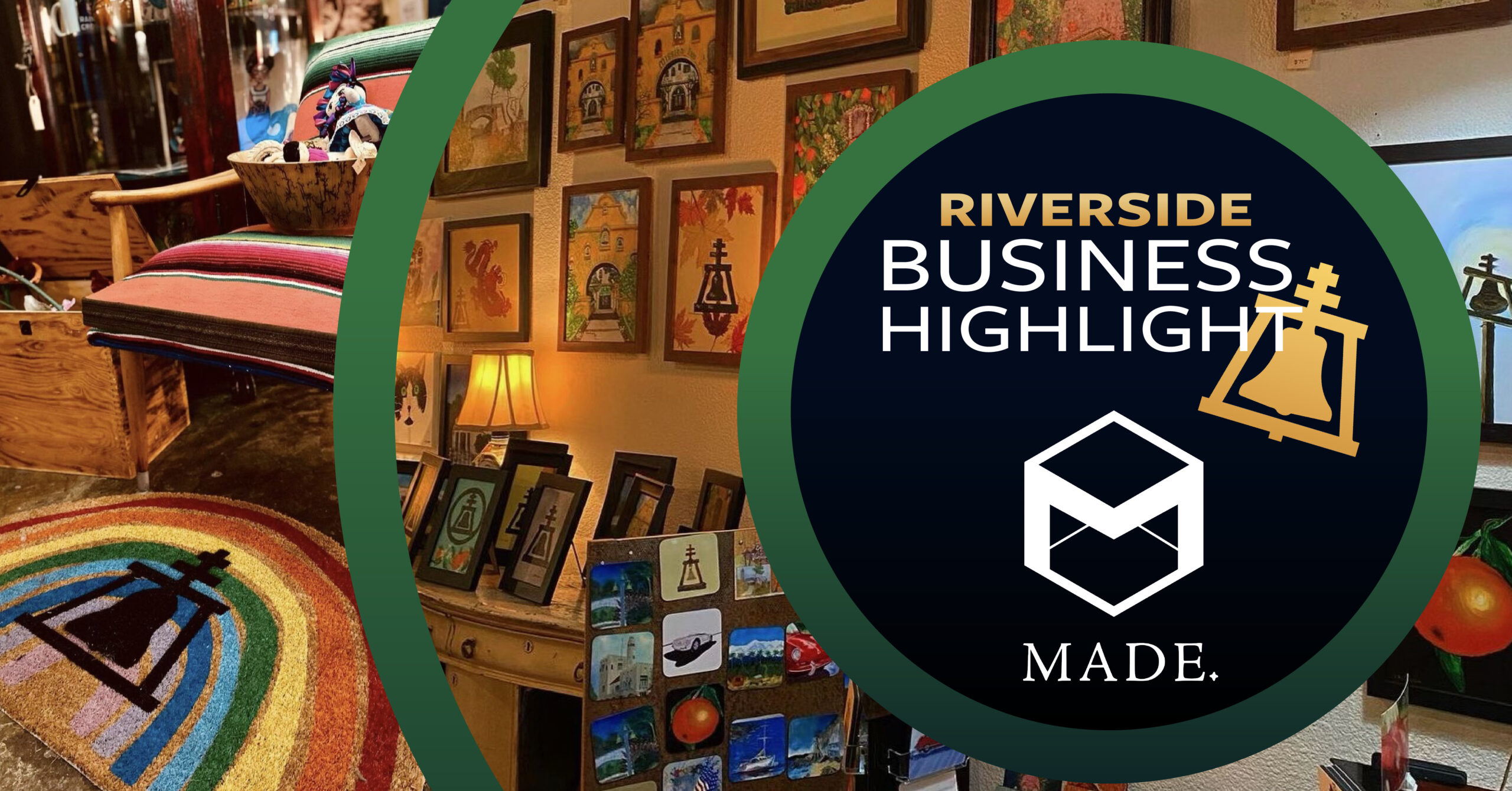
MADE Riverside is a brick and mortar store located in the Inland Empire that resells handcrafted and custom-made goods created by local artisans. The store’s inception began as a family endeavor to establish a set location for makers to sell their creations without having to navigate the complications of sellers’ markets. Their store is now a well known go-to for Riverside locals and hosts over 100 local small businesses selling their products.
We interviewed MADE Riverside’s owner, Rico, to learn more about how the business came to be and what challenges his family faced when launching their vision.
What is the history behind the store?
The family behind MADE started selling handcrafted woodwork at markets like the Rose Bowl before the idea of a physical store came up.
“We had retail experience,” Rico says, referring to his dad’s experience as a business owner. “We also had market experience. So we kind of had the entrepreneur going, and then the retail thing going.”
Anyone who enters the MADE Riverside store will instantly notice a number of crafted goods stamped with the Riverside rain cross— symbolizing that MADE is truly a store for local artisans. While this wasn’t originally intended, it has become part of what makes the store a Riverside favorite.
“We're kind of known as the rain craft store in Riverside, but that wasn't intended,” Rico says. “That's just what happens having local makers that are proud of where they're from.”
What challenges did you face when MADE Riverside was first launched?
“So in the beginning, for the first two years, I was out all the time, trying to find people and trying to convince people of our resale model,” Rico says. “Since it's kind of a unique mode, it's really hard to explain to people what we do.”
The hardest thing about being an entrepreneur is the first step. For the team behind MADE, the first step was finding local artisans to jump on board.
“The main challenge was getting the makers and another challenge was actually gaining advertising and gaining notoriety and finding a way to share what we're doing,” Rico says. “The other challenge was obviously the business side. We knew how to make things, but there are a ton of things that go into just running the brick and mortar business that have to happen behind the scenes— contracts and figuring out how to successfully track inventory.”
Did you struggle to find a building that fit your needs?
“We (originally) tried to get a location downtown, but it was harder because we weren't established.”
Rico and family also found it hard to explain their business model to building owners. The family decided to take a vacation to Arizona, and when they came back, they were able to find a location within a week near the Riverside Plaza. The timing worked perfectly, and the MADE team eagerly began to set up shop.
The store now has two sides, and is continuing to expand. After a quick month of searching, Team Stance secured yet another location for MADE Riverside in the Freeway Industrial Park for Rico to expand his custom fabrications business: Alderette Designs. Part of MADE Riverside’s evolution has been to get more and more involved in the community.
How has the shop, as a local business, been able to stay involved in the community?
“I'm really big on that: keeping it local,” Rico says. “We try to buy and use local...and that's great for the community. All the small businesses helping the other small businesses— that's what's gonna help Riverside as a whole to rise, I think.”
During the pandemic, the team at MADE saw some of that community support in return. “People were buying gift cards even though we were closed. It was a really cool sense of community.”
What is the future of the store?
“We're just really focusing on trying to bring more people into the store, bring notoriety, and bring back our regular customers. We're in the rebuilding phase (post pandemic).”
After the “rebuilding phase,” Rico also hopes to continue expanding Alderette Designs and bring more small businesses into the MADE Riverside network.
When asked if he would recommend starting a business to others despite the many challenges and setbacks, Rico said “absolutely,” without hesitation.
“I've grown as a human being,” he says. “We need more small businesses and less big corporations. If people don't step up and start getting out there and (start businesses), then all we're going to have is big corporations.”
“Even if everything shuts down tomorrow, I still learned so much. (Starting MADE Riverside) is an experience I don’t regret.”
--
Our team at Stance Commercial Real Estate is happy to help locals like MADE Riverside move into buildings that allow their businesses to grow. Ready to expand? Not sure if you should lease or purchase? Our team will help you find the perfect location and answer all of your questions. Call Joe today at (909) 772-1212 for a free consultation.

Professional Voices: Commercial Insurance Coverage
Eric Doll, Senior Vice President at Venbrook Insurance Services, specializes in the commercial insurance industry providing insurance services related to running a business. We interviewed him to learn more about commercial property insurance and how it affects our clients.
Eric is a long-time Stance partner and trusted professional in his field. When Stance Commercial Real Estate was first taking roots, Eric and our founder Joe started a networking group. “The idea would be to get to know each other first personally, before we even started doing business together,” Eric says. “It’s been fun to watch (Joe and Heidi) build Stance and turn it into what it is today.”
Now Eric continues to assist our Team and our clients with all things related to commercial insurance policies. Continue reading to see what helpful advice he has to offer.
Minimizing Insurance Costs
The number one question clients will ask when it comes to insurance is, “what will it cost?.” Especially during unpredictable times where the economy fluctuates, having all of the right information is crucial.
“Right now the cost of insurance is historically higher than it's been in more than a decade,” Eric says. “A lot of my new clients are coming to me saying they’ve experienced an increase and are trying to drive down that cost.”
Eric notes that one of the best ways to minimize the cost of commercial insurance is to control risk. Don’t purchase buildings that will need major repairs in the next couple of years. Look for buildings with new roofs, updated electrical wiring, or are free of other hazards. Location should also be considered. Buildings in extreme weather prone areas may be required to pay additional insurance.
“A couple of the other big things to look for are the coverages themselves. Not all policies are created equal,” Eric says. “You have actual cost value versus replacement costs, and that’s how you value the building itself. The replacement cost is the depreciated value of the building, so if you’re buying a building for $5 million, but it's depreciated by 25-30% then at the time of you having a claim, you might only receive 60- or 70% of the limited insurance that’s specified in the policy.”
Nuances To Look For
When investing in commercial property, the kind of insurance coverage you plan to purchase may affect your ability to secure a loan. “A lot of times what people don’t realize is if you’re getting a loan, the lender often has requirements for the types of commercial insurance and the coverages that you have,” Eric says. “The lenders dictate what a lot of your insurance is actually going to look like.”
Details ranging from a building’s purpose, to what the building is made of, may affect insurance costs. Concrete is becoming more desirable than other building materials. The purpose of a building all affects premiums. For example, the insurance for an apartment building could be three times as much as the insurance of a multi-million warehouse.
Eric reminds investors and buyers, “If you’re purchasing investment property and it’s your first time in you need to know that insurance cost will vary depending on the type of asset that you were purchasing. “
Buyers Compared To Landlords
Buyers will face different commercial insurance premiums than landlords, which is something to consider for those wanting to move from leasing to owning. Some landlord building insurance providers prefer owner-user plans. Some prefer coverage for landlords only.
In the case of owner-user policies, “the number one thing you really want to make sure of is that in the lease agreement you’re not both covering the building,” Eric says. “A well-worded lease...will make sure that there’s only one policy in place, and that the liability is assumed by the landlord or the tenant or otherwise specified in the agreement.”
“It comes down to the lease agreement and this is where Joe and Heidi can really help with negotiations,” Eric notes. Negotiating a lease or purchasing agreement is always flexible.
The first step is to stay educated as a client, and to partner with a commercial real estate broker you can trust. Our Team at Stance Commercial Real Estate is known for negotiating lease or purchase agreements that perfectly fit our clients needs.
---
Have more questions on commercial insurance policies? Contact Eric Doll through Venbrook Insurance Services. Ready to lease or purchase or need more information? Call Joe anytime at (909) 772-1212.
Professional Voices: Advice From A Commercial Escrow Agent
Navigating commercial escrow can be a daunting process, which is why those looking to lease or purchase commercial property should partner with a professional. Our Team at Stance Commercial Real Estate prides ourselves in providing the best service possible, and establishing a network of like-minded people. Amy Hayes, a commercial escrow agent, has been one of our trusted partners for years. Not only has she assisted many of our clients who enter escrow, but she has also been a valuable resource for our Team.
Amy first launched her escrow career straight out of high school. After nearly a decade in the industry, dabbling in nursing school, and then moving out of state, Amy returned to commercial escrow services and has been in the industry ever since.
What A Commercial Escrow Agent Does
Escrow agents handle the specifics of escrow instructions, which can mean staying on top of dates, assuring those instructions are mutually understood and agreed upon, and preparing necessary documents.
“Typically I start my day with my calendar,” Hayes says. “In commercial business we have a lot of dates that are pertinent to the transaction like due diligence dates— dates where the buyer needs to add or release funds. Basically I calendar all of those dates, so that I know when all of those dates are expiring and I can send a courtesy notice to the client.”
Those dates play a huge role in keeping on top of the details of escrow instructions. Occasionally those instructions also need to be amended. Owners association demands, purchase agreement changes, and other external factors can affect escrow.
With proper management through commercial escrow services, there is less room for error and unwanted liability.
The Advantage of Hiring An Escrow Expert
“You need to have an escrow agent to handle your funds,” Amy says. “We are a disinterested third party to the transaction, so everything that we do in connection with those funds has to be mutually agreed upon between the buyer and the seller.”
Amy emphasizes that neutrality is crucial during the escrow process in order to remain fair for all parties involved. “There’s just so much that goes into a real estate transaction,” she says. Without a full team of experts, important details can become lost or imbalanced.
A commercial escrow agent will keep funds safe as the transaction between buyers and sellers is finalized.
What To Look For In An Escrow Agent
According to Amy, finding a commercial escrow agent starts with developing a professional relationship. “It’s hard to get a transaction closed if you don’t have that established,” she says.
Amy also notes that reliability is huge. “Know how your escrow agent works,” she says. “Know that the escrow agent will be there for you when it comes down to closing.”
Ultimately, on top of managing the escrow instructions attached to an agreement, an expert escrow agent will be a valuable resource during a commercial transaction.
As for further resources? Amy points out the benefit of utilizing your broker as a reference as well, “Joe is very knowledgeable in what he does...he’s a great representative for the buyer or seller.”
---
Find your next commercial property opportunity here. Want to learn more about commercial transactions? Call Joe today at (909) 772-1212.

A New Future For Iconic Historic Building In Riverside
As locals, Joe and Heidi Stance have always appreciated Riverside. The city is well-known for its intricately designed historic buildings that reflect the city’s rich past. The Stances now have the opportunity to take part in preserving that history with their latest property: Downtown Riverside’s Life Arts Center.
Iconic Structure Designed By Mission Inn Architect
The Life Arts Center has a long history of diverse uses and has become a central part of the Riverside community. Mission Inn architect, Arthur Benton, began plans in 1909 for an iconic Italian Renaissance Revival building that would house the local YMCA chapter. The architectural design veered away from the other, more common styles of the region. This makes the Life Arts Center stand out as a unique and unforgettable beauty.
In the 1970s the building was purchased by its current owner. The location served as a center for religious gatherings for years, but eventually housed an art supply company. From then on the building became known as a hub for the arts. Ultimately this new community of artists revived the building, and led to its current name.
The City of Art and Innovation
Not only is Riverside known for its historic buildings, but it has also long been a destination city hailed for its prime location. Downtown Riverside itself is known as the “cultural and artistic epicenter of the region,” making it a popular and prominent gathering place. Riverside County is one of the largest counties in the state and is best known for being a city of art and innovation.
The Life Arts Center is one way that the Stances hope to preserve the city’s rich history and encourage innovation. As a Riverside landmark, the center will undoubtedly have a bright future. As for what exactly that future is? The possibilities are endless!
For years the Life Arts Center has been a hub for the community serving as a banquet hall as well as a collection of art studios. Many memories were made in the historic commercial building. The upstairs rooms could allow for the LAC to be a future office space. Maybe the banquet halls will be preserved to make room for many more weddings and special events in the future. The future owners of the LAC could even dig into the building’s historic roots and revive its use as a communal art space and gallery.
Location, Location, Location
The building is conveniently located next to bars, famous art murals, and historic churches. Nearby restaurants, shops, and the famous Mission Inn makes the location of the Life Arts Center that much more ideal. During the summers, the LAC is also the beginning attraction during Riverside’s infamous monthly Arts Walks. These exciting events allow entrepreneurs and artisans to sell their products and sport their work. Locals from all over the Inland Empire enjoy gathering at these events and touring the Life Arts Center to learn more about the historic building’s influence on Riverside’s culture.
Needless to say, The Life Arts Center is full of potential. The city’s diverse demographics and continual growth presents numerous opportunities for the LAC. No matter its future, the people of Riverside will always look to the building’s beautiful brick structure with fondness and be inspired by its vibrant past.
---
Interested in this great opportunity? Learn More or Connect with the team preserving history and encouraging innovation. Call Joe Stance today at (909) 772-1212 to learn more about more exciting opportunities.

What a CCIM Designation Means For Our Clients
Joe Stance, Stance Commercial Real Estate Founder and Co-Owner, has officially been awarded his CCIM Designation. This prestigious title is the reward of hard work, dedication, and determination, not to mention the support of his wife and Stance CRE Co-Owner, Heidi. While most individuals take 1-3 years to receive the designation, Joe proudly completed the curriculum in 5 months. Additionally, he more than doubled his portfolio requirements— an impressive feat for any designee.
“Getting my designation is something I’ve been wanting to do for a long time,” Joe says. “Ultimately I did it to become a better master of my craft, and to be able to guide my clients to the best of my ability.”
Joe thrives off of the ability to offer the best service and knowledge for his clients. He knew that achieving his CCIM designation would benefit his clientele in the long run.
What is the CCIM Institute?
For over 50 years, the CCIM (Certified Commercial Investment Member) Institute has held a reputation for being the go-to provider of real estate courses. Taught by industry leaders and veterans, CCIM real estate courses prepare professionals for the field with tools and practices that are designed for success. The CCIM website describes their core curriculum as robust and “for those who want to set themselves apart.”
While the Institute has courses designed for a number of commercial focuses, their CCIM Designation curriculum is specifically geared towards commercial real estate experts. The course offers more than 160 hours of education covering topics such as market analysis and ethics.
Who Receives a CCIM Designation?
The pursuit of a CCIM Designation isn’t for everyone. To be awarded a designation, individuals must enroll in and complete the four-course curriculum. The curriculum includes an online ethics course and elective courses from the Ward Center for Real Estate Studies.
In addition, commercial real estate brokers must present a professional portfolio to demonstrate the work they have done in their field. Depending on their experience and industry, the activities presented have to equate to a certain dollar amount that proves an individual’s success.
What Does a CCIM Designation Mean For Stance CRE Clients?
Joe Stance’s CCIM designation puts Stance Commercial Real Estate ahead of the game. Fewer than 10 percent of commercial real estate professionals currently hold the title. To be awarded his designation, Joe had to submit a portfolio of work as well as two recommendations from CCIM Designees from a trusted network.
“The in-depth knowledge that CCIM offers is second to none,” Joe says. “Even major universities and different programs that are available don’t compare. It really is a laser focused curriculum that I was impressed with throughout the program.”
Not only did the core curriculum strengthen Joe’s knowledge of CRE, but it also placed him into a life-long network of professionals. The Institute requires designees to attend monthly meetings to discuss market trends, share ideas for improvement, and educate one another on the ever-changing industry.
A CCIM Designation and network further provides Joe and Team Stance the expert tools needed to serve our clients and community.
--
Want to learn about our team? Read more here. Are you ready to sell or purchase commercial property? Call Joe today at (909) 772-1212.