


Investing in Commercial Real Estate in a College Town Like Riverside
Riverside, California is rich in history, culture, and long-term economic opportunity. With a population of just over 300,000, Riverside is the sixth-largest city in Southern California and the twelfth-largest in California. The city has earned national recognition as a hub of higher education, boasting three internationally recognized universities and colleges that serve more than 50,000 students. This concentration of higher education institutions creates a powerful economic foundation that supports long-term commercial real estate growth and stability.
Known as the City of Arts and Innovation, Riverside offers far more than academic influence. The city is home to museums, theaters, fine dining, festivals, markets, and unique shopping experiences that attract both visitors and long-term residents. Retail businesses have historically thrived near the universities, and many students choose to remain in Riverside long after graduation. This creates sustained demand not only for housing, but also for offices, entertainment venues, healthcare services, retail spaces, and professional buildings that support new ventures and growing businesses. For commercial real estate customers, this blend of academic stability and cultural growth creates a compelling investment environment.
As the county seat of Riverside County, the city is currently midway through a major development initiative known as the “Riverside Renaissance.” This long-term program focuses on transportation improvements, infrastructure upgrades, and quality-of-life projects such as park enhancements, landscaped medians, and expanded library systems. These investments strengthen the city’s long-term attractiveness for residents, businesses, and investors alike. As current and future graduates exit college and enter the workforce, they are stepping into a city filled with opportunity, economic momentum, and expanding commercial demand.
Stance CRE regularly works with investors who recognize that college towns like Riverside offer a rare combination of stability, growth, and diversification. Unlike markets driven solely by tourism or single-industry employment, Riverside benefits from a layered economy supported by education, healthcare, government, research, logistics, and small business development. This structure creates multiple entry points for commercial real estate investment across retail, office, mixed-use, industrial, and specialized asset classes.
Understanding the Economic Foundation of a College Town
At the core of every successful college town is a powerful institutional economic engine. Universities generate thousands of jobs through academic positions, administration, facilities management, research, healthcare partnerships, and operational services. In Riverside, higher education does not function as an isolated sector but as a catalyst for broader economic activity. Research funding, innovation initiatives, and public-private partnerships create business ecosystems that extend well beyond campus boundaries.
The student population itself also represents a consistent economic driver. Students create daily demand for food services, retail, healthcare, fitness, entertainment, transportation, and professional services. Faculty and staff add another layer of purchasing power, often with long-term residency and stable income profiles. This dual-market demand base supports tenant stability and creates reliable occupancy potential for commercial properties. For investors, this means that properly positioned assets can benefit from predictable leasing cycles and resilient long-term performance.
Key Commercial Property Types That Perform Well
Retail properties located near campuses and along major corridors tend to perform strongly in college towns like Riverside. Convenience-oriented businesses such as quick-service restaurants, coffee shops, grocery-adjacent retail, fitness centers, medical offices, and personal service providers often experience consistent foot traffic. Properties with walkability, visibility, and transit accessibility typically command stronger tenant demand and longer lease retention.
Office and flex properties also present strong opportunities, particularly those that support professional services, research organizations, healthcare providers, and university-affiliated operations. Graduates who remain in Riverside to launch startups, consulting firms, or service-based businesses often seek smaller office footprints, shared spaces, or flexible layouts. Stance CRE frequently advises investors to prioritize adaptability in property design and configuration, allowing assets to evolve alongside changing tenant needs.
The Role of Location and Accessibility
Micro-location plays a critical role in college town investing. While proximity to campus is valuable, it is not the only determining factor of success. Properties located along commuter corridors, near residential neighborhoods, or within mixed-use districts often benefit from both student-driven and community-driven demand. Riverside offers a diverse urban layout that includes redevelopment zones, established commercial corridors, and suburban nodes, each with distinct investment characteristics.
Accessibility extends beyond distance alone. Parking availability, pedestrian patterns, transit access, and traffic flow significantly influence tenant performance. Investors who understand how students, faculty, and residents move through the city are better positioned to select properties that align with real-world usage patterns. This level of site analysis is central to how Stance CRE evaluates acquisition opportunities in the Riverside market.
Internationally Recognized Universities and Colleges in Riverside
Riverside is a dynamic Southern California college town with a diverse, family-oriented population and a strong sense of community identity. Higher education institutions serve as major population anchors, drawing students from across the country and the world, many of whom remain in the area after graduation to build careers and businesses.
University of California, Riverside (UCR)
Situated on nearly 1,200 scenic acres in Inland Southern California, UC Riverside represents one of the most influential economic forces in the region. With more than 26,000 students and over 1,100 faculty members, including Nobel Prize winners and members of the National Academies of Science and Medicine, UCR drives research with economic, scientific, and social impact. The university’s role in innovation and workforce development creates long-term demand for office space, research facilities, retail services, and professional infrastructure throughout the city.
California Baptist University (CBU)
Located on a 162-acre campus in the historic Magnolia Avenue district, California Baptist University blends mission revival architecture with modern facilities. Recent additions such as the Events Center and Magnolia Crossing residential complex reflect ongoing campus investment and expansion. CBU’s academic programs and growing enrollment contribute to sustained housing, retail, and service demand in surrounding commercial districts.
La Sierra University
La Sierra University’s 150-acre campus serves more than 2,300 students across more than 120 academic programs. Known for academic quality, research opportunities, community engagement, and a diverse student body, La Sierra contributes to the city’s educational depth and long-term population stability. Its presence further strengthens Riverside’s position as a multi-campus higher education hub.
Evaluating Risk and Long-Term Stability
Although college towns are often considered stable markets, disciplined risk assessment remains essential. Investors should monitor enrollment trends, institutional funding, housing policies, and long-term development plans. Changes in any of these areas can influence commercial demand patterns. In Riverside, ongoing infrastructure investment and city-level development initiatives have supported a generally positive long-term outlook.
Tenant diversification is also critical. Properties that rely on a narrow tenant category may face greater volatility during economic or seasonal shifts. Balanced tenant mixes, long-term leases, and professional property management strategies help mitigate risk and support consistent cash flow. Strategic asset positioning often delivers stronger long-term appreciation than speculative short-term plays.
Financing, Valuation, and Redevelopment Potential
University-adjacent commercial assets are often viewed favorably by lenders due to stable demand drivers. This can result in competitive financing terms for qualified investors. However, valuation still depends on fundamentals such as lease structure, tenant quality, building condition, and income stability.
Riverside also offers redevelopment and repositioning opportunities, particularly in older commercial corridors and transitional districts. Properties that support adaptive reuse, mixed-use redevelopment, or modernization can unlock significant long-term value when aligned with zoning and planning objectives. Stance CRE regularly assists investors in identifying properties where future use potential exceeds current operational performance.
Profitable Commercial Real Estate Investment Ideas for College Towns
Retail businesses tend to thrive close to universities, but strategic positioning is essential. Location alone does not guarantee success. Utilizing that location to attract and retain the university-driven customer base is what drives performance. At Stance CRE, local market knowledge plays a critical role in aligning property use with student and graduate demand patterns.
Student Housing
Rising enrollment and limited on-campus housing supply have made off-campus student housing an increasingly attractive investment class. Strong enrollment demographics, rising room and board costs, and limited private dorm development have created a favorable supply-demand imbalance. Well-located student housing properties often benefit from stable occupancy and long-term demand drivers.
Co-Working and Shared Office Spaces
Co-working environments appeal to students, startups, and early-stage entrepreneurs who seek affordable, flexible workspace. Shared offices with meeting rooms, WiFi infrastructure, and collaborative layouts support Riverside’s growing entrepreneurial ecosystem and provide scalable leasing models for investors.
Technology and Study-Oriented Spaces
Cyber cafes and technology access centers can fill gaps for students who lack personal equipment or seek quiet, focused work environments outside traditional cafes. These spaces support academic demand while creating consistent daily foot traffic.
Fitness and Wellness Centers
Health and wellness facilities perform well in college towns due to consistent student demand. Fitness centers, boutique studios, and wellness-focused services often integrate seamlessly into university-adjacent commercial corridors.
Retail Apparel and Lifestyle Stores
Clothing and accessory retailers thrive in college environments when properly aligned with local culture and demand patterns. Market-specific analysis is essential, as each college community has distinct consumer preferences.
Food, Beverage, and Specialty Dining
Juice bars, snack parlors, bakeries, and specialty food concepts perform well when quality, branding, and location align. Health-conscious offerings are particularly well positioned in modern college markets.
Service-Based Commercial Uses
Laundry services, dry cleaning, and convenience retail provide essential services that support both students and long-term residents. These uses often deliver consistent demand regardless of economic cycles.
How Stance CRE Can Support Your Investment Strategy
Navigating the commercial real estate market requires experience, local knowledge, and strategic insight. Market conditions can change rapidly, and investment decisions must account for economic shifts, regulatory factors, and long-term planning considerations.
Stance CRE has been adding value to investment decisions in Riverside for years. The firm combines local expertise with data-driven analysis to help clients identify opportunities, manage risk, and execute strategic acquisitions. As a local business with deep community ties, Stance CRE brings a unique perspective that national firms often lack.
In the right market, both active and passive investment strategies can generate steady cash flow and long-term returns. Stance CRE not only understands Riverside as a market but as a community, working and living within the same neighborhoods where its clients invest. This alignment of local insight and professional expertise creates meaningful value for commercial real estate customers seeking sustainable growth.
Frequently Asked Questions
Investing in a college town like Riverside raises important strategic questions for commercial real estate customers. Understanding these considerations can help investors make informed, confident decisions.
What types of commercial properties are most resilient in college towns?
Properties that serve essential daily needs tend to demonstrate the strongest long-term resilience. These include neighborhood retail, medical offices, service-based businesses, and flexible office spaces. These asset types benefit from consistent demand driven by students, faculty, staff, and permanent residents.
How does student population turnover affect long-term investment performance?
Although individual students cycle through the system, the overall population remains stable. This creates continuity in demand patterns. Businesses may adapt offerings over time, but the underlying economic driver remains consistent, supporting long-term property performance.
Is seasonality a risk factor for university-adjacent commercial properties?
Seasonality can affect certain retail segments, particularly during academic breaks. However, cities like Riverside offset this through local resident populations, summer programs, conferences, and tourism activity. Diversified tenant mixes and long-term leases further reduce seasonal risk exposure.
How Stance CRE Can Help You
College town markets have unique economic drivers, regulatory frameworks, and demand patterns. A firm like Stance CRE provides localized market intelligence, strategic guidance, and on-the-ground expertise that help investors identify opportunities while avoiding common pitfalls associated with university-driven markets.
For strategic guidance and investment support in Riverside, contact Stance CRE at (909) 772-1212 and explore how a locally driven commercial real estate strategy can help you build long-term value in one of Southern California’s most dynamic college markets.


New Demand for Sustainability in Commercial Real Estate
The commercial real estate industry is experiencing a profound shift driven by growing expectations around sustainability. Investors, tenants, lenders, and regulators are increasingly aligned in prioritizing buildings and portfolios that demonstrate responsible environmental, social, and governance practices. Sustainability is no longer viewed as a niche consideration or a marketing differentiator reserved for flagship properties. It is now a core component of asset value, operational resilience, and long-term competitiveness in commercial real estate.
For owners and occupiers alike, this demand reflects broader economic and societal changes. Rising energy costs, climate risk exposure, evolving tenant preferences, and heightened disclosure requirements are reshaping how properties are planned, operated, and transacted. Firms like Stance CRE are seeing firsthand how sustainability considerations influence leasing decisions, investment strategies, and redevelopment plans across office, industrial, retail, and mixed-use assets.
Understanding What Sustainability Means in Commercial Real Estate
Sustainability in commercial real estate extends well beyond energy efficiency alone. It encompasses how buildings use resources, impact occupants and communities, and adapt to long-term environmental and economic risks. This includes reducing carbon emissions, minimizing water consumption, improving indoor environmental quality, and ensuring buildings are resilient to extreme weather events and regulatory changes.
At the same time, sustainability also includes social and governance factors that affect asset performance. Social considerations involve occupant health, accessibility, and community integration, while governance focuses on transparency, reporting, and responsible decision-making. When these elements are integrated into property strategy, sustainability becomes a framework for managing risk and unlocking value rather than an isolated initiative.
Market Forces Driving the New Demand
One of the strongest drivers of sustainability demand is tenant expectation. Many corporate occupiers have established environmental and social goals that require them to lease space aligned with those commitments. Energy-efficient buildings with strong sustainability credentials help tenants reduce operating costs, meet reporting obligations, and support employee wellness and retention. As a result, properties lacking these features face increasing competitive pressure.
Investor priorities also play a critical role. Institutional investors, private equity firms, and lenders are evaluating assets through an environmental, social, and governance lens. Properties with clear sustainability strategies often benefit from improved access to capital, favorable financing terms, and enhanced exit potential. Stance CRE frequently works with clients who recognize that sustainability performance is now directly linked to investment risk and long-term valuation.
Regulatory and Policy Influences on Sustainability
Regulatory frameworks are rapidly evolving at the local, state, and national levels. Energy benchmarking ordinances, emissions caps, and mandatory disclosure requirements are becoming more common in major markets. These policies require building owners to measure, report, and in some cases reduce their environmental impact, creating both compliance obligations and strategic opportunities.
Proactive owners who invest early in sustainable upgrades are often better positioned to manage regulatory risk. They can spread capital expenditures over time, avoid penalties, and maintain flexibility as regulations tighten. Conversely, properties that delay action may face higher costs and diminished appeal. Understanding the regulatory landscape is essential for making informed decisions about asset improvement and portfolio planning.
Operational Benefits of Sustainable Buildings
Sustainable commercial properties frequently deliver tangible operational benefits. Energy-efficient systems reduce utility expenses and stabilize operating costs over time. Advanced building controls, efficient lighting, and modern HVAC systems can significantly improve performance while reducing maintenance demands.
Beyond cost savings, sustainable buildings often offer superior occupant comfort and reliability. Improved indoor air quality, thermal comfort, and lighting contribute to higher tenant satisfaction and productivity. These factors can translate into stronger tenant retention, reduced vacancy, and enhanced reputation for property owners and managers.
Sustainability as a Value Creation Strategy
From an investment perspective, sustainability is increasingly viewed as a value creation tool rather than a cost center. Strategic retrofits and sustainable design enhancements can increase net operating income, extend asset life, and support higher rents or sale prices. In competitive markets, sustainability features can differentiate a property and attract higher-quality tenants.
For repositioning and redevelopment projects, sustainability considerations are often integrated from the outset. This includes selecting durable materials, designing flexible spaces, and incorporating renewable energy solutions. Stance CRE advises clients that aligning sustainability with overall asset strategy helps ensure that investments deliver both financial and environmental returns.
The Role of Data, Metrics, and Transparency
Accurate data is foundational to effective sustainability efforts. Building owners are increasingly relying on energy monitoring, benchmarking tools, and performance analytics to understand how their properties operate. These insights enable targeted improvements and support compliance with disclosure requirements.
Transparency is equally important. Investors and tenants expect clear reporting on energy use, emissions, and sustainability initiatives. Consistent metrics allow stakeholders to compare assets, track progress, and assess risk. Properties that can demonstrate measurable improvement over time are often viewed as more resilient and forward-looking.
Challenges and Barriers to Adoption
Despite growing demand, implementing sustainability initiatives can present challenges. Upfront capital costs, uncertainty around payback periods, and operational disruptions are common concerns for property owners. Older buildings may require significant upgrades to meet modern performance standards, which can complicate planning and budgeting.
However, many of these barriers can be mitigated through phased approaches, incentive programs, and careful financial analysis. Utility rebates, tax incentives, and green financing options can help offset costs. Experienced advisors, including teams at Stance CRE, help clients evaluate trade-offs and prioritize initiatives that align with both sustainability goals and financial realities.
Future Outlook for Sustainable Commercial Real Estate
Looking ahead, sustainability is expected to become even more deeply embedded in commercial real estate decision-making. Advances in building technology, increasing climate risk awareness, and continued regulatory pressure will reinforce the importance of sustainable practices. Assets that fail to adapt may face accelerated obsolescence.
At the same time, sustainability presents opportunities for innovation and leadership. Owners who embrace sustainable strategies can enhance resilience, attract premium tenants, and position their portfolios for long-term success. As market expectations continue to evolve, sustainability will remain a defining factor in how commercial real estate is valued, developed, and operated.
Frequently Asked Questions
Sustainability in commercial real estate can seem complex, especially for owners and investors navigating changing expectations and regulations. The following questions address common concerns and provide clarity on how sustainability impacts commercial properties and decision-making.
Why is sustainability becoming so important to commercial real estate tenants?
Tenants are under increasing pressure from customers, employees, and stakeholders to operate responsibly. Leasing space in sustainable buildings helps them reduce operating costs, meet environmental reporting requirements, and create healthier workplaces. Sustainable properties also support corporate branding and employee satisfaction, making them more attractive in competitive labor markets.
Does investing in sustainability always increase property costs?
While some sustainability initiatives require upfront investment, they often reduce long-term operating expenses and risk. Energy-efficient systems, for example, can lower utility costs and maintenance needs. Over time, these savings, combined with improved tenant retention and asset value, can outweigh initial expenditures.
How does sustainability affect property value and financing?
Sustainable properties are increasingly viewed as lower-risk investments. They often command higher rents, experience lower vacancy, and attract more favorable financing terms. Lenders and investors may also prioritize assets with strong environmental performance, which can enhance liquidity and exit potential.
What is the first step for a property owner interested in sustainability?
The first step is typically to assess current building performance through energy benchmarking and operational reviews. This establishes a baseline and identifies opportunities for improvement. Working with experienced advisors such as Stance CRE can help owners develop a practical, phased strategy that aligns sustainability goals with financial and operational objectives.


Acquire Like a Pro: Your Guide to Commercial Property Ownership
Why Acquiring Commercial Property Is Your Next Smart Move
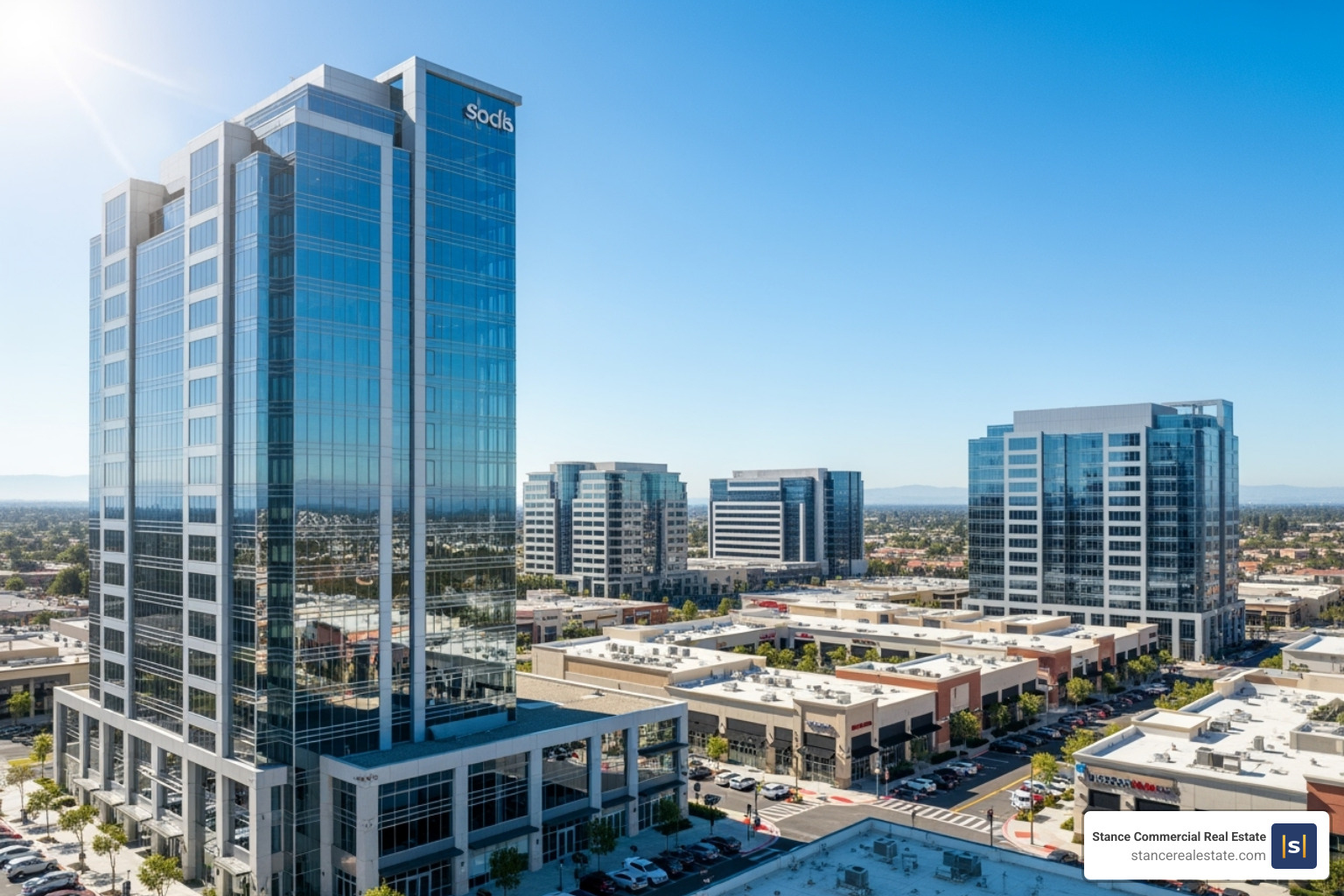
Caption: A vibrant commercial landscape in Southern California, featuring modern office buildings, busy retail centers, and expansive industrial warehouses.
Acquire Like a Pro: Your Guide to Commercial Property Ownership is about understanding a fundamental truth: commercial real estate offers a powerful and proven path to wealth. While many investment vehicles are subject to market volatility, commercial properties can generate stable and substantial 9-12% annual returns, far outpacing many other asset classes. This superior performance is not accidental; it is the direct result of a business-oriented model built on professional tenants, longer lease terms that ensure income stability, and triple net (NNN) leases that strategically shift many operational costs to the tenant, insulating the owner from unpredictable expenses.
Here's what you need to know to acquire commercial property like a pro:
- Financial preparation - This goes beyond just the down payment. Expect to need 25-35% down, but also have significant liquid reserves for closing costs, immediate repairs, and a contingency fund to cover vacancies. Lenders will want to see a strong personal financial statement and a clear understanding of key metrics like Net Operating Income (NOI), capitalization rates (cap rates), and the Debt Service Coverage Ratio (DSCR).
- Professional team - Success in this arena is a team sport. Before you even look at a property, you must assemble a team of dedicated specialists: a commercial agent with a track record in your desired asset type and market, a real estate attorney to protect your legal interests, a commercial lender who understands asset-based underwriting, a CPA to structure the deal for maximum tax efficiency, and a qualified inspector to uncover potential physical defects.
- Due diligence - This is the most critical phase of any acquisition. It is an exhaustive investigation where you verify every claim made by the seller. This includes verifying zoning compliance for your intended use, conducting environmental assessments to avoid liability, performing a detailed physical inspection of the building and its systems, and forensically analyzing all financial documents like rent rolls and operating statements.
- Market analysis - A great property in a declining market is a poor investment. You must evaluate macroeconomic indicators, local employment trends, population growth, and demographic shifts. Location is paramount, so analyze accessibility to major transportation corridors, supply and demand dynamics for your specific property type, and the overall health of the local business community.
- Negotiation - A successful negotiation is about more than just the price. It involves structuring a purchase agreement with contingencies that protect you, securing an adequate due diligence period to conduct your investigation, and understanding the seller's motivations to craft a mutually beneficial deal. The terms of the deal are often as important as the final number.
The leap into commercial property is significant. It involves different metrics, deeper underwriting, and higher stakes than other asset types. The value of a commercial property is intrinsically linked to its Net Operating Income (NOI), which means you have the power to directly increase your equity by improving the asset's performance. Leases typically span 3-10 years with business tenants who, having a vested interest in their commercial space, often maintain the properties to a higher standard.
I'm Joe Stance. Over the past decade, I've guided investors through millions of square feet of commercial transactions in the Inland Empire. The principles in this guide are the bedrock of my practice and have helped my clients avoid costly mistakes and build substantial, lasting wealth through commercial assets.
Acquire Like a Pro: Your Guide to Commercial Property Ownership helpful reading:
- Managing Commercial Property Expenses
- What Your Business Growth Plans Reveal About the Type of Property You Should Choose
Foundations: Why, What, and How to Invest in Commercial Real Estate
When we talk about commercial property ownership, we're discussing a strategic investment that can transform your financial future. It's a distinct discipline within the real estate world, offering unique and powerful advantages for investors seeking substantial returns, long-term stability, and a scalable path to portfolio growth.
The Compelling Benefits of Commercial Property
The benefits of owning commercial property are numerous and compelling. Commercial real estate often delivers higher annual returns, typically in the 9–12% range, a figure that consistently outperforms many other investment classes. This higher yield is driven by several structural factors unique to commercial assets.
First, commercial spaces generate significantly higher rental income per square foot. Leases are long-term, often spanning 3–10 years or more, which provides a stable, predictable, and reliable income stream that is less susceptible to short-term market fluctuations. The tenants are typically businesses—corporations, LLCs, or franchises—which translates to a more professional landlord-tenant relationship with lower turnover rates. Because their business depends on their location, these tenants have a vested interest in maintaining their space, leading to less wear and tear and better property upkeep.
A key advantage is the widespread use of the Triple Net Lease (NNN). In a typical NNN lease, the tenant is responsible for paying for property taxes, building insurance, and common area maintenance, in addition to their base rent. This structure minimizes the landlord's operational expenses and creates a more passive, predictable income stream, protecting your returns from rising costs.
Unlike properties valued primarily by subjective comparisons, commercial property is valued based on its Net Operating Income (NOI). This is a critical distinction: it gives you direct control over your property's value. By increasing rental income, reducing vacancies, or managing expenses more efficiently, you directly build equity. A single large commercial asset can provide significant cash flow with streamlined management compared to overseeing numerous smaller properties, allowing for more efficient scaling of your portfolio, as explained in Commercial Real Estate Passive Income Explained.
Understanding the Main Types of Commercial Properties
It's crucial to understand the diverse landscape of commercial properties. Each type has unique characteristics, tenant profiles, risks, and rewards. Specializing in one or two can give you a competitive edge.
Caption: A thriving retail center in the Inland Empire, showcasing diverse businesses and active consumer engagement.
- Office Buildings: Categorized by quality grades, which dictate tenant quality and rental rates.
- Class A: Premium, modern buildings in prime locations with high-end amenities, attracting top-tier corporate tenants like law firms and financial institutions.
- Class B: Good quality, slightly older buildings that are well-maintained. They offer a stable tenant base and present value-add opportunities through renovation and modernization.
- Class C: Older buildings, often in less desirable locations, requiring significant renovation. They offer higher risk but the potential for high returns through strategic repositioning.
- Retail Properties: Includes everything from large power centers with national anchor tenants to smaller strip centers and standalone commercial buildings. Location, visibility, traffic counts, and local demographics are absolutely critical for success. Co-tenancy clauses and the creditworthiness of anchor tenants are key diligence items.
- Industrial Properties: This broad category includes warehouses, distribution centers, manufacturing facilities, and flex spaces. The explosive growth of e-commerce has fueled unprecedented demand for Industrial Real Estate, especially for "last-mile" logistics centers. These assets often feature very long lease terms, credit-worthy tenants, and relatively low maintenance costs.
- Multifamily Properties (Commercial-Scale): Large apartment complexes with five or more units are treated as commercial investments by lenders and appraisers. They are underwritten based on their income potential (rent roll, vacancy rates, expense ratios), not on comparable sales of smaller properties. They offer steady cash flow from multiple tenants, spreading risk, and are a popular asset class for both new and experienced investors.
- Hospitality Properties: This includes hotels, motels, and extended-stay facilities. These properties have high profit potential but require intensive, specialized management and are highly sensitive to economic cycles, business travel, and tourism trends. Key metrics include Revenue Per Available Room (RevPAR) and Average Daily Rate (ADR).
Key Investment Strategies for Every Goal
Different strategies cater to varying levels of risk tolerance, capital, and desired returns in commercial real estate.
- Buy and Hold: A long-term strategy focused on acquiring stable, cash-flowing properties and holding them for an extended period. The goal is to generate consistent income and benefit from long-term property appreciation and loan amortization. This is ideal for investors seeking stability and wealth preservation.
- Value-Add Investing: This involves purchasing underperforming properties and increasing their value through strategic improvements. This could include physical renovations, lease restructuring to increase rents, or implementing more efficient professional management. This strategy carries higher risk but can yield significant returns, often in the 12–18% range, upon stabilization or sale.
- Passive vs. Active Investing: You can be an active, hands-on investor who directly manages properties, or you can invest passively in vehicles such as Real Estate Investment Trusts (REITs) or syndications (Limited Partnerships - LPs). Passive investing offers exposure to commercial real estate with less direct involvement and lower capital requirements, but also less control.
Explore our guide on Commercial Real Estate Investment Strategies to learn more.
Opening up Significant Tax Advantages
Commercial property ownership offers some of the most significant tax advantages available to investors, which can dramatically boost your overall returns.
- Depreciation: You can deduct a portion of the property's value (the building, not the land) from your taxable income each year through depreciation. A strategy known as a cost segregation study can accelerate these deductions, significantly improving cash flow in the early years of ownership.
- 1031 Exchange: This powerful tool allows you to defer capital gains taxes by reinvesting the proceeds from a sale into a "like-kind" commercial property. This enables you to grow your portfolio tax-free, compounding your wealth over time. Strict timelines apply (45 days to identify a replacement property, 180 days to close).
- Interest Deductions: The interest paid on your commercial mortgage is a business expense and is therefore tax-deductible.
- Operating Expenses: All ordinary and necessary costs of running the property, such as property management fees, insurance, repairs, and maintenance, are deductible business expenses that reduce your taxable income.
These benefits make commercial real estate a highly efficient and attractive asset class for building long-term wealth. We explore these in more detail in The Most Attractive Tax Benefits of Investing in Commercial Real Estate in 2022.
How to Determine the Right Offer Price for a Property
Determining the right offer price is both an art and a science, blending rigorous analytical methods with strategic negotiation and market insight.
- Income Capitalization Method: This is the primary valuation method for commercial properties. It directly links a property's value to its earning potential. The formula is:
Property Value = NOI / Market Cap Rate. By using the property's verified NOI and a market-appropriate cap rate, you can arrive at a valuation based purely on its financial performance. This is how sophisticated investors and appraisers value property. - Market Comparison Approach: This method involves analyzing recent sales of similar commercial properties in the same market. While it's a useful secondary check, it can be difficult to find truly "comparable" properties, as every commercial asset has unique tenants, lease terms, and physical conditions. It's most effective when used to validate the cap rate chosen for the income approach.
- Gross Rent Multiplier (GRM): This is a quick screening tool, not a definitive valuation method. It's calculated by dividing the purchase price by the gross annual rent. A lower GRM might indicate a better value, but this metric ignores vacancies and operating expenses, making it unreliable for final decision-making. Use it only for initial, high-level comparisons.
Beyond the numbers, understanding the seller's motivation is a powerful negotiation tool. Are they facing a deadline? Are they retiring? By uncovering their reasons for selling, you can often tailor an offer that addresses their specific needs—which may not just be about achieving the highest possible price. This insight helps you create a realistic pro forma analysis and project long-term ROI, as detailed in How to Evaluate a Commercial Property for Long-Term ROI.
Navigating Your Commercial Financing Options
Securing the right financing is critical. Unlike consumer lending, commercial lenders focus primarily on the property's income stream and your perceived ability to successfully operate the asset.
- Traditional Commercial Mortgages: Offered by banks and credit unions, these are the most common financing option. Terms typically range from 10 to 25 years with a balloon payment after 5, 7, or 10 years. Lenders will heavily scrutinize the property's NOI, DSCR, rent roll, and tenant quality.
- SBA 504 & 7a Loans: These government-backed loans are ideal for owner-occupied commercial properties, where a business will occupy at least 51% of the space. They often feature lower down payments (as low as 10%) and long-term, fixed-rate financing, making them very attractive for business owners looking to buy their own building.
- Bridge Loans: These are short-term loans (typically 6 months to 3 years) with higher interest rates. They are used to "bridge" a gap in financing, often for value-add properties that need improvements or lease-up before they can qualify for stable, long-term financing.
- Seller Financing: In some cases, a seller may be willing to finance a portion of the purchase price themselves. This can be a creative way to close a deal, especially when traditional financing is difficult to obtain. It offers flexibility in terms but often comes with a shorter loan term and higher interest rate.
Be prepared for a substantial down payment of 25–35% and have significant cash reserves for closing costs, due diligence expenses, and post-acquisition capital needs. Lenders will scrutinize your business plan, financial projections, and experience to ensure the asset can comfortably service the debt. Understanding the nuances of Commercial Real Estate Interest Rates is also crucial for locking in favorable terms.
The Acquisition Playbook: Your Guide to Commercial Property Ownership
Now that we understand the "why" and "how much," let's walk through the practical, step-by-step process of acquiring a commercial property. This playbook, with a focus on the dynamic Inland Empire market, is your roadmap to a successful transaction.
Step 1: Assemble Your Professional Power Team
Never attempt to navigate the complexities of a commercial real estate transaction alone. A strong, experienced, and local professional team is your greatest asset and your best protection against costly mistakes. Vet these professionals as if you were hiring for a key position in your own company.
- Commercial Real Estate Agent: Find a local market specialist, preferably one with a designation like CCIM (Certified Commercial Investment Member) or SIOR (Society of Industrial and Office Realtors). They should have deep expertise in your target property type (e.g., industrial, retail) and provide access to off-market deals, market data, and negotiation expertise.
- Real Estate Attorney: Hire an attorney who specializes in commercial real estate law within the specific county of the transaction. They will draft and review the purchase and sale agreement, review title and survey, verify zoning, and protect your legal interests throughout the process. Their fee is an investment, not an expense.
- Commercial Lender: Build a relationship with a reputable lender who understands asset-based lending for commercial properties. They can pre-qualify you, explain your financing options, and guide you to the best loan product for your specific deal.
- CPA/Tax Professional: A knowledgeable CPA is crucial for advising on the optimal ownership structure (e.g., LLC, LP) to limit liability and maximize tax advantages. They will be your guide for depreciation strategies and executing a 1031 exchange.
- Property Inspector & Engineers: Engage a qualified inspector who specializes in commercial buildings. Depending on the property, you may also need specialists like a structural engineer, roofing consultant, or HVAC technician to conduct thorough assessments and identify costly hidden defects.
This team's collective knowledge is your shield, helping you avoid pitfalls and capitalize on opportunities. Learn more about their roles in the Commercial Real Estate Services Industry.
Step 2: Master Market and Location Analysis
The adage "location, location, location" is amplified in commercial real estate. Your investment's success is inextricably tied to the health of the surrounding market and the specific attributes of its location.
- Economic Indicators: Evaluate the key economic drivers of the market. In the Inland Empire, this means tracking logistics and warehousing employment, population growth, new business formation, and major infrastructure projects like airport expansions or new highway interchanges.
- Supply and Demand: Analyze market-specific data like vacancy rates, absorption rates (the rate at which available space is leased), and the new construction pipeline for your property type. High absorption and low vacancy signal a strong, landlord-favorable market.
- Demographics: Understand the area's demographic profile—age, income levels, education—to ensure it aligns with the needs of your target tenants or their customers.
- Accessibility and Visibility: Proximity to major transportation arteries (like the I-10, I-15, and SR-60 in the Inland Empire), rail lines, ports, and public transit is critical, especially for industrial and retail properties. Visibility and ingress/egress are also key factors.
- Local Market Knowledge: Understanding the unique dynamics of submarkets, such as the Understanding the Riverside Commercial Real Estate Market, is essential for identifying pockets of growth and areas ripe for investment.
Step 3: Conduct Critical Due Diligence to Acquire Like a Pro
Due diligence is your 30- to 90-day investigation period to verify every single detail about the property. Your goal is to uncover any potential issues before you are legally obligated to close. Trust, but verify everything.
Caption: A detailed blueprint illustrating the essential due diligence checklist for commercial property acquisition.
- Financial Due Diligence: This is a forensic audit of the property's finances. Scrutinize at least three years of historical operating statements, rent rolls, and utility bills. Create lease abstracts for every tenant to understand their terms, options, and responsibilities. Verify all income and expenses to confirm the seller's NOI claims and build your own accurate pro forma.
- Physical Assessment: Conduct a thorough building inspection covering the structure, roof, HVAC systems, plumbing, electrical systems, parking lot, and landscaping. Check for ADA compliance. Reviewing past insurance claims can also reveal persistent issues like water intrusion or vandalism.
- Environmental Due Diligence: A Phase I Environmental Site Assessment (ESA) is non-negotiable, especially in a mature market like California. This report identifies potential soil or groundwater contamination from current or past uses (like gas stations or dry cleaners), protecting you from massive cleanup liabilities. If issues are found, a more invasive Phase II ESA may be required.
- Legal and Title Due Diligence: Your attorney will conduct a title search to verify clear ownership and uncover any liens, easements, or encumbrances that could affect your use of the property. They will also review the survey to confirm property boundaries. Always secure title insurance for protection against future claims.
- Zoning and Entitlement Verification: Confirm with the local municipality that the property's current use is legally compliant and that your intended future use is permitted under current zoning regulations. Investigate any planned zoning changes or development overlays that could impact the property's value.
This meticulous process, outlined in our Due Diligence Checklist: What to Review Before Buying Commercial Property, ensures you know exactly what you're buying.
Step 4: Negotiate the Purchase Agreement to Acquire Like a Pro
The purchase agreement is the legally binding backbone of your acquisition. It's where all terms, conditions, timelines, and protections are formally documented.
- Letter of Intent (LOI): While typically non-binding, the LOI is a crucial first step. It outlines the key deal terms (price, closing date, due diligence period) and serves as a roadmap for drafting the final agreement. A well-defined LOI saves time and legal fees.
- Purchase and Sale Agreement (PSA): This is the definitive, legally binding contract. Your attorney will ensure it includes all necessary protections, representations, and warranties from the seller, and clearly defines the obligations of both parties.
- Contingencies: These are your safety nets. Critical contingencies include clauses that allow you to terminate the agreement without penalty if you cannot secure satisfactory financing, if the physical inspection reveals unacceptable defects, or if the due diligence uncovers negative information.
- Due Diligence Period: Negotiate for a sufficient timeframe (typically 30–90 days, depending on complexity) to conduct your comprehensive investigations without being rushed.
- Closing Process: Once all contingencies are satisfied and removed in writing, the deal moves to closing. Your attorney, title company, and escrow agent will manage the transfer of funds and the official recording of the deed, making you the new owner.
A well-drafted purchase agreement is paramount to a secure investment. For more guidance, see our resource on Purchasing Commercial Real Estate.
Mitigating Risk and Ensuring Long-Term Success
Even with the best preparation, all investments involve risk. In commercial real estate, learning from the common pitfalls of others and proactively implementing strategies to address them is the key to protecting your capital and ensuring long-term success.
Common Pitfalls and How to Avoid Them
Here are the most frequent and costly mistakes investors make, and how you can avoid them to safeguard your investment:
Caption: A universal warning sign, reminding investors of the potential pitfalls in commercial property acquisition.
- Inadequate Financial Analysis: Never trust a seller's pro forma at face value. These are marketing documents. You must conduct your own independent analysis using actual, verified financial documents (rent rolls, operating statements, tax bills) to avoid overpaying for an underperforming asset.
- Insufficient Market Research: Failing to deeply research local economic trends, supply/demand dynamics, demographics, and competition can lead to investing in a declining market or overpaying at the peak. Your market analysis must be as thorough as your property analysis.
- Over-Leveraging: Taking on too much debt makes your investment fragile and vulnerable to market downturns or an unexpected vacancy. Maintain a healthy Debt Service Coverage Ratio (DSCR) above 1.25x and ensure you have sufficient cash reserves to weather any storms.
- Skipping or Skimping on Inspections: The cost of a professional commercial inspection is minimal compared to the potential expense of an unforeseen roof replacement, HVAC failure, or structural issue. It is your first and best line of defense against physical defects. Always hire qualified, specialized professionals.
- Neglecting Legal Counsel: Trying to save money by not hiring an experienced commercial real estate attorney is a false economy. One missed clause in a lease, one overlooked easement in a title report, or one poorly drafted PSA clause can cost you multiples of their fee or kill the deal entirely.
- Underestimating Capital Expenditures (CapEx): Operating expenses cover day-to-day costs, but CapEx covers major, long-term replacements (roof, HVAC, parking lot). Failing to budget for these large, inevitable expenses by setting aside a monthly CapEx reserve will lead to a cash flow crisis when a major system fails.
By being acutely aware of these common pitfalls, you can build layers of protection into your acquisition process. For further insights, explore Common Mistakes New Investors Make in Commercial Real Estate.
Frequently Asked Questions about Commercial Property Ownership
Here are answers to some of the most common questions we receive from aspiring commercial property owners:
- What is the biggest difference between buying commercial and other types of property?
The biggest differences are valuation and tenants. Commercial property value is fundamentally driven by the net operating income (NOI) it generates. This means you, as the owner, can directly increase the property's value by improving its financial performance. Furthermore, commercial tenants are businesses operating under formal lease agreements, typically for longer terms (3–10+ years) and often under triple net (NNN) structures, which creates a more stable, professional, and predictable income stream. - How much capital do I really need to start investing in commercial real estate?
You should expect to need a 25–35% down payment, plus an additional 3-5% of the purchase price for closing costs (e.g., legal fees, loan origination, title insurance). Beyond that, you must have substantial cash reserves for post-closing repairs, tenant improvements, leasing commissions, and a contingency fund to cover at least six months of debt service and operating expenses in case of unexpected vacancies. - What is a Triple Net (NNN) lease and why is it important?
An NNN lease is a lease structure where the tenant is responsible for paying for the three major "nets": real estate taxes, building insurance, and common area maintenance (CAM), in addition to their base rent. It is highly important for investors because it shifts the burden of unpredictable or rising operating costs to the tenant, making the landlord's income stream more predictable and passive. - What is a tenant estoppel certificate and why is it important?
A tenant estoppel certificate is a legal document signed by a tenant during the due diligence period that confirms the key terms of their lease agreement (e.g., rent amount, lease term, security deposit). It is critically important because it prevents the tenant from later claiming different terms exist, thereby verifying the seller's rent roll and protecting the buyer from post-closing disputes. - What are my responsibilities after closing the deal?
After closing, your work begins. Your primary responsibilities include property management (or overseeing your property manager), tenant relations, financial administration (bookkeeping, budgeting, reporting), and strategic asset management. This involves making long-term decisions to maintain and increase the property's value, such as planning capital improvements and optimizing the tenant mix.
How Stance CRE Can Help You
From mastering financial analysis and market research to conducting critical due diligence and negotiating protective contracts, every step is crucial for mitigating risk and making informed, profitable decisions. The path to long-term wealth through commercial real estate has its challenges, but by embracing the best practices outlined in this guide, you can navigate them successfully and build a robust portfolio.
At Stance Commercial Real Estate, we are deeply committed to the Riverside and Inland Empire markets. Our local expertise, data-driven approach, and service-over-profit ethos position us as your trusted partner in achieving your investment goals. Ready to take the next step? Explore our Commercial Real Estate Investment Strategies to find the right fit for your goals.

Selecting a Property That Actually Fits Your Business Growth Plans
Why Your Next Property is a Strategic Growth Lever, Not Just an Expense
Your business growth plans do far more than hint at the type of property you should choose—they define it. This decision isn’t just about square footage or lease terms; it’s about creating a physical environment that supports where your company is headed, not just where it is today. The space you select becomes a strategic asset, shaping how efficiently your team operates, how well you serve customers, and how effectively you can scale.
When you look closely at your growth trajectory—whether you expect rapid expansion, steady long-term development, or a shift in operational needs—you’re essentially outlining the property specifications required to support that path. Your facility becomes the foundation for future wins, ensuring your operations, talent, and customer experience all have room to grow.
Consider the specific implications of your strategy:
- Rapid Scaling: A plan to double your headcount in 24 months requires more than just extra desks. It demands a space with flexible lease terms, such as expansion clauses giving you the right of first refusal on adjacent units. Without this, you could find yourself landlocked and forced into a costly, disruptive move just as your business gains momentum.
- Product Line Expansion: Introducing a new product isn't just a marketing challenge; it's a physical one. You may need adaptable production zones, higher ceilings for vertical storage or new machinery, increased floor load capacity, and significant utility upgrades for power and water. The right property has this capacity built-in or can be easily retrofitted.
- Geographic Expansion: Moving into a new territory means prioritizing locations that serve as a strategic beachhead. This could be a site near major transport hubs like the I-10/I-15 interchange for a logistics company, or a storefront in a high-density area for a retailer targeting a new customer base.
- Service-Based Growth: For firms reliant on top talent and client relationships, the property becomes a tool for attraction and retention. This means choosing professional, client-facing spaces in locations with excellent employee access, abundant amenities, and a prestigious address that reinforces your brand's credibility.
- Logistics Growth: Success in e-commerce or distribution hinges on supply chain velocity. This makes industrial properties near major highways with ample loading docks, large truck courts for easy maneuverability, and high clear heights for racking essential. Every minute saved in transit translates to a competitive advantage.
- Tech Needs: A modern business runs on data and power. Your property must support this with robust electrical capacity, redundant power sources, and access to high-speed fiber internet from multiple carriers. For data-intensive operations, specialized HVAC systems are non-negotiable to protect critical hardware.
Choosing the wrong property can stall growth for years. It can force a premature and expensive relocation, drain capital on underutilized space, or create operational bottlenecks that cripple efficiency and frustrate employees. Many businesses fall into the trap of treating property as a simple cost to be minimized, overlooking its profound impact on productivity, customer perception, and long-term financial stability. With brick-and-mortar still accounting for a staggering 85% of all retail sales, the right physical location remains one of the most powerful assets a business can possess.
Too often, leadership teams separate their corporate growth strategy from their real estate decisions, leading them to choose a property based on short-term availability or perceived affordability. This guide provides a strategic, step-by-step process for integrating your business plan directly into your property search, ensuring your next move is a catalyst for success.

Step 1: Auditing Your Present and Projecting Your Future
Before you even start browsing listings, signing a lease, or making an offer, it’s essential to take a hard, strategic look at where your business stands today—and where it’s realistically headed tomorrow. This isn’t just a helpful exercise; it’s the cornerstone of making a property decision that actually supports growth rather than limiting it. Choosing the right space begins with an honest, data-driven assessment of your current operations, combined with a forward-looking strategy that anticipates future needs. The properties you consider, the layout you prioritize, and even the location itself should all be informed by this thorough understanding of your business trajectory. The smarter your insight into growth, the more your property becomes a tool for scaling successfully rather than a constraint on progress.
Skipping this crucial step is a recipe for disaster. You'll either end up in a cramped space you outgrow within a year, triggering a costly and disruptive move, or you'll find yourself hemorrhaging cash on excessive square footage you don't need and can't afford. The goal is precision: finding the right fit for today with the built-in flexibility for tomorrow.

Assessing Your Current Business Needs
Start with what you know: your business as it operates right now. To do this effectively, assemble a cross-functional team involving heads of HR, Operations, IT, and Finance. Each department has unique insights into space and infrastructure requirements. Your first task is to calculate your baseline square footage by conducting a thorough audit of:
- People: Go beyond a simple headcount. Analyze the type of workspace your employees need to be productive. A creative agency might thrive in a collaborative, open-plan space with numerous breakout areas, while an accounting or law firm will likely require private offices for confidentiality and focused work. Consider different work styles; do you need quiet zones, team pods, or large conference rooms? Health and safety guidelines, such as the common standard of at least 11 cubic meters of space per employee, provide a minimum, but optimal productivity often requires more.
- Equipment: List every significant piece of machinery, technology, and specialized tool you rely on. This goes far beyond desks and chairs. A tech company needs a climate-controlled server room with robust HVAC and power. A manufacturer may need heavy-duty three-phase power, reinforced flooring, and specific ventilation. A medical clinic will have imaging machines with shielding requirements, while a commercial kitchen has extensive plumbing and fire suppression needs. The physical requirements of your equipment are non-negotiable constraints.
- Inventory: Quantify your current storage requirements for products, components, or raw materials. Document any special needs, such as climate control for perishable goods, high-security cages for valuable items, or specialized shelving and racking systems for efficient organization. Analyze your inventory workflow (e.g., FIFO, LIFO) and how the physical layout can optimize it. Easy access for shipping and receiving is paramount.
Beyond pure square footage, map your daily workflow requirements. How do people, materials, and information move through your space? An inefficient layout creates bottlenecks, wastes time, and can directly impact customer service and profitability. Finally, gain a complete picture of your total occupancy costs.
Forecasting Your Growth Trajectory
Here’s where the concept truly clicks: your 3–5 year business plan isn’t just a document—it’s the blueprint for your property strategy. Vague optimism won’t cut it; you need concrete, data-driven projections. If your plan anticipates adding 10 or more employees each year, a space that only accommodates your current team is already outdated before you move in. Planning for growth from day one ensures your property becomes a springboard, not a bottleneck, allowing operations, collaboration, and innovation to scale seamlessly alongside your business.
Translate your strategic goals into physical requirements. A new product line often means new equipment, which requires more space, more power, and potentially different zoning. Market diversification into a new region could mean opening a regional distribution center in the Inland Empire or a small satellite sales office. To manage this uncertainty, develop multiple growth scenarios—conservative, expected, and aggressive—and identify a property solution that can accommodate the most likely outcomes.
The property you choose must be scalable. Scalability can take many forms: a lease with a right of first refusal on an adjacent unit, a modular building design that can be easily reconfigured, or a property with excess land for future construction. For industrial users, the ability to add mezzanine floors can dramatically increase usable space without expanding the building's footprint.
For businesses with multiple properties, a Commercial Real Estate Portfolio Analysis is essential to ensure individual property decisions align with your broader corporate strategy. Smart planning also includes building in flexibility for downsizing or strategic pivots. A lease with favorable subleasing options provides a critical safety net if market conditions change or a business unit underperforms. The ultimate goal is to choose a property that can accommodate your entire journey—growth, pivots, and all—without holding you back.
Step 2: Matching Property Type to Your Business Model
Different business models demand fundamentally different physical spaces. Your day-to-day operational blueprint—how you create value, interact with customers, and manage your workflow—is the primary determinant of your ideal commercial property type. A misunderstanding here can lead to a space that actively works against your business goals. Let's examine how the unique needs of retail, industrial, and office-based businesses dictate their real estate choices.
Retail: The Customer-Facing Frontier
For any retail business, the property is the stage on which the customer experience unfolds. High foot traffic and maximum visibility are the non-negotiable pillars of success. Despite the rise of e-commerce, the physical store remains dominant, with brick-and-mortar still accounting for a massive 85 percent of total retail sales, according to Statista.
Customer accessibility is just as vital. This includes ample, convenient parking and strategic proximity to your target demographic. Research confirms this, showing that 93% of consumers travel 20 minutes or less for their everyday purchases. Your location must be within this radius. Furthermore, locating near complementary, non-competing businesses (e.g., a coffee shop next to a bookstore) can create a synergistic effect, boosting traffic for all. The type of retail center also matters, from a neighborhood strip mall serving daily needs to a large regional mall that acts as a destination. As omnichannel strategies become standard, consider if the space can support functions like buy-online-pickup-in-store (BOPIS).
Industrial & Warehousing: The Logistical Backbone
Industrial operations revolve around one core principle: the efficient movement and processing of goods. Therefore, proximity to major transport hubs—highways, ports, and intermodal rail facilities—is crucial. For businesses in the Inland Empire, immediate access to the I-10 and I-15 corridors can dramatically optimize delivery times and reduce transportation costs. The explosion of online shopping has intensified this need, making last-mile distribution centers one of the hottest asset classes, as detailed in How E-commerce Growth is Shaping Industrial Real Estate.
Key features to scrutinize include HGV access and sufficient loading docks (a good ratio is one dock door per 5,000-10,000 sq. ft.), a large, paved truck court for safe maneuvering, and high ceilings (clear heights of 32 feet or more are now standard) to maximize vertical storage with modern racking systems. The national industrial vacancy rate remains exceptionally low at 7%, with smaller small-bay properties even tighter at 4.2%, highlighting intense demand. Your layout must be designed for seamless supply chain efficiency, from receiving to storage to shipping. If you're looking for space in this competitive market, check out Industrial Property for Sale Riverside CA.
Office & Service-Based: The Hub for Talent and Operations
For office-based businesses, the property serves a dual purpose: it's a home base for attracting and retaining top talent, and it's the first physical impression you make on clients. Employee accessibility has become a top priority. This means considering average commute times, access to public transportation, and the availability of local amenities like cafes, restaurants, and gyms that improve the daily work environment and create a vibrant workplace culture.
If you regularly host clients, professional, well-equipped meeting spaces are essential for projecting credibility and confidence. Explore options like Downtown Riverside Office Space to establish a strong professional presence. With the rise of hybrid work models, the office's role has shifted. Many businesses now need flexible layouts with more collaborative zones, high-tech conference rooms for seamless virtual participation, and fewer dedicated desks. The choice between co-working and a dedicated space often depends on your growth stage; co-working offers maximum flexibility for early-stage companies, while a dedicated office provides stability, security, and the ability to build a unique company culture. For local insights, read about Leasing Office Space in Riverside.
| Property Type | Primary Location Driver | Key Feature | Ideal for Growth in... | Scalability Challenge |
|---|---|---|---|---|
| Retail | High Foot Traffic & Visibility | Storefronts, Display Space | Customer-facing sales, Brand presence | Limited physical expansion, Lease restrictions |
| Industrial & Warehousing | Transport Hub Proximity | High Ceilings, Loading Docks | Manufacturing, Logistics, E-commerce | Zoning, Specialized equipment space, Utility capacity |
| Office & Service | Employee/Client Accessibility | Collaborative/Private Workspaces | Professional services, Tech, Administration | Rapid headcount growth, Layout changes, Tech infrastructure |
What Your Business Growth Plans Reveal About the Type of Property You Should Choose
This is where everything converges. Your strategic plans are not abstract documents; they provide a practical, detailed roadmap to the right property. The way you run your business—your operational model—determines where it needs to be located, what physical infrastructure it requires to function, and what legal and regulatory frameworks it must adhere to. Ignoring this connection means choosing a property that will eventually hinder, rather than help, your growth.
How Your Operational Model Dictates Location Needs
Your operational model is the single most important driver of your location requirements. A national distribution center being established in the Inland Empire requires immediate, unimpeded access to the I-10 or I-15 for its logistics network to function. In contrast, a high-end retail boutique opening in Downtown Riverside needs to be on a street with heavy foot traffic and high visibility. For most retail and service businesses, the potential customer base is defined by a surprisingly small radius; as research shows, 93% of consumers travel 20 minutes or less for everyday purchases. You must be physically located within that convenient radius of your target demographic. For some businesses, Location Location Location: Why Walkability Matters More Than Ever is the deciding factor; for a heavy industrial user, it's irrelevant. Don't forget to consider supplier proximity. Moving to a location with cheaper rent can quickly become a net loss if it significantly increases transportation costs and lead times from your key suppliers, especially if you rely on a Just-In-Time inventory model. Understanding the nuances of the Riverside Commercial Real Estate Market helps match your specific operational needs to the right local corridor or submarket.
Matching Technological and Infrastructure Needs to Property Specs
A building's infrastructure is as critical as its size and layout. Before you get serious about a property, you must verify the availability and capacity of essential services that can support not just your current operations, but also your projected growth.
- High-speed fiber internet: This is a baseline, non-negotiable requirement for nearly all modern businesses. Crucially, you should verify the presence of multiple carriers in the building to ensure redundancy and competitive pricing. An outage can halt your entire operation.
- Power capacity: This is critical for manufacturing, data centers, or even large offices with dense employee counts. Conduct a power study to confirm the building's electrical service (including whether it has 3-phase power) can handle your current and future equipment load. Inquire about backup power systems like generators or UPS.
- HVAC systems: In the Inland Empire's climate, a reliable and efficient HVAC system is essential for employee comfort, productivity, and the proper functioning of sensitive equipment. Investigate the system's age, maintenance history, and whether it allows for zoned control. Modern systems with high MERV-rated air filtration have also become a key factor in employee wellness.
- Physical Security: Evaluate the building's existing security infrastructure, including access control (key card systems), video surveillance, and alarm monitoring. The level of security you need will vary greatly between a jewelry store and a standard office.
Properties with certified sustainable features often deliver significantly cheaper running costs over the lease term, a point detailed in our article on Green Real Estate Trends. Modern smart building features like integrated security, lighting, and energy management can also improve operational efficiency and provide valuable data. Always prioritize properties with robust, accessible conduit systems that can accommodate future technological upgrades without costly demolition and reconstruction.
Navigating Zoning, Regulations, and Your Long-Term Vision
Zoning laws and municipal regulations are hard constraints that can completely derail your plans if ignored. This is a critical part of your due diligence. In the Inland Empire, industrial zoning (e.g., M-1, M-2) is required for manufacturing and logistics, while commercial zoning (e.g., C-1, C-2) covers most retail and office uses. Mixed-use zoning is increasingly common in urban cores like Downtown Riverside, offering flexibility but with its own specific set of rules regarding operations and hours.
Beyond the base zoning, many businesses, such as medical clinics, educational facilities, or entertainment venues, require a special use permit or conditional use permit (CUP) to operate, even within the correct zone. This can be a lengthy and uncertain process. Be aware of signage restrictions, parking requirements (often a specific ratio of spaces per 1,000 sq. ft.), and environmental regulations, which are particularly stringent in California. A food production facility faces entirely different health and safety rules than a tech office. To avoid costly surprises, use our Due Diligence Checklist: What to Review Before Buying Commercial Property as an essential guide.
If your long-term vision includes diversification, choose an adaptable property. This could mean a building with a flexible layout, modular walls, or a location with zoning that permits a wider range of uses. For those looking to align their growth with powerful economic incentives, it's worth exploring opportunities like Investing in Riverside's Opportunity Zones. Your growth plans have already defined your property needs; the challenge is translating them into a concrete set of criteria before you start your search.
Step 3: Analyzing the Financial and Contractual Framework for Growth
The financial and legal aspects of acquiring commercial property aren't just administrative paperwork—they are strategic decisions that will either fuel your growth or severely constrain it. A favorable location is useless if the deal structure undermines your cash flow or locks you into an inflexible commitment. Understanding these frameworks is essential to ensuring What Your Business Growth Plans Reveal About the Type of Property You Should Choose aligns with both your financial capacity and your critical need for future flexibility.
The Financial Implications: Leasing vs. Buying for a Growing Business
The decision to lease or buy is one of the most consequential financial choices your business will make. It has profound, long-term effects on cash flow, balance sheet health, operational flexibility, and wealth creation. Our comprehensive guide on Leasing vs Buying Commercial Real Estate offers a detailed comparison.
- Leasing: The primary advantage of leasing is capital preservation. It requires far less upfront capital than a purchase, freeing up precious cash for core business activities like inventory, equipment investment, marketing, or hiring key personnel. Rent is typically a fully tax-deductible business expense. However, you are exposed to market volatility with potential rent increases at renewal, and you build no equity. A common benchmark is that rent should not exceed 10% of your gross income. It's also crucial to understand the lease structure: a Triple Net (NNN) lease means you pay for taxes, insurance, and maintenance on top of rent, while a Gross Lease includes those in a single payment.
- Buying: Ownership demands a substantial down payment (often 20-30% for a conventional loan, though SBA loans may require less) but provides long-term cost predictability through a fixed mortgage payment. This insulates you from rent inflation. Ownership is also a powerful wealth-building tool. You can deduct property depreciation and mortgage interest from your taxes, and most importantly, you build equity as the loan is paid down and the property appreciates in value. This creates a valuable asset on your balance sheet that can be leveraged for future financing. With over 50% of small and medium-sized enterprises planning to invest in property, its role in a long-term financial strategy is clear. If you buy a property larger than your current needs, you can also generate additional income by leasing the extra space.
What Your Business Growth Plans Reveal About the Type of Property You Should Choose: Lease Terms
If you decide to lease, the specific terms negotiated in your Commercial Real Estate Lease Agreement are powerful strategic tools. Do not simply accept the landlord's standard document. Negotiate for clauses that explicitly enable and protect your growth plans:
- Expansion Clauses: A Right of First Refusal (ROFR) or Right of First Offer (ROFO) on adjacent space is critical. This gives you the legal right to expand within the same building, allowing you to grow without the massive disruption and cost of a full relocation.
- Subleasing & Assignment Rights: These provide valuable insurance. Subleasing lets you rent a portion of your unused space to another tenant if your needs change or you downsize, offsetting your costs. Assignment rights allow you to transfer the entire lease to another business, providing an exit strategy.
- Renewal Options: This grants you the right to extend your lease on predetermined terms (or terms based on fair market value). This provides stability and protects you from exorbitant rent spikes or being forced out at the end of your term.
- Tenant Improvement (TI) Allowances: This is a negotiated amount of money from the landlord to help you customize the space for your specific needs (e.g., building offices, installing special plumbing). This can dramatically reduce your upfront, out-of-pocket renovation costs.
- Termination Rights: An early termination clause allows you to exit the lease before its expiration under specific, pre-agreed conditions (often with a penalty). This offers a crucial safety net for unforeseen business pivots or downturns.
- "Make Good" Clauses: This clause specifies the condition in which you must return the premises at the end of the lease. Negotiate this carefully to avoid unexpected and expensive restoration costs, such as having to demolish improvements you paid to install.
The financial structure and contractual terms you negotiate are just as important as the physical space itself. Getting these details right will create a framework that supports, rather than restricts, your expansion for years to come.
Frequently Asked Questions about Business Growth and Property Selection
How much space will my business need in the future?
Forecasting future space needs is a blend of art and science, but it's key to aligning your property with your growth. Start with your 3-5 year business plan, focusing on concrete projections for hiring, production volume, and inventory levels. A common rule of thumb for office space is 100-250 square feet per employee, but this varies widely. A tech company with an open-plan layout might use 150 sq. ft. per person, while a law firm with private offices may need 300 sq. ft. For industrial space, you must calculate needs based on machinery footprints, workflow clearances, and racking capacity. It's often wise to secure 15-25% more space than you need today or, more strategically, to find a property with clear expansion potential (like adjacent units or excess land) to avoid a disruptive and costly move down the line.
Should I choose a larger space now or plan to move later?
This requires a careful cost-benefit analysis. On one hand, leasing or buying excess space means paying for a non-productive asset, which impacts your monthly cash flow. Calculate this "cost of carry" (e.g., 2,000 extra sq. ft. at $1.50/sq. ft./month = $36,000 per year). On the other hand, a future relocation is incredibly expensive, factoring in broker fees, moving company costs, potential downtime in operations (lost revenue), and the cost of building out a new space. If your growth is highly certain and rapid, securing a larger space now can be the more prudent financial decision. If you're considering ownership, a larger property could be a smart Buy and Hold Real Estate investment, where you can lease out the extra space to another tenant, generating income until you need it yourself.
What's more important: customer accessibility or employee accessibility?
This depends entirely on your business model. There is no single right answer.
- Retail & Customer-Facing Services: For these businesses, customer accessibility is paramount and non-negotiable. You must be where your customers are, with high visibility, easy access, and ample parking. Most consumers will not travel far for routine purchases, so convenience is your primary location driver.
- B2B & Office-Based Services: Here, employee accessibility often becomes the top priority. In a competitive labor market like the Inland Empire, a location that is convenient for your team, with good freeway access and nearby amenities, is a powerful tool for talent acquisition and retention. Proximity to local institutions can also provide a talent pipeline, as discussed in The Impact of Inland Empire Colleges and Universities on Commercial Real Estate Growth.
- Industrial & Logistics: For this sector, neither customer nor employee accessibility is the top driver. Logistical accessibility—proximity to highways, ports, and rail, along with efficient truck circulation—trumps all other considerations.
What are the 'hidden' costs in a commercial lease?
What you see in the base rent is often just the beginning. In most non-gross leases (like NNN leases), you will also be responsible for operating expenses. These can include: Common Area Maintenance (CAM) charges, which cover the costs of managing and maintaining the property's shared areas (landscaping, parking lots, security, etc.); property taxes; and property insurance. These can be variable and increase annually. Also, look for built-in annual rent escalations (typically 3-4%) in the lease agreement. Finally, the "make good" or restoration clause can present a significant cost at the end of the lease, requiring you to pay for the removal of your improvements and returning the space to its original condition.
How Stance CRE Can Help You
At Stance Commercial Real Estate, we specialize in this strategic alignment. With unparalleled local expertise in the dynamic Inland Empire market, including Riverside and the surrounding communities, we help you integrate your real estate strategy directly with your business plan. We don't just find you an available space—we partner with you to identify and secure the right space that will serve your business for the long term. When you're ready to make a strategic move that supports your future, Trust Stance CRE to guide you through every step of the process.
Explore more commercial real estate insights and information or contact us today to have a confidential discussion about your company's growth plans.

Cap Rates Explained: What Every CRE Investor Needs to Know
Why Understanding Cap Rates is Critical for Commercial Real Estate Success
Understanding cap rates is essential for anyone evaluating commercial real estate, whether comparing properties, forecasting returns, or assessing market risk. Although the term is used frequently, cap rates are often misunderstood. Many investors know the basic formula, but not the deeper factors that cause cap rates to rise, fall, or vary across asset types and markets.
A clear understanding of cap rates allows investors to interpret market conditions more accurately and make stronger, data-driven decisions. By knowing what cap rates truly measure and how they reflect risk, value, and income performance, investors are better equipped to analyze opportunities, avoid mispriced assets, and build a portfolio with confidence.
While widely discussed, cap rates are often misunderstood. A common mistake is focusing on a single number without comparing the deal cap rate to the market cap rate. This comparison is crucial—it can be the difference between gaining instant equity and overpaying for an asset. Understanding this dynamic allows you to identify undervalued properties and negotiate from a position of strength.
For example, current market data shows multifamily cap rates averaging around 5.3%, with projections suggesting a slight increase. However, a "good" cap rate is always relative to property class, location, and your investment strategy.
What is a Cap Rate and How is it Calculated?
A cap rate (short for capitalization rate) is a metric used in commercial real estate to estimate a property’s potential return based on its income. It is calculated by dividing a property’s net operating income (NOI) by its current market value or purchase price.
Think of a cap rate as your return on investment (ROI) if you bought the property with cash, free of any financing. This makes it an unleveraged return, offering a clear view of the property's performance before debt payments are considered. Cap rates also serve as a risk measurement tool. A lower cap rate typically signals a safer, more stable investment (like a prime office building), while a higher cap rate may indicate more risk but also the potential for higher returns.
The Cap Rate Formula
The formula is beautifully simple:
Cap Rate = Net Operating Income ÷ Property Value
For example, if you're considering an office building with an annual NOI of $75,000 and an asking price of $1,000,000, the calculation is:
$75,000 ÷ $1,000,000 = 0.075 or 7.5%
This means the property generates an annual income equal to 7.5% of its purchase price.
Understanding Net Operating Income (NOI)
Net Operating Income (NOI) is the single most important figure for determining a property's profitability and is the foundation of the cap rate calculation. It represents the property's true earning power before considering financing or taxes. The calculation is more detailed than simply subtracting costs from rent; it follows a specific sequence:
- Potential Gross Income (PGI): This is the total rental income the property would generate if it were 100% occupied, with all tenants paying their full rent on time.
- Effective Gross Income (EGI): From the PGI, you subtract an allowance for vacancy and credit loss. This creates a more realistic picture of expected income. EGI also includes any other income generated by the property, such as from parking fees, vending machines, or laundry facilities.
- Operating Expenses (OpEx): These are the day-to-day costs required to run and maintain the property. A comprehensive list includes:
- Property Taxes
- Property Insurance
- Utilities (if not paid by tenants)
- Repairs and Maintenance
- Property Management Fees
- Administrative and Legal Fees
- Landscaping and Janitorial Services
- Net Operating Income (NOI): EGI - Operating Expenses = NOI.
NOI intentionally excludes several major expenses that often confuse new investors: debt service (mortgage principal and interest), capital expenditures such as roof replacements or major HVAC upgrades, depreciation, and income taxes. These items vary widely from investor to investor, which means including them would distort comparisons between properties. By removing these investor-specific costs, NOI provides a clean, consistent measure of how well a property performs operationally, regardless of who owns it.
This standardized view is what makes NOI so valuable in cap rate analysis. It isolates the property’s true earning power, focuses strictly on income and essential operating expenses, and enables investors to evaluate deals side by side with far greater accuracy. Whether comparing two similar assets in the same market or weighing different property types altogether, NOI ensures that the analysis is grounded in the property’s fundamentals rather than the financing or tax situation of a particular buyer.
Deal vs. Market Cap Rate: The Key to Finding Undervalued Properties
Understanding the basic cap rate formula is just the first step. The real opportunity for smart investors comes from mastering the difference between the two cap rates that exist for every deal. At Stance Commercial Real Estate, we use this strategy to help our clients in Riverside and the Inland Empire identify undervalued assets and negotiate from a position of strength.
Deal Cap Rate: Your Property's Specific Return
The deal cap rate is specific to the property you are analyzing. You calculate it by dividing the property's Net Operating Income by its asking price. For example, a building with a $50,000 NOI and a $1,000,000 asking price has a 5% deal cap rate. However, this number is meaningless without context.
Market Cap Rate: The Benchmark for Your Deal
The market cap rate provides that crucial context. It is the average cap rate of comparable properties (comps) that have recently sold in the same area. To find the market cap rate, you must analyze comps with similar locations, property types, asset classes, and tenant quality. If three similar properties recently sold at cap rates of 4.8%, 5.2%, and 5.4%, your average market cap rate is 5.13%.
The Comparison Strategy: Gaining a Competitive Edge
This is where you gain your advantage.
- If your deal cap rate is higher than the market cap rate, you may have found an undervalued property. The seller is offering a better return than the market average.
- If your deal cap rate is lower than the market cap rate, the property may be overpriced.
Let's revisit our example: your property has a 5% deal cap rate, but the market cap rate is 5.5%. This knowledge gives you negotiation power. You could offer $910,000 instead of $1,000,000. At that price, your new deal cap rate becomes 5.5% ($50,000 ÷ $910,000), aligning with the market and potentially creating $90,000 in instant equity. This data-driven approach transforms you from a guesser into a strategic investor.
Key Factors That Influence Commercial Real Estate Cap Rates
Cap rates are not static; they fluctuate as a dynamic reflection of both property-specific characteristics and broader economic trends. Factors such as location, property type, tenant quality, lease terms, and market demand all influence a property’s cap rate, while interest rates, inflation, and local economic conditions shape the broader investment landscape. Understanding these drivers is essential for accurately assessing risk, identifying opportunities, and making informed investment decisions in competitive markets such as California. By analyzing how these elements interact, investors can better evaluate potential returns and determine whether a property is fairly valued or presents a strategic advantage.
Property-Specific Drivers
- Location: Prime locations in Tier I markets (major gateway cities like Los Angeles or New York) have lower cap rates (4-5.25%) due to high demand, liquidity, and perceived safety. Tier II markets (strong secondary cities like Riverside or San Diego) see rates from 5.5% to 6.75%, offering a balance of growth and stability. Tier III markets (smaller, emerging areas) can have rates of 7% or higher, reflecting greater perceived risk but also potential for higher growth.
- Property Type: Different property types carry unique risk profiles and are influenced by different economic forces. Nationally, industrial properties average around 7.60% cap rates, driven by e-commerce and logistics demand. Stable multifamily properties average 5.3%, supported by strong demographic trends. Office properties, facing sensitivity to remote work trends, have climbed to around 8.90%. Retail sits in the middle at 7.00%, with cap rates heavily dependent on the quality of tenants and location (e.g., a grocery-anchored center vs. an unanchored strip mall).
- Asset Class: The quality of the building is a major factor. Class A properties are the newest and highest quality, commanding the lowest cap rates. Class C are older and may require improvements, resulting in the highest cap rates.
| Asset Class | Typical Cap Rate Range | Characteristics |
|---|---|---|
| Class A | 4% - 8% | Newest buildings, prime locations, credit tenants, modern amenities |
| Class B | 6% - 9% | Good locations, well-maintained but older, fewer modern amenities |
| Class C | 7% - 10%+ | Older (20+ years), needs improvements, higher risk, often in less desirable locations |
- Tenant Quality & Lease Terms: The strength of the income stream is paramount. A building with a high-credit national chain (like Walgreens or Starbucks) on a long-term lease will have a significantly lower cap rate than one with local, "mom-and-pop" tenants on short-term leases. The lease structure is also critical. A Triple Net (NNN) lease, where the tenant is responsible for paying property taxes, insurance, and maintenance, creates a highly predictable, passive income stream for the landlord, justifying a very low cap rate. In contrast, a Gross lease, where the landlord pays all operating expenses, introduces more risk and variability, leading to a higher cap rate.
Macroeconomic and Market Influences
- Interest Rates: Generally, when interest rates rise, borrowing becomes more expensive, and investors demand higher returns. This pushes cap rates up and property values down. The spread between cap rates and the 10-Year Treasury yield is a key indicator of perceived risk, typically ranging from 2% to 4%.
- Economic Health: A strong economy with GDP growth and low unemployment boosts demand for commercial space, pushing rents up and cap rates down. During contractions, the opposite occurs as vacancies rise and rental growth stagnates.
- Risk Premium: This is the extra return investors demand for choosing real estate over a risk-free investment like Treasury bonds. This premium fluctuates with market sentiment and economic conditions. In times of uncertainty, investors demand a higher risk premium, which pushes cap rates higher.
Using Cap Rates for Detailed Investment Analysis
Now that the fundamental concept and purpose of cap rates are clear, the focus shifts to how they can be applied in detailed investment analysis. Cap rate analysis functions as a financial GPS, providing direction for evaluating potential acquisitions, comparing properties, and estimating returns. However, it is important to understand its limitations. Cap rates offer a snapshot based on current income and market value, but they do not account for future changes in income, unexpected expenses, or financing structures. Using cap rates alongside other metrics and market insights allows investors to make more informed, strategic decisions.

What is a 'Good' Cap Rate? Cap Rates Explained: What Every CRE Investor Needs to Know
There is no single "good" cap rate. The right cap rate depends on your risk tolerance, investment strategy, and market conditions. The general 5% to 10% range can be broken down by strategy:
- Lower Cap Rates (4-5%): Signal stability and lower risk. These are often prime properties with creditworthy tenants. You trade higher immediate cash flow for safety and appreciation.
- Medium Cap Rates (5-8%): Represent a balance of risk and return. This is often the sweet spot for investors seeking solid performance without excessive risk.
- Higher Cap Rates (8%+): Offer higher potential returns but come with higher risk. These properties may require significant improvements or be in less-proven markets, making them ideal for value-add investors.
Current data shows multifamily cap rates averaging 5.3%, with expectations of a slight rise to 5.5-6%, reflecting ongoing market adjustments.
Limitations of Using Cap Rates
Cap rates are powerful but not perfect. Relying on them exclusively is a common mistake. Remember their limitations:
- They are a snapshot in time, reflecting performance at a single moment.
- They ignore leverage, so they don't show your actual cash-on-cash return if you use financing.
- They don't account for the time value of money, treating future income the same as present income.
- They don't factor in future cash flow changes or the cost of major capital improvements.
Cap Rate vs. Other Key Metrics
To be an effective investor, use cap rates in conjunction with other metrics:
- Return on Investment (ROI): A broader metric that considers the entire investment period, including appreciation and financing effects.
- Cash-on-Cash Return: Measures the annual cash flow against the actual cash you invested (down payment). This is your return on leveraged capital.
- Internal Rate of Return (IRR): A more sophisticated metric that accounts for the time value of money, ideal for comparing complex investments over time.
- Gross Rent Multiplier (GRM): A quick screening tool (Price ÷ Gross Rent), but less reliable than cap rate because it ignores operating expenses.
Use cap rates for initial screening and comparison, but always conduct a deeper analysis with these other metrics before making a final decision.
Leveraging Cap Rate Analysis for Smarter CRE Deal-Making
Mastering cap rate analysis provides a powerful toolkit for smarter, more informed deal-making. For investors in Riverside and the Inland Empire, understanding how to interpret and apply cap rates can become a significant competitive advantage, enabling more strategic acquisitions, better risk assessment, and stronger portfolio growth. By leveraging this knowledge, investors are better positioned to identify opportunities, make data-driven decisions, and build a successful commercial real estate portfolio.
Screening and Comparing Properties
Cap rates are your first filter for evaluating investments. They provide a crucial apples-to-apples comparison when looking at different properties, asset classes, or markets. This allows you to quickly filter opportunities based on your target return and identify outliers that warrant a closer look. Is a property with an unusually high cap rate a hidden gem or a sign of underlying problems? Cap rate analysis helps you ask the right questions.
Strategic Negotiation Using Cap Rate Data
Solid cap rate analysis is your best tool in negotiations. Instead of relying on gut feelings, you can use objective, market-based data to verify a property's value.
For example, a property has an NOI of $75,000 and an asking price of $1,500,000, for a 5% deal cap rate. Your research shows similar properties are selling at a 6% market cap rate. This data justifies a lower offer. You can present a data-backed offer of $1,250,000 ($75,000 ÷ 0.06), aligning the price with market reality. If successful, you not only save on the purchase but also gain $250,000 in instant equity and improve your cash flow from day one.
Identifying Value-Add Opportunities
Cap rate analysis is essential for spotting value-add opportunities—properties where you can actively improve performance and force appreciation. The key is to find properties where the current cap rate doesn't reflect its true potential. This strategy involves buying based on current performance and creating value by improving future performance.
Consider this value-add case study:
- The Purchase: An investor identifies a Class C industrial building with an asking price of $2,000,000. The property suffers from deferred maintenance and below-market rents, generating a current NOI of $160,000. This gives it an 8% deal cap rate.
- The Plan: The investor acquires the property and immediately invests $300,000 in capital improvements: a new roof, updated electrical systems, and cosmetic upgrades to the office space. An aggressive leasing strategy is implemented to bring rents to market levels, and a new management company is hired to reduce operating inefficiencies.
- The Result: After 18 months, the improvements and new management have increased the NOI to $225,000.
- The Exit: The property is now considered a stabilized Class B asset. Similar properties in the market are trading at a 6.5% exit cap rate. Based on the new, higher NOI, the property's value is now calculated as $225,000 ÷ 0.065 = $3,461,538.
By buying at a high cap rate (8%) and forcing appreciation through operational improvements, the investor was able to sell at a lower, compressed cap rate (6.5%), creating over $1.1 million in value on a total investment of $2.3 million.
Frequently Asked Questions about Cap Rates
Over years of helping investors in the Inland Empire, I've found that the same key questions about cap rates come up repeatedly. Here are clear, concise answers.
Is a higher or lower cap rate better?
Neither is universally "better." The right cap rate depends on your investment strategy and risk tolerance.
- Higher Cap Rates (e.g., 8%+) suggest higher potential returns but also higher risk. They are often associated with value-add opportunities, older properties, or emerging markets. These appeal to aggressive investors willing to take on more work for a bigger upside.
- Lower Cap Rates (e.g., 4-5%) indicate lower risk, greater stability, and a higher-value asset. These are typically prime properties with strong tenants. They appeal to conservative investors prioritizing capital preservation.
The "better" cap rate is the one that aligns with your personal investment goals.
How do rising interest rates affect cap rates?
There is a strong relationship between interest rates and cap rates.
Generally, when interest rates rise, cap rates also tend to rise. This is because higher borrowing costs mean investors need to pay less for a property to achieve their desired return. This upward pressure on cap rates can lead to a decrease in property values.
However, the relationship isn't always 1:1. Other factors, like strong rental growth and low supply, can counteract the effect of rising rates. For example, between 2023 and 2024, cap rates for multifamily, industrial, and office properties increased by 0.4% or more, but the change wasn't as dramatic as some predicted due to other market forces.
What is the difference between cap rate and cash-on-cash return?
This is a common point of confusion. Both are vital, but they measure different things.
- Cap Rate measures the property's unleveraged annual return, assuming an all-cash purchase (NOI ÷ Property Value). It tells you how the property itself performs, independent of financing.
- Cash-on-Cash Return measures the return on your actual cash invested (down payment plus closing costs). It includes the effects of financing (Annual Cash Flow ÷ Total Cash Invested).
In short: Cap rate asks, "How does this property perform?" Cash-on-cash return asks, "How will I perform with this property?" Understanding both is essential.
What is an 'exit cap rate' and why is it important?
The exit cap rate (or terminal cap rate) is the cap rate used to estimate a property's sale price at the end of your projected holding period. It is a critical assumption in any long-term financial model, such as an Internal Rate of Return (IRR) or discounted cash flow (DCF) analysis. Since you are projecting into the future, the exit cap rate is an educated guess based on expected market conditions. A common and conservative practice is to assume the exit cap rate will be slightly higher than your entry cap rate. This accounts for the building being older and provides a buffer against potential market downturns. Being too aggressive with your exit cap rate assumption is a frequent mistake that can lead to overestimating future profits.
How Stance CRE Can Help You
We've covered the fundamentals, from the basic formula to the critical distinction between the deal cap rate and the market cap rate—your key to finding undervalued assets. We also explored the property-specific and macroeconomic factors that influence rates, from asset class to interest rate shifts.
Cap rates are a foundational screening tool, but they are most powerful when combined with other metrics like cash-on-cash return and a deep understanding of local market context. What looks good on paper must be verified against the realities of a specific market, whether it's Riverside or the broader Inland Empire.
At Stance Commercial Real Estate, we combine rigorous analysis with unparalleled local expertise. Our service-first approach ensures you receive the honest, expert guidance needed to steer the complexities of California's commercial markets.
Whether you're targeting industrial, office, or retail properties, mastering cap rate analysis provides a significant competitive advantage. You'll spot better opportunities, negotiate from a position of strength, and build a portfolio that achieves your goals.
Ready to put this knowledge to work? Learn more about our commercial real estate services and find how we can help you secure the right investment opportunities in today's dynamic market.

Common Mistakes New Investors Make in Commercial Real Estate
Why Understanding Common Mistakes New Investors Make in Commercial Real Estate Can Save Your Investment
Commercial real estate offers significant opportunities, but it can also be a minefield for new investors who aren’t prepared. Mistakes such as underestimating operating costs, neglecting thorough due diligence, or misjudging market trends can quickly erode potential profits and even jeopardize an investment. By understanding the most common pitfalls, new investors can make more informed decisions, avoid costly errors, and position themselves for sustainable, long-term success in a competitive market. Knowledge and preparation aren’t just advantages—they’re essential tools for protecting your capital and maximizing returns.
Here are the top mistakes new CRE investors make:
- Underestimating expenses and overestimating potential returns.
- Over-leveraging with too much debt.
- Skipping thorough due diligence, missing hidden issues.
- Failing to understand market rents and key metrics.
- Trying to handle everything alone instead of building a professional team.
- Making emotional decisions instead of focusing on the numbers.
- Neglecting property management, leading to higher vacancy rates.
While mistakes are part of learning, CRE errors are exceptionally expensive. Many new investors rush into deals without a full understanding, leading to costly surprises. Whether you're targeting office, retail, or industrial properties in Southern California's Inland Empire, successful investing requires knowledge, preparation, and avoiding these common pitfalls.
As the founder of Stance Commercial Real Estate, I've seen these mistakes in the Inland Empire. My mission is to guide investors with the highest ethical standards, helping them build successful portfolios by avoiding the expensive errors that trap beginners.
Financial Miscalculations and Planning Failures
The foundation of any successful CRE investment is solid financial planning. This is where many new investors stumble, making errors that can doom a deal before it even closes.
Underestimating Expenses and Overestimating Returns
Many new investors fall for "pro forma fallacies"—rosy financial projections from sellers that make a property look more profitable than it is. Sellers often understate actual expenses, which artificially inflates the Net Operating Income (NOI) and the property's perceived value.
The true cost of ownership goes far beyond the mortgage. You must account for property taxes, complex Commercial Insurance Coverage, and ongoing Real Estate Maintenance. A major component is capital expenditures (CapEx)—large-scale replacements like roofs or HVAC systems. Smart investors budget for these costs and maintain a contingency fund of 5-15% for surprises. Without this cushion, a single emergency repair can lead to negative cash flow and financial distress. For a deeper dive, see our guide on Managing Commercial Property Expenses.
Making Poor Financing Decisions
Debt is a powerful tool, but misusing it is a classic mistake. Over-leveraging—taking on too much debt—can lead to negative cash flow, especially during vacancies or downturns when income drops but the mortgage payment doesn't. Many first-timers also accept high-interest loans or unfavorable terms because they don't understand Commercial Real Estate Interest Rates.
While all-cash deals avoid debt, they limit growth by tying up capital. A balanced approach is key. Lenders use the debt coverage ratio (DCR) to assess risk; a DCR below 1.25 is a red flag. Maintaining conservative loan-to-value ratios and substantial cash reserves is your best defense against unexpected financial trouble.
Failing to Develop a Sound Business Plan
Rushing into a deal without a clear roadmap is gambling, not investing. A sound business plan is essential and should include:
- Clear Goals: Are you seeking cash flow, appreciation, or tax benefits?
- Defined Investment Strategy: Will you pursue a Buy and Hold Real Estate strategy or a value-add approach? Explore different Real Estate Investment Strategies to find your fit.
- Property Management Plan: Will you self-manage or hire a professional?
- Exit Strategy: How and when do you plan to sell?
Without this foundational work, you're far more likely to make emotional decisions and struggle to achieve your goals.
Critical Research & Due Diligence: Avoiding Common Mistakes New Investors Make in Commercial Real Estate
Due diligence isn't a formality; it's your financial insurance policy. Thorough research and due diligence are the cornerstones of successful commercial real estate investing. Many new investors dive in too quickly, relying on surface-level information or assumptions, which can lead to costly mistakes. From misjudging property values and overlooking hidden expenses to underestimating local market dynamics, the risks are significant—but entirely avoidable with the right preparation.
By committing to careful analysis, investors can uncover potential red flags, verify financial projections, and make informed decisions that protect their capital. Critical research doesn’t just minimize risk; it builds confidence, uncovers hidden opportunities, and lays the foundation for long-term success in a competitive market. The more rigorous the due diligence process, the greater the likelihood of a profitable, sustainable investment.
Insufficient Market and Demographic Research
Commercial real estate is hyper-local. A strategy that works in one city may fail in another. Before investing, you must analyze the specific market's economic drivers and demand patterns. Key areas to research include:
- Economic Trends: Look at job growth and the health of local industries. A growing logistics hub offers different opportunities than a declining industrial area.
- Population Trends: Is the area growing? What are the demographics and income levels? This data determines demand for retail, office, and other property types.
- Vacancy Rates: High vacancy is a major red flag indicating oversupply or low demand.
- Zoning and Location: Zoning regulations dictate what you can do with a property. Proximity to infrastructure like highways is also critical.
Misunderstanding Property Valuation and Key Metrics
Without mastering key financial metrics, you're essentially guessing a property's value. A common trap is accepting a seller's inflated Net Operating Income (NOI) at face value. Always verify income and expenses yourself.
You must understand these core concepts:
- Market Rents: What could a vacant suite realistically lease for today? This varies by property type, size, and location.
- Net Operating Income (NOI): Gross rental income minus all operating expenses (taxes, insurance, maintenance, management, etc.).
- Capitalization Rate (Cap Rate): The NOI divided by the purchase price. A "good" cap rate depends on the market, property type, and risk.
- Cash-on-Cash Return: Your annual pre-tax cash flow divided by your total cash investment. This shows the return on your actual capital.
Most importantly, don't let emotions drive your valuation. A beautiful property that doesn't make financial sense is a bad investment. Use our guide on How to Evaluate a Commercial Property for Long-Term ROI to stay objective.
Skimping on the Due Diligence Process
Rushing due diligence to save time or money is a recipe for disaster. This is your last chance to find problems before they become your financial burden. The cost of proper inspections is minimal compared to the cost of fixing hidden issues after closing.
Your due diligence must include:
- Physical Inspections: Hire professionals to assess the roof, HVAC, electrical, and plumbing systems, as well as the building's structure.
- Environmental Reports: A Phase I (and possibly Phase II) assessment protects you from liability for site contamination.
- Title Search and Lease Audits: Verify clear ownership and review every lease in detail. Check expiration dates, rent escalations, and tenant creditworthiness.
- Zoning and Permit Verification: Confirm the property's use is legal and all past construction was properly permitted.
Our Due Diligence Checklist: What to Review Before Buying Commercial Property provides a comprehensive guide. Use the full due diligence period—it's the best investment you can make to protect your capital.
Execution and Management Errors
Even the most promising commercial real estate investments can falter if execution and management are mishandled. Mistakes such as poor project oversight, misaligned tenant management, or failure to adhere to timelines and budgets can quickly erode potential returns. For new investors, these errors often stem from inexperience or underestimating the complexity of property operations.
Effective execution and proactive management are essential for maximizing the value of an investment. This means implementing clear processes, maintaining strong communication with stakeholders, and staying on top of operational details—from leasing and maintenance to regulatory compliance. By avoiding common missteps in execution and management, investors can protect their assets, maintain tenant satisfaction, and ensure long-term profitability.
Trying to Do Everything Yourself
The "DIY investor" trap is one of the fastest ways to lose money in commercial real estate. CRE transactions are far more complex than residential deals. Trying to handle legal documents, financing, and negotiations without expertise is a costly mistake.
Building a strong professional team isn't an expense; it's an investment. Your team should include:
- A knowledgeable real estate broker with local market expertise.
- An experienced real estate attorney to protect your legal interests.
- A qualified Commercial Real Estate CPA for tax guidance.
- A trusted Commercial Escrow Agent for smooth closings.
Successful investors leverage the expertise of others, allowing them to focus on strategic decisions.
Letting Emotions Drive Decisions: A Common Mistake New Investors Make in Commercial Real Estate
Falling in love with a property is a dangerous emotional trap. The market doesn't care about a building's beautiful facade or impressive lobby; it only cares about the numbers.
Emotional attachment leads to overbidding, ignoring financial red flags, and focusing on aesthetics over profitability. Before purchasing commercial real estate, you must maintain objectivity. Ask yourself: "If this property looked different but had the same financials, would I still buy it?" Your spreadsheet, not your feelings, should guide your decision. Sometimes the best deal is the one you walk away from.
Neglecting Property Management and Asset Monitoring
Closing the deal is the starting line, not the finish. Many new investors underestimate the ongoing work required to make an investment succeed.
Poor property management leads to frustrated tenants, higher vacancy rates, deferred maintenance, and ultimately, a decrease in property value. Whether you hire a professional Commercial Property Management firm or manage it yourself, you need proactive systems for rent collection, tenant relations, and maintenance.
Successful investors use effective Real Estate Asset Management Strategies to preserve and grow their investment's value. The real work begins after you get the keys, and that's where your returns are made or lost.
Frequently Asked Questions about CRE Investment Mistakes
What are the key differences in mistakes made by HNW investors versus new investors?
Mistakes happen at all levels, but they differ in nature. High-Net-Worth (HNW) investors often make errors of scale. Due to the size of their transactions, a single misstep can cost millions. Their mistakes often involve over-relying on past success in other fields, lacking local market expertise for a new area, or mishandling complex financing structures. The greater consequences for high-net-worth (HNW) investors are substantial.
New investors, in contrast, typically make more fundamental errors stemming from basic knowledge gaps like miscalculating NOI or skipping due diligence. Under-capitalization is another major pitfall, leaving them without reserves for unexpected costs. Both groups can avoid these mistakes by partnering with experienced local professionals.
Why is a long-term perspective so crucial in commercial real estate?
Commercial real estate is a long-term wealth-building strategy, not a get-rich-quick scheme. Markets move in cycles, and a short-term focus can lead to impulsive, costly decisions. Adopting a Buy and Hold Real Estate Investors mindset allows you to ride out downturns and benefit from long-term advantages like property appreciation, steady cash flow from rent, and significant tax benefits. Patience isn't just a virtue in CRE; it's a core strategic advantage that allows you to build lasting wealth without being forced to sell at a loss during temporary market dips.
What are the consequences of poor legal and negotiation practices?
Cutting corners on legal and negotiation support is a classic mistake with long-lasting consequences. Inadequate lease terms in a generic Commercial Real Estate Lease Agreement can lead to tenant disputes and lost revenue. Overlooked zoning violations or title defects can result in fines and expensive legal battles years after closing. Ineffective negotiation can mean overpaying for a property or accepting unfavorable terms that hurt profitability for the entire ownership period. Investing in an experienced real estate attorney isn't an expense—it's insurance against six- or seven-figure mistakes.
How Stance CRE Can Help You
Success in CRE comes down to three things: education, preparation, and expert guidance. By understanding the fundamentals, you position yourself for success instead of costly surprises. Local market expertise is a critical part of that preparation. A strategy for Los Angeles may not work in Riverside, making it vital to Understanding the Riverside Commercial Real Estate Market.
At Stance Commercial Real Estate, we put our clients' interests first. Our reputation is built on trust, transparency, and deep local expertise in the Inland Empire. We focus on helping you make smart, informed decisions that align with your long-term goals, whether you prefer a Buy and Hold Real Estate approach or another strategy.
Don't let the fear of mistakes keep you from the opportunities in commercial real estate. Arm yourself with knowledge, build a team of trusted advisors, and approach every deal with a clear-eyed, objective perspective.
Ready to steer the Riverside commercial real estate market with confidence? Explore our Commercial Real Estate Investment Strategies and learn how our local expertise can help you build a thriving portfolio. Let's work together to turn your investment goals into reality—the right way.
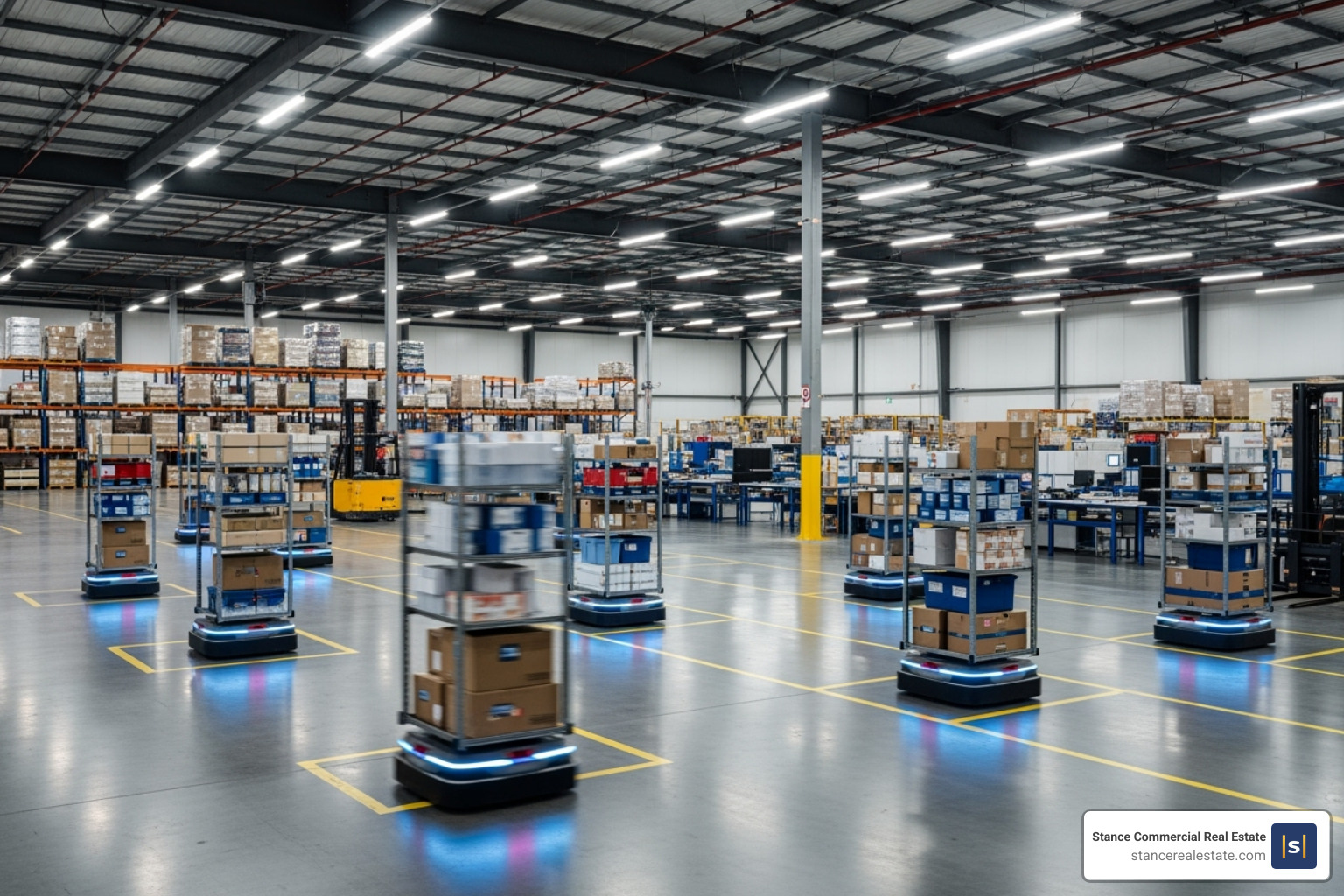
How E-Commerce Growth Is Shaping Industrial Real Estate
Why E-Commerce Is Changing the Industrial Real Estate Landscape
E-commerce has become one of the most powerful forces driving the evolution of industrial real estate. As online shopping becomes deeply woven into everyday consumer behavior, its influence on physical infrastructure continues to expand. Today, e-commerce accounts for nearly 19% of core retail sales—a share that continues to rise—and requires about three times more warehouse space per dollar of sales than traditional brick-and-mortar retail.
This fundamental shift is redefining logistics and development strategies across the industry. Developers and investors are prioritizing larger, taller, and more technologically advanced facilities designed for automation, robotics, and rapid fulfillment. At the same time, proximity to consumers has become a key competitive advantage, fueling demand for last-mile distribution centers in and around dense urban markets. Together, these trends are reshaping the landscape of industrial real estate and setting the pace for the next decade of growth and innovation.
The core impacts of e-commerce on industrial real estate are multifaceted and profound:
- Massive Space Demand: The scale is immense. Every $1 billion in new e-commerce sales generates an estimated demand for 1.25 million square feet of new distribution space. As online sales grow by hundreds of billions annually, the need for logistics real estate expands exponentially.
- Warehouse Evolution: The modern warehouse bears little resemblance to its predecessors. New facilities are significantly larger and taller, with clear heights often exceeding 40 feet to maximize cubic storage capacity. This verticality is essential for accommodating complex racking and automated systems.
- Strategic Location Shift: The consumer expectation of same-day or next-day delivery has made proximity to the end customer paramount. This is pushing warehouse development from remote, rural areas to infill locations closer to major population centers.
- Rise of Specialized Facilities: The e-commerce ecosystem has spurred demand for a variety of specialized asset types, including micro-fulfillment centers (MFCs) for rapid urban delivery, temperature-controlled cold storage for online groceries, and vast reverse logistics hubs to process a high volume of returns.
- Pervasive Technology Integration: Demand is soaring for facilities built to support automation. This includes robust power infrastructure, super-flat floors for robotics, and high-speed data connectivity for AI-driven inventory management systems.
To meet this surge, the market has responded with a historic construction cycle. Between 2022 and 2023 alone, over 1.1 billion square feet of new industrial space was delivered in the U.S. Despite this significant influx of new supply, national industrial vacancy remains structurally low at 6.7%, a testament to the powerful underlying demand. This tight market has fueled strong rental growth, with average rents rising 7.2% year-over-year. In prime logistics markets like Southern California's Inland Empire, the effects are even more pronounced, with rent growth reaching an incredible 12.1% year-over-year, highlighting the irreplaceable role of coastal logistics hubs in the global supply chain.
The Surge in Demand: Why E-Commerce Needs More (and Different) Space
The explosive growth of online retail is the single most powerful force changing the industrial real estate sector. It’s no longer just about needing more warehouses; it’s about needing smarter, faster, and more strategically located facilities designed for an entirely different supply chain model. With e-commerce requiring, on average, three times more logistics space than traditional retail to generate the same amount of sales, the pressure is on for investors, developers, and businesses to adapt to this new reality.
The 3x Space Multiplier
Unlike traditional retail, where goods ship on pallets in bulk to a few dozen store locations, e-commerce involves picking, packing, and shipping millions of individual orders directly to customers' doorsteps. This direct-to-consumer (D2C) model requires a vastly larger physical footprint for several critical reasons:
- Individual Order Fulfillment: The process for a single online order is far more complex than a bulk shipment. Each item must be individually picked from a shelf, scanned, transported to a packing station, boxed with dunnage, labeled, and sorted for shipment. This granular process requires extensive networks of conveyors, numerous packing stations, and large staging areas for outbound parcels, all of which consume significant square footage.
- Wider Product Variety: Online stores offer a seemingly endless aisle, leading to a massive proliferation of unique products, or Stock Keeping Units (SKUs). A large physical retail store might carry 50,000 SKUs, but a major e-commerce fulfillment center can easily house over a million. Storing this incredible variety requires more space and sophisticated inventory management systems to ensure items can be located and picked efficiently.
- Returns Processing (Reverse Logistics): Handling the high volume of online returns—often called the "shadow supply chain"—is a massive, space-intensive operation. E-commerce return rates can be as high as 30%, compared to under 10% for brick-and-mortar. Each returned item must be received, inspected, graded, and then either restocked, refurbished, or liquidated. This entire process requires dedicated space equivalent to a second, parallel warehouse operation.
This isn't just a theoretical multiplier. The market data is clear: an increase of $1 billion in e-commerce sales translates to a tangible need for approximately 1.25 million square feet of new distribution space.
Bigger, Taller, Faster: The New Warehouse Standard
To accommodate the complexity and velocity of e-commerce, the very design of industrial facilities is undergoing a dramatic transformation. Warehouses are evolving in their physical characteristics to maximize efficiency and throughput.
- Increased Clear Heights: Vertical space is just as important as floor space. To maximize storage density, new warehouses feature soaring clear heights, with 40 feet becoming the new standard, a significant increase from the 28-32 feet common just a decade ago. This allows for taller racking systems and multi-level automated mezzanines. The average new warehouse has increased by 3.7 feet in height compared to facilities built between 2002 and 2007.
- Larger Building Footprints: The average new warehouse has also grown by over 108,000 square feet in size compared to the same period, with facilities now regularly exceeding 1 million square feet. These massive buildings, especially prevalent in logistics hubs like Southern California's Inland Empire, are needed to house extensive inventory and complex sorting systems under one roof.
- Efficient Goods Flow: Modern facilities are designed as finely tuned engines for moving goods. This includes a higher ratio of dock doors to facilitate rapid loading and unloading, expansive truck courts for maneuvering, and dedicated trailer parking (yard space), which is critical for staging inbound and outbound freight. The interior is designed for the rapid movement of goods, often incorporating advanced conveyor systems, robotics, and super-flat floors required for specialized machinery.
This evolution is a testament to why Industrial Real Estate: Why Warehouses Are Outperforming Other Sectors. The relentless demand for industrial space that can handle high volumes at high speeds is paramount in the age of e-commerce.
How E-Commerce Growth Is Shaping Industrial Real Estate Locations and Design
Consumer demand for near-instant delivery has forced a radical rethinking of the entire supply chain. Proximity to the customer is now the paramount concern, driving a wave of innovation in where industrial facilities are located and how they are designed to function.
The "Urbanization of Warehousing": The Race for the Last Mile
Gone are the days when warehouses could be located exclusively in distant, rural areas. The promise of same-day or one-hour delivery has shifted the strategic focus to sites much closer to dense population centers—a trend known as the "urbanization of warehousing." The primary driver is last-mile delivery, the final and most expensive leg of a product's journey from the warehouse to the customer's doorstep. To shorten this leg and reduce transportation costs, companies must position inventory as close to consumers as possible.
This has fueled the rise of micro-fulfillment centers (MFCs). These are smaller (10,000 to 50,000 square feet), highly automated facilities strategically placed within or on the edge of urban areas, enabling rapid order processing and dispatch. To create these urban logistics hubs, developers are pursuing creative urban infill projects. This often involves navigating significant challenges, such as high land costs, complex zoning regulations, and community opposition (NIMBYism), but the payoff in delivery speed and efficiency is substantial. A key trend is the repurposing of obsolete commercial properties, such as vacant big-box retail stores. These locations are ideal as they are already situated in prime commercial corridors near population centers and have existing infrastructure like parking and loading areas, a convergence that ties into The Future of Mixed-Use Developments: Live-Work-Play Spaces in Demand.
The Rise of Specialized Facilities and Reverse Logistics
Beyond general warehousing, e-commerce has created explosive demand for highly specialized facilities. A major driver is the management of product returns. Online purchases have a staggeringly high return rate of nearly 30%, compared to less than 10% for in-store purchases. This has created an entire sub-industry and asset class dedicated to reverse logistics—the complex process of moving goods from customers back to the seller or a third-party processor.
These reverse logistics centers handle the labor-intensive tasks of inspection, sorting, grading, and repackaging. Because of the operational complexity and unpredictable inflow of goods, these facilities require 15-20% more space than traditional outbound operations. This hidden operational cost of e-commerce translates directly into millions of square feet of additional industrial real estate demand.
Another specialized facility seeing explosive growth is cold storage. The boom in online grocery sales and meal-kit delivery services requires a sophisticated, unbroken cold chain with precise temperature-controlled environments. These cold storage facilities are significantly more expensive to build and operate than standard warehouses due to the need for insulated metal panels, advanced refrigeration systems, and higher energy consumption. However, they command premium rents and attract long-term leases from high-credit tenants.
In land-constrained urban markets, multi-story warehouses are also emerging as an innovative solution. Pioneered in dense Asian and European cities, these facilities are now appearing in the U.S. They maximize vertical space by building up, often featuring truck ramps to allow full-sized tractor-trailers to access loading docks on the second or even third floor. These developments represent key Industrial Development Trends that are reshaping the sector in response to e-commerce pressures.
Adapting to New E-Commerce Models
New retail models that blend the online and offline worlds require highly flexible industrial solutions. Omnichannel retailing, which seeks to create a seamless customer experience across online, mobile, and physical stores, means that logistics facilities must support both direct-to-consumer parcel shipments and bulk replenishment for retail stores from the same inventory pool.
Direct-to-Consumer (D2C) brands are also a growing source of demand. As these brands scale, they are increasingly building their own logistics infrastructure, driving demand for flexible industrial spaces that can accommodate their growth. Many are using hybrid facilities that combine warehouse, office, and sometimes even showroom or content creation space. Even traditional retailers are adapting their supply chains with models like buy-online-pickup-in-store (BOPIS), which requires efficient inventory staging areas within their stores or at nearby micro-fulfillment sites, further evolving Retail Commercial Real Estate strategies.
The Tech Revolution: Automation and AI in the Modern Warehouse
To keep pace with the relentless speed and staggering volume of e-commerce, technology is no longer a luxury but an absolute necessity. Automation, artificial intelligence, and data analytics are the engines driving the efficiency of the modern warehouse. This technological revolution is not only transforming how facilities operate but is also fundamentally influencing their physical design and infrastructure requirements.
How E-Commerce Growth Is Shaping Industrial Real Estate through Automation
The growing pursuit of speed in e-commerce fulfillment has made automation not just beneficial but essential. A single large fulfillment center may now handle hundreds of thousands of individual orders each day—a volume that human labor alone cannot efficiently or accurately manage. This accelerating reliance on advanced technology is fundamentally transforming the industrial real estate landscape, influencing everything from facility design and layout to location strategy and infrastructure investment.
- Robotics and Automated Guided Vehicles (AGVs): Machines are now performing a wide range of repetitive and physically demanding tasks. This includes Autonomous Mobile Robots (AMRs) that bring shelves of goods to stationary human pickers (a "goods-to-person" system), robotic arms that can pick and place individual items, and AGVs that transport pallets and carts throughout the facility. This technology dramatically boosts productivity, reduces human error, improves workplace safety, and helps mitigate the challenges of labor shortages.
- AI-Powered Inventory and Warehouse Management: Sophisticated Warehouse Management Systems (WMS) and Warehouse Execution Systems (WES) are the brains of the operation. Artificial intelligence analyzes vast amounts of sales data to predict demand, optimizing product placement (slotting) within the warehouse to ensure popular items are located for the fastest possible retrieval. AI algorithms also orchestrate the movement of robots and direct human workers on the most efficient picking paths in real-time.
- Automated Sorting Systems: At the outbound stage, high-speed conveyor belts and automated sorting machines are essential. These systems can rapidly scan and direct thousands of packages per hour to the correct loading bay for shipment, making high-volume, direct-to-consumer shipping possible.
This deep integration of automation delivers tangible benefits beyond speed. It leads to significantly reduced long-term labor costs, a critical factor in a tight labor market, and vastly improved order accuracy, which enhances customer satisfaction and reduces the costly process of handling incorrect shipments. Consequently, modern industrial facilities must be designed from the ground up to accommodate these complex systems, requiring sufficient power capacity, robust fiber-optic networks, and perfectly flat floors with high load-bearing capacity.
Smart Buildings, IoT, and Sustainability
Beyond operational automation, e-commerce is pushing the industrial sector toward smarter, more sustainable buildings. These features not only reduce operating costs but also future-proof the investment and appeal to environmentally conscious corporate tenants.
Internet of Things (IoT) sensors are turning warehouses into intelligent, data-rich environments. These sensors can monitor everything from ambient temperature and humidity to the vibration patterns of conveyor motors. This data enables predictive maintenance, allowing facility managers to anticipate equipment failures before they occur, preventing costly downtime and operational disruptions.
Energy efficiency has become a major priority for both developers and tenants. Modern warehouses are increasingly adopting high-efficiency LED lighting with motion sensors, smart HVAC systems, and advanced insulation materials to lower substantial operational costs. Many developers are pursuing green building initiatives and LEED (Leadership in Energy and Environmental Design) certification to attract premium tenants and increase the long-term value and marketability of their properties.
The vast, flat roofs of modern warehouses are ideal for the installation of rooftop solar panels. These solar arrays can generate a significant portion of a facility's energy needs, reducing reliance on the grid and hedging against rising electricity costs. As delivery fleets rapidly electrify, EV charging stations for both employee vehicles and commercial delivery vans are also becoming essential infrastructure. These forward-looking advancements align with the growing Sustainability Demand from corporate occupiers and contribute to the broader Green Real Estate Trends reshaping the entire real estate sector.
Navigating the Market: Challenges and Opportunities for Investors
The e-commerce-driven industrial boom presents a landscape of both robust, sustained demand and significant challenges. For investors and developers, successfully navigating rising costs, land scarcity, and shifting market dynamics is crucial for capitalizing on the sector's immense long-term potential.
Key Challenges in the Industrial Sector
Understanding and mitigating these headwinds is essential for making informed and profitable investment decisions in the current environment.
- Extreme Land Scarcity: Finding well-located, entitled parcels of land near major population centers for last-mile facilities is increasingly difficult and prohibitively expensive. The entitlement process itself—securing zoning changes and permits—can take years and faces growing opposition from local communities concerned about traffic and noise.
- Rising Construction and Material Costs: Global supply chain issues and inflation have led to significant increases in the cost of key building materials like steel, concrete, and roofing components. Tariffs and transportation costs further squeeze development margins, making it harder for new projects to pencil out financially.
- Persistent Labor Shortages: The industrial sector faces a dual labor challenge: finding skilled construction workers to build new facilities and finding operational staff to run the warehouses. This competition for labor is a primary driver behind the push for greater automation within facilities.
- Supply Chain Disruptions: Delays in receiving critical building components, such as electrical switchgear or pre-cast concrete panels, can push project completion dates back by months, increasing carrying costs and delaying rental income.
- Normalizing Vacancy Rates: After years of historically low vacancy, the national industrial vacancy rate climbed to 6.7% in August 2024. This is not a sign of collapsing demand but rather a temporary imbalance caused by a massive construction pipeline delivering new supply faster than it can be absorbed in some submarkets.
- Financial Headwinds: A fluctuating interest rate environment directly impacts the cost of capital for acquisitions and development. Higher Commercial Real Estate Interest Rates can affect project viability, investor returns, and overall market liquidity.
How E-Commerce Growth Is Shaping Industrial Real Estate Investment Opportunities
Despite the challenges, the e-commerce revolution continues to create a wealth of compelling opportunities for savvy investors who know where to look.
- Value-Add Investments: One of the most attractive strategies is acquiring older, functionally obsolete industrial properties and upgrading them for modern tenants. For example, an investor could purchase a 1980s-era warehouse with 24-foot clear heights and invest in raising the roof to 36 feet, adding modern ESFR fire suppression systems, and expanding the truck court. Such upgrades can make the facility viable for e-commerce users and potentially double its rental income.
- Creative Repurposing of Obsolete Properties: Converting former big-box retail stores, defunct shopping centers, or even multi-level parking garages into last-mile delivery hubs is a highly profitable strategy. It leverages prime locations with existing infrastructure while meeting the intense demand for urban logistics space.
- Speculative Development in Core Markets: In markets with proven strong fundamentals, low vacancy, and a diverse tenant base, building new industrial facilities on a speculative basis (without a pre-committed tenant) can be highly rewarding. While it carries higher risk, it allows developers to capture peak market rents upon completion.
- Focus on High-Growth Markets: While the Inland Empire remains a top-tier market with the nation's highest rent growth at 12.1% year-over-year, other markets are also booming. Key logistics hubs to target include Dallas-Fort Worth (a critical central U.S. hub), Phoenix (serving the rapidly growing Southwest), Atlanta (the logistics capital of the Southeast), and the I-81/I-78 corridor in Pennsylvania and New Jersey (serving the entire Northeast megalopolis).
- Specialized Asset Investment: Investing in niche property types can lead to outsized returns due to less competition and specialized tenant needs. This includes developing or acquiring cold storage facilities, which command premium rents; advanced manufacturing centers for reshoring initiatives; or dedicated reverse logistics hubs, which are becoming critical infrastructure for major retailers.
Frequently Asked Questions about E-Commerce and Industrial Real Estate
Below are answers to some of the most frequently asked questions from investors, developers, and business owners about the impact of e-commerce growth on industrial real estate.
How much more space does e-commerce really need compared to traditional retail?
E-commerce operations require, on average, three times more logistics space than traditional retail for the same dollar amount of sales. This "3x multiplier" is a rule of thumb in the industry. The reason is that e-commerce warehouses must perform tasks that don't exist in a traditional retail supply chain. They must store a much wider variety of individual products (SKUs), handle the labor-intensive process of picking and packing every single customer order, and manage a high volume of customer returns, which requires its own dedicated space and workflow. To put it in perspective, every $1 billion in new e-commerce sales creates demand for approximately 1.25 million square feet of distribution space.
What is "reverse logistics" and why is it so important for industrial real estate?
Reverse logistics is the entire process of managing product returns from customers back to the seller or a third-party processor. It's a critical and costly part of e-commerce because online shoppers return items at a much higher rate—nearly 30% for some product categories—compared to less than 10% for in-store purchases. This constant flow of returned goods requires dedicated facilities and highly specific processes for receiving, inspection, sorting, repackaging, and restocking. These operations are less efficient and more chaotic than outbound fulfillment, meaning they can require 15-20% more warehouse space than standard outbound operations. This creates a significant, and often overlooked, source of additional demand for industrial real estate.
What is the difference between a fulfillment center and a distribution center?
While the terms are often used interchangeably, they traditionally describe facilities with different functions. A classic distribution center (DC) operates on a business-to-business (B2B) model. It receives goods in bulk (e.g., by the pallet or truckload) from manufacturers and ships them in bulk to a relatively small number of retail stores. In contrast, a fulfillment center (FC) is designed for e-commerce and operates on a direct-to-consumer (D2C) model. It stores individual items and is optimized for picking, packing, and shipping a very high volume of small, unique orders to thousands of individual addresses. FCs require more complex technology, more labor or automation, and more space for returns. As omnichannel retail grows, the lines are blurring, with many modern facilities designed as hybrid models that can handle both B2B and D2C operations.
Is the industrial real estate market at risk of being overbuilt?
This is a nuanced question. A recent construction boom added over 1.1 billion square feet of industrial space between 2022 and 2023, which did push the national vacancy rate up to 6.7% from historic, unsustainable lows below 4%. However, this normalization does not necessarily signal a downturn.
Several powerful, long-term factors suggest a strong outlook. The continued double-digit growth of e-commerce, the strategic reshoring of manufacturing to North America, and the need for companies to hold more "safety stock" inventory all create sustained, powerful demand. Furthermore, a significant portion of the older warehouse stock in the U.S. is functionally obsolete and cannot meet modern e-commerce needs for high ceilings, robust power, and automation. While some secondary markets may experience temporary oversupply, prime logistics hubs like the Inland Empire continue to see robust demand and rent growth. For savvy investors, analyzing the current market is key to identifying opportunities, as even a temporary rise in vacancy can create attractive entry points for long-term holds.
How Stance CRE Can Help You
The connection between e-commerce and industrial real estate is more than influential—it is transformative. We are seeing a fundamental and lasting shift in how goods move through the economy, and the impact of e-commerce growth will continue to be the primary driver of industrial real estate market dynamics for the foreseeable future.
The landscape has shifted dramatically and irrevocably. What was once a niche delivery option, same-day delivery is now a consumer expectation. Warehouses, once relegated to remote locations, have moved to the edges of our cities to enable last-mile logistics. And the facilities themselves, once simple storage sheds, are now sophisticated hubs of technology powered by robotics and artificial intelligence. The average warehouse is larger, taller, and smarter—a complete reimagining of an asset class, all driven by the relentless growth of online shopping.
For investors, developers, and businesses, success in this new era requires vision, adaptability, and deep expertise. The challenges—including intense land scarcity, rising construction costs, and the need to carefully balance new supply with market absorption—are significant. However, the opportunities they create are even greater. Value-add repositioning of older assets, creative repurposing of obsolete properties, strategic development in core markets, and investment in specialized assets like cold storage or reverse logistics hubs offer immense potential for growth and return.
This is especially true in core logistics markets like the Inland Empire, where strategic location, irreplaceable infrastructure, and a deep labor pool create exceptional and durable opportunities. Capitalizing on this potential requires more than just capital; it demands deep local knowledge and a data-driven approach to navigate the complexities of the market.
At Stance Commercial Real Estate, we have a decade of experience on the ground in the Inland Empire market. We provide the critical insights and expert guidance our clients need to make confident, informed decisions in this rapidly evolving landscape. The future of industrial real estate is digital, automated, and closer to the customer than ever before. The question is whether you are positioned to capitalize on the change. To learn how we can help you optimize your industrial real estate strategy, explore our expert commercial real estate services.

How to Market Your Commercial Property to High-Quality Tenants
Why Marketing to High-Quality Tenants is Critical for Your Investment
Marketing your commercial property to attract high-quality tenants takes more than just putting up a “For Lease” sign. In today’s highly competitive market, it requires a well-rounded strategy that highlights your property as a value-driven business opportunity. Successful leasing efforts go beyond showcasing space—they demonstrate how the location, amenities, and management add real advantages for a tenant’s operations, growth, and brand image. By positioning your property as a solution that supports business success, not just available square footage, you appeal to stable, long-term tenants who recognize and invest in quality.
Traditional marketing tactics no longer capture the attention of high-quality tenants who pay on time, maintain their space, and renew for the long term. You'll learn how to prepare your property, dominate the digital landscape, create an unbeatable tenant experience, and structure deals that close.
I'm Joe Stance, and through my company, Stance Commercial Real Estate, I've helped property owners in the Inland Empire successfully market their commercial properties to high-quality tenants by combining local market expertise with proven strategies. Let's explore how you can do the same.
Step 1: Defining Your Ideal Tenant and Preparing a Premium Property
Before you can effectively market your commercial property to high-quality tenants, you must answer two questions: Who are you trying to attract? And does your property meet their expectations? A premium property attracts premium tenants, who expect excellence from the moment they arrive.
What Defines a High-Quality Commercial Tenant?
A high-quality tenant is a strategic partner who contributes to your property's reputation and long-term value. Key characteristics include:
- Financial Stability: They demonstrate solid financial footing with verifiable income, healthy balance sheets, and strong credit. They can meet their lease obligations without issue, paying on time, every time.
- Business Reputation: A tenant with a respected brand lifts the entire property's image, creating a ripple effect that attracts other quality businesses.
- Long-Term Potential: Quality tenants often seek multi-year commitments, viewing their workspace as a strategic investment. This reduces turnover costs and provides predictable income.
- Brand Synergy: In multi-tenant properties, they create a beneficial ecosystem. A thriving coffee shop draws foot traffic for a law firm, or a respected accounting practice adds credibility.
- Low-Impact Operations: They maintain the premises responsibly, communicate proactively about maintenance, and respect the property as if it were their own.
Enhancing Curb Appeal for a Powerful First Impression
First impressions happen in seconds. A well-maintained exterior signals professionalism and a commitment to quality that discerning tenants recognize.
Focus on these key areas:
- Landscaping: A well-manicured lawn, vibrant seasonal plants, and clean common outdoor amenities create an inviting aesthetic.
- Exterior Maintenance: Regularly power wash the building, clean windows, and address any chipped or faded paint immediately. Fix visible repairs like cracked sidewalks promptly.
- Modern Signage: Clear, legible signs that complement your building's architecture are both practical and aesthetically pleasing.
- Parking: Ensure you have ample, well-lit parking. Inadequate or dark parking areas can be deal-breakers.
Essential Amenities and Features for Today's Businesses
Today's tenants seek an environment that improves productivity and supports employee wellness. Your property must offer a complete business solution.
- High-Speed Internet: Robust, reliable connectivity is as essential as electricity.
- Modernized Common Areas: Clean, aesthetically pleasing lobbies, hallways, and restrooms reflect a premium experience.
- Wellness and Collaboration: On-site fitness centers, even small ones, are highly valued. Well-equipped conference rooms and collaborative spaces are also deciding factors.
- Energy-Efficient Systems: Tenants increasingly expect sustainable features. Energy-efficient HVAC and LED lighting reduce operating costs and appeal to corporate values. Properties with diverse amenities see 12% higher demand, a clear signal that these features impact leasing success.
When you market your commercial property to high-quality tenants, these features transform from nice-to-haves into competitive necessities.
Step 2: Dominating the Digital Landscape with Strategic Marketing
In today’s market, your property’s first showing happens online—often long before a prospect ever schedules a tour. A strong digital presence isn’t optional; it’s essential for attracting sophisticated businesses across Southern California. Modern marketing means meeting prospective tenants where they already are: online, on their own time, and with clear, compelling information that helps them envision success in your space. From professional photography and virtual tours to detailed listings and active social media engagement, every digital touchpoint should build confidence and convey value long before the first handshake.
Creating a Compelling Online Presence
Your online presentation is your property's digital curb appeal. Grainy photos and a bare-bones listing won't impress serious prospects.
A professional property website, showcasing high-quality photos and a virtual tour, is crucial for attracting high-quality tenants.
- Professional Visuals: High-resolution photography is your foundation. It tells a story that basic snapshots can't. Drone footage offers a bird's-eye perspective that showcases your property's location and scale.
- Virtual Tours and 3D Renderings: This technology allows prospects to walk through your space from anywhere, at any time. For properties under development, 3D renderings bring your vision to life and help tenants see the finished product's potential.
- Digital Storefront: A dedicated property website serves as a central hub for comprehensive information and high-quality visuals. Also, ensure your property is listed prominently on major commercial real estate marketplaces like CoStar and LoopNet.
- Local SEO: When a business searches for "commercial property for lease Riverside CA," your property should appear at the top. This requires optimizing your website and listings with the right keywords and location information.
Leveraging Social Media and Targeted Advertising
Beyond basic listings, strategic advertising can connect you with high-quality tenants who might not be actively searching yet.
- LinkedIn: This is the platform for establishing credibility and connecting with business decision-makers. Share market insights and property updates to position your property in front of the right audience.
- Instagram: For properties with strong aesthetic appeal, Instagram is excellent for visual storytelling through high-quality photos and short videos.
- Targeted Advertising: Use platforms like Google AdWords and social media to reach specific demographics and businesses that fit your ideal tenant profile. This precision means your marketing dollars work smarter.
- Email Marketing: Use platforms like Constant Contact to keep your property front and center with brokers and prospects through regular newsletters with market updates and property news.
Using Data to Refine Your Marketing Efforts
Effective marketing is data-driven. We measure, analyze, and continuously refine our approach.
- Website Analytics: Google Analytics shows who is visiting your site, where they come from, and what content captures their attention.
- Lead Source Tracking: This reveals which marketing channels generate the most qualified leads, helping allocate future budgets effectively.
- Engagement Metrics: Social media likes, shares, and comments provide real-time feedback on what your audience finds valuable.
We continuously evaluate our strategies and adjust based on performance metrics and market trends to ensure your property remains competitive.
How to Market Your Commercial Property to High-Quality Tenants by Creating an Unbeatable Experience
Marketing doesn't stop once a lead is generated. The most desirable tenants aren't just looking for square footage—they're searching for properties that support their operational needs and company culture. This is where you transform your building from a commodity into a community where businesses can flourish.
Leveraging Technology for a Seamless Tenant Experience
Today's businesses expect their commercial spaces to be technologically advanced. Leveraging technology creates a seamless, efficient experience that makes tenants' lives easier.
Smart building integration automates and optimizes everything from security to energy management. The smart building tech market is growing rapidly, reflecting rising tenant expectations. Features like automated climate and lighting control give tenants the personalization they crave while delivering energy efficiency.
Tenant experience platforms, like HqO, have revolutionized communication. These digital hubs allow tenants to submit maintenance requests, book conference rooms, or RSVP to events from their smartphones. This convenience and transparency demonstrate your commitment to operational efficiency and a superior tenant experience.
The Growing Importance of Sustainability and Wellness
High-paying tenants increasingly prioritize properties that demonstrate a genuine commitment to sustainability and wellness. This is becoming a fundamental requirement in lease negotiations.
- Green Building Certifications: Certifications like LEED have evolved from a nice-to-have to an expected credential, helping corporate tenants meet their own sustainability targets.
- EV Charging Stations: The rise of electric vehicles has made EV charging stations one of the most requested amenities. Installing them signals that your property is forward-thinking.
- Innovative Initiatives: Beyond recycling, consider programs like urban agriculture or rooftop gardens, which can increase property values and build community.
- On-Site Wellness Programs: Research shows that employees in wellness-oriented workplaces report higher job satisfaction. This can include on-site fitness centers, meditation sessions, or quiet wellness rooms for mental health breaks.
Building a Thriving Business Ecosystem and Strong Relationships
Attracting high-quality tenants is a challenge, but keeping them is where the real value lies. The relationship between property owner and tenant should be a partnership built on trust and mutual success.
- Curate a Complementary Tenant Mix: Select tenants who can interact and benefit from one another, such as a law firm and an accounting practice, to build an ecosystem where businesses thrive together.
- Host Networking Events: Organize events like happy hours or "lunch-and-learns" to build community. When tenants feel connected, they are far more likely to renew their leases.
- Proactive Communication and Service: Keep tenants informed about maintenance and improvements. Be responsive and invested in their success. A recent study found that a 1-point increase in tenant satisfaction makes tenants 18% less likely to leave. Engaged tenants stay longer, pay consistently, and recommend your property to others.
Step 4: Structuring the Deal and Partnering for Success
Your marketing has attracted the right prospects. Now comes the moment to structure a deal that closes. This final step requires balancing competitiveness with value, offering flexibility while protecting your investment, and partnering with professionals who can steer complex lease negotiations.
How to Market Your Commercial Property to High-Quality Tenants with Smart Pricing and Flexible Leases
Setting the right rental rate is both an art and a science. Price too high, and you risk vacancy; too low, and you leave money on the table. The goal is to find the sweet spot where the rate reflects your property's premium value while remaining competitive.
Rental rate analysis starts with thorough market research of comparable properties in your area, like Riverside. This data-driven approach ensures informed decisions. High-quality tenants understand that premium properties command premium prices, but you must justify the rate by highlighting superior amenities and a thriving business environment.
Flexibility is increasingly important. While commercial leases are typically long-term, offering flexible terms can be a key differentiator. This might include shorter initial terms with renewal options, expansion rights, or graduated rent increases.
Understanding different lease structures helps craft deals that work for both parties:
| Lease Type | Landlord Responsibility | Tenant Responsibility | Best For |
|---|---|---|---|
| Full-Service Gross | All operating expenses (taxes, insurance, maintenance) | Base rent | Tenants seeking predictable, all-inclusive costs. |
| Triple Net (NNN) | Major structural repairs | Base rent + taxes, insurance, and maintenance | Landlords desiring a hands-off investment. |
| Modified Gross | Some operating expenses (e.g., structural) | Base rent + a portion of operating expenses | A balanced approach for both parties. |
| Percentage Lease | Varies | Base rent + a percentage of gross sales | Retail properties where landlord shares in tenant success. |
The Value of Partnering with a Reputable Brokerage Firm
Navigating the commercial real estate market, especially in competitive areas like Southern California, often requires expert assistance. Partnering with a reputable brokerage firm offers tangible benefits:
- Market Knowledge: A good broker understands which industries are expanding in Riverside, which neighborhoods are emerging, and how local projects affect property values.
- Extensive Networks: Brokerages have established relationships with tenant representation brokers, giving your property exposure to qualified prospects you might never reach alone.
- Negotiation Expertise: Experienced brokers know which lease terms are standard, negotiable, or deal-breakers, protecting your interests while keeping deals moving forward.
- Tenant Vetting: Rigorous screening processes assess financial stability, business viability, and reputation, ensuring you lease to truly high-quality tenants.
- Transaction Management: A brokerage handles the countless details from inquiry to lease signing, ensuring a smooth process for everyone.
At Stance Commercial Real Estate, our local market expertise in Riverside and the Inland Empire, combined with our dedication to building long-term relationships, means we're not just filling your space; we're finding the right partner for your investment's future.
Frequently Asked Questions about Attracting Commercial Tenants
Here are answers to some of the most common questions property owners ask when trying to steer the leasing landscape in markets like Riverside and the Inland Empire.
How do I determine the right rental rate for my commercial property?
Setting the right rental rate is a critical step when you market your commercial property to high-quality tenants. Start with a comprehensive market analysis of comparable properties in your specific area. Don't just look at general regional data; focus on similar buildings in similar neighborhoods. Factor in your property's unique advantages, such as location, condition, and amenities. The goal is to find the sweet spot that maximizes income while attracting tenants who see the value. A rate that is too high will lead to vacancy, while a rate that is too low may attract unstable tenants and leave money on the table.
What are the most important amenities for attracting office tenants today?
Today's high-quality office tenants prioritize amenities that support productivity and employee well-being. High-speed, reliable internet is a given. Beyond that, tenants look for modern, clean common areas, flexible meeting rooms, and on-site fitness facilities. Increasingly, they also expect smart building technology for environmental control and sustainability features like EV charging stations. Think about what makes an employee want to come to the office. In a competitive market, these amenities are often the deciding factor between two otherwise comparable properties.
How can I make my marketing materials stand out?
To stand out, you must invest in professional-quality assets. This means high-resolution photography, drone videos to showcase the location, and interactive 3D virtual tours. However, great marketing goes beyond visuals; it involves storytelling. Don't just list features. Instead, paint a picture of how the space will benefit a tenant's business. Highlight the unique aspects of your property and the surrounding neighborhood. You are selling a business solution and an experience, not just square footage. Your materials should help prospects envision their business thriving in your space.
How Stance CRE Can Help You
Today's tenants seek more than just square footage; they want spaces that support their growth and reflect their values. For property owners in Riverside and the broader Southern California region, leveraging local expertise is crucial for navigating the unique dynamics of the Inland Empire market.
At Stance Commercial Real Estate, we've spent over a decade mastering this market. Our approach is simple: we prioritize service over profit and treat every property as if it were our own. We combine deep local knowledge with the negotiation skills needed to structure deals that work.
When you partner with us, you gain a dedicated advocate who understands how to connect you with the quality prospects your investment deserves. We know what makes Riverside tenants tick and how to position your property to stand out.
Ready to explore your next commercial real estate opportunity in Riverside or the broader Inland Empire? Learn more about our services and insights and find how local expertise can transform your investment experience.
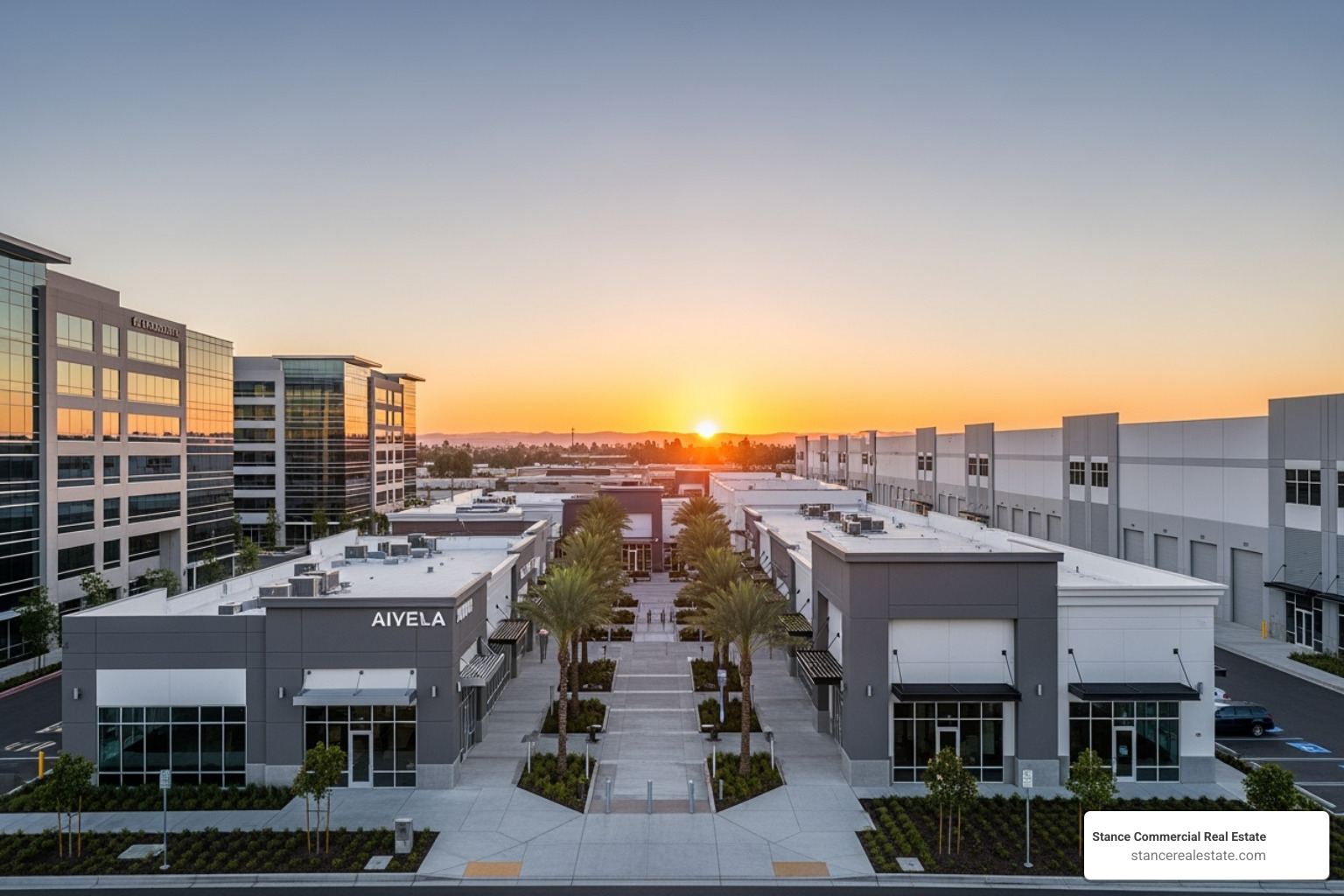
Build a Bulletproof Portfolio: How to Diversify Your Real Estate Holdings
Why Real Estate Portfolio Diversification Matters More Than Ever
To diversify your real estate portfolio holdings means spreading investments across different property types, geographic markets, and investment strategies to reduce risk while maintaining strong returns. In a volatile market—with U.S. commercial property prices down 22% from their peak—this strategy is more critical than ever.
Success in real estate isn’t about amassing properties haphazardly—it’s about strategically building a portfolio that can endure economic ups and downs. This means diversifying across property types such as industrial, office, and retail, spreading investments across different regions, leveraging multiple investment vehicles like direct ownership and Real Estate Investment Trusts (REITs), and balancing risk profiles from stable core assets to higher-risk, opportunistic opportunities.
Smart investors know real estate offers powerful inflation hedging and low correlation with stocks and bonds. But achieving resilience requires a deliberate strategy. I'm Joe Stance, and with nearly twenty years of experience in the Inland Empire, I've seen that a well-diversified portfolio is what separates successful long-term investors from those who struggle through market cycles.
The 'Why': Core Benefits of a Diversified Commercial Real Estate Portfolio
After three decades in this business, I can tell you that to diversify your real estate portfolio holdings isn't just smart—it's a financial lifeline during turbulent times. A well-diversified portfolio acts as both a shield and a sword, protecting you from downturns while actively generating wealth.
The core benefits are compelling. Risk mitigation is foundational; by spreading holdings across industrial warehouses, medical offices, and retail strips, a downturn in one sector won't sink your entire portfolio. Commercial real estate also provides stable cash flow, often through long-term triple net (NNN) leases where tenants cover taxes, insurance, and maintenance. This creates predictable income streams that are less volatile than stock dividends. Furthermore, real estate serves as a powerful inflation hedge. As costs rise, commercial property values and rents typically rise too, protecting your purchasing power. Finally, the combination of current income and long-term capital appreciation creates a powerful wealth-building engine.
Perhaps most importantly, commercial real estate maintains a low correlation to stocks and bonds. When stock markets panic, your properties provide a stabilizing influence on your overall wealth. For more on maximizing these benefits, explore our Commercial Real Estate Services.
Navigating Market Volatility and Risk
Today's market requires a sharp focus on risk-adjusted returns—achieving the best possible returns for the risk you accept. While direct real estate has historically shown low or negative correlation with the S\&P 500, recent trends show that REITs can temporarily move more closely with stocks during periods of market stress. However, as institutional investors know, the long-term diversification benefits of real estate remain strong.
The end of near-zero interest rates means property performance now hinges on fundamentals like location, tenant quality, and lease terms. This makes careful property selection crucial. During economic downturns, tenant stability is paramount. Properties with creditworthy tenants on long-term leases, such as medical offices or grocery-anchored retail, provide reliable income when other investments falter. This resilience is key to building a portfolio that can not just survive but thrive. For more on building a resilient portfolio, see our Commercial Real Estate Investment Strategies.
The 'What': Key Strategies to Diversify Your Real Estate Portfolio
Building a bulletproof portfolio requires strategic allocation. Think of it like cooking a great meal: each ingredient adds a unique flavor. When you diversify your real estate portfolio holdings, each property type, location, and investment vehicle contributes differently to your overall returns.
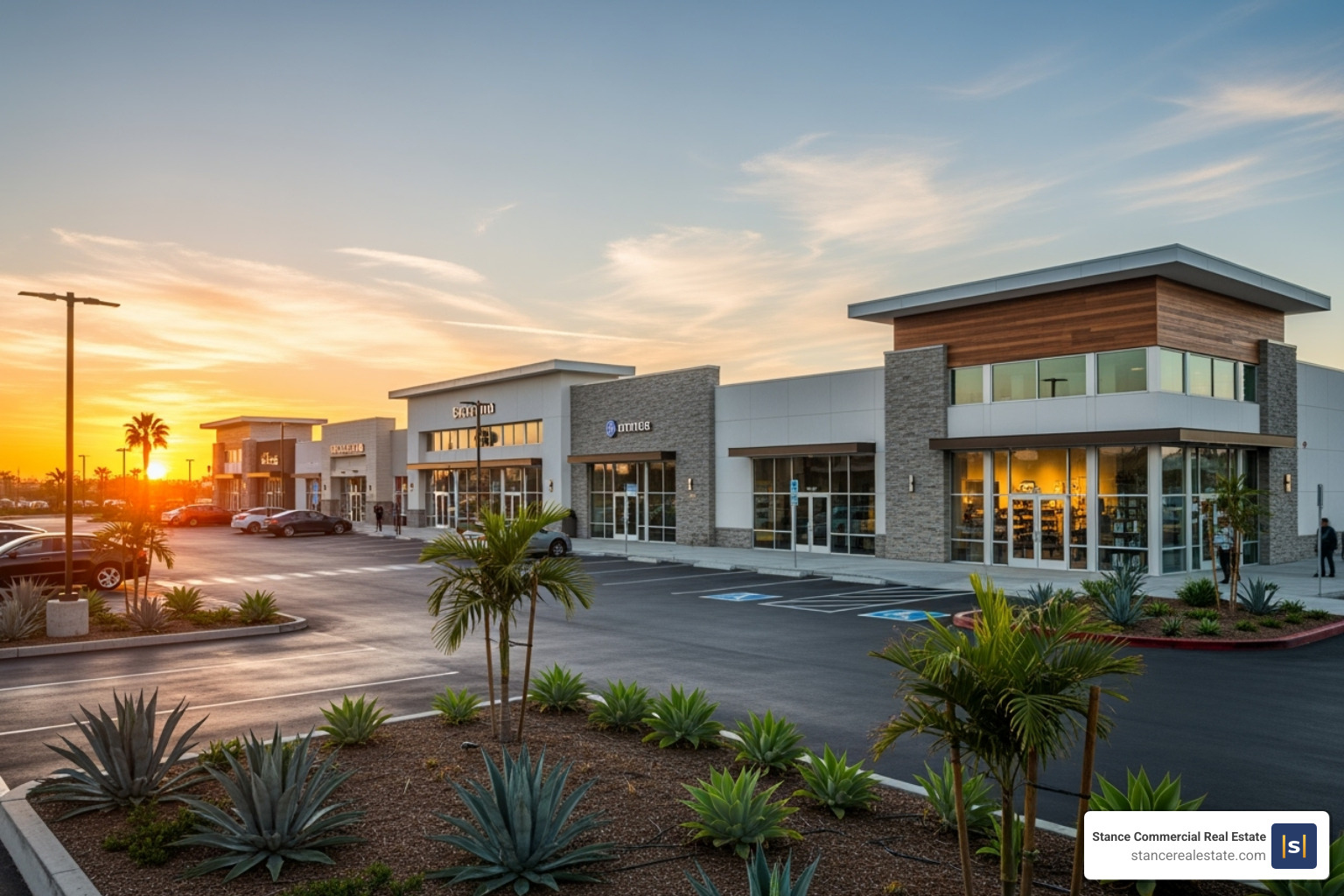
How to Diversify Your Real Estate Portfolio by Property Type
Mixing different commercial property types is the foundation of diversification, as each sector reacts differently to economic shifts.
- Industrial Properties: The darlings of recent years, including logistics facilities, warehouses, and data centers. Fueled by e-commerce, they offer steady income from long-term leases and are less sensitive to downturns in consumer spending. Explore Industrial Real Estate to see current opportunities.
- Office Properties: Ranging from premium Class A buildings to functional Class C spaces. While remote work has shifted the landscape, prime locations and specialized spaces for collaborative industries still command strong rents.
- Retail Properties: Beyond the headlines, necessity-based retail like grocery-anchored strip malls and pharmacies continues to perform well. The key is to focus on concepts that are thriving in the modern economy.
- Specialty Properties: These offer unique, recession-resistant opportunities. Medical office buildings benefit from consistent healthcare demand, while self-storage facilities perform well in both good and bad economic times. Learn about Medical Office Space in Riverside to understand this sector's resilience.
How to Diversify Your Real Estate Portfolio by Geography
All real estate is local. A booming economy in one city doesn't guarantee success in another. Investing everything in one market exposes you to concentrated risks like local economic downturns, oversupply, or unfavorable zoning changes.
Geographic diversification is essential for mitigating these risks. By spreading investments across different regions, states, or even submarkets within a large metro area—like the Inland Empire—investors can balance growth opportunities with stability. While the Inland Empire has experienced significant expansion, savvy investors also explore complementary markets that respond differently under varying economic conditions. Deep knowledge of local fundamentals—employment trends, population growth, infrastructure projects, and housing demand—is critical for making informed investment decisions and positioning a portfolio to withstand market fluctuations.
Diversification Through Investment Vehicles
How you invest is as important as what you invest in. You have several paths to diversify real estate portfolio holdings, each with distinct trade-offs.
| Investment Vehicle | Advantages | Disadvantages |
|---|---|---|
| Direct Ownership | Full control, potential for higher returns, significant tax benefits (depreciation, 1031 exchanges). | High capital requirement, illiquidity, active management responsibilities, concentration risk with single properties. |
| Real Estate Investment Trusts (REITs) | High liquidity (publicly traded), low capital requirements, instant diversification, professional management. | Subject to stock market volatility, limited control, returns can correlate with broader equity markets. |
| Private Real Estate Funds / Syndications | Access to institutional-quality properties, professional management, potential for higher returns than REITs, diversification within funds. | High minimum investments, illiquidity (10+ year holds), restricted to accredited investors, dependence on sponsor expertise. |
Direct ownership offers maximum control and tax benefits but requires significant capital and hands-on management. REITs provide instant diversification and liquidity with a low barrier to entry, but they are subject to stock market fluctuations. Private funds and syndications offer a middle ground, providing access to institutional-grade deals with professional management, but they are illiquid and typically reserved for accredited investors. Many sophisticated investors use a combination of all three. To see which fits you, Find out if you are an Active or Passive Commercial Real Estate Investor.
Navigating the Market: Advanced Diversification and Economic Factors
Beyond the basics, a truly resilient portfolio considers advanced risk allocation and the broader macroeconomic environment.
Implementing a Risk Allocation Strategy
When you diversify your real estate portfolio holdings, you should create a strategic mix based on risk and return profiles.
- Core Investments: The foundation of a portfolio, typically 40-60% of holdings. These are stable, fully leased properties in prime locations, like a Class A office building with a credit-worthy tenant. They offer predictable cash flow and lower risk, with returns typically in the 4-6% range.
- Core-Plus Investments: A step up in risk and potential reward. These are core properties with a minor flaw, such as a near-term lease expiration or the need for light cosmetic updates, offering a chance to add value. They often yield 6-8% returns.
- Value-Add Strategies: These involve acquiring underperforming properties and changing them through significant improvements, like renovating an outdated office building to attract new tenants. These deals require more expertise and can deliver returns in the 8-12% range.
- Opportunistic Strategies: The highest risk and reward category, including ground-up development or acquiring distressed assets. Offering potential returns of 12-20%, these are best suited for experienced investors with significant capital.
A balanced portfolio might allocate capital across these strategies based on your risk tolerance and time horizon, which Morningstar recommends should be at least 10 years. For a deeper dive, explore our guide on the Core Real Estate Investment Strategy.
The Influence of Macroeconomic Trends
Commercial real estate is deeply connected to economic forces. Understanding these trends is vital for smart diversification.
- Interest Rates: Rising rates increase borrowing costs and can put downward pressure on property values. Cap rates—a property's income relative to its value—are closely tied to interest rate movements. Learn more at How Interest Rates Impact Commercial Real Estate.
- Inflation: Real estate can be an excellent inflation hedge. Leases with built-in rent escalations allow property income to keep pace with or exceed inflation, protecting your purchasing power.
- Economic Growth: Job creation and population growth are fundamental drivers of demand for commercial space. Following these trends helps identify promising markets.
Leveraging Tax Advantages for Portfolio Growth
Tax benefits are a key advantage of commercial real estate investing.
- Depreciation: The IRS allows you to deduct a portion of your property's value each year as a "paper loss," which can significantly reduce your taxable rental income.
- 1031 Exchanges: This powerful tool allows you to defer capital gains taxes by reinvesting the proceeds from a sale into a new "like-kind" property. This strategy can save investors around 40% on their tax bills from net gains, allowing capital to grow tax-deferred.
Navigating complex tax laws requires professional guidance from a CPA specializing in real estate. To learn more, read our guide: Find the Tax Benefits of Investing in Commercial Real Estate.
Frequently Asked Questions about Portfolio Diversification
Investors often have similar questions when they decide to diversify your real estate portfolio holdings. Here are answers to some of the most common ones.
What is the first step to diversify a real estate portfolio?
The first step is internal. Before looking at properties, you must define your personal investment framework:
- Assess Your Goals: Are you seeking monthly income, long-term wealth generation, or an inflation hedge?
- Analyze Current Holdings: If you own real estate, where is it concentrated? Identify risks in property type or geography.
- Define Your Risk Tolerance: Be honest about how much market volatility you can handle. The best strategy is one you can stick with.
Once you have this clarity, you can begin exploring opportunities. For beginners, our guide on Start with Your First Commercial Real Estate Investment is a great resource.
Is it better to own one large commercial property or several smaller ones?
This depends on your capital and management capacity. There's a clear trade-off between diversification and efficiency.
- Several Smaller Properties offer superior diversification. If one property loses a tenant, you still have income from the others, spreading your risk. However, this also means multiple management headaches, from different tenants to separate maintenance schedules.
- One Large Property can provide economies of scale. Management can be more efficient, and a single large asset with multiple tenants (like an office complex) can offer diversification within the property itself.
The sweet spot often depends on your capacity for hands-on involvement. If you enjoy the operational side, multiple properties may suit you. If you prefer a hands-off approach, a single larger asset with professional management might be better. To help control costs either way, see our guide on Managing Commercial Property Expenses.
How do REITs help diversify a real estate portfolio?
Real Estate Investment Trusts (REITs) are an excellent tool for diversification, offering several key advantages:
- Instant Diversification: A single REIT share gives you ownership in a large, varied portfolio of properties.
- Low Capital Outlay: You can invest in institutional-quality real estate with a small amount of capital.
- Liquidity: Unlike direct property ownership, publicly traded REIT shares can be bought and sold quickly.
- Professional Management: Your investment is managed by a team of real estate experts.
REITs are a powerful complement to direct ownership, providing liquidity and access you can't get otherwise. They are a proven way to diversify your real estate portfolio holdings within the global REIT market, which represented about $1.9 trillion in assets as of 2022.
How Stance CRE Can Help You
Building a bulletproof commercial real estate portfolio is an ongoing process of strategic thinking and patient execution. The key is to diversify your real estate portfolio holdings effectively by spreading investments across different property types, geographies, and investment vehicles.
Here at Stance Commercial Real Estate, we are guided by a simple principle: service over profit. Our deep roots in Riverside and the Inland Empire provide us with local market insights that national firms simply can't match. We focus on proactive portfolio management, continuously assessing conditions to ensure your investments remain aligned with your goals.
Your real estate journey doesn't have to be complicated, but it must be strategic. Ready to build a resilient future? For a detailed evaluation of your current holdings and a custom diversification strategy, explore our Commercial Real Estate Portfolio Analysis services. Let's build your portfolio together, one strategic investment at a time.