

Leasing Medical Office Space in Riverside: A Step-by-Step Guide
Finding medical office space for lease Riverside can be a challenge given the growing demand and dynamic market environment. Whether you're a healthcare provider or an investor looking to tap into the opportunities this area offers, leasing the right space can support your business goals and patient needs effectively. Here are some quick insights:
- High demand: With the aging population, there's a rising need for medical services, which increases the demand for suitable office spaces.
- Diverse options: Riverside offers a variety of office types, from traditional settings to innovative coworking spaces ideal for different medical and healthcare needs.
- Strategic benefits: Leasing can provide flexibility, cost-effectiveness, and proximity to key amenities like hospitals and transportation hubs.
Riverside, with its robust healthcare market and rich community amenities, serves as an appealing destination for medical professionals and investors. Its blend of modern infrastructure and historical charm creates an engaging environment for businesses of all sizes.
I'm Joe Stance, and with seventeen years in the commercial real estate industry, I've helped numerous clients find medical office space for lease Riverside. I understand both the challenges and the opportunities this market holds. Let's explore further how Riverside can be the perfect place for your medical office.
Why Riverside is Ideal for Medical Offices
Riverside, California, offers a unique blend of history, culture, and economic vitality that makes it an ideal location for medical offices. If you're considering leasing medical office space in Riverside, here's why this city stands out.
Rich History and Vibrant Culture
Riverside is steeped in history, home to landmarks like the Mission Inn, which not only attract tourists but also create a vibrant local community. This historical ambiance adds a unique charm that can be leveraged by medical practices to create a welcoming and distinctive identity. Being part of a community that values its history can improve the appeal of your medical office to both locals and visitors.
Thriving Economy
Riverside's economy is on the rise, driven by its strategic location just sixty miles east of Los Angeles. This proximity allows businesses to tap into the broader Southern California market while enjoying lower overhead costs. The city’s dynamic growth is particularly evident in its commercial real estate sector, which sees a high demand for spaces that blend retail, office, and residential elements. This trend reflects a shift towards more integrated and community-focused business environments, ideal for medical offices looking to serve diverse patient needs.
Educational and Research Opportunities
The presence of the University of California, Riverside contributes significantly to the city’s economy and culture. It provides a steady stream of educated professionals and opportunities for collaboration in medical research and innovation. This academic influence ensures a vibrant, knowledgeable community that can support and improve healthcare services in the area.
Excellent Transportation and Infrastructure
Riverside boasts an excellent transportation network, making it easily accessible for both patients and healthcare professionals. Major freeways such as the 91, 215, and 60 improve connectivity, while the Riverside Transit Agency and Metrolink train service offer extensive public transport options. This infrastructure supports ease of access, crucial for medical offices that rely on patient foot traffic and employee convenience.
Riverside's combination of historical richness, economic growth, academic influence, and robust infrastructure makes it a compelling choice for medical offices. These factors not only create a supportive environment for healthcare businesses but also offer opportunities for growth and innovation.
Current Market Trends in Riverside Medical Office Space
Riverside's medical office space market is experiencing significant shifts driven by various factors. Understanding these trends can help you make informed decisions when considering medical office space for lease in Riverside.
Aging Population and Growing Demand
The aging population in the U.S. is a key driver of increased demand for healthcare services, and Riverside is no exception. As more people reach retirement age, the need for medical care rises. This trend is expected to continue, with the share of Americans aged 65 and older projected to grow significantly. This demographic shift means more medical office space will be needed to accommodate new healthcare providers and services.
Shortage of Medical Office Space
With the growing demand for healthcare services comes a potential shortage of medical office space. A report by Transwestern highlights this concern, noting that the need for medical office space could outpace supply. This shortage presents both a challenge and an opportunity for those looking to lease or invest in medical office spaces in Riverside.
Stable Tenants and Appreciation Potential
Medical office spaces are known for having stable tenants. Healthcare providers typically have long-term leases due to the nature of their services and the significant investment required to build out medical facilities. This stability makes medical office properties a reliable investment with steady cash flow. Additionally, the increasing demand can lead to appreciation in property values, offering potential financial benefits over time.
How to Steer the Market
Navigating the Riverside medical office space market requires careful consideration of these trends. Here are a few tips:
- Keep an Eye on Demand: Monitor the aging population and healthcare trends to anticipate shifts in demand.
- Act Quickly: With potential shortages on the horizon, acting swiftly to secure space can be advantageous.
- Consider Long-Term Leases: The stability of medical tenants makes long-term leases a sound strategy.
Key Features to Look for in Medical Office Space
When searching for medical office space for lease in Riverside, it's crucial to focus on features that cater to both healthcare providers and their patients. Here's what to consider:
Specialized Features
Medical offices require specific features to support healthcare operations. Look for spaces that offer:
- Examination Rooms: Adequate number and size to accommodate patient flow and medical equipment.
- Laboratory Space: If needed, ensure there's a designated area for lab work.
- Sterilization Areas: Essential for maintaining hygiene and safety standards.
- Storage: Ample space for medical supplies and equipment.
These specialized features are vital for efficient and effective healthcare delivery.
Healthcare Needs
Consider the unique needs of your practice. Different specialties may require different setups:
- Pediatrics might need child-friendly waiting areas.
- Orthopedics could require space for physical therapy equipment.
- Cardiology might benefit from rooms equipped for diagnostic tests.
Tailoring the space to your specialty ensures better service and patient care.
Patient Comfort
Comfort is key to a positive patient experience. Features that improve comfort include:
- Comfortable Waiting Areas: Ample seating, calming decor, and entertainment options like TVs or magazines.
- Privacy: Ensure that consultation and treatment rooms offer privacy for confidential discussions.
- Ease of Navigation: Clear signage and accessible design help patients find their way easily.
Providing a welcoming environment can improve patient satisfaction and loyalty.
Accessibility
Accessibility is non-negotiable in a medical office. Ensure the space is compliant with the Americans with Disabilities Act (ADA). Key elements include:
- Wheelchair Access: Ramps, wide doorways, and accessible restrooms.
- Parking: Adequate parking spaces, including designated spots for those with disabilities.
- Public Transport Links: Proximity to bus stops or train stations for patients reliant on public transport.
Accessibility not only meets legal requirements but also broadens your patient base.
By focusing on these key features, you can select a medical office space that meets the needs of your practice and your patients. Let's explore the costs and availability of medical office spaces in Riverside.
Average Costs and Space Availability
When it comes to medical office space for lease in Riverside, understanding the costs and availability is essential for making an informed decision. Let's break down what you can expect:
Average Rent and Square Footage
In Riverside, the average rental rate for medical office space hovers around $20 per square foot. This figure provides a baseline, but actual prices can vary based on location, amenities, and the specific needs of your practice.
- Typical Space Size: On average, medical offices in Riverside measure about 3,466 square feet. However, options can range up to 25,000 square feet, depending on your requirements.
Range of Options
Riverside offers a diverse array of medical office spaces to suit various needs and budgets. Here’s a quick look at the types of spaces available:
- Small Practices: Ideal for solo practitioners or small groups, these spaces can be as compact as 1,300 square feet.
- Mid-Sized Offices: Perfect for growing practices, with options typically ranging from 3,000 to 5,000 square feet.
- Large Facilities: For larger healthcare groups or specialized clinics, spaces can extend up to 25,000 square feet.
This variety ensures that whether you're a new practice or an expanding one, Riverside has something to fit your needs.
Availability of Medical Offices
Currently, there are about 9 medical offices available for lease in Riverside, providing a good mix of locations and configurations. This availability allows you to find a space that aligns with your practice's goals and patient demographics.
Steps to Secure Medical Office Space in Riverside
Finding the perfect medical office space for lease in Riverside involves several key steps. Let's walk through the process so you can secure a space that meets your needs.
1. Search Listings
Start by exploring available listings. Websites like LoopNet and Crexi are popular platforms for finding commercial real estate. You can filter your search by location, size, and price to find options that suit your practice.
- Tip: Keep an eye on the City of Riverside's planning department for zoning regulations to ensure the space is suitable for medical use.
2. Evaluate Options
Once you've gathered a list of potential spaces, it's time to evaluate them. Consider factors like location, accessibility, and patient comfort. Look for specialized features that cater to healthcare needs, such as:
- Exam Rooms: Ensure there are enough rooms to accommodate your patient flow.
- Waiting Areas: Comfortable seating and ample space for patients to wait.
- Parking: Adequate parking is crucial for both staff and patients.
3. Lease Negotiation
Negotiating your lease is a critical step. Here are some tips to ensure you get the best deal:
- Start Early: Begin negotiations well before your current lease ends to have leverage and time to explore options.
- Incentives: Ask about tenant improvement allowances or other incentives landlords might offer.
- Flexible Terms: Negotiate for flexibility, such as subleasing options or early termination clauses.
4. Legal Considerations
A lease is a legally binding contract, so understanding the legal aspects is vital:
- Consult an Attorney: Always have a real estate attorney review the lease before signing to identify any red flags.
- COVID-19 Clauses: Ensure the lease includes clauses that protect you in case of another pandemic-related disruption.
- Exit Strategy: Clarify what happens if you need to leave early, including any penalties or liabilities.
Frequently Asked Questions about Medical Office Space for Lease in Riverside
Is medical office space a good investment?
Investing in medical office space for lease in Riverside is often considered a smart move. Here's why:
- Stable Need: With an aging population and increasing healthcare demands, medical offices are always in demand. According to Transwestern, the aging population is driving a surge in healthcare services, which means more office space is needed.
- Steady Cashflow: Medical practices tend to have long-term leases, providing consistent cashflow. Healthcare providers are less likely to move frequently due to the specialized nature of their facilities.
- Appreciation Potential: As Riverside grows, so does the value of its real estate. With consistent property value appreciation, investing in medical office space can offer significant returns over time.
What are the average rental rates for medical office space in Riverside?
Understanding rental rates is crucial for budgeting. Here's what you can expect:
- Average Rate: The average rental rate for medical office space in Riverside is around $20 per square foot. This cost can vary based on location and specific amenities offered.
- Space Sizes: You can find spaces ranging from 3,466 square feet to as large as 25,000 square feet, accommodating both small practices and larger healthcare facilities.
How do I find medical office space for lease in Riverside?
Finding the right space requires a strategic approach. Here's how to get started:
- Search Listings: Begin your search on platforms like LoopNet and Crexi, which list available medical office spaces. Use filters to narrow down your options based on size, price, and location.
- Contact Brokers: Reach out to commercial real estate brokers who specialize in medical office spaces. They have insider knowledge and can help you find options that might not be listed online.
- Visit Properties: Once you've identified potential spaces, schedule visits to see them in person. Pay attention to the layout, accessibility, and overall condition of the space to ensure it meets your needs.
How Stance CRE Can Help You
When it comes to leasing medical office space in Riverside, partnering with a local expert can make all the difference. At Stance Commercial Real Estate, we pride ourselves on our deep roots in the Riverside community. Our founders, Joe and Heidi Stance, have built a company that prioritizes service over profit, ensuring that you receive personalized attention and expert guidance throughout your leasing journey.
Local Expertise: Our team knows Riverside inside and out. This means we can offer insights that go beyond basic metrics. We understand the streets, the buildings, and even the history behind them. This local knowledge allows us to pinpoint the best locations that align with your business goals and patient needs. Whether you're interested in foot traffic patterns or future development plans, we've got you covered.
Service Excellence: At Stance, our commitment to service is unwavering. We handle the complexities of commercial real estate transactions so you can focus on what you do best—providing exceptional healthcare. From identifying the perfect property to negotiating contracts and managing post-lease logistics, we are with you every step of the way. Our goal is to ensure that every client is fully supported and satisfied with their real estate journey.
Riverside Market: Riverside offers a unique blend of historical charm and modern opportunity. With a growing population and robust healthcare needs, the demand for medical office space is on the rise. This makes it an ideal market for healthcare professionals looking to establish or expand their practice. By choosing Stance Commercial Real Estate, you're not just leasing a space; you're investing in a community that supports and values your contributions.
Ready to explore your options? Learn more about how we can assist you in leasing office space in Riverside by visiting our service page.
Let us help you steer the Riverside market with confidence, leveraging our local expertise and commitment to exceptional service. Together, we can find the perfect medical office space for lease in Riverside that meets your needs and supports your growth.


Mastering Commercial Real Estate Investment: Top Strategies for Success
Commercial real estate investment strategies can be the key to thriving in a dynamic, lucrative market. Whether you're a business owner or investor in Riverside, understanding these strategies can align your financial goals with your risk tolerance. Here are the top four strategies you should consider:
- Core Investments: Low risk, stable returns, focus on high-quality properties.
- Core Plus Investments: Moderate risk, require slight renovations, offer solid returns.
- Value-Add Investments: Higher risk, entail substantial improvements, result in higher returns.
- Opportunistic Investments: High risk, significant work needed, aim for potentially high returns.
Each approach varies in risk and expected returns, and knowing which fits your objectives is crucial.
I'm Joe Stance, a seasoned professional with seventeen years of experience in guiding clients through commercial real estate investments. Having facilitated millions of square feet in transactions, I understand the importance of aligning these strategies with your specific needs. Let’s dig deeper into how you can leverage these strategies to optimize your investments.
Understanding Real Estate Investment Strategies
Navigating real estate investment strategies can be daunting, but understanding the core approaches can simplify your decision-making process. Let's break down the four main strategies: core, core plus, value-add, and opportunistic.
Core Strategy
Core investments are the safest bet in commercial real estate. Think of this strategy as the "buy and hold" approach. Here, investors focus on acquiring high-quality, well-located properties. These are often Class A buildings in prime areas, like a fully-leased office building in downtown New York City.
- Risk Profile: Low
- Typical IRR: Below 10%
These properties come with minimal vacancies and stable revenue, making them largely recession-proof. The primary goal: generate steady income with little need for active management.
Core Plus Strategy
Core Plus investments carry slightly higher risk but offer greater potential returns. This strategy involves properties that are mostly stable but may need some minor upgrades or have a few tenant vacancies. Picture an older office building in a good location that needs a facelift.
- Risk Profile: Low-moderate
- Typical IRR: 10-14%
Investors might add value by making cosmetic improvements or filling vacancies to boost rental income. This approach is suitable for those looking for a balance between stability and growth.
Value-Add Strategy
For those willing to take on more risk for potentially higher rewards, Value-Add investments are an attractive option. This strategy involves properties that need significant improvements or repositioning. An example could be a distressed shopping mall that requires extensive renovations.
- Risk Profile: Moderate
- Typical IRR: 15-19%
The aim is to improve property value and cash flow over a 5-7 year period. Successful execution can lead to substantial profits, making this a popular strategy for savvy investors.
Opportunistic Strategy
At the highest end of the risk spectrum lies the Opportunistic strategy. This involves acquiring properties that need substantial investment to become profitable. Imagine a dilapidated warehouse transformed into a modern office space.
- Risk Profile: High
- Typical IRR: 20%+
These investments often require a significant capital injection and may experience periods of no income. However, the potential returns can be very enticing for investors with a high risk tolerance.
By understanding these strategies, you can better align your investments with your financial goals and risk appetite. Whether you prefer the stability of core investments or the high potential returns of opportunistic projects, each approach offers unique opportunities in the commercial real estate market.
Top Commercial Real Estate Investment Strategies
When it comes to real estate investment strategies, some approaches have gained popularity for their potential to yield significant returns. Let's explore four key strategies: fix and flip, rental property, BRRRR, and rental debt snowballing.
Fix and Flip
The fix and flip strategy is a approach where investors buy undervalued properties, renovate them, and sell them for a profit. It's a favorite on reality TV shows, but it's not without risks. The key to success lies in accurately valuing properties and managing renovation costs.
- Risk Profile: High
- Success Tip: Choose experienced contractors and sell quickly to minimize holding costs.
Rental Property
Investing in rental properties is a tried-and-true strategy for generating steady income. By purchasing a property and renting it out, investors can earn monthly rental income and benefit from property appreciation over time.
- Income Streams: Rent payments and potential property appreciation.
- Tax Advantage: Use the 1031 exchange rule to defer capital gains taxes by reinvesting profits into another property.
BRRRR (Buy, Rehab, Rent, Refinance, Repeat)
The BRRRR strategy is an advanced method that combines elements of flipping and renting. Investors buy a property, rehab it, rent it out, refinance to pull out equity, and then repeat the process with another property.
- Key Elements: Identifying undervalued properties and executing efficient rehabs.
- Long-Term Goal: Build a portfolio of income-generating properties with minimal initial capital.
Rental Debt Snowballing
Rental debt snowballing is a strategic approach to owning rental properties free and clear. Investors focus on paying off the smallest loan first, then redirect those funds to the next smallest loan, and so on.
- End Goal: Increase monthly cash flow by eliminating mortgage payments.
- Strategy: Prioritize loans with the lowest balances to accelerate payoff.
Each of these real estate investment strategies offers unique opportunities and challenges. Whether you're drawn to the quick turnaround of fix and flip or the steady growth of rental properties, understanding these strategies can help you choose the path that aligns best with your investment goals.
Real Estate Investment Strategies for Beginners
Starting in real estate investment can seem overwhelming. However, there are real estate investment strategies designed specifically for beginners that are simpler and less risky. Let's break down some of these strategies to help you get started.
Single-Family Rentals
Single-family rentals are a beginner-friendly way to enter the real estate market. You buy a house and rent it out to tenants. This strategy provides a steady income stream and the potential for property appreciation.
- Pros: Consistent monthly rental income and potential for property value increase.
- Cons: Risk of vacancies and maintenance responsibilities.
House Hacking
House hacking is a clever way to reduce your living expenses. You buy a property, live in one part, and rent out the other. This could be a duplex, triplex, or even just spare rooms in your house.
- Pros: Rent from tenants can help cover your mortgage and offer tax benefits.
- Cons: Sharing space with tenants can affect privacy and may require you to manage tenant issues.
Flipping Properties
Flipping involves buying a home, renovating it, and selling it for a profit. This strategy is popular for its potential quick returns but requires market knowledge and renovation skills.
- Pros: Potential for high returns in a short time.
- Cons: High risk due to market fluctuations and time-consuming renovations.
Live-In Flip
Similar to flipping, a live-in flip involves living in the property while you renovate it. This approach can save on living costs while you work on the home.
- Pros: Save on rent or mortgage while increasing the property's value.
- Cons: Living in a construction zone can be disruptive, and renovations take time.
Wholesaling
Wholesaling is a low-capital strategy where you find properties at a discount and sell the contract to another buyer for a fee. You don't need to purchase the property yourself.
- Pros: Low capital requirement and quick transactions.
- Cons: Requires a strong understanding of property values and a robust network of buyers and sellers.
Advanced Real Estate Investment Strategies
Are you ready to level up your real estate investing game? Let's explore some advanced real estate investment strategies that can offer high returns but require a bit more expertise and risk tolerance.
Tax Lien Investing
Tax lien investing is a unique strategy that involves buying tax lien certificates from municipalities. When property owners fail to pay their property taxes, the local government can place a lien on their property. As an investor, you can purchase this lien, effectively paying the taxes on behalf of the owner.
- Pros: Potential for high-interest earnings and the possibility of acquiring property if the owner doesn't pay their taxes.
- Cons: Complex process requiring knowledge of tax laws and lien processes, and there's always a risk that the property owner won't pay.
Fact: According to the National Tax Lien Association, about $21 billion in property taxes become delinquent each year, making this a sizable investment area.
Discounted Note Investing
Discounted note investing involves purchasing real estate debt at a discount. This means you buy the right to collect the debt, often for less than its face value. You profit by collecting the full amount from the borrower.
- Pros: Opportunity to buy debt at a lower price and earn profit from the difference.
- Cons: Requires understanding of the legal implications and the ability to manage the debt collection process.
Case Study: Mark, a high-net-worth investor, successfully used discounted note investing to generate steady income while minimizing tax liabilities through strategic financial maneuvers.
Hard Money Lending
Hard money lending is a strategy where you lend money to real estate investors or developers. These loans are typically short-term and secured by real estate. Hard money lenders focus more on the property value than the borrower's credit history.
- Pros: High-interest rates and secured loans make this an attractive option for experienced investors.
- Cons: High risk if the borrower defaults and the property value decreases.
Statistic: In real estate crowdfunding, platforms offering these types of investments have reported annualized returns of 2% to 20%.
Frequently Asked Questions about Real Estate Investment Strategies
What is the 2% rule in real estate?
The 2% rule is a guideline used by real estate investors to quickly assess the potential profitability of a rental property. It suggests that the monthly rental income should be at least 2% of the property's purchase price.
- Example: If you buy a property for $150,000, the monthly rent should be at least $3,000 to meet the 2% rule.
This rule helps investors gauge if a property will generate positive cash flow, which is crucial for covering expenses and earning a profit.
What is the 1% rule in real estate investing?
The 1% rule is another quick calculation that helps investors determine if a rental property might be a good investment. According to this rule, the monthly rent should be at least 1% of the purchase price of the investment property.
- Example: For a property costing $200,000, the target monthly rent should be at least $2,000.
This rule is a benchmark for evaluating gross income potential and ensuring that the property can cover its costs, including mortgage payments, property management, and maintenance.
What is the 5% rule in real estate investing?
The 5% rule is a guideline that helps investors calculate the combined return from rent and appreciation. This rule suggests that the annual return on an investment property should be at least 5% of its purchase price, combining rental income and property appreciation.
- Example: If a property is purchased for $300,000, the combined annual return from rent and appreciation should be $15,000 or more.
This rule assists investors in assessing whether a property will provide a sufficient return on investment, taking into account both rental income and the potential increase in property value over time.
These rules are not absolute but serve as quick tools to help investors evaluate potential real estate deals. It's essential to consider them alongside thorough market research and due diligence to make informed investment decisions.
How Stance CRE Can Help You
In commercial real estate, understanding local market expertise is crucial. At Stance Commercial Real Estate, we pride ourselves on our deep roots in Riverside. This local knowledge allows us to provide clients with the most accurate insights and advice. Whether it's navigating zoning laws or understanding market trends, our team is equipped to guide you through every step.
Service over profit is not just a motto for us; it's how we conduct business. We believe that by prioritizing our clients' needs and building long-term relationships, we create more value than focusing solely on immediate profits. Our commitment to your success is evident in our strategic pricing, meticulous property preparation, and targeted marketing efforts.
Our expertise in commercial real estate investment strategies, paired with our dedication to service, sets us apart. Whether you're interested in fix and flip opportunities or looking to invest in rental properties, our team is here to support you.
Partnering with Stance Commercial Real Estate means you're choosing a team that values your goals and is committed to helping you achieve them. Let's work together to master the art of commercial real estate investment. For more information on how we can assist you, visit our services page.
Commercial Real Estate: A Comprehensive Guide
Navigating the World of CRE Real Estate
Commercial real estate (CRE) refers to properties used for business activities rather than residential living. This can include anything from storefronts and office spaces to massive industrial warehouses.
Main types of CRE properties:
- Office buildings
- Retail properties
- Industrial complexes
- Hotels
- Multifamily properties
Commercial real estate (CRE) is essential for businesses needing a workspace. It helps generate income through tenants who lease the space for their operations. Understanding CRE is crucial for investors and business owners exploring this market.
My name is Joe Stance, and I've spent over ten years in commercial real estate, assisting clients with buying, leasing, and managing various properties. My aim is to guide you through the complexities of the CRE market.
Now, let's dive deeper into what CRE real estate truly entails.
What is CRE Real Estate?
Commercial real estate (CRE) refers to properties used for business purposes. Unlike residential real estate, which is meant for living spaces, CRE properties are designed to generate income through business activities. This includes everything from leasing office buildings to running hotels. Let's break down the different types of CRE properties and how they differ from residential real estate.
Types of CRE Properties
Office Buildings
Office buildings are one of the most common types of CRE properties. They range from small professional buildings to large skyscrapers. These spaces are typically leased to businesses that need a place for their employees to work.
Retail Properties
Retail properties include shopping centers, strip malls, and standalone stores. These spaces are leased to businesses that sell goods or services directly to consumers. For instance, a strip mall might house a variety of stores, such as a grocery store, a pharmacy, and a clothing boutique.
Industrial Complexes
Industrial properties are used for manufacturing, production, and storage. These include factories, warehouses, and distribution centers. For example, Amazon's fulfillment centers are industrial properties where products are stored and shipped to customers.
Hotels
Hotels and resorts are another category of CRE properties. These establishments provide lodging, food, and other services to travelers. They can range from budget motels to luxurious resorts.
Multifamily Properties
Multifamily properties are residential buildings with multiple units, such as apartment complexes. While they serve as residences, they are considered commercial properties because they generate income for the owner through rent.
CRE vs. Residential Real Estate
The primary difference between CRE and residential real estate is their purpose. CRE properties are non-residential and are used for business activities, while residential properties are meant for people to live in.
Business Activities
CRE properties are designed to support various business activities. These activities include office work, retail sales, manufacturing, and hospitality services. The goal is to generate income through leasing or other business operations.
Residential Purposes
Residential properties, on the other hand, are meant for people to live in. This includes single-family homes, condos, and apartment complexes. Even though multifamily properties generate income, they are still considered residential because they serve as living spaces.
In summary, while both CRE and residential real estate can be profitable, they serve different purposes and cater to different markets. Understanding these differences is essential for anyone considering investing in or working within the CRE sector.
Investing in CRE Real Estate
Investing in CRE Real Estate can be a lucrative venture, but it requires a solid understanding of the market, strategies, and financing options available.
CRE Investment Strategies
There are four main strategies for investing in commercial real estate, each with its own risk and return profile:
- Core Real Estate
- Low Risk, Stable Returns: Core investments focus on high-quality, fully-leased properties in prime locations. These properties typically offer stable, long-term returns with minimal risk.
- Example: A fully-leased office building in a major city like New York or San Francisco.
- Core Plus
- Moderate Risk, Slight Renovations, Solid Returns: Core Plus properties are similar to Core but may require minor improvements or have slightly higher risk due to location or tenant quality.
- Example: A well-maintained shopping center in a growing suburban area.
- Value-Add
- Higher Risk, Substantial Improvements, Higher Returns: Value-Add investments involve properties that need significant renovations or repositioning. The goal is to increase the property's value and generate higher returns.
- Example: An older apartment complex that requires extensive upgrades to attract higher-paying tenants.
- Opportunistic
- High Risk, Significant Work Needed, Potentially High Returns: Opportunistic investments are the riskiest and involve properties that need major redevelopment or are in less desirable locations. The potential returns can be very high if the investment is successful.
- Example: Converting an old industrial warehouse into a trendy office space or mixed-use development.
Financing CRE Investments
Financing commercial real estate investments can be complex, involving various sources of capital:
- Debt and Equity
- Debt: Borrowing money from lenders, typically in the form of mortgages or loans. The investor pays interest and repays the principal over time.
- Equity: Raising capital by selling ownership stakes in the property. Investors share in the profits and losses.
- Traditional Banks
- Loans: Banks offer various loans, such as permanent loans, which are first mortgages with terms of at least five years. These loans are ideal for stable, long-term investments.
- REITs (Real Estate Investment Trusts)
- Indirect Investment: REITs allow investors to buy shares in a company that owns, operates, or finances income-producing real estate. This offers liquidity and diversification without the hassles of property management.
- Private Equity Firms
- Capital Raising: Private equity firms raise capital from outside investors and use it to acquire, develop, and manage properties. They aim to improve the properties and sell them for a profit.
Investing in CRE Real Estate requires careful planning and a clear strategy. By understanding the different investment strategies and financing options, you can align your investments with your financial goals and risk tolerance.
Becoming a CRE Professional
Key Roles in CRE
Commercial Real Estate (CRE) offers a variety of career paths, each with its own set of responsibilities and required skills. Here are some key roles:
- Real Estate Acquisitions: Professionals in this role identify and evaluate potential properties for investment. They conduct market research, analyze financials, and negotiate purchase terms.
- Development: Developers oversee the entire process of creating a new property or renovating an existing one. They work with architects, contractors, and local authorities to ensure the project meets all regulations and is completed on time and within budget.
- Lending: CRE lenders work for banks or private lending institutions. They assess the creditworthiness of borrowers, evaluate property values, and structure loan terms. Their goal is to minimize risk while providing capital for CRE projects.
- Brokerage: Brokers act as intermediaries between buyers and sellers or landlords and tenants. They help clients find the right properties, negotiate deals, and handle the paperwork. Successful brokers need excellent networking and negotiation skills.
- Appraisal: Appraisers provide an unbiased estimate of a property's value. They consider factors like location, condition, and market trends. Accurate appraisals are crucial for securing financing and making informed investment decisions.
Essential Skills for CRE Professionals
To succeed in CRE Real Estate, you'll need a mix of technical knowledge and soft skills:
- Self-Motivation: CRE professionals often work independently and need to stay driven to meet their goals. Whether it's closing a deal or managing a project, self-motivation is key.
- Problem-Solving: The CRE industry is complex and ever-changing. Professionals must be able to think on their feet and find solutions to unexpected challenges.
- Negotiation: Strong negotiation skills can make or break a deal. Whether you're a broker closing a sale or a developer securing funding, the ability to negotiate effectively is invaluable.
- Market Analysis: Understanding market trends and economic factors is essential. This skill helps in making informed decisions about property investments and developments.
- Financial Modeling: Financial modeling involves creating detailed projections of a property's performance. This skill is crucial for evaluating potential investments and securing financing.
Becoming a CRE Professional requires a blend of education, experience, and the right skill set. Whether you're drawn to acquisitions, development, lending, brokerage, or appraisal, mastering these skills will set you up for success in the dynamic world of commercial real estate.
CRE Real Estate Market Trends
2024 Outlook for CRE
The commercial real estate (CRE) market in 2024 is navigating through a complex landscape shaped by various economic and societal factors. One of the most significant trends is the ongoing impact of work-from-home arrangements. Since the COVID-19 pandemic, many companies have adopted hybrid work models, reducing the demand for traditional office spaces. This shift has led to a record-breaking 19.6% office vacancy rate at the end of 2023.
Despite these challenges, certain CRE sectors like multifamily, retail, and industrial properties remain strong. For instance, JPMorgan Chase's mid-year update in May 2024 highlighted the resilience of these sub-sectors, even in the face of rising interest rates. However, the office market continues to struggle with high vacancy rates and declining property values.
Challenges in CRE
The CRE market faces several problems that investors and professionals must steer. One major challenge is the tight credit environment. With interest rates at a 23-year high, refinancing existing debt has become increasingly difficult. The Conference Board economists predict that around $1 trillion in CRE debt will come due this year and next, creating significant stress on property owners.
Construction costs have also surged, with prices for materials like steel, lumber, and asphalt rising by 46% since pre-COVID times. This increase complicates new development projects and adds pressure on existing properties to maintain profitability.
Rental rates are another area of concern. While rental rates have increased by 31% over the past decade, further hikes may be hard to justify as renters already spend 30% to 35% of their income on housing. This issue is particularly pressing for sectors like retail and office spaces, where tenant turnover can be high.
Redevelopment projects offer a glimmer of hope. For example, The Counselors of Real Estate are advising on the redevelopment of Peoria’s McKinley and Harrison School sites, showcasing how strategic redevelopment can breathe new life into underused spaces.
Volatility and High CRE Debt
The CRE market is inherently volatile, and the current economic climate exacerbates this instability. The Federal Reserve Chair Jerome Powell has warned that CRE losses will primarily impact small- and medium-sized banks, which hold a significant portion of troubled loans. The practice of "extend and pretend," where lenders extend loan maturity dates rather than write off bad loans, adds another layer of uncertainty.
Maturing loans are a ticking time bomb. As these loans come due, property owners face the daunting task of refinancing at much higher interest rates. This situation is particularly dire for office properties, which have seen a more than 35% drop in value from their peak.
Construction input costs continue to rise, making new projects more expensive and less feasible. This increase in costs, coupled with tight credit conditions, creates a challenging environment for new developments and renovations.
Navigating these challenges requires a keen understanding of market trends, economic factors, and strategic investment approaches. As the CRE market continues to evolve, staying informed and adaptable will be key to success.
Frequently Asked Questions about CRE Real Estate
What does CRE mean in real estate?
CRE stands for Commercial Real Estate. It refers to properties used for business-related purposes. Unlike residential real estate, which is for living spaces, CRE is used to generate income. Examples include office buildings, retail stores, hotels, and industrial complexes.
What is CRE investing?
CRE investing involves purchasing commercial properties to earn rental income or achieve capital appreciation. Investors lease these properties to businesses. This can provide a steady income stream and potential growth in property value over time.
Types of CRE investments include:
- Office buildings: Leased to companies for workspace.
- Retail properties: Stores, strip malls, and shopping centers.
- Industrial complexes: Factories and warehouses.
- Hotels: Lodging for travelers.
- Multifamily properties: Apartment complexes rented out to multiple tenants.
Investors can also participate indirectly through REITs (Real Estate Investment Trusts). These are companies that own, operate, or finance income-producing real estate and are publicly traded.
How to get a CRE designation?
To earn a CRE designation, you must be invited by your peers and recognized for your expertise and problem-solving skills in real estate. The Counselors of Real Estate (CRE) organization awards this prestigious title.
Steps to earn a CRE designation:
- Gain experience: Work in various roles within the commercial real estate sector to build your expertise.
- Network: Engage with industry professionals and participate in real estate organizations.
- Peer recognition: Be acknowledged by your peers for your contributions and knowledge.
- Invitation: Receive an invitation to join the Counselors of Real Estate.
CRE professionals are trusted advisors who find solutions to complex real estate challenges. They offer expertise across more than 60 real estate disciplines and practice in 22 countries.
How Stance CRE Can Help You
At Stance Commercial Real Estate, we pride ourselves on our deep understanding of Riverside's vibrant market. Our local expertise allows us to offer insights that go beyond basic metrics, ensuring you make informed, strategic decisions in the complex world of cre real estate.
Riverside is not just a location for us; it's our community. We live and breathe Riverside culture, giving us unparalleled knowledge of the area's real estate dynamics. This local insight is invaluable when it comes to understanding which locations have the best foot traffic, how demographic shifts are influencing the market, and how future developments might affect your investment.
Service over profit is at the heart of everything we do. Our team is dedicated to providing a seamless experience from start to finish. We handle the complexities of commercial transactions so you can focus on what you do best—running your business. From identifying the perfect property to negotiating contracts and managing post-sale logistics, we are with you every step of the way.
Choosing Stance Commercial Real Estate means choosing a partner who values local insight and delivers exceptional service. We are more than just a real estate agency; we are your neighbors and your partners in navigating the complexities of the commercial real estate landscape.
Find how we can help you capitalize on the opportunities in Riverside’s dynamic market. Learn more about our services and start your investment journey with a team that knows Riverside best.
If you’re considering investing in downtown Riverside commercial real estate, let Stance Commercial Real Estate guide you through the process. Our knowledge and expertise are your assets in making informed, strategic decisions that drive growth and success.

The Insider's Guide to Commercial Real Estate Services and Investments
The Basics of Commercial Real Estate
Navigating commercial real estate might seem overwhelming, but it doesn't have to be. Whether it's your first time diving into this market or you're a seasoned investor, understanding the essentials can streamline your journey.
Benefits of commercial real estate:
- Income Generation: Rental income and capital appreciation.
- Types: Offices, industrial spaces, retail units, and special-purpose buildings.
- Purpose: Space for businesses and income-generating activities.
Commercial real estate (CRE) encompasses properties used primarily for business purposes, not living spaces. From busy shopping malls to modern office buildings, CRE is integral to any city's economic framework.
I’m Joe Stance, with over a decade in commercial real estate, I've steered countless businesses and investors through successful transactions. Let's dive deeper into what makes CRE a robust investment choice and a vital part of community infrastructure.
Understanding Commercial Real Estate
Commercial real estate (CRE) refers to properties used for business activities. These properties generate income through rent or capital appreciation. Unlike residential real estate, CRE is not intended for living spaces but for commercial uses. Let's break down the main types of CRE and the key players involved.
 Types of Commercial Real Estate
Commercial real estate can be categorized into several types, each serving different business purposes:
- Office Buildings: These include skyscrapers, small office buildings, and business parks. Office spaces are typically used by businesses for administrative functions. Class A buildings are the most prestigious, featuring high-quality infrastructure and prime locations. Class B and C buildings are less expensive and might need upgrades.
- Industrial Spaces: These properties are used for manufacturing, storage, and distribution. Examples include warehouses and factories. The rise of e-commerce has increased demand for industrial spaces, especially warehouses.
- Retail Units: Retail properties include shopping malls, strip malls, and standalone stores. These spaces are leased by businesses selling goods directly to consumers. Retail spaces are often evaluated based on foot traffic and location.
- Special Purpose: This category includes properties designed for specific uses, such as hotels, healthcare facilities, and schools. These properties often require specialized management due to their unique requirements.
Key Players in Commercial Real Estate
Several key players drive the commercial real estate market. Each has a distinct role in the development, investment, and management of CRE properties:
- Developers: These are the professionals who create new commercial properties. They handle everything from land acquisition to construction. Developers take on significant risk but can earn substantial rewards if a project is successful.
- Investors: Investors provide the capital needed to purchase and develop CRE properties. They can be individuals, companies, or real estate investment trusts (REITs). Investors earn returns through rental income and property appreciation.
- Brokers: Brokers facilitate transactions between buyers and sellers or landlords and tenants. They provide market insights, negotiate deals, and help clients find suitable properties. Brokers earn commissions based on the value of the transactions they handle.
- Property Managers: Property managers oversee the day-to-day operations of commercial properties. Their responsibilities include maintenance, tenant relations, and financial reporting. Effective property management ensures that properties remain profitable and well-maintained.
By understanding the types of CRE and the roles of key players, you can better steer the complex world of commercial real estate. Whether you're looking to invest, lease, or manage a property, knowing these fundamentals is crucial.
The Current State of U.S. Commercial Real Estate
The U.S. commercial real estate (CRE) market is in a state of flux. Several factors, including market trends, economic impacts, and evolving work habits, are reshaping the landscape. Let's dive into the key elements affecting CRE today.
Market Trends and Predictions
Interest Rates and Debt Maturity
Interest rates are a significant factor in CRE. The Federal Reserve has kept the benchmark interest rate at a 23-year high to curb inflation. This high-rate environment impacts the cost of borrowing, making it more expensive for investors to finance new projects or refinance existing debt.
About $1 trillion in CRE debt is maturing soon, creating potential turbulence. Property owners face the challenge of refinancing at higher rates, which can strain their finances.
Hybrid Work
The shift to hybrid work has reduced demand for office spaces. Many companies are downsizing or moving to more affordable locations. Moody’s Analytics predicts that the value of office properties will drop by 26% by the end of next year. This trend is especially pronounced in major metro areas, where office vacancies continue to rise.
Economic Impact and Risks
Pandemic Effects
The pandemic has had a lasting impact on CRE. While residential real estate markets have fared well due to low interest rates, commercial properties have faced more challenges. The NAIOP Research Foundation study highlights that the commercial real estate development contributed $26 billion to the state economy, supporting 162,515 jobs. However, the pandemic has accelerated changes in how businesses use space.
Bank Exposure and Investment Risks
Banks, especially small and medium-sized ones, are exposed to CRE debt. Federal Reserve Chair Jerome Powell has warned that CRE losses will mostly harm these banks, which hold higher concentrations of troubled loans. The strategy of "extend and pretend"—extending loan maturity dates rather than writing off loans—has become common among small- and mid-size banks.
Market Turbulence
The CRE market is expected to face more turbulence in the coming years. The Conference Board economists predict that the worst is still ahead, referring to the stress on CRE as a "first-in-a-generation, if not a lifetime, event." Valuations across all CRE types are likely to slump by 10% peak-to-trough during the next 18 months.
Investment Risks
Investing in CRE comes with its risks. Market volatility, economic downturns, and tenant defaults are significant concerns. Diversification and thorough market analysis are essential strategies to mitigate these risks.
Despite the challenges, not all analysts have a gloomy outlook for CRE. JPMorgan's mid-year report suggests that the outlook for the second half of 2024 is largely positive, with multifamily, industrial, and retail sectors performing well.
Understanding these trends and risks is crucial for anyone involved in commercial real estate. As the market continues to evolve, staying informed and adaptable will be key to navigating the complexities of CRE investments and services.
Investing in Commercial Real Estate
Investing in commercial real estate (CRE) can be a lucrative venture if approached with a well-thought-out strategy. Let's dive into the essentials of evaluating properties and managing risks to maximize your returns.
Evaluating Commercial Properties
1. Highest and Best Value
When evaluating a commercial property, it’s crucial to determine its highest and best value. This means identifying the most profitable use of the property. For example, a building in a prime location might fetch higher returns if converted from an office space to a mixed-use development.
2. Income Potential
Analyze the income potential by looking at rental rates, occupancy levels, and lease terms. A property with long-term, stable tenants will offer more predictable income. For instance, a retail building with national chain tenants may provide steady cash flow compared to a property with short-term leases.
3. Location Analysis
Location is a key factor in property evaluation. Properties in high-demand areas, such as tech hubs or areas with strong economic growth, often yield better returns. For example, the rise of e-commerce has boosted the demand for industrial properties like warehouses near urban centers.
Risk Management in CRE Investments
1. Market Analysis
Conduct thorough market analysis to understand economic trends, demographic shifts, and local market conditions. For instance, knowing that a new infrastructure project is planned in an area can signal future property value appreciation.
2. Diversification
Diversification is essential to spread risk. Invest in different property types and locations. For example, combining investments in multifamily housing, industrial spaces, and retail units across various regions can help balance your portfolio.
3. Financial Planning
Develop a solid financial plan that includes budgeting for maintenance, property management, and potential vacancies. This helps ensure you can handle unexpected expenses without jeopardizing your investment.
Investment Strategies
1. Property Evaluation
Before purchasing, evaluate the property’s potential for income and appreciation. Look at factors like the building’s condition, tenant quality, and lease terms. Properties in good condition with long-term tenants are often safer bets.
2. Highest and Best Value
Identify the property’s most profitable use. Sometimes, the current use isn’t the most lucrative. For example, converting an old office building into apartments in a growing residential area can increase its value.
3. Income Potential
Assess the property’s ability to generate income. Check current rental rates and compare them to market rates. Properties with below-market rents offer opportunities for rent increases and higher returns.
4. Location Analysis
Location significantly impacts property value and rental income. Properties in prime locations with high foot traffic or near major transportation hubs are usually more valuable.
Risk Management
1. Market Analysis
Understanding the market is key to managing risks. Analyze economic indicators, local market conditions, and future development plans. For instance, a property in an area slated for infrastructure improvements may see an increase in value.
2. Diversification
Spread your investments across various property types and locations to minimize risk. For example, owning both retail and industrial properties can protect you if one sector underperforms.
3. Financial Planning
Create a robust financial plan that includes budgeting for unexpected expenses like repairs or vacancies. This ensures you have the funds to manage your properties effectively.
Investing in commercial real estate requires careful evaluation and strategic planning. By focusing on the highest and best value, income potential, and location, and by managing risks through market analysis, diversification, and financial planning, you can maximize your returns and build a successful CRE portfolio.
Commercial Real Estate Services
Navigating commercial real estate can be complex, but having the right services can make all the difference. Here, we'll break down the key services that help you buy, sell, lease, and manage commercial properties effectively.
Brokerage Services
Brokerage services are the backbone of commercial real estate transactions. Brokers assist with:
- Buying and Selling: Whether you're looking to purchase a new commercial property or sell an existing one, brokers guide you through the process. They help you find the right property, negotiate prices, and handle all the paperwork.
- Leasing: Brokers also specialize in leasing, helping landlords find tenants and tenants find the right spaces. They negotiate lease terms to ensure both parties are satisfied.
- Market Analysis: A critical part of brokerage services is market analysis. Brokers provide insights into market trends, property values, and potential investment returns. This helps you make informed decisions.
Property Management
Property management involves overseeing the day-to-day operations of a commercial property. This includes:
- Maintenance: Ensuring the property is well-maintained is crucial. Property managers handle regular upkeep, repairs, and emergency maintenance.
- Tenant Relations: Good tenant relations are essential for retaining tenants and reducing vacancy rates. Property managers handle tenant complaints, lease renewals, and any issues that arise.
- Financial Reporting: Keeping track of finances is another key responsibility. Property managers provide detailed financial reports, including rent collections, expenses, and budgeting.
Tenant Representation
Tenant representation services focus on helping tenants find and secure the best commercial spaces. This involves:
- Lease Negotiation: Tenant reps negotiate lease terms to get the best deal possible. They ensure the lease aligns with the tenant's needs and budget.
- Space Planning: Finding the right space is more than just square footage. Tenant reps help plan the layout to ensure it meets the tenant's operational requirements.
- Relocation Services: If a tenant needs to move, tenant reps manage the relocation process. This includes finding new space, negotiating the lease, and coordinating the move.
Commercial real estate services encompass a wide range of activities that make buying, selling, leasing, and managing properties more efficient and effective. Whether you need brokerage services, property management, or tenant representation, having the right support can significantly impact your success in the commercial real estate market.
Frequently Asked Questions about Commercial Real Estate
What is commercial real estate?
Commercial real estate (CRE) refers to properties used for business purposes. These properties are typically leased to tenants to conduct income-generating activities. Examples include office buildings, industrial spaces, retail units, and special-purpose properties like hotels and hospitals.
How do you evaluate a commercial property?
Evaluating a commercial property involves several key factors:
- Income Potential: One of the primary metrics is the property's ability to generate income. This is often measured by the capitalization rate (cap rate), which is the ratio of the property's net operating income to its purchase price. For example, a retail building with a cap rate of 6.90% and a price of $3,000,000 indicates a strong income potential.
- Location: The property's location significantly impacts its value and attractiveness to tenants. Consider factors like proximity to transport links, local amenities, and the demographic profile of the area. For instance, a property in a developing area with new transport links might offer significant appreciation potential.
- Market Trends: Stay informed about local market conditions, including zoning laws, infrastructure developments, and neighborhood dynamics. Market research can help identify promising opportunities and avoid costly mistakes. For example, an aging population might increase demand for senior living housing.
What are the risks in commercial real estate investment?
Investing in commercial real estate comes with its own set of risks:
- Market Volatility: CRE markets can be volatile, influenced by broader economic trends such as GDP growth, employment rates, and interest rates. For example, industrial properties may thrive with the rise of e-commerce, while retail spaces might struggle during economic downturns.
- Economic Downturns: Economic recessions can lead to decreased demand for commercial spaces, affecting rental income and property values. The recent pandemic has shown how sudden economic shifts can impact the CRE market.
- Tenant Defaults: The risk of tenants defaulting on their lease agreements can affect your income stream. Diversification can help mitigate this risk by spreading investments across different property types and geographical locations.
Understanding these risks and evaluating properties thoroughly can help you make informed decisions and achieve success in the commercial real estate market.
How Stance CRE Can Help You
Commercial real estate is a dynamic and multifaceted sector that offers numerous opportunities for investors and businesses alike. Understanding the various types of properties, key players, market trends, and risks involved is crucial for making informed decisions.
Key Takeaways
- Types of Commercial Real Estate: From office spaces to industrial units and retail properties, each type serves different business needs and offers unique investment opportunities.
- Market Trends: Staying updated on market trends, such as interest rates and economic impacts, can help you steer through market turbulence and make strategic investments.
- Investment Strategies: Evaluating properties for their highest and best value, understanding income potential, and managing risks through diversification and financial planning are essential for successful investments.
- Commercial Real Estate Services: Utilizing brokerage services, property management, and tenant representation can streamline your transactions and improve your property investments.
Stance Commercial Real Estate
At Stance Commercial Real Estate, we specialize in helping you steer the complexities of the commercial real estate market. Our team of experts is dedicated to providing you with the best services, from brokerage and property management to tenant representation. We leverage advanced technology and local market knowledge to ensure you make confident and informed decisions.
Owning and investing in commercial real estate can be highly rewarding with the right strategy and support. Let us be your trusted partner in achieving your real estate goals.
For more information on how we can assist you, visit our services page.
Lease Like a Pro: Your Guide to Commercial Property Rentals
Finding the right commercial property for lease can set your business up for success. Whether you're a new startup, expanding business, or just looking for a strategic location, leasing commercial property involves several key considerations.
Here’s a quick overview to get you started:
- Different Types of Commercial Leases: Triple Net Lease (NNN), Gross Lease, and Modified Gross Lease.
- Key Considerations Before Leasing: Lease terms, zoning laws, and maintenance responsibilities.
- Benefits of Leasing Commercial Property: Flexibility, lower upfront costs, and tax advantages.
As a seasoned commercial real estate professional, I’m Joe Stance. With 17 years of experience in helping businesses in the Inland Empire, I have guided many through the leasing process to find the perfect property. Let's dive deeper into what you need to know to lease commercial property like a pro.
Understanding Commercial Property for Lease
When you think about leasing commercial property, it's all about finding the right space for your business needs. Let's break down the types of commercial properties and the benefits of leasing them.
Types of Commercial Properties
1. Offices
These are spaces designed for business operations. They can range from small single-tenant offices to large skyscrapers. For instance, in Waterville, ME, there are office buildings available from 98 to 5,000 square feet, perfect for businesses of various sizes.
2. Industrial Units
Industrial properties are used for manufacturing, storage, and distribution. They are often located near major transport routes to improve logistical efficiency. For example, there’s a prime industrial property on Trafton Road in Waterville offering up to 120,000 square feet of space.
3. Retail Spaces
Retail properties are where businesses sell goods or services to consumers. These spaces are designed to maximize foot traffic and visibility. In Waterville, you can find retail-commercial spaces for lease right on Main Street, a prime location for attracting customers.
4. Specialty Use
These properties cater to specific business needs, such as medical offices or educational facilities. They are custom to meet the unique requirements of these businesses.
5. Vacant Land
Vacant land is available for businesses looking to build custom facilities. For example, Waterville offers industrial land with prime exposure to Interstate 95, ideal for new commercial developments.
Benefits of Leasing Commercial Property
1. Higher Returns and Rental Yields
Leasing commercial property can offer higher returns compared to residential properties. Commercial leases often come with longer terms, providing a stable income stream. Plus, properties in high-traffic areas, like those on Main Street in Waterville, can command higher rents due to their prime locations.
2. Flexibility
Leasing offers flexibility that owning cannot. If your business needs change, you can move to a different location without the hassle of selling property. This is particularly beneficial for growing businesses or those testing new markets.
3. Lower Upfront Costs
When leasing, you avoid the high upfront costs associated with buying property. This includes the down payment and closing costs. Instead, you can focus your capital on growing your business.
4. Tax Advantages
Leasing can offer tax benefits. Lease payments are often tax-deductible as a business expense. This can provide significant savings, especially for small businesses.
5. Less Responsibility
Leasing means you are not responsible for property maintenance and repairs, which can save both time and money. This is typically handled by the property owner or manager.
Key Considerations Before Leasing
When leasing a commercial property, it's crucial to understand several key factors to ensure you get the best deal for your business. This section will cover essential terms, breakaway costs, lease agreements, and market trends to watch for.
Triple Net Lease (NNN)
A Triple Net Lease (NNN) is a common type of commercial property lease where the tenant agrees to pay for real estate taxes, building insurance, and maintenance, in addition to rent and utilities. This setup can be beneficial but also comes with responsibilities.
Real Estate Taxes: In an NNN lease, tenants pay property taxes. This means you need to account for these costs when budgeting.
Building Insurance: Tenants also cover the building insurance. This gives you the flexibility to choose your preferred insurance carrier but adds to your expenses.
Maintenance: Maintenance costs, including repairs and upkeep, fall on the tenant. This can be a double-edged sword: you control the maintenance quality but bear the costs.
Rent and Utilities: Besides the additional expenses, tenants still pay the base rent and utility bills, which are usually lower compared to other lease types.
Pros: For tenants, an NNN lease offers control over the property and potentially lower base rents. For landlords, it provides a steady income stream with fewer responsibilities.
Cons: The main downside for tenants is the risk of increased costs, such as higher taxes or unexpected repairs. For landlords, finding reliable tenants willing to take on these responsibilities can be challenging.
Market Trends to Watch For
Understanding market trends is essential for making informed leasing decisions. Here are some key trends to keep an eye on:
Cap Rates: Cap rates, or capitalization rates, measure the return on investment for a property. A higher cap rate indicates a higher return but also higher risk. For example, a building generating $100,000 in annual net income and costing $1 million has a cap rate of 10%.
Valuable Property Types: Certain property types are more valuable due to market demand. For instance, retail spaces in prime locations or industrial units near major highways tend to have higher rental yields.
Market Trends: Keeping an eye on local market trends can help you make better leasing decisions. For example, if the demand for office space is rising in your area, securing a lease now might save you money in the long run.
Essential Terms in Lease Agreements
When reviewing a lease agreement, pay attention to these essential terms:
Lease Duration: Most commercial leases range from 3 to 10 years. Ensure the term aligns with your business plan.
Rent Inclusions: Clarify what is included in the rent. Are property taxes, insurance, and maintenance fees covered? This can significantly impact your overall costs.
Renewal Options: Look for options to renew the lease. This can give you flexibility if your business grows.
Breakaway Costs
Breakaway costs refer to the expenses you incur if you need to exit the lease early. Always check for these in your lease agreement:
Out Clause: Some leases have an out clause, allowing you to break the lease under specific conditions. Understand these conditions and any associated penalties.
Subletting: Negotiating the ability to sublease can provide an exit strategy if you need to leave early. Make sure the lease terms are clear on this.
Steps to Lease Commercial Property Like a Pro
Leasing commercial property can be daunting, but following the right steps can make you feel like a pro. Here’s how:
Finding the Right Property
Local Representation: Working with local experts who know the market can save you time and money. Stance CRE professionals, for instance, bring experience and deep local-market knowledge, ensuring you find the perfect property for your business.
Tenant Rep: A tenant representative can help you steer the search and negotiation process. They advocate for your interests and help you understand the market trends, which can be crucial in finding the right deal.
Property Management: Good property management ensures that the property is well-maintained and that any issues are promptly addressed. This can make a big difference in your overall satisfaction with the lease.
Negotiating the Lease
Lease Agreement: This document outlines the terms and conditions of your lease. Make sure it includes essential terms like rent amount, due date, and lease period. Verbal agreements are not legally binding—everything must be in writing.
Essential Terms: Ensure the lease covers all necessary aspects, including insurance requirements, hours of operation, and subletting clauses. This will protect you from unexpected costs and conditions.
Breakaway Cost: Understand the conditions and costs associated with breaking the lease. Whether it’s a set fee or subletting stipulations, make sure you’re comfortable with the terms.
Finalizing the Lease
Transaction Process: The final steps involve reviewing the lease agreement in detail and ensuring all terms are clear. This includes understanding your responsibilities and the landlord’s obligations.
Investment Needs: Make sure the lease aligns with your business’s financial goals. Consider the long-term costs and benefits to ensure it’s a sound investment.
Frequently Asked Questions about Commercial Property for Lease
What is a commercial property lease?
A commercial property lease is a legally binding contract between a landlord and a business tenant. It allows the tenant to use the property for commercial purposes in exchange for rent. These leases often include terms about the duration of the lease, rent amount, responsibilities for property maintenance, and other essential conditions.
How do I find commercial property for lease near me?
Finding the right commercial property for lease involves several steps:
- Determine Your Needs: Know the square footage, location, and type of property you need.
- Research Online Listings: Websites like LoopNet, CoStar, and local real estate sites can be very helpful.
- Engage a Real Estate Agent: Agents have deep local-market knowledge and can help find properties that meet your criteria.
- Visit Potential Properties: Always visit properties in person to assess their suitability for your business.
Is it better to lease or own commercial property?
The decision to lease or own depends on various factors:
- Leasing Benefits:
- Flexibility: Easier to relocate if your business grows or market conditions change.
- Lower Upfront Costs: No need for a large down payment.
- Short-Term Commitment: Ideal for businesses unsure of their long-term needs.
- Owning Benefits:
- Equity: Build long-term wealth through property ownership.
- Control: More control over the property without landlord restrictions.
- Tax Advantages: Potential tax benefits (consult your accountant).
By addressing these common questions, we aim to make your journey in leasing commercial property smoother and more informed. If you have more questions, our team at Stance Commercial Real Estate is here to help.
How Stance CRE Can Help You
At Stance Commercial Real Estate, we understand that navigating commercial property for lease can be daunting. That's why we're committed to providing you with expert guidance and unparalleled service.
Riverside is a unique city that blends historical charm and modern opportunity. Our deep local-market knowledge gives us an edge in identifying the best properties to meet your business needs. We live, work, and engage in the Riverside community, which means we know the streets, the buildings, and the stories behind them. This allows us to offer insights that go beyond basic metrics.
Service over profit is our motto. We prioritize transparency, communication, and integrity to ensure a seamless experience from start to finish. Whether you're looking to lease, buy, or sell, we handle the complexities so you can focus on running your business.
Curious about how we can help you capitalize on Riverside's dynamic market? Find more about our services and let us guide you through the process. Our knowledge and expertise are your assets in making informed, strategic decisions that drive growth and success.
Lease like a pro with Stance Commercial Real Estate—your partner in navigating the complexities of the commercial real estate landscape.

Mastering Commercial Real Estate Lease Agreements: What You Need to Know
A commercial real estate lease agreement is a crucial document for any business looking to rent commercial space. It details the terms under which property is leased and sets the foundation for the tenant-landlord relationship.
Quick Overview:
- Definition: A binding contract between a landlord and tenant for business property rental.
- Key Elements: Includes lease term, rent, responsibilities, and other conditions.
- Types: Gross Lease, Triple Net Lease, Modified Gross Lease.
Understanding the ins-and-outs of a commercial real estate lease agreement is vital for any business owner. Whether you are starting a new venture or expanding an existing one, the terms detailed in this agreement can make or break your success. We'll break down everything you need to know to master your next commercial lease agreement.
I'm Joe Stance, with seventeen years of experience in the commercial real estate world. My mission is to guide business owners like you through the complexities of commercial leases to ensure you get the best deal possible.
Understanding Commercial Real Estate Lease Agreements
Types of Commercial Real Estate Leases
Commercial real estate lease agreements can be complex, but they generally fall into a few main categories: gross leases, net leases, triple net leases, percentage leases, and shell leases.
Gross Lease: In a gross lease, the tenant pays a fixed monthly rent, and the landlord covers most of the property expenses, such as taxes, insurance, and maintenance. This is straightforward but can come with higher rent to offset the landlord's costs.
Net Lease: This type of lease requires the tenant to pay rent plus one or more additional expenses. There are three types of net leases:
- Single Net Lease (N): The tenant pays rent and property taxes. The landlord covers other costs like insurance and maintenance.
- Double Net Lease (NN): The tenant pays rent, property taxes, and insurance premiums. The landlord handles maintenance costs.
- Triple Net Lease (NNN): The tenant is responsible for rent, property taxes, insurance, and maintenance costs. This often results in lower base rent but higher overall costs for the tenant.
Percentage Lease: Common in retail, a percentage lease requires the tenant to pay a base rent plus a percentage of their gross sales. This aligns the landlord's revenue with the tenant's success.
Shell Lease: In a shell lease, the landlord provides the property in a "shell" condition, and the tenant is responsible for completing the interior build-out. This offers flexibility but requires a significant upfront investment from the tenant.
Key Components of a Commercial Lease Agreement
Understanding the key elements of a commercial lease agreement can help you steer the process more effectively.
Lease Term: This specifies the duration of the lease. Commercial leases typically range from three to five years, but can be customized to suit the needs of both parties.
Rent: The base rent amount is a crucial component. It’s essential to understand how this amount is calculated and whether it includes any additional expenses.
Security Deposit: This is a sum paid upfront by the tenant to cover any potential damages or unpaid rent. The amount and conditions for its return should be clearly outlined.
Maintenance Responsibilities: Define who is responsible for maintaining the property. This can include everything from structural repairs to everyday cleaning and utilities.
Permitted Use: This clause specifies what type of business activities can be conducted on the premises. It ensures that the tenant’s operations comply with zoning laws and landlord preferences.
Renewal Options: Renewal clauses outline the terms under which the lease can be extended after the initial term expires. This can include rent adjustments and other conditions.
By understanding these components, you can better negotiate and tailor a lease agreement that meets your business needs.
How to Negotiate a Favorable Lease Agreement
Negotiating a commercial real estate lease agreement can be daunting, but with the right approach, you can secure terms that benefit your business. Here are some key tips and strategies to help you get the best deal:
Negotiation Tips
Start Early: Begin negotiations well before your current lease expires. This gives you leverage and time to explore other options.
Understand Your Needs: Clearly define what your business requires in terms of space, location, lease duration, and budget. This helps prioritize what's most important while negotiating.
Research Market Conditions: Be informed about current real estate market trends in your desired area. Knowing average lease costs, vacancy rates, and occupancy terms can give you leverage in negotiations.
Flexibility
Flexible Terms: Negotiate for flexibility, such as the ability to sublease or terminate the lease early. Understand any penalties involved.
Exit Strategy: Know your exit strategy. What happens if you need to leave early? What liabilities continue after you leave? These are critical questions to answer before signing.
Lease Terms
Lease Duration: Most commercial leases range from 3 to 10 years. Make sure the term aligns with your business plan.
Rent Adjustments: Clarify if and how rent will increase over time. This can be through fixed increments or based on market rates.
Renewal Clauses: Look for options to renew the lease. This can give you flexibility if your business grows.
Common Clauses to Watch Out For
Escalation Clause: This clause allows the landlord to increase rent over time, often tied to inflation or market rates. Make sure the terms are clear and fair.
Sublease Clause: This clause determines whether you can sublease the space to another tenant. Ensure it’s included if you may need to vacate before the lease ends.
Termination Clause: Understand the conditions under which you or the landlord can terminate the lease early. This can include penalties or notice periods.
Maintenance Clause: Clearly outline who is responsible for maintenance and repairs. This can prevent disputes over unexpected costs.
Tips for Tenants
Business Description: Provide a clear description of your business in the lease agreement. This ensures that the tenant’s operations comply with zoning laws and landlord preferences.
On-Site Employees: Specify the number of employees who will be on-site. This can impact parking and facility requirements.
Business Hours: Define your business hours. This can affect building access and utility costs.
Current Space Overview: Include a detailed overview of the current space. This can help in negotiating tenant improvements or allowances.
By following these tips and understanding key clauses, you can negotiate a lease that supports your business's success.
Frequently Asked Questions about Commercial Real Estate Lease Agreements
What is the Best Commercial Lease for a Tenant?
When it comes to choosing the best commercial lease, it often depends on the specific needs and financial situation of the tenant. Here are some common types of leases and their benefits:
- Gross Lease: In a gross lease, the tenant pays a single, all-inclusive rent amount. The landlord covers property taxes, insurance, and maintenance costs. This is beneficial for tenants who prefer predictable expenses and want to avoid the hassle of managing additional costs.
- Triple Net Lease (NNN): With a triple net lease, tenants pay rent plus property taxes, insurance, and maintenance costs. This lease type can be advantageous for tenants looking for lower base rent and who are comfortable managing additional expenses.
- Modified Gross Lease: This lease is a middle ground where the tenant and landlord agree on how to split expenses. The flexibility of a modified gross lease can be ideal for tenants who want some control over their costs but don't want to manage all property expenses.
How to Write an Offer Letter to Lease a Commercial Property?
Writing an effective offer letter can set the tone for a successful lease negotiation. Here are the key components to include:
- Statement of Interest: Clearly express your intention to lease the property. Mention why the location and property are suitable for your business.
- Company Description: Provide a brief overview of your business, including your industry, years in operation, and any relevant achievements. This helps the landlord understand your business's stability and potential.
- Contact Details: Include your full name, business name, address, phone number, and email. Make it easy for the landlord to get in touch with you.
- Proposed Lease Terms: Outline your desired lease duration, preferred move-in date, and any specific requirements you have for the property. This could include modifications, parking needs, or special accommodations.
What is the Difference Between Lease and Rent?
Understanding the difference between a lease and rent can help you make informed decisions:
- Lease Duration: A lease typically involves a longer-term commitment, often ranging from one to five years or more. It provides stability for both the tenant and landlord, with terms that are legally binding for the duration of the lease.
- Rent Duration: Renting usually involves a shorter-term agreement, such as month-to-month. It offers more flexibility but can also mean higher costs and less stability.
- Maintenance Responsibilities: In a lease, responsibilities for maintenance and repairs are often clearly outlined. For example, in a triple net lease, the tenant may be responsible for most maintenance. In a gross lease, the landlord usually handles these tasks. Renting arrangements might not specify such detailed responsibilities, leaving more ambiguity.
By understanding these distinctions, you can choose the arrangement that best suits your business needs and financial situation.
How Stance CRE Can Help You
Navigating the complexities of a commercial real estate lease agreement can be daunting, but with the right knowledge and guidance, it becomes manageable. We've covered essential elements, types of leases, key components, negotiation tips, and legal requirements to help you make informed decisions.
At Stance Commercial Real Estate, we pride ourselves on our deep-rooted expertise in Riverside's commercial real estate market. Our team understands the unique dynamics of the local market, allowing us to provide custom advice and support to our clients.
Whether you're a landlord looking to lease your property or a tenant seeking the perfect business space, we're here to help. Our local market expertise ensures that we can guide you through every step of the process, from initial discussions to the final signing of the lease agreement.
Feel free to contact us today to explore how we can assist you in mastering your commercial real estate ventures in Riverside. Our commitment is to support your success and help you achieve your business goals within this vibrant community.
We hope this guide has provided valuable insights into commercial lease agreements and empowered you to make the best choices for your business. The right lease can significantly impact your business's success, so take the time to understand your options and negotiate terms that work for you.

The Impact of Inland Empire Colleges and Universities on Commercial Real Estate Growth
Nestled in the heart of Southern California, the Inland Empire's landscape is punctuated not just by its picturesque mountains and sprawling suburbs but also by the campuses of its numerous academic institutions. These bastions of higher learning are more than just centers of education and innovation; they are pivotal economic forces, particularly in the commercial real estate sector. From the bustling corridors of the University of California, Riverside to the vibrant classrooms of California State University, San Bernardino, and the cutting-edge facilities at Loma Linda University, each institution weaves a complex tapestry of demand, development, and value in the local commercial property market. This article delves into the multifaceted role that colleges and universities in the Inland Empire play in shaping the region's commercial real estate landscape, underscoring their significance as economic drivers and harbingers of growth.
University of California, Riverside (UCR) UCR's expansion has directly influenced commercial real estate through the development of student housing, academic buildings, and research facilities. The university's growth stimulates demand for nearby commercial properties, including retail, dining, and services catering to students, faculty, and staff.
California State University, San Bernardino (CSUSB) CSUSB contributes to commercial real estate development by attracting businesses that serve the university community. Properties near the campus tend to have higher values, and there's often a spillover effect where the demand for commercial spaces extends beyond the immediate vicinity of the university.
Loma Linda University (LLU) The presence of LLU, particularly its medical center, creates a need for specialized commercial real estate, such as medical offices and research facilities. The university’s healthcare focus drives demand for commercial properties that support health services and biomedical industries.
California Baptist University (CBU) CBU's growth has led to increased demand for mixed-use developments that combine retail, office, and residential spaces. The university's events and programs also create opportunities for commercial real estate in hospitality and conference services.
Riverside Community College District (RCCD) The RCCD, with its several campuses, has a broad influence on commercial real estate across the Inland Empire. Community colleges often require vocational spaces, training centers, and continuing education facilities, bolstering demand for commercial properties.
Community Colleges and Trade Schools The proliferation of community colleges and vocational schools in the Inland Empire increases the need for flexible commercial spaces that can accommodate classrooms, workshops, and administrative offices. These institutions often lease commercial spaces for satellite classrooms and facilities, contributing to the commercial real estate market's vitality.
Economic Impacts on Commercial Real Estate
- Demand for Rental Properties: Educational institutions attract students and staff who require residential and commercial rentals, supporting the apartment and retail market.
- Infrastructure Development: Universities drive the construction of new commercial properties and the improvement of existing ones to meet their expanding needs.
- Business Growth: Colleges and universities often incubate businesses that eventually require commercial spaces for operations, contributing to the region's economic development.
- Property Values: The demand for properties near educational institutions tends to increase property values due to the desirable location, resulting in a robust commercial real estate market.
- Innovation Hubs: Research and development at universities can lead to the creation of innovation hubs and business parks, requiring specialized commercial real estate solutions.
In conclusion, the colleges and universities of the Inland Empire significantly benefit the commercial real estate sector. They influence property demand, stimulate development, and contribute to a dynamic market that supports a wide range of businesses and services. As these institutions continue to grow and evolve, their role as economic catalysts in the commercial real estate landscape will undoubtedly expand, further shaping the economic future of the Inland Empire.
How Stance Commercial Real Estate Can Be of Assistance
Navigating the ever-changing commercial real estate landscape, especially in the fast-paced Southern California environment, can be quite a challenging endeavor. Swift shifts in any commercial real estate scenario may present unexpected hurdles. Moreover, achieving a sale that aligns with your pricing and timeline objectives requires thoughtful consideration of numerous additional factors.
Stance CRE offers valuable support, catering to a diverse range of investors. With a well-established track record of enhancing investment decisions here in Riverside, we bring more than just market expertise to the table; we have deep roots in the local community.
In favorable market conditions, both active and passive investment options hold the potential for consistent cash flow and return on investment. At Stance Commercial Real Estate, our connection to Riverside's culture is profound. We don't simply operate within the community; we wholeheartedly embrace it as our home, and our passion for the region drives us to assist you in achieving your objectives.
Don't hesitate to reach out to us today at (909) 772-1212, and let us help you determine the most fitting role to meet your needs!

Navigating the Complexities of Commercial Building Ownership
Why Understanding Commercial Buildings is Important
Owning a commercial building can be a lucrative investment. However, navigating through its complexities is no small feat. If you're looking for a quick answer on what a commercial building entails, here it is:
A commercial building is a property used for business activities, such as offices, retail stores, warehouses, and multifamily apartments.
Now, let's dive in deeper.
Choosing the right commercial building is critical for your business growth and financial health. Location, building condition, and zoning laws are just a few of the essential elements to consider. Whether you're leasing or buying, understanding these aspects can help you make a well-informed decision and maximize your investment returns. Riverside's dynamic market, for example, offers unique opportunities and challenges that can significantly impact your business.
I'm Joe Stance, founder of Stance Commercial Real Estate. With over ten years in the commercial real estate industry, I've guided countless businesses through the complexities of buying, leasing, and managing commercial properties. My experience ensures that you get the best advice and services tailored to your needs.

Understanding Commercial Building Types
When it comes to commercial buildings, understanding the different types is crucial. Each type has unique features, benefits, and challenges. Here, we'll break down the main categories: Office, Retail, Industrial, Multi-Family, and Mixed-Use.
Office Buildings
Office buildings are designed for business use. They range from small, single-tenant offices to large skyscrapers.
- Class A: These are the top-tier buildings. They are new, in prime locations, and have high-quality finishes. They attract high-quality tenants and command the highest rents.
- Class B: These buildings are a step down from Class A. They are older or in less desirable locations but still offer good quality and lower rents.
- Class C: These are the oldest buildings, often in need of major renovations. They are usually in less attractive areas and have higher vacancy rates.
Retail Spaces
Retail spaces are where businesses sell goods or services to consumers. They come in various forms:
- Standalone Stores: These are individual buildings occupied by a single tenant.
- Strip Malls: These are clusters of stores with shared parking.
- Shopping Centers: Larger complexes that may include big-box stores, restaurants, and entertainment facilities.
Retail properties are designed to maximize foot traffic and visibility. For example, retail spaces in Riverside, CA, are known for their vibrant commercial activity.
Industrial Properties
Industrial properties are used for manufacturing, storage, and distribution. They include:
- Warehouses: Large spaces for storage and distribution.
- Manufacturing Plants: Facilities where products are made.
- Flex Spaces: Buildings that can be used for multiple purposes, such as office and industrial.
These properties are often located near major transport routes to enhance logistical efficiency. For instance, 1975 Rt 309 in South Whitehall, PA, is a prime industrial property with excellent transport access.
Multi-Family Buildings
Multi-family buildings are residential properties with five or more units. They include:
- Apartment Complexes: Large buildings with multiple rental units.
- Condos: Similar to apartments but typically owned individually rather than rented.
Multi-family properties offer stable revenue streams, especially in growing areas. For example, 960-966 Hamilton St in Allentown, PA, is a notable multi-family property.
Mixed-Use Complexes
Mixed-use complexes blend residential, commercial, and sometimes industrial spaces in one location. These properties cater to a trend towards integrated living and working spaces. They are popular in urban areas where space is at a premium.
Mixed-use developments offer several advantages, such as diversified income streams and higher occupancy rates. They are ideal for investors looking for a blend of residential and commercial opportunities.
By understanding these different types of commercial buildings, you can better navigate the complexities of commercial real estate and make informed investment decisions.
Next, we'll dive into the key considerations in commercial building ownership to help you further understand what it takes to succeed in this field.
Key Considerations in Commercial Building Ownership
Owning a commercial building can be a lucrative investment, but it comes with its own set of challenges. Here's a breakdown of key considerations to keep in mind:
Location
Location is crucial in commercial real estate. A prime location can attract high-quality tenants and command higher rents. For example, properties like 2428 Walbert Avenue in South Whitehall boast exceptional visibility to over 20,000 vehicles per day (VPD), making them highly desirable.
Consider the following when evaluating a location:
- Traffic Flow: High visibility can lead to higher foot traffic.
- Accessibility: Easy access to highways and public transportation can be a huge plus.
- Demographics: Ensure the location suits the target market for your tenants.
Property Management
Good property management is essential for maintaining the value of your investment. Poor management can lead to high vacancy rates and deteriorating property conditions.
Key aspects of property management include:
- Tenant Relations: Building a good rapport with tenants can result in longer leases and fewer vacancies.
- Maintenance: Regular upkeep prevents small issues from becoming costly repairs.
- Financial Management: Keeping accurate financial records is crucial for tax purposes and understanding your return on investment (ROI).
Legal Compliance
Navigating the legal landscape is a must for any commercial property owner. Failure to comply with local, state, and federal regulations can result in hefty fines and legal issues.
Important areas to consider:
- Zoning Laws: Ensure the property is zoned for its intended use.
- Building Codes: Regular inspections can help you stay compliant with safety regulations.
- Lease Agreements: Draft clear and enforceable lease agreements to protect your interests.
Maintenance
Regular maintenance is key to preserving the value of your property. A well-maintained building attracts and retains tenants, reducing vacancy rates and increasing ROI.
Areas to focus on:
- Routine Inspections: Regularly check for issues like plumbing leaks, electrical problems, and structural damage.
- Upgrades: Consider upgrades that can improve energy efficiency and reduce long-term costs.
- Emergency Repairs: Have a plan in place for handling urgent repairs to minimize disruption for tenants.
By paying close attention to these key considerations, you can navigate the complexities of owning a commercial building and set yourself up for long-term success.
Next, let's explore the financial aspects of owning a commercial building to understand the investment potential and financing options available.
Financial Aspects of Owning a Commercial Building
When it comes to owning a commercial building, understanding the financial aspects is crucial. Let's break down some key topics: investment potential, cap rates, off-market deals, and financing options.
Investment Potential
Commercial buildings can be a lucrative investment. They often appreciate over time, offering both rental income and capital gains. For example, if you buy a property for $2.5 million and sell it two years later for $2.8 million, you would have a capital gain of $300,000.
Rental Income: Owning a commercial property allows you to earn rental income. If you're not using all the space, you can lease it to other businesses. This provides a steady cash flow, which can help offset mortgage payments and other expenses.
Tax Breaks: You can also benefit from tax deductions for mortgage interest and annual depreciation. These deductions can significantly reduce your taxable income, making the investment even more attractive.
Cap Rates
Cap rate, or capitalization rate, is a key metric in commercial real estate. It helps you understand the potential return on your investment.
Formula: Cap Rate = Net Operating Income (NOI) / Purchase Price
For example, if a building generates $100,000 in annual net income and costs $1 million, the cap rate is 10%. A higher cap rate generally indicates a higher return, but also higher risk.
Off-Market Deals
Off-market deals are properties not listed publicly. They can offer unique opportunities for savvy investors. These deals often come with less competition and can be negotiated more flexibly.
Finding Off-Market Deals: Networking is key. Building relationships with brokers, property managers, and other investors can help you find these hidden gems.
Financing Options
Financing a commercial building can be complex, but there are several options available:
- Traditional Loans: Banks offer commercial real estate loans, but they often require a down payment of 20-35%.
- SBA Loans: Small Business Administration (SBA) loans are a great option for owner-users. They usually require only a 10% down payment.
- Private Lenders: These lenders offer more flexible terms but at higher interest rates.
- REITs: Real Estate Investment Trusts (REITs) allow you to invest in commercial properties without owning them directly. This is a good option for those looking for less hands-on involvement.
Down Payments: Be prepared for a significant upfront cost. Down payments typically range from 15-30% of the purchase price. For example, a $1 million property might require $150,000 to $300,000 upfront.
Liabilities: Owning a commercial property comes with responsibilities. You’ll need liability insurance to protect against lawsuits and property damage.
By understanding these financial aspects, you can make informed decisions and maximize the return on your investment in a commercial building.
Next, we'll dive into the challenges and solutions in commercial real estate to help you navigate tenant management, market fluctuations, and more.
Challenges and Solutions in Commercial Real Estate
Owning a commercial building can be rewarding, but it comes with its own set of challenges. Here’s how to navigate some common issues:
Tenant Management
Managing tenants can be tricky. Tenant turnover is higher in commercial properties compared to residential ones. Each business has unique needs, which can lead to costly refurbishments.
Solution: Qualify tenants by examining their credit and financial history. This minimizes the risk of lease breaches. A commercial real estate expert can help assess a tenant’s past financials and leasing history. This ensures you attract reputable and creditworthy tenants.
Building Upgrades
Each tenant may require different modifications to the space, leading to high renovation costs.
Solution: Negotiate tenant improvements upfront. Discuss who will handle the renovations and the costs involved. Ensure you understand the terms, like whether you need to repay the improvement allowance if you end the lease early.
Market Fluctuations
Market conditions can change rapidly, affecting property values and rental income. The 2008 recession and the COVID-19 pandemic are prime examples of how external factors can impact the commercial real estate market.
Solution: Diversify your investment portfolio. Combining both commercial and residential investments can provide more stability. Stay informed about market trends and be prepared to adapt your strategy as needed.
Environmental Regulations
Environmental regulations are becoming stricter. Commercial buildings are responsible for a significant portion of energy usage and CO2 emissions.
Solution: Invest in sustainable building practices. This can lead to long-term cost savings and higher profitability. Green-certified buildings can attract tenants looking for environmentally conscious spaces, and you may benefit from lower-cost financing and tax benefits.
By understanding these challenges and implementing the right solutions, you can navigate the complexities of owning a commercial building more effectively. Next, we’ll answer some frequently asked questions about commercial buildings.
Frequently Asked Questions about Commercial Buildings
What is the meaning of commercial building?
A commercial building is any structure used for business activities. This includes office buildings, retail spaces, warehouses, and more. These buildings are designed to generate income, either through renting out space to businesses or by being used directly for business operations.
What is a general commercial building?
A general commercial building is a versatile structure that can accommodate various types of businesses. Examples include office buildings, shopping centers, and mixed-use properties that combine retail, office, and sometimes residential spaces. These buildings often feature flexible layouts to suit different tenant needs.
How does commercial real estate investment compare to residential?
Investing in commercial real estate can offer higher returns and consistent cash flow compared to residential properties. However, it also comes with more complexities and risks.
Here are some key differences:
- Income Potential: Commercial properties often generate higher rental income. For instance, a multi-family residential property can provide steady income from multiple tenants.
- Financing: Commercial loans typically require larger down payments (15%-30%) and more stringent approval processes than residential loans.
- Management: Managing a commercial property can be more demanding. You'll need to handle multiple tenants, comply with stricter regulations, and maintain larger facilities.
- Risk: Commercial real estate can be affected by economic downturns, leading to higher vacancy rates. However, it can also offer better protection against inflation.
Overall, commercial real estate can be a lucrative investment, but it requires careful planning and management.
Conclusion
Owning a commercial building is not just about having a piece of property; it's about creating a long-term strategy for success.
Long-term Strategy
When it comes to commercial real estate, long-term planning is key. This means:
- Focusing on Location: A prime location can increase property value and attract quality tenants. For example, properties in areas with high visibility and traffic, like those along Hamilton Street in Allentown, PA, tend to do well.
- Regular Maintenance: Keeping your property in good condition not only maintains its value but also keeps tenants happy and reduces turnover.
- Adapting to Market Trends: Stay informed about market changes. For instance, retail properties have shown resilience, with only a 1.39% decline compared to the overall 8.39% fall in commercial real estate from Q4 2022 to Q3 2023.
- Financial Planning: Understand your financing options and plan for potential economic downturns. Having a solid financial strategy can help you weather market fluctuations.
Stance Commercial Real Estate
At Stance Commercial Real Estate, we understand the complexities of owning a commercial building. Our team is equipped with extensive industry experience and in-depth local market knowledge. We work hard to simplify the process at every step, ensuring you make confident decisions.
We use advanced technology to stay organized and efficient, making your experience as smooth as possible. Our goal is to help you succeed in your commercial real estate endeavors.
For more information on how we can assist you, visit our services page.
Owning a commercial building is a significant investment, but with the right strategy and support, it can be highly rewarding. Let us help you navigate the complexities and achieve your real estate goals.

Riverside Commercial Real Estate Guide: Best Investments on the Market
Looking for commercial property for sale in Riverside? You're in the right place. Riverside, CA, offers a vibrant market teeming with opportunities for business owners and investors alike. Whether you are seeking office spaces, retail buildings, industrial lots, or mixed-use properties, Riverside has options to meet every need.
Here's a quick overview of why investing in Riverside is appealing:
- Strategic Location: Riverside's proximity to major ports and highways makes it a prime spot for businesses requiring easy logistics and transportation.
- Diverse Economy: With sectors like technology, healthcare, and education thriving, the local economy remains robust and less vulnerable to economic downturns.
- Growth Potential: Riverside continues to develop, both in terms of infrastructure and community amenities, offering substantial long-term returns on investment.
Whether you are new to the Riverside real estate market or an experienced investor, our guide will help you navigate the best investment opportunities.

Types of Commercial Properties Available in Riverside
Riverside, CA offers a variety of commercial property for sale, each catering to different business needs. Here's a quick overview of the main types available:
Office Spaces
Riverside boasts a range of office spaces, from small boutique-style offices to large corporate buildings.
- Modern Complexes: Recent developments include office complexes equipped with the latest technology. These are ideal for tech companies and startups.
- Historical Areas: For those seeking charm, Riverside also has historical buildings converted into office spaces. These offer a unique working environment.
Industrial Lots
If your business involves manufacturing, logistics, or large-scale trade, Riverside's industrial lots are highly appealing.
- Spacious Warehouses: Industrial properties offer ample space for warehouses and factories.
- Strategic Locations: Many are near major transport routes, providing logistical advantages.
Retail Buildings
The retail sector in Riverside is vibrant, with options ranging from standalone shops to spaces within large shopping centers.
- High Footfall Areas: Retail buildings are designed to attract a high volume of foot traffic, ensuring businesses get the visibility they need.
- Diverse Options: You can find everything from small shops to large retail spaces in bustling shopping centers.
Mixed-Use Properties
Mixed-use properties are designed to include a combination of residential, commercial, and sometimes industrial spaces.
- Versatility: These properties are ideal for investors looking to diversify within a single location.
- Community Focus: They often support a blend of uses, creating integrated and community-focused business environments.
Investing in Riverside’s commercial real estate offers businesses and investors a chance to be part of a growing community. Whether you are looking for a quaint office space, a bustling retail location, an expansive industrial lot, or a versatile mixed-use property, Riverside has options to meet your needs.
Next, we will explore the most profitable commercial properties in Riverside.
Most Profitable Commercial Properties in Riverside
Riverside offers a diverse array of profitable commercial properties. Whether you are interested in office buildings, industrial properties, retail spaces, or mixed-use developments, Riverside provides ample opportunities for high returns.
Office Buildings
Office buildings in Riverside are in high demand, especially in strategic locations like downtown and near major highways. These areas offer excellent accessibility and visibility, making them ideal for businesses.
Modern office complexes equipped with the latest technology are particularly appealing to tech companies and startups. These buildings not only offer the necessary infrastructure but also contribute to a professional business environment.
Industrial Properties
Industrial properties, including warehouses and manufacturing plants, are another profitable investment in Riverside. The city's strategic location near major highways like Hwy 60 and Hwy 91/215 makes it a logistics hub.
Retail Spaces
Retail spaces in Riverside are vibrant and cater to a high footfall, ensuring businesses get the visibility they need. Shopping centers and standalone stores in prime locations are particularly lucrative.
Mixed-Use Developments
Mixed-use developments combine residential, commercial, and retail spaces, offering a versatile investment opportunity. These properties are designed to create a community-focused environment, attracting both businesses and residents.
Investing in these types of properties not only diversifies your portfolio but also leverages the built-in customer base residing within the same complex, enhancing business exposure and customer convenience.
Next, we'll delve into the specific investment opportunities available, focusing on high return properties, growth areas, and emerging markets.
Investment Opportunities: Commercial Property for Sale in Riverside
High Return Properties
Investing in high return properties in Riverside can provide substantial financial benefits. Two key types of properties stand out: vehicle parks and storage facilities.
Vehicle parks are in high demand due to Riverside's growing population and increasing vehicle ownership. These properties offer consistent income from parking fees and can be particularly lucrative near busy areas like shopping centers and downtown.
Storage facilities are another high-yield investment. With the rise of e-commerce and the need for extra storage, these properties are always in demand.
Growth Areas
Identifying growth areas is crucial for maximizing your investment. Two prime locations in Riverside are Downtown Riverside and the Airport vicinity.
Downtown Riverside is a hub of activity and economic growth. The area blends historical charm with modern developments, making it attractive for businesses. Properties like those near Main Street and Rustin Avenue benefit from high foot traffic and proximity to cultural landmarks like the Mission Inn.
The Airport vicinity is another booming area. The accessibility and infrastructure in this area support a variety of business activities, from warehousing to manufacturing.
Emerging Markets
Emerging markets in Riverside offer exciting opportunities for forward-thinking investors. Two key areas to watch are tech hubs and green zones.
Tech hubs are rapidly developing in Riverside, driven by the city's focus on innovation and high-tech industries. Properties like those around University Avenue are well-positioned to attract tech companies and startups. These areas offer modern office spaces equipped with the latest technology, catering to the needs of tech-savvy businesses.
Green zones are also gaining traction as sustainability becomes a priority. Investing in properties designed with eco-friendly features can attract environmentally conscious businesses and customers. Riverside's commitment to green development makes these areas highly attractive for long-term investments.
By focusing on high return properties, growth areas, and emerging markets, investors can tap into Riverside's dynamic commercial real estate landscape and secure substantial returns on their investments.
Next, we'll explore the legal considerations crucial for navigating Riverside's commercial real estate market.
Navigating Legal Considerations in Riverside Commercial Real Estate
Investing in commercial property for sale in Riverside requires a good understanding of local legal considerations. This includes zoning laws, permits, and regulations, as well as knowing how residential use fits into commercial zones. Here's a breakdown to help you navigate these aspects effectively.
Zoning Laws
Riverside’s zoning laws dictate what activities can occur in specific areas. For example, some zones are designated strictly for industrial use, while others are for retail or mixed-use purposes. Understanding these zoning laws is crucial:
- Commercial Zones: These are areas where businesses like offices, retail stores, and restaurants are allowed. Properties like 3800-3870 La Sierra Ave, which is a retail space, fall under this category.
- Mixed-Use Zones: These zones allow for a combination of residential, commercial, and sometimes industrial uses. For instance, properties like 902 Columbia Ave can be used for both industrial and residential purposes under certain conditions.
Permits and Regulations
Before making any modifications or starting construction on a commercial property, you need the right permits. Riverside has specific building codes and safety standards to ensure the safety and compliance of your property. Here are some key points:
- Building Codes: These cover structural integrity, electrical systems, plumbing, and more. For example, 3100 Jefferson St, built in 1975, would need to adhere to updated codes if any renovations are planned.
- Safety Standards: These include fire safety measures, accessibility, and environmental regulations. Properties like 2078 Rustin Ave, which are newly built, must meet current safety standards from the outset.
Residential Use of Commercial Property
In some cases, Riverside allows residential living in commercial zones, but this comes with specific legal restrictions and permit requirements. This can be an opportunity for mixed-use developments, which are increasingly popular. Here’s what you need to know:
- Legal Restrictions: Only certain commercial zones permit residential use, and this often comes with conditions. For example, a property in a mixed-use zone might allow for apartments above retail spaces.
- Permit Requirements: You will need special permits to convert parts of a commercial property for residential use. This involves meeting both residential and commercial standards, which can be complex but rewarding.
By understanding these zoning laws, permits, and regulations, you can ensure that your investment in Riverside's commercial real estate market is both compliant and profitable.
Next, we'll address some frequently asked questions about commercial property in Riverside.
Frequently Asked Questions about Commercial Property in Riverside
What are the current market trends?
Riverside, CA is becoming a hotspot for commercial real estate investment. The city’s proximity to major markets like Los Angeles, combined with affordable property prices, makes it an attractive option for investors. Here are some key trends:
- Industrial Properties: There's a high demand for industrial spaces, especially for warehouses and manufacturing plants. For example, the industrial property at 3100 Jefferson St. offers 150,000 SF for lease at $1.15/SF/MO, reflecting competitive pricing in this sector.
- Retail Spaces: Retail properties are also in demand. Locations like 3800-3870 La Sierra Ave offer multiple spaces with varying sizes, catering to different business needs.
- Office Buildings: Office spaces remain a steady investment. Properties like 4371 Latham St. offer significant square footage and are available for sale, providing opportunities for long-term investment.
How does zoning impact property usage?
Zoning laws in Riverside determine the types of activities allowed in specific areas. Here's what you need to know:
- Commercial Zones: These are designated for business activities like retail stores, offices, and restaurants. For example, properties like 1400 University Ave, which offers 16,695 SF of retail space, are located in commercial zones.
- Industrial Zones: These areas are reserved for manufacturing, warehousing, and other industrial activities. For instance, the industrial property at 902 Columbia Ave is a prime example of a space suitable for such uses.
- Mixed-Use Zones: These zones allow for a combination of residential, commercial, and sometimes industrial activities. This flexibility can be advantageous for investors looking to develop multi-purpose properties.
Understanding zoning laws is crucial. For instance, converting a commercial property to residential use requires special permits and adherence to both residential and commercial standards.
What are the long-term benefits of investing in Riverside?
Investing in commercial property for sale in Riverside offers several long-term benefits:
- Economic Diversity: Riverside has a diverse economy with strong sectors in manufacturing, health services, and education. This diversity supports a steady demand for various commercial spaces.
- Strategic Location: Its proximity to Los Angeles and other major markets makes Riverside a strategic location for businesses. This can mean higher foot traffic for retail spaces and easier logistics for industrial properties.
- Affordable Prices: Compared to other Californian cities, Riverside offers more affordable commercial real estate options. For example, smaller industrial spaces can be found for as low as $685,000.
- Growth Potential: Areas like downtown Riverside and the vicinity of the airport are experiencing significant growth, providing ample opportunities for high returns on investment.
By understanding these trends, zoning impacts, and long-term benefits, you can make informed decisions about investing in Riverside’s commercial real estate market.
Conclusion
Investing in commercial property for sale in Riverside is more than just a financial decision; it's a strategic move towards sustainable growth and success. Riverside's commercial real estate market offers diverse opportunities, from high-demand office buildings to industrial properties and retail spaces. But navigating this dynamic market requires local expertise and a deep understanding of the community.
Local Expertise
At Stance Commercial Real Estate, we pride ourselves on our intimate knowledge of Riverside. We are not just market experts; we are your neighbors. Our team lives and breathes Riverside culture, making us uniquely positioned to offer insights that go beyond mere statistics. We understand the nuances of each neighborhood, the intricacies of local zoning laws, and the trends that drive property values.
Why Choose Stance Commercial Real Estate?
Choosing Stance means partnering with a team committed to your success. Our deep understanding of the Riverside market sets us apart. We don't just help you find properties; we form strategic partnerships that enhance the value we deliver. Here’s why working with us benefits you:
- Tailored Advice: We offer personalized guidance that aligns with your business goals and current market trends.
- Market Navigation: From legal and zoning challenges to securing favorable financing options, we navigate the complexities of the commercial real estate market for you.
- Community Integration: Being part of the Riverside community allows us to offer insights that other firms might miss. We know the local market because we are part of it.
Our goal is to help you make informed decisions and secure a prosperous future for your business. Whether you're looking to lease a retail space or invest in a high-return industrial property, we are here to guide you every step of the way.
Ready to Invest?
Investing in Riverside's commercial real estate is promising, and with the right guidance from experts who are part of the community, your investment can thrive. Let us help you explore the possibilities and achieve remarkable success in Riverside’s flourishing commercial real estate landscape.
Stance CRE can be a great resource regardless of which type of investor you are. We have been adding value to investment decisions right here in Riverside for years. We are not just market experts; we are your neighbors! We are a local business with local interests.
Call us today at (909) 772-1212 and let us help you decide which type of role is best for you!
With Stance Commercial Real Estate, you are not just getting a service provider; you are gaining a partner dedicated to your success.

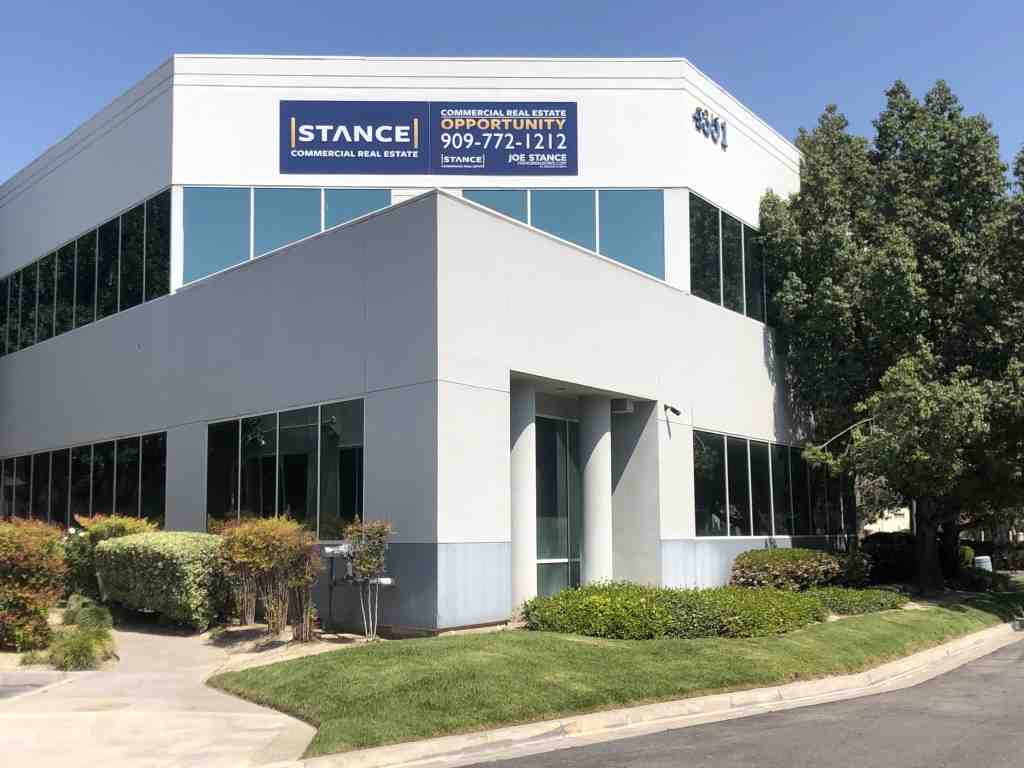
Comprehensive Guide to Leasing Office Space in Riverside
Looking for office for rent Riverside? You've come to the right place! Whether you are a business owner or an investor, finding the perfect office space in Riverside, CA can be a daunting task.
Here is a quick peek into what you need to know:
- Availability: Riverside has a range of office spaces available, from small 1,300 sq ft offices at $1.50/SF/MO to larger options around 35,670 sq ft at $2.65/SF/MO.
- Types: You can choose from traditional offices, shared spaces, and even virtual offices to meet your business needs.
- Locations: Popular areas include Downtown Riverside, Hunter, and La Sierra.
Riverside boasts a vibrant commercial real estate market, making it an attractive hub for businesses of all sizes. This city combines the benefits of a large urban environment with the charm of a small town, offering affordable housing and a strategic location near both mountains and the beach.
Leasing office space in Riverside presents several advantages. These include flexibility, lower initial investment, and the opportunity to prime your business for growth in a bustling economic landscape. With increasing demand and consistent property value appreciation, Riverside stands out as a lucrative option for office rentals.
Ready to dive deeper? Let's explore the different office space options, key considerations, market trends, and more in the sections that follow.
Understanding Office Space Types in Riverside
When searching for an office for rent in Riverside, it's important to understand the different types of office spaces available. Each type caters to specific business needs and preferences.
Here is a breakdown of the main options:
Traditional Office Spaces
Traditional office spaces are the most common type of office rental. They offer a dedicated area for your business, typically leased for a longer term. These spaces are ideal for established companies that require privacy and control over their environment.
- Example: 8990 Garfield St, offering 1,300 SF for lease at $1.50/SF/MO.
- Benefits: Privacy, control, and customization.
- Drawbacks: Higher costs and longer lease commitments.
Shared Office Spaces
Shared office spaces are designed for smaller companies that want the feel of a traditional office but with lower costs. These spaces include lockable offices and a common area shared with other tenants.
- Example: 3615 Main Street, which offers open workspace and event space.
- Benefits: Cost-effective, community environment.
- Drawbacks: Less privacy compared to traditional offices.
Virtual Offices
Virtual offices provide a business address and essential services without the need for a physical space. They are perfect for freelancers, remote workers, or businesses that operate primarily online.
- Example: Turner Riverwalk and Riverside Central Business Center offer virtual office services.
- Benefits: Professional address, cost savings.
- Drawbacks: No physical space for daily operations.
Coworking Spaces
Coworking spaces are flexible and dynamic, catering to freelancers, startups, and small businesses. These spaces offer a variety of options, from hot desks to private offices, and often include amenities like meeting rooms and event spaces.
- Example: TailoredSpace Riverside offers meeting rooms, private offices, and dedicated desks.
- Benefits: Flexibility, networking opportunities, and access to amenities.
- Drawbacks: Can be noisy and less private.

Understanding these different types of office spaces can help you make an informed decision when looking for an office for rent in Riverside. Each option has its own set of benefits and drawbacks, so consider what best fits your business needs. Next, we will dive into key factors to consider when renting office space.
Key Factors to Consider When Renting Office Space
When searching for an office for rent in Riverside, several key factors can significantly impact your decision. Let's break down the most important ones: location, size, price, and amenities.
Location
Location is crucial. It affects accessibility for both your employees and clients. For instance, offices near major highways like Interstate 60 offer easy access and high visibility. The Moreno Valley Mall area is a prime example, attracting over 132,000 cars daily.
Neighborhood vibe matters too. Riverside is a college town with three major universities, so being near these can help attract young talent. Think about the public perception and whether the location aligns with your brand.
Size
Size does matter when it comes to office space. Your office should comfortably fit all your employees and equipment. If you are planning to grow, consider a space that will accommodate future expansion.
Example: Spaces ranging from 16,750 to 312,890 square feet are available in Riverside, offering flexibility depending on your needs.
Price
Budget is always a factor. Riverside office spaces average $28.23 per square foot. Prices can vary greatly, from $8.40 to $84.96 per square foot annually, depending on the location and amenities.
Tip: Compare different options to find a balance between cost and features. Some listings even offer flexible leasing terms, like monthly or quarterly payments.
Amenities
Amenities can make or break your decision. Essential amenities include high-speed internet, parking, and security. Some offices offer additional perks like meeting rooms, dedicated desks, and even virtual offices.
Example: TailoredSpace Riverside provides a variety of amenities that can be tailored to your business needs, such as private offices and meeting rooms.
By considering these key factors, you'll be better equipped to find the perfect office for rent in Riverside. Next, we'll explore the current trends in Riverside's office space market.
Current Trends in Riverside Office Space Market
Pricing Trends
Office rental prices in Riverside have been quite dynamic. On average, office spaces are listed at $28.23 per square foot. However, prices can range significantly based on location and amenities. For instance, some offices are available for as low as $8.40 per square foot, while others can go up to $84.96 per square foot. This variability allows businesses of different sizes and budgets to find suitable spaces.
Demand
The demand for office spaces in Riverside is on the rise. Riverside's strategic location and thriving local economy make it an attractive spot for businesses. The city has seen a particular uptick in interest for hybrid spaces that combine retail, office, and residential elements. This shift reflects a broader trend towards more integrated and community-focused business environments.
Case Study: The Moreno Valley Mall, an enclosed shopping center, has become a hotspot for businesses due to its high visibility and accessibility, serving over 132,000 cars a day. This kind of traffic is a strong indicator of high demand in the area.
Supply
There are currently 61 office spaces for rent in Riverside, offering a diverse range of options. From small boutique-style offices to large corporate buildings, the supply is varied enough to meet different business needs. Recent developments have also introduced modern office complexes equipped with the latest technology, which are ideal for tech companies and startups.
Fact: Riverside's office spaces include 4-star buildings, with some built as recently as 1992, offering spaces ranging from 16,750 to 312,890 square feet. This variety ensures that businesses can find spaces that align with their specific requirements.
Understanding these trends can help you make a more informed decision about renting office space in Riverside. Next, we will explore how to find the right office space in Riverside.
How to Find the Right Office Space in Riverside
Finding the perfect office for rent Riverside can be a breeze if you know where to look and what to consider. Here are some key methods to help you locate the ideal space for your business:
Online Listings
Online platforms are a great starting point. Websites like LoopNet offer a comprehensive list of office spaces available for rent in Riverside. These listings provide detailed information about square footage, rental rates, and amenities.
Tip: Use filters to narrow down your search based on your specific needs, such as location, price range, and office size.
Brokerage Services
Another effective way to find office space is by working with a commercial real estate broker. Brokers have in-depth knowledge of the local market and can offer insights that you might not find online. They can help you:
- Identify properties that fit your criteria
- Negotiate lease terms
- Understand legal and zoning regulations
Quote: "Navigating these legal aspects may require consultation with local experts or legal advisors familiar with Riverside’s commercial real estate regulations."
Direct Inquiries
Sometimes, the best deals are not listed online. Directly contacting property owners or management companies can uncover hidden gems. This approach can be particularly useful for finding spaces in high-demand areas or those with unique amenities.
Example: A business owner looking for a space in the Hunter area might contact the management of 1040 Iowa Ave. directly to inquire about the availability of their 4,441 SF office space.
Local Market Insights
Understanding the local market trends can also guide your search. For instance, areas along the Riverside Freeway (CA-91) are gaining popularity due to their easy access to major transportation routes. Keeping an eye on such trends can help you find a location that offers both convenience and growth potential.
Fact: The average asking price for office space in Riverside is $28.23 per square foot, but prices can vary significantly based on location and amenities.
By leveraging these methods, you can find an office space that meets your needs and budget. Next, we will dive into the costs and options available for renting office space in Riverside.
Office for Rent Riverside: Pricing and Options
Cost of Office Spaces in Riverside
The cost of office spaces in Riverside can vary widely. On average, the asking price is $28.23 per square foot. However, there are options to suit different budgets and needs.
For instance, basic office spaces can be found for as low as $8.40 per square foot per year, while premium locations can go up to $84.96 per square foot per year.
Here's a quick comparison of typical prices:
- Budget Options: $8.40 - $18.00 per square foot per year
- Mid-Range: $18.00 - $30.00 per square foot per year
- Premium: $30.00 - $84.96 per square foot per year
Tip: Prices can fluctuate based on market conditions, so it's worth monitoring trends regularly.
Popular Locations for Office Rentals in Riverside
Downtown Riverside:
Downtown is a prime location for office rentals. It's known for its vibrant business environment and easy access to amenities. Office spaces here typically range from $19.20 to $30.00 per square foot per year.
Hunter:
The Hunter area offers a mix of affordability and convenience. It is close to major highways, making it an attractive spot for businesses. Prices here range from $17.40 to $29.40 per square foot per year.
La Sierra:
La Sierra is another popular choice, especially for those seeking more budget-friendly options. Office spaces in La Sierra can be found for as low as $18.00 per square foot per year, making it a great choice for startups and small businesses.
Fact: The Moreno Valley Mall area, while primarily a retail hub, also offers office spaces ranging from $24.00 to $30.00 per square foot per year.
By understanding the costs and popular locations, you can make an informed decision when looking for an office for rent in Riverside. Next, we’ll explore the intricacies of lease agreements and how to navigate negotiations effectively.
Navigating Lease Agreements and Negotiations
When leasing an office space in Riverside, understanding the lease agreement is crucial. Here are the key aspects to consider:
Terms
Lease Duration: Most commercial leases range from 3 to 10 years. Make sure the term aligns with your business plan.
Rent Inclusions: Clarify what is included in the rent. Are property taxes, insurance, and maintenance fees covered? This can significantly impact your overall costs.
Renewal Options: Look for options to renew the lease. This can give you flexibility if your business grows.
Negotiation Tips
Start Early: Begin negotiations well before your current lease expires. This gives you leverage and time to explore other options.
Incentives: Landlords often offer incentives like tenant improvement allowances. For example, a landlord might provide $40,000 to build out your space. Be clear on the terms. Do you owe this back if you leave early?
Flexible Terms: Negotiate for flexibility, such as the ability to sublease or terminate the lease early. Understand any penalties involved.
Professional Help: Consider hiring a real estate broker or attorney. As stated by Jeremiah Lee, "An ounce of prevention is worth a pound of cure." Professionals can spot red flags and negotiate better terms for you.
Legal Considerations
Binding Contract: A lease is a legally binding contract. If you break it, you could face legal consequences. Always consult an attorney before signing.
Representations and Warranties: Ensure the lease includes representations and warranties. If the landlord claims the property is in a certain condition, this clause can protect you if it’s not.
COVID-19 Clauses: Given the pandemic, many leases now include COVID-19-related clauses. These can address rent relief or lease termination if another lockdown occurs. Make sure these are fair and clearly defined.
Exit Strategy: Know your exit strategy. What happens if you need to leave early? What liabilities continue after you leave? These are critical questions to answer before signing.
By understanding these elements and negotiating effectively, you can secure a lease that benefits your business in the long run.
Next, we’ll delve into the services and amenities offered with office rentals in Riverside.
Office for Rent Riverside: Services and Amenities Offered
When looking for an office for rent in Riverside, it's important to consider the services and amenities included. These can significantly impact your daily operations and employee satisfaction. Here’s a breakdown of common offerings:
Internet:
Reliable internet is crucial for any business. Most office spaces in Riverside, like those offered by TailoredSpace, come with high-speed internet connections. This ensures that your team can work efficiently without interruptions.
Parking:
Parking can be a major concern, especially in busy areas. Many office buildings in Riverside provide ample parking spaces. For example, the property at 1040 Iowa Ave. offers dedicated parking, making it convenient for employees and clients.
Security:
Safety is a top priority. Office spaces in Riverside often include security features such as surveillance cameras, secure entry systems, and 24/7 monitoring. Properties like 11728 Magnolia Avenue ensure a secure environment for your business operations.
Utilities:
Most office leases in Riverside include basic utilities like water, electricity, and heating/cooling. This is often factored into the rental price, making budgeting simpler. For instance, the office at 8990 Garfield St. includes utilities in its $1.50/SF/MO lease rate.
Meeting Rooms:
Having access to professional meeting rooms is essential for client presentations and team discussions. TailoredSpace Riverside offers well-equipped meeting rooms that can be booked as needed, providing a flexible solution for businesses of all sizes.
Dedicated Desks:
For businesses that need a stable workspace but want to avoid the cost of a full office, dedicated desks are a great option. These are available at locations like Turner Riverwalk, where you can rent a dedicated desk in a shared environment.
Virtual Offices:
Virtual offices are perfect for businesses that need a professional address and occasional access to office facilities. TailoredSpace Riverside offers virtual office services, including mail handling and access to meeting rooms, without the need for a physical office.
Additional Amenities:
- Private Offices: For those needing more privacy, private offices are available in many Riverside locations.
- Social Spaces: Areas for informal meetings and relaxation can help boost employee morale and productivity.
- Technology: Some offices come equipped with advanced tech like video conferencing equipment and smartboards.
By considering these amenities, you can find an office for rent in Riverside that meets your business needs and enhances your work environment.
Next, let's explore the popular locations for office rentals in Riverside.
Frequently Asked Questions about Office Space in Riverside
What are the average rental rates for office spaces in Riverside?
The average asking price for office for rent Riverside is approximately $28.23 per square foot. However, prices can vary widely depending on the location and type of office. For example:
- Office/Retail spaces: Around $21.00 USD /SF/yr.
- Office/Medical spaces: Between $13.80-$17.40 USD /SF/yr.
- High-end office spaces: Up to $84.96 USD /SF/yr.
These rates provide a general idea, but specific prices will depend on the exact location, size, and amenities of the office space.
How does the cost of office space in Riverside compare to other cities?
When compared to other cities in Southern California, Riverside offers more affordable office rental rates. For instance, office spaces in Los Angeles and San Diego often command much higher prices due to their larger markets and higher demand.
- Los Angeles: Office spaces can go for $40-$60 per square foot.
- San Diego: Rates often range from $35-$55 per square foot.
Riverside’s strategic location and lower costs make it an attractive option for businesses looking to establish a presence in Southern California without the hefty price tag.
What types of office spaces are available in Riverside?
Riverside offers a variety of office spaces to suit different business needs:
- Traditional Offices: Private offices with dedicated workspaces, ideal for businesses needing a permanent location.
- Shared Offices: Cost-effective solutions where multiple businesses share a larger office space.
- Virtual Offices: Provide a business address and phone services without the need for a physical office.
- Coworking Spaces: Flexible and collaborative environments perfect for freelancers, startups, and small businesses.
Each type offers unique benefits, allowing businesses to choose the best fit based on their operational needs and budget.
Ready to dive deeper into Riverside's office rental landscape? In the next section, we'll explore popular locations for office rentals in Riverside.
Conclusion
At Stance Commercial Real Estate, we pride ourselves on being more than just a real estate agency. We are deeply rooted in Riverside's community and culture, providing us with the local expertise necessary to guide you through the process of finding the perfect office for rent in Riverside.
Local Expertise
Navigating Riverside's commercial real estate market can be complex, but our team at Stance CRE is here to simplify it for you. Our extensive market knowledge, combined with our dedication to the local community, ensures that we understand the nuances of Riverside's diverse neighborhoods. From the bustling Downtown area to the industrial hubs in Hunter and La Sierra, we know where the opportunities lie and can help you seize them.
Future Outlook
Riverside's commercial real estate market is on an upward trajectory, driven by its strategic location and vibrant economy. With a strong industrial sector and a growing demand for office spaces, the future looks promising for businesses looking to establish or expand their presence here. Whether you are a startup seeking a coworking space or an established company in need of a traditional office, Riverside offers a variety of options to meet your needs.
Our connection to Riverside goes beyond business. We live, work, and thrive in this community, and we are committed to helping you do the same. By choosing Stance CRE, you are not just getting a real estate service; you are gaining a partner dedicated to your success.
Ready to explore the possibilities? Contact us today to find the ideal office space that aligns with your business goals. Visit our properties page to get started.
Feel free to reach out to us with any questions or to schedule a consultation. Let's make your next move in Riverside a successful one!
How Stance Commercial Real Estate Can Help You
If your company is stable with little plans for growth and has large amounts of cash on hand, purchasing your property may make sense. On the other hand, if your company is rapidly growing and tends to reinvest cash into business expansion or development, leasing space is likely going to be the right answer for you. If you are considering buying or leasing office space in Riverside, one of our experts would be happy to talk through this decision with you and help you identify the solution that will best meet your company’s needs.
Stance CRE can be a great resource regardless of which type of investor you are. We have been adding value to investment decisions right here in Riverside for years. We are not just market experts; we are your neighbors! We are a local business with local interests.
In the right market, both active and passive options have the potential to generate steady cash-flow and return on investment. At Stance Commercial Real Estate, we live and breathe Riverside culture. We are not only working in the community, but we also live here… we love it and we want to help you succeed in it!
Call us today at (909) 772-1212 and let us help you decide which type of role is best for you!